

Plot Summary
Prologue
On a cold November night, Millie Masters records a confession for whoever might find it after her death. She admits that she once killed her father, then insists her current story began later, with two frightened young women she drove home.
Millie frames her recent crimes as unfinished work: part revenge, part protection, and perhaps a route to notoriety. The recording promises a reckoning, but her mission is still underway. To understand why she began killing again, she says, the story must start with those girls in the back of her car.
The prologue makes confession both a practical safeguard and an act of self-fashioning. Millie is not simply trying to tell the truth; she imagines an audience, choosing the timing and shape of her own exposure. Her opening admission about her father sets a trap for the reader: murder is established before motive, while the claim that it is not yet the story postpones the wound that explains her. Her distinction between a sin and a victory also announces her unstable moral accounting. The tape promises honesty, but its maker remains invested in controlling how she will be remembered.
Message M After Midnight
Millie Masters works by day in a picture-framing shop and spends her nights answering Message M, an informal helpline that lets frightened women text her for help. She drives two young women home after a man corners them in a bar, then misses plans with her best friend, Nina Lee, because another caller needs her.
Her urgency comes from her younger sister Katie, once a brilliant Durham student, now withdrawn and dangerously thin after being raped on New Year’s Eve. Katie has refused police involvement, and Millie blames herself for not protecting her. When she visits, their careful small talk cannot disguise how much of Katie’s life has stopped. Millie’s rescues are becoming penance for a failure she cannot repair.
Millie’s helpline converts private helplessness into a repeatable procedure: receive a message, reach the woman, get her somewhere safe. The work genuinely helps people, but it also lets Millie treat a profound personal failure as a solvable series of emergencies. Katie’s silence frustrates this model. Her recovery cannot be arranged by a quick intervention, and Millie’s guilt makes that limit feel like another accusation. The missed plans with Nina show the cost of Millie’s self-appointed duty before it becomes lethal. Protection is both her most generous impulse and her way of avoiding grief that has no immediate task attached to it.
Rose in the Basement
A confused late-night message reports that a woman may have been drugged at a house. Millie hurries to the address, finds a handsome resident who denies knowing the caller, and climbs a garden wall to search next door. After the woman’s corrected location arrives, Millie enters a student house and finds a man named Karl photographing an unconscious, partly undressed young woman she privately calls Rose.
Millie threatens him with a kitchen knife and gets Rose moving, but Karl grabs her and she strikes her head against the bed. Millie keeps Karl back long enough for Rose to escape. When he charges after Millie on the stairs, she kicks him; he falls and cracks his skull. Millie has crossed from rescue into an unplanned killing.
The death grows from a real act of intervention, but the scene also exposes Millie’s danger: she enters without a reliable plan because anger feels more urgent than judgment. Her violence is not initially calculated, yet the decisive kick comes after Rose has escaped, when Millie could still leave. That makes the killing morally and psychologically harder to contain than simple self-defense. The mistaken address intensifies the episode’s instability, placing Millie in danger before she even reaches the victim. Her stated wish to protect women is sincere, but sincerity does not prevent her from confusing immediate control with justice.
Thirteen Faces on Camera
Alone with Karl’s body, Millie wipes surfaces, returns the knife, removes traces of Rose, and searches his phone for evidence connecting him to her. She takes his camera instead of leaving it behind. At home, she finds images of thirteen unconscious women, including one whose hair reveals she is not Rose but another earlier victim.
The discovery turns one rescue into evidence of repeated predation, and Millie’s fear that she killed the wrong kind of man gives way to pride. A customer named James Khan soon comes to her shop to frame his parents’ old travel tickets. Millie notices his charm, though she declines his invitation for a drink. Her private life and the investigation are beginning to overlap.
The camera changes the meaning of Karl’s death without making Millie’s choice automatically righteous. Its images supply a pattern that her first encounter could not establish, and Millie treats that retrospective evidence as permission to convert a panicked act into a moral verdict. Taking the camera is crucial: it preserves proof, but also leaves her holding an object that can connect her to the crime. James’s ordinary commission offers a counterweight to the violence, introducing a possible relationship built around patience and craft. Millie is not yet able to inhabit that ordinary possibility without measuring it against danger.
Steven’s Football Scarf
Still shaken by Karl’s death, Millie returns to the night shift and receives a message from a woman hiding in Pom Pom’s toilets. The woman says a man has been following her and may have drugged her drink. Millie recognizes the pursuer, Steven, from an earlier rescue and draws him away by pretending to welcome his advances.
At his football-decorated flat, she finds Rohypnol in his jacket and suspects he intends to incapacitate her. She tricks him into taking the sedative while pretending to use cocaine, then waits as it weakens him. Using his Liverpool scarf, she holds it over his face until he stops moving. Millie arranges the room to suggest an accidental overdose and leaves without calling for help.
This killing marks a shift from reactive force to chosen method. Millie identifies a credible immediate threat, but then turns the rescue into a private execution, using Steven’s presumed intent to justify a death she carefully stages. The scarf makes the act intimate and symbolic: his allegiance and domestic surroundings become part of the scene she constructs. Her preparation shows growing competence, while her certainty about Steven’s future behavior remains an inference rather than a conviction reached through due process. She is not simply losing control; she is discovering how pleasurable it feels to exercise control without anyone else’s permission.
James Knows the Bodies
Millie finally accepts a drink with James, whose lateness and nervous charm make the date feel both ordinary and precarious. He reveals that he is a police detective investigating two deaths: Karl, his neighbor, and Steven, a banker found after an apparent overdose.
Police found disturbing photographs on Karl’s computer but cannot locate the camera. Millie conceals that she took it and listens as James shares details he should keep private. Their attraction grows, even as his account gives her a glimpse of the investigation closing around her.
Meanwhile, Millie learns that Nina has lent ten thousand pounds to her new boyfriend, Hugh Chapman, to start a furniture business. Millie distrusts the arrangement, but does not yet know Hugh is cheating.
James’s disclosure creates a double intimacy: he offers personal warmth and professional information, while Millie responds with concealment that makes the relationship structurally unequal. His investigative curiosity is not merely a threat; it appeals to her own appetite for patterns and consequence. The missing camera becomes a concrete vulnerability, while the unsolved deaths give Millie reason to stay close to the person who may uncover her. Nina’s loan introduces a parallel form of risk. Millie’s instinct to protect her friend echoes her care for Katie, but also prepares her to treat another person’s vulnerability as a mandate to intervene.
Chris Falls at Clifton
While trying to identify Katie’s attacker, Millie searches for a bald man with a magpie tattoo and red curtains, but her first trip to Pom Pom’s yields no lead. On a run, she confronts Chris, a bearded runner who has used Strava to learn her name and track her routes. He admits he has arranged encounters because he finds her attractive.
Millie draws him to Clifton Suspension Bridge, asks to use his phone for photographs, and pushes him from the wall. He catches her sports bra, nearly pulling her over too, before the fabric snaps and he falls. Millie deletes their pictures, sends his wife a vague final message from his phone, and leaves with his penknife. A witness later reports seeing a woman near the fall.
Chris’s stalking makes Millie’s fear materially grounded, yet her response exceeds escape or protection: she engineers a fatal fall. The bridge turns an everyday surveillance tool into a mechanism of vulnerability, showing how a public fitness profile can expose a person’s habits and location. The snapped strap leaves Millie physically endangered at the instant she claims mastery, a reminder that violence does not make her invulnerable. Her staged message and removal of evidence reveal an increasingly deliberate criminal intelligence. The witness who sees a woman near the scene is the cost of a plan that feels complete only from inside Millie’s own perspective.
Macarons for Hugh
Nina confides that Hugh has been evasive about his business and may be seeing another woman. Millie draws out the details, then approaches Hugh under the pretext of needing help with a coffee table. She visits his flat, where he tries to turn the lesson into a sexual advance. Millie feeds him nut-free macarons, then reveals she has mixed in almond flour despite knowing about his severe allergy.
When Hugh’s throat swells, she takes his EpiPen and phone, locks herself in the bathroom, and deletes their messages. Hugh points her to a shoebox containing Nina’s ten thousand pounds. Millie retrieves the cash and watches him die without giving him the emergency medication. Nina is left unaware of who caused Hugh’s death.
Millie’s intervention begins as protection against financial and romantic exploitation, but she makes herself judge, jury, and executioner. Hugh’s manipulation of Nina is real; Millie’s deliberate withholding of lifesaving treatment is also real. The allergy, previously introduced as a detail at lunch, becomes a weapon because she can convert intimate knowledge into lethal leverage. Recovering the cash complicates the act further: she does restore what Hugh took, but the restitution cannot cleanse the means. Her private rescue model has become indistinguishable from punishment, especially because the person she claims to protect is denied the truth.
The Wrong Red Curtains
Millie traces David Cartwright, a bald Pom Pom’s bouncer, through public social media and finds that his favorite café lies near the Italian restaurant Katie once mentioned. She watches David and his girlfriend, Kelly, at breakfast, then follows him home and sees red curtains in an upstairs window.
Believing the clues confirm her target, Millie breaks in while he is away and waits beneath his bed. When David returns and bathes, she throws a phone and radio into the water, electrocuting him.
Only afterward does she notice a photograph showing David celebrating New Year’s Eve in New York, and another that leaves his chest tattooless. His death is not revenge for Katie’s assault. Millie has killed an innocent man through haste and confirmation bias.
The mistake is not a random twist but the consequence of Millie’s investigative method: she gathers clues that fit, then treats their convergence as proof. A location, a job, a body type, and curtains become a substitute for direct identification. The posthumous photographs do what Millie refused to do beforehand, testing her theory against disconfirming evidence. Her elaborate method makes the error more disturbing, not less, because planning has not corrected her moral certainty. The victim’s ordinary domestic life, including his relationship with Kelly, punctures the fantasy that the guilty are always recognizable by appearance.
Two Bodies in Roland Road
After David’s death attracts police attention, Millie withdraws, but Katie’s despair worsens. Following New Year’s fireworks, Katie cuts her wrists and is hospitalized. That night, while working Message M, Millie receives a frantic plea from a fifteen-year-old trapped at a party with an older man and his friends.
Millie smashes the front door of the house and attacks the man as he emerges from his bedroom, killing him with a rock. His housemate appears in the hallway, so Millie stabs him in the throat. Only then does she hear the girl whimpering in the bedroom. Millie covers the girl’s eyes, threatens her into silence, deletes her messages, and drives her home. She washes away the blood and destroys her Message M SIM card.
This episode fuses the two motives that have governed Millie: rescuing a vulnerable girl and answering Katie’s pain. The immediate danger is credible, but Millie’s violence is so uncontrolled that she kills a second man largely to prevent him from identifying her. The rescue therefore saves the teenager from assault while leaving her with fear, secrecy, and an enforced silence. Katie’s hospitalization intensifies Millie’s sense that she must act, but it also reveals the inadequacy of substituting revenge for care. Ending Message M is a recognition that the system Millie built to help others has become entangled with her compulsion to punish.
The Letter Names Dale
After the double killing, Millie records a long confession for Nina, explaining her childhood abuse and the death of her father. As a teenager, she poisoned his pie with rat poison; when he later vomited while drunk, she watched him choke, though she had not planned that exact death.
The recording also recounts the men she has killed and leaves instructions for her possessions. Before Millie can act on her next plan, she reads Katie’s hospital letter.
Katie admits that she lied about parts of the assault because she feared Millie would retaliate, and says she knows who attacked her. A tattoo artist’s voicemail adds that the magpie design may come from a sports logo. Millie recognizes the Newcastle United emblem associated with their uncle, Dale.
The letter reverses the direction of protection. Millie has imagined herself as the only person guarding Katie, but Katie has been withholding information to protect Millie from becoming what she feared. The revelation also exposes the limits of Millie’s certainty: she built an investigation from fragments supplied by a traumatized person who was trying to manage her sister’s rage. The childhood confession complicates the idea that Millie’s violence began with adult vigilantism. Her father’s death was both deliberate and accidental, a formative ambiguity she has carried forward as a model for evading responsibility while claiming agency.
James Chooses the Law
Millie concludes that Dale, not David Cartwright, attacked Katie, and sets out to kill him. Before she can reach him, James drives her to a secluded lane and lays out the links he has found: the missing camera, her rescue work, the deaths, and a woman matching her appearance near the scenes. He says he understands why she acted but cannot let her go.
Millie argues that the police repeatedly fail women like Katie, while James insists that private vengeance cannot replace law. When he tells her to surrender, Millie returns to his car and drives into him. She leaves him in the road, believing she has killed him, then goes home to prepare for arrest or suicide. His refusal to look away destroys the future she had begun to imagine with him.
James is not simply an obstacle; he embodies the institutional justice Millie wants to reject and the personal intimacy she wants to preserve. His willingness to acknowledge systemic failure makes his boundary more painful: he understands her indictment, yet refuses to authorize her crimes. Millie’s choice to run him down is both practical self-preservation and an emotional collapse of the relationship. The scene asks whether love can survive a conflict over legitimate violence. For Millie, being understood is not enough if understanding does not include permission. James’s insistence that accountability matters exposes the difference between sympathy and absolution.
Nina Takes the Wheel
At home, Millie prepares to end her life rather than face prison, but the letter she had postponed reading changes everything. Katie says she knows the attacker and lied because she feared what Millie might do. Millie connects the magpie to the Newcastle United emblem and remembers Dale’s shirt, his presence at their mother’s house on New Year’s Eve, and an old photograph showing the tattoo on his chest.
A news report then reveals that James survived the collision, though he is badly injured. Millie rushes to Dale’s home, but Nina arrives first and forces her to explain. Nina has found Hugh’s recovered cash and inferred Millie’s role in the killings. Instead of abandoning her, she agrees to help her confront Dale and manage the evidence.
Katie’s letter interrupts Millie’s self-destruction by replacing a vague target with a relationship she had trusted. The revelation makes the past newly legible, but it does not make Millie’s earlier killing of David Cartwright right; it sharpens the cost of acting before knowing. Nina’s arrival supplies the counterforce Millie has lacked: another person who can take charge without simply endorsing her self-image. Her practical questions redirect the crisis from solitary panic to shared planning. The friendship now carries an ethical burden, because loyalty may mean helping Millie survive while refusing to let her continue killing indefinitely.
Dale’s House Burns
Millie reaches Dale’s house and peppersprays him, handcuffing him to the kitchen island while she confronts him about Katie’s assault and his knowledge of Millie’s father. James, now out of hospital, sends a warning that he is coming.
When Millie learns he has her confession tape, she abandons Nina’s plan for a gas leak and douses the house, Dale, and herself with petrol. Nina orders her to leave, but Millie lights a match and drops it before fleeing on Dale’s motorcycle.
James arrives and runs into the burning house to help Dale. Nina collects the incriminating objects from Millie’s home, plants them in James’s flat, and anonymously tells police he is responsible for the murders. Dale dies in the fire; James survives, badly injured and implicated.
The fire is the climax of Millie’s belief that violence can close a cycle by consuming both perpetrator and avenger. She prepares to die alongside Dale, but Nina’s intervention makes survival possible without erasing the crime. James’s instinct to enter the burning house confirms the decency Millie once saw in him, even as she leaves him to face the consequences of her actions. Nina’s counterplot is an act of fierce loyalty with grave moral cost: she protects her friend by redirecting suspicion toward an innocent person. The ending’s escape is therefore neither clean justice nor simple triumph.
A Future Beyond Bristol
Nina and Millie rehearse a cover story and arrange an alibi: they say they spent the night watching a film together. At the police station, Millie claims James had become obsessive and threatening, and that she struck him with her car while escaping him.
Police charge her with reckless driving, but Nina expects the charge to fall away. James’s evidence is compromised by Nina’s planted material and anonymous accusation, leaving him under suspicion for the deaths he investigated. While Millie is questioned, Gina exposes her unfaithful husband, Daniel Craig, by distributing a photograph of him with neighbor Sean, resolving the strange blackmail subplot.
Later, Millie and Nina agree that Message M must end. Katie is receiving treatment and improving, and Nina proposes that they leave Bristol for her firm’s new Edinburgh office. Millie accepts the possibility of starting over.
The resolution refuses the fantasy that finishing a revenge mission restores what was lost. Katie’s treatment offers a form of help distinct from Millie’s vigilantism, while the closure of Message M acknowledges that good intentions do not justify limitless responsibility. Nina’s plan gives Millie a future, but it rests on a deception that places James at risk and leaves the law’s failures unresolved. Gina’s revenge against Daniel and Sean offers a comic miniature of the novel’s larger question: what counts as justice when institutions and relationships fail? Millie ends not redeemed, but redirected, with survival made possible by friendship and a willingness to stop.
Analysis
The novel builds its thriller engine around a conflict between protection and authority. Millie’s work through Message M responds to a recognizable failure: women often face danger in ordinary settings, while formal institutions may be slow, skeptical, or unable to secure convictions. The narrative takes that frustration seriously without granting Millie an uncomplicated moral victory. Her first killing follows a rescue, but later deaths show how quickly a credible threat can become a license for punishment. When she misidentifies David Cartwright, the book makes the cost of private certainty literal: a man who fits a pattern dies because Millie treats accumulated clues as proof.
Millie’s childhood history explains the shape of her compulsion rather than absolving it. She learned that adults who should protect children can fail, and that survival may require watching, planning, and acting alone. Her father’s death is formative precisely because it is neither wholly deliberate nor wholly accidental. That ambiguity becomes a template for the later story, as Millie claims intention when it suits her and accident when responsibility becomes unbearable. Katie’s letter breaks this pattern by revealing that the younger sister has been trying to protect Millie in return. Their relationship is not a simple rescuer and rescued pairing; each has been concealing pain to spare the other.
Nina offers a different model of care. She is not naïve in the end, but neither does her loyalty remain morally clean. Her decision to frame James saves Millie from immediate prosecution while compromising the justice she has spent her life serving. James, meanwhile, embodies the possibility that a flawed system can still contain people committed to its principles. Millie cannot accept that distinction until it is too late. The ending does not resolve this tension with a verdict or confession. It offers treatment for Katie, a possible move for Millie and Nina, and the closure of Message M. Survival begins not with a final act of vengeance, but with limits: Millie cannot protect every woman, repair every injury, or make violence produce justice.
Review Summary
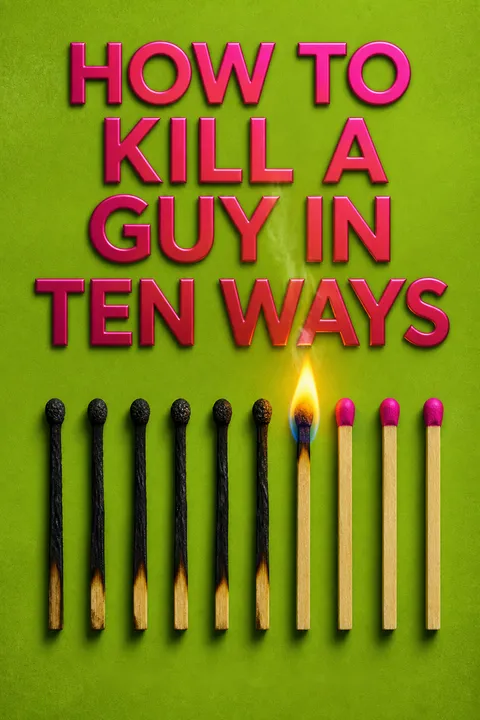
How to Kill a Guy in Ten Ways is a darkly humorous thriller about Millie Masters, who runs a hotline to help women in dangerous situations with men. After her sister's rape, Millie becomes a vigilante, killing predatory men. Reviews praise the book's wit, feminist themes, and entertaining plot, though some criticize the protagonist's unlikability and judgmental attitude. Opinions are mixed on the ending, with some finding it satisfying and others disappointed. Overall, readers found it a fast-paced, entertaining read that tackles serious issues with dark humor.
People Also Read


Characters
Millie Masters
Reluctant vigilanteA sharp, unsentimental picture framer in Bristol, Millie uses humor and observation to keep other people at a distance. Her informal Message M helpline grows from guilt over her younger sister Katie’s assault and from Millie’s own history of abuse. She feels responsible for protecting women, but her need for control turns rescue into punishment. Her practical intelligence can become overconfidence: she reads people quickly, then mistakes a plausible pattern for proof. Millie is drawn to books, running, her cat Shirley Bassey, and the rare possibility of ordinary intimacy. Beneath her cynicism is a deep attachment to Katie and Nina, though she struggles to accept care in return.
Nina Lee
Loyal best friendNina is Millie’s closest friend, a high-achieving lawyer whose warmth and colorful style conceal a formidable capacity for judgment. She is generous, forgiving, and hopeful about romance, sometimes to the point of ignoring warning signs. Her friendship with Millie reaches back to their final school years, when Nina offered the lively, safe family life Millie had never known. Nina wants Millie to stop living inside old injuries, but her loyalty is not passive: she can take command when Millie is in crisis. She offers emotional shelter while remaining clear-eyed about the practical consequences of Millie’s choices.
Katie Masters
Wounded younger sisterTen years younger than Millie, Katie is intelligent, funny, and once full of promise, earning a place at Durham University. After a sexual assault, she retreats from study and ordinary life, becoming depressed and physically frail. Millie’s urge to protect her is sincere, but Katie is more perceptive and self-aware than Millie assumes. She does not want her pain turned into another person’s crusade, and she struggles with guilt about the effect she has on her sister. Their bond is deeply affectionate, shaped by childhood closeness and Millie’s long-standing role as protector.
James Khan
Detective and love interestJames is a young police detective, thoughtful and ambitious, who becomes Millie’s customer and then her romantic interest. He is attracted to her wit and directness, and his investigative instincts lead him to connect deaths others dismiss as accidents. James wants to believe that the law can deliver justice, even when he sees its limits in sexual violence cases. His openness, sometimes careless with professional information, makes him both a source of insight and a risk to Millie. He is capable of tenderness, but his principles place firm limits on what he will overlook.
Dale
Trusted family uncleDale is Millie and Katie’s paternal uncle, a Newcastle United supporter who visits their mother and helps Millie establish an independent home. For much of Millie’s childhood, he appears to be the gentler alternative to her volatile father. His familiarity gives him a place inside the family’s private world, and Millie remembers him through practical gestures, football loyalties, and his continued presence after her father’s death. The trust he inspires in Millie is complicated by the family’s habit of leaving painful matters unspoken.
Millie’s mother
Passive family matriarchMillie and Katie’s mother is a careful housekeeper who manages domestic order while avoiding confrontation. She loves her daughters, particularly Katie, but her passivity leaves Millie feeling unprotected during a frightening childhood. She tries to care for Katie after the assault, though she often minimizes the severity of her condition. Her relationship with Millie is marked by resentment, silence, and the shared knowledge that neither has fully discussed the past.
Karl
Basement photographerKarl is a student-house resident whose polished appearance and easy charm conceal predatory behavior. Millie encounters him photographing an unconscious young woman in his basement. His private collection of images suggests repeated exploitation, and his ordinary surroundings make his conduct more disturbing rather than less. He is the first man whose death turns Millie’s rescue work into a personal reckoning.
Rose
Drugged young womanRose is a young woman found unconscious and exposed in Karl’s basement. Her pink hair and disorientation make her vivid in Millie’s memory, though Millie does not know her name when she intervenes. Rose represents the immediate human stakes of Millie’s rescue work and the limits of what Millie can know about the women she helps.
Hugh Chapman
Nina’s new boyfriendHugh is an affable plumber who presents himself as an aspiring furniture maker. Nina is captivated by his charm and practical confidence, while Millie remains wary of his need to impress and his request for financial help. He is socially adept enough to make his ambitions feel plausible, and Millie’s suspicions about him grow as Nina shares more of their relationship.
Steven Baker
Pom Pom’s pursuerSteven is a well-off man who frequents Pom Pom’s and targets women on nights out. Millie recognizes him from an earlier rescue and sees him following another woman at the club. His polished clothes and expensive flat sit uneasily beside his predatory attention to women.
Chris
Strava stalkerChris is a bearded runner who uses Strava to identify Millie and learn when and where she runs. He frames his repeated appearances as romantic persistence, failing to recognize how threatening his access to her routine feels. His cheerful manner disguises an entitlement that Millie experiences as a direct invasion of her privacy.
David Cartwright
Pom Pom’s bouncerKnown to friends as Big Dave, David works security at Pom Pom’s and other local venues. He is bald, heavily built, and publicly displays a life centered on club work, his girlfriend Kelly, and breakfast outings. His appearance and proximity to Katie’s remembered location make him a focus of Millie’s suspicion.
Gina
Picture restorerGina works alongside Millie at Picture This as a picture restorer. She is talkative, theatrical, and hungry for social connection, often recounting the troubles in her marriage. Millie finds her exhausting but recognizes that Gina can be loyal and resourceful. Her own anger at betrayal gives her more complexity than Millie initially allows.
Angela
Loud old school friendAngela is one of Millie and Nina’s longtime school friends. She talks constantly, drinks heavily at gatherings, and often seeks reassurance about her relationship. Her exuberance can overwhelm the people around her, but it also seems to be a way of insisting on a place in a world where she fears being overlooked.
Izzy
Event planner and motherIzzy is an old school friend who works as an event planner and is married to Josh. She is stylish, capable, and frequently late, with much of her conversation devoted to work, childcare, and her husband’s shortcomings. Her confidence and polished presentation contrast with her uncertainty about asking directly for what she wants.
Sean Cannon
Nosy next-door neighborSean is Millie’s garrulous neighbor, often appearing over the garden fence to talk about family and local affairs. His uninvited chatter irritates Millie, and his opinions can be casually prejudiced. Later, his anxious behavior suggests a private problem that Millie had not anticipated.
Rick
Millie’s framing-shop bossRick owns Picture This, where Millie works framing photographs and paintings. He is kind, hesitant, and attached to an unpublished novel he mentions often. He values the shop as a real livelihood, which makes Millie’s increasing unreliability hurt him more than she expects.
Imran Khan
James’s observant brotherImran is James’s brother, a sociable man who shares a house with other students. His brief encounter with Millie leaves him with a sense that he has seen her before, a recollection that matters to James’s investigation.
John Towles
Older party hostJohn Towles is an older man who invites a fifteen-year-old girl to what she expects will be a party. He is connected to the young men at the house where Millie is called to intervene. His role exposes the vulnerability created when adults exploit a teenager’s wish to seem mature.
Paul Marques
Housemate at the partyPaul Marques is a housemate present at the gathering where a fifteen-year-old girl is left alone with an older man. His inaction becomes part of the danger Millie encounters when she arrives at the house.
Juliet
Teenage callerJuliet is a fifteen-year-old who accepts an invitation from an older man connected to her brother’s football team. She drinks to appear older, then recognizes that the gathering is not what she expected and secretly contacts Message M. Her fear and uncertainty make her especially vulnerable to both her hosts and Millie’s intervention.
Kelly
David’s girlfriendKelly is David Cartwright’s girlfriend. Her public images present a carefully styled persona, while their conversations reveal suspicion and conflict about his nights away. She gives Millie a glimpse of David’s ordinary intimate life beyond the club.
Daniel Craig
Gina’s unfaithful husbandDaniel Craig is Gina’s husband, whose late returns and secrecy lead her to suspect an affair. He becomes the focus of Gina’s private investigation into betrayal, exposing a domestic subplot that mirrors the novel’s broader concern with what people hide from one another.
Plot Devices
Message M
Rescue line and accessMessage M is Millie’s informal service for women who feel unsafe on dates, in bars, or on the walk home. Notices in local venues invite them to text her, and she responds by arranging pickups or helping them leave dangerous situations. The line gives the plot a steady stream of concrete encounters and introduces the people Millie feels responsible for protecting. It also provides the connection that draws her into Karl’s house and, later, to the teenager at the party. As Millie’s violence escalates, the phone becomes both a tool for care and a traceable link she eventually has to abandon.
Magpie and red curtains
Fragmentary identity cluesKatie remembers a bald, tall man, red curtains, and a magpie tattoo, but cannot initially give Millie a name or address. Millie treats those fragments as a search pattern, checking club workers, social media, cafés, and tattoo shops. The clues lead her toward David Cartwright, whose appearance and neighborhood seem to fit, but the match is false. A tattoo artist’s later reference to a team logo helps Millie connect the bird to Newcastle United and reconsider her uncle Dale. The clue chain shows how trauma memory can be incomplete and how a determined investigator can mistake inference for confirmation.
The confession tape
A record of buried historyMillie records an account of her killings and childhood for Nina, intending it to explain her actions if she is arrested or dies. The tape reveals that her father abused her and that, as a teenager, she poisoned a pie that contributed to his death. It also describes her later victims and exposes her way of converting pain into a personal theory of justice. Millie leaves the recording where it can be found, but fails to destroy it after the danger shifts. James discovers it, giving him a personal as well as circumstantial basis for confronting her.
Staged accidental deaths
Violence disguised as chanceMillie repeatedly tries to make intentional actions resemble accidents or suicides. She cleans Karl’s house, arranges Steven’s death to suggest an overdose, and sends a final message from Chris’s phone. Her methods evolve from improvisation to research and planning, but she repeatedly underestimates witnesses, evidence, or the possibility that her identification is wrong. The device creates suspense around what police can connect and lets Millie tell herself that an outcome is inevitable rather than chosen. Her increasingly elaborate scenes reveal both her competence and the danger of confusing concealment with control.
Nina’s counterstory
Friendship as escape planWhen Nina realizes Millie is connected to the deaths, she does not immediately report her. Instead, she investigates, finds Hugh’s recovered money, gathers objects linking Millie to the crimes, and helps plan the confrontation with Dale. After the fire and James’s survival, Nina plants incriminating evidence in James’s flat and makes an anonymous report blaming him. She also prepares an alibi for herself and Millie. Her actions transform friendship into a plot mechanism capable of changing the police investigation, while raising the cost of loyalty by placing James under suspicion.
Download PDF
Download EPUB
.epub digital book format is ideal for reading ebooks on phones, tablets, and e-readers.








