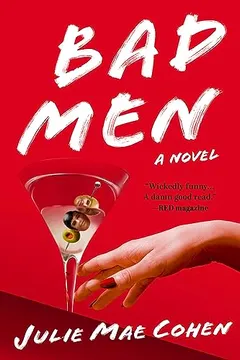


Plot Summary
Prologue
At twelve, Saffy Huntley- Oliver knows her stepfather Harold has turned the family pool into a place of abuse. When he summons her six-year-old sister Susie instead, Saffy sends Susie to watch a film and goes to the water herself.
She attacks Harold and holds him beneath the surface until he stops moving. Then she drags him to the pool’s edge, runs inside, and performs the grief of a child who has just found a drowning. She has saved Susie, but she has also discovered that she can decide what happens next.
Saffy’s first killing grows from a child’s practical understanding of danger: adults have failed to protect her, so she intervenes before Harold can reach Susie. Her performance afterward shows how quickly she learns that survival depends not only on action but on controlling the story others will believe. The pool is both the site of Harold’s abuse and the instrument that ends it. Saffy’s sense of justice begins as protection, but the concealment that follows makes violence inseparable from secrecy.
A Foot on the Doorstep
True-crime podcaster Jonathan Desrosiers, known as Jon, finishes a public event where admirers praise his work solving murders. His devoted follower Simon Simons lingers afterward, hoping for more of Jon’s attention, but Jon turns him down and returns home. His wife, Amy, is waiting with packed bags. She says years of Jon’s obsession with murder have left her lonely, and leaves their home.
The next morning, while taking a heavy rubbish bag off his doorstep, Jon sees a human foot among the remains. Police question him because the body resembles five earlier dismembered men found in London. Jon’s private grief has become a crime scene, and the detective in charge treats him as a possible suspect.
The novel makes Jon’s personal failure and professional identity collide before he can process either. Amy’s departure exposes the cost of his habit of treating other people’s pain as a puzzle, while the body on his step literalizes that cost without making Jon responsible for the killing. Simon’s small, disappointed appearance also plants an early danger in an otherwise ordinary fan encounter. The police suspicion matters because Jon’s expertise gives him useful instincts, but his public career has also made him a visible target.
Axe in the Freezer
Jon remembers the distinctive Axe body spray worn by Cyril Walker, a builder who once contacted his podcast with a clue in the Lianne Murray murder. Cyril’s testimony helped expose the real killer and clear an innocent man, making him seem trustworthy. Jon recognizes the scent on the bag and breaks into Cyril’s house to check his suspicion.
In the freezer, he finds five severed heads. Cyril returns, attacks him with a knife, and Jon escapes into the street badly wounded. The discovery identifies Cyril as the Bin Bag Killer, but the sixth victim’s head is missing. Jon has found the answer to one case and been pulled into another, while the experience leaves him traumatized and unable to continue his work.
Jon solves this case through sensory memory rather than a grand deductive flourish. The ordinary body spray links a helpful witness to a hidden crime, unsettling the assumption that moral credibility can be read from one good act. Cyril’s earlier effort to save an innocent man remains real, which makes his violence harder to file away as simple monstrosity. Jon’s survival also marks the limit of armchair investigation: knowledge can uncover danger, but it cannot keep the investigator outside its reach.
Two Men, Two Designs
At fifteen, Saffy overhears softball star Neve Owens confide that their popular coach, Mr Scheeler, groped her. Saffy blocks the men’s toilet at a bowling alley, waits until Scheeler leaves the party to urinate, and kills him with his own Babe Ruth bat. The death is mistaken for a robbery.
Years later, while modelling in New York, she notices bruises on her neighbour Mandy and learns her husband Chad is abusive. Saffy pushes Chad from the roof of their building, and his death is ruled accidental. Both killings follow her private logic: she selects men she believes will harm women and devises a cover story that lets her continue unchallenged.
These earlier murders show how Saffy’s idea of protection hardens into a private justice system. She acts when institutions and bystanders seem likely to fail women, but she also decides for herself who deserves punishment and what risks are acceptable. The contrast between Scheeler’s public affection and private abuse, and Chad’s polished status and domestic violence, makes respectability a poor guide to safety. Saffy’s elaborate staging is not only tactical; it lets her preserve the identity of a charming, socially acceptable woman.
The Rescue Was Staged
After seeing reports that Jon survived Cyril’s attack, Saffy tracks him to his isolated Scottish cottage. She has adopted a rescue dog named Patch, then places the animal in an old shaft near the loch and waits for Jon to find her. When she reports the trapped dog, Jon climbs into the flooded hole and brings it out, despite his recently healed stab wound.
The rescue revives a part of him that months of isolation have buried. Saffy uses the emergency to gain his trust, then accepts his offer of a lift and gives him her London keys so he and the dog have somewhere to stay. Jon believes their meeting was chance; Saffy has built it deliberately.
The staged rescue exposes the difference between Jon’s instinctive care and Saffy’s strategic intimacy. He risks himself for an unknown animal, while she creates a crisis because she wants access to him. Her manipulation is both predatory and emotionally earnest: she is pursuing a real connection by manufacturing the conditions for one. The dog becomes a bridge between their temperaments. Jon’s response to its vulnerability suggests that his capacity for care survives his trauma, even when he cannot yet extend that care to himself.
Amy Beyond the Curtains
In London, Saffy takes Jon to watch Amy from outside her house because he cannot stop wondering how she is. He sees Amy making tea, then welcomes another man inside and kisses him. The sight confirms that Amy is building a life without him, and Jon has to face the fact that his marriage cannot be recovered by longing alone.
Meanwhile, Saffy returns to her sister Susie, whose unfaithful boyfriend Finlay has reappeared. Saffy wants to punish him, but recognizes that Susie still wants him and would be hurt by his death. She tries, imperfectly, to let Susie make her own choices, even as she remains fiercely protective.
The scene outside Amy’s house gives Jon evidence that hurts precisely because it is ordinary. Amy is not a mystery to solve or a grieving figure waiting for him; she is making tea and choosing company. Saffy’s support of Susie mirrors Jon’s need to stop treating love as a problem he can fix through intervention. Yet Saffy’s restraint is fragile. She understands that protection can become control, but she has spent much of her life believing that her sister’s safety depends on her decisions.
Cyril Denies the Sixth
Jon visits Cyril in prison at DI Atherton’s request, hoping to learn the identity of the headless sixth victim. Cyril admits to five murders but denies killing the man left at Jon’s doorstep. He asks Jon to find the real killer, insisting that he did not leave the body or spray it with Axe.
Police identify the victim as Francesco Fanducci, an Italian nightclub owner who does not match Cyril’s other victims. Atherton then tells Jon that the police are considering him as a suspect. Because Jon has no alibi for the weekend Fanducci disappeared, and because the body was left at his home, he faces the possibility of arrest. Saffy agrees to help him investigate privately.
Cyril’s denial turns the apparent solution into a moral and evidentiary problem. Jon cannot dismiss the claim simply because Cyril is a murderer, especially when Fanducci differs from the known victims. The police’s suspicion of Jon also makes his investigative skill newly self-interested: solving the case may protect him, but it may also restore the work he had abandoned. Saffy’s decision to join him accelerates their intimacy while bringing her own appetite for control into a process that depends on evidence.
Majicks and the Missing Owner
Jon and Saffy investigate Majicks, Fanducci’s nightclub. A bouncer says the club has struggled, that earlier venues owned by Fanducci burned down, and that the owner pursued women who worked there. Jon later speaks with Trina, a bartender who describes Fanducci’s affairs and his violence toward one of her friends.
She says his wife, Fatima, feared he had been hurt or had abandoned her and their five young children. Saffy watches Fatima managing the children and doubts she could have carried out the dismemberment, though she does not rule her out. The evidence sketches a bullying, unfaithful man, but offers no clear killer. The case becomes less about a simple domestic motive than about who could have reached Fanducci.
The investigation complicates the convenient category of victim. Fanducci’s family and employees describe a man whose disappearance caused real fear, while also revealing how his power depended on neglect and sexual entitlement. Fatima’s visible exhaustion challenges the detective’s easy assumptions about what a mother of five could do, but does not itself establish guilt or innocence. The nightclub offers an environment where rumor circulates freely and reliable knowledge remains scarce. Jon and Saffy must distinguish a motive from proof.
The Hidden Signed Book
When Girl rummages through Saffy’s wardrobe, Jon finds a signed copy of his book hidden among her belongings. The inscription proves Saffy attended his reading on the night Amy left, despite having acted as if she barely knew who he was. Jon realizes she had recognized him on the train and questions whether their Scottish meeting was really accidental.
Saffy admits she concealed her interest, then turns the argument toward his own secrecy and his late-night contact with Amy. She leaves before he can resolve the dispute. From a cafe, she watches Amy and feels a jealous urge to threaten her, but chooses not to. Her restraint does not undo the lie; it only shows how much the new attachment unsettles her.
The book is material proof that Saffy has been managing the relationship as carefully as one of her crime scenes. Jon’s discovery makes attraction feel unsafe because he can no longer tell which moments were spontaneous. Saffy’s anger at his contact with Amy is genuine, but it also diverts attention from her own deception. Her choice not to harm Amy matters because it interrupts her established pattern of turning emotional injury into action. The scene leaves both characters with a more accurate, less flattering view of themselves.
Edie’s House Burns
Jon learns that his agent Edie’s home and office have been set on fire while she and her wife, Marj, slept upstairs. They escape, but the office is badly damaged and Edie’s laptop is missing. Jon has also received threats demanding that he revive his podcast, along with a photograph of Amy taken in a cafe.
He shares this information with Saffy, admitting that the danger may be real and may extend beyond him. The fire echoes Fanducci’s suspected arson history, but no link is yet proven. Edie’s survival gives Jon another reason to resume investigating, while the attack makes his private relationships vulnerable to whoever is watching him.
The arson shifts the threat from anonymous messages to physical harm and makes Jon’s guilt about his career newly concrete. Edie is not merely a professional contact; she is the person who sustained the work he now fears has made others dangerous. The photograph of Amy suggests surveillance rather than random online abuse, tightening the connection between Jon’s public identity and private life. The story keeps causation uncertain, forcing Jon to act without the comfort of knowing whether his instincts are protecting people or pulling them deeper into danger.
Blood Beneath the Dressing Gown
Saffy lures Rupert Huntington-Hogg, a politician who has abused women and used his power to evade consequences, to her home. Wearing a roleplay outfit, she restrains him and kills him with a hunting knife. While she hides the bloodied clothes, Jon arrives to retrieve the dog’s toy and tell her about the threats against him and Amy.
Saffy conceals the body, claims she has a nosebleed, and listens as Jon admits he has withheld information. He asks her on a proper date. Saffy accepts, though their new honesty is still built around an enormous secret. Jon leaves without discovering the dead man upstairs.
Saffy’s killing of Rupert shows that her appetite for punishment continues even as she tries to build a relationship based on trust. Her careful concealment protects her immediate secret, but it also makes Jon’s invitation ethically precarious: he is choosing a partner without knowing the most consequential fact about her. The contrast between their conversation about honesty and the hidden body sharpens the novel’s central tension. Intimacy may invite disclosure, but Saffy’s sense of justice has been shaped by a lifetime of deciding that secrecy is safer.
Poison at the Hospital
On their first formal date, Jon tells Saffy that a threatening caller claimed to be watching him. Soon afterward, a hospital calls: Amy has suffered convulsions after eating poisoned chocolates. Jon rushes to her bedside, where Amy and her new partner Marc accuse him of sending them.
A card bearing Jon’s name appears to support their suspicion, and Amy says police already questioned her about him. DI Atherton and officers arrive, so Jon flees instead of staying to explain. Outside, someone he recognizes offers help, stings his arm, and lowers him into a wheelchair. Jon is drugged and taken away. Saffy waits for him, then realizes the silence may mean he is in danger.
The poisoning weaponizes Jon’s emotional history: because he has watched Amy and called her late at night, the accusation feels plausible to outsiders even though it is false. His flight compounds the suspicion, showing how fear can produce the very appearance of guilt a manipulator needs. The hospital is meant to be a place of care, yet it becomes the point where Jon is isolated and abducted. Saffy’s romantic anticipation collapses into uncertainty, forcing her to pursue action rather than wait for reassurance.
The Fan’s Locked Room
At a hidden, soundproofed basement, Simon reveals that he has kidnapped Jon to make him record a podcast and write a book about Simon’s crimes. Simon has poisoned his own mother and other elderly people, killed cats, and set the fire at Edie’s office to gain access to Jon. He also sent the threats and poisoned Amy to lure Jon out.
When Jon refuses his demands, Simon cuts off Jon’s little toe with bolt cutters. Meanwhile, Saffy recruits Finlay to trace the threatening accounts. He enlarges the reflection in a photograph of Amy and identifies Simon holding the camera. Saffy follows the clue to Simon’s home and enters alone, reaching Jon as Simon holds her at gunpoint.
Simon’s violence grows from the same attention economy that once made Jon’s career: he wants to turn private suffering into a story with himself at its center. His claim to know Jon through books and recordings is a counterfeit intimacy that erases the real person. The taxidermied cats and severed toe make his wish for permanence grotesquely literal. Saffy’s reliance on Finlay is also significant: to save Jon, she accepts help from someone she dislikes, subordinating pride to urgency.
The Shot in the Basement
Simon presses a gun to Saffy’s head and orders Jon back into his chair. Jon swings Simon’s sledgehammer, but his injured foot throws off the blow; Saffy ducks, breaks free, and Simon loses the weapon. When Simon pins her to the floor and grips her throat, Jon grabs the gun and shoots him.
Saffy helps Jon upstairs, where she opens the freezer and finds Francesco Fanducci’s head and hands. The discovery links Simon to the case’s strangest evidence, though it does not explain why Fanducci was killed. Police arrive, and Jon is taken to hospital with his severed toe preserved for surgery.
Jon’s decisive violence is framed as immediate defense, not a conversion into Saffy’s private method of justice. He acts when Simon is actively strangling her, after trying less lethal intervention first. Saffy’s escape depends on her own timing and strength, so the climax is a collaboration rather than a rescue performed by one hero for another. Fanducci’s remains renew the mystery at the instant Simon appears to resolve it, preserving uncertainty about the case’s original crime.
A Toe, a Case, a Future
After surgery, Jon learns that doctors have reattached his toe. Simon’s written podcast script and the evidence in his home connect him to eighteen poisonings of elderly people, many never treated as murders. Police also recover Edie’s stolen laptop and confirm Simon’s role in the threats and fire. Atherton clears Jon of suspicion and acknowledges that he helped solve the case.
Jon admits that his work may have encouraged Simon, but Saffy insists Simon alone chose his crimes. With the case closed, Jon and Saffy begin a relationship, while Fatima receives support after Fanducci’s death. The public credits Jon with catching another killer, unaware that the first body on his doorstep had a different author.
The resolution offers Jon a return to purpose, but not a clean restoration of his former identity. His concern about the effects of true-crime storytelling is answered without absolution: a story can attract dangerous attention, yet it does not remove a perpetrator’s agency. Atherton’s softened attitude suggests that institutions, too, prefer a usable account of events. The final sentence prepares the reader for the epilogue’s correction, reminding us that public credit and actual responsibility do not always belong to the same person.
Epilogue
Saffy tells her dog the truth she cannot share with Jon. She killed Fanducci, dismembered him, and placed his remains at Jon’s home with Axe body spray so Jon would find Cyril’s crimes and return to investigation. She also put Fanducci’s head and hands in Simon’s freezer, giving the police a false connection.
To learn Jon’s Scottish address, she broke into Edie’s office. Saffy sees the entire scheme as a gift to the man she loves, though Jon believes Simon began the case. As she walks Girl through Kensington Gardens, she accepts that the public will praise Jon and leave her name out of it.
The epilogue overturns the apparent chain of discovery without erasing the real crimes Jon uncovered. Saffy has engineered the case as a courtship gift, turning murder into both punishment and a means of directing Jon toward the work she knows he needs. Her devotion is sincere, but it is built on surveillance, framing, and a unilateral decision about what will make him whole. The final irony is not simply that a woman was overlooked. It is that Saffy actively prefers the invisibility that protects her, while resenting the credit given to someone else.
Analysis
Bad Men places two forms of self-appointed justice beside each other. Jon investigates violence by gathering evidence and persuading institutions to act; Saffy kills men she judges dangerous, then designs appearances that keep her outside suspicion. Their attraction is therefore not a simple opposition between a moral man and an immoral woman. Both believe they can reduce harm, but Jon’s method depends on accountability while Saffy’s depends on secrecy and personal authority.
The novel also examines how attention can become a form of possession. Cyril kills men because he cannot bear their departure. Simon treats Jon’s books and recordings as proof of an intimate bond, then tries to force Jon to narrate Simon’s life. Saffy, too, arranges encounters and monitors people she loves, though she understands herself as protective rather than controlling. These different motives do not make their actions equivalent, but they reveal a shared temptation: to mistake knowing someone for having a claim on them.
Jon’s work gives him a public identity and helps victims’ families, yet it has narrowed his private life until Amy leaves. His recovery begins not when he solves another case, but when he accepts help, cares for Girl, and admits what he has lost. The ending complicates that growth. Saffy’s staged murder sends him back to purpose, but she has chosen his path without his consent. The mystery’s final revelation thus makes the romance exciting and ethically unstable: love may inspire protection, but it does not excuse deception or erase the other person’s right to choose.
Review Summary
Reviews for Bad Men are mixed, averaging 3.63/5. Praise centers on the fun, darkly comedic premise of a vigilante female serial killer, Saffy, and strong audiobook narration. Many readers enjoyed the Dexter-like concept and fast pacing. Common criticisms include: the story feeling more like a romance than a thriller, Saffy being an unlikeable or poorly executed "feminist" character, too much focus on male lead Jonathan's perspective, predictable plot twists, and the feminist themes feeling superficial or contradictory given Saffy's behavior toward other women.
People Also Read








Characters
Saffy Huntley-Oliver
The polished protectorA wealthy former model and charity board member, Saffy is socially fluent, observant, and fiercely attached to her younger sister, Susie. Her cultivated ease hides a habit of studying people for danger and opportunity. She is drawn to Jonathan’s decency and investigative mind, while her own ideas about justice make intimacy difficult: she trusts her judgment more readily than she trusts other people’s choices. Saffy can be generous and funny, but her care often arrives with a plan already in motion.
Jonathan Desrosiers
The haunted investigatorJon is a journalist, author, and true-crime podcaster whose close attention to evidence has solved cases and built a public following. He cares about victims and their families, but his work has become a refuge from ordinary emotional obligations. His father’s alcoholism and his own fear of failure feed a tendency to treat life as a puzzle he can solve if he gathers enough detail. After losing Amy and surviving Cyril’s attack, Jon must decide whether investigation can remain an act of service without consuming the people around him.
Susie Huntley-Oliver
Saffy’s cherished sisterSusie is Saffy’s younger sister and closest family. Warm, impulsive, and accustomed to being protected, she wants romance and ordinary independence, even when she chooses men Saffy distrusts. Her bond with Saffy is affectionate but not uncomplicated: Susie resists being managed, while Saffy struggles to distinguish care from control.
Amy Desrosiers
Jon’s estranged wifeAmy leaves Jon after years of feeling displaced by his work. She values presence and shared daily life more than his promises to change later. Her directness makes the marriage’s failure difficult for Jon to recast as a temporary misunderstanding. Amy is building a life beyond him, though their history continues to shape his choices.
Cyril Walker
The helpful witnessA South London builder who contacts Jon with information about a wrongly accused man, Cyril presents himself as practical, friendly, and distrustful of police. His keen eye for fashion sits oddly beside his rough manner, making him memorable to Jon. Cyril’s resentment of injustice is tied to his brother’s experience, and his easy sociability helps him move between ordinary life and criminal inquiry.
Simon Simons
The devoted superfanSimon is a meticulous, socially awkward reader who attends Jon’s events, collects signed books, and writes regularly to Jon through his agent. He admires Jon’s investigative work and wants a closer connection than Jon is prepared to offer. His careful habits and persistent attention make him easy to dismiss as harmless, a judgment that reveals how little people know about the lives hidden behind routine.
DI Atherton
The skeptical detectiveAtherton leads the Metropolitan Police investigation into the dismembered men. He distrusts Jon’s public treatment of crime and resents the attention given to an amateur investigator. His bluntness reflects a professional concern with evidence and with the damage sensational coverage can cause, even when Jon’s instincts prove useful.
Edie
Jon’s agent and allyEdie is Jon’s longtime literary agent, a shrewd advocate who understands both the commercial value of his work and the personal cost it extracts. She offers practical help when he withdraws from public life and remains loyal even when he refuses to meet his obligations. Her relationship with her wife, Marj, gives Jon a picture of care that is both candid and durable.
Finlay Smythe
Susie’s unreliable boyfriendFinlay is a wealthy former tech entrepreneur who coasts on charm, money, and the assumption that others will accommodate him. He is unfaithful and emotionally evasive, yet Susie remains attracted to him. Saffy sees him as a threat to her sister’s happiness, while his technical knowledge eventually makes him useful in a crisis.
Fatima Fanducci
The burdened wifeFatima is Francesco’s wife and the mother of five young children. Once a primary school teacher, she now manages a crowded household while her husband spends much of his time away. Her exhaustion and fear make her an easy figure for outsiders to misread, but her concern for her family is clear in the limited evidence Jon and Saffy gather.
Trina
The club bartenderTrina works at Majicks and knows the private behavior behind Fanducci’s public image. She is wary of being drawn into the investigation, but speaks up for Fatima and shares what she knows about Fanducci’s treatment of women.
Harold Lyon
Saffy’s imposing stepfatherHarold is a wealthy, powerful presence in Saffy and Susie’s childhood home. His authority shapes the girls’ lives and teaches Saffy how easily adults can conceal what happens inside a family.
Marc
Amy’s new partnerMarc is the man Jon sees with Amy after their separation. He is protective when Jon arrives at the hospital, but his certainty about Jon’s guilt makes an already volatile encounter more dangerous.
Mr Scheeler
The beloved softball coachScheeler coaches Saffy’s school softball team and is admired by students for his humor and success. That public affection makes it difficult for Neve to imagine being believed when she reports his behavior.
Chad Brett
The polished neighborChad is a wealthy pharmaceutical executive whose polished manner conceals his abuse of his wife, Mandy. His social confidence and professional success contrast with the injuries he leaves behind at home.
Plot Devices
Axe body spray
The scent that links suspectsThe body spray on the bag outside Jon’s home recalls the scent Cyril wore when he first met Jon. That sensory clue pushes Jon to Cyril’s house, where the freezer reveals five severed heads. The scent is also used to make the sixth victim appear connected to Cyril, a false trail that hides Saffy’s role in arranging the case.
Girl the rescue dog
A staged meeting pointSaffy adopts Patch, later called Girl by Jon, and uses the dog to create an emergency near Jon’s Scottish cottage. Jon’s willingness to enter a flooded shaft establishes his instinctive care and gives Saffy a plausible reason to approach him. The dog then becomes a shared responsibility that draws them together and exposes the different ways they express attachment.
The signed book
Proof of concealed familiarityJon finds his own book, signed for Saffy under her full name, hidden in her wardrobe. It proves she attended his reading before their supposed chance meeting in Scotland and had recognized him earlier than she admitted. The book turns a private keepsake into evidence, shifting their flirtation into a confrontation about trust, privacy, and the stories they have each withheld.
The body on the doorstep
A murder that begins the inquiryThe severed remains left outside Jon’s house connect his personal life to the London killings and draw him back into investigative work. The body leads him to Cyril’s freezer and eventually to Francesco Fanducci’s identity. Only at the end does the epilogue reveal that Saffy killed Fanducci and staged the discovery to direct Jon toward Cyril.
Download PDF
Download EPUB
.epub digital book format is ideal for reading ebooks on phones, tablets, and e-readers.








