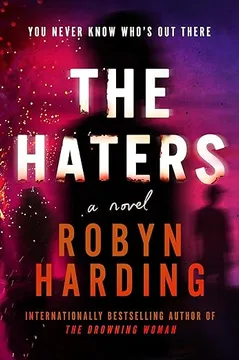


Plot Summary
A Launch Night Wound
Camryn Lane, a divorced Vancouver mother and high school counselor, celebrates the publication of her first novel, Burnt Orchid, with friends, colleagues, and her teenage daughter Liza cheering her on from afar.
Just before Camryn takes the stage, an email from a reader named Ingrid Wandry accuses her of stealing troubled students' experiences for her fiction. The attack turns her proudest evening sour, though she delivers her speech and tries to hold on to the room's warmth.
The next day, she rereads the accusation, worries that her counseling work might have seeped into the book, then convinces herself she protected her students' privacy. At a poorly attended bookstore signing, she manages only two sales and leaves feeling exposed, with no idea that the email is the beginning.
Camryn's first wound is not simply a bad review. It targets the ethical identity she depends on at work, making her wonder whether the novel she wrote as an act of self-fulfillment has violated the young people she serves. The timing matters: a public celebration gives the accusation an audience before she has developed any distance from her book. Her attempt to dismiss it restores composure, not security. The empty signing then offers a smaller but concrete humiliation, teaching her that publication brings visibility without guaranteeing the recognition she has spent years seeking.
Orchid's First Knife
Inside Camryn's novel, Orchid Chambers grows up with a mother hollowed by disappointment and a stepfather, Trevor, who begins sexually abusing her. When Orchid tells her mother, Lorna blames her clothes rather than protecting her. Orchid understands that the next assault is coming, takes a butcher knife from the kitchen, and stabs Trevor when he enters her room.
The killing sends her to juvenile detention, where a GED teacher insists she may still build an ordinary life. But at eighteen, released without family or a home, Orchid has nowhere safe to go. This past gives Burnt Orchid its central moral problem: a child driven to violence by adults who have failed her, and a young woman forced to decide what survival will cost.
Orchid's violence begins after the adults who should have protected her make protection impossible. The novel does not erase the killing or make it virtuous; it locates the act inside a system of neglect that leaves a child to solve an adult threat with the only power she can reach. That distinction shapes Camryn's fictional interest in culpability: trauma explains a choice without automatically absolving it. The first story within the story therefore carries an uncomfortable question into Camryn's own life. Who gets to tell a vulnerable person's story, and what responsibilities follow when suffering becomes material for an audience?
Two Girls Find Shelter
On the day Orchid leaves detention, Tash and her boyfriend Jerome take her to a trailer where Jerome tries to rape fourteen-year-old Lucy. Orchid threatens him with a broken vodka bottle, then leads Lucy away, promising protection without knowing where they will sleep.
A bag Lucy took from the trailer contains cocaine, which Orchid sells to Mal, a powerful skid-row dealer. Mal becomes both mentor and employer, and Orchid learns to survive by handling drug deliveries. She and Lucy also buy discarded prescription medicines from a corrupt pharmacist and resell them to people who cannot afford care.
The work earns them a shabby studio and brings another runaway, Tracey, into their household. Orchid has made a home from scraps, but her protection depends on turning vulnerable girls into workers in her growing operation.
Orchid's promise to Lucy is sincere, yet it immediately acquires a cost. She gives the younger girl safety by building a small institution inside a violent world, then reproduces that world's bargains through drug dealing and illegal medicine sales. Her care is neither a simple virtue nor a disguise for cruelty. It is practical, compromised, and shaped by the absence of legitimate shelter. The group resembles a family because it offers belonging and shared purpose, but its hierarchy also makes Orchid powerful over the girls she claims to protect. The tension between refuge and control becomes the novel's most revealing portrait of survival.
The Reviews Turn
Camryn checks the review site despite promising her publicist, Olivia, that she will stay offline. The original accusation has become a public campaign, with anonymous accounts calling her a child exploiter and urging readers to boycott Burnt Orchid.
Her friend Janine Kang, a former news anchor who has survived years of online stalking, warns her not to engage. Olivia removes the most abusive reviews, but the platform's notifications provoke a larger backlash, and fake accounts multiply faster than the publisher can respond. Camryn searches for Ingrid and finds a nearly blank profile using photographs of a smiling blonde woman.
Meanwhile, a Miami book festival offers Camryn a panel and a glimpse of the professional life she has dreamed about. Theo, her younger boyfriend, wants to join her, but she refuses, widening a disagreement about how committed they should become.
The platform makes accusation look like evidence through repetition. Readers encounter a swelling score and a chorus of identical claims, not the private uncertainty Camryn initially felt. Her publisher's limited intervention unintentionally supplies the crowd with a fresh grievance, showing how moderation can be recast as proof of censorship. Camryn's decision to investigate Ingrid is understandable but consequential: she moves from protecting her attention to studying a stranger's online footprint. The festival invitation offers a counterweight, yet Theo's disappointment reveals that Camryn's new career is already changing the expectations inside her relationship. Public ambition and private loyalty begin competing for space.
Miami's Uninvited Guest
At the Miami festival, Camryn arrives to find an unsigned bouquet in her hotel room. She assumes it came from Theo and leaves him a grateful message, but he later tells her he sent nothing. On a panel, an audience member challenges Camryn's work as a counselor and suggests her novel exploits teenagers.
Fellow writers Zoe Carpenter and Timothy Rush support her afterward, but another anonymous gesture, a drink sent by a blonde woman who disappears, makes the attention feel less harmless. That night, blocked calls wake Camryn repeatedly; by morning her voicemail holds forty-six silent messages.
She returns home shaken, then keeps the incidents from Olivia because the festival itself seemed successful. Olivia reports that review removals have provoked a fresh wave of attacks, leaving Camryn isolated with a fear she cannot yet prove.
Miami converts the online accusation into a bodily experience. The unknown flowers occupy Camryn's private room, the audience member puts her professional ethics onstage, and the silent calls invade the hours when she is least able to defend herself. None of these clues proves a single persecutor is responsible, which is precisely why they unsettle her: ordinary gestures become unreadable. Camryn's choice to withhold the events from her publicist also reflects her fear of becoming a problem for the team that supports her career. She returns with both recognition and dread, unable to separate the festival's genuine welcome from the possibility of surveillance.
Abby's Empty Chair
At Maple Heights Secondary, Camryn counsels Fiona Carmichael after Fiona shares a video of Abby Lester overdosing at a sleepover. Abby's friends filmed her instead of getting help, and Fiona offers little remorse. When Camryn visits Abby's home with schoolwork, Abby panics at the sight of her and demands that she leave.
The vice principal explains that students have begun reporting fears that Camryn will use their private troubles in another book. At home, Camryn finds a string of repeated messages from Liza's boyfriend, Wyatt, on her daughter's laptop and worries that he is controlling her.
Liza explains that the messages were a joke, but also admits she may defer university to travel. Her father Adrian and stepmother Tori support the plan, leaving Camryn to question whether her concern is maternal instinct or anxiety spilling into family life.
Abby's refusal to see Camryn is a crucial rupture because it turns Camryn's professional role into a source of fear. Camryn recognizes that Abby has been traumatized, yet she cannot know whether the rejection stems from the school, the book, or something Abby is concealing. The uncertainty echoes the online accusations and makes her increasingly eager to interpret clues. At home, the repeated texts and Liza's possible gap year give that vigilance an intimate target. The episode shows how care can become surveillance when fear goes unchecked: Camryn wants to protect her daughter, but her need for certainty risks overriding Liza's privacy and independence.
The False Affair Email
After Camryn asks her boyfriend Theo to speak with her friend Martha's withdrawn husband, Felix, Felix attacks Theo and accuses him of sleeping with Martha. A forged email from Camryn's old account had planted the affair claim and urged Felix to confront his wife.
Camryn tells Martha that someone hacked her account, then apologizes to Felix for the damage the message caused. She realizes the attacks have moved beyond reviews and may be aimed at her relationships. With help from Janine's advice, Camryn enlarges the fake Ingrid profile photographs and spots a veterinary clinic logo and fragments of a Washington address.
Her search leads to Megan Prince, a veterinary technician in Bellevue. Camryn also learns from writer Chloe Winston how online campaigns can spill into physical life, but Chloe's warning not to engage cannot quiet Camryn's need to identify her tormentor.
The forged email is effective because it does not invent an implausible new conflict. It weaponizes real vulnerabilities: Theo and Felix do not know each other well, and Camryn's friendship with Martha is central to her life. A fabricated message becomes socially credible before anyone verifies its source. Camryn's investigation has a similar double edge. She is gathering evidence after institutions have failed to help, but she is also crossing from online research toward an unknown person's home. Chloe's account gives her a vocabulary for the danger without giving her a reliable solution, intensifying the gap between knowing the risk and tolerating inaction.
Megan's Front Lawn
Camryn drives to Bellevue and waits outside the clinic, then follows Megan Prince home when she misses her chance to approach her at work. Megan says she is not Ingrid and has never heard of Camryn's book.
She shows Camryn that the photographs belong to her private Instagram account, which means the impersonator is likely among her followers. Megan's nephew watches from the house and records their confrontation as Camryn, frightened and angry, raises her voice and demands help. Back in Vancouver, Camryn learns that the footage has been edited into a TikTok video.
Megan presents herself as an innocent reviewer targeted by an unstable author, and the clip draws hundreds of thousands of views. Camryn's attempt to make a human connection has handed the online crowd its most damaging image yet.
Camryn's error is not that she wants to speak to the person whose image appears in the account; it is that fear persuades her she can control the encounter by choosing its setting. Megan's home is public enough to feel safe to Camryn, but private enough to make Megan feel threatened. The video then strips away the sequence that produced the confrontation and preserves only the visible anger. This is a reversal of authorship: Camryn's attempt to supply context becomes material for someone else's story about her. The scene exposes how recorded images can make a partial truth feel complete.
A Life Becomes a Hashtag
After the video goes viral, Camryn's publisher prepares a formal apology and tells her to leave social media. She posts it, then sees her daughter Liza humiliated by classmates and learns Liza does not want her at graduation.
At a family dinner, Camryn accuses Wyatt of steering Liza away from university; Liza storms out, and the relationship between mother and daughter breaks further. Camryn later defies her publicist's advice and responds to online attacks, but her defense is twisted into fresh accusations that she is a predator.
At school, complaints arrive through the anonymous reporting portal, and the principal sends Camryn home. She suspects Fiona and soccer player Hugo after seeing them together, while death threats, a sexualized image of a child, doxxing, paint on her car, and shampoo spread through her bathroom make the harassment physical.
Camryn's attempt to regain control repeatedly transfers the cost to people with less power in the moment: Liza becomes the target of classmates' attention, while students and parents question whether Camryn can counsel them. The story does not present the backlash as fair simply because Camryn made a reckless choice. Rather, it distinguishes accountability for confronting Megan from the mob's appetite for allegations without evidence. Her compulsive reading and posting become a form of self-injury, briefly offering action while feeding the spectacle. The vandalism and threats then collapse the distance between public reputation and personal safety, leaving Camryn unable to tell where rumor ends and danger begins.
Orchid Leaves the Fire
In Burnt Orchid's 1998 storyline, Orchid refuses to let the young Star carry out a paid arson meant to kill pharmacist Allan's disabled wife, Carol. Orchid follows Star to the house and tries to stop her, but Star throws water onto burning grease, sending flames across the kitchen.
Orchid drags the burning girl outside, then reenters the smoke-filled house to call emergency services and rescue Carol from her bedroom. She leaves before police arrive, badly burned herself, and boards a bus with no settled destination.
In Camryn's novel, this is the point when Orchid abandons her street operation rather than return to the life she has built. Years later, in Chicago, she studies social work, meets legal-aid lawyer Michael Carder, and begins a new identity that cannot fully erase the people she left behind.
Orchid's decisive change is not produced by punishment or a sudden discovery of innocence. She acts compassionately when compassion threatens her safety, rescuing Carol even though doing so exposes her to the police and abandons Star. The burns on Orchid's hands make the cost visible, while also suggesting that the old life cannot be shed without damage. Her later education and meeting with Michael give her a route into another social world, not a clean slate. This embedded story matters because its grease-fire mechanics will become a literal template for someone in Camryn's present, turning fiction into both an ethical burden and a plot instrument.
The Hacker Never Arrives
With her career in jeopardy and her address exposed, Camryn hires cyber-security specialist Shane Miller to trace the harassment. She borrows the fee from her former mother-in-law, Marion, then waits at their agreed cafe while Shane fails to appear and keeps her laptop.
Constable Kash Gill later calls with news that Shane has died in a house fire. Investigators suspect arson because the fire began in the kitchen and Shane was found in bed. Camryn remembers the grease-fire murder in her novel and tells police about it, though she does not yet understand the connection.
Around the same time, Liza returns briefly to collect makeup with Fiona Carmichael, whose presence alarms Camryn. After telling Liza about her secret attendance at Abby's party, Camryn meets Abby's mother Rebecca and learns Abby has a fresh burn on her arm.
The sequence turns Camryn's search for certainty into a new source of danger. Paying Shane is an act of desperation, but it also leaves her dependent on a stranger whose methods she cannot verify. His death makes the private investigation part of a homicide inquiry, while the resemblance to Camryn's fictional fire tempts the police and Camryn to connect events before the evidence is clear. Liza's disclosures shift the emotional stakes again: Camryn learns that her daughter was present during Abby's crisis, and Abby's unexplained injury supplies a concrete clue. The mystery is no longer only who attacked Camryn, but what the teenagers did to one another.
Abby Names the Fire
Camryn learns from Rebecca that Abby's arm was burned at a recent beach party, then spots Abby hiding near the cafe. In the alley, Abby admits she followed Shane home and entered his house to destroy the laptop containing evidence against her.
She set a pan alight, copying the fire sequence from Burnt Orchid, but the blaze spread; she escaped with a burned arm and believed Shane would wake. Rebecca hears the confession and calls police. Investigators later establish that Abby, traumatized by the overdose and manipulated by Fiona, created the false Ingrid accounts, hacked Camryn's email, posted abuse, and exposed her address.
Fiona supplied Megan's photographs and personal information; she and Hugo also staged several physical pranks. The school learns that Fiona and Hugo had brought drugs to Abby's party, while Liza and Wyatt arrived later and failed to seek help.
The revelation joins two kinds of harm without making them equivalent. Abby's harassment began as retaliation shaped by shame, false information, and trauma, but it culminated in a death that cannot be undone. Fiona's manipulation explains how the campaign acquired its target and personal details; it does not make Abby's choices harmless. The novel also refuses an easy confession scene in which the victim becomes a villain and the case closes neatly. Camryn catches Abby during a moment of panic, and Rebecca's call to police restores a boundary that Camryn herself cannot set. Fiction has become a script, but its author is not responsible for every reader's actions.
A Smaller, Truer Beginning
The investigation leaves Abby with a mental-disorder finding and a short stay in a forensic psychiatric facility; the Lesters move away, while Fiona and Hugo face social consequences but evade criminal charges for the overdose.
Camryn's publisher refuses her next novel, and she ends her relationship with Theo, acknowledging that their needs and temperaments do not fit. She and Liza begin repairing their bond as Liza confronts guilt over staying silent at Abby's party. Camryn returns to counseling at another school and tells herself she is done writing.
In the epilogue, she helps a thirteen-year-old who ranked classmates by appearance, recognizing the insecurity beneath the cruelty. Liza postpones Australia and considers a family visit to France. Camryn remains a writer in private, but for now she chooses presence over publication.
Resolution arrives through changed priorities rather than restored circumstances. Camryn does not recover the book deal, the public reputation, or the relationship she had before the attacks. Instead, she returns to the work that first gave her a vocation and sees a new student with more patience than she could offer Fiona. Her attention to the student's insecurity is not naïve forgiveness; it is an effort to intervene before cruelty hardens into identity. Liza's tentative plans mark a modest reopening of the future, grounded in family rather than pressure to resume the path she abandoned. Camryn's final commitment to writing privately protects the desire without confusing visibility with proof of worth.
Epilogue
At a new school, Camryn counsels Mikayla Shaw, a thirteen-year-old who ranked her classmates by appearance. She recognizes that the cruelty may be covering insecurity and resolves to keep working with the girl rather than write her off as another Fiona.
At home, Liza postpones her Australia trip, saves money, and begins planning a visit to her aunt in France. Camryn is glad to see her daughter reaching toward the world again. She still intends to write another novel someday, but privately and under a pseudonym. The book she may one day write has a title: The Haters.
The epilogue refuses the clean fantasy that healing means returning to the exact life Camryn had before publication. She keeps her counseling job, maintains a tentative bond with Liza, and protects writing as a future possibility rather than demanding that it rescue her immediately. Mikayla's case echoes Fiona's cruelty, but Camryn now looks for the insecurity beneath a harmful act without pretending that the act does not hurt others. Her plan to publish under a pseudonym registers both caution and desire: she has learned the cost of public exposure, yet refuses to let the crowd claim her voice permanently.
Analysis
The novel treats public shaming as a system of narrative production. Camryn writes a novel from a desire to be heard, then finds that strangers, platforms, and a clipped video write a harsher story about her. The distinction between what happened and what the audience believes happened becomes increasingly unstable: repeated ratings look like consensus, an edited recording looks like a complete encounter, and allegations acquire authority from their circulation rather than their evidence. This does not absolve Camryn of her decision to confront Megan. The book keeps her responsible for a reckless act while showing how disproportionate retaliation can turn accountability into spectacle.
The parallel story of Orchid deepens the question of whether explanation is the same as excuse. Orchid is shaped by abuse and poverty, but she also exercises power over the girls who depend on her. Abby, by contrast, is both a victim of cruelty and a person whose actions lead to a death. Fiona's manipulation and the other students' fear help explain how the harm gathered momentum, yet no single explanation makes the consequences disappear. The novel's moral attention moves among people rather than settling on a simple villain and innocent audience.
Camryn's deepest conflict is between visibility and care. Writing offers her a self beyond marriage and motherhood, but the public identity attached to the book begins to injure her daughter and threaten the students she serves. Her eventual turn away from publication is not a rejection of creativity so much as a refusal to sacrifice her remaining relationships to the demand that she defend herself before strangers. The ending values modest forms of repair: listening again at a new school, allowing Liza time, and keeping the possibility of writing alive without making applause its measure.
Review Summary
The Haters is a psychological thriller that has garnered mostly positive reviews, averaging 3.58 out of 5. Readers praise its fast-paced, binge-worthy plot exploring online trolling and social media harassment through debut author Camryn Lane's spiraling life. Many loved the book-within-a-book concept featuring excerpts from Camryn's novel Burnt Orchid. Common criticisms include Camryn's questionable decision-making, underdeveloped secondary characters, and an anticlimactic ending. Despite mixed feelings about the protagonist, most reviewers found the story gripping, relevant, and twisty enough to keep pages turning.
People Also Read




Characters
Camryn Lane
Counselor turned novelistCamryn is a forty-four-year-old high school counselor, a divorced mother, and a debut novelist whose fiction gives shape to difficult lives. She is observant and compassionate, but her professional confidence does not protect her from the hunger for recognition she has carried since childhood. Years of setting aside her writing make publication feel like more than a career milestone; it becomes evidence that a neglected part of herself still matters. As a parent, she tries to balance protection with independence, and as a counselor she believes young people deserve careful listening. Her strengths become strained when fear makes her read uncertain clues as proof. Camryn's central tension is between wanting to be seen and needing to protect the people who share her life.
Liza Lane
Camryn's independent daughterLiza is Camryn and Adrian's seventeen-year-old daughter, a talented young makeup artist approaching graduation and a major transition. She is affectionate with Camryn but increasingly protective of her privacy and her own decisions. Her close relationship with her mother gives their conflicts unusual force: Liza's anger is not indifference but a demand to be considered as a person with her own risks, loyalties, and embarrassment. She is drawn to social belonging and to the freedom promised by travel, even when those desires complicate her judgment. Liza's story asks how a young person can become independent while still needing parental care, and how a parent can remain close without turning concern into control.
Orchid Chambers
Burnt Orchid's survivorOrchid is the central character of Camryn's novel, a girl whose life is shaped by abuse, abandonment, and the scarcity of safe choices. She is strategic, watchful, and capable of both tenderness and ruthless calculation. Her instinct to protect younger girls gives her purpose, but it also draws her into a criminal world where care and control can become difficult to distinguish. Orchid does not imagine herself as a conventional hero; she measures choices by whether they keep people alive and what they may cost later. Her story lets Camryn explore how a person can change without pretending the past has vanished, and why survival sometimes looks morally compromised from the outside.
Abby Lester
A student in crisisAbby is a gifted, academically ambitious student whose interest in robotics and science sets her apart from the more socially powerful students around her. She wants belonging, but the desire to be accepted leaves her exposed to people who treat vulnerability as entertainment. After a traumatic party, she becomes withdrawn and wary of the school adults who once supported her. Abby is more than the event that makes her a victim: she has intelligence, shame, fear, and a capacity for choices that carry serious consequences. Her role complicates the novel's concern with harm by showing how a person can be injured by others and still cause new injury.
Fiona Carmichael
A polished school queenFiona is a high-achieving, socially influential student whose attractive manners make adults more likely to underestimate her. She understands how reputation works among teenagers and uses confidence to avoid appearing vulnerable or accountable. Camryn sees a troubling gap between Fiona's polished public image and the cruelty she displays toward less powerful classmates. Fiona's influence depends on other students wanting her approval and fearing the cost of opposing her. She represents a particular kind of adolescent power: not loud rebellion, but the ability to set the group's rules while seeming perfectly respectable to people outside it.
Theo
Camryn's younger partnerTheo is a thirty-five-year-old outdoor-adventure business owner who has been dating Camryn for nearly two years. Rugged, generous, and accustomed to active work, he differs from Camryn's quieter, book-centered habits. He cares about her and wants the relationship to deepen, while Camryn is protective of the independence she has reclaimed after an unhappy marriage. Their mismatch is not simply age or taste: they carry different expectations about commitment, reassurance, and what it means to be included in a partner's life. Theo's support is real, but his frustration sometimes makes him center his own hurt at moments when Camryn needs room to act.
Martha
Camryn's oldest confidanteMartha has been Camryn's closest friend since high school and shares a busy life with her husband, Felix, at their neighborhood cafe. Warm, sociable, and comfortable in the spotlight, she is often the person who turns Camryn's private achievements into celebrations. Beneath that exuberance is a woman who expects mutual loyalty and notices when her closest friend disappears into work or crisis. Martha's relationship with Camryn is intimate enough to survive disagreements, but that closeness also makes her sensitive to threats against her marriage and to changes in Camryn's romantic life. She represents friendship as a daily practice of attention, not simply an affectionate history.
Adrian Fogler
Liza's father and Camryn's exAdrian is Camryn's ex-husband and Liza's father. He is easygoing and comfortable with the security his wealthy family provides, while Camryn remembers a marriage in which she carried more than her share of domestic responsibility. Their relationship has lost its romantic force but retains familiarity and a shared commitment to their daughter. Adrian's parenting style is more permissive than Camryn's, and he often acts as a calmer counterweight when she becomes anxious. He is not always emotionally perceptive, but he knows Liza needs time and tries to keep parental conflict from becoming another burden.
Tori
Adrian's polished new wifeTori is Adrian's second wife, a successful home stager and mother to Savannah. Stylish, disciplined, and socially confident, she has helped create a relaxed household where teenagers are welcome. Her approach contrasts sharply with Camryn's more cautious parenting, particularly around relationships and independence. Tori wants the family she has built to feel harmonious, but her composure can make it hard for Camryn to know what she truly thinks. She is a meaningful presence in Liza's life, though her role as stepmother also exposes the quiet competition and insecurity that can hide beneath apparently cooperative parenting.
Megan Prince
A veterinary technicianMegan works at a feline veterinary clinic in Bellevue and keeps a private Instagram account filled with ordinary photographs of her cat and daily life. She has no established connection to Camryn when the two women meet, and Camryn's arrival at her home frightens her. Megan is an ordinary person suddenly pulled into a public controversy because someone has copied her images. Her discomfort illustrates how quickly a person who is not seeking attention can become a character in someone else's online story.
Lucy
Orchid's first street allyLucy is a fourteen-year-old runaway Orchid finds in danger at Tash's trailer. Quiet and watchful, she has already learned to endure more than her age should require. She accepts Orchid's offer of protection with immediate trust, and the two girls become partners in navigating the streets. Lucy grows into a capable aide within Orchid's small network, combining practical intelligence with deep loyalty. Her character reveals both the tenderness in Orchid's protective instincts and the cost of becoming dependent on a person whose own survival strategy relies on crime.
Mal
Skid-row power brokerMal is a forceful dealer and leader in the skid-row community Orchid enters after leaving detention. He is ruthless, perceptive, and pragmatic, able to recognize useful ability in people other adults dismiss. His connection with Orchid is based on a shared understanding of danger rather than romance or conventional affection. Mal teaches her how power operates on the street, while also expecting a share of any enterprise she builds. He offers opportunity, but never without making clear that survival in his world comes with obligations.
Star
A vulnerable new recruitStar is a sixteen-year-old girl who comes to Orchid seeking help for a frightening illness. Small, young, and more determined than her appearance suggests, she wants a way to survive that does not depend on sex work. Orchid sees her courage and recruits her for errands and deliveries, while trying to keep her away from the most dangerous assignments. Star's impatience and desire to prove herself create friction with the protective rules Orchid has built around her group.
Fiona's sidekick
A conflicted classmateLily Mathers is part of Fiona's social circle and often follows the group's lead. She is stylish and guarded, but less certain and less socially forceful than Fiona. Camryn notices flashes of conscience in her, especially when Abby's treatment is discussed. Lily's silence reflects the pressure to preserve one's place among powerful peers, even when she understands that someone has been harmed.
Hugo Duncan
A soccer-playing classmateHugo is a teenage soccer player connected to Wyatt's team and to Fiona's social orbit. He is physically confident and difficult for Camryn to read, in part because she encounters him first at a distance and then through a recording. His presence links several groups of young people whose relationships Camryn does not fully understand. He also represents the limits of her perspective: a brief sighting can feel like proof when she is already frightened.
Janine Kang
A veteran media friendJanine is Camryn's friend and Liza's best friend's mother, a former television journalist who understands the rewards and dangers of public visibility. Her own experience with online harassment makes her wary of advice that sounds easy from a distance. She urges Camryn to document incidents and avoid engaging with attackers, offering practical counsel shaped by painful experience. Janine is one of the few people who recognizes that online abuse can cross into ordinary life.
Holly
Camryn's literary agentHolly is Camryn's agent and a friend formed through the work of preparing Burnt Orchid for publication. She is encouraging, commercially alert, and invested in Camryn's next project, even as she has to think about the realities of the publishing business. Holly helps Camryn navigate professional decisions but cannot shield her from every consequence. Their relationship joins personal affection to a working bond, making each business setback feel more intimate.
Constable Kash Gill
The school liaison officerKash is a police officer assigned to Maple Heights Secondary, where he works with administrators and students on conduct that may cross legal lines. He is firm without being needlessly punitive and shares a cooperative professional relationship with Camryn. Kash understands the difficulties of investigating online harassment, but his access to the school does not give him unlimited authority. His presence connects the students' crisis with the limits of institutional intervention.
Jody Edwards
A published writing mentorJody is an established romance novelist Camryn first meets at a writing workshop. She understands publishing's practical demands and the sting of public criticism, and she shares advice about the business with other writers. Her confident experience gives Camryn a model of how a writer might continue after rejection, though Jody's knowledge of online conversations can sometimes leave Camryn unsure what to trust.
Rebecca Lester
Abby's protective motherRebecca is Abby's mother, a healthcare professional whose home offers her daughter a calm refuge after a traumatic school incident. She and her husband Craig are attentive and deeply worried about Abby's isolation. Rebecca is willing to protect her daughter's boundaries, even when that means keeping school staff at a distance. Her perspective keeps Abby's family consequences visible in a story otherwise dominated by Camryn's fear and career.
Chloe Winston
A writer harmed by trollsChloe is a fantasy novelist whose earlier experience of online abuse gives Camryn a firsthand warning about public retaliation. She speaks candidly about the limits of fighting trolls and the lasting psychological effects of being targeted. Her account helps Camryn understand the danger, though it cannot tell her exactly what to do.
Shane Miller
A cyber-security specialistShane is a technically gifted specialist recommended to Camryn through Janine. He offers to trace the source of her online harassment, an option Camryn pursues after other avenues fail. His work operates in a gray area that makes Camryn uneasy even as she becomes more desperate for answers.
Plot Devices
Burnt Orchid
Fiction becomes a blueprintCamryn's debut novel is both her greatest accomplishment and the focus of the campaign against her. Its story follows Orchid, a girl pushed from abuse into street life and criminal survival. Camryn insists that the fictional teenagers and their troubles are not portraits of her students, but accusations about the book become the excuse for public outrage. Later, a crucial fire sequence in Orchid's story is copied in real life. The novel therefore operates on two levels: it is the work Camryn wants readers to judge, and a narrative template that influences actions far beyond her control.
Anonymous review platforms
Outrage multiplies without proofThe review site allows readers to rate books and comment with limited identity verification. A hostile accusation gains traction, then fake accounts and sympathetic users drive the rating down. Attempts to remove personal attacks trigger a complaint about censorship, giving the campaign a new grievance. The platform makes it difficult for Camryn to distinguish genuine readers from coordinated harassment, while the visible score allows strangers to treat repetition as confirmation. Online reviews become both a professional threat and the public stage on which the book's ethics are debated.
The Ingrid Wandry profile
A borrowed face hides the attackerA false identity sends the first accusatory email and posts attacks under the name Ingrid Wandry. The profile uses photographs taken from Megan Prince's private Instagram account, misleading Camryn into searching for a woman who does not exist under that name. The stolen pictures provide clues to Megan's workplace, but not to the person who copied them. This disguise lets the campaign appear to come from a single outraged reader while concealing the teenagers who have access to the photographs and information about Camryn's relationships.
The school reporting portal
Anonymous warnings become weaponsMaple Heights uses an encrypted reporting tool so students can alert administrators to bullying, assault, self-harm, and threats. The system initially helps staff learn about the video of Abby's overdose. Later, anonymous complaints about Camryn's conduct and her novel arrive through the same channel. Because the portal protects students' identities, administrators must take the allegations seriously while struggling to judge their credibility. Its dual role reflects the story's central problem: a tool built to help vulnerable people can also be used to intimidate and mislead.
The physical pranks
Digital hate enters the homeFlowers, silent calls, pizzas, threatening texts, vandalized property, and shampoo spread through Camryn's bathroom turn an online campaign into a series of physical intrusions. Each incident is ambiguous enough to invite dismissal, but together they make Camryn feel watched and unsafe. The pranks also create clues: the people behind them know her relationships, routines, and address. Their apparent childishness makes the escalation more unsettling, since the perpetrators treat consequences to Camryn and those around her as entertainment.

Download PDF
Download EPUB
.epub digital book format is ideal for reading ebooks on phones, tablets, and e-readers.








