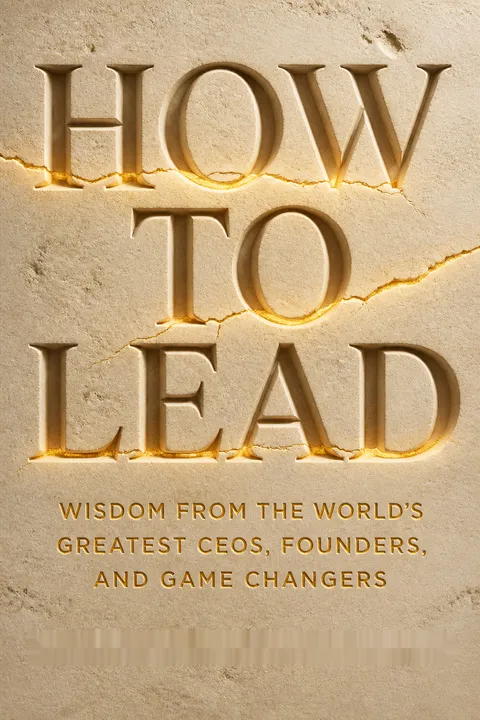


Key Takeaways
Do not mistake early achievement for a ceiling on later leadership
Leadership can arrive late. Rubenstein divides life into three broad phases: education and training, building a career, and living with the results. Early standouts do not always become lasting leaders, while people who lacked money, opportunity, or direction may grow into responsibility later. The timeline is a useful counter to the idea that a young person’s status predicts a whole life, not a rule that everyone matures on schedule.
A career can change course. Rubenstein was not a standout student or athlete. He moved from law to the Carter White House, lost that job when Carter lost reelection, and found that ordinary legal practice did not suit him. At thirty-seven, he helped launch Carlyle despite having no Wall Street experience. Chance introductions, skilled partners, and early successful deals mattered alongside his ambition.
What's striking is the book's refusal to treat leadership as a prize awarded to the most impressive teenager. That view accords with developmental thinking: abilities and motivations can change as people encounter new roles, mentors, and constraints. Rubenstein's path also makes luck visible rather than dressing it up as destiny. The three-phase model is best used to loosen premature judgments, not to impose a universal timetable. People face different economic pressures, caregiving duties, and opportunities, so a delayed career turn may reflect structural barriers as much as personal growth.
Build around customers, then let long-term evidence outrank daily applause
Start with the user. Bezos says Amazon's advantage came from concentrating on customers rather than competitors. The principle requires naming whose needs matter: at the Washington Post, he treated readers, not advertisers, as the core customer. Amazon began with books because the web could offer millions of titles, far beyond the selection of a physical bookstore. Customer requests then helped the company expand into products such as windshield wiper blades.
Ignore noisy scorekeeping. During the dot-com collapse, Amazon's stock fell from about $113 to $6 in under a year. Bezos says internal measures, including customers and profit per unit, were improving. The company had enough capital to keep operating while the market panicked. His point is not that investors never matter, but that daily price movements should not replace evidence about whether the business is getting stronger.
This is a practical distinction between a signal and a score. Customers reveal whether a service solves a real problem; a share price registers expectations, liquidity, and emotion as well as operating performance. Bezos's example shows why leaders need measures close to the work, not just public applause. Still, customer focus is not automatically virtuous: customers can want things that are harmful, and a company can serve users while imposing costs on workers or communities. Long horizons help only when leaders also ask who bears those costs.
Make talented people more capable, not more obedient
Leadership enables action. Colin Powell describes a leader's work as clarifying the mission, explaining it throughout the organization, and making sure people have what they need to do their jobs. Richard Branson emphasizes listening, delegation, and hiring people with stronger skills. Ken Griffin learned that a global trading firm could not depend on one person making every call: nearly all of Citadel's decisions are made by colleagues closest to the information.
Trust requires structure. Powell's approach begins with purpose and then gives responsibility to the people doing the work. Griffin's experience makes the practical limit clear: as Citadel traded around the clock across markets, he had to rely on skilled colleagues rather than personally supervise every decision. Delegation is not abandonment. It means choosing capable people, giving them context, and trusting their judgment while remaining accountable for the overall mission.
The common thread is not that leaders should disappear, but that authority should improve the quality of other people's decisions. This resembles distributed problem-solving in complex organizations, where local knowledge often outruns what a central office can see. Clear purpose helps local choices cohere without requiring constant permission. The model does depend on competence and psychological safety. When staff fear punishment for surfacing bad news, delegation becomes a way for leaders to avoid responsibility rather than a way to use expertise.
Master one craft before broadening your authority
Earn credibility first. Rubenstein advises concentrating on one skill or subject until colleagues recognize genuine expertise, then widening the scope. At Carlyle, he focused on raising capital for the firm's investments. Once that ability was established, he could take on other needs. Eric Schmidt offers a similar sequence: become unusually good at something, then build the broader skills required to manage people and strategy.
Change direction when evidence demands it. Bezos entered Princeton hoping to become a theoretical physicist. After seeing how a gifted student solved a problem by recognizing its similarity to earlier work, he concluded that physics was not his best field and shifted to electrical engineering and computer science. The lesson is not to cling to an early identity. Specialization builds a base, but sound judgment includes recognizing when another craft fits better.
Expertise supplies both a useful body of knowledge and a basis for trust. It can prevent leaders from relying on status alone when making technical decisions. But specialization can also become a trap if the expert mistakes past mastery for permanent authority. The strongest version of this advice is sequential rather than rigid: develop depth, then learn how adjacent disciplines connect, while staying open to evidence that the original field is no longer the right fit.
Treat strategy as a hypothesis that reality must keep testing
Strategy has four jobs. David Petraeus describes strategic leadership as getting the central ideas right, communicating them across the organization, overseeing execution, and revising them in light of results. This is more than announcing a vision. It includes watching what happens on the ground and changing course when assumptions fail.
The Iraq experience shows the stakes. Petraeus describes the decision to disband the Iraqi army and exclude Ba'ath Party members from the new government as deeply damaging, because it left many people with incentives to oppose the new order. During the 2007 Surge, the strategy shifted from concentrating forces on large bases to living among communities and seeking local cooperation. Petraeus reports that violence fell about 85 percent over eighteen months. His account presents both strategic adaptation and the cost of decisions made without adequate attention to consequences.
This framework makes strategy a repeated cycle of interpretation, communication, action, and revision, rather than a plan laminated at the start. That is especially valuable where conditions are unstable and feedback arrives unevenly. The military example also warns that implementation is not a neutral technical stage: policy choices distribute risk and create winners, losers, and opposition. Reported improvements should not be mistaken for proof that every element of a campaign worked or that its long-term effects were settled.
Protect trust by sharing credit and owning costly mistakes
Reputation is operational. Rubenstein argues that integrity supports leadership because people need reasons to trust the person directing them. He recalls a senior lawyer's warning that ethical shortcuts can destroy a reputation built over years. The practical test appears in both success and failure: share recognition when a team succeeds, and do not hide from responsibility when judgment fails.
Respect can survive disagreement. Ruth Bader Ginsburg and Antonin Scalia held sharply different legal views, yet maintained a friendship, helped each other improve their writing, and attended opera together. Colin Powell offers a harder example: he presented a case at the United Nations for Iraqi weapons of mass destruction based on intelligence that proved wrong. He later described feeling mortified. Trust is not never being wrong; it depends on candor about what went wrong and respect for others despite disagreement.
Trust is a form of organizational infrastructure: it makes candid disagreement and correction possible before small errors become institutional crises. Ginsburg and Scalia show that intellectual conflict need not become personal contempt. Powell's experience adds an important limit to personal integrity: conscientious leaders can still transmit faulty evidence, especially when institutions share the same assumptions. Accountability therefore requires not only humility from individuals but procedures that invite challenge and make uncertainty visible.
Reserve your best energy for decisions only you can make
Decision quality needs protection. Bezos says senior executives are paid to make a small number of high-quality decisions, not thousands of hurried ones. He protects eight hours of sleep, starts meetings at ten in the morning, and schedules difficult discussions before lunch. He also thinks several years ahead, arguing that a quarterly result often reflects decisions made long before the quarter began.
Work hard without worshipping exhaustion. Rubenstein credits long hours with helping him compete, but also says demanding work is healthier when balanced by interests outside the job. Warren Buffett's career provides a different version of the same principle: he has stayed with work he enjoys, rather than treating income as the only measure of success. The useful question is not simply how much time a leader puts in, but whether that time supports sound judgment and a sustainable life.
The emphasis on decision quality is a useful corrective to leadership cultures that confuse busyness with contribution. Sleep, protected thinking time, and long planning horizons can help leaders avoid reacting to every new demand as if it were equally important. Yet the ability to reserve time is not distributed equally: frontline workers and caregivers often have less control over schedules than executives. Good leadership protects attention at the top while also designing work so that the people carrying out the plan are not simply asked to absorb endless urgency.
Keep learning, because yesterday's expertise can become tomorrow's blind spot
Curiosity sustains competence. IBM's Ginni Rometty says she looks for people who want to learn, not only those who already know a particular task. She credits curiosity with helping her move through technical, sales, strategy, and leadership roles as IBM repeatedly changed its business. Bill Gates likewise describes continuing to take courses after leaving Harvard, because he enjoys being a student.
Learning can redirect a career. Branson describes life as an ongoing education through listening, travel, and new ventures. Bezos's move from physics toward computing shows curiosity paired with honest self-assessment: he noticed where his abilities were strongest and changed fields. Across these stories, learning is not collecting facts for their own sake. It is staying informed enough to notice when an old explanation, product, or skill no longer fits the problem.
Curiosity is most useful when it is paired with revision. A leader who asks questions but protects every existing belief is performing openness, not practicing it. Rometty's emphasis on learning also suggests a hiring principle: adaptability can matter more than a snapshot of current knowledge in fields that change quickly. Still, learning has to be connected to action. Endless exploration can become an elegant form of delay unless leaders decide what new evidence should change in the work.
Use your platform to widen who gets a chance to lead
Leadership can change access. Ruth Bader Ginsburg built arguments against gender discrimination through cases involving teachers forced onto unpaid maternity leave and women denied health insurance for their families. Her work aimed to change the legal rules that limited women's choices. Melinda Gates describes a different barrier: women in poorer countries lacking access to contraception, education, and basic health care. Her foundation joined a coalition that raised $2.6 billion to expand contraceptive access in sixty-nine of the poorest nations.
Opportunity multiplies beyond one person. Oprah Winfrey says helping girls resonates because she grew up poor herself. Her school in South Africa supported girls who went on to universities across the United States. These stories make public influence more than celebrity or institutional rank. It can be used to remove barriers, expand choices, and help people who were excluded shape their own futures.
These examples broaden leadership from personal achievement to changes in the conditions under which other people can act. Legal reform, health access, and education work at different scales, but each can expand a person's practical options. The section also resists the easy claim that opportunity is only a matter of effort: discrimination and poverty constrain choices before individual ambition can operate. Philanthropy can test approaches and draw attention, but lasting access usually depends on institutions and public systems beyond any one donor.
Fit your leadership style to the mission, not a celebrity template
There is no single mold. Rubenstein groups the interviewees as visionaries, builders, transformers, commanders, decision-makers, and masters. The categories show how different the work can be: Bezos imagined a wider online marketplace, while Ruth Bader Ginsburg used law to challenge unequal treatment, and Jack Nicklaus pursued excellence in sport and course design.
Do not imitate the predecessor. Tim Cook followed Steve Jobs at Apple, but did not try to become another Jobs. Cook leaned on operations, teamwork, and steady execution, and Apple grew substantially under his leadership. Lorne Michaels, meanwhile, says creative teams need room to work and that a better idea can come from a new writer. These examples suggest that effective leadership depends on the task, the people, and the moment, not on copying a famous personality.
The anthology's variety is its strongest argument against a universal leadership persona. Vision, careful operations, legal persuasion, crisis command, and artistic judgment place different demands on attention and authority. A typology can help readers ask what a role requires, but it should not turn people into fixed types. Many leaders shift between modes, and success in one setting does not guarantee competence in another. The better question is which behavior the present problem calls for, and what evidence would show that it is working.
Analysis
How to Lead is an interview anthology organized around the question of how people acquire influence, not a single managerial formula. Its central argument emerges through contrasts: Bezos builds for customers and distant returns; Buffett relies on patient valuation; Powell and Petraeus lead through strategic communication; Ginsburg changes legal assumptions; Michaels protects creative independence. Rubenstein's six categories make this range visible, while his own career supplies a narrative thread: leadership can develop after an unremarkable early life and through choices shaped by chance.
The book's most useful feature is its accumulation of different routes. A reader can see that discipline, curiosity, persistence, humility, communication, and judgment recur, but they do not combine in identical proportions. Cook succeeds by not copying Jobs. Branson delegates; Bezos protects decision time; Powell stresses the people who execute the mission. The examples make leadership less like a personality type and more like a set of capabilities fitted to context.
There is also a necessary limitation. The book features unusually successful people, so it is vulnerable to survivorship bias: their decisions are visible because their ventures and careers endured. Many leaders take similar risks without building Amazon, Nike, or Carlyle. Rubenstein's attention to luck and partners helps correct the myth of solitary genius, but the collection cannot show how often comparable effort meets closed doors. Its own accounts of gender and racial discrimination make clear that opportunity is not evenly distributed.
The strongest reading therefore treats the interviews as a repertoire, not proof that one path guarantees results. Their advice becomes actionable when translated into questions: Whose needs define success? Which decisions require central judgment? What evidence would change the plan? Who lacks access to participate? Leadership here is not merely getting others to follow. It is creating conditions in which a worthwhile purpose can be pursued, then accepting responsibility for the consequences.
Review Summary
How to Lead received mixed reviews, with praise for its insightful interviews and leadership wisdom from successful figures. Critics appreciated the diverse perspectives and accessible format. However, some found it superficial and lacking in-depth analysis. Positive reviews highlighted the book's inspirational qualities and valuable lessons, while negative reviews criticized its focus on wealthy individuals and lack of critical questioning. Overall, readers found it a light but potentially valuable read for those interested in leadership and success stories.
People Also Read










Glossary
Powell Doctrine
Criteria for using forceA set of principles associated with Colin Powell's approach to military action. Before using force, leaders should exhaust diplomatic and political options, establish a clear political objective, and use decisive force sufficient to achieve that objective. Powell objected to interpreting the doctrine as a demand for unlimited force; the point is to avoid entering a conflict without a defined purpose and adequate means.
strategic leadership
Direction, execution, revisionDavid Petraeus's description of leadership at the highest organizational level. It involves getting the central ideas right, communicating them through the organization, overseeing their implementation, and revising them in response to results and changing circumstances. The framework treats strategy as continuing work rather than a one-time announcement, and applies to both military and civilian organizations.
Giving Pledge
Commitment to give away wealthAn initiative begun by Bill and Melinda Gates and Warren Buffett that invites very wealthy individuals and families to commit to giving away at least half of their wealth during their lifetimes or through their estates. The pledge is intended to encourage philanthropy and allow participants to learn from one another, while leaving them free to choose different causes.
six categories of leadership
Six ways leaders contributeRubenstein's organizing scheme for the book's interviews: visionaries, builders, transformers, commanders, decision-makers, and masters. The labels distinguish broad kinds of work, from imagining new ventures to directing organizations, changing existing institutions, making consequential choices, and pursuing high-level craft. They are an editorial framework for comparing the interviews, not a claim that every leader fits one permanent type.
President's Emergency Plan for AIDS Relief
Global HIV and AIDS programA United States government initiative, commonly abbreviated PEPFAR, created under President George W. Bush to support HIV and AIDS treatment and prevention, especially in developing countries. Anthony Fauci describes helping develop the program. In the book, it illustrates how public leadership, scientific expertise, and government resources can be combined to address a major health crisis.
FAQ
What's How to Lead about?
- Exploration of Leadership: How to Lead by David M. Rubenstein explores leadership through interviews with prominent leaders from various fields, examining their rise to prominence and the qualities that define effective leadership.
- Diverse Perspectives: The book features insights from leaders in business, politics, sports, and philanthropy, including Jeff Bezos, Bill Gates, and Oprah Winfrey, offering unique perspectives on leadership challenges and responsibilities.
- Inspiration for Readers: Rubenstein aims to inspire readers to develop their own leadership skills by sharing stories and lessons from influential figures, serving as both a guide and a source of motivation for aspiring leaders.
Why should I read How to Lead?
- Learn from the Best: The book compiles wisdom from some of the world's most successful leaders, offering valuable lessons and insights that readers can apply to their own lives and careers.
- Understanding Leadership Dynamics: It provides a comprehensive understanding of what makes a good leader, emphasizing humility, integrity, and the ability to inspire others, crucial for anyone looking to take on leadership roles.
- Real-Life Examples: The interviews present real-life examples of leadership in action, making the concepts relatable and applicable, showing how leaders navigated challenges and made impactful decisions.
What are the key takeaways of How to Lead?
- Importance of Humility: Many leaders emphasize humility, recognizing that no one person has all the answers, which helps leaders connect with their teams and fosters collaboration.
- Value of Hard Work: Success often comes from hard work and perseverance rather than just talent or luck, as leaders like Phil Knight and Warren Buffett attribute their achievements to their relentless work ethic.
- Adaptability and Learning: Effective leaders are lifelong learners who adapt to changing circumstances, embracing challenges and viewing failures as growth opportunities.
What are the best quotes from How to Lead and what do they mean?
- Jeff Bezos on Decision-Making: “When you can make a decision with analysis, you should do so. But it turns out in life that your most important decisions are always made with instinct, intuition, taste, heart.” This highlights the balance between analytical thinking and emotional intelligence.
- Indra Nooyi on Sacrifices: “If you’re willing to make all the trade-offs that you need to make, you can have it all.” This reflects the reality that achieving success often requires sacrifices, especially for women balancing career and family.
- Jamie Dimon on Impact: “My contribution to making it a better world is running a good JPMorgan Chase.” This underscores the idea that effective leadership in business can significantly impact society.
How does David M. Rubenstein define leadership in How to Lead?
- Leadership as Influence: Rubenstein defines leadership as the ability to influence and inspire others to achieve common goals, involving not just directing but also motivating and empowering team members.
- Diverse Leadership Styles: The book illustrates that there is no single style of leadership; different leaders have different approaches based on their personalities and experiences, enriching the understanding of effective leadership.
- Continuous Growth: Leadership is a journey of continuous growth and learning, with leaders needing to be open to feedback and willing to adapt their strategies as they encounter new challenges.
What qualities do successful leaders share according to How to Lead?
- Vision and Drive: Successful leaders often possess a clear vision for their organizations and the drive to pursue it relentlessly, helping them navigate obstacles and maintain focus on long-term goals.
- Integrity and Ethics: Integrity and ethical behavior are crucial for building trust with teams and stakeholders, forming a foundation for sustainable leadership.
- Ability to Learn from Failure: Successful leaders view setbacks as opportunities for growth, using those experiences to inform future decisions.
How can I develop my leadership skills based on How to Lead?
- Seek Mentorship: The book encourages seeking mentors who can provide guidance and share experiences, accelerating personal growth.
- Embrace Challenges: Taking on challenges and stepping out of your comfort zone is essential for developing leadership skills, such as leading projects or volunteering for new responsibilities.
- Cultivate Emotional Intelligence: Developing emotional intelligence is crucial for effective leadership, helping in building strong relationships and fostering a positive team environment.
What role does luck play in leadership according to How to Lead?
- Luck as a Factor: Many leaders acknowledge that luck plays a significant role in their success, with opportunities often arising unexpectedly.
- Creating Your Own Luck: Leaders create their own luck through hard work, preparation, and perseverance, increasing the likelihood of favorable outcomes.
- Recognizing Opportunities: Successful leaders recognize and act on opportunities when they arise, requiring keen awareness and adaptability.
How does How to Lead address the challenges of leadership?
- Navigating Crises: The book discusses how leaders are tested during crises and how their responses can define their legacies, demonstrating resilience and decisiveness.
- Balancing Responsibilities: Leaders share struggles in balancing personal and professional responsibilities, highlighting the importance of support systems and self-care.
- Building Strong Teams: Building strong, diverse teams that collaborate effectively is necessary, with leaders fostering an inclusive culture that values different perspectives.
What advice do the leaders in How to Lead give for aspiring leaders?
- Be Authentic: Leading with authenticity builds trust and respect among team members, as many leaders stress the importance of being true to oneself.
- Focus on Continuous Learning: Aspiring leaders are encouraged to adopt a mindset of continuous learning and curiosity, helping them stay adaptable and informed.
- Prioritize Relationships: Building strong relationships with colleagues, mentors, and stakeholders is essential, with leaders investing time in understanding and supporting their teams.
What leadership qualities are emphasized in How to Lead?
- Integrity and Trust: Integrity is crucial for building trust with teams, with leaders leading by example and standing for their values.
- Communication Skills: Effective communication is highlighted as crucial, with leaders needing to articulate a clear vision and engage with others to foster collaboration.
- Resilience and Persistence: Perseverance through challenges is a common theme, with leaders like Ruth Bader Ginsburg illustrating how resilience leads to significant achievements.
How does How to Lead inspire future leaders?
- Role Models: The book showcases successful leaders as role models, with their stories and experiences serving as inspiration for aspiring individuals.
- Practical Guidance: Actionable advice equips future leaders with the tools needed to succeed, with insights applicable in various contexts.
- Encouragement to Take Risks: Leaders encourage taking risks and embracing challenges as part of growth, motivating future leaders to strive for excellence.
Download PDF
Download EPUB
.epub digital book format is ideal for reading ebooks on phones, tablets, and e-readers.








