

Key Takeaways
Meditate to meet life, not to manufacture a permanently pleasant mood
Practice for the whole weather. Meditation, in this book, is not a technique for staying calm or escaping pain. It is training in meeting whatever appears with attention and kindness. Pleasure and pain are unavoidable; the extra distress called dukkha grows when people demand that life remain comfortable and reject what is not. Chödrön borrows a Buddhist comparison: rather than covering every rough road with leather, protect the feet that walk it. The practice works on the mind that meets circumstances, rather than promising to control every circumstance.
Stay with what is here. A difficult session, full of restlessness, grief, or a sore back, is not automatically a failed one. The measure is whether there was any recognition of present experience. That recognition can be brief, but it is the beginning of relating to life without adding another layer of judgment.
The distinction between unavoidable pain and the struggle layered onto it is useful because it avoids selling meditation as emotional anesthesia. It also clarifies why a practice can be worthwhile without producing immediate comfort. The metaphor of protecting the feet emphasizes agency over response, but it needs a boundary: inner flexibility does not make harmful conditions acceptable or remove the need to change them. A person can work with distress and still seek safety, justice, medical care, or practical help. Meditation is a way to meet reality, not a reason to tolerate preventable harm.
Build a small, repeatable sitting practice around breath and posture
Make the beginning ordinary. Chödrön recommends choosing a realistic time and duration, then keeping the commitment. Twenty minutes is her suggested starting point, but a student overwhelmed by anxiety and obligations began with just ten minutes before getting out of bed. During a 2:30 a.m. panic about work, that short sit helped him see which tasks actually needed attention and return to sleep. The point is not an ideal meditation room. It is a practice that can survive real life.
Use the body as an anchor. The book teaches shamatha, or calm abiding: settling attention by returning to an object, usually the breath. Its six posture points are seat, hands, torso, eyes, face, and legs. Sit stable and upright without rigidity, keep the front of the body open, and adjust for comfort. A chair is a valid seat. The breath is felt gently, especially as it goes out, rather than controlled.
A modest routine makes meditation less dependent on inspiration, and the student's experience shows how a brief pause can restore prioritization rather than merely create calm. The posture instructions also treat attention as embodied: slumping, tension, and drowsiness are part of the session, not distractions from some purely mental task. One useful refinement is to treat the setup as adjustable, not a test of discipline. Pain, disability, and breathing difficulties may make a particular posture or breath focus unsuitable. The book supports adaptation by allowing a chair and other sensory objects.
Treat wandering as the moment to practice returning, not evidence of failure
Notice, name, return. The mind naturally produces thoughts; meditation does not require erasing them. When attention has been pulled away from the breath, gently recognize the event as thinking and return. Chödrön describes three degrees of discursive thought: being fully absorbed in a fantasy, noticing a thought after only a short detour, and hearing background thought without losing the breath. The first two call for returning; background chatter need not be wrestled with.
Awareness can feel like more noise. Beginners often conclude that meditation has made their minds busier. Chödrön argues that the thoughts were already there; practice makes them easier to notice. She recommends gentleness, patience, and humor, since attention develops unevenly. One day may feel clear, the next may be swallowed by a long-running worry. The return itself is the useful repetition, not proof that the mind has become perfectly still.
This reframes attention as a recoverable skill rather than a state one either possesses or lacks. The distinction among levels of thought is especially practical: it prevents a meditator from treating every passing fragment as an emergency. The approach also resembles learning in other domains, where recognizing an error is part of developing control. Yet there is no need to turn every session into a performance metric. Counting distractions can become another form of self-monitoring that tightens attention. The book's emphasis on a light return helps keep the method from becoming a contest against one's own mind.
Train your attention with kindness, not another weapon against yourself
Friendship means staying. Maitri is the book's term for lovingkindness or unconditional friendliness toward oneself. It does not mean indulging every impulse or insisting on feeling good. It means remaining present through boredom, anger, pain, peacefulness, and confusion without treating any of them as proof of personal failure. Chödrön compares meditation to training a dog: harsh commands can produce compliance, but gentle training fosters a more flexible, less frightened response.
Expect a gradual change. Practice develops steadfastness, clearer awareness of habitual patterns, courage with discomfort, wakefulness to the present, and a sense that neither success nor difficulty needs to become a grand identity. It is not a quick makeover. Chödrön describes still having sessions filled with worry and emotion after many years of meditation. The shift is that these experiences become less likely to dictate the whole meaning of a day.
Self-kindness here is not a reward for having mastered attention. It is the condition that makes repeated attention possible without turning practice into self-punishment. That distinction matters for any discipline: shame can produce short bursts of compliance, while curiosity makes it easier to notice what is actually happening. The dog-training analogy captures this well, although human behavior is more complicated than training a pet. Friendliness does not mean avoiding accountability. A person can acknowledge harm done, make amends, and still refuse to define the whole self by one mistake.
Drop the emotional plot long enough to feel what is actually happening
Find the feeling beneath the story. When an emotion takes hold, Chödrön suggests pausing, letting the explanation rest, and sensing the feeling directly. Where is it in the body? Is it tight, hot, shaky, or heavy? The emotion becomes the object of attention, rather than the story about who caused it and what must happen next. She calls this a felt sense: immediate, bodily experience that does not depend on narrating the emotion.
A family story makes the stakes clear. Chödrön's granddaughter, whose mother died after years of alcoholism and relapse, reflected that a fixed identity can require hiding painful or embarrassing parts of oneself. She understood her mother's drinking as connected to something deeper, while also recognizing addiction as a disease. The story illustrates the cost of disowning experience, not a simple explanation for addiction. The practice invites people to acknowledge difficult feelings instead of abandoning themselves to conceal them.
Separating bodily sensation from the narrative around it creates room to observe emotion without immediately endorsing its interpretation. That is a subtle but important distinction: anger may be real as a felt experience even when the accompanying accusation is incomplete or mistaken. The granddaughter's reflection gives the idea emotional weight, but it should not be read as a general account of addiction. Addiction has biological, social, and psychological dimensions that cannot be reduced to emotional avoidance. The meditation lesson is narrower and still powerful: disowned pain deserves attention, while compassion must not become a substitute for treatment or support.
Stay with strong feelings without acting them out or pushing them underground
Use breath as an anchor, not an escape. When a strong emotion arises, Chödrön advises breathing while also staying in contact with the feeling. Focusing only on breath to make anger disappear can become repression; focusing only on intense emotion can become overwhelming. The breath offers steadiness while the feeling is allowed to be present. The instruction is to avoid both acting out and suppressing the emotion, so its energy can be experienced without immediately becoming speech, blame, revenge, or distraction.
Do not demand a particular result. A feeling may fade, intensify, or remain much the same. It may also shift into another feeling. None of these outcomes proves the meditation worked or failed. Chödrön suggests starting with mild irritation before approaching deeply painful material. That graduated approach matters: the practice is to build the capacity to stay, not to force exposure to the most distressing memory available.
The balance between contact and containment is the most technically important part of this emotional practice. Breath can prevent attention from collapsing into a single sensation, while attention to the feeling prevents breathing from becoming a polite way to avoid it. This is a useful model for emotional regulation because it distinguishes regulation from deletion. The book also wisely recommends starting small and stopping if direct perception triggers panic. For people with trauma or severe distress, self-guided exposure may be unsafe; trusted professional support can provide pacing and stabilization. Courage is not the same as forcing oneself to endure overwhelm.
Use sounds, sights, and sensations to re-enter this specific moment
Any perception can anchor attention. Breath is not the only possible meditation object. Sound, sight, touch, taste, and smell can each bring attention to direct experience. A sound can be heard as sound, before it becomes a memory or prediction; a taste can be experienced before it becomes an argument about what it means. When the mind wanders, return to the chosen perception. This makes ordinary activities, including eating, walking, or washing dishes, opportunities to practice presence.
The same sound can mean different things. Chödrön recounts a prisoner playing a recording of ocean waves to soothe others. Some listeners mistook it for rising floodwater and panicked. The sound itself did not dictate its meaning; memory and expectation shaped the response. The story explains why direct perception takes practice. If a sensory object brings up panic or trauma, stop and return when ready rather than treating distress as a test to pass.
Sensory attention offers a concrete route out of abstract rumination. It also reveals that perception is not a neutral feed: context and memory shape what a sound or sight seems to announce. The prison recording dramatizes this point without requiring specialized terminology. A useful caution is that direct contact with sensation is not always calming. For someone whose senses are linked to traumatic memory, noticing more can initially increase distress. The book's permission to stop matters because mindfulness is not simply maximum exposure. A good practice expands choice, including the choice to use a safer anchor.
Let uncertainty loosen your grip on fixed stories about yourself and others
Groundlessness is room, not a void. Chödrön uses shunyata, usually translated as emptiness, for the open quality in which thoughts, feelings, and perceptions arise without being fixed objects. It does not mean that nothing matters. It means that a thought or identity is less solid than it appears. Meditation makes this visible by tracking one experience as it changes. A person who seems permanently difficult, for example, may appear very different to someone with another history and relationship to them.
Difficulties can become practice. The Seven Delights is a teaching that treats thoughts, disturbing emotions, obstacles, painful consequences, illness, dying, and adverse circumstances as possible occasions for awakening. The point is not to call these events pleasant. It is to notice the chance to soften rather than automatically harden around them. Chödrön also warns that practice has contractions and setbacks. Openness is gradual and uneven, not a permanent mood that can be secured.
The idea of groundlessness challenges the impulse to turn temporary states into permanent verdicts. That can widen perspective in relationships, where a familiar story often disguises itself as a complete account of another person. The Seven Delights gives difficulty a role without pretending that suffering is inherently good. This distinction is ethically essential: illness and loss can deepen compassion, but they can also overwhelm, and no one owes a spiritual lesson to adversity. The practice is to find a less reactive response where possible, not to romanticize hardship or blame people for struggling.
Turn hard moments into compassion, with practice and community as support
An open heart is the direction. Bodhichitta means awakened heart-mind: a capacity to remain open rather than narrowing into prejudice, fixed opinions, or self-protection. Chödrön presents meditation as a way to uncover this tenderness, not as a route to becoming invulnerable. When people learn to recognize their own fear, envy, anger, or shame, they can better understand that others also struggle with powerful emotions. Difficulty can then become a prompt for compassion rather than a reason for revenge or isolation.
Practice need not be solitary. The book names three Buddhist supports: Buddha as an example, dharma as teaching and practice, and sangha as a community of practitioners. A sangha is not meant to replace personal responsibility or become a circle of mutual dependence. It offers companionship, honesty, and practical help when practice falters. Members can support one another as peers, including through conversation at a distance. The central task remains personal: notice the reaction, and choose whether to harden or stay open.
This ending connects a private discipline to public life. Compassion is not merely a warm feeling; in the book's account, it grows from recognizing familiar forms of vulnerability in oneself and others. The community element also counters the fantasy that resilience must be self-sufficient. At the same time, an open heart does not require agreement, passivity, or unlimited access to someone who causes harm. Healthy boundaries can coexist with compassion. The strongest reading of bodhichitta is therefore not niceness at any cost, but a refusal to reduce another person, or oneself, to a single painful moment.
Analysis
The book's practical core is a repeated sequence: notice what is happening, release the story that claims to explain everything, feel the immediate experience, and return to the present. The breath supplies a basic anchor, but the method broadens to thoughts, emotions, and sensory perceptions. That breadth matters. A sound, an ache, or a wave of anger is not treated as an interruption to meditation; each can become the material through which attention is trained.
Chödrön's strongest contribution is the pairing of steadiness with friendliness. Attention without kindness can become surveillance, while kindness without attention can slide into avoidance. The book asks for both: remain with experience, but do not attack the self for having it. Its account of progress is correspondingly modest. Thoughts continue, moods shift, and practiced people still lose their temper. The change is less about eliminating difficult states than gaining room to respond differently.
The approach also contains a necessary tension. It locates much suffering in the mind's reactivity, which can be liberating when circumstances cannot be controlled. But that emphasis can be misused if readers conclude that every problem should be solved internally. External injustice, illness, unsafe relationships, and addiction may require concrete intervention, social support, or clinical care. The book is most persuasive when meditation is understood as improving contact with reality, not replacing action on reality.
Its spiritual language, including emptiness and awakened heart-mind, frames attention as an ethical practice. The aim is not simply personal calm. It is a wider capacity to meet one's own distress without turning it into harm toward oneself or others. That goal is demanding precisely because it asks for openness without promising comfort, certainty, or a final arrival.
Review Summary
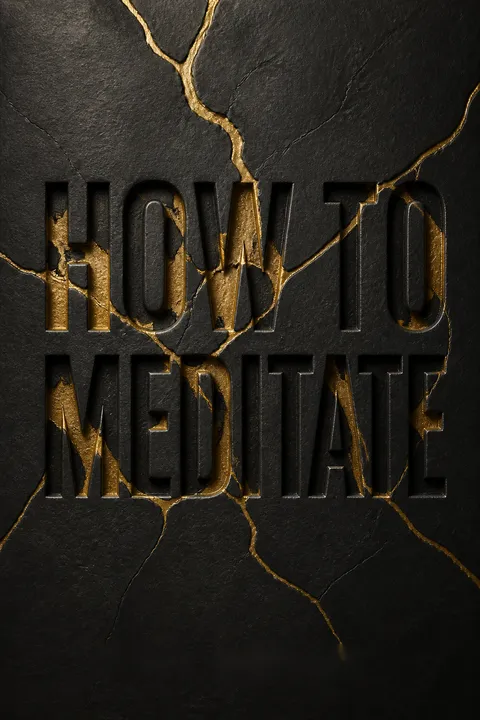
Meditation How to Meditate A Practical Guide to Making Friends with Your Mind receives high praise as an accessible introduction to meditation. Readers appreciate Chödrön's warm, down-to-earth approach and practical advice. The book is seen as helpful for beginners and experienced meditators alike, offering insights into Buddhist practice while remaining secular and psychologically-focused. Some reviewers found it repetitive or basic, but most recommend it as a valuable resource for learning meditation techniques and understanding the practice's benefits for mental well-being and self-awareness.
People Also Read






Glossary
shamatha
calm-abiding meditationA Sanskrit term meaning calm abiding. In this book, shamatha is the practice of stabilizing attention by placing the mind on an object, usually the breath, and returning when attention wanders. Its purpose is to cultivate presence and wakefulness, not to eliminate thoughts or force a special state.
dukkha
dissatisfaction and added sufferingA Buddhist term often translated as suffering or dissatisfaction. Chödrön distinguishes dukkha from pain itself. Pain and pleasure are ordinary parts of embodied life; dukkha is sustained by resistance to that changing condition and the insistence that experience should remain comfortable, secure, or agreeable.
maitri
unconditional friendlinessA Sanskrit term translated as lovingkindness or friendliness. In the book, maitri means meeting oneself without rejecting difficult or embarrassing experience. It is not simply self-indulgence or a demand to feel good. It supports the steadiness needed to remain present with the full range of thoughts, emotions, and sensations.
lojong
mind-training through reflectionA Tibetan Buddhist contemplative practice that uses short slogans as prompts for examining one's habits and responses. Chödrön presents slogans as practical instructions to carry into meditation and daily life, including reminders to treat thoughts less rigidly and to trust one's direct observation of one's own practice.
felt sense
direct bodily feelingChödrön's term for experiencing an emotion or perception directly, often through its bodily qualities, rather than mainly through an explanatory story. A person might notice heat, tightness, trembling, or heaviness without immediately building a narrative about its cause or what should happen next.
shunyata
open, unfixed experienceA Buddhist term commonly translated as emptiness. Chödrön uses it to describe the spacious quality in which thoughts, sensations, emotions, and perceptions arise without being fixed or self-contained. It does not mean that life is meaningless or that nothing exists; it points to experience being less solid than habitual interpretations suggest.
kleshas
disturbing emotional statesA Buddhist term for mental and emotional states that disturb or hook attention, such as anger, craving, or pride. In the book's approach, kleshas are not simply to be suppressed. Their arising can become an opportunity to notice the energy of emotion and one's habitual response to it.
bodhichitta
awakened heart-mindA Buddhist term combining heart and mind to describe awakened, inclusive openness. Chödrön presents bodhichitta as tenderness that can remain available even in difficult circumstances, rather than a fixed achievement or a life without pain. Meditation helps loosen the defensive habits that obscure this capacity.
sangha
community of practitionersA Buddhist community of people committed to practice and awakening. Chödrön describes sangha as a source of companionship, honest reflection, and practical support, not as a group that takes responsibility away from its members. Practitioners can help one another while each remains accountable for their own reactions and choices.
The Seven Delights
difficulties used as practiceA teaching presented through a song attributed to Gotsampa. It names seven kinds of difficulty, including thoughts, disturbing emotions, obstacles, painful consequences, illness, dying, and adverse conditions, as possible occasions for awakening. The teaching does not call hardship pleasant; it encourages meeting it without automatically hardening or fleeing.
FAQ
What's "How to Meditate: A Practical Guide to Making Friends with Your Mind" about?
- Purpose of Meditation: The book explores meditation as a practice to synchronize the mind and body, allowing one to be genuine and alive.
- Journey of Life: It presents life as an endless journey where meditation helps experience all its textures.
- Structure: The book is divided into parts focusing on meditation techniques, working with thoughts, emotions, sense perceptions, and opening the heart.
- Author's Perspective: Pema Chödrön emphasizes meditation as a tool for self-discovery and developing a friendly relationship with one's mind.
Why should I read "How to Meditate: A Practical Guide to Making Friends with Your Mind"?
- Practical Guidance: The book offers step-by-step instructions on starting and maintaining a meditation practice.
- Emotional Insight: It provides insights into working with emotions and thoughts, helping readers manage their mental landscape.
- Holistic Approach: Chödrön integrates Buddhist teachings with practical advice, making it accessible to both beginners and seasoned practitioners.
- Personal Growth: Reading this book can lead to greater self-awareness, emotional balance, and a more open-hearted approach to life.
What are the key takeaways of "How to Meditate: A Practical Guide to Making Friends with Your Mind"?
- Mindfulness and Presence: Meditation is about being present and aware, not escaping or avoiding thoughts and emotions.
- Emotional Management: The book teaches how to work with emotions by acknowledging them and letting them pass without judgment.
- Non-Struggle: It emphasizes the importance of not struggling against experiences but rather embracing them as part of the path.
- Unconditional Friendliness: Developing a kind and compassionate attitude towards oneself is crucial in meditation practice.
What are the best quotes from "How to Meditate: A Practical Guide to Making Friends with Your Mind" and what do they mean?
- "Meditation is simply training our state of being so that our mind and body can be synchronized." This quote highlights the essence of meditation as a practice of alignment and harmony.
- "Our life is an endless journey: the practice of meditation allows us to experience all the textures of the roadway." It suggests that meditation helps us fully engage with life's experiences, both pleasant and unpleasant.
- "The mind is very wild. The human experience is full of unpredictability and paradox, joys and sorrows, successes and failures." This reflects the book's acknowledgment of life's complexities and the role of meditation in navigating them.
- "We do not meditate in order to be comfortable." This quote challenges the common misconception that meditation is solely for relaxation, emphasizing its deeper purpose of self-awareness and acceptance.
How does Pema Chödrön define meditation in "How to Meditate: A Practical Guide to Making Friends with Your Mind"?
- Training the Mind: Meditation is described as training the mind to be present and aware, rather than being carried away by thoughts.
- Non-Judgmental Awareness: It involves observing thoughts and emotions without judgment, allowing them to pass naturally.
- Breath as a Tool: The breath is used as a focal point to anchor the mind and cultivate mindfulness.
- Path to Self-Discovery: Meditation is a journey of self-discovery, helping individuals become more genuine and alive.
What is the "Monkey Mind" and how does "How to Meditate: A Practical Guide to Making Friends with Your Mind" suggest dealing with it?
- Nature of the Mind: The "Monkey Mind" refers to the restless, wandering nature of the mind that constantly jumps from thought to thought.
- Labeling Thoughts: The book suggests acknowledging wandering thoughts by labeling them as "thinking" and gently returning to the breath.
- Gentle Approach: It emphasizes a gentle, non-judgmental approach to dealing with the Monkey Mind, avoiding harsh self-criticism.
- Training in Presence: Regular meditation practice helps train the mind to stay present and reduce the influence of the Monkey Mind.
How does "How to Meditate: A Practical Guide to Making Friends with Your Mind" address working with emotions?
- Acknowledgment: The book advises acknowledging emotions as they arise, without trying to suppress or avoid them.
- Dropping the Story: It suggests dropping the narrative or story attached to emotions and focusing on the raw feeling itself.
- Emotions as Energy: Emotions are seen as natural energy that can be worked with, rather than something to be feared or rejected.
- Path to Awakening: Working with emotions is presented as a powerful path to personal transformation and awakening.
What are the "Six Points of Posture" in "How to Meditate: A Practical Guide to Making Friends with Your Mind"?
- Seat: Find a stable base, whether on a cushion or chair, to support an upright posture.
- Hands: Rest hands on thighs, palms down, or use the Zen mudra for alertness.
- Torso: Keep the torso upright and relaxed, with an open heart and strong back.
- Eyes: Meditate with eyes open, gazing softly downward to encourage wakefulness.
- Face: Keep the mouth slightly open to relax the jaw and face muscles.
- Legs: Cross legs comfortably, ensuring knees are not higher than the waist, or sit in a chair if needed.
How does "How to Meditate: A Practical Guide to Making Friends with Your Mind" suggest using sense perceptions in meditation?
- Direct Experience: Sense perceptions like sound, sight, and touch can be used as objects of meditation to anchor the mind.
- Interrupting Thoughts: Focusing on sense perceptions helps interrupt the momentum of wandering thoughts and brings attention back to the present.
- Non-Judgmental Awareness: The book encourages experiencing sense perceptions without labeling them as good or bad.
- Gateway to Presence: Sense perceptions are seen as a gateway to the immediacy of experience and the vastness of the present moment.
What is "Unconditional Friendliness" in "How to Meditate: A Practical Guide to Making Friends with Your Mind"?
- Self-Compassion: Unconditional friendliness involves being kind and compassionate towards oneself during meditation practice.
- Non-Aggression: It means refraining from harsh self-criticism and judgment about one's meditation experience.
- Maitri: The book introduces the concept of maitri, or loving-kindness, as a way to cultivate unconditional friendliness.
- Path to Acceptance: Developing unconditional friendliness helps individuals accept themselves and their experiences more fully.
How does "How to Meditate: A Practical Guide to Making Friends with Your Mind" explain the concept of "Groundlessness"?
- Nature of Reality: Groundlessness refers to the inherent uncertainty and unpredictability of life.
- Relaxation with Uncertainty: The book encourages relaxing with groundlessness and becoming comfortable with not having solid ground to stand on.
- Path to Enlightenment: Embracing groundlessness is seen as a path to enlightenment, allowing for a more open and flexible mind.
- Letting Go: Meditation helps individuals let go of the need for certainty and control, fostering a sense of ease and acceptance.
What is the "Way of the Bodhisattva" as described in "How to Meditate: A Practical Guide to Making Friends with Your Mind"?
- Bodhichitta: The Way of the Bodhisattva involves cultivating bodhichitta, or awakened heart-mind, characterized by openness and compassion.
- Soft Spot: It emphasizes nurturing the "soft spot" within, allowing love and compassion to flow freely.
- Embracing Uncertainty: The path involves embracing uncertainty and groundlessness, leading to greater love and compassion.
- Purpose of Practice: The ultimate goal of meditation and spiritual practice is to become a completely loving person, contributing to a more compassionate world.
About the Author
Other books by Pema Chödrön









Download PDF
Download EPUB
.epub digital book format is ideal for reading ebooks on phones, tablets, and e-readers.








