

Key Takeaways
Treat retirement as a life to design, not a balance to reach
Money is only one input. Retirement planning is often framed as a savings target followed by a withdrawal formula. Benz argues that this misses the larger task: deciding how to use years that may otherwise lack the structure, relationships, and purpose work once supplied. The shift from employer pensions to individual 401(k) accounts has also put more decisions on households, many of whom must navigate unfamiliar terrain.
Plan for the person, too. Benz’s father had discussed investments with her and trusted her to take over as his cognition declined. That handoff eased a difficult period for the family. The lesson reaches beyond account balances: prepare for how daily life, health, and decision-making may change. There is no single correct retirement. The plan should fit the life someone wants and remain open to revision.
What's distinctive is the book's refusal to treat a retirement plan as a financial answer to a human question. A portfolio can fund choices, but it cannot decide which choices matter. That distinction also explains why two households with identical assets may need very different plans. The practical challenge is to connect lifestyle intentions to financial estimates without pretending either side is perfectly predictable. Money is a resource for a life, not a substitute for having one.
Build structure, purpose, and close relationships before work disappears
Leisure needs a shape. Michael Finke cautions against imagining retirement as one long vacation. Time without routine can drift by, and activities that feel restorative as breaks from work may become dull when they fill every day. Regular habits, meaningful challenges, and some chosen work can give the week a useful rhythm.
Invest beyond money. Finke treats health and relationships as investments because they require effort now to support a better life later. Fritz Gilbert and his wife discovered this through Freedom for Fido, a charity building fences for dogs kept on chains. It grew to 100 fences and more than 200 volunteers, giving participants purpose, outdoor activity, and community. Researcher Laura Carstensen also finds that social circles often shrink with age as weaker ties fall away, while a close core remains important.
Retirement removes the workplace's built-in calendar and casual contact, so purpose and friendship need deliberate alternatives. The charity story makes that concrete: a shared task can create community more naturally than a vague goal to socialize. Still, connection does not require constant company. Introverts may prefer a few deep relationships and solitary routines. The useful test is not the size of a social calendar, but whether dependable ties and meaningful activity remain available.
Test-drive the life before making an irreversible retirement leap
Start years ahead. Gilbert suggests beginning serious lifestyle planning about five years before retirement. Track spending for a year, explore where to live, and model how work, travel, healthcare, and housing may change. A move should be tested in practice, not chosen from a tax ranking or holiday impression. A rural home may suit outdoor interests but lack reliable internet or convenient services.
Try the transition. About two years out, Gilbert and his wife spent ten days at the cabin they were considering as home, using the time to talk about what each wanted. They found that retirement needed room for separate interests as well as shared time. A phased reduction in work, or a trial budget based on expected retirement income, can expose practical and emotional surprises while there is still time to adjust.
A trial run is valuable because people are poor at forecasting how an imagined life feels in ordinary conditions. Vacations conceal errands, isolation, and routine; spreadsheets conceal the emotional force of spending from savings. Small experiments turn assumptions into evidence and preserve options. They cannot eliminate uncertainty, and a ten-day stay cannot reproduce a permanent move, but it can reveal questions worth investigating before a major commitment.
Practice spending on what you value before fear hardens into habit
Saving is not the finish line. Ramit Sethi argues that people can become skilled at accumulation and still feel unable to use their money. He describes a worry-free number: an agreed purchase threshold below which a person stops scrutinizing every small expense. The point is not to spend carelessly, but to avoid letting routine anxiety consume attention.
Give plans a destination. Sethi recommends listing meaningful things to do over the next five years, then estimating what they cost and when to pursue them. The list can include modest pleasures as well as large trips, and it need not resemble a neighbor's retirement. He describes financially independent people with millions who still agonize over minor purchases. A life organized only around preserving a balance can miss the experiences the balance was meant to support.
This advice treats spending as a learnable skill rather than a personality defect. A pre-agreed threshold reduces repeated low-value decisions, while a written list makes personal priorities visible against social pressure. There is an important boundary: permission to spend is not proof of affordability. The strongest version pairs values clarification with a realistic cash-flow plan, so guilt does not dictate every purchase and optimism does not erase future obligations.
Let retirement spending adjust to markets, age, and actual priorities
A rule is a starting point. The familiar 4% guideline assumes an inflation-adjusted withdrawal that stays broadly fixed. It is designed to withstand difficult historical conditions, but it does not describe how most households actually spend. David Blanchett’s research finds that average spending often falls in real terms as retirees age. The apparent increase near ages 90 to 95 is influenced by a smaller group facing unusually high health costs, not a universal late-life spending rise.
Build in choices. Jonathan Guyton’s Guardrails method adjusts withdrawals when portfolio results move outside planned limits. More flexibility can support a higher initial withdrawal in models, but only if retirees accept reductions when conditions deteriorate. Separate essential expenses from discretionary goals, and consider a dedicated travel pot that can be used more heavily while health and energy allow.
The key contribution is not a magic withdrawal percentage, but a clearer account of the bargain: more spending early can mean less later, and flexible spending asks retirees to respond rather than follow a fixed script. Aggregate spending patterns are useful clues, not personal forecasts. A household may spend more in later years because of care needs, or less because health limits activity. Any flexible strategy depends on having expenses that can genuinely be adjusted.
Delay Social Security when longevity protection matters more than early cash
Claiming age changes the floor. Social Security benefits can begin at 62, but claiming before full retirement age permanently reduces the monthly amount. Delaying beyond full retirement age increases the benefit by 8% for each year up to age 70, and inflation adjustments apply to the larger amount. That makes delay especially valuable for people who live longer than average and for a higher-earning spouse whose benefit may support a surviving partner.
Early can still fit. Franklin identifies situations where claiming sooner may be reasonable: poor health and limited life expectancy, an immediate need for income, or a couple coordinating different earnings histories. A survivor may receive one benefit rather than both. In her example, household benefits of $3,000 a month fall to $2,000 when one spouse dies. Compare options using personal records and circumstances, not fear alone.
Social Security is unusual because it combines lifetime payments with inflation adjustments, making it a form of longevity protection rather than simply another investment. Delaying can therefore be compared with buying a larger guaranteed income floor, not with chasing an uncertain market return. But the choice has a liquidity cost: someone must fund the years before benefits start. Health, marital status, household cash needs, and survivor protection all shape the decision.
Match portfolio risk to spending needs, time horizon, and temperament
Begin with the household. William Bernstein asks retirees to consider their withdrawal rate, age, tolerance for investment losses, and desire to spend assets or leave a bequest. Wade Pfau and Alex Murguia’s Retirement Income Style Awareness assessment adds two preference questions: safety versus reliance on market probabilities, and commitment to a lasting solution versus flexibility. Those preferences can point toward investment portfolios, time-based buckets, protected income, or a combination.
Protect time to recover. Bernstein favors inflation-protected Treasury securities for matching essential future expenses. In his example, a retiree needing $40,000 beyond Social Security each year would seek resources for that gap across the planned horizon. Broad index funds offer a simpler growth engine, while cash and high-quality bonds can reduce pressure to sell stocks after a downturn. No allocation is universally optimal; the usable one is the one the retiree can sustain.
This section makes investor temperament part of portfolio design, not a flaw to be corrected. A theoretically efficient plan that provokes panic selling is not efficient in practice. At the same time, a safety buffer has a cost: cash may lose purchasing power, and extensive bond matching can limit growth. Preferences should guide trade-offs, not replace the arithmetic of spending, longevity, inflation, and the assets actually available.
Plan housing and care before health turns choices into emergencies
Home is more than an asset. Assess whether the house is affordable, accessible, and near healthcare, transportation, and people who matter. Aging in place need not mean remaining in the same building; moving to a nearby apartment may preserve community while reducing stairs and maintenance. Before relocating, investigate local medical capacity and support services. Carolyn McClanahan describes a rural client whose insurance promised substantial care benefits, but reliable in-home caregivers were unavailable locally.
Name the care plan. Medicare does not generally cover ongoing custodial help with daily activities, and dental, vision, and hearing costs can also surprise retirees. Consider how care might be funded, who could coordinate it, and what family members can realistically provide. Women may face particular exposure when they outlive a spouse or lack a dependable caregiver, making early planning especially important.
Housing and healthcare are often modeled as separate budget categories, but they operate as one system. A low-cost location can become expensive if care is scarce or family must travel to provide it. Planning should therefore include service availability and caregiver capacity, not just property value. No forecast can specify exactly what care an individual will need, but advance conversations can prevent a crisis from making every decision at once.
Account for the career costs of caregiving and women's longer lives
The gap accumulates. Jean Chatzky points to three retirement disadvantages many women face: lower lifetime earnings, time away from paid work to care for children or parents, and longer life expectancy. Breaks in employment can mean fewer Social Security credits and smaller retirement contributions, while lost seniority and earnings can make catching up harder. One cited estimate placed the financial cost of caring for an older relative near $400,000; caregivers may also pay thousands annually out of pocket.
Plan as a household. A pre-retirement review should include each partner's savings, expected spending, Social Security choices, housing, and care plans. Women should be involved in financial meetings and know where accounts and documents are held. Chatzky also cautions against leaving excessive assets in cash purely for comfort when a long retirement requires growth.
The chapter's value is its structural account of retirement inequality: smaller balances often reflect unpaid care and labor-market patterns, not weaker financial judgment. It also resists a simplistic claim that women are inherently poor investors. The right response is not one gender-specific portfolio, but attention to earnings histories, caregiving plans, longevity, and who participates in decisions. Household advice should remain individualized rather than treating women as a uniform group.
Plan taxes across retirement, not one tax return at a time
Choose when income appears. Retirees may draw from taxable, tax-deferred, and Roth accounts, each with different tax consequences. Mike Piper argues that minimizing this year's bill can create larger bills later, especially when required distributions begin. The years after work ends but before Social Security or required distributions start may offer a lower-income window for carefully sized Roth conversions. Whether conversion helps depends on current and future tax rates, other income thresholds, and how heirs may be taxed.
Use the right dollars. Qualified charitable distributions send money directly from a traditional IRA to an eligible charity, potentially excluding that gift from taxable income. Tax rules and thresholds change, so strategies should be checked against current law. For complex account mixes, a qualified tax professional can model the lifetime consequences rather than optimizing a single year's return.
Retirement creates a planning opportunity because households gain some control over the timing and source of income. That control is valuable but easy to overstate: a conversion that looks attractive by tax bracket may affect benefits or other income-linked costs. The central discipline is to compare full marginal effects across years, not chase the smallest immediate bill. Personalized planning matters because similar account balances can produce different tax outcomes.
Make your accounts, decision-makers, and care wishes easy to find
Documents preserve choice. Jennifer Rozelle recommends basic legal arrangements for healthcare decisions, financial authority during incapacity, and instructions for what happens after death. A will does not override beneficiary designations on retirement accounts or insurance, so those records must match current wishes. Name backup decision-makers, tell them they have been chosen, and store documents where they can be found.
Talk before a crisis. Cameron Huddleston learned this through her parents. Her father died without a will or clear instructions; her mother later developed Alzheimer’s, and Cameron had to piece together accounts and unpaid bills. A current inventory of accounts, contacts, passwords, and care preferences can spare loved ones detective work. People without children can appoint trusted friends or professionals to serve in these roles.
These preparations are not merely administrative. They are a way to preserve agency when the person most affected may no longer be able to explain their preferences. The hardest barrier is often emotional discomfort, not paperwork. Sharing every account balance is not required, but the responsible people need enough information to act. Because relationships and assets change, documents and access instructions need periodic review.
Use a life review to pursue meaningful unfinished business now
Ask what would matter. Hospice physician Jordan Grumet uses a life review, a guided reflection on important relationships, successes, disappointments, and unfinished goals. He describes a man who left a promising corporate path to attempt Mount Everest. He had to turn back halfway, yet at the end of his life he spoke warmly about the attempt, not just the summit he missed. The effort mattered because it expressed something he valued.
Start small and revise. Purpose need not be one grand mission. It can be a changing set of activities that feel worthwhile in the doing. Grumet suggests asking what would be regretted if time were short, then making room for those things and for relationships that need attention. Retirement can provide space to experiment, but meaningful change does not need to wait for retirement.
The story separates meaningful action from outcome-based achievement. That distinction matters because fear of failure can disguise itself as sensible delay, especially when a goal has no guaranteed payoff. A life review gives vague dissatisfaction a structure, while small experiments make change less intimidating. The approach should not romanticize risk: obligations and money remain real. Its force lies in asking whether postponement is truly protecting something more important.
Analysis
How to Retire is an interview anthology, but its deeper structure is a case against treating retirement as a single financial threshold. The contributors repeatedly connect money to what it enables: a stable home, time with friends, meaningful activity, health, and the freedom to make choices. The result is less a universal recipe than a map of questions that households must answer for themselves.
The book's strongest practical insight is that uncertainty should change the planning method, not prevent planning. People cannot know their lifespan, future health, investment returns, or future preferences. They can still define essential spending, build buffers, test possible lifestyles, decide what can be cut, and make legal and financial arrangements before a crisis. Retirement becomes a sequence of decisions rather than one irreversible verdict.
The range of expert views is a feature. Some contributors favor annuities and guaranteed income; others emphasize liquid investments, TIPS, or a simple index portfolio. These positions are not always contradictory. They often optimize different needs, such as predictable essentials, market growth, flexibility, or comfort spending from assets. A useful plan makes those priorities explicit instead of searching for a supposedly perfect product.
There are limits to the book's numerical guidance. Withdrawal rates, Social Security choices, tax rules, and care costs depend on individual circumstances and changing law. Aggregate spending declines do not guarantee that one person's spending will fall, and a cash buffer can ease anxiety without increasing expected returns. The interviews are best read as prompts for tailored analysis, not as instructions to copy another person's plan.
The most complete retirement preparation therefore joins a financial forecast to a human one: what a normal week might contain, who can help when capacity changes, how resources can support current priorities, and what success would mean if the plan must adapt. The book's central standard is not perfect prediction. It is making choices deliberately, then revisiting them as life changes.
Review Summary
How to Retire receives high praise for its comprehensive approach to retirement planning. Readers appreciate the diverse expert interviews covering financial and non-financial aspects. The book's practical advice, easy-to-read format, and valuable takeaways are frequently mentioned. Many find it helpful regardless of their retirement stage. Some note the US-centric financial information and occasional conflicting advice. Overall, reviewers recommend it as an essential guide for those approaching or in retirement, offering insights on finances, lifestyle, health, and finding purpose.
People Also Read







Glossary
Retirement Income Style Awareness
retirement-income preference assessmentA framework developed by Wade Pfau and Alex Murguia to help people identify which retirement-income approach fits their preferences. It considers two dimensions: whether a person prioritizes contractual income safety or accepts market probabilities, and whether they prefer flexibility or a lasting commitment. The result helps narrow the choices among portfolio withdrawals, time-based buckets, protected income, and hybrid strategies.
Guardrails
adaptive withdrawal rulesA flexible retirement spending method associated with Jonathan Guyton and William Klinger. It compares portfolio withdrawals with predetermined upper and lower limits. If withdrawals become too large relative to the portfolio, spending is reduced; if they become modest, a raise may be possible. Unlike a fixed inflation-adjusted withdrawal, the method responds to investment outcomes and requires retirees to accept spending changes.
retirement spending smile
age-related spending patternDavid Blanchett's label for the pattern in which average retiree spending tends to decline in inflation-adjusted terms through much of retirement, then may rise in very old age. The late increase is influenced by a smaller group with exceptionally high health costs. It is an aggregate pattern, not a forecast that every retiree will spend less early or more near the end of life.
bucket approach
time-based portfolio organizationA way to organize retirement assets by when they may be needed. A common version holds near-term withdrawals in cash, intermediate needs in high-quality bonds, and longer-term funds in growth assets such as stocks. The safer assets can provide spending during market declines, while the growth portion remains invested. Bucket arrangements can support behavior, but do not guarantee higher returns.
time segmentation
assets matched to spending horizonsA retirement-income strategy that assigns investments to different time periods. Near-term expenses are matched with safer assets, while funds for more distant needs can remain invested for growth. It may use holdings similar to a conventional diversified portfolio, but presents them as separate spending horizons. The structure can help some retirees stay calm during market declines without eliminating investment risk.
risk wrap
market growth with income protectionOne of the four retirement-income styles in Pfau and Murguia's framework. A risk-wrap approach combines a willingness to rely on market growth with a preference for committing to an income strategy that limits the danger of outliving assets. A variable annuity with a lifetime income benefit is one possible form, though fees, contract terms, and insurer strength require careful review.
worry-free number
low-stakes spending thresholdRamit Sethi's proposed personal threshold for purchases that do not merit repeated scrutiny. A person or couple chooses an amount suited to their finances and agrees not to agonize over spending below it. The purpose is to reduce attention spent on minor decisions and make room for intentional spending, not to bypass a realistic budget.
life review
guided reflection on a lifeA structured conversation or exercise, used in hospice settings, that helps a person reflect on important relationships, major events, achievements, disappointments, and unfinished aims. Jordan Grumet argues that people can use it before the end of life to clarify what matters and act on it. It can help turn vague hopes or regrets into choices that are possible now.
Health and Retirement Study
longitudinal study of older AmericansA University of Michigan study that follows Americans over time, with particular attention to aging and retirement. David Blanchett refers to its repeated household observations when discussing how spending changes across retirement. Following the same households helps distinguish changes in spending from simple differences between younger and older groups, though population averages cannot determine an individual household's future.
qualified charitable distribution
direct IRA gift to charityA transfer made directly from an eligible traditional IRA to a qualifying charity. Under the rules described in the book, the transfer may be excluded from the account owner's taxable income and can count toward a required minimum distribution. The rules include eligibility and dollar limits, and they can change, so retirees should verify current requirements before making a transfer.
FAQ
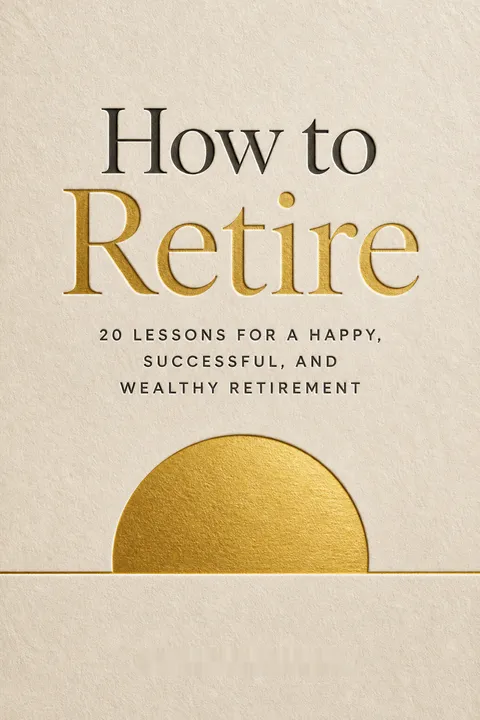
What’s How to Retire: 20 Lessons for a Happy, Successful, and Wealthy Retirement by Christine Benz about?
- Comprehensive retirement guide: The book presents 20 lessons from leading experts, covering financial, emotional, health, and lifestyle aspects of retirement.
- Holistic approach: It goes beyond investments, addressing Social Security, healthcare, housing, taxes, estate planning, and finding purpose.
- Expert interviews: Each chapter features in-depth conversations with retirement thinkers, offering diverse perspectives and actionable advice.
- Focus on transition: Emphasizes that retirement is a major life change, not just a financial event, requiring ongoing adaptation and planning.
Why should I read How to Retire by Christine Benz?
- Expert perspectives: The book curates wisdom from financial planners, researchers, healthcare professionals, and behavioral experts for a well-rounded view.
- Addresses complexity: It clarifies both financial and nonfinancial challenges, helping readers navigate the confusing landscape of modern retirement.
- Actionable and inspiring: Each chapter ends with key takeaways, practical checklists, and resources, encouraging readers to actively design their retirement.
- Behavioral and emotional focus: Tackles the psychological and lifestyle hurdles retirees face, not just the numbers.
What are the key takeaways from How to Retire by Christine Benz?
- Retirement is multifaceted: Success depends on financial security, health, relationships, and a sense of purpose.
- Personalization is crucial: The book encourages readers to tailor strategies to their unique circumstances, goals, and preferences.
- Adaptability matters: Plans must evolve with changing health, markets, and personal priorities over a retirement that could last 30+ years.
- Preparation is key: Early planning, trial runs, and open communication with loved ones are essential for a smooth transition.
What are the best quotes from How to Retire by Christine Benz and what do they mean?
- “Retirement is two rows of ten dots and one row of five dots.” – Michael Finke uses this visual to highlight the finite nature of retirement and the importance of planning how to spend your time meaningfully.
- “A year of saying no.” – Fritz Gilbert suggests spending the year before retirement declining new commitments to discover what truly brings satisfaction outside of work.
- “Retirement is a moving target.” – The book emphasizes that plans must be flexible to accommodate changes in health, markets, and personal goals.
- “Quality over quantity in relationships.” – Laura Carstensen’s research shows that focusing on a few close connections leads to greater happiness and resilience in later life.
How does How to Retire by Christine Benz help readers visualize and plan their retirement lifestyle?
- Finite time perspective: Encourages readers to see retirement as a limited period, prompting intentional planning for meaningful activities.
- Importance of structure: Highlights the need to develop routines and habits to replace the structure lost when leaving work.
- Health and relationships: Stresses that happiness in retirement is closely tied to maintaining physical health and strong social connections.
- Trial runs and social planning: Suggests “mini-retirements” and building friendships outside of work before retiring to test and refine lifestyle expectations.
What is the bucket strategy for retirement income in How to Retire by Christine Benz?
- Three-bucket system: Assets are divided into short-term cash, intermediate-term bonds, and long-term growth stocks to manage spending and market volatility.
- Optional fourth bucket: For those self-funding long-term care, a separate bucket can be set aside for those expenses.
- Tax overlay: Recommends spending from taxable accounts first, then tax-deferred or Roth accounts, aligning with tax efficiency.
- Peace of mind: The strategy provides a clear framework for managing withdrawals and reduces anxiety about market downturns.
How does How to Retire by Christine Benz address Social Security claiming strategies?
- Delaying increases benefits: Waiting to claim until age 70 boosts benefits by 8% per year after full retirement age, maximizing lifetime income.
- Early claiming considerations: Early claiming may be appropriate for those with poor health, immediate financial need, or as part of spousal strategies.
- Inflation protection: Social Security benefits are adjusted annually for inflation, helping preserve purchasing power.
- Complexity and personalization: The book emphasizes the importance of personalized planning and staying informed about legislative changes.
What does How to Retire by Christine Benz say about spending patterns and creating a retirement spending plan?
- Retirement spending smile: Spending is typically higher in early retirement, dips in the middle years, and may rise again due to healthcare costs later.
- Core vs. non-core spending: Advises identifying essential recurring expenses and managing discretionary spending separately.
- Flexible withdrawal strategies: Recommends guardrails-based systems that adjust withdrawals based on portfolio performance, rather than static rules.
- Guaranteed income: Suggests using Social Security or annuities to cover essential expenses, reducing risk and allowing more flexibility with discretionary spending.
How does How to Retire by Christine Benz recommend investing and allocating assets in retirement?
- Personalized asset allocation: Considers spending rate, age, risk tolerance, and bequest motives when setting portfolio mix.
- Inflation protection focus: Advocates for Treasury Inflation-Protected Securities (TIPS) as a core holding to preserve purchasing power.
- Simplicity and sustainability: Warns against over-optimizing and recommends a diversified, easy-to-maintain portfolio.
- Matching spending to performance: Suggests using income from dividends and interest first, then selling from overweighted asset classes, and maintaining cash reserves for downturns.
What is the retirement income style (RISA) concept in How to Retire by Christine Benz and why is it important?
- Four income styles: The RISA framework identifies total return, time segmentation, income protection, and risk wrap as key approaches.
- Safety-first vs. probability-based: Differentiates between those who prefer guaranteed income and those comfortable with market variability.
- Commitment vs. optionality: Explores preferences for fixed, irreversible solutions versus flexible, adjustable plans.
- Personalization tool: Helps retirees and advisors tailor strategies to individual comfort levels and goals, avoiding one-size-fits-all solutions.
How does How to Retire by Christine Benz address tax planning and withdrawal strategies?
- Multiyear tax planning: Focuses on lifetime tax efficiency, not just minimizing taxes in a single year.
- Withdrawal sequencing: Advises spending from taxable accounts first, then tax-deferred or Roth accounts based on current and future tax rates.
- Roth conversions: Recommends using early retirement years for Roth conversions at lower tax rates to reduce future required minimum distributions.
- Charitable giving: Suggests qualified charitable distributions as a way to reduce taxable income in retirement.
What guidance does How to Retire by Christine Benz offer on healthcare, long-term care, and housing decisions?
- Healthy aging focus: Emphasizes exercise, social engagement, and realistic health planning tailored to individual needs.
- Medicare and supplemental coverage: Advises on choosing between Medigap and Medicare Advantage, and planning for uncovered costs like dental and vision.
- Long-term care options: Discusses self-funding, insurance, Medicaid, and reverse mortgages as ways to pay for care.
- Housing considerations: Encourages assessing home suitability, proximity to healthcare and family, and phased housing plans, including downsizing and tapping home equity cautiously.
Download PDF
Download EPUB
.epub digital book format is ideal for reading ebooks on phones, tablets, and e-readers.








