

Key Takeaways
Treat every conversation as a chance to understand the other person's map
Perspective is the foundation. Carnegie's central idea is that influence starts by seeing a situation through the other person's needs, fears, and priorities, rather than assuming that sound arguments alone will persuade. He built the book from adult classes where students tested interpersonal advice in everyday life, then reported what happened. He cites a study estimating that, even in engineering, technical knowledge accounted for about 15 percent of financial success, while people skills accounted for 85 percent. That historical claim is best read as a statement of the book's emphasis, not a universal formula.
Practice makes principles usable. Carnegie admits he often failed to follow his own advice. He recommends treating the book as a working manual: rehearse an idea, try it in a real interaction, and review the result. His daughter recalls that he even kept a file of his own foolish mistakes as a reminder to keep learning.
The book's durable contribution is its shift in the unit of analysis: a conversation is not simply an exchange of claims, but a meeting between two interpretations of what is at stake. That resembles perspective-taking in negotiation, where understanding the other party's constraints can reveal options that positional debate hides. The practical emphasis on trying, reviewing, and trying again also anticipates reflective practice in professional training. The caution is that perspective-taking is not mind-reading. A considerate question is more reliable than confidently guessing what another person values.
Stop correcting people in ways that make them defend their mistakes
Blame invites a defense. Carnegie argues that criticism rarely produces honest self-examination in the moment. People tend to protect their dignity by explaining why they acted as they did, and may resent the critic even when the criticism is accurate. He illustrates this with Abraham Lincoln's unsent letter to General Meade after Meade failed to pursue the retreating Confederate army following Gettysburg. Lincoln was furious, but chose not to send the rebuke, reasoning that it would not undo the missed opportunity and could damage their working relationship.
Ask before accusing. A safety supervisor found that scolding workers for removing hard hats produced only temporary compliance. When he instead asked whether the hats were uncomfortable, then explained the protection they offered, workers were more willing to wear them. The point is not to ignore harmful conduct, but to address it without turning correction into a contest over who deserves blame.
This advice aligns with a familiar pattern in conflict research: threats to status or identity can make people defend a position more fiercely. A question about obstacles can move attention from personal fault to solvable conditions, as in the hard-hat example. Still, avoiding criticism should not mean avoiding accountability. Safety rules, repeated misconduct, or unequal power can require clear limits and consequences. The useful distinction is between naming the impact of behavior and attacking the worth or character of the person responsible.
Feed self-respect with specific appreciation, never counterfeit flattery
Recognition is a human need. Carnegie says people want to feel that their work and presence matter. He contrasts this with flattery, which is praise offered carelessly or for personal advantage. Honest appreciation names something genuinely valuable. Charles Schwab, who led major steel companies, attributed much of his leadership success to encouraging people and praising good work rather than making fault-finding his default. When a partner made a costly business mistake, John D. Rockefeller focused on what the partner had managed to salvage instead of humiliating him over the loss.
Notice what is usually overlooked. Carnegie urges readers to acknowledge a child's effort, thank a service worker for unusual care, or tell a colleague exactly what was helpful. Praise is more credible when it is tied to an observed action, rather than inflated claims about someone's general greatness. The aim is to recognize real contribution, not to purchase compliance with compliments.
Specific recognition has an advantage over generic praise: it tells people what mattered and signals that their effort was actually noticed. That makes appreciation useful in teams, classrooms, and family life, where invisible work often goes unacknowledged. The ethical boundary is important. Praise can become a control tactic if it is delivered only to elicit obedience, or if it rewards outcomes while ignoring unfair conditions. Carnegie's distinction between sincere appreciation and flattery helps, but sincerity is demonstrated by consistency, accuracy, and respect for the recipient's agency.
Earn connection by noticing people before trying to impress them
Curiosity beats self-promotion. Carnegie's opening image is a dog greeting someone with unmistakable enthusiasm: the animal does not begin by demanding attention. The human equivalent is showing genuine interest in other people. He points to Jim Farley, a political organizer who made a deliberate effort to remember thousands of names and details about the people he met. Remembering someone's name or asking about a detail they previously shared can communicate that they are more than a passing transaction.
Warmth is visible. Carnegie also recommends a natural smile and an energetic greeting. A stockbroker in one of his classes tried greeting his wife and acquaintances more warmly after years of being withdrawn, and reported a change in how people responded to him. The principle is not to perform cheerfulness on command. It is to make your attention and goodwill easier for others to perceive.
Small signals of recognition matter because social interaction depends partly on whether people feel noticed or overlooked. Remembering a name, greeting someone warmly, or recalling a detail can lower the distance between strangers without requiring dazzling conversation. These gestures are most effective when they reflect real attention, not a memorized sales routine. There is also a cultural nuance: eye contact, smiling, and use of first names do not communicate respect identically everywhere. The deeper practice is to notice how the other person prefers to be approached.
Listen long enough for the real problem to emerge
Attention is active work. Carnegie describes a dinner conversation with a botanist in which he knew little about the subject but listened closely and asked interested questions. The botanist later called him a stimulating conversationalist. The example reverses the usual idea that being interesting means talking well: attentive listening gives the other person room to explain what matters to them.
Complaints often need a hearing. A telephone-company representative spent hours listening to a furious customer who had filed complaints and threatened legal action. By letting the customer explain his grievances without interruption, the representative eventually established enough trust to resolve the dispute. Carnegie also recounts a mother whose relationship with her teenage daughter improved when she stopped issuing instructions and made space for the girl to talk. Listening does not guarantee agreement. It reveals what a disagreement is actually about.
Listening is not merely a polite pause before delivering a rebuttal. It helps surface information that an advocate's monologue can conceal, and it can make people feel less compelled to repeat themselves. This connects with approaches such as motivational interviewing, where open questions and reflective listening help people articulate their own concerns. The limit is that listening should not be confused with endorsing every claim or allowing a conversation to become abusive. Good listening combines patience with boundaries, clarification, and an honest response.
Make your proposal answer the other person's wants too
Start with their incentive. Carnegie compares persuasion to fishing: the bait must appeal to the fish, not the angler. In practical terms, a request is more compelling when it shows how the other person benefits. He tells of a lecture organizer facing a hotel manager who planned to triple the ballroom rent. Rather than protest, Carnegie laid out the manager's gains and losses, including the profitable events the lectures displaced and the promotional value they brought. The rent increase was reduced to 50 percent.
Build mutual value. A job applicant wrote to Phoenix banks explaining how her experience could help them, rather than simply asking for a position. Eleven of twelve invited her to interview. Carnegie insists that this approach should benefit both sides, not disguise a one-sided demand. Before making a request, identify the other person's actual priorities, then explain a fair exchange in terms they can judge for themselves.
The shift from asking what one wants to asking what the other party values is a core move in principled negotiation. It can turn a standoff into a search for overlapping interests, as the rent discussion illustrates. Yet persuasion through incentives can slide into manipulation when benefits are exaggerated, costs are hidden, or the other person has little ability to refuse. Mutual benefit is not a decorative phrase. It requires transparent trade-offs and room for a genuine no.
Lower the temperature before you try to change a mind
Winning can lose the relationship. Carnegie argues that an argument often hardens each side's position. In one story, he corrected a dinner guest's mistaken attribution of a line, only to be told afterward that the correction had embarrassed the guest and served no useful purpose. A truck salesperson learned a better response when customers praised a competitor: he acknowledged the competitor's strengths instead of arguing, which allowed the conversation to move toward his own product without a fight.
Make disagreement safer. Carnegie recommends listening first, looking for areas of agreement, and admitting any part of the other person's case that is sound. He also urges people to acknowledge feelings before offering facts. In his example, a radio listener who angrily corrected Carnegie's geographical mistake became friendly after Carnegie called, apologized, and recognized why the error mattered to her. Respect lowers defensiveness; it does not require surrendering the truth.
The strongest version of this principle is not that arguments are always useless, but that humiliation is a poor route to persuasion. Respectful disagreement can preserve the conditions for examining evidence, while ridicule tends to make the dispute about identity. Carnegie's counsel is especially useful when the relationship must continue after the disagreement. It is less sufficient when a decision is urgent or a false claim is causing harm. In those situations, civility still matters, but clear correction and firm boundaries may be necessary.
Give people ownership of ideas, effort, and the credit
Invite people into the solution. Carnegie observes that people are more committed to ideas they help develop. A salesman who had failed for years to sell sketches asked a buyer how the designs could be completed to suit the buyer's needs. The buyer's suggestions shaped the final work, and the orders followed. In another example, a manager asked employees what they needed from him, then asked what he could reasonably expect from them. The group helped define its own commitments and became more engaged.
Share authorship generously. Carnegie describes Theodore Roosevelt consulting political leaders about appointments, then letting them take credit for acceptable choices. He also recounts Colonel House introducing ideas to President Wilson without insisting on recognition. These stories make the same practical point: consultation can create commitment, while publicly claiming every idea can provoke resistance. The goal is a better decision, not ownership of the spotlight.
Participation supports autonomy, a major source of motivation in work and education. When people help define the problem and shape a solution, they can see how their judgment matters rather than feeling managed from above. Shared credit can strengthen that sense of ownership. There is a real boundary, however: inviting input is not the same as pretending a decision is open when it is already made. Consultation earns trust only when contributions can meaningfully affect the outcome, or when limits are stated plainly.
Make your case visible before asking people to believe it
Demonstration can outperform explanation. Carnegie says that an idea often needs to be presented in a way people can see and remember. When a newspaper faced claims that it carried too much advertising and too little news, it gathered the reading material from one day's edition into a 307-page book. The physical volume made the amount of content immediately apparent. A salesperson selling cash registers made a similar move by dropping coins onto the floor to dramatize the small losses caused by outdated equipment.
Make evidence concrete. A market researcher first lost a client's attention by debating tables of data. On a second visit, he brought jars of competing cold creams, each labeled with a finding. The display made the comparison tangible, and the meeting became a longer discussion. Dramatization is not decoration: it makes a claim easier to grasp. But the display must represent the evidence honestly, or showmanship becomes distortion.
Concrete demonstrations reduce the effort required to understand an abstract claim. A visible comparison or physical example can also give a group something specific to discuss, rather than forcing people to hold a long verbal explanation in memory. This is a useful bridge between rhetoric and design. The danger is that vividness can be mistaken for proof. A striking prop may make weak evidence feel decisive, so effective dramatization should clarify what the facts support, not conceal what they do not.
Correct behavior without shrinking the person
Protect dignity while addressing the problem. Carnegie's leadership advice is to begin with genuine praise, then make correction as specific and indirect as the situation allows. A steel executive saw workers smoking beneath a no-smoking sign. Instead of publicly scolding them, he handed them cigars and asked them to smoke outside. Another leader praised a trainee teller's accuracy and friendliness, then worked with her on the balancing procedure she had not yet mastered.
Make improvement feel possible. Carnegie advises leaders to acknowledge their own mistakes, ask questions rather than bark orders, and give people a reputation worth living up to. A teacher who described a disruptive student as a natural leader gave him a constructive role to inhabit. The common thread is to correct an action without defining the whole person by the failure. Directness is still appropriate when needed, but contempt usually adds friction without adding clarity.
This approach has a close relationship to coaching: identify a strength, specify the gap, and communicate confidence that progress is possible. Protecting face can make feedback easier to hear, especially when the person must keep working with the critic. But praise should not become a disguised preamble to criticism, and positive labels should not trap someone in expectations they did not choose. The most respectful feedback is concrete, proportionate, and paired with support or resources that make improvement genuinely achievable.
Turn work into a challenge people want to win
A meaningful contest can release effort. Carnegie tells of a steel mill manager who could not increase production by pleading, threatening, or criticizing. Executive Charles Schwab asked one crew how many production heats it had completed and wrote the number on the floor. The next shift raised the mark, and the first shift tried to beat it. Production rose as workers competed to excel.
Use challenge with care. Carnegie distinguishes the desire to do good work from simply chasing money. He cites research by psychologist Frederick Herzberg and examples of people drawn to the interest and mastery involved in a task. A challenge can make effort feel purposeful, but it works best when the goal is fair, visible, and within reach. Competition that humiliates weaker performers or rewards unsafe shortcuts can undermine the very cooperation a leader needs.
A clear challenge can turn routine work into a game with feedback, progress, and a visible standard. That structure can energize people who value mastery and achievement, and the mill story makes the motivational mechanism easy to picture. It is not a universal substitute for fair pay, adequate staffing, or sound working conditions. Competition can also shift attention from quality to scorekeeping. A responsible leader tracks whether the contest improves the work itself, not merely the number displayed on the floor.
Analysis
The book's argument is less a bag of social tricks than a theory of friction. People resist when they feel belittled, ignored, cornered, or treated as instruments. Carnegie's remedies repeatedly restore something those encounters threaten: dignity, attention, agency, and a credible reason to cooperate. That pattern explains why his advice travels across contexts, from sales calls and workplace feedback to family disputes. The stories make a broad human principle memorable by showing small changes in approach producing different reactions.
The book's evidence should be read with care. Most examples are personal anecdotes, not controlled comparisons, and the early claim assigning precise shares of career success to technical and interpersonal skill is historical rather than a dependable modern estimate. The stories demonstrate possibility, not guaranteed effects. A friendly approach cannot resolve every dispute, and a flattering tone cannot substitute for fair terms, competence, or institutional accountability.
The strongest ethical safeguard in the book is sincerity paired with mutual benefit. Without it, remembering names, appealing to someone's interests, or letting them take credit can become calculated manipulation. With it, these behaviors express genuine respect and improve the information available to both sides. Contemporary negotiation practice echoes this distinction: understanding interests is useful when it broadens the available solutions, not when it merely makes another person easier to steer.
Carnegie also treats interpersonal skill as learnable. His emphasis on practice, review, and noticing one's own mistakes is more persuasive than any promise of instant charm. A practical application is to choose one upcoming interaction, identify the other person's likely concern, and test one behavior: ask before criticizing, listen without interrupting, or explain the shared benefit. Then review the response without assuming one success proves a universal rule. Human relations remain situational, but attention and respect are consistently better starting points than ego and pressure.
Review Summary
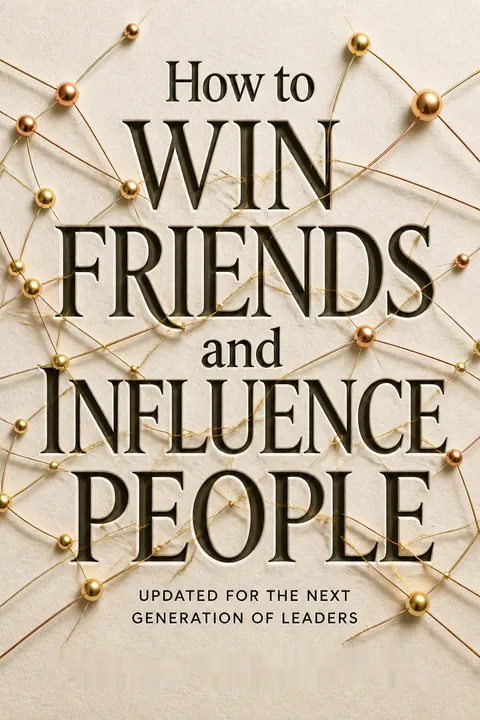
How to Win Friends and Influence People is widely praised as a timeless self-help classic, offering practical advice on interpersonal skills and leadership. Many readers find its principles on kindness, empathy, and genuine interest in others transformative. The book's conversational style and anecdotes make it engaging, though some critics find it repetitive or outdated. While most appreciate its emphasis on basic human decency, a few question its applicability in modern contexts. Overall, it remains highly recommended for improving social and professional relationships, with many considering it essential reading for personal development.
People Also Read










Glossary
D.F.T. file
Personal mistake recordCarnegie's shorthand for a personal file of foolish errors, meaning "Damn Fool Things I've Done." He used it to record moments when he had failed to practice the interpersonal principles he taught, such as forgetting a newly introduced person's name or reacting impatiently. The file served as a reminder that social skill requires ongoing self-correction.
Socratic method
Questions that build agreementA questioning approach associated in the book with Socrates. Rather than directly contradicting someone, the speaker asks a sequence of questions that invite agreement on points the other person already accepts. Those shared premises can help the person examine a conclusion with less defensiveness. Carnegie presents it as a way to guide discussion, not as proof that every question-led conclusion is sound.
Yes, yes technique
Begin with shared agreementCarnegie's name for beginning a conversation with points the other person is likely to affirm before presenting a proposal. The technique aims to prevent an immediate defensive rejection and establish shared goals or accepted facts. It should not be used to trap someone into agreement: its sound use makes real common ground clear before exploring a decision.
FAQ
1. What is "How to Win Friends and Influence People" by Dale Carnegie about?
- Foundational self-improvement guide: The book is a classic manual on human relations, teaching practical principles for improving interpersonal skills and building genuine relationships.
- Focus on empathy and understanding: Carnegie emphasizes seeing things from others’ perspectives, fostering empathy, appreciation, and effective communication.
- Timeless leadership advice: The book provides actionable strategies for leading and influencing others positively in both personal and professional contexts.
- Real-life examples: Carnegie uses anecdotes and stories to illustrate his points, making the advice relatable and easy to apply.
2. Why should I read "How to Win Friends and Influence People" by Dale Carnegie?
- Proven, universal techniques: The book’s principles have helped millions improve their relationships and communication skills across generations and cultures.
- Builds confidence and influence: Readers learn how to handle disagreements, admit mistakes, and inspire cooperation without conflict.
- Applicable to all walks of life: Whether you’re a businessperson, student, or homemaker, the advice is relevant and practical for anyone seeking social or professional success.
- Foundation for leadership: The book’s strategies are essential for anyone aspiring to lead, motivate, or inspire others.
3. What are the key takeaways from "How to Win Friends and Influence People" by Dale Carnegie?
- Human relations can be learned: Effective interaction is a skill that can be developed through practice and understanding.
- Empathy and appreciation matter: Sincere appreciation and seeing things from others’ viewpoints are central to building influence.
- Avoid criticism and arguments: Criticism breeds resentment, and arguments rarely change minds; positive reinforcement is more effective.
- Influence through shared interests: Appealing to others’ desires and interests is more persuasive than focusing on your own.
4. What are the fundamental techniques in handling people according to Dale Carnegie?
- Don’t criticize, condemn, or complain: Criticism wounds pride and arouses resentment, making it counterproductive.
- Give honest and sincere appreciation: Genuine recognition satisfies the deep human need to feel important and motivates positive behavior.
- Arouse in the other person an eager want: Influence others by showing how your ideas benefit them, not just yourself.
5. What are the six ways to make people like you in "How to Win Friends and Influence People"?
- Become genuinely interested in others: Show authentic care and curiosity about people’s lives and interests.
- Smile sincerely: A warm smile makes you approachable and likable, setting a positive tone.
- Remember and use names: Using someone’s name demonstrates respect and personal attention.
- Be a good listener: Encourage others to talk about themselves and listen attentively.
- Talk in terms of others’ interests: Engage people by discussing what matters to them.
- Make others feel important sincerely: Recognize and appreciate others’ worth in a genuine way.
6. How does Dale Carnegie recommend making a good first impression?
- Smile genuinely: A real smile conveys warmth and makes others feel welcome.
- Show enthusiasm and warmth: Positive energy and interest in others attract people to you.
- Control your attitude: Acting cheerful and friendly, even if you don’t feel like it, can influence both your mood and others’ reactions.
7. What does Dale Carnegie say about remembering and using people’s names?
- Names are powerful: A person’s name is the “sweetest and most important sound” to them, showing respect and attention.
- Requires effort and focus: Remembering names involves concentration, repetition, and association.
- Builds goodwill: Using names makes people feel valued and can open doors in both business and social settings.
8. How does "How to Win Friends and Influence People" by Dale Carnegie suggest handling criticism and complaints?
- Criticism is usually futile: It puts people on the defensive and rarely leads to lasting change.
- Understand before judging: Try to see why people behave as they do, which fosters sympathy and kindness.
- Use encouragement and appreciation: Rewarding good behavior is more effective than punishing bad behavior.
9. What are the key principles for winning people to your way of thinking in Dale Carnegie’s book?
- Avoid arguments: Arguments harden opposition and rarely change minds.
- Show respect for opinions: Never say “You’re wrong”; acknowledge others’ viewpoints to reduce defensiveness.
- Admit mistakes quickly: Owning up to errors disarms hostility and builds trust.
- Begin in a friendly way: Friendliness softens resistance and opens doors to cooperation.
- Let others feel the idea is theirs: People are more committed to ideas they believe they originated.
10. How does Dale Carnegie recommend handling disagreements and arguments?
- Avoid arguments altogether: The best way to win an argument is to avoid it.
- Listen first and calmly: Allow others to express themselves fully before responding.
- Look for areas of agreement: Start with shared points to create common ground.
- Admit errors honestly: Quickly admitting mistakes disarms hostility and fosters goodwill.
11. What is the importance of seeing things from the other person’s point of view in "How to Win Friends and Influence People"?
- Empathy reduces conflict: Understanding others’ perspectives helps you respond more effectively and avoid offense.
- Increases influence: Considering others’ viewpoints makes persuasion easier and relationships stronger.
- Practical advice: Ask yourself, “How would I feel if I were in their shoes?” to gain insight and patience.
- Real-life impact: Empathy can transform relationships at home and work by fostering understanding and cooperation.
12. What are the best quotes from "How to Win Friends and Influence People" by Dale Carnegie and what do they mean?
- “The only way to get the best of an argument is to avoid it.” This highlights the futility of arguments and the importance of harmony in relationships.
- “A person’s name is to that person the sweetest and most important sound in any language.” Using names shows respect and personal attention.
- “Give honest and sincere appreciation.” Genuine recognition motivates people and builds goodwill.
- “A drop of honey catches more flies than a gallon of gall.” Friendliness and kindness are more effective than criticism or hostility.
- “Try honestly to see things from the other person’s point of view.” Empathy is key to understanding and influencing others.
About the Author
Other books by Dale Carnegie







Download PDF
Download EPUB
.epub digital book format is ideal for reading ebooks on phones, tablets, and e-readers.








