

Plot Summary
A Vulva Hat Reunion
Luc O’Donnell is organizing a gender-inclusive prewedding party for his best friend Bridget, with Oliver Blackwood, his devoted boyfriend of two years, delayed by work. At the bar, Luc collides with Miles, the ex who sold intimate details of their relationship to the tabloids, and meets Miles’s glittering young fiancé, JoJo. Their engagement lands like a fresh insult.
Then a song by Luc’s famous father, Jon Fleming, brings back the man who once pretended to have cancer for publicity. Overwhelmed by both reminders of betrayal, Luc slips away from Bridget’s party and hides on a park bench. Oliver finds him, comforts him, and helps him return to his friends. Luc leaves believing Miles is behind him for good.
The opening turns a comic party costume into a measure of Luc’s vulnerability. His jokes help him manage a room, but they cannot prevent old betrayals from making his present happiness feel temporary. The twin reminders of Miles and Jon connect romantic injury to paternal disappointment: Luc has learned to expect affection to carry a price. Oliver’s quiet search offers a different model of care, one based on noticing distress rather than demanding performance. Still, Luc’s claim that the past is over is more hope than fact, which gives the novel its central pressure.
Fifty Thousand Pounds
A tabloid photograph of Luc in his party hat briefly alarms his workplace, but his boss checks that he is all right rather than demanding a public-relations apology. The more difficult intrusion comes when Miles visits Luc’s office.
He admits he was selfish and trapped when he sold their story, but asks Luc to attend his wedding to JoJo, hoping the invitation will help everyone move on. Luc recognizes that Miles is asking for his own comfort, not Luc’s forgiveness, and rejects him.
At home, Oliver lets Luc decide for himself, even while admitting he dislikes the prospect of attending an ex’s wedding. Luc keeps turning the invitation over in his mind. He wants to prove he has recovered, but cannot tell whether going would close the old wound or reopen it.
Miles’s apology is not a clean act of repair because it arrives bundled with a request that benefits him. Luc sees the imbalance clearly, yet still wants the wedding to function as evidence that the betrayal no longer governs his life. That desire reveals how easily self-respect can become another performance for an imagined audience. Oliver’s restraint matters: he neither forbids Luc nor disguises his jealousy. Their relationship can hold disagreement without converting it into control, though Luc is still learning to trust that distinction.
The Spy in Harrow
Days before her wedding, Bridget receives a photograph of her fiancé Tom looking intimate with an unknown woman, then cannot reach him. Luc cancels a rare date with Oliver to stay with her, and their comforting evening becomes tense when Oliver worries that Bridget’s recurring crises are swallowing their time together.
The next day, friends help Bridget search for Tom in Harrow. Their amateur pursuit ends at a crowded Tube station, where Bridget confronts him and a transit guard nearly fines her for jumping a barrier.
Tom explains that he is moving a drug-smuggling informant between safe houses as part of his intelligence work. Bridget’s suspicion dissolves, but the search has exposed the informant. On the way back, the group learns that Bridget’s church has burned down, leaving her wedding without a venue days before the ceremony.
The false-affair scare converts Luc’s history of betrayal into a lens through which Bridget fears her own future. He tries to support her without reinforcing panic, but his instinct to become indispensable creates friction with Oliver, whose concern is partly reasonable and partly jealousy. The reveal that Tom’s secrecy is professional rather than romantic resolves the immediate suspicion while showing the cost of treating limited evidence as certainty. The burned church then shifts the story from emotional crisis to practical emergency, forcing friendship to become work.
A Garden in Surrey
Luc and Tom call venue after venue, but none can accommodate Bridget’s wedding at such short notice. Luc reluctantly contacts Jon, hoping his father’s celebrity connections might help, and receives an easy promise with no follow-through.
His mother, Odile, supplies the real solution: her friend Judy owns the historic Pfaffle Court estate and can offer its grounds, as well as officiate. Bridget accepts the magnificent garden, and Luc and Oliver help move guests, transport, and accommodation arrangements from London to Surrey. Luc barely sees Oliver during the exhausting preparations.
Bridget finally insists he go home rather than spend her prewedding night working himself sick. Oliver has arranged a private Pretty Woman-themed evening, complete with sweets, candles, and the movie. Luc recognizes the care beneath the joke and lets himself be loved without turning the moment into another test.
The venue rescue quietly contrasts the kinds of help Luc expects from his parents. Jon offers effortless confidence without dependable action; Odile gives practical support through a friend and remains present for the consequences. Luc’s choice to ask his father is not foolishness so much as an old hope briefly revived. Meanwhile, Bridget’s decision to send Luc home marks friendship as reciprocal rather than endlessly extractive. Oliver’s elaborate movie night is intimate precisely because it is imperfect and personal, a domestic counterweight to the grand wedding machinery consuming their time.
The Train of Taffeta
On the wedding morning, Bridget discovers that her carefully chosen dress is still in London. Oliver drives back to retrieve it, but the clock is closing in. Judy and Odile search the estate and bring out a collection of old wedding dresses. Bridget chooses a grand, dated gown that resembles her childhood fantasy, and Judy pins it into shape.
The ceremony proceeds in the garden, with Judy openly admitting that the vows are not legally binding and the couple will register their marriage later. The dress’s enormous train swallows chairs and complicates the procession, while Luc’s carefully written speech dissolves in the heat and sweat.
He speaks from memory instead, stumbling but making Bridget understand how much she matters to him. Oliver steadies him, and Bridget answers with affection. Luc ends the day dancing with Oliver and feeling genuinely happy for the couple.
The dress crisis strips Bridget’s imagined perfect day down to the people willing to improvise for her. The gown is not the one she ordered, but it carries a childhood wish into a less controlled, more communal ceremony. Luc’s ruined speech similarly exposes the gap between rehearsed meaning and lived care: his words fail as an artifact, yet his years of showing up have already made his devotion legible. The legally symbolic ceremony also plants a question the novel will later ask of Luc and Oliver: what gives a commitment its force?
Miles Gets His Wedding
Luc attends Miles and JoJo’s wedding with Oliver, determined to discover whether seeing his ex married will finally free him from the past. The ceremony is flamboyant and irreverent, but Miles and JoJo’s affection is unmistakably sincere.
Luc’s former friend Heather apologizes for how she took sides after the tabloid betrayal, and Luc begins to recognize that the rupture divided a whole circle of people, not only him and Miles. After the ceremony, Miles treats Luc’s presence as proof they can be friends again.
Luc congratulates the couple but makes clear that he can wish them well without restoring their relationship. He and Oliver leave together. The visit does not erase what Miles did; it allows Luc to define the boundary himself rather than accepting the reconciliation Miles wants.
Luc arrives seeking a verdict on his own recovery and instead encounters evidence that Miles’s new happiness is real. That recognition is painful because it denies him the simple satisfaction of dismissing the marriage as a sham. Heather’s apology complicates the old story further: loyalty after a betrayal can injure people on both sides, even when the original harm remains unequal. Luc’s refusal to become Miles’s friend is therefore not revenge or incapacity to forgive. It is a boundary that separates wishing someone well from granting them renewed access.
JoJo Wants Proof
A few days after the wedding, JoJo appears at Luc’s office, where the staff’s livestreaming and misunderstandings delay their conversation. He explains that he wanted Luc at the ceremony partly to see that the man Miles betrayed had built a happy life, and partly because JoJo himself fears Miles might someday betray him too.
JoJo does not ask Luc to forgive Miles; he admits that he chose to trust him despite knowing what he had done. Luc initially resents being asked to reassure the younger man, then recognizes the familiar fear beneath JoJo’s polished online persona.
He tells JoJo that Miles is not necessarily the same person he was years ago, while refusing to withdraw his own boundary. The encounter leaves Luc considering that love may involve risk without requiring him to deny the evidence of the past.
JoJo’s visit turns the former victim into an unwilling witness for someone else’s gamble. Luc’s first response is defensive because he has no obligation to certify Miles’s safety, and because doing so could make his own injury seem trivial. Yet JoJo’s anxiety is not a challenge to Luc’s account; it is a parallel fear shaped by a different relationship. The conversation permits two truths to coexist: Miles harmed Luc, and people may change. Luc’s growing capacity for nuance is not absolution. It is freedom from needing the past to dictate every future judgment.
A Proposal in the Kitchen
After JoJo’s visit, Luc begins comparing his settled life with Oliver to the messier years he once mistook for freedom. When Oliver suggests making Luc’s gradual move into his house official, Luc panics at the thought of naming what they already share and unexpectedly proposes marriage instead.
Oliver says yes, but Luc later realizes the proposal came out in the middle of a kitchen conversation, so he buys a modest ring and asks again on one knee. Oliver accepts it.
Luc then visits Odile and Judy, only to discover that he has failed to tell his mother about the engagement and has falsely implied that he already did. Odile is hurt, then welcomes Oliver as family. Her teasing and Judy’s imaginary wedding gift soften the embarrassment, while the ring makes Luc’s impulsive choice tangible.
Luc’s proposal is both a leap toward intimacy and a way to avoid saying plainly how vulnerable he feels. Marriage gives him a visible gesture where emotional language fails him. Oliver’s acceptance does not remove that ambiguity; it creates space for Luc to return and choose the gesture more deliberately. His failure to tell Odile reveals the same reflex that drives his romantic evasions: he anticipates disappointment, then improvises a lie to postpone it. Family humor absorbs the mistake, but the episode suggests that commitment is not one grand decision. It is a series of ordinary acts of disclosure.
The Wrong Country House
Alex Twaddle, Luc’s hapless coworker, invites the charity office to his wedding to Miffy, the daughter of an earl. The group travels north in a minibus organized by Rhys, but bad directions lead them through heavy rain to the wrong house.
They enter because a key is left under the mat, make tea, and argue about Luc’s decision to keep his own wedding small. The actual homeowners arrive with police, and the entire group is detained while officers investigate the trespass and worry they may disrupt the high-profile society wedding.
Oliver explains the law, but the group’s release comes through Miffy’s father and Justice Mayhew, a judge whose influence outweighs the ordinary process. The episode leaves Luc uneasy about how readily status protects some people, even when they have plainly caused trouble.
The mistaken house turns the novel’s comic travel mishaps into a concentrated study of class power. Luc and his colleagues are not innocent of trespass, but their treatment changes as soon as an earl intervenes. Oliver’s legal explanation exposes the distinction between what the law says and how institutions behave when influential people are involved. Luc’s own discomfort matters because he is not outside privilege: his famous parents have opened doors too. The episode refuses a simple division between ordinary people and elites, instead showing how access can be inherited, borrowed, or quietly activated.
The Bishop's Wedding
At Alex and Miffy’s cathedral wedding, Luc struggles with the religious service and its traditional assumptions about marriage, while Oliver finds comfort in a ceremony resembling the ones from his childhood.
The contrast sharpens at the reception, where Luc also wants Oliver to feel at home in queer social spaces, but Oliver explains that rainbow-centered parties can make him feel judged rather than included. Luc has mistaken shared identity for shared taste, and his efforts to reassure Oliver have become pressure.
In the formal garden, Luc apologizes for treating Oliver’s discomfort as a flaw, while Oliver admits the disagreement has prompted him to question which preferences are truly his. They reconcile without resolving every question, and return to the wedding together, carrying a more difficult understanding of what belonging means to each of them.
The two weddings make opposite traditions visible: one grants Oliver familiarity while excluding Luc, and another offers Luc cultural recognition while making Oliver feel like an outsider. The conflict is not a contest over which ceremony is more authentic. It concerns who gets to define belonging and whether shared identity should require shared symbols. Luc’s good intentions become coercive when he treats Oliver’s reserve as evidence of internalized shame. Their repair begins when he accepts that care does not mean interpreting another person’s experience for them.
The Blackwood Lunch
When Luc and Oliver visit Oliver’s parents, Miriam and David, the couple’s engagement becomes an excuse for the Blackwoods to question whether two men should marry at all. They describe gay relationships as less valid than straight ones and cast marriage as something that need not apply to their son.
Luc tries to respond without provoking a scene, but Oliver finally interrupts the pattern. He tells his parents that their treatment of Luc and their refusal to recognize his relationships have hurt him, then rejects the idea that parental support entitles them to control his choices.
Oliver leaves with Luc, openly aligning himself with their future together. The confrontation costs him the comfort of pretending his parents’ approval is assured, but it also marks a change from silently absorbing their judgments to naming them.
The lunch exposes the difference between being loved and being recognized. The Blackwoods may understand their conduct as concern, yet their language makes Oliver’s relationships permanently provisional. Luc’s restraint cannot repair that contradiction, and Oliver’s eventual anger is a refusal to let politeness conceal its cost. His choice is not a clean break from family attachment; he still wants their presence. What changes is the direction of responsibility: he stops treating his parents’ discomfort as proof that he must be wrong.
The Last Word's Cost
Wedding planning intensifies the couple’s disagreements over seating, ceremony style, and the rainbow decorations Luc wants. Oliver worries that Luc sees his discomfort with queer imagery as a failure of identity, while Luc suspects Oliver is still shaping himself around parental expectations.
Their argument remains unresolved when Oliver’s mother calls with news that David has suffered a fatal heart attack. Oliver goes to Milton Keynes alone to support Miriam and arrange the aftermath, leaving Luc to wonder whether the fight has damaged their engagement at the worst possible time.
He tries to give Oliver space, then spirals through anxious texts and imagined rejection. Friends Priya and Bridget keep him from being alone with those fears. When Oliver returns, exhausted and grieving, they reconnect without pretending the argument has vanished.
The sudden death does not settle the couple’s disagreement; it makes every unresolved sentence harder to revisit. Luc interprets Oliver’s absence through abandonment, while Oliver’s grief temporarily removes his ability to reassure him. Their asymmetry is revealing: Luc wants closeness as proof that the relationship remains intact, whereas Oliver needs solitude to process a family history he has only just begun to challenge. Friends interrupt Luc’s worst assumptions, but do not solve the problem for him. The scene insists that love can remain real while access to another person’s inner life is temporarily limited.
The Eulogy Goes Off Script
At David’s funeral, Oliver abandons the polished eulogy he prepared and describes his father as a complicated man whose final exchange with him ended in anger. He admits he loved David and regrets that their relationship cannot be repaired, but also says his father’s cruelty and homophobia shaped their distance.
The speech shocks the mourners and leaves Oliver crying. Outside, Christopher accuses his brother of making the funeral harder, and they argue over which son carried more of their parents’ demands.
Oliver apologizes for failing to stand up for Christopher sooner; Christopher acknowledges their parents may have made each brother feel less valued than the other. Their uncle Jim then admits he also learned to hide parts of himself to satisfy the family. The funeral opens old wounds without neatly closing them.
Oliver’s eulogy refuses the social bargain by which funerals convert complicated lives into respectable summaries. Its honesty is not uncomplicated catharsis: it exposes his grief, risks hurting his mother, and forces Christopher to confront a separate injury. The brothers’ argument reveals how family favoritism can be experienced as a zero-sum contest even when the parents are manipulating both children. Uncle Jim extends that inheritance across generations. The scene’s insight is not that truth heals everything, but that silence has also been an active force in shaping the family.
Seating Cards and Fault Lines
After the funeral, Oliver and Luc return to the wedding plans, but decisions that once seemed manageable now feel loaded. They argue over the band, venue, and whether the ceremony should display queer symbols; Luc fears a polished, conventional wedding will erase something important, while Oliver feels that the symbols cannot speak for him.
Luc storms out and takes refuge with Odile, who helps him see that weddings are not the same as marriages and that the two men may be confusing logistical exhaustion with incompatibility. They still have no easy answer.
Luc’s desire to be chosen collides with Oliver’s desire not to be defined by either heterosexual tradition or a commercial version of queer identity. The conflict does not end their engagement, but it turns wedding planning into a test neither knows how to pass.
The planning fight magnifies small choices because the couple has made the wedding carry too many meanings at once. A band or balloon arch becomes a proxy for recognition, family history, and whether each partner can remain legible to himself inside the relationship. Odile’s distinction between wedding and marriage offers perspective, though it cannot tell Luc what he wants. His deeper fear is not a tasteful disagreement; it is that a shared life will require him to disappear. Oliver fears the same disappearance in a different form.
The Art Party
Priya organizes Luc’s prewedding party at a queer art gallery, where Luc meets Tyler, a trans artist whose sculpture reflects his long wait for gender-affirming care. Tyler and Luc flirt, but Luc makes clear he is engaged, and the encounter remains playful rather than becoming an affair.
For once, Luc enjoys a lively queer gathering without using it to punish himself or escape his life. Photographs of him and Tyler later reach Oliver through Bridget’s social media. At their planned dinner, Luc’s father calls and pressures him about attending the wedding, leaving Luc late and drained.
Oliver then admits the photographs unsettled him, not because he distrusts Luc, but because Luc looked happy in a world Oliver may not share. The party exposes a fear neither man has managed to name plainly.
Tyler functions less as a romantic threat than as evidence of a version of Luc’s life that remains available to him: social, queer, spontaneous, and not defined by domestic routine. Luc’s restraint matters because he can enjoy attraction without turning it into betrayal or self-sabotage. Oliver’s reaction is also more vulnerable than possessive. He fears that Luc’s happiness may depend on a world he cannot enter comfortably. Their problem is not fidelity but the possibility that one partner’s flourishing may feel like the other’s exclusion.
Quo Vadis, Again
At Quo Vadis, the restaurant where Luc and Oliver first met, Luc explains that Jon wants to attend their wedding for the publicity and has hinted he might speak badly about Odile if excluded. Luc refuses to let his father manipulate the guest list.
Oliver, already shaken by the photographs of Luc’s party, says he worries their different ways of moving through queer life may make them incompatible. Luc tells him that the party felt good because he was free to enjoy it, not because he wanted to leave Oliver behind.
He also accepts that Oliver need not share every setting or symbol to belong in their relationship. They order a vegan meal with an old favorite adapted for Oliver, and the familiar restaurant helps them recover their sense of being a couple rather than two opposing wedding plans. They decide to continue toward the ceremony.
The restaurant returns them to the beginning, but not to the fantasy that love can remain untouched by time. Luc now knows his father’s pattern well enough to refuse the leverage, while Oliver is brave enough to voice a fear that sounds like a breakup. Their reconciliation depends on distinguishing difference from rejection. Luc does not promise to abandon queer spaces, and Oliver does not pretend to enjoy them. Instead, they make room for separate forms of happiness while choosing the shared relationship.
Cold Feet on the Bridge
The night before the wedding, Luc becomes violently sick and calls Bridget, who meets him on the Millennium Bridge. He admits that he loves Oliver but no longer knows whether he wants to marry him. The scale of the ceremony seems to have swallowed the relationship itself, turning their private life into a public institution neither fully understands.
Bridget offers no magical solution. She points out that Luc has only two real choices: marry Oliver or leave him at the altar, and Luc cannot bear the second.
Believing that going through with the wedding is the least damaging option, he returns to the venue the next morning. He is still nauseated and terrified, but tries to reassure Oliver that he is committed. Oliver, however, is already distressed and asks him to stop before Luc can make another promise he does not mean.
Luc’s panic is not simply fear of commitment. It is a belated recognition that he used marriage to express feelings he could not say directly, then allowed the wedding’s scale to make that gesture feel irreversible. Bridget’s bluntness removes the romantic escape hatch: love does not make the choice painless, and avoidance is still a choice. Luc’s decision to proceed is ethically understandable but emotionally false. The scene prepares the reversal by making clear that a wedding can be kept at the cost of the relationship it is meant to honor.
Marriage Without Marriage
In a side room minutes before the ceremony, Oliver tells Luc he cannot marry him. Luc first hears this as rejection and erupts, but Oliver explains that he wants their life together and does not want to bind it inside a framework that has always felt imposed on him.
He has spent the planning months trying to please Luc, his parents, and the imagined expectations of a proper wedding, until he could no longer tell which choices were his. Luc admits he also no longer wants to marry that day, though he had planned to go through with it rather than hurt Oliver.
They recognize that they are not rejecting each other; they are rejecting the performance and legal script they mistook for proof. With only minutes remaining, they choose to remain partners on their own terms.
The emotional climax reverses the expected roles: Oliver is the one who stops the wedding, while Luc discovers that relief can coexist with hurt. Their honesty arrives late and causes real pain, but it also prevents a public promise from disguising private doubt. Oliver’s objection is not to commitment itself, but to a form that feels authored by other people and historically unavailable to them. Luc’s agreement shows growth from using grand gestures as proof toward asking what the gesture actually means. Their choice makes intimacy more specific, not less serious.
The Rainway Exit
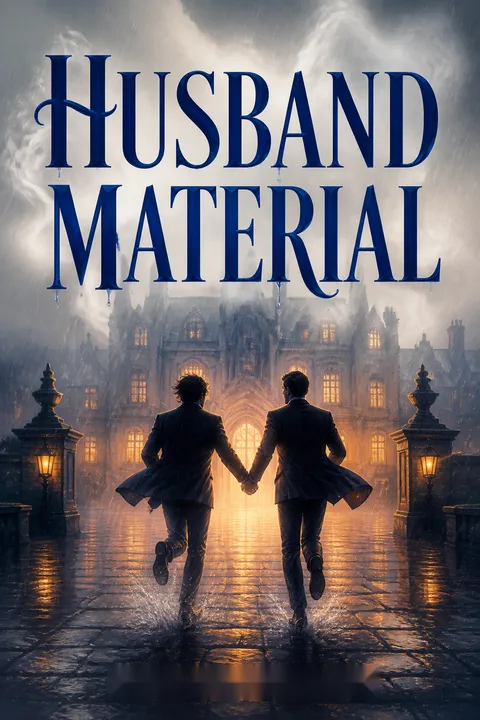
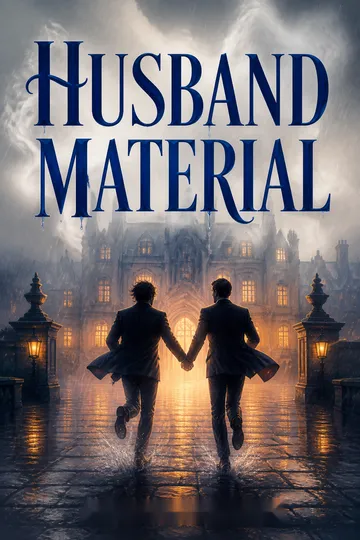
Luc and Oliver walk into the ceremony room together and face the friends, relatives, and coworkers gathered to watch them marry. Oliver explains that they have decided marriage is not right for them, but that they intend to stay together; he invites everyone to enjoy the party and its open bar. Then he takes Luc’s hand, and they run out through the venue into a sudden London downpour.
Rain shines on the pavement, and umbrellas bloom in rainbow colors around them. The guests have traveled, planned, and dressed for a wedding that will not happen, but Luc and Oliver leave without disguising their decision as a breakup. Their public exit makes the resolution plain: the relationship remains, while the ceremony and legal status do not.
The ending does not treat marriage as either a universal triumph or a failed romance. The couple’s public announcement accepts the inconvenience they have caused rather than hiding behind a private excuse, while their departure turns the expected aisle procession into an escape they choose together. The rainbow umbrellas echo the symbols that once divided them, now appearing in the world without either man having to organize or endorse them. What matters is not that Luc and Oliver find a perfect form, but that they stop using form as a substitute for mutual understanding.
Analysis
Husband Material treats marriage less as a romantic destination than as a cultural form that presses on people unevenly. Luc and Oliver are surrounded by weddings that seem to confirm different versions of adulthood: Bridget’s improvised garden ceremony makes devotion communal; Miles and JoJo’s queer celebration makes visibility joyful; Alex’s cathedral wedding ties love to inherited class and religious tradition. None is simply right or wrong. Each makes visible the assumptions its participants can inhabit, resist, or overlook.
Luc’s central struggle is to stop using performance as evidence. He performs cheerfulness when wounded, jokes when he needs reassurance, and finally reaches for marriage as a gesture large enough to carry feelings he cannot articulate. Oliver’s struggle runs in the opposite direction. He is so practiced at responsibility and accommodation that he risks confusing other people’s expectations with his own convictions. Their conflicts over rainbows, music, and venues matter because they expose these habits, not because the objects themselves are profound.
The two family histories deepen that conflict. Luc has learned that a parent can turn intimacy into publicity and abandon promises without consequence. Oliver has learned that care can coexist with belittlement, and that approval may always depend on obedience. The funeral refuses to make Oliver’s father either a saint or a monster, allowing love, anger, gratitude, and regret to remain in the same account. That complexity echoes the book’s larger resistance to tidy moral categories.
The ending does not reject marriage as meaningless or claim that private love is automatically more authentic. It rejects the idea that one public form must certify every relationship. Luc and Oliver’s choice is significant because they make it together, after finally naming what each fears losing. Their commitment remains serious precisely because they stop asking a ceremony to speak in their place.
Review Summary
Husband Material receives deeply divided reviews. Many readers praise the humor, Joe Jameson's narration, and exploration of queer identity, finding it a realistic portrayal of relationship challenges. However, numerous critics express disappointment, citing repetitive conflicts about rainbow wedding décor and heteronormativity, lack of character growth, excessive arguing, and an unsatisfying ending where Luc and Oliver cancel their wedding at the altar. Common complaints include Luc's self-centered behavior, poor communication between the couple, an underdeveloped primary conflict introduced too late, and feeling the sequel undermined the beloved first book. Several wished they'd never read it.
People Also Read



Characters
Lucien O'Donnell
A self-mocking survivorLuc is a quick-witted charity worker whose jokes often arrive before his feelings do. The son of two famous musicians, he has learned to expect attention to be unreliable and affection to come with strings attached. Betrayal by his former boyfriend and disappointment in his father have made him suspicious of stability, even as he longs for it. His loyalty to Bridget and love for Oliver draw him into situations he would rather evade. Luc’s growth lies not in becoming unafraid or perfectly articulate, but in learning to distinguish a boundary from a punishment and a grand gesture from an honest choice.
Oliver Blackwood
A careful, devoted barristerOliver is a criminal barrister whose precision, consideration, and strong sense of responsibility contrast with Luc’s improvisational humor. Raised in a family where approval is conditional and emotions are managed through restraint, he has learned to perform competence even when he feels uncertain. He is thoughtful about ethics, veganism, and the consequences of his choices, but his care can become an attempt to anticipate what others want. Luc makes him feel accepted without requiring him to be polished, while also challenging him to examine which inherited expectations he still follows.
Bridget Welles
Luc's crisis-loving best friendBridget, usually called Bridge, is Luc’s oldest and most steadfast friend. She believes deeply in romance and weddings, yet is also practical enough to organize people through catastrophe. Her optimism can make her dismissive of nontraditional choices, but her generosity is genuine: she repeatedly makes space for Luc’s fears and notices when he is exhausted before he does. Bridget’s friendship gives Luc a model of commitment grounded in years of showing up, not in a perfect ceremony or a dramatic declaration.
Miles Greene
Luc's polished former loverMiles is Luc’s former boyfriend, charming and practiced at smoothing over awkwardness. Their relationship lasted years, but its ending left Luc with a lasting distrust of public intimacy and easy apologies. Miles tends to frame difficult situations in ways that make his own wishes sound reasonable. His polished manner can conceal the self-interest beneath it, making him a useful contrast to Oliver’s more careful, accountable form of care.
Tom Ballantyne
Bridge's private, steady fiancéTom is Bridget’s partner, a reserved man whose work regularly takes him out of contact. His calmness can be mistaken for evasiveness, particularly by friends whose histories make uncertainty feel dangerous. He is committed to Bridget and shares her sense of humor, though his secrecy can complicate trust and ordinary wedding planning.
JoJo Ryan
A camera-ready romanticJoJo is a young online creator with a polished public image and a sincere, vulnerable streak beneath it. He is affectionate and hopeful, but fame has taught him that strangers can turn personal choices into public judgment. His relationship with Miles makes him confront questions about trust that Luc knows intimately. JoJo’s openness gives Luc a chance to practice compassion without pretending that past harm did not occur.
Odile O'Donnell
Luc's irrepressible motherOdile is Luc’s mother, a French musician with a warm, teasing manner and little patience for unnecessary formality. She loves Luc fiercely but can feel hurt when he assumes she is less important than his difficult father. Her humor and unconventional habits make her hard to embarrass, though she is perceptive about her son’s evasions. Odile offers both practical help and blunt perspective, while allowing Luc to make mistakes without confusing them with a lack of love.
Jon Fleming
Luc's self-serving rock-star fatherJon is Luc’s famous father, a musician skilled at turning personal experience into public attention. His charisma can make promises sound effortless, but he is unreliable when asked to act for someone else. Luc’s relationship with him is shaped by a long history of absence, self-promotion, and disappointment. Jon’s fame gives him social power, yet it does not give him the emotional consistency Luc wants from a parent.
Priya
A blunt, fiercely loyal artistPriya is Luc and Bridget’s friend, a goth artist with a sharp tongue and a practical streak. She refuses sentimental explanations that do not fit the facts, but she shows up with food, transport, and the blunt advice her friends need. Her relationships with Theresa and Andi challenge assumptions about exclusivity and conventional romance. Priya’s loyalty is expressed less through reassurance than through making sure nobody faces a crisis alone.
Alex Twaddle
A bewilderingly posh colleagueAlex works at Luc’s charity and combines a genial manner with an almost supernatural inability to understand jokes. He is wealthy, sheltered, and steeped in aristocratic assumptions, yet rarely malicious. His marriage plans expose the distance between inherited social tradition and emotional self-knowledge. Alex’s earnestness makes him both a comic presence and an unobtrusive source of pressure on Luc’s ideas about adulthood.
The James Royce-Royces
A married, devoted duoThe two James Royce-Royces are Luc’s friends, a married couple whose shared name and affectionate competitiveness regularly confuse their circle. They are prosperous restaurateurs and devoted new parents to Baby J. Their relationship gives Luc a close-up view of marriage and family life, complete with tenderness, logistics, and comic overinvestment in their child’s milestones. They are supportive without always understanding why Luc resists conventional advice.
Baby J
The beloved adopted sonBaby J is the adopted son of the two James Royce-Royces. He is too young to participate in the group’s plans, but his presence changes how his parents and friends organize themselves. His small milestones become a source of delight for the adults around him.
Liz
A vicar among Bridget's friendsLiz is Bridget’s friend and a vicar who is meant to officiate at the wedding. She is conscientious and compassionate, but her affection for Bridget sometimes leads her to share information before she understands its consequences. Her faith is practical rather than self-righteous, and she is willing to laugh at herself.
Rhys Jones Bowen
CRAPP's enthusiastic streamerRhys runs social media for the charity and brings an influencer’s confidence to every situation, whether or not anyone has asked to be filmed. He is gregarious, politically opinionated, and often oblivious to how his improvisations affect others. His optimism can turn a small misunderstanding into an event, but it also helps draw a disparate group into shared action.
Ana with one N
Rhys's candid, self-made dateAna is Rhys’s date, a former teacher who now earns money through online adult content. She speaks plainly about work, financial pressure, and sexual autonomy, refusing to let other people’s discomfort define her choices. Her confidence unsettles the charity’s more conventional staff and gives her a perspective independent of Rhys.
Tyler
A trans artist with biteTyler is an artist whose sculpture draws on the long delays he faced seeking gender-affirming care. He is angry about institutional neglect but retains a playful, flirtatious manner. His brief connection with Luc is open and bounded, offering an example of attraction that does not depend on secrecy or self-destruction.
Christopher Blackwood
Oliver's globe-trotting brotherChristopher is Oliver’s younger brother, a doctor whose humanitarian work keeps him far from home. He and Oliver have grown up interpreting their parents’ expectations differently, and each has reasons to believe the other was favored. Christopher’s independence is sincere, though it has also left Oliver carrying family responsibilities. His marriage to Mia gives him a life and partnership distinct from the Blackwood household.
Mia
Christopher's perceptive wifeMia is Christopher’s wife and an observant presence in the Blackwood family. She recognizes how their parents’ comparisons have distorted the brothers’ relationship and tries to interrupt their competition over who suffered more. Her directness is tempered by patience, and she often sees the emotional pattern before either brother can name it.
Miriam Blackwood
Oliver's anxious, exacting motherMiriam is Oliver’s mother, courteous in manner and deeply invested in the family’s social expectations. She can express affection while also minimizing the importance of Oliver’s relationships with men. Her standards are presented as concern, which makes their emotional effect difficult for Oliver to challenge without guilt.
David Blackwood
Oliver's forceful, judgmental fatherDavid is Oliver’s father, a prosperous and forceful man who prizes discipline, self-reliance, and respectability. He can be generous in practical ways while making his approval difficult to earn. His assumptions about masculinity and sexuality shape the Blackwood family’s emotional climate, especially for Oliver.
Judy
Odile's aristocratic friendJudy is Odile’s wealthy friend, the owner of Pfaffle Court and a former officiant. She is irreverent, experienced, and cheerfully unconstrained by conventional expectations. Her estate and eccentric history make her an unexpected source of practical help when Bridget’s plans collapse.
Miffy
Alex's aristocratic fiancéeMiffy, whose formal name is Clara, is Alex’s fiancée and the daughter of an earl. She moves comfortably within the social world that overwhelms Luc, and her elaborate wedding reflects its traditions and resources.
Heather
A wary former friendHeather was once part of Luc and Miles’s social circle and remained closer to Miles after their breakup. She is perceptive enough to recognize that old grievances affected more people than Luc initially considered, and honest enough to acknowledge where she handled the rupture poorly.
Uncle Jim
A guarded Blackwood relativeUncle Jim is David’s brother and a member of the older Blackwood generation. He shares some of the family’s blunt humor but carries private regrets about the life he chose not to examine. His presence helps reveal how family silence can outlast the people who first imposed it.
Plot Devices
The Wedding Sequence
A series of relationship testsThe novel arranges its major events around other people’s weddings and a funeral. Bridget’s wedding tests Luc’s friendship and resourcefulness; Miles’s wedding forces him to face betrayal; Alex’s formal ceremony exposes differences between Luc and Oliver; the funeral confronts Oliver with family history. Each event offers a distinct social script for love and commitment, letting the central couple compare their own relationship with other people’s choices.
Wedding Logistics
Pressure made visibleBurned churches, unavailable venues, missing dresses, seating cards, bands, and guest lists make emotional disagreements concrete. The logistics are not merely comic obstacles: they force Luc and Oliver to decide who gets to shape their shared future and how much meaning to assign to ceremony. The more they try to make one perfect event represent both men, the more their different needs become visible.
Public Images
Private pain made publicTabloid coverage of Luc’s past and social-media photographs of his present turn intimacy into something observed by strangers. Miles once profited from exposing Luc’s relationship, while images from Luc’s party later prompt Oliver to question whether Luc’s happiness belongs to a world Oliver cannot share. Public visibility therefore carries both the threat of exploitation and the possibility of finding community.
Family Scripts
Inherited rules under pressureLuc and Oliver carry different family injuries into their ideas of commitment. Luc distrusts promises because his father repeatedly made himself the center of their relationship; Oliver has been trained to earn approval by meeting his parents’ standards. Wedding and funeral rituals bring those habits to the surface, forcing each man to ask whether a familiar form reflects his own values or merely the expectations he inherited.
The Abandoned Ceremony
Love separated from legal formThe wedding-day decision distinguishes the couple’s relationship from the institution they have been preparing to enter. Oliver’s objection and Luc’s agreement do not erase their commitment; they reveal that both men have confused a public ceremony with proof that their private bond is real. Their announcement to the guests turns that insight into a shared, accountable choice.
London Calling Series

About the Author

Download PDF
Download EPUB
.epub digital book format is ideal for reading ebooks on phones, tablets, and e-readers.








