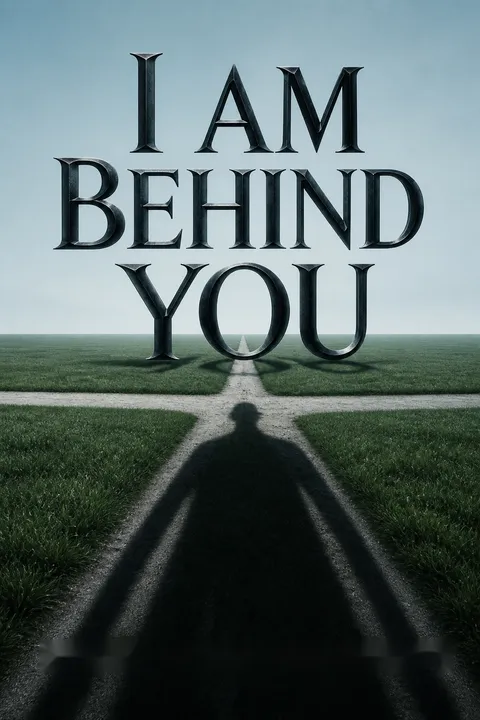


Plot Summary
The Campsite Vanishes
Six-year-old Molly wakes her mother, Isabelle, because the campsite toilets have disappeared. Outside their caravan, Isabelle finds only four caravans, four cars, and an immense, neatly cut field. Neighbour Stefan Larsson discovers the same absence when he wakes his wife, Carina, and their son, Emil. Nearby, former footballer Peter Sundberg argues with Isabelle over the missing surroundings and his drunken mistake with the car keys.
The other campers are still asleep, while Benny the beagle waits uneasily in his basket. Grass and a uniformly blue sky stretch to every horizon. No service block, lake, kiosk, road, or other people remain. The families have not merely lost their way; their familiar world has been removed around them.
The disappearance turns an ordinary holiday into a test of how people behave when their social setting is stripped away. The first responses are telling: Isabelle searches for someone to blame, Peter retreats into wounded pride, and Stefan tries to make the event manageable. These are not simply personality quirks; each is a practiced defense suddenly exposed by the empty landscape. Molly notices the absence before the adults can explain it, making the child both witness and unsettling guide. The field removes the distractions of ordinary life, but it does not erase the conflicts the campers brought with them.
A Horizon Without Sun
Peter tries to prove that the group is still near the campsite by following his GPS. Its screen insists that he is beside a lake, but when he drives toward the mapped shoreline, the car continues across unbroken grass. His phone has no signal, and when he looks up, there is no sun, only an even blue brightness with no clouds or visible source.
Stefan tests the sky by throwing a toy car upward; it falls back without striking anything. The sight intensifies his fear that everything he loves could vanish, so he returns to Carina and Emil. Peter, meanwhile, finds that the GPS map disappears at a boundary, leaving him alone in the blank field and unsure whether he can find his way back.
The failed map is more than a malfunction: it forces the characters to confront the gap between representations and reality. Peter initially trusts the device because it supplies familiar coordinates, but the invisible lake makes that confidence absurd. Stefan responds differently, using the existence of his family as his remaining proof of a livable world. Both men depend on external structures, one technological, the other intimate, yet neither can explain the field. The missing sun intensifies this uncertainty by removing the most dependable marker of time and orientation. Without ordinary reference points, each person must decide what to trust.
Songs Across the Void
While the group debates whether they have been transported or are sharing an illusion, a battery radio at Donald and Majvor Gustafsson's caravan plays Swedish pop songs without a presenter. Peter hears the same broadcast from his car, confirming that the signal reaches beyond the small camp, though it offers no explanation.
The campers move their caravans apart and organize searches in four directions. Stefan proposes using garden canes tied with cloth as markers, so explorers can follow straight routes and retrace them.
Peter, Stefan, Donald, and Lennart and Olof set out in separate cars. Their GPS devices sometimes show roads or familiar Swedish places that cannot be seen around them. The songs continue, a fragment of ordinary culture traveling through a place with no visible transmitter.
The radio offers continuity without communication. The campers can hear a familiar cultural world, but cannot answer it, locate its source, or learn whether anyone else is listening. This makes the broadcasts both comfort and provocation. Their choice to search systematically is an effort to recover agency through practical work, especially for the men who are accustomed to solving problems by acting on them. Yet the canes mark only the explorers' own routes; they do not make the landscape intelligible. The songs similarly preserve memory while withholding context, showing how recognition can soothe people even when it cannot guide them.
Crosses in the Grass
Majvor discovers a small cross marked on each caravan, apparently in dried blood. No one remembers seeing the marks before, and the campers cannot agree on their meaning.
Beyond the camp, Peter sees his dead father, Stefan recognizes the pale, beckoning figure he glimpsed while nearly drowning as a boy, and Donald encounters a mutilated image of his father. Emil also spots a thin white man in the distance, but Peter dismisses what his son saw.
Peter's GPS begins displaying places from his childhood, including the moment he lost his faith after his rabbit died. He realizes that the familiar divine presence he has resisted all his life is absent here. The figures appear personal, but their connection to the blood-marked crosses remains unexplained.
The apparitions turn private memory into something spatial and difficult to dismiss. Each person encounters not a shared monster but an image fitted to a formative wound, making the field feel less like a location than a mechanism that exposes buried experience. Peter's recognition that God is absent complicates his history: faith once helped him endure his father's violence, then collapsed when he blamed God for Diego's death. The crosses invite a shared interpretation, but the group cannot agree on one. Their uncertainty suggests that common danger does not automatically produce common meaning; people still approach it through their individual histories.
Molly's Dangerous Game
Molly draws shy Emil into games that shift from puppies and make-believe to threats about a monster. She demands that he keep secrets and swear on his mother's life, leaving him frightened but unable to resist her authority. At her urging, both children cut the gas hoses on their caravans, disabling the stoves and refrigerators.
Carina discovers the damage and confronts Isabelle, who refuses to believe Molly could be responsible. Meanwhile Lennart and Olof plant a flower, a potato, and dill in the strange soil; within an hour, new shoots appear. Stefan builds a makeshift phone platform and reaches his mother, who tells him his sick father is deteriorating. His call proves that somewhere beyond the field, ordinary life still exists.
Molly's play is a form of coercion disguised as childhood intimacy. She gives Emil a role, then makes affection and safety conditional on obedience, exploiting his trust and fear of disappointing adults. The severed hoses translate this unequal relationship into material danger for both families. Meanwhile, the plants' impossible growth and Stefan's fragile phone call pull in opposite directions: the field behaves by unknown rules, yet it remains connected to a human world. The juxtaposition prevents easy conclusions about whether the place is supernatural, psychological, or both. Each new piece of evidence increases the stakes without making the whole system clearer.
Donald Brings the Shotgun
Donald becomes convinced the field is a dream and treats disagreement as proof that others are part of it. His wife, Majvor, cannot persuade him otherwise. After Peter and Stefan ask to dismantle some of Donald's awning floorboards for a phone tower, Donald appears with his shotgun and fires at the group. Lennart and Olof later approach him peacefully, but Donald shoots near them too.
A bullet shatters a window in their caravan. Peter decides that Donald must be removed before someone is killed. He hooks Donald's caravan to the Cherokee and drives away with Donald inside, despite the older man's threats. The attempt to protect the others leaves Peter alone with an armed, unstable passenger and the GPS soon fails.
Donald converts uncertainty into a private theory that makes him its sole authority. Calling the others unreal allows him to dismiss their fear and justify violence while preserving his self-image as a man in control. Peter's decision to tow him away is both protective and deeply risky: it repeats Peter's habitual role as the person who acts when everyone else hesitates, but offers no clear plan for what comes next. The episode also makes a crucial distinction between leadership and competence. Peter takes responsibility, yet his choice can only relocate the danger, not resolve the conditions producing it.
The Tiger at the Crossroads
Carina persuades Isabelle to accompany her into the field, where their antagonism briefly gives way to exposed histories. Carina tells how grief and a violent, racist crowd shaped her youth; Isabelle recalls seeing a pale figure on a fashion-show screen years earlier, when she understood how empty her life as a beautiful commodity felt.
Their trip turns violent after Isabelle mocks Carina's tattoo, which commemorates that past. Carina attacks her, then freezes when she sees the black tiger that has haunted her since a brutal assault in Stockholm. Isabelle sees the pale figure she has long awaited. The two women stop fighting, and Carina helps the battered Isabelle back toward camp, though Isabelle remains drawn to the apparition.
The fight makes the women's conflict bodily before either can fully understand its source. Isabelle's contempt for Carina's tattoo touches a history Carina has tried to contain, while Carina's violence momentarily recreates the aggressive world she escaped. The tiger interrupts that cycle, but it does not explain it or offer absolution. Isabelle's response is different: she interprets the pale figure as a chance to escape the vacancy she has felt throughout her life. Each woman therefore meets the uncanny through a distinct psychological need, one through fear of her past and the other through yearning to leave herself behind.
Rain That Eats Metal
After Peter returns toward the camp, clouds rush across the sky and a procession of burned, screaming figures approaches. Rain begins to fall, eating through paint, plastic, metal, and human skin. Peter escapes in Donald's car, using a manual to shield himself from drops that burn through his clothing.
At camp, the others barricade themselves inside the caravans. Stefan and Carina cover their shelter with bedding, but Stefan crawls into the exposed alcove to rescue Emil's stuffed animals and is badly burned.
Peter shelters with Isabelle and Molly. Isabelle leaves the caravan and walks into the rain, apparently choosing its pain, while Peter and Molly survive beneath a mattress. Benny and Maud fight off a burning creature trapped under a caravan.
The rain makes the field's threat physical and indiscriminate. Earlier apparitions could be dismissed as projections, but acid that consumes a roof or burns Stefan's back cannot be contained within private belief. Survival now depends on ordinary materials, improvised shelter, and bodily sacrifice. Stefan's rescue of Emil's toys is especially revealing: he risks himself not to save an abstract symbol of childhood, but the objects that make his son's inner world tangible. Isabelle's exit shows the opposite response to terror. Where Stefan clings to connection, she seeks annihilation, treating pain as a route out of the life she cannot inhabit.
Blood Pays the Visitors
When the rain stops, the burned creatures return to the camp and climb onto the pale figures gathered at its crossroads. Each camper sees those figures differently: Lennart and Olof see travelling salesmen, Majvor sees James Stewart, and others see figures from their own memories.
The burned beings drink from them while the survivors watch without intervening; afterward, the pale figures stagger away diminished. Lennart and Olof's garden has been destroyed, and Majvor finds a century-old wedding ring, chain, and dental fillings where her caravan stood.
The objects suggest that earlier people suffered the same fate. Carina and Stefan trace flattened paths converging beneath the camp and recognize that they are living at an intersection, where repeated traffic has worn the grass down.
The feeding scene converts an inexplicable haunting into a repeated transaction: the pale visitors endure, the burned ones take what they need, and the observers remain outside the exchange. Yet the campers cannot tell whether the figures are victims, offerings, or something else. The old gold and fillings extend the crisis beyond the present group, making their survival feel contingent rather than exceptional. Carina and Stefan's tracks provide the first physical pattern that can be mapped, but a crossroads is not an exit. It is a place where routes meet, and therefore a place where different histories and possible futures become dangerously adjacent.
The Bloodman Falls
Abandoned in the field after Peter uncouples his caravan, Donald sees the bloodied figure of his father, who died in a sawmill accident when Donald was a child. He had spent decades blaming himself for pulling the log that caused the accident and preserving the image of his father with severed hands. This time Donald confronts the apparition and shoots it.
The Bloodman dissolves into a pale figure, and Donald remembers his father as loving rather than accusing. He returns to camp with Benny and Maud, but his new confidence collapses when he points the gun at Peter. Majvor throws a beer can at Donald's head, giving Stefan time to seize the shotgun and stop him from firing.
Donald finally separates the accident from the guilt that has organized his identity. Shooting the Bloodman is not simply an act of courage; it breaks the image through which he has continually punished himself. But emotional release does not immediately make him safe. He redirects his need for mastery toward Peter, showing how easily relief can harden into entitlement when it is mistaken for authority. Majvor's intervention matters because she acts rather than soothing or containing him. Her choice interrupts a familiar marital pattern in which she has managed Donald's volatility largely in private.
Molly Takes the Wheel
After the crisis, the campers begin dividing tasks and trying to live with the possibility that they may be stranded. Molly slips into the Cherokee and starts it while Emil is lying beneath the attached caravan, playing with his toys. The vehicle moves, and a wheel rolls across Emil's chest, breaking his ribs and leaving him near death.
His parents and the others carry him into the caravan, where Carina holds his hand and Stefan searches for a way to keep him alive. A red cross appears over Emil's heart. His Darth Maul lightsabers, crushed against him in his pocket, have left their shape there. Molly's game has crossed into irreversible physical harm, and the mark points back to the tracks through the camp.
The accident collapses the distance between Molly's imaginative violence and real consequence. Until now, adults have struggled to interpret her behavior as mischief, trauma, or something stranger; Emil's injuries make that ambiguity impossible to keep at a safe distance. The cross over his heart echoes the marks on the caravans, while the crushed toy weapons link his private play to the force of the vehicle. The scene also strips the adults of their usual competence. They can carry Emil, hold him, and hope, but they cannot repair him. Their helplessness makes the coming choice to follow the tracks feel less like adventure than necessity.
Walk the Line Home
Emil briefly wakes and tells his parents that they must go into the darkness. Carina has already followed the black tiger away from camp, fearing that her past has marked the family for punishment. Stefan finds her and brings her back, then carries Emil on a sofa cushion into the dark boundary. Carina follows.
Inside, they cannot see, but Emil recognizes a small caravan as a door and leads his parents toward it. The three emerge onto the familiar Swedish campsite, and Emil is whole again. Their relief is interrupted when Donald arrives in the Beetle and leaves towing his caravan, offering no explanation. The family has escaped the field, but the crossing has not solved why it existed or what happened to everyone else.
Stefan's decision answers the story's central practical question with an act of trust rather than a theory. He follows Emil into darkness because remaining in the visible world has become more dangerous than entering the unknown. Carina's return is equally important: she abandons the belief that her past must be paid for through self-destruction and reenters the family. Emil's role reverses the usual parent-child arrangement; his perception supplies the route adults could not discover. The return to the campsite offers restoration, but not a complete explanation. Donald's unexplained departure keeps the ending from becoming a simple rescue narrative.
Peter Enters the Dark
Peter's journey ends at the towering wall of darkness, drawn by the pull he feels in his blood. He remembers Anette, the older football coach with whom he shared an intense, brief encounter as a teenager. Her scent of shower gel and disinfectant guides him through the dark to a lit sign from the changing room where they first became lovers.
There he finds Anette transformed into an enormous woman whose body expresses a desire Peter never admitted to himself. He climbs into her embrace and stops trying to return. The scene follows Peter's repeated longing to escape his obligations, from his failed marriage to his abandoned football career, but gives that escape an intimate and unsettling form.
Peter has spent much of the novel confusing freedom with the removal of demands. The field initially offers him a kind of ecstasy because nobody can ask anything of him; his final passage turns that fantasy into surrender to a private desire. Anette's transformed body is not a conventional reunion but a revelation of what Peter has concealed even from himself. The encounter also complicates his public identity as a helpful, reassuring trainer. His wish to care for others coexists with a wish to be held beyond responsibility. The darkness grants that wish, though the novel leaves its cost and permanence uncertain.
Majvor Takes the Gun
Donald tells Majvor he intends to leave her behind, insulting her body and the life of care she built around him. Majvor drives into him with the car, pinning him against their damaged caravan, then severs one of his hands with an axe. She walks away with the James Stewart figure she had imagined as a companion, only to discover that her fantasy has become cruel and sexual rather than tender.
In the dark, songwriter Peter Himmelstrand offers her a revolver. Majvor returns, shoots the Stewart figure, and claims the cowboy identity she had mistaken for a romantic rescue. Her departure is not a reconciliation with Donald or a return to her old faith; she chooses a path of her own.
Majvor's violence echoes Donald's childhood trauma, but the echo does not make her action a straightforward liberation. Her long habit of caring for others has left her with little practice in wanting something for herself, so she first projects that desire onto a famous screen hero. When the fantasy exposes its limits, she destroys the image rather than preserving it at any cost. The revolver becomes a tool for claiming agency, but also a sign that agency in this world may be inseparable from violence. Majvor's choice is therefore both emancipation and a troubling inheritance of the power she has endured.
The Last Crossroads
Lennart and Olof remain at the camp as darkness rises around the horizon. Their partnership began as a practical refuge after both wives left, and they have spent years sharing work and a home without naming the intimacy between them. Facing the end, they try to make love but cannot; instead, Lennart starts an Abba song and they dance together.
Elsewhere, the Molly who has lost her human form continues along the tracks, while Isabelle joins the burned figures in their ceaseless walk. The ending gives no single explanation for the field or its inhabitants. Some return, some enter darkness, and some keep moving, leaving the crossroads as a place of passage rather than a final answer.
The closing paths refuse to rank one response to the field as the single correct one. Lennart and Olof cannot force their relationship into a form they do not desire, but their dance gives their affection a physical expression they had long avoided. Isabelle and Molly, by contrast, become part of the very process that has threatened the campers, though their transformations carry different histories and meanings. The crossroads thus holds return, surrender, companionship, and continued wandering at once. By ending with movement rather than explanation, the novel makes uncertainty structural: what matters is not a final map of the place, but what each person chooses or is able to do within it.
Analysis
I Am Behind You places ordinary people in a landscape that seems designed to make their inner lives visible, but it resists reducing the supernatural to metaphor. Peter's guilt, Donald's grief, Carina's shame, and Isabelle's emptiness shape what they see, yet corrosive rain, crossed tracks, and physical injuries insist that something external is happening too. The novel's central tension is not simply whether the field is real. It is whether a person can interpret an experience without forcing it into the story that already protects them.
The characters use different defenses. Peter reaches for action and dreams of freedom from obligation. Stefan preserves moments of family happiness, trying to make memory a shelter. Majvor turns care into routine, while Donald converts fear into control. Their habits help them survive until those habits become dangerous. Molly's games sharpen the same question in miniature: imagination can make fear bearable, but it can also direct another person into harm.
The crossroads gives the novel a physical form for these competing lives. Paths converge, old remains surface, and visitors appear in guises shaped by those who encounter them. Yet no single interpretation accounts for every event. Some people return to familiar life; others enter darkness, remain behind, or continue walking. The book's ending therefore offers choices and transformations without a universal verdict. Its deepest insight is that flaws are not isolated defects to be discarded. They are habits of survival, capable of protecting love or reproducing injury, depending on whether a person can finally see what those habits are doing.
Review Summary
Characters
Peter Sundberg
Restless former footballerPeter is a former professional footballer whose career, marriage, and failed business have all fallen short of the success he once expected. He now works as a personal trainer and draws self-worth from helping clients regain confidence, even as he resents being needed at home. His marriage to Isabelle is strained by years of mutual contempt, and he struggles to connect with their daughter, Molly. Peter acts quickly when a crisis demands action, but his bravado often masks a wish to escape responsibility. Childhood violence and a complicated history with faith shape his sense of freedom, guilt, and what it means to protect someone.
Isabelle Sundberg
Beauty haunted by emptinessIsabelle is a former model whose beauty has been both livelihood and trap. She is sharp, controlling, and often cruel, especially toward Peter, but her hostility covers a persistent sense that ordinary life cannot reach her. A thyroid condition makes regular food essential, linking her emotional distress to urgent physical need. She uses glamour, luxury, and extreme horror films to manage feelings she cannot comfortably share. Her relationship with Molly is complicated by distance and shame, while her marriage to Peter has become a contest over power and disappointment. Isabelle wants to be seen as a person rather than an image, though she rarely knows how to ask for that directly.
Molly Sundberg
Commanding, uncanny childMolly is six, observant, attractive, and far more commanding than adults expect a child to be. After a disturbing early separation from her mother, her tantrums give way to an unnerving calm and a talent for directing other children. She can turn play into an instrument of pressure, making Emil feel both chosen and afraid. Her parents disagree about how much of her behavior is deliberate, and that uncertainty isolates her even inside her family. Molly's games draw on stories, images, and fears around her, but she seems to understand their power in ways the adults do not. She is both a child seeking control and a presence the others cannot easily explain.
Stefan Larsson
Practical family anchorStefan runs a small grocery store and prefers tangible problems with workable solutions. He is devoted to Carina and Emil, though anxiety makes him cling to ordinary routines and treasured memories as protection against loss. As a child, he nearly drowned and encountered a pale figure, an experience that left him fearful of what might exist beyond familiar life. In the crisis, Stefan organizes searches, builds improvised equipment, and tries to keep the group functioning. His carefulness can become avoidance, especially when he struggles to talk about what frightens him. Family life gives him both his deepest vulnerability and his strongest reason to act.
Carina Larsson
Survivor guarding her pastCarina is Stefan's wife and Emil's mother, a capable shopkeeper who has built a stable life after a troubled youth. The death of her mother, substance abuse, and years among violent companions left her with a persistent fear that people will disappear when she lets them out of sight. She is practical and direct, but can become fierce when she believes someone threatens her family. Carina's marriage to Stefan rests on a long history that is not always easy for her to disclose. Her tattoos carry a private reminder of what she survived, and her instinct to keep moving often competes with her need to stay close to the people she loves.
Emil Larsson
Imaginative, anxious boyEmil is Stefan and Carina's young son, a shy, thoughtful child who relies on his parents while building elaborate games with stuffed animals and Star Wars figures. He notices details adults overlook and often translates frightening events into stories he can manage. His imagination is not merely an escape: it gives him a vocabulary for experiences he cannot explain directly. Emil finds friendship difficult and is vulnerable to Molly's confidence, yet he can show unexpected insight when the adults around him falter. His bond with his parents is affectionate and trusting, and his games reveal how a child tries to make danger understandable without fully understanding it.
Donald Gustafsson
Bullying, wounded patriarchDonald is a successful lumberyard owner who prizes American cars, guns, masculine authority, and the appearance of self-sufficiency. His bluster often conceals a deep fear of weakness, senility, and losing control. He expects others to respect his decisions, while treating disagreement as an insult. His wife, Majvor, has spent decades accommodating his moods and keeping their household intact. Donald's childhood was shaped by a catastrophic accident involving his father, a memory he has never properly faced. He is capable of warmth and loyalty, but his long memory for grievances and appetite for power can turn those qualities into threats.
Majvor Gustafsson
Patient wife with resolveMajvor has spent much of her adult life caring for Donald and raising their four sons. She is hospitable, religious, and skilled at drawing people together through food and attention to small needs. Her patience is not passivity: she knows how to set a boundary, though she rarely does so without serious cause. She has learned to live with disappointments by keeping faith, domestic rituals, and private fantasies close at hand. A fondness for James Stewart's western roles gives her a secret imaginative life beyond her marriage. Majvor's kindness is genuine, but it has also become a duty she is beginning to question.
Lennart Österberg
Reserved dairy farmerLennart is a practical, observant farmer who shares his life and work with Olof. He tends to be cautious with feelings, preferring crosswords, routines, and useful tasks to emotional declarations. His childhood included an unsettling encounter with a healer who seemed to know things she should not have known, leaving him wary of strange claims. Lennart is deeply loyal, especially when someone he cares about is in danger, and his steadiness can help others regain perspective. He and Olof have built a companionship that is both ordinary in its daily habits and difficult for Lennart to name. He values their shared life even when he cannot explain it.
Olof
Gentle farmer and companionOlof is Lennart's longtime companion, a dairy farmer with a reflective temperament and a habit of turning questions over before answering. He is less guarded than Lennart and more willing to consider unfamiliar possibilities, though he does not pretend to understand everything. After his wife left, he and Lennart gradually made a home together, sharing work, quiet rituals, and the comfort of another person's presence. Olof's gentleness is not weakness; he can read tension in others and offer care without demanding an explanation. He is also prone to daydreaming, especially about a peaceful future in which their families and farms remain connected.
Benny
Watchful beagleBenny is Donald and Majvor's beagle, whose understanding of the crisis comes through familiar scents, territory, food, and the movements of the people around him. He is wary of strangers and easily frightened, but his instincts register changes the humans overlook. His shifting relationship with Maud, the neighbouring cat, gives the animals a small parallel story of rivalry and uneasy cooperation.
Maud
Independent orange catMaud is the dairy farmers' cat, watchful and self-possessed. She ignores Benny's attempts to intimidate her, then meets him on terms he does not expect. Her calm independence contrasts with the human characters' need to explain and control events. Maud's presence also gives Benny a companion as the familiar order of the camp breaks down.
Peter's father
Violent childhood shadowPeter's father was an abusive, alcoholic presence whose violence shaped Peter's childhood and his mother's life. Peter remembers him through fear, shame, and the long effort to escape him. His absence does not erase his influence; Peter's ideas about danger, courage, and freedom still carry the imprint of their relationship.
Anette
Peter's first deep attachmentAnette is a former national footballer who works as a coach when Peter meets her at a youth training camp. Older than Peter and recently retired from playing, she is practical and restrained, yet their brief intimacy makes a lasting impression on him. Their connection is defined by its timing as much as its desire, and Peter returns to its sensory details years later.
Peter Himmelstrand
Songwriter in the darknessPeter Himmelstrand is a Swedish songwriter whose old songs keep reaching the campers through the unexplained radio broadcasts. His music becomes an unlikely thread between the field and the world the characters remember. He also appears as a weary, sardonic presence in the darkness.
Plot Devices
The Empty Field
Removes familiar bearingsThe field replaces the campsite's roads, buildings, lake, trees, animals, and visible sun while preserving the four caravans and their occupants. Its level grass and curved horizon frustrate attempts to judge distance or direction. GPS maps sometimes display places the campers cannot see, while phones work only under limited conditions. The setting forces practical choices, such as marking routes with canes, but does not reward a straightforward solution. It functions as both physical trap and exposed inner landscape, where each character's memories and fears become unusually difficult to ignore.
The Blood Crosses
Marks the intersecting pathsSmall crosses in dried blood appear on all four caravans, and a cross later appears over Emil's heart. The campers connect them to tracks worn through the grass, which meet beneath the camp. The marks suggest that the caravans and their occupants have been placed at a meaningful intersection, but no one can establish who made them or what they demand. The motif links the unexplained geography to bodily vulnerability and to remnants left by earlier people. It gives the group a concrete pattern to observe without supplying a reliable key to the pattern's meaning.
Memory-Shaped Visitors
Externalizes private woundsPale, expressionless figures appear at the field's edges, but different observers perceive them through personal memories. Peter sees versions of his father, Donald sees the bloodied aftermath of his father's accident, Majvor recognizes James Stewart, and Lennart and Olof see travelling salesmen. Emil interprets figures through Star Wars and other stories. These shifting appearances prevent the group from agreeing on what is physically present. They also make the supernatural inseparable from psychology: the visitors seem to expose what each person fears, wants, or has never managed to resolve.
The Corrosive Rain
Turns danger into a siegeDark clouds bring rain that consumes paint, plastic, metal, and human skin. Burned figures flee the downpour and seek shelter near the campers, while caravans provide only temporary protection. The survivors improvise with mattresses, bedding, and work surfaces, and Stefan risks severe burns to save Emil's stuffed animals. The rain makes the field's danger concrete and communal, forcing characters to share shelter regardless of their personal conflicts. Its arrival and retreat also reveal that the landscape operates by rules the campers can observe but cannot control.
The Radio Songs
Preserves a broken connectionBattery radios broadcast old Swedish popular songs despite the failure of mobile phones and internet access. The songs give the campers familiar melodies and clues about a continuing connection to somewhere beyond the field, but no announcer explains the signal and no listener can respond. Peter recognizes the songwriter behind the playlist, while Majvor records the songs as if careful attention might reveal a pattern. The broadcasts create comfort without providing rescue, making sound a fragile substitute for contact and a recurring link between characters' memories and the unexplained place.
Platserna Series
Download PDF
Download EPUB
.epub digital book format is ideal for reading ebooks on phones, tablets, and e-readers.








