

Plot Summary
Prologue
Blackeberg was built as a clean, modern suburb, its apartment blocks arranged on land with little local history and no old church to suggest ghosts might linger there. On October 18, a father and daughter moved in after dark with almost no furniture.
No neighbor noticed. Weeks later, police questioned the driver who had brought them from Norrköping. He remembered the unusual night delivery and the girl, but not enough to understand what he had carried into the suburb.
The opening makes Blackeberg’s newness more than a backdrop. Its planned streets and missing past leave residents without a shared language for what has arrived among them. The late-night move is practical concealment, but it also places the newcomers outside the ordinary rituals by which a neighborhood recognizes itself. The driver’s belated testimony turns a mundane act of delivery into an origin story, while the suburb’s rational confidence becomes part of its vulnerability. Horror enters not an ancient ruin but a place convinced that nothing old, strange, or unaccountable belongs there.
A Killer in the Forest
On October 21, thirteen-year-old Oskar Eriksson endures another day of humiliation at school. When his bullies corner him in a bathroom, he submits to their taunts to avoid a beating, then walks into the woods with a knife and imagines Jonny Forsberg as his victim. Nearby, Hakan Bengtsson, a frightened middle-aged man, has brought gas and tools because he believes he must collect blood for someone he serves.
He abducts a boy from the path, kills him, and drains him. Oskar hacks at a rotten tree while picturing Jonny’s death, unaware that the real murder is happening close by. The next day, the crime report gives his fantasy an unnerving echo, and he wonders whether his game somehow caused it.
The parallel between Oskar’s make-believe violence and Hakan’s actual killing makes fantasy feel dangerous without granting Oskar supernatural agency. Oskar’s imagined revenge gives him temporary control over a life in which even his body betrays him, but the newspaper’s matching details turn that comfort into fear. Hakan’s hesitation complicates the crime: he does not act with triumphant cruelty, but under a coercive belief that failure will bring something worse. The scene establishes two forms of powerlessness, one social and intimate, the other supernatural and lethal, while refusing to confuse the harm caused by either.
The Girl on the Jungle Gym
That night, Oskar takes a kitchen knife into his courtyard and practices threatening the tree as if it were Jonny. A dark-haired child appears on the jungle gym. She says she cannot be his friend, yet stays to talk; Oskar notices her strange smell, bare arms, and strength when she jumps down. The next evenings, she returns and studies his Rubik’s Cube, which she has never seen before.
She solves it in hours, astonishing him. When she leans close, Oskar sees her expression shift toward hunger and touches her cheek, interrupting her approach to his throat. She pulls away. She gives her name as Eli, and Oskar gives his. Their awkward curiosity becomes a small, guarded friendship, with the solved Cube as its first shared secret.
The meeting begins with danger but does not resolve into a simple rescue or attack. Oskar approaches Eli armed, rehearsing the dominance he lacks at school; his first genuine contact instead interrupts her apparent predation. The Cube gives them a way to meet as equals, through concentration and play, before either can explain the larger facts of their lives. Eli’s refusal of friendship is also a boundary, not merely a threat. Oskar’s curiosity persists because he recognizes loneliness in her, while his instinct to touch her cheek quietly changes the terms of their encounter.
Jocke Vanishes Beneath Leaves
On a cold night, Jocke, one of Blackeberg’s bar regulars, hears a child asking for help in an underpass. He carries Eli, believing she is injured, and she fastens herself to him and drinks his blood. When he is dead, Hakan finds the body, discovers Eli has twisted Jocke’s neck, and drags him to the shore. He weights the corpse and sinks it beneath the water rather than expose Eli.
Jocke’s friends notice his absence, but the police have no body and little to investigate. Gosta, who saw the child waiting in the underpass, knows what happened yet cannot face a formal interview. At the restaurant, Lacke briefly befriends Hakan without understanding who he is, while the others fill the silence with ordinary talk.
Jocke’s death converts Eli’s private need into a communal absence. His kindness is sincere, but the act of carrying a vulnerable-looking child gives her access to him, exposing the lethal risk hidden inside the neighborhood’s everyday codes of help. Hakan’s disposal of the body is an act of protection that also deepens his complicity. Gosta’s silence is not indifference: fear and shame make testimony feel more dangerous than keeping the secret. Lacke’s casual encounter with Hakan adds tragic proximity, showing how recognition often fails not because people never meet, but because they do not know what they are seeing.
The Price of Staying Alive
Hakan’s history explains his devotion without excusing it. Once a Swedish teacher, he lost his home and work after a scandal and drifted into drinking before Eli found him and gave his life direction. He has assisted her before, but resists when she needs blood again. In Stockholm’s public library, he encounters a toothless boy being sold for sex; instead of using him, Hakan gives him the money he had meant for charity.
Yet his refusal cannot last. At a swimming pool, he anesthetizes young Mattias and prepares to drain him. The boy wakes and screams, bringing witnesses to the changing room. Trapped, Hakan pours acid over his own face to prevent recognition and is taken to hospital, critically injured.
Hakan’s moral life is fractured rather than absent. His refusal to exploit the boy in the library shows that he can recognize another person’s suffering, but that recognition does not free him from his service to Eli. Instead, his compassion coexists with the violence he commits to sustain her. The acid is both an attempt to erase his identity and a self-inflicted sentence: he would rather become unrecognizable than be separated from the role that gives his existence meaning. His story asks whether devotion can remain loving once its cost is repeatedly paid by strangers.
A Code Through Concrete
After Oskar refuses Jonny’s order to clear stones from a sandbox, Jonny, Micke, and Tomas wait for him and whip him with hazel branches. Tomas strikes his face, leaving a long cut, and Oskar hides the truth from his mother. In the school bathroom, he looks at his bloodied cheek and imagines the clown in the mirror telling him to kill.
Eli sees the wound that evening and urges him to fight back, even against a group. Oskar gives her a page of Morse code so they can communicate through their shared wall. Their taps turn the concrete between their apartments into a private channel. Eli also promises she can help him, offering the first assurance that someone might stand beside him.
The beating makes Oskar’s submission visible in a wound he cannot entirely conceal, while his lie to his mother preserves the shame that keeps him isolated. Eli’s advice is not a conventional lesson in courage; she gives him permission to treat self-defense as legitimate, though her suggestion of weapons carries its own danger. The Morse code matters because it creates contact without requiring either child to expose everything face to face. Their communication is both intimate and controlled, a way to be close while maintaining the walls that have so far protected them.
The Ice Gives Oskar Back
Oskar begins to push back at school. After Jonny ropes him like a horse in the gym, Oskar throws the jump rope away and joins Mr. Avila’s strength training, where he finds a brief refuge from his classmates. During a school outing on the frozen bay, Jonny and Micke drag him toward a hole in the ice.
Oskar twists free, hits Jonny with a heavy stick, and leaves him bleeding on the ice. Rather than keep striking, he gives Jonny his sock to press against the wound and runs for help when the boy vomits. At the same time, younger skaters discover Jocke’s head frozen into the lake. Police recover the body, proving that the missing regular was murdered.
Oskar’s retaliation changes his position but does not make violence feel like victory. He chooses the moment and lands a serious blow, then responds to Jonny’s injury with practical care. That combination separates self-protection from the revenge fantasy that first gave him comfort, although the distinction remains fragile. The discovery of Jocke’s body enlarges the story’s danger from a whispered rumor into public fact. Oskar’s private struggle and the community’s search for a killer now occupy the same landscape, where an act of survival and evidence of a supernatural crime emerge within moments of each other.
Blood on the Basement Floor
Proud of having stopped Jonny, Oskar brings Eli to the basements and tells her what happened. They play at knighthood among discarded bottles, then Oskar proposes sealing their friendship by mixing blood. He cuts his palm and offers Eli the knife. Her composure collapses. She crawls toward the drops on the concrete and licks them up, warning him to leave before she hurts him.
Oskar backs away, frightened by the hunger he has just witnessed. He later visits his father, but the weekend becomes another disappointment: his father drinks with a friend, and Oskar leaves in the night, hitchhiking back toward Blackeberg. The cut on his hand leaves him afraid that he has been infected, even as he longs to return to Eli.
Oskar’s blood pact is an attempt to make affection durable through a ritual he does not understand. Eli’s refusal is an act of protection, but its physical urgency reveals that intimacy cannot erase the danger of her need. His retreat is therefore both rational and painful: the friend who makes him feel seen is also someone he may not safely touch. The failed visit to his father compounds the rejection. Oskar’s longing for Eli grows not because she is uncomplicated, but because ordinary adult care has proved unreliable and she has offered a form of recognition no one else has.
Virginia Takes the Infection
Virginia, a grocery clerk and longtime companion to Lacke, is attacked by Eli on a dark path. Lacke drives the child away and carries Virginia home, but her wounds begin to heal strangely. She recoils from sunlight and ordinary food, and a small cut sends her into a consuming hunger for blood. At first she tries to manage it alone, cutting herself and drinking her own blood.
She then attacks a sick woman in her home, but the cancer-tainted blood leaves her ill and disoriented. When Virginia approaches Gosta, his cats sense the change and swarm her. Lacke fights them off and gets Virginia to hospital. There, she understands that the infection is taking control of her body and that she may soon endanger people she loves.
Virginia’s transformation makes the supernatural cost legible through a person who had previously belonged to ordinary routines of work, food, and companionship. Her first response is not predation but self-harm, an effort to contain a need she experiences as an invasion. The failed attack on the cancer-stricken woman shows that the new hunger is not a simple appetite, and the cats’ collective resistance gives her condition a bodily witness beyond her own perceptions. Lacke’s care brings her to safety, but it cannot return her to the life she recognizes.
A Father's House Fails
Oskar reaches his father’s home hoping for a quiet weekend and the familiar pleasures of riding a moped and eating together. For a while, father and son share food, games, and old routines. Then the father’s friend Janne arrives, drinks with him, and takes over the evening. Oskar burns their unfinished game sheets in the stove and waits for the drunken version of his father to come into his room.
Instead, he leaves in the night, carrying his childhood rubber boots as a keepsake. He hitchhikes to Norrtälje and takes the subway back to Blackeberg, where he expects Eli to be. The journey is an act of choice, but it also leaves him cut off from the one adult home he had hoped might hold.
The visit begins with a real tenderness: shared meals and games let Oskar briefly inhabit the childhood he still wants. The interruption by alcohol turns that comfort into something conditional, and burning the game sheets gives physical form to his anger at having the evening taken from him. His escape is not a clean declaration of independence. He lies to avoid a larger crisis and carries the small boots that preserve an image of himself held safely by his father. Returning to Eli means choosing an imperfect refuge over a familiar but unreliable one.
The Name Behind Eli
Back in Blackeberg, Oskar finds Eli’s apartment and asks what she is. Eli confirms that she needs blood and has lived for centuries, though she remains physically twelve. She explains that the name she uses hides a boy’s name, Elias, and shares a memory of being selected by a powerful man and mutilated as a child before becoming what she is.
Oskar recoils from the history, then recognizes that Eli has not lied to control him so much as to survive. He refuses the idea of becoming like her but accepts that he wants to remain with her. When the police begin searching for Hakan, Oskar knows Eli is in danger and no longer mistakes her strangeness for a simple puzzle to solve.
Eli’s history reframes her secrecy as the residue of violence, not an invitation to decode her for its own sake. The revelation of Elias also unsettles Oskar’s assumptions about gender and childhood, but he does not make acceptance dependent on a tidy explanation. His refusal to become like Eli preserves a boundary, while his decision to stay recognizes the person beyond the condition. The relationship moves from curiosity toward informed attachment. Oskar now knows enough to fear what Eli can do, yet he also understands why she has learned to hide.
Lacke Stays Beside Virginia
In hospital, Virginia tells Lacke what she has become and asks him to destroy her heart before she harms anyone. Lacke cannot bring himself to kill her. Instead, he tells her about the savings he has kept from his father’s stamp collection and the country life he once imagined sharing with her. He stays beside her through the night.
At dawn, Virginia asks the nurse to open the blinds, knowing sunlight will end her life. Lacke wakes too late to stop it and watches her burn. Elsewhere, Gosta finally tells Jocke’s friends what he witnessed, and they begin to accept that the child killer is real. Lacke’s grief turns from disbelief toward a determination to act, although he does not yet know how.
Lacke’s response to Virginia’s request is neither heroic mastery nor simple denial. He cannot grant the death she asks for, but he refuses to leave her alone with the decision. His imagined cottage gives their relationship a future in language just as she knows she cannot inhabit one. Virginia’s choice to face sunlight is an attempt to prevent the infection from making her choices for her. The parallel movement in Gosta’s testimony matters: private fear begins to become public knowledge, though too late to save Jocke or Virginia.
Tommy's Trophy in Darkness
After escaping the hospital, Hakan kills a morgue attendant and returns to Blackeberg, searching for Eli. Tommy, a sixteen-year-old who has been avoiding his mother’s policeman partner, is hiding in a basement shelter after drinking glue. Eli confronts Hakan there. Hakan beats and sexually assaults Eli, but Eli drives a broken broom handle into his eye, tears out his heart, and locks him in the shelter.
Tommy has witnessed the struggle from hiding. When Hakan revives and gropes through the dark, Tommy uses Staffan’s heavy shooting trophy to batter him repeatedly. Staffan finds Tommy beside the ruined body and calls for help. Police take Hakan to hospital in critical condition, while Tommy is treated as a severely traumatized witness.
The basement confrontation strips away the fantasy that devotion protects Hakan from becoming monstrous. His assault on Eli makes the dependence between them irreparable, while Eli’s counterattack is a desperate use of the strength she has long tried to govern. Tommy’s intervention is not cleanly triumphant: fear, intoxication, and the need to survive turn him into a participant in extreme violence. The trophy he stole from Staffan becomes an improvised weapon, linking his private conflict with adult authority to the immediate struggle for life. Hakan’s survival keeps the violence from resolving neatly into a victory.
The Pool Turns Red
Jonny’s older brother Jimmy gathers two criminal acquaintances and ambushes Oskar at the swimming pool, where Mr. Avila has been lured away and knocked unconscious. Jimmy clears the other boys from the water, holds Oskar by the hair, and sets a cruel test: stay submerged or lose an eye. Oskar struggles beneath the surface, unable to reach the edge.
Micke, who helped arrange the trap, sees Eli outside the glass and lets her in. Eli bursts through the reinforced door and attacks. The boys see a small figure move with impossible speed, then blood and broken glass fill the pool area. When the violence ends, Jonny and Jimmy are dead, Oskar is alive, and Eli has carried him out of the school.
The pool returns Oskar to the position of a trapped, exposed child, but this time the threat is organized by an older brother and an accomplice rather than improvised school cruelty. The water makes helplessness physical: Oskar cannot argue, run, or even breathe. Micke’s decision to admit Eli matters because a former participant in bullying finally interrupts the group’s logic, though fear is what moves him. Eli’s rescue is loving and terrifying at once. Oskar survives through a force that protects him while confirming that the danger he chose to accept is real.
A Train Out of Blackeberg
By Friday, police are searching Blackeberg for the missing Oskar and for answers about the pool killings. Their accounts cannot reconcile the evidence with an ordinary explanation; several boys describe Eli as an angel.
Oskar has already helped Eli escape the apartment before investigators arrive. They jump from a balcony into the bushes and gather Eli’s possessions, including money and puzzles. Oskar does not agree to become like Eli, but he chooses to travel with him rather than return to the life that has made him feel powerless.
On the train, Oskar carries boxes and an old trunk while the conductor checks whether anyone will meet him at the other end. Oskar says he will manage. The train carries them away without promising where they will belong.
The ending offers departure rather than a solved future. Oskar and Eli evade immediate capture, but they do not repair the family, school, or community structures that made their flight necessary. The boxes and trunk turn companionship into a practical burden they must carry together. Oskar’s refusal to become like Eli remains important: closeness does not require identical lives or an erasure of difference. The police’s angel story shows how witnesses translate terror into familiar language, while the train leaves the central question open. They have chosen one another, not a safe destination.
Epilogue
On Friday the thirteenth, police continue questioning witnesses and searching for Oskar. The boys who survived the swimming pool struggle to describe what they saw, and the evidence offers no explanation they can comfortably accept.
In a separate account, a conductor checks on a boy traveling alone with boxes and an old trunk. Oskar says he will manage without anyone meeting him. The train carries him onward with Eli, while Blackeberg is left with a crime scene, a missing child, and stories that cannot make the night ordinary again.
The epilogue refuses to convert the escape into a settled ending. Police testimony and the conductor’s practical concern place the extraordinary beside the mundane, as though both versions of the event must continue to coexist. The surviving boys use the word angel, a label that makes the rescue easier to hold but cannot explain its violence. Oskar’s calm assurance to the conductor signals a new willingness to bear responsibility, though he is still a child traveling without a secure destination. The narrative closes on movement, not certainty: the pair have left the suburb, but the reader cannot know what safety will mean for them.
Analysis
The novel sets its horror inside a planned suburb whose residents expect rational explanations, then shows how violence flourishes in the spaces their ordinary systems do not cover. Oskar’s school, home, and neighborhood all have rules, yet none reliably protects him. His bullying is treated as routine until he strikes back, while the supernatural threat is repeatedly misread as a criminal, foreign, or psychiatric problem. The mismatch between what people see and what they can admit becomes one of Blackeberg’s defining failures.
Oskar and Eli’s bond does not cleanse either of them. Oskar’s hunger for power begins as a revenge fantasy, and Eli’s need to feed produces real deaths. Their intimacy is meaningful precisely because it cannot erase those facts. Oskar learns to distinguish self-defense from cruelty, but the novel leaves that distinction under pressure: he protects himself with violence, accepts Eli’s nature, and ultimately leaves with someone whose survival has harmed others. Love here is not innocence. It is a choice made with knowledge of risk.
The parallel stories of Hakan, Virginia, and Lacke broaden the book’s account of care. Hakan’s devotion becomes complicity; Virginia’s refusal to endanger others leads her to choose death; Lacke’s loyalty is imperfect but embodied in staying beside her. Each responds differently to the same demand: whether another person’s need can justify any cost. Meanwhile, the adults around Oskar often mistake surveillance, discipline, or reassurance for protection. The ending offers no social repair and no clean moral verdict. Oskar and Eli depart together, carrying a fragile bond into an unknown future, while Blackeberg is left to turn the inexplicable into stories it can bear.
Review Summary
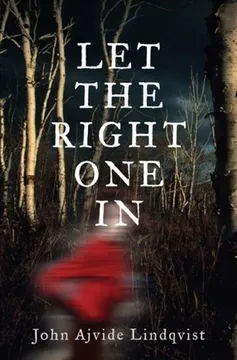
Let the Right One In is a dark, atmospheric vampire novel set in 1980s Sweden. Readers praise Lindqvist's exceptional character development, particularly the relationship between Oskar and Eli. The book is lauded for its gritty realism, chilling horror, and departure from typical vampire romance tropes. Many consider it a masterpiece of the genre, superior to its film adaptations. However, some readers find certain scenes disturbing and unnecessary. Overall, the novel is highly recommended for horror fans seeking a unique, emotionally powerful vampire story.
People Also Read










Characters
Oskar Eriksson
The boy who watches backOskar is a lonely thirteen-year-old in Blackeberg, bullied at school and often ashamed of his weight, incontinence, and fear. He reads obsessively, collects newspaper accounts of murder, and uses fantasy to imagine a power he lacks in ordinary life. His parents’ divorce has left him with an affectionate but anxious mother and a father whose drinking makes their closeness unreliable. Oskar is not simply a passive victim: he studies people, notices details, and gradually tests what he will endure. What draws him toward Eli is the sense that she sees him without reducing him to his humiliations.
Eli
The unknowable neighborEli appears to be a child living next door to Oskar, but ordinary categories do not fit her easily. She is quick-minded, physically unusual, and unfamiliar with many common objects, yet can be playful and attentive when she feels safe. Her silences protect a history she has learned not to share. Eli wants companionship but knows that closeness can expose others to danger, so she alternates between inviting Oskar near and pushing him away. Her bond with him is shaped by the wish to be treated as a person rather than a mystery, threat, or rescue project.
Hakan Bengtsson
The damaged caretakerHakan is a middle-aged former teacher whose life has been broken by scandal, isolation, and drinking. He clings to Eli with a devotion that gives him purpose and relieves him of having to build a life of his own. His intellectual habits remain visible in his literary references and careful observations, even as his judgment narrows around the person he serves. Hakan can feel pity for vulnerable people, but feeling it does not reliably stop him from causing harm. His central conflict is the gap between the tenderness he believes he offers and the violence his loyalty demands.
Virginia
The neighbor who enduresVirginia is a grocery clerk in her fifties and one of the regulars at Blackeberg’s Chinese restaurant. Independent and accustomed to working, she keeps relationships with clear boundaries, though her bond with Lacke is deeper than she admits. She has a daughter and grandson beyond the immediate neighborhood, and ordinary acts of care remain important to her. Virginia dislikes being treated as fragile or helpless. Her attention to the people around her gives her a practical steadiness, but she is also capable of recognizing when her own needs have become too dangerous to ignore.
Lacke
A drifter with a conscienceLacke is an unemployed, bookish regular at the Chinese restaurant, sustained by small inheritances, favors, and an unhurried refusal to organize his life around conventional work. He loves Virginia but has never found a way to make their relationship secure. His humor and philosophical reflections often protect him from grief, yet he is capable of acting when someone needs help. Jocke’s disappearance unsettles him because friendship is rare in his life. Lacke’s moral instinct is personal rather than abstract: he measures what is right by whether he can bear to abandon a particular person.
Tommy
The restless basement boyTommy is sixteen, clever, restless, and involved in petty theft with his friends. He lives in the shadow of his mother’s new relationship with Staffan, a policeman, and resents being expected to accept the change without protest. He is protective of Oskar in an uneven, sometimes awkward way, recognizing the boy’s vulnerability without knowing how to stop the bullying. Tommy’s jokes and bravado cover grief for his dead father and uncertainty about adulthood. He is drawn to risk partly because it gives him a temporary sense of control.
Gunnar Holmberg
The policeman who listensHolmberg is a police commissioner who visits schools to discuss drugs and police work. He believes young people can still be reached, and he prefers conversation to intimidation. His patience makes him approachable to children, though it cannot protect him from the limits of evidence or institutional procedure. Holmberg tries to see people as individuals rather than types, an instinct tested by the crimes in Blackeberg.
Gosta
The witness behind curtainsGosta is an isolated man who lives among many cats in a foul-smelling apartment. He is observant and deeply attached to the animals, but fear and instability make it difficult for him to approach the police. His reluctance is not a lack of concern; he worries about being questioned, disbelieved, or overwhelmed. The cats offer him a form of companionship that he can manage more easily than human contact.
Jonny Forsberg
The bully who sets termsJonny is Oskar’s chief tormentor at school. He organizes humiliations with a hunter’s patience, using nicknames and group pressure to keep Oskar in a position of fear. His behavior is learned within a family shaped by money worries and uneven adult attention, but the story does not excuse the harm he causes. Jonny’s confidence depends on having an audience and being able to define what counts as weakness.
Tomas Ahlstedt
The clever accompliceTomas once played with Oskar, but he has since aligned himself with the bullies. Teachers regard him as bright and promising, and he uses that status without showing much empathy for the boy he helps torment. His participation demonstrates how cruelty can be maintained not only by the loudest aggressor but by someone who understands the social rules and chooses to enforce them.
Micke Siskov
The follower who joins inMicke joins Jonny’s attacks on Oskar and often appears to enjoy the group’s pranks. He is less calculating than Tomas, but his willingness to participate helps make the bullying feel routine and socially protected. Micke’s later choices reveal that a follower still has agency, even when fear and peer pressure shape what he does.
Johan
The fair-weather classmateJohan is Oskar’s classmate and occasional companion. He enjoys spending time with Oskar when it suits him, but rarely chooses him first and does not reliably defend him. His presence gives Oskar glimpses of ordinary friendship while exposing its limits. Johan is not a villain; he is a child navigating the same social world, often choosing comfort over solidarity.
Yvonne
Tommy's conflicted motherYvonne loves Tommy and wants him to accept Staffan, her new partner, but she is unsure how to balance that relationship with her son’s resistance. She tries to protect Tommy without always understanding what he needs from her. Her affection is genuine, yet the pressure to keep peace can make her overlook the depth of his grief and anger.
Staffan
The orderly policeman in waitingStaffan is a police officer and a serious partner to Yvonne. He values order, religion, and discipline, and expects Tommy to respect adult authority. His careful manners conceal a temper he does not always recognize in himself. Tommy sees him as an intruder into the family left by his father, while Staffan sees himself as someone preparing to take responsibility.
Fernando Avila
The teacher who trainsMr. Avila is Oskar’s strict gym teacher, a former fighter pilot who demands effort and order. His severity makes him intimidating, but he also offers Oskar a space where the other boys are less free to torment him. He notices when Oskar is struggling and can offer practical support without forcing a confession.
Jocke
The neighborhood's missing regularJocke is one of the men who gathers at the Chinese restaurant. He dreams of travel and companionship, and his decision to help a child in distress reflects his basic decency. His absence becomes a test of how seriously his friends take one another.
Jimmy Forsberg
Jonny's volatile brotherJimmy is Jonny’s older brother, familiar with violence and willing to use intimidation to defend family pride. He acts with greater confidence than Jonny and brings adult criminal associates into a school conflict. His loyalty is forceful, but it turns a cruel rivalry into a mortal threat.
Morgan
The loud restaurant regularMorgan is one of the men who drinks with Lacke and Jocke. He uses jokes and political arguments to manage discomfort, and he is quicker to talk about action than to take it. His friendship with the group is real but shaped by the habits of men who have learned to avoid earnestness.
Larry
The watchful restaurant regularLarry is a quieter member of the restaurant group, attentive to Jocke’s disappearance and sympathetic to Lacke’s grief. He tends to notice what others dismiss, though he hesitates before taking responsibility. His care often appears in small actions rather than grand declarations.
Plot Devices
The invited threshold
Makes welcome physically bindingEli cannot enter a home without being invited. The rule appears first as a small hesitation at doors, then becomes a test of whether Oskar’s welcome is sincere. It turns hospitality into a supernatural boundary: refusal can protect a household, while permission exposes the person who gives it to a danger they may not understand. The rule also gives Oskar agency. He cannot control Eli’s nature, but he can decide whether she is allowed into his space.
Blood and infection
Links survival to contaminationBlood sustains Eli, but contact with her can also transmit a condition that changes a victim’s body. The need for fresh blood drives Hakan into murder and later transforms Virginia. The device makes survival morally costly: a character can continue living only by taking from another, while a victim may become a threat without choosing to. It binds the intimate act of feeding to the wider community, so private hunger produces public deaths, fear, and pursuit.
Morse through the wall
Turns isolation into contactOskar teaches Eli Morse code so they can tap messages through the concrete between their apartments. The code suits both children: it allows contact without demanding eye contact, speech, or immediate explanation. Its simple signals become a private channel through which they arrange meetings and express need. The wall remains a barrier, but the tapping lets them make it permeable by choice. Communication becomes a form of trust built from repeated, audible proof that someone is on the other side.
Oskar's murder scrapbook
Gives fear a paper shapeOskar collects newspaper clippings about murderers and violent deaths in a scrapbook. The collection lets him study what frightens him from the safety of his room and supplies material for his imagined identity as a killer. When real murders occur, the scrapbook becomes a record of evidence and a way to test the events against his fantasies. It reveals Oskar’s curiosity about violence without making him equivalent to the crimes he studies; he is trying to transform fear into knowledge and control.
The Rubik's Cube
Makes trust playableThe Cube is the first object Oskar and Eli share. Eli’s ability to solve it astonishes Oskar, and their attempts to teach, borrow, and later give it meaning create a language of attention before either can explain their past. As a puzzle, it invites persistence and promises a solution; as a relationship object, it resists being reduced to a simple answer. Oskar’s attachment to it reflects his desire for order, while Eli’s participation lets her practice an ordinary kind of play.

Download PDF
Download EPUB
.epub digital book format is ideal for reading ebooks on phones, tablets, and e-readers.








