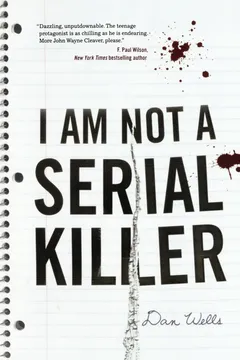


Plot Summary
A Body Behind the Laundromat
Fifteen-year-old John Wayne Cleaver spends his days around the dead at his family’s mortuary and studies serial killers to understand the violence he fears in himself. After mechanic Jeb Jolley is found torn apart behind the Wash-n-Dry, John watches the police clean the scene, then returns to the mortuary hoping to examine the body.
His aunt Margaret helps him prepare an elderly woman for burial and questions his fascination with killers. At therapy, John explains the strict rules he uses to restrain himself: he avoids animals, limits how long he watches people, and compliments anyone he feels like hurting.
He admits that the crime scene drew him because he wants to understand what happens when someone becomes a corpse. His therapist warns him that risk factors do not determine his choices.
John’s careful rules are not proof that he lacks conscience. They are his attempt to build one through observation and repetition, much as he studies killers to learn what ordinary people already seem to know. His mortuary work offers a controlled intimacy with death: bodies cannot demand empathy or surprise him. Jeb’s murder breaks that arrangement. A living person has become a body through violence, and John’s fascination moves from the aftermath toward the act itself.
The Missing Kidney
The coroner keeps Jeb’s remains for an extended autopsy, leaving John to track the case through daily newspaper reports. When the body finally reaches the mortuary, John helps his mother and aunt prepare it. The wounds are ragged, but a single kidney is absent, and the paperwork confirms it was not removed in surgery.
John notices the difference between the chaotic damage and the clean cut that took the organ. He concludes that the killer may have taken a souvenir and arranged the organs deliberately, signs that fit the serial-killer profiles he has studied.
The police have not disclosed the missing kidney, so John keeps his theory to himself. For the first time, his expertise seems to offer a way into the mystery, and the murder becomes an absorbing puzzle rather than distant research.
The missing kidney gives John a pattern to interpret, but his interpretation is shaped by the stories he knows best. He treats the crime scene as a text and assumes its details express a killer’s psychology. That method makes him attentive, yet it also narrows his vision: he sees ritual where there may be practical necessity. His private certainty is both useful and dangerous, because it encourages him to trust his reading before he has enough evidence to test it.
An Arm Gone Missing
A second victim, farmer Dave Bird, is brought to the mortuary with one arm missing. John expects another stolen organ, but the rest of Dave’s organs are present and the abdomen is less extensively damaged than Jeb’s.
He realizes that the earlier gutting may have helped the killer locate the kidney, rather than served as a ritual. Excited by the revised theory, John explains too much while his mother works. She sees how eagerly he studies the mutilated body and orders him out of the embalming room, barring him from the work that has long made death feel orderly and familiar.
John wants to protest, but forces himself to follow his rules and leave. His most reliable refuge is suddenly closed, while the killer’s changing methods suggest that his own assumptions are no longer enough.
The missing arm exposes the weakness in John’s preferred way of understanding violence. He wants each act to reveal a stable motive, but the evidence instead points toward a concrete need he has not considered. His mother’s ban compounds the shock: she sees his excitement as a warning, while he experiences the mortuary as the place where he can keep his thoughts contained. Their conflict is not simply about whether death is disturbing. It is about who gets to decide what helps John remain safe.
The Clown at the Dance
At the Halloween dance, John dresses as a clown and speaks with Brooke Watson, a neighbor whose laughter briefly makes him feel welcome. When bully Rob Anders mocks John and spills his drink, John uses his usual tactic of complimenting someone he wants to hurt.
Rob keeps pushing, so John abandons restraint and describes how he imagines cutting him open, then explains that he uses praise to stop himself. Rob backs away, but Brooke has heard the threat and leaves uncertainly. John tells himself he has handled the confrontation, yet his attempt to appear harmless has exposed the violence behind his rules.
Outside school, the town grows anxious as another killing is reported and local news broadcasts gruesome details. John recognizes a black, oily stain near the new victim and connects it to the residue he noticed at Jeb’s scene.
John’s encounter with Rob marks a shift from managing violent thoughts privately to using them as social force. The tactic works in the narrowest sense: Rob retreats. But John has made fear into a tool for securing space, and Brooke’s withdrawal shows the relational cost. The dance also places his chosen clown costume beside the town’s real violence. What he once studied at a safe distance is now shaping how he treats people who might otherwise have reached him.
The Reporter Becomes Evidence
Television reporter Ted Rask announces that investigators have found human DNA in the black residue near Dave Bird’s body and that a decades-old Arizona case may offer a connection. Before Rask can present his findings, the killer attacks him, takes a leg, and smears the same acrid substance across his face.
John focuses on the difference: this victim was not simply mutilated for pleasure. Rask had brought attention to the residue, and the killer’s attack appears designed to stop further reporting.
In therapy, Dr. Neblin helps John clarify that the killer’s actions do not fit the usual pattern of someone seeking notoriety. The old case concerns Emmett Openshaw, who vanished decades earlier after violence in his home left a similar black stain. John now suspects a threat with a motive beyond serial killing.
The reporter’s death challenges John’s effort to make the killer fit a familiar category. Serial-killer profiles help him organize evidence, but they cannot explain why this attacker would silence a reporter instead of courting publicity. John’s correction is intellectually important, yet it also reveals his emotional investment in the distinction: he wants the violence to have a coherent logic. The residue and old Arizona case widen the mystery beyond psychology, forcing him to consider that the killer may not be human.
Crowley Changes Shape
John notices a drifter watching people around town and follows him to the frozen lake, where Mr. Crowley, his elderly neighbor, has invited the man ice fishing. The stranger pulls a knife, but Crowley’s hands lengthen into claws and he kills him with sudden, unnatural strength.
John watches Crowley cut into his own abdomen, insert the dead man’s lungs, and recover from the failing breath that had been weakening him. The replacement works, while a blackened pair of old lungs falls away. Crowley then removes the body and evidence across the ice.
John reaches home shaken, but his curiosity competes with his fear: he wants to understand what he saw as much as he wants to escape it. The stolen organs, the black residue, and Crowley’s physical decline suddenly form one explanation.
The revelation converts the novel’s crime puzzle into a direct moral crisis. Crowley is not merely a predator who leaves clues; he is a neighbor who can be tender in ordinary life and monstrous when survival demands it. John’s decision to watch rather than intervene matters because it shows how thoroughly curiosity can displace responsibility. Yet witnessing the killing also gives him knowledge no profile could provide. He now understands the mechanism, but understanding does not tell him what kind of person he will become in response.
The Tip That Backfires
John decides the police will need proof, so he secretly follows Crowley and watches his routines, searching for a moment to expose him. When Crowley leaves at night and picks up a stranded motorist, John calls in an anonymous warning. He arrives too late to save the motorist.
Two officers find Crowley beside the body, but Crowley transforms, kills them, and takes one officer’s arm to repair his own. He hides the bodies and evidence before help arrives, leaving the authorities to suspect the missing car owner, Greg Olson.
John understands that his warning has helped create more victims and that police bullets cannot stop the demon. He resolves to act alone, though he fears the violent part of himself that his rules were built to restrain. The monster he has kept at bay becomes a weapon he considers using.
John’s first attempt to intervene is both brave and disastrously incomplete. He treats information as enough to change events, but Crowley’s strength and speed turn the police response into another opportunity to feed. The resulting guilt complicates John’s sense of responsibility: he did not kill the officers, yet his choice helped place them there. His decision to hunt Crowley alone is therefore not simple heroism. It is an attempt to prevent further deaths while risking the very self he has spent years trying to govern.
Notes Across the Street
John studies Crowley’s habits and identifies secrecy as a vulnerability. He slips anonymous notes onto the neighbor’s car and around his house, naming stolen body parts and signaling that someone knows what he is. Crowley’s unease confirms the pressure is working, but John’s surveillance expands beyond the target.
He watches Brooke through her bedroom window and mistakes private observation for closeness, while his fixation frightens him. At a neighborhood gathering, John and Crowley share an unexpected affinity for fire, which makes Crowley seem more human rather than less dangerous.
John continues sending threats, but he cannot separate his investigation from his growing hunger to watch and control. His father’s absence and strained family life leave him with few dependable attachments, while Max and Brooke offer connections he does not know how to handle.
The notes give John a sense of agency without requiring direct confrontation, but surveillance also lets him confuse knowledge with intimacy. He can learn Brooke’s routines while remaining unknown to her, an arrangement that protects him from rejection and denies her personhood. Crowley’s shared interest in fire unsettles the clean division John wants between monster and human. The more closely John studies his enemy, the more he encounters recognizable longing and loneliness, qualities he has trouble acknowledging in himself.
Christmas Breaks the Rules
During Christmas break, John goes to Max for company after realizing that his watching of Brooke has become stalking. When he admits that he has treated their friendship as a rule to keep himself normal, Max feels used and sends him away.
That night, John fails to locate Crowley before the neighbor kills Max’s father, Roger Bowen. John returns to the street, sees the aftermath, and races home before Crowley can discover he has been following him.
To cover his open bedroom window and suspicious absence, John convinces Crowley he has run away from home; Crowley helps him climb back inside. The encounter lets John fool the demon again, but the next morning Crowley leaves a threat for his unseen watcher. John has lost his closest friend and failed to protect the man Max loved.
The rupture with Max exposes the cost of turning relationships into instruments of self-control. John sought friendship partly as evidence that he was safe, and Max understandably hears that he was never valued for himself. The death that follows makes John’s isolation consequential: without Max’s trust, he has no ordinary companionship to steady him, and without an effective plan, he cannot protect Max’s family. Crowley’s threatening note reverses their positions. John has been observing the demon, but the demon now knows an observer is near.
A Father’s Empty Gift
On Christmas Day, John and his sister Lauren receive gifts from their absent father, Sam. John’s iPod is empty despite the promise that it contains their father’s music, and the small disappointment opens the larger wound of years without reliable contact.
Alone downtown, John phones Crowley from a pay phone and asks about the stolen bodies. Crowley admits that he once took Emmett Openshaw’s whole life and identity, but that Jeb was the first victim whose remains he did not keep.
As Crowley traces the call and searches for him, John flees through the snow and hides for hours. The confession explains the black residue and the demon’s ability to inhabit successive bodies, but not why Crowley has stayed in Clayton. John turns to Dr. Neblin for help interpreting that choice.
The empty gift and Crowley’s confession mirror each other through the question of what makes a life continuous. John’s father remembers enough to send a token, but not enough to fulfill its promise; Crowley has survived by taking other people’s bodies, yet now remains bound to one life. The contrast presses John toward the possibility that attachment can be more than weakness. His call is also a risky bid for contact, not just information, and Crowley’s pursuit makes the cost of that curiosity immediate.
Fear Feels Like Connection
After Dr. Neblin suggests that emotional ties can make someone stay in a painful life, John realizes that Crowley may be unable to abandon his wife, Kay. Before he can act on the insight, John attends a vigil for Roger and sees Brooke create a flower pile for victims no one can name. He cannot share the community’s comfort, and his anger carries home.
When his mother tries to reach him, John smashes dishes and raises a kitchen knife, discovering that her fear gives him an intoxicating sense of connection and control. He stops before attacking her, apologizes, and retreats to his room. The moment proves that the monster is not a separate creature he can blame: it is his own capacity, and he must choose what he does with it.
John’s discovery that fear can make him feel connected is a genuine danger because it offers the intensity he has long lacked without requiring mutual understanding. His mother’s terror briefly feels like intimacy, but it is control masquerading as closeness. Brooke’s memorial flowers present a different model: people can act together to honor strangers even when remembrance cannot undo death. John’s decision to lower the knife does not cure his impulses. It establishes that responsibility lies in what he chooses next, not in whether dark thoughts vanish.
Love Becomes the Weakness
John’s mother invites him back to help prepare Roger’s body, recognizing that the mortuary had given him structure and a shared task. While embalming, John studies the damage and sees how Crowley’s body nearly failed after waiting too long to feed.
Lauren reminds him that love, despite his family’s fractures, still binds them. Dr. Neblin’s earlier reasoning supplies the missing piece: Crowley stays in Clayton because he loves Kay and cannot trade her for a fresh identity elsewhere.
John plans to exploit that attachment, Crowley’s failing organs, and his fear of exposure. He trades the untouched iPod for a GPS tracker, then secretly plants it in Crowley’s car. The strategy is precise, but it requires John to invade Kay’s home and use her as bait.
The mortuary’s return is not merely a concession to John’s interests. Working beside his mother restores a form of contact grounded in trust and shared responsibility. The body on the table also converts his observations into practical knowledge: Crowley’s survival depends on replacing organs, and his reluctance to kill creates a limited window. Yet the plan’s cleverness hides its moral price. John intends to weaponize the very attachment that gives Crowley a reason to remain human, and must confront what that choice will demand of him.
The Bait Turns Bloody
As Crowley’s health worsens, John slips into Kay’s bedroom, photographs her, and attacks her to create a threat compelling enough to bring Crowley home. He hits her with a clock radio, ties her to the bed, and sends the images from her phone.
The violence overwhelms him; he calls Dr. Neblin for help, then hangs up before revealing his location. Crowley turns back toward home, but he has already killed another man. In the car, John discovers that the dead victim is Neblin, who came out into the dangerous night to reach him after hearing his call.
John understands that his plan has caused another death. Still, he drags Neblin’s body out of Crowley’s reach and hides it behind the shed, hoping the demon will fail without a fresh organ to take.
The plan’s failure is not an abstract setback: John has harmed an innocent woman, exposed his therapist to danger, and then finds Neblin dead because he answered a call for help. His capacity to stop himself is incomplete, and his choices have consequences beyond his intentions. Moving Neblin’s body becomes a test of whether John can act for someone else rather than protect only himself. He accepts the risk of leaving blood evidence because preserving his own safety would abandon the person who tried to save him.
The Mortuary Becomes a Trap
Without Neblin’s body, Crowley grows weaker, but he crawls toward John’s house, where John’s mother has come outside looking for him. John draws the demon away from her and into the mortuary, then lures it into the embalming room. He switches on the bladed trocar and drives it into Crowley’s chest, using the vacuum hose to pull away the organs and fluids that sustain him.
Crowley’s body disintegrates into black residue. Before dying, he asks John to remember him, and John watches the last of the creature collapse. The room that once let John approach death as a technician has become the site of a deliberate killing. His mother has seen enough to know that the official version of events cannot contain the whole truth.
The climax turns John’s familiar tools into instruments of lethal action. The embalming room has always offered him distance from death through procedure; now he must use that knowledge to cause it. Crowley’s collapse is not a victory without residue. John has saved his mother and ended the killings, but he has also crossed a boundary he cannot simply restore. The demon’s request for remembrance complicates the clean ending John might want: understanding the enemy means acknowledging both his violence and the attachments that kept him in Clayton.
A Family Holds Fast
John tells his mother that the attacker was a demon, while she helps him summon emergency services and insists they face the authorities together. She embraces him, reassures him that he is not alone, and gives him the connection he has spent years fearing he cannot feel.
Kay defends John to investigators, whose evidence never fully exposes what he did. Afterward, John visits her and asks about Bill Crowley’s life; Kay describes the man she loved before the killings consumed him. John cannot make his violent thoughts disappear, so he rebuilds practical limits and keeps himself occupied rather than claiming to be cured.
He also begins trying to know his mother and considers approaching Brooke more honestly. Clayton slowly returns to routine, but John understands that his own darkness remains a responsibility he must manage.
The resolution refuses the comforting idea that one good act erases a dangerous self. John’s mother’s acceptance gives him support, not absolution; Kay’s account restores Crowley’s human history without excusing his murders. John’s progress lies in recognizing that impulses are not destiny and that connection requires regard for another person’s reality. His rules remain imperfect, but they can now be understood as tools rather than a magical wall. The ending leaves him with an ongoing ethical task: practice restraint while learning how to participate in other people’s lives.
Analysis
The novel locates horror in the unstable border between impulse and action. John fears that his lack of empathy makes him destined for violence, so he builds rules from the behavioral signs he has read about in serial killers. Those rules do not make him harmless by themselves; they give him ways to choose restraint, while also keeping him isolated from the very relationships that might help him understand other people. Crowley unsettles John’s categories because monstrous violence exists alongside tenderness, memory, and love. The demon is not excused by those qualities, but neither can it be reduced to a faceless appetite. Its attachment to Kay explains why it remains in one deteriorating life rather than escaping into another.
John’s pursuit becomes a test of whether he can use his knowledge without adopting the logic of the killer he studies. He repeatedly treats people as pieces in a plan: witnesses to be redirected, friends as proof of normality, and Kay as bait. Each choice produces consequences he cannot fully control. The story’s sharpest reversal comes when fear gives John the emotional intensity he has wanted. It feels like connection, but it is actually domination. His decision to stop short of hurting his mother shows that ethical conduct need not wait for perfect emotional understanding. He can recognize another person’s vulnerability and choose not to exploit it.
The mortuary’s craft and the supernatural mystery meet in the climax. John’s practical knowledge saves his mother, but the act does not erase his violent impulses or turn him into a conventional hero. The ending is more demanding: he must keep making choices after the emergency has passed. The book suggests that moral identity is neither an inherited destiny nor a feeling one can summon at will. It is a practice, strengthened by honest relationships, concrete limits, and the willingness to accept responsibility when a carefully intended plan harms someone else.
Review Summary
I Am Not a Serial Killer receives mixed reviews, with many praising its unique premise and engaging protagonist. Readers appreciate the dark humor, psychological insights, and John Cleaver's struggle against his sociopathic tendencies. Some found the supernatural twist jarring, while others enjoyed the unexpected direction. The book is noted for its gruesome details and exploration of morality. Many reviewers compare it to Dexter and recommend it for fans of unconventional thrillers. Overall, it's described as a fast-paced, entertaining read that leaves readers eager for the sequels.
People Also Read

Characters
John Wayne Cleaver
Boy policing his own darknessJohn is a fifteen-year-old mortuary worker with an intense interest in serial killers and a persistent fear that he may become one. He studies people as carefully as he studies corpses, but struggles to understand emotion from the inside. His self-imposed rules are a practical attempt to keep harmful impulses from becoming actions. John is observant, intelligent, and often funny, though his humor can conceal how isolated he feels. His family’s work gives him a structured way to be near death, while his friendships and therapy expose how difficult it is for him to approach living people without turning them into puzzles.
April Cleaver
Worried mother and morticianJohn’s mother runs the mortuary with her sister and tries to protect him while also keeping the family functioning. She is direct when frightened, sometimes clumsy in her attempts to reach her son, and weighed down by years of strained relationships. April worries that John’s fascination with bodies and killers signals danger, yet she is also willing to reconsider her judgments when she sees what helps him. Her care is practical as much as emotional: she gives him work, sets boundaries, and keeps trying to create a family life despite their silences.
Bill Crowley
Gentle neighbor with secretsBill Crowley is John’s elderly neighbor, a retired water-system engineer who is courteous, generous, and fond of his wife. He treats John with warmth and welcomes his help around the house. His ordinary manners make him a reassuring presence in a town unsettled by violence, though he carries private burdens that John cannot initially read. Crowley’s attachment to his home and relationships contrasts with John’s habit of keeping emotional distance. He is a character whose kindness and danger coexist, forcing those around him to reconsider how much a familiar face can conceal.
Dr. Neblin
Therapist who listens closelyDr. Neblin is John’s therapist, a calm and observant man who takes his unusual fears seriously without treating them as prophecy. He uses humor to ease difficult conversations, but does not let John’s cleverness divert every question. Their sessions give John a place to explain the rules he has built and to test his ideas about violence, responsibility, and emotion. Neblin’s strength is patience: he offers interpretations without forcing John to accept them, and encourages him to distinguish a risk from an inevitable fate.
Kay Crowley
Bill’s devoted wifeKay is a warm, practical older woman whose life with Bill is rooted in decades of shared history. She is hospitable to John and treats him like a trusted neighbor, offering food and small kindnesses without demanding much in return. Her steadiness contrasts with the fear spreading through Clayton, and her relationship with Bill gives their home a sense of ordinary tenderness. Kay’s generosity is not naïveté: she has a strong attachment to the people she loves and a clear sense of who has treated her with care.
Margaret
Aunt and mortuary partnerMargaret is John’s aunt and his mother’s twin, working beside her at the family mortuary. She is more playful and energetic than her sister, but shares her insistence that the dead be treated with respect. Margaret gives John practical tasks and light conversation, making the mortuary feel like a place of competence rather than horror. She also notices when his interests trouble the family. Her role is a quiet stabilizing one: she eases tension between relatives while maintaining clear standards about their work.
Lauren Cleaver
Estranged sister returning homeLauren is John’s older sister, who left home as a teenager and later returned to work at the mortuary. Her relationship with their mother remains strained, and she uses style and independence to keep distance from family expectations. With John, she shares a wary understanding shaped by their absent father and complicated home life. Lauren can be blunt, but she also recognizes the care her mother expresses through practical effort. She offers John a glimpse of family connection that does not require pretending everything is easy.
Max
John’s talkative school friendMax is a high-school classmate who talks readily, jokes loudly, and shares John’s social outsider status. John initially values him partly because Max makes their silence look less conspicuous, but their friendship contains genuine routine and companionship too. Max is more emotionally perceptive than John gives him credit for, especially when he realizes that John has treated friendship as a safeguard rather than a mutual bond. His enthusiasm for comics and games gives the boys common ground, while his pride in his father shapes his understanding of family.
Brooke Watson
Neighbor John wants to knowBrooke is John’s neighbor and a classmate whose humor and warmth catch him off guard. She is friendly without being easily defined by John’s observations, which makes her a test of whether he can meet someone as a person rather than a subject. Brooke is close to her family and expresses care openly, even when she is grieving or uncertain. Her willingness to speak with John offers him an ordinary chance at connection, though his difficulty reading boundaries complicates that possibility.
Sam Cleaver
Absent father rememberedSam is John and Lauren’s father, a fan of old movies who left the family years earlier. His intermittent gifts and messages offer small reminders of a past in which he shared music and jokes with his children, but his unreliability leaves those gestures painfully incomplete. John has learned to expect little from him, though the hope of a meaningful connection has not entirely disappeared. Sam’s absence shapes the family’s emotional habits, giving John another reason to treat attachment as something uncertain.
Jeb Jolley
First local murder victimJeb is a local mechanic whose violent death behind the Wash-n-Dry introduces the killings that unsettle Clayton County. His body provides John with the first physical evidence to study, including damage that seems both savage and deliberate. Jeb’s ordinary place in the town makes the crime feel close rather than distant, and his death starts John’s attempt to understand the attacker.
Dave Bird
Farmer with a missing armDave is a local farmer whose body reaches the Cleaver mortuary after another brutal attack. The missing arm and less extensive abdominal damage force John to reconsider his first theory about the killer’s behavior. Dave’s case matters because the differences between victims reveal that the violence may serve a physical purpose rather than a ritual one.
Ted Rask
Sensational local reporterTed Rask is a television reporter who covers the Clayton killings with dramatic urgency. His investigation brings a decades-old Arizona case and its black residue back into the public story. Rask’s appetite for a compelling report makes him useful to the investigation and conspicuous to the killer, demonstrating the risks of turning a local crime into a media spectacle.
Greg Olson
Wrongly suspected family manGreg Olson is a local construction worker whose car becomes part of the police investigation after two officers are found dead. The uncertainty surrounding his disappearance turns his family into a target for a frightened community. His case shows how quickly incomplete evidence can be converted into public blame.
Roger Bowen
Max’s beloved fatherRoger Bowen is Max’s father, a truck driver whose frequent work keeps him away from home. Max admires him and looks forward to sharing games when he returns. Roger’s role in the story gives the killings a direct cost for John’s closest school friend and makes the town’s fear personal.
Emmett Openshaw
Vanished Arizona residentEmmett is the subject of an unsolved Arizona disappearance from decades earlier. Investigators find violence and black residue in his home but no body, leaving his fate unexplained. His case provides the old connection that helps John question whether the Clayton killer is an ordinary serial offender.
Rob Anders
School bullyRob is a student who has mocked John for years and provokes him at the Halloween dance. His taunts push John beyond his usual strategy of using compliments to control violent impulses. Rob’s presence exposes how easily John can turn fear into a means of winning a confrontation.
Agent Forman
FBI investigatorAgent Forman is an FBI investigator involved in the Clayton case and the old Arizona evidence. He presents forensic findings to the public and later questions John and his mother. His role represents the official investigation’s attempt to impose a human explanation on a series of events that do not fit one.
Plot Devices
John’s Rules
Restraint made into routineJohn creates rules to interrupt behaviors he associates with serial killers. He limits his watching of people, avoids animals, and uses compliments when he feels violent toward someone. The rules make internal conflict visible through concrete habits, and they give him a vocabulary for responsibility before he fully understands empathy. When he abandons them to pursue Crowley, the change is not a simple release of power. It reveals how much his stability depends on practiced choices, and how easily a protective routine can become a rigid substitute for genuine relationships.
The Family Mortuary
A workshop beside deathThe mortuary is John’s home, workplace, and most familiar setting for examining death. Its routines give him a controlled way to handle bodies, while his mother and aunt insist on care and respect for the people they prepare. The mortuary also provides the practical knowledge that lets John notice the missing organs and understand Crowley’s physical needs. Its equipment becomes significant as the story advances, but the setting’s central function is to keep John’s fascination grounded in labor, family history, and the difference between caring for a body and treating a living person as an object.
Black Residue
A trail between victimsThe oily black substance appears near multiple victims and connects the Clayton killings to an old Arizona disappearance. At first, it looks like a clue to a conventional criminal’s methods. John gradually understands it as a physical remnant associated with Crowley’s deteriorating body and discarded parts. The residue serves both as forensic evidence and as a sign that the killer’s body does not obey ordinary biology. Its changing meaning tracks the story’s movement from procedural mystery toward supernatural horror.
Stolen Body Parts
Survival at another’s expenseThe missing kidney, arm, leg, and lungs initially suggest trophies or ritual behavior. John’s autopsy work and observation of Crowley reveal that the body parts replace failing parts in the killer’s own body. Each attack is therefore tied to physical deterioration, not simply a compulsion to kill. This device drives the mystery and creates the story’s central moral pressure: Crowley’s survival requires another person’s death, while John’s attempt to stop him requires confronting his own capacity for violence.
Notes and GPS Tracker
Surveillance turned into strategyJohn uses anonymous notes to convince Crowley that someone knows what he is doing, then plants a GPS tracker in Crowley’s car to follow his movements. The notes exploit Crowley’s fear of discovery, while the tracker gives John information that an anonymous police call could not provide. Later, John tries to use Kay’s phone and images to draw Crowley away from a potential victim. The tools show John’s intelligence and patience, but also how quickly his investigation becomes invasive and dangerous to people around him.

Download PDF
Download EPUB
.epub digital book format is ideal for reading ebooks on phones, tablets, and e-readers.








