

Plot Summary
The Happiness Assignment
Nanoka Koyanagi, an unusually self-assured elementary schooler, challenges her teacher Hitomi’s advice about thinking before acting, then learns that her class will study happiness. Her parents are usually away working, but Nanoka insists she is not lonely: after school she walks with a bobtail cat and visits two older friends.
Skank-san welcomes her with milk, sweets, and Othello; Granny offers tea, baked treats, and books. Nanoka first met Skank-san while carrying the injured cat through the rain, after a string of neighbors refused to help. Skank-san took them in and bandaged the animal. These visits become Nanoka’s private classroom, where she tests ideas about happiness against people whose lives differ sharply from hers.
The assignment gives Nanoka a question she can investigate rather than merely answer, and her daily visits provide a living set of competing examples. Her confident logic protects her from loneliness, but it also lets her define friendship on her own terms, without testing whether others feel the same. The rescued cat establishes a pattern that will recur: Nanoka acts decisively when someone is hurt, while the adults around her teach her that good intentions still require judgment. Her mentors do not offer one doctrine. They show her that happiness can be food, attention, reading, or simply the time someone makes for another person.
A Girl Above the Hill
When Skank-san and Granny are both away, Nanoka and the cat explore a neglected stone building on the hill. On its roof they find Minami, a high school girl pressing a box cutter to her wrist. Nanoka panics, offers a bandage, and stays beside her after Minami refuses help. Minami admits that hurting herself quiets her thoughts, though Nanoka cannot understand the relief she describes.
A notebook tucked beneath Minami reveals that she is writing a story. Nanoka is not amused or dismissive; she tells Minami that she hopes to write one herself and asks to read it. Minami lends it only after Nanoka promises to finish her current book first. Their shared love of stories turns a frightening encounter into a fragile friendship.
Nanoka meets pain first as a practical emergency, so she reaches for a bandage before she can grasp what Minami’s injury means. Minami’s writing offers a different point of contact: Nanoka can respect the work without claiming to understand its author. That distinction matters because Minami is accustomed to hiding both her wounds and her creative ambition. The notebook becomes an invitation with boundaries, not a cure. Nanoka’s enthusiasm makes Minami briefly visible without demanding that she explain everything. Their friendship begins in the space between care and comprehension, a space Nanoka will have to learn not to fill with assumptions.
The Apology Minami Needs
Nanoka asks Minami what happiness feels like and learns that Minami’s parents died in an accident years earlier. Soon afterward, Nanoka’s own parents tell her they cannot attend her class observation because of a business trip.
She lashes out, accusing them of choosing work over her, then refuses dinner and breakfast. At the rooftop, Minami recognizes the danger in that unresolved quarrel. She tells Nanoka that she regrets never making peace with her parents, because death left no later chance to apologize or share dinner again.
Nanoka finally remembers her mother’s effort to cook for her and her father’s care in choosing gifts. She returns home and makes peace. On observation day, her parents arrive after arranging time off, and Nanoka’s happiness is suddenly concrete.
Minami’s grief converts Nanoka’s ordinary disappointment into a question of irreversible time. The force of the lesson comes not from an adult warning but from a teenager who knows what an unfinished argument can become. Nanoka must revise her first interpretation of her parents: work has repeatedly hurt her, yet their labor does not erase their care. Her apology is not surrendering the complaint; it is refusing to let anger become the last word. The parents’ appearance then complicates her earlier certainty in a useful way. Happiness is not a perfect family schedule, but neither is love merely an excuse for absence.
The Roof Is Demolished
Nanoka returns to the hill expecting to see Minami, but workers have closed the gate and explain that the decaying building will be torn down. They have not seen a high school girl. Nanoka asks them to direct Minami to Granny’s house, then waits there, but Minami never arrives. When Nanoka later reaches the clearing, the building has become rubble.
The loss leaves odd traces: she cannot recall the contents of Minami’s story, and the handkerchief Minami gave her is missing from her desk. Nanoka also realizes that she never sees Minami on the town’s streets. She keeps the memory of their conversations, but the ordinary explanations for the girl’s sudden arrival and disappearance no longer fit.
The demolition turns a private meeting place into literal absence, while the missing notebook memory and handkerchief make the loss harder to file as an ordinary friendship. Nanoka’s response is not yet to solve the mystery; she preserves the emotional fact that Minami mattered even when evidence slips away. The book links physical erasure with the instability of memory, but does not make the experience meaningless. Minami’s advice remains active in Nanoka’s behavior toward her parents. The vanished girl has already changed the living world around Nanoka, which gives the mystery consequences before it has an explanation.
The Father's Arrest
At the supermarket, Nanoka witnesses guards restraining a man accused of stealing. The next school day, she hears that the man is Hikari Kiriyuu’s father, a gentle adult she has greeted in the neighborhood. Hikari misses nearly a week of school, then returns to classmates’ stares and accusations. Nanoka tries to defend him by attacking the boys’ logic, but Hikari remains silent.
When she challenges the bullies again, Hikari abruptly tells her to stop and leaves the classroom. He does not return. Nanoka believes she has acted as his ally, yet her intervention has made him feel exposed rather than supported. The incident also reveals how quickly a parent’s alleged wrongdoing becomes a burden placed on a child who had no part in it.
Nanoka judges the classmates’ accusations correctly but mistakes correctness for help. Her argument protects Hikari from slander in public, yet it removes his control over when and how he faces the shame attached to his father. Hikari’s silence is not proof that he has no courage; it may be the only form of resistance available to him at that moment. The school’s spectators deepen the harm by treating rumor as entertainment. Nanoka’s own moral certainty cannot make the classroom safe, and her failure here exposes the difference between defending someone and listening to what they can bear.
Help That Hurts
Nanoka visits Hikari’s home with lesson notes, determined to tell him she is on his side and to push him back toward school. He refuses to open his bedroom door. When she insists that he must fight the boys, he tells her he hates her most and will not return. Nanoka leaves in tears.
The rejection deepens when Ogiwara, the classmate who shares her love of books, ignores her at school; Nanoka later learns he spread the rumor about Hikari’s father. Other classmates also turn away. At Skank-san’s apartment, Nanoka finally admits how hurt and confused she is. Her attempt to help has cost her a valued connection, and she begins to believe that thinking seriously about other people only leads to rejection.
The scene at Hikari’s door is a collision between two survival strategies. Nanoka believes action means confronting the threat; Hikari needs the freedom to decide what action is possible. His anger wounds her, but it also reveals that her loyalty has started to feel like pressure. Ogiwara’s betrayal compounds the injury because shared literary taste had seemed like evidence of kinship. Nanoka’s retreat into the belief that connection is futile is therefore psychologically understandable, not simply childish stubbornness. The next lesson must reach her without denying that people really have hurt her.
Skank's Second Chance
Skank-san tells Nanoka about a clever, isolated girl who grew into an adult with no close ties, destroyed her own well-being, and nearly gave up on life. Nanoka recognizes the story as Skank-san’s own history. Skank-san explains that she has rediscovered happiness by caring about Nanoka, then helps her see that Hikari may be fighting in his own way by continuing to draw.
Nanoka realizes she had demanded that he confront the bullies on her terms, much as a teacher might force an already reluctant child to eat. When she mentions Hikari by name, Skank-san reacts with startling recognition, embraces Nanoka, and apologizes as if an old truth has surfaced. Nanoka leaves determined to return to Hikari, this time to listen rather than command.
Skank-san’s confession changes the advice from abstraction into a warning with a human cost. She is not asking Nanoka to tolerate cruelty; she is showing how intelligence can become a sealed room when it is used to rank everyone else as foolish. Her comparison between Hikari’s reluctance and a child being forced through an unpleasant meal lets Nanoka feel the coercion in her own behavior. The recognition triggered by Hikari’s name signals that the women’s meetings exceed ordinary coincidence, but the emotional result is immediate and practical: Nanoka chooses a gentler form of repair.
The Door Opens
Nanoka returns to Hikari’s house and apologizes to his mother and to the closed bedroom door for the way she spoke before. She explains that she has come to discuss happiness, not to demand that he attend school. Their conversation begins through the door. Hikari asks why she cares, and Nanoka answers that she admires his drawings and wants to find happiness with him.
He opens the door, admits his father really did steal, and asks to return to school with her. Nanoka tells him that Hitomi has been waiting for him. They arrive late together, and Hikari tells the teacher that drawing and having a friend beside him make him happy. Nanoka sits with him, sharing books and lessons rather than forcing him to fight her battles.
The open door marks a change in the terms of their friendship. Nanoka stops treating Hikari as a project to rescue and offers him a reason to choose contact for himself. His admission about his father matters because trust now includes an uncomfortable fact, not just reassurance. Returning to school does not end the bullying or make Hikari suddenly fearless; it gives him a companion while he faces what remains. His statement about drawing also reclaims the activity classmates mocked. The answer to happiness is specific to him, and Nanoka’s presence supports it without taking ownership of it.
The Empty Clearing
After the school day, Nanoka visits Skank-san and finds a stranger living in her apartment; he says he has lived there for years and gives her an unfamiliar ice pop. Nanoka takes the mystery to Granny, who says that happiness is being able to recognize that one is happy now. In their final conversation, Granny recounts an ordinary life made joyful by favorite people and chosen efforts, and tells Nanoka that she is happy.
Nanoka leaves believing she has found her own answer. The wind turns her back: Granny’s wooden house has vanished, and the bobtail cat stays behind. Nanoka understands that this is a farewell, though she does not yet know why these friends appeared or why their absences feel different from ordinary loss.
The two disappearances are not treated as interchangeable. Skank-san’s empty apartment produces bewilderment, while Granny’s last conversation gives Nanoka a way to hold loss without making it negate happiness. Granny describes a good life as something practiced through relationships and choices, not as a life untouched by pain. The cat’s decision to remain at the house makes the farewell tangible and leaves Nanoka to walk on alone. Her mentors have not supplied a universal definition; they have made it possible for her to recognize what she already values and to continue choosing it.
A Happiness Chosen
At the final class presentation, Hikari tells his classmates that he is happiest when someone values his drawings and stays beside him. Nanoka then presents the answer she has been forming: happiness is something people choose through their actions, by caring for themselves and those who matter to them.
She later tells Hitomi about Minami, Skank-san, Granny, and the cat, asking why they disappeared. Hitomi suggests they may have come to meet Nanoka, an explanation Nanoka rejects because she had always gone to them.
As she leaves, her speech and vision abruptly fail, and her childhood account breaks off. The answer does not solve every mystery, but Nanoka has moved from treating happiness as a clever definition to describing it as a life made through connection.
The paired presentations complete the classroom assignment while preserving the children’s differences. Hikari names the concrete conditions that let him create; Nanoka describes the agency required to keep relationships possible. Her account to Hitomi is also an attempt to make her strange friendships socially legible, even though the teacher’s explanation does not satisfy her. The sudden sensory break refuses a tidy transition from childhood to adulthood. Instead, the story lets the reader feel the discontinuity that Nanoka herself cannot yet explain. What carries forward is not certainty about the visitors, but the practice of choosing care.
Epilogue
As an adult, Nanoka wakes from the same childhood dream, works as a writer, and lives with the cat she calls March. She has come to understand the three women as lives she might have entered: Minami’s parents died in a plane crash on the day Nanoka’s parents had planned to travel, while Skank-san embodies a future shaped by isolation.
Granny represents another possible life, one made full by loved ones. Nanoka believes their meetings saved her, just as her visits helped them choose differently. She is now beside Hikari, an artist, when he gives her a painting of rapeseed flowers as a proposal. Nanoka makes him express the feeling in words, keeping the rest of their answer private.
The adult frame converts the childhood mystery into a structure of possible selves without reducing the women to lessons or hallucinations. Each visitor gives Nanoka a glimpse of what could follow from a different history: bereavement, isolation, or sustained attachment. The plane crash clarifies how fragile the hinge of her parents’ missed trip was, while the adult relationship with Hikari shows that the child’s choices continued into a life of art and intimacy. Her work as a writer also answers the ambition first awakened by Minami’s notebook. The final proposal echoes their shared history, but Nanoka’s insistence on spoken feeling shows how far she has moved beyond clever inference.
Analysis
The novel makes happiness a problem of interpretation before it makes it a feeling. Nanoka is bright enough to build arguments from whatever she hears, but her early confidence often conceals a failure to imagine how another person experiences the same event. Her defense of Hikari shows the difference between moral accuracy and emotional usefulness: she correctly rejects collective blame, yet she also tries to dictate how he must resist it. The book’s central development is not that Nanoka becomes less forceful. She learns to ask what kind of help another person can accept.
The three older companions turn that education into a series of possible futures. Minami embodies the cost of irreversible bereavement, Skank-san the cost of withdrawing from connection, and Granny the possibility of a life made meaningful through ordinary attachments. Their supernatural status gives Nanoka access to lives she cannot yet imagine, but the emotional logic remains grounded in specific acts: apologizing, listening, sharing food, reading beside someone, and making time. The mystery does not replace psychology; it enlarges the consequences of choice.
The recurring question about happiness also resists a single doctrine. The women offer answers that fit their own histories, while Hikari locates happiness in drawing and in a friend’s presence. Nanoka’s answer is more active: happiness must be chosen through care for others and for oneself. That formulation is tested by the story’s losses, not protected from them. The vanished friends cannot be retrieved, and the childhood voice eventually breaks off, yet the adult Nanoka carries their influence into her writing and her relationship with Hikari. The book’s claim is modest but demanding: people cannot control every loss or circumstance, but they can still choose whether to meet one another with attention.
Review Summary
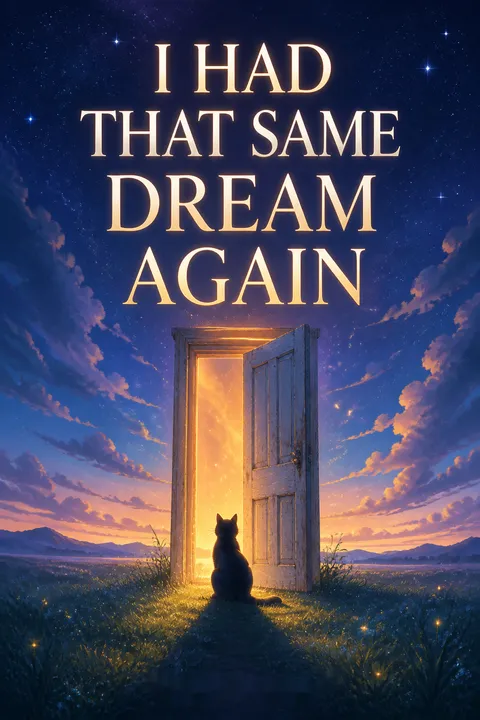
I Had That Same Dream Again receives mostly positive reviews for its heartwarming story about a young girl's search for the meaning of happiness. Readers appreciate the unique perspective of the child protagonist and the deep philosophical questions explored. Many find the characters endearing and the writing style engaging, though some feel the pacing is slow. The book's themes of friendship, growing up, and finding joy in life resonate with readers of all ages. Overall, it's praised as a touching and thought-provoking novel.
People Also Read
Characters
Nanoka Koyanagi
The sharp little questionerNanoka is an observant elementary schooler who trusts her own reasoning and delights in books, sweets, wordplay, and precise judgments. Her bravado helps her withstand exclusion at school, but it can also make her mistake confidence for understanding. She is quick to defend people she cares about and slow to notice when protection becomes pressure. Her conversations with the adults in her life gradually teach her to hold uncertainty, consider another person’s perspective, and value ordinary acts of care. She approaches happiness as a question worth testing against real lives, not as a rule she can memorize.
Hikari Kiriyuu
The hidden young artistHikari is Nanoka’s quiet desk neighbor, a talented young artist who hides his drawings after classmates ridicule him. His reserve can look like passivity, but drawing is a form of persistence and self-expression that he protects even when he cannot defend it aloud. His family matters deeply to him, and the pressure surrounding his father’s choices makes school feel especially exposed. Hikari and Nanoka share a classroom partnership built around different strengths: her fluency and his visual imagination. He is a sensitive observer whose courage tends to emerge slowly, once he feels safe enough to act in his own way.
Minami
The rooftop storytellerMinami is a high school student Nanoka meets in an isolated hilltop building. She writes stories but conceals her work, and she carries grief that makes ordinary happiness difficult to imagine. Her manner is brusque, yet she listens closely to Nanoka and shares books, facts, and hard truths when she feels able. Minami’s experience gives her a keen awareness of regret and the limits of time. She does not offer uncomplicated comfort; instead, she asks Nanoka to take a chance at reconciliation that Minami herself wishes she had taken.
Skank-san
The candid night workerKnown to Nanoka by the writing on her door, Skank-san is a young woman whose unconventional schedule and easy warmth make her feel unlike the adults Nanoka knows at home. She shares milk, desserts, Othello, and long conversations, but she does not pretend to have simple answers. Her frankness about work, love, pain, and loneliness gives Nanoka room to ask questions without being shamed for them. Beneath her teasing manner is a thoughtful person who recognizes how easily self-protection can become isolation. She is both a source of comfort and a model of hard-won self-awareness.
Granny
The gentle reader and bakerGranny lives in a wooden house on the hill and welcomes Nanoka with tea, baked sweets, and books. Her patience makes room for not knowing: she treats confusion as the beginning of thought rather than a failure. She speaks from long experience but does not impose her own life as a template for Nanoka. Art, family, memory, and ordinary pleasures shape her view of happiness. Her quiet humor and affection give Nanoka a steadier kind of guidance than the schoolroom, especially when difficult emotions resist a neat explanation.
Hitomi
The thoughtful teacherHitomi is Nanoka’s elementary school teacher and the person who introduces the class assignment about happiness. She respects Nanoka’s intelligence while urging her to think before acting and to decide for herself what is true. Hitomi tries to protect vulnerable students without humiliating them, and she trusts Nanoka with responsibility even when the choice worries her. Her advice is warm but not infallible. That gap between her good intentions and Nanoka’s own interpretations gives the child room to question adults while still accepting their care.
Ogiwara
The popular book loverOgiwara is a well-liked classmate who shares Nanoka’s appetite for books. Their conversations offer her a rare sense of intellectual companionship, though he remains socially at ease with other children in a way she is not. His attention matters to Nanoka partly because she hopes a shared love of stories will mean a deeper bond. He represents the uncertainty of friendship: similar interests can open a conversation, but they do not guarantee loyalty or intimacy.
The Bobtail Cat
Nanoka's steadfast walking companionNanoka rescues the injured bobtail cat in the rain and soon makes her a companion on daily walks. The cat follows Nanoka between the riverside apartments and the hill, accepts milk and affection, and often chooses her own pace. Her wordless presence gives Nanoka someone to address without fear of judgment. She also links the girl’s separate friendships, quietly accompanying her through moments of discovery, grief, and change.
Nanoka's Parents
Busy but loving parentsNanoka’s mother and father work long hours, leaving her to spend much of her time alone. Their absences hurt her, especially when they threaten a school event she wants them to attend. They also show affection through meals, gifts, and the effort to make time when they can. Nanoka has to learn that their work and their love can coexist, even when the balance still disappoints her.
Hikari's Mother
A protective, welcoming parentHikari’s mother receives Nanoka kindly when she brings school notes to the family home. She knows how withdrawn her son has become and is grateful that a classmate values his art. Her concern is protective rather than forceful, and she lets Nanoka speak with Hikari without making the moment about herself.
The Bullying Classmate
The loud classroom antagonistOne boy in Nanoka and Hikari’s class mocks Hikari’s drawings and uses the rumor about his father to shame him. He turns the classroom’s silence into permission to bully, and his aggression exposes how quickly children can mistake group approval for being right.
Shintarou
The kindly fellow teacherShintarou is a teacher who shares the faculty room with Hitomi. He quietly gives Nanoka chocolate and supports the warmth she associates with her teacher, serving as a small example of adult kindness.
Plot Devices
The Happiness Assignment
A question that gathers livesHitomi’s classroom assignment gives Nanoka a reason to ask friends and adults what happiness means to them. Each answer grows out of a concrete life: Minami speaks from grief, Skank-san from loneliness, Granny from a life of relationships, and Hikari from drawing and companionship. The assignment keeps these otherwise separate encounters connected and lets Nanoka test her conclusions against experience. Its most important effect is not a single agreed definition. It teaches her that happiness may be described differently by different people, and that the answer she gives must come from the choices she makes.
The Uncanny Visitors
Possible lives made personalMinami, Skank-san, and Granny appear as distinct people in Nanoka’s childhood, yet their homes, histories, and disappearances resist ordinary explanation. Nanoka first treats them as friends whose wisdom she can seek; the adult frame later suggests they embody lives she might have lived under different circumstances. Their role is both supernatural mystery and ethical counterfactual. Each shows Nanoka a path shaped by grief, disconnection, or lasting affection, while her own attention helps them turn toward happiness. Their identity is a major revelation, so this device carries spoilers.
Othello and the Board
Small turns mirror relationshipsNanoka repeatedly plays Othello with Skank-san and later with Hikari. The game offers a simple shared activity that does not require either person to explain everything. Its alternating dark and light pieces also echo the book’s insistence that pain and happiness can occupy the same life, and that a changed position can alter what the board looks like. Granny’s final reference to the game gives the motif special emotional weight. Othello does not solve the characters’ problems; it lets them remain beside one another while they think.
Books, Stories, and Art
Creation makes hidden feelings visibleBooks connect Nanoka with Ogiwara, Granny, and Minami, while Minami’s private story and Hikari’s drawings reveal parts of themselves they struggle to show directly. Nanoka’s admiration is not based on popularity or performance; she values the ability to make something she cannot make herself. The creative work becomes a way for quieter characters to claim an inner life, even when they cannot defend it in conversation. Nanoka’s own eventual writing career completes the motif, showing how the childhood encounters shape not only her relationships but the work she chooses to do.
FAQ
Synopsis & Basic Details
What is I Had That Same Dream Again about?
- Child's Journey to Happiness: The story follows Nanoka, a young elementary school student, as she explores the meaning of happiness through her interactions with a diverse group of friends.
- Unconventional Friendships Emerge: Nanoka forms unique bonds with Skank-san, Minami, and Granny, each offering different perspectives on life and what it means to be happy.
- Life Lessons and Reflections: Through these relationships and experiences, Nanoka learns about the complexities of human emotions, the importance of empathy, and the power of personal choice in shaping one's life.
Why should I read I Had That Same Dream Again?
- Unique Perspective on Happiness: The novel offers a fresh and thought-provoking exploration of happiness through the innocent and inquisitive eyes of a child.
- Exploration of Unlikely Bonds: The story celebrates the power of human connection and the beauty of forming meaningful relationships with people from different walks of life.
- Emotional Depth and Resonance: The novel delves into complex themes of loneliness, loss, and self-discovery, offering a deeply moving and emotionally resonant reading experience.
What is the background of I Had That Same Dream Again?
- Contemporary Japanese Society: The story reflects aspects of contemporary Japanese society, including the pressures of work, the challenges of family life, and the search for meaning in a rapidly changing world.
- Focus on Interpersonal Relationships: The novel emphasizes the importance of human connection and the role of relationships in shaping individual identity and well-being within a modern context.
- Exploration of Social Isolation: The story touches on themes of social isolation and loneliness, particularly among young people and those struggling with mental health issues.
What are the most memorable quotes in I Had That Same Dream Again?
- "Life is like a wonderful movie.": This quote, often repeated by Nanoka, encapsulates her optimistic and imaginative view of the world, even in the face of adversity.
- "Happiness won't cooome wandering my way sooo, thaaat's why I set ooout to find it todaaay!": This song, frequently sung by Nanoka and her friends, highlights the active pursuit of happiness and the importance of taking initiative in one's own life.
- "Everyone is different. But we're all the same.": This quote, offered by Skank-san, encapsulates the novel's central theme of empathy and the recognition of shared humanity despite individual differences.
What writing style, narrative choices, and literary techniques does Yoru Sumino use?
- Childlike Narrative Perspective: The story is told from the first-person perspective of Nanoka, a young elementary school student, which provides a unique and innocent lens through which to explore complex themes.
- Philosophical Musings Interwoven: Sumino seamlessly integrates philosophical musings on happiness, loneliness, and the meaning of life into the narrative, prompting readers to reflect on these concepts alongside Nanoka.
- Symbolism and Recurring Motifs: The novel employs symbolism and recurring motifs, such as the Othello game, the color cream, and the phrase "Life is like...", to enhance the thematic depth and create a cohesive narrative structure.
Hidden Details & Subtle Connections
What are some minor details that add significant meaning?
- The Name "Skank": The crude nameplate outside Skank-san's apartment, initially perceived as negative, becomes a symbol of her unconventionality and the judgment she faces from society. It also highlights Nanoka's acceptance of her despite societal labels.
- The Handkerchief from Minami: The handkerchief Minami gives Nanoka, later revealed to have a similar pattern to one Nanoka's father bought, subtly suggests a connection between Minami's past and Nanoka's present, hinting at shared experiences of loss and longing.
- The Vanishing Nameplate: The disappearance of Skank-san's nameplate coincides with her own disappearance, symbolizing the erasure of her identity and the impermanence of human connections.
What are some subtle foreshadowing and callbacks?
- Minami's "I had that same dream again": The recurring dream Minami mentions foreshadows the cyclical nature of her struggles and the potential for history to repeat itself if she doesn't address her past trauma.
- Skank-san's Crème brûlée Analogy: Skank-san's comparison of life to a crème brûlée, with its sweet and bitter parts, foreshadows her own eventual disappearance and the realization that even in happiness, there can be underlying sadness.
- The Baobab Tree: The discussion of the baobab tree from The Little Prince foreshadows the theme of hidden potential and the importance of nurturing one's inner self, as the baobab's roots are initially mistaken for branches.
What are some unexpected character connections?
- Skank-san and Kiriyuu's Father: The revelation that Skank-san might have known Kiriyuu's father, implied by her comment about wanting to "get out of everyday life," suggests a shared sense of disillusionment and a desire for escape from societal pressures.
- Minami and Nanoka's Parents: The similar handkerchief patterns suggest a connection between Minami's deceased parents and Nanoka's present family life, highlighting the cyclical nature of loss and the enduring impact of parental figures.
- Granny and Minami's Artistic Talent: The connection between Granny's friend, the artist, and Minami's writing talent suggests a shared creative spirit and a potential for healing through artistic expression.
Who are the most significant supporting characters?
- Hitomi-sensei: The Guiding Mentor: Hitomi-sensei serves as a consistent source of support and guidance for Nanoka, encouraging her to think critically and explore her own understanding of happiness.
- Kiriyuu: The Embodiment of Courage: Kiriyuu's journey from a bullied and withdrawn classmate to a courageous individual who embraces his artistic talent highlights the transformative power of friendship and self-acceptance.
- March: The Silent Companion: March, Nanoka's cat, provides unwavering companionship and a sense of comfort throughout her journey, symbolizing the simple joys and unconditional love that can be found in everyday life.
Psychological, Emotional, & Relational Analysis
What are some unspoken motivations of the characters?
- Skank-san's Desire for Redemption: Skank-san's motivation to help Nanoka stems from a deep-seated desire for redemption, hoping to prevent Nanoka from making the same mistakes she did in her own life.
- Minami's Yearning for Connection: Despite her outward aloofness, Minami is motivated by a yearning for connection and understanding, finding solace in Nanoka's genuine interest in her well-being and her writing.
- Kiriyuu's Need for Acceptance: Kiriyuu's motivation to draw stems from a deep-seated need for acceptance and validation, seeking to express himself and connect with others through his artistic talent.
What psychological complexities do the characters exhibit?
- Nanoka's Intellectual Arrogance: Nanoka exhibits a tendency towards intellectual arrogance, often viewing herself as superior to her classmates and struggling to empathize with those who don't share her intellectual curiosity.
- Minami's Self-Destructive Tendencies: Minami struggles with self-destructive tendencies, engaging in self-harm as a way to cope with her trauma and feelings of worthlessness.
- Skank-san's Avoidance of Intimacy: Skank-san exhibits a pattern of avoiding intimacy and commitment, stemming from her past experiences and a fear of repeating past mistakes.
What are the major emotional turning points?
- Nanoka's Realization of Minami's Pain: Nanoka's realization of Minami's self-harm and tragic past marks a turning point in her understanding of happiness, prompting her to move beyond intellectual pursuits and embrace empathy.
- Nanoka's Fight with Her Parents: Nanoka's fight with her parents over their absence from class observation day forces her to confront her own selfishness and the importance of appreciating her family.
- Kiriyuu's Confession of His Happiness: Kiriyuu's confession of his happiness in Nanoka's presence marks a turning point in their relationship, solidifying their bond and empowering him to embrace his true self.
How do relationship dynamics evolve?
- Nanoka and Skank-san's Mentorship: The relationship between Nanoka and Skank-san evolves from a casual friendship to a mentorship, with Skank-san imparting her wisdom and life lessons to Nanoka.
- Nanoka and Minami's Shared Vulnerability: The relationship between Nanoka and Minami deepens as they share their vulnerabilities and offer each other support, creating a bond based on mutual understanding and empathy.
- Nanoka and Kiriyuu's Mutual Support: The relationship between Nanoka and Kiriyuu transforms from a one-sided alliance to a mutual support system, with each character offering encouragement and strength to the other.
Interpretation & Debate
Which parts of the story remain ambiguous or open-ended?
- The Nature of Skank-san and Minami's Disappearances: The novel leaves the nature of Skank-san and Minami's disappearances ambiguous, prompting readers to question whether they were real people, figments of Nanoka's imagination, or symbolic representations of certain themes.
- The Meaning of Granny's Death: The circumstances surrounding Granny's death and the sudden disappearance of her house remain unexplained, leaving readers to interpret the event as a natural passing, a symbolic departure, or a supernatural occurrence.
- The Significance of the "Same Dream": The recurring dream that Nanoka and Minami share remains open to interpretation, prompting readers to consider its connection to themes of memory, identity, and the cyclical nature of life.
What are some debatable, controversial scenes or moments in I Had That Same Dream Again?
- Nanoka's Confrontational Behavior: Nanoka's confrontational behavior towards her classmates, while often intended to defend others, can be seen as both admirable and problematic, raising questions about the effectiveness and ethics of her approach.
- Skank-san's Lifestyle and Influence: Skank-san's unconventional lifestyle and past actions may be viewed as controversial, prompting debate about the appropriateness of her role as a mentor figure for Nanoka.
- The Glorification of Self-Sacrifice: The novel's emphasis on self-sacrifice and prioritizing the happiness of others may be seen as both noble and potentially harmful, raising questions about the importance of self-care and personal boundaries.
I Had That Same Dream Again Ending Explained: How It Ends & What It Means
- Nanoka's Realization of Happiness: The ending reveals that Nanoka's happiness lies in her ability to connect with others, cherish her memories, and live a life true to her values, shaped by the lessons she learned from her friends.
- The Cyclical Nature of Life: The recurring dream and the cyclical structure of the narrative suggest the cyclical nature of life, with its recurring patterns of loss, growth, and self-discovery.
- The Enduring Power of Connection: The ending emphasizes the enduring power of human connection and the importance of cherishing the relationships that shape our lives, even in the face of loss and uncertainty.
また、同じ夢を見ていた Series

Download PDF
Download EPUB
.epub digital book format is ideal for reading ebooks on phones, tablets, and e-readers.








