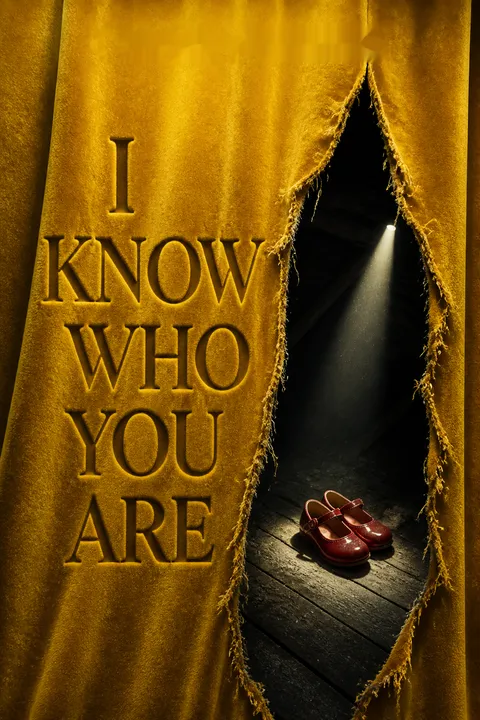


Plot Summary
The Empty House
At thirty-six, actress Aimee Sinclair is used to becoming other people on camera and dreading the moments she must be herself. After a bitter argument with her husband, Ben, she returns from filming to find their Notting Hill house empty. His phone, wallet, keys, coat, and shoes remain behind; an elaborate bouquet carries an apology she cannot ask him to explain.
The previous night is blurred, though she remembers his hands at her throat and knows she demanded a divorce. She searches every room, then reports him missing. Their marriage has narrowed into suspicion and loneliness, yet Aimee still hopes Ben will come home and make the rupture seem temporary. His absence turns that hope into the first question she cannot answer.
Aimee’s profession gives her an unusual refuge: she can inhabit a role more easily than her own life. That skill also makes her an unreliable interpreter of private events, because she instinctively edits pain into a story she can bear. The empty house is not merely a mystery setting. Ben’s belongings suggest he did not leave in the ordinary way, while the flowers invite Aimee to treat harm as something an apology can repair. Her hope is psychologically credible because it protects her from the more frightening possibility that love and danger have become inseparable.
The Account Names Aimee
While trying to resume her morning routine, Aimee discovers that her bank card has been declined. The joint account she shared with Ben has been emptied of more than ten thousand pounds and closed. She calls the bank expecting to learn that Ben took the money, but its records say the final withdrawal was made by her.
The contradiction leaves her shaken: she has no memory of going to the branch. Detectives Alex Croft and Wakely arrive to investigate Ben’s disappearance. Aimee admits to an earlier stalker, but lies about the last night she saw Ben and conceals the severity of their argument. Croft notices the broken bedroom bolt and the sparse house, then takes Ben’s phone and wallet as evidence.
The bank record gives the mystery its central destabilizing mechanism: Aimee’s own identity appears to testify against her. Her first response is not to investigate her memory but to preserve the version of herself she can manage, which is why she lies to Croft about the last night. That choice makes her look more suspicious and narrows the investigators’ trust. Croft’s attention to the broken bolt and missing photographs also establishes a contrast between Aimee’s account of a shared home and the physical evidence of a life stripped nearly bare.
The Girl from Galway
In 1987, a little girl in Galway believes she caused her mother’s death during childbirth because her older brother, Eamonn, and their father have told her so. Her father beats Eamonn, and the boy’s anger eventually turns on his little sister when she reaches for his comfort. Crying outside a closed shop, she meets Maggie, a warm, dark-haired stranger who offers to help her.
Maggie tells the child she has spoken with her father and that the girl can stay with her for a few days. Instead, Maggie drives her far from home to a flat in Essex, where a man named John announces himself as her new father. The child is frightened, but the cake and kindness have already made the journey seem like rescue.
The child’s vulnerability comes from a brutal confusion of care and blame. She has absorbed the idea that she is responsible for her mother’s death, so even ordinary needs feel like demands she must earn the right to make. Maggie’s first kindness exploits that hunger. The journey works because it resembles protection before it reveals itself as control. Eamonn’s rejection matters too: the child has learned to seek safety from people who have already hurt her, a pattern that will later make coercion feel familiar rather than immediately recognizable.
A New Name Above the Shop
In Essex, Maggie cuts the child’s hair, dresses her in pink pajamas marked Aimee, and forbids her to use the name Ciara. She and John claim that the girl’s father no longer wants her, then confine her above their betting shop. Aimee is expected to work, obey their rules, and learn an English accent before she can attend school.
Maggie alternates treats with humiliation, while John takes photographs and insists that the child belong to their household. A framed picture of another little girl, and presents apparently meant for her, leave Aimee with questions nobody answers. She clings to books, tapes, and the memory of Eamonn, secretly repeating her old name so that the life she had before will not disappear completely.
Renaming is the story’s most intimate form of violence: it changes what the child is allowed to say about herself before she has the power to resist. The adults do not rely on punishment alone. They attach affection to compliance, making food, toys, and a promised school place rewards for becoming someone else. Aimee’s private storytelling is therefore more than escape. By rehearsing the memory of Ciara, she preserves an inner witness who can recognize that the imposed identity is not the whole truth.
Postcards Under the Attic
Back in 2017, Aimee remembers that a stalker once sent handwritten cards insisting she was known, then appeared outside her old home dressed much like her. Ben had blamed the woman for a break-in and persuaded Aimee to move, handling the purchase of their new house while she was away filming. Now, with Ben missing, Aimee finds almost no shared photographs and an attic stripped of the ordinary possessions that should have followed them.
A shoebox holds dozens of the stalker’s old postcards. She also finds the distinctive lipstick she once discovered beneath the marital bed, a clue that makes her wonder whether Ben had been unfaithful. She cannot decide whether the objects explain the disappearance or deepen the trap around her.
The postcards give Aimee a concrete threat to focus on, but their message is also a psychological provocation: someone claims to know her better than she knows herself. The empty attic and absent photographs quietly undermine the marriage she remembers, while the lipstick complicates her picture of Ben without proving anything. Aimee responds by assembling clues as if she were preparing a role, but each object invites several incompatible interpretations. The thriller’s tension grows from that gap between physical evidence and the story she needs it to tell.
The Betting Shop Shootout
The childhood memories move deeper into the years above the Essex betting shop. Maggie teaches Aimee to shoot after a warning arrives in the shape of a child-sized coffin. On the Grand National’s busiest day, a worker named Susan tricks Aimee into opening the back door, allowing armed robbers inside.
Aimee hides, retrieves the pistol Maggie has taught her to use, and shoots the attackers after they shoot Maggie and John. Following Maggie’s instructions, she places the gun in John’s hand and gives police a rehearsed account. She believes both adults are dead. Afterward, Maggie scrubs her in a bath and tells her the deaths are her fault. The child leaves believing she is dangerous, guilty, and alone.
The robbery makes the child’s learned obedience deadly: Aimee is blamed both for opening the door and for surviving by using the weapon she was taught to handle. Maggie’s version of events gives the child no stable moral ground; she must lie to the police, then accept blame at home. This is how trauma becomes a script. Aimee’s later instinct to doubt her own memory is not an arbitrary twist but the consequence of having been trained to distrust her perceptions whenever they conflict with an adult’s demands.
Evidence Against the Actress
Croft returns with footage showing Aimee slap Ben outside an Indian restaurant on the night he vanished. Aimee admits they fought but hides his accusation that she was sleeping with her co-star, Jack Anderson. Croft then reveals Ben’s badly injured face and says he reported Aimee for assault before disappearing. A counselor’s recording captures Ben fearing she might kill him.
The detectives also find that Aimee’s car stopped at a petrol station, where a woman resembling her bought lighter gel, even though the tank was nearly empty. Aimee denies being there. The police seize her laptop and discover searches for divorce lawyers, while Aimee finds an empty lighter-gel bottle in her own rubbish and cannot explain how it got there.
The evidence is persuasive because each piece touches a real weakness in Aimee’s story: she did slap Ben, she did consider divorce, and she cannot explain the missing hours. The narrative does not make her innocent by making her flawless. Instead, her actual conduct gives the false evidence room to breathe. Croft’s suspicion is professionally reasonable, while Aimee’s anger is also justified by the threat of a husband who has hurt her. The result is a collision in which neither private certainty nor official procedure can yet establish what happened.
A Scandal on Set
As Aimee finishes filming, Jennifer Jones arrives for an interview she never agreed to, probing her marriage and her film’s story of a woman accused of killing her husband. Aimee’s co-star Jack offers comfort, and their on-screen intimacy has already blurred into an attraction neither has acknowledged. After a night of drinking, Aimee wakes at home beside Jack, with no clear memory of the journey there.
Jennifer’s online report shows photographs of them together, including an image from Aimee’s dressing room, and suggests their affair explains Ben’s absence. At the same time, Alicia White needles Aimee over the coveted role and hints that her agent may drop her. The press story makes Aimee’s career look like evidence of motive.
The film’s simulated murder and the manufactured romance turn performance into apparent fact. Aimee’s ability to act becomes a liability because outsiders interpret staged intimacy as confession and private vulnerability as publicity. Jack’s kindness is real enough to matter, but his access to Aimee also leaves her exposed. Alicia’s taunts add another pressure: Aimee is already inclined to see success as borrowed and temporary. The section shows how a public image can be assembled from genuine fragments and still tell a false story.
The Garden Gives Up a Body
After Croft obtains a warrant and searches Aimee’s house, she returns from meeting her agent to find police activity and a covered body being carried from the garden. Aimee runs, convinced the discovery will make the detectives certain of her guilt. At the wrap party, she tries to hold herself together while Alicia claims she may win the same major film role Aimee was promised.
Jennifer confronts her, admits someone who looks like Aimee tipped her off, and reveals that Jack supplied photographs. Aimee smashes Jennifer’s phone, then receives a birthday message that exposes the date she has spent years concealing. Croft arrests her at the party for Ben Bailey’s murder as guests watch.
The body converts suspicion into public certainty before Aimee can make sense of the evidence. Her flight is understandable but damaging, and the party forces her to perform composure at the exact moment her private life becomes spectacle. The false birthday message is especially cruel because it reaches beneath celebrity identity to the buried child’s history. Jennifer’s phone and Jack’s photographs show that the scandal is not spontaneous; someone has arranged its witnesses. Yet the arrest lands before Aimee knows who is arranging them or why.
The Wrong Husband
In prison, Aimee’s cellmate Hilary shows her a news photograph of Ben Bailey, and Aimee realizes the pictured man is not the husband she knew. Croft confirms that the corpse was the real Ben Bailey, who died by suicide more than two years earlier; someone dug him up and planted his remains beneath Aimee’s decking.
Dental records identify the body, but they do not identify the man who married her. With no real Ben to charge her with killing, Aimee is released. Croft admits the case has been manipulated and asks why anyone would go to such lengths. The answer remains hidden, but Aimee’s certainty that she knew her husband has finally collapsed.
The photograph accomplishes what the earlier evidence could not: it breaks the assumption on which the entire investigation rests. Aimee’s husband was not simply a liar about one affair or one job. The identity that organized her adult life may have been fabricated from the start. Hilary’s blunt recognition is more useful than the official process because she notices the face itself. The release clears Aimee of this murder charge, but it does not restore security; it enlarges the mystery from a disappearance into a deliberate construction of her life.
The Name at TBN
Aimee visits TBN and learns that Ben Bailey was fired for gross misconduct two years earlier, before the marriage began. Jack takes her in when reporters gather outside her house. He later admits Jennifer blackmailed him over a past affair, which is why he provided the photographs that helped her story. He also reveals that he is a widowed father to a young daughter, Lilly.
Croft tells Aimee that the man she married used a dead man’s identity and that John Sinclair, the man from her childhood, survived prison. Aimee withholds what she remembers about the 1988 shooting. Then an antique-shop photograph of the boy she once knew as John appears in several windows, drawing her toward the old betting shop.
The TBN visit strips away the marriage’s professional alibi: the husband Aimee thought she understood had not worked where he claimed since before they met. Jack’s confession complicates the comfort he offers, showing that kindness and concealment can coexist without making him the architect of the larger plot. Croft’s news about John returns Aimee to the childhood she has tried to keep sealed. The repeated photograph works as an invitation and a warning, turning a private memory into a trail someone wants her to follow.
The Letter in Essex
At the shuttered betting shop, Aimee climbs the familiar stairs and finds a red album filled with newspaper clippings about her career. Inside lies a letter she wrote at eighteen to Eamonn, the brother she left behind in Ireland. It explains that she had been taken to England, raised under the name Aimee Sinclair, and later placed in foster care after Maggie and John died.
A woman with Maggie’s hair and face appears behind her. Aimee recognizes the disguise but cannot yet identify the person beneath it. The figure removes the wig and reveals Eamonn, who has spent years watching her. Before she can escape, he explains that he became the man she married and has used Maggie’s appearance to stalk her.
The letter is a rare piece of Aimee’s own authorship, written before fame taught her to manage how others saw her. Its presence in the album shows that someone has preserved her public self while pursuing the private child beneath it. The reveal of Eamonn collapses several separate mysteries into one person: the husband, the stalker, and the woman who seemed to know her past. Aimee’s identity is not simply unmasked; it is reclaimed as a history she had written down but never fully brought into her adult life.
Her Brother Wore Ben’s Face
Eamonn explains that the real Ben Bailey died after losing his job, and that he adopted the dead man’s identity to marry Aimee. He used her passport and laptop, drained the joint account, staged the fuel purchase, planted the corpse, and sent the postcards to make her appear unstable and violent. His disguise as Maggie revived the name attached to Aimee’s childhood captivity.
He says Maggie and John killed the original Aimee and that he later killed John, then accuses his sister of abandoning him after she ran away. His grievance has become a claim of ownership: he wants the sister who escaped to return to him. He knocks Aimee unconscious and takes her to their childhood home in Ireland.
Eamonn’s scheme turns intimacy into surveillance. He knows Aimee’s passwords, history, anxieties, and longing for a child, and uses that knowledge to construct a believable life around a false identity. His claim that the plot is punishment disguises its deeper purpose: he treats Aimee’s independence as a betrayal and her affection as something owed. The reveal also complicates the name Maggie. It once represented both comfort and cruelty to the child; in Eamonn’s hands, it becomes a costume designed to make Aimee doubt what she knows.
The Ax in the Shed
Tied to a bed in the house where she was born, Aimee recognizes Eamonn beneath his altered face and understands that escape will require strategy. She pretends to accept his wish for a reunion, allowing him to untie her feet and lower his guard. When he falls asleep beside her, she strikes his head with a metal Jesus statue, frees herself, and runs outside.
Eamonn pursues her through the storm. Aimee takes refuge in the old shed where her father once forced Eamonn to kill a chicken. She finds the ax there and swings as her brother enters. When he continues moving, she strikes again, killing him. Her survival depends on using the performance he expected from her to create one moment of real resistance.
Aimee’s final performance is not an escape into another identity but a deliberate use of the skills imposed on her. She reads Eamonn’s need for reconciliation, gives him the scene he expects, then acts at the moment his vigilance drops. The shed returns the story to the childhood violence that shaped both siblings, but the roles have changed: Aimee is no longer the child forced to witness harm or accept another person’s account of it. Her violence is terrible, and the narrative does not make it clean; it is the act by which she ends Eamonn’s control.
Epilogue
Six months later, Aimee is married to Jack and pregnant, while continuing her acting career. Alicia White has disappeared, and Aimee offers no explanation for the loss. During a promotional interview, Jennifer Jones asks her to introduce the character she plays.
Exhausted, Aimee gives her own name instead, then corrects herself. The slip captures the uneasy boundary that remains between the woman and her roles: she has escaped one imposed identity, but acting is still both her livelihood and her shelter.
The epilogue offers a future that answers Aimee’s longing for intimacy and motherhood without pretending that the past has been neatly repaired. Marriage to Jack and a coming child suggest a chosen family, but Alicia’s disappearance and the unanswered aftermath of Eamonn’s crimes leave unease in the frame. The final promotional mistake is more than a joke about fatigue. Aimee’s name has been repeatedly assigned, stolen, and performed, so confusing herself with a character remains plausible. Her survival means she can choose her roles now, not that the boundary between performance and self has become effortless.
Analysis
I Know Who You Are builds its suspense around a question more intimate than who committed a crime: who has the authority to say what Aimee is? Her childhood name is taken from her, her memories are dismissed or shaped by adults, and her adult marriage rests on a borrowed identity. When she becomes famous, the public also claims ownership of her image, turning staged affection and private distress into saleable evidence. The book’s repeated concern with acting is therefore structural as well as thematic. Aimee performs because it gives her a temporary escape from herself, while the people around her use performance to make her doubt that self.
The novel also makes self-deception more complicated than simple denial. Aimee conceals Ben’s violence from the police, not because the violence is unreal, but because she still wants to preserve the marriage she imagined. Her own silence gives the investigation a plausible reason to distrust her, even as someone else exploits that silence. The resulting tension asks how a person can testify reliably about a life in which coercion has repeatedly taught them to revise the truth. Memory is not merely missing data here. It is shaped by shame, fear, and the desire to remain loved.
The childhood timeline shows where that vulnerability began. Maggie makes care conditional, John’s household replaces the girl’s name and history, and the child is blamed for surviving a violent robbery. The lesson is not that Aimee should have been more alert. It is that children depend on adults to interpret danger, and that dependence can be weaponized. As an adult, Aimee is drawn toward familiar patterns of secrecy and control because familiarity can masquerade as safety.
The ending offers survival rather than uncomplicated healing. Aimee uses performance deliberately to escape Eamonn, but her victory costs a life and leaves difficult questions unresolved. Her later marriage, pregnancy, and career suggest that she can build a future, not that she has escaped every old pattern. The final confusion between actress and character leaves the central tension alive: a role can save Aimee, but only if she remains the one choosing it.
Review Summary
I Know Who You Are receives mixed reviews, averaging 3.42/5. Many readers praise Alice Feeney's gripping writing style, short chapters, and unpredictable twists, with some calling it a page-turning psychological thriller. However, a significant number of reviewers express strong negative reactions to the ending, describing it as revolting, implausible, and relying on shock value. The book's depictions of child abuse, animal cruelty, and spousal abuse also disturb many readers. Comparisons to Feeney's debut, Sometimes I Lie, are frequent, with most agreeing that debut was superior.
People Also Read







Characters
Aimee Sinclair
Actress in borrowed rolesAimee is a London actress whose work depends on becoming other people, while interviews and ordinary social encounters leave her anxious and exposed. She is observant, self-deprecating, and hungry for a home and family life, yet she often edits painful facts to preserve the relationships she wants to believe in. Her private refuge is fiction, especially stories that offer a different ending from the one she fears. Aimee’s caution can look like passivity, but it is also a survival skill developed through years of uncertainty. She struggles to distinguish self-protection from denial, and her deepest wish is to be known without being controlled.
Eamonn
The distant older brotherEamonn belongs to Aimee’s earliest memories in Galway, where poverty, bereavement, and their father’s violence shape the household. Older and more knowledgeable than his little sister, he can offer her tenderness, but he also carries anger and a child’s limited power to escape their circumstances. His relationship with Aimee is formed before either sibling can understand how much fear and abandonment are shaping them. He represents the family bond Aimee longs to recover, as well as the unresolved past that shadows her adult life.
Maggie O’Neil
A child’s uncertain guardianMaggie is the Irish woman who brings a frightened child into her Essex home and assumes authority over the girl’s name, routine, and future. She can be playful and generous, offering food, toys, and moments of warmth, yet her affection is conditional and her temper can turn frightening without warning. Maggie understands how to make a child feel chosen, then uses that attachment to demand obedience. To Aimee, she becomes both a source of comfort and a figure of danger, leaving the child to confuse being loved with being owned.
John
The man above the shopJohn lives with Maggie above the betting shop and presents himself to the child as her new father. He can share jokes and small treats, but he also keeps secrets and participates in the rules that govern the flat. His relationship with Maggie is strained, and the child watches their arguments without being able to understand their stakes. John’s presence gives the home a fragile appearance of family, though Aimee cannot tell which parts of that appearance she should trust.
Ben Bailey
The missing journalistBen is the man Aimee believes she married, a journalist with an Irish accent and a reputation for charm. In their shared history, he is attentive and funny at first, but their relationship becomes marked by jealousy, estrangement, and conflict over Aimee’s career and her wish for children. He is difficult for her to read because she remembers both the man who seemed to understand her and the husband who made her feel small. His absence forces Aimee to reconsider how much of their private life she truly knew.
Jack Anderson
The co-star who offers shelterJack is Aimee’s handsome co-star, confident in public and more emotionally guarded than his easy charm suggests. Months of filming draw the two actors into an attraction that complicates Aimee’s already troubled marriage. Jack is attentive when she is frightened, though his own history of grief and compromised choices makes him less straightforward than her first impression suggests. He uses humor and performance to deflect pain, much as Aimee does, and his role in her life raises difficult questions about trust, privacy, and what kindness can repair.
Alex Croft
The relentless detectiveDetective Inspector Alex Croft investigates Ben’s disappearance with an alert, unsentimental manner that Aimee initially experiences as accusation. Croft is young, observant, and willing to challenge the assumptions in a witness’s story, including Aimee’s. Her confidence can slide into impatience, and she does not always recognize how threatening the investigation feels to someone with Aimee’s history. Still, she follows evidence even when it overturns her own theory. Croft embodies the tension between institutional suspicion and the genuine work of discovering what happened.
Wakely
Croft’s quiet partnerDetective Sergeant Wakely accompanies Croft through interviews and searches, often letting his colleague lead. His quiet presence gives the investigations a steadier counterweight to Croft’s sharp questions. He records details, handles evidence, and occasionally offers a human response when Aimee feels cornered. Wakely’s restraint makes him difficult for Aimee to read, but he is an important part of the police team pursuing the case.
Jennifer Jones
The hungry showbiz reporterJennifer is a celebrity journalist whose interviews blur professional curiosity with personal provocation. She has been unkind about Aimee’s appearance and work, and she pursues stories with a competitive appetite. Jennifer wants access, attention, and a career that keeps her relevant, even when the people she covers are vulnerable. Her relationship with Jack gives her leverage over him, while her reporting makes Aimee’s private life public property. She treats a human crisis as a career opportunity, but is not the only person manipulating the information she receives.
Alicia White
Aimee’s rival actressAlicia attended the same schools as Aimee and treats their overlapping careers as a competition. Beautiful, ambitious, and skilled at social performance, she likes to remind Aimee that she arrived first and deserves more. Her barbed confidence conceals a need for recognition and approval, particularly from people whose judgment matters to her. Alicia’s presence unsettles Aimee because she appears to embody the effortless status Aimee believes she lacks.
Tony
Aimee’s believing agentTony is Aimee’s agent, a busy industry professional who sees more promise in her than she sees in herself. He protects her when he can, weighs career opportunities against her capacity, and tries to push her toward work that could change her future. His brisk manner can intensify Aimee’s fear that she is about to be discarded, but his support is not merely transactional. Tony is one of the few people in her professional life who asks her to trust her own ability.
Hilary
The practical cellmateHilary is Aimee’s cellmate during her brief imprisonment, an experienced inmate with a blunt manner and a talent for navigating prison routines. She offers food, explains the systems Aimee cannot yet use, and notices the discrepancy in the news photograph that others have overlooked. Hilary protects herself through bargaining and sharp humor, but she is capable of spontaneous generosity. Her practical kindness gives Aimee a rare moment of help without strings attached.
Susan
The shop’s temporary helperSusan is hired to help at the betting shop on its busiest day. She offers the child food and presents herself as friendly, then uses that trust to create an opportunity for danger. Her brief presence shows how easily kindness can be imitated and how difficult it is for a sheltered child to judge an adult’s intentions.
The Galway father
A violent, grieving parentAimee’s childhood father is grieving and impoverished, and his household is governed by anger and scarcity. He blames the child for her mother’s death and uses violence against her older brother. His treatment teaches both children to understand home as a place where love and fear occupy the same rooms.
The Galway mother
The absent first lossAimee’s mother dies during childbirth, before her daughter can know her. Her absence shapes the family’s grief and becomes the reason the child is taught to feel responsible for a tragedy she could not have caused.
Plot Devices
The borrowed identities
Makes identity unstableAimee’s acting career, her childhood renaming, the husband’s assumed name, and the stalker’s disguise all make identity a practical tool in the plot. Characters use names, faces, accents, and roles to control what others believe. The device keeps the reader asking whether a person’s public presentation is a chosen performance or an imposed one. It also gives Aimee’s profession a double meaning: acting can offer freedom from a painful self, but it can also make her easier to frame as someone she is not.
The contested memory
Turns recollection into evidenceAimee’s childhood diagnosis of trauma-related amnesia gives the police a reason to question her account and gives Aimee a reason to question herself. Gaps around the final night with Ben, the childhood shooting, and years of suppressed history make memory both a clue and a source of fear. The story does not treat recollection as a perfect recording. Aimee remembers some events clearly, avoids others, and has been trained since childhood to accept another person’s version of what happened.
The repeated postcards
Turns recognition into threatAnonymous cards bearing the same message appear first as a stalking campaign and later as evidence that the threat reaches into Aimee’s private history. Their repetition makes them feel less like a clue to a specific crime than a demand that Aimee recognize someone she has lost or forgotten. The old cards hidden in the attic, combined with the present-day emails and the lookalike sightings, connect the past to the investigation while encouraging Aimee to suspect several people.
The forensic trail
Makes false evidence persuasiveBank records, CCTV, a missing passport, the petrol-station purchase, lighter gel, and the buried body give investigators tangible reasons to suspect Aimee. These objects are not meaningless red herrings; they are arranged to support a coherent accusation. Their force comes from the fact that Aimee cannot explain some of them and has concealed other damaging truths. The evidence therefore produces genuine suspense rather than simple confusion, until the false identity at the center of the case is exposed.
The red shoes
Links childhood to controlThe child’s longing for red shoes begins as a small, vivid wish in a poor household. The image returns through Aimee’s adult choices and reaches its most disturbing meaning in the final confrontation, where the shoes become a gift used to recall childhood affection and punishment. Their changing significance tracks the difference between a remembered symbol and the person who controls its meaning. The shoes connect the adult thriller to the little girl’s history without relying on exposition alone.
About the Author
Other books by Alice Feeney





Download PDF
Download EPUB
.epub digital book format is ideal for reading ebooks on phones, tablets, and e-readers.








