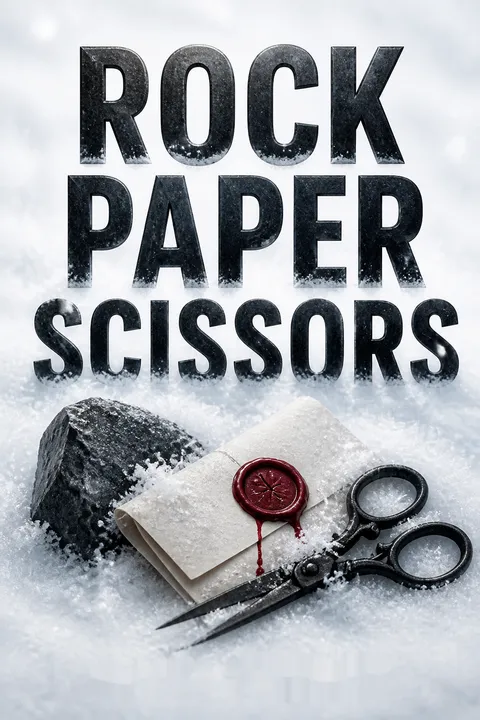


Plot Summary
A Weekend at Blackwater
In February 2020, Amelia drives her husband, Adam, and their elderly Labrador, Bob, north from London through a blizzard. The trip is meant to give their failing marriage one last chance, though Adam resents the journey and Amelia has secretly hidden his phone. They reach a remote converted chapel beside Blackwater Loch, where the entrance is locked despite their booking instructions.
After they circle the building, its heavy doors stand open. Inside, Adam finds a welcome note, but neither spouse can identify the supposed owner or housekeeper. Bob growls at the chapel, and the cold, isolated building offers no immediate comfort. Their arrival begins as a marital retreat and quickly becomes a question of who expected them there.
The trip makes private marital strain physically consequential. Amelia controls the route and removes Adam’s phone, trying to force attention from a man who habitually escapes into work. Adam’s resistance is not merely irritation: his face blindness already makes ordinary social life precarious, while a remote journey strips away the tools he uses to feel secure. The chapel’s unexplained open doors mirror the marriage’s hidden contents. Both spouses enter believing they understand why they are there, yet the unexplained invitation signals that someone else has arranged the terms.
The Chapel Watches
The chapel’s rooms look prepared but neglected: the kitchen has almost nothing in it, while a vast freezer holds labelled meals and the crypt stores wine. Mirrors, antlers, and stained glass make the house feel staged for someone else’s story. After dinner, Amelia sees a face outside and breaks a wine bottle in her fright.
Adam finds only sheep when he searches the grounds, but their dog had already reacted to something at the doors. Later, Amelia descends to the crypt for another bottle. The lights fail, the trapdoor shuts, and she becomes trapped in darkness with an asthma attack. Adam brings her inhaler and gets her out, but his rescue does not erase the growing suspicion that he has concealed more than the phone.
The house turns the couple’s competing perceptions into a thriller mechanism. Adam cannot reliably identify faces, so Amelia’s sighting initially has no witness who can confirm it; her fear is easy for him to dismiss. His willingness to rescue her complicates that emotional distance, but his earlier conduct leaves care entangled with control. The crypt attack also makes Amelia’s body a source of evidence: asthma exposes her vulnerability, while the missing inhaler and unreliable power imply that danger is being arranged by human hands. The chapel is frightening precisely because its uncanny effects have plausible explanations, none of which yet feels safe.
The Marriage They Built
Anniversary letters reach back to 2007, when Adam and Robin, then known to the reader through Amelia’s account, meet at the Electric Cinema and fall quickly in love. Robin adopts an abandoned Labrador puppy, Bob, after Adam proposes at Battersea Dogs Home.
She also persuades the bestselling novelist Henry Winter to let Adam adapt one of his books, giving the struggling screenwriter a career-making opportunity. Their early years bring a small wedding, a derelict Hampstead house that Robin renovates, and the promise of a shared family.
Adam’s work soon expands, however, and Robin becomes both his first reader and the quiet supporter behind his success. The paper crane she makes for their anniversary becomes his enduring good-luck charm, carrying their early faith into a less certain future.
The letters establish that love in this marriage was once expressed through practical acts, not simply devotion. Robin finds Bob, engineers Adam’s professional opening, and makes a home with her own labor; Adam answers with commitment and gifts. Their symbolic game and paper crane give chance a place in their shared language, but the career breakthrough already contains an imbalance. Robin’s influence enables Adam’s independence, even as his success makes her contribution less visible. The narrative’s letter form invites trust in intimate testimony, then makes that trust unstable: a private record can preserve affection while also concealing who is writing and what the reader has mistaken.
The Cost of Silence
As Adam’s adaptations succeed, he spends less time with Robin and becomes increasingly dependent on Henry Winter’s approval. The couple’s attempts to have a child lead to invasive treatment, a missed fertility appointment, a brief pregnancy, and miscarriage.
Robin grieves while Adam continues chasing work, and his renewed focus on his own screenplay brings actress October O’Brien into their lives. Robin’s jealousy softens when October proves generous, but intimacy between the spouses keeps thinning.
On their tenth anniversary, Robin returns home early and finds Adam in bed with Amelia, her friend and colleague from Battersea. She uproots the magnolia Adam planted as a gift and leaves the house, her wedding ring, and Bob behind. Their marriage ends at the point where betrayal becomes impossible to reinterpret.
The betrayal lands after a history of unequal investment, not in an emotional vacuum. Robin has repeatedly supported Adam’s ambitions, while infertility makes her need for mutual presence more urgent; his absence at the clinic turns professional neglect into bodily loneliness. October initially embodies the world Adam prioritizes, but her kindness complicates Robin’s suspicion and shows that jealousy is not the only cause of the marriage’s collapse. The affair with Amelia converts friendship into another loss. Robin’s removal of the magnolia is a concrete rejection of a future Adam offered but failed to inhabit with her.
A Night of False Calm
Back in the chapel, Adam and Amelia try to settle beside the fire, but their old grievances surface whenever work, affection, or trust comes up. Amelia admits to herself that she has hidden the real purpose of the trip, while Adam believes she is planning something against him.
He throws his treasured paper crane into the fire during an argument; Amelia retrieves it, and they briefly reconnect. That fragile warmth breaks when she sees a watcher at a stained-glass window.
Adam goes outside with Bob and finds sheep, then dismisses Amelia’s fear. Later, she is trapped in the crypt and rescued during an asthma attack. They sleep in a bedroom almost identical to theirs in London, where Adam dreams again of a woman in a red kimono struck by a car.
This night fuses reconciliation with manipulation. The couple can still perform tenderness, but neither can sustain it without suspicion intruding. The paper crane is especially charged: Adam’s attachment to it links him to an earlier marriage, while Amelia’s act of retrieving it suggests a desire to preserve the bond she helped damage. The bedroom replica makes domestic familiarity uncanny, and Adam’s recurring dream supplies a buried past that he cannot interpret. His face blindness limits recognition, but the larger failure is relational: both spouses mistake selective knowledge for understanding, and both use reassurance to avoid asking what the other is hiding.
Bob Disappears
Before dawn, Amelia discovers that Bob has vanished from the locked chapel. Adam helps search, then uses the phone he had pretended to leave in London. The discovery turns their suspicion on each other: Amelia admits she hid the device to keep him present, while Adam accuses her of lying about the trip. In the crypt, he finds a pamphlet describing Blackwater Chapel’s grim history and stories of ghosts.
He also produces newspaper clippings about October O’Brien, which he found in a kitchen drawer. Amelia insists someone is staging the disturbances and proposes leaving, but their car is buried under snow and the weather has sealed off the valley. With Bob missing and no signal, neither can simply walk away from the mystery.
The phone revelation prevents the conflict from settling into a simple victim-and-perpetrator arrangement. Amelia’s deception is a bid for intimacy, but it is still coercive; Adam’s concealment is a response, not an absolution. Each interprets the other’s secrecy as proof of danger, which makes honest collaboration difficult precisely when they need it. The pamphlet and clippings widen the mystery without resolving it. October’s presence in the evidence also recalls the earlier marriage and the cost of Adam’s professional life, suggesting that Blackwater is not only a place of threat but a repository for the history both spouses would rather edit.
The Woman in the Cottage
Amelia and Adam search the snow around the chapel, then walk to a nearby thatched cottage hoping its occupant can lend them a phone. A grey-haired woman watches Adam through the window, surrounded by candles and a white rabbit, before drawing the curtains. The couple leave a note and climb a hill to look for a road or another house.
From there, they see a figure enter the chapel. Adam rushes back while Amelia struggles to keep up through the storm. The bell rings, and by the time she reaches the building, Adam is nowhere in the main rooms. She follows his voice through a concealed bookcase door into a private study, where he recognizes the antique desk from a photograph of Henry Winter’s writing room.
The cottage woman’s refusal turns the setting’s isolation into an interpersonal choice. The couple can no longer assume that a person nearby is a source of help, and Adam’s face blindness makes even basic identification uncertain. Their separation on the hill reproduces the marriage’s larger pattern: Adam acts alone, Amelia follows, and each reaches the next revelation with incomplete information. The secret study changes the chapel from a generalized haunted place into a specific person’s domain. The concealed entrance also gives the novel’s central image a literal form: a familiar public surface hides a private history that only becomes visible when someone finds the seam.
Henry Winter’s Empty Grave
Adam identifies the chapel as belonging to Henry Winter, the celebrated novelist whose books shaped his career. The revelation explains the clippings and the study, but not the fake rental email or the missing dog.
In the crypt and kitchen, Adam and Amelia find further signs that Henry’s presence has been carefully staged. Outside, they discover Bob’s collar on a freshly cleared gravestone bearing Henry’s name and a 2018 death date. Adam recalls receiving a manuscript from Henry’s agent in 2019, apparently after the author had died.
The contradiction unsettles him: someone either continued writing as Henry or falsified the grave. The couple return indoors, barricade the chapel doors, and try to understand who has drawn them into this landscape.
The gravestone converts a ghost story into a problem of authorship and evidence. Henry’s death appears settled by the physical marker, yet the later manuscript makes the official account untenable. Adam’s professional dependence on Henry now has personal weight: if the author’s identity can be continued after death, then the career Adam built under his influence may rest on a concealed arrangement. Bob’s collar makes the mystery intimate rather than abstract. The couple are not merely investigating a dead novelist; someone has removed the creature they both love and placed a trace of him beside the grave.
A Daughter’s Hidden Story
Robin’s perspective reveals that the woman in the cottage is Adam’s former wife and Henry Winter’s estranged daughter. After leaving London, she returned to Blackwater when Henry called to say he was dying.
He died in his study after showing her his will and unfinished novel; Robin buried him secretly, dismissed the housekeeper, and kept his death from the world. She completed the manuscript under Henry’s name, and his agent accepted it as the author’s best work.
Robin later found Adam’s abandoned screenplay in Henry’s desk and read the anniversary letters she had written during their marriage. She arranged the fake weekend invitation to bring Adam and Amelia to Blackwater on the anniversary of her wedding, taking Bob so he would be safe while she forced the past into view.
Robin’s actions expose authorship as both inheritance and resistance. Henry denied her confidence and controlled the story of his family, yet after his death she writes in his name, using the authority he left behind to make her own work possible. Her deception is not morally clean: she manipulates Adam and Amelia, takes Bob, and turns a private wound into a staged reckoning. Still, the act of writing lets her revise the role assigned to her by a father who treated her as an interruption. The novel does not equate creative agency with innocence; it asks what forms of power become available to people who were denied a voice.
The First Wedding Returns
As Adam and Amelia search the chapel, they find anniversary gifts preserved in Henry’s desk: a bronze rabbit, the paper crane, an iron key, and pennies. A child’s bedroom contains a dollhouse resembling Adam and Robin’s former home, a jack-in-the-box marked with Adam’s name, and repeated warnings against telling stories.
On the staircase, Amelia recognizes restored photographs of Adam’s first wedding and Robin as a child beside Henry. She tells Adam that the woman in the wedding picture is not her.
He realizes he was married to Robin for ten years without knowing she was Henry’s daughter, and that Henry’s influence over his career began through that concealed family connection. The anniversary souvenirs show that Robin has been preserving their shared life even after the marriage ended.
The objects make memory materially undeniable. Adam cannot identify faces, but the artifacts around him function as a substitute archive, allowing Amelia to assemble what his perception cannot confirm. The child’s room links the adults’ marriage to Robin’s earlier isolation, while the dollhouse reduces domestic life to a scene arranged by someone else. Adam’s dependence on visual testimony is reversed: Amelia must interpret the photographs for him, though her own credibility is compromised. The revelation that his professional mentor was also his former wife’s father destabilizes the story Adam told himself about success, while the gifts suggest that Robin’s attachment survived the betrayal.
The Red Kimono’s Truth
Robin slides a letter beneath the barricaded chapel door. It reveals that Amelia knew Adam before they met as adults: as a teenager, she stole a car and drove it during the hit-and-run that killed Adam’s mother.
Adam remembers the girl who urged him to drive faster that night, then abandoned him at the scene. The face-blind boy could not identify her, and Amelia later approached him through Robin at Battersea. Adam confronts his wife with the accusation; she admits the truth and struggles to breathe.
As she reaches for a kitchen knife, Robin appears behind her with the stork-shaped scissors. The confrontation ends with Amelia dead and Adam facing the woman whose betrayal he had never fully understood, alongside the complicity he himself carries.
The revelation reorders nearly every prior relationship. Amelia’s pursuit of Adam can be read as guilt, fixation, or an attempt at atonement, but none of those motives cancels the choice to conceal the killing. Adam’s prosopagnosia has preserved the crime as a faceless nightmare, making him dependent on another person to name the truth. Yet his own memory supplies the decisive recognition: the girl’s actions, not her face, return. Robin’s scissors transform a domestic keepsake into a weapon, joining her mother’s craft and her childhood history to the present violence. The climax offers exposure, not moral repair.
The Choice After Blood
Six months later, Robin has returned to London with Adam and Bob. They have removed Amelia’s belongings and redecorated the house, while Robin has left her former job at Battersea and begun writing full time. Under Henry Winter’s name, her novel based on Adam’s screenplay and her own anniversary letters is set for publication, with Adam contracted to write the screen adaptation.
Adam says the marriage has returned to something like its earlier shape, and his nightmares have stopped. He remembers the night his mother died more clearly: he was driving the stolen car while a teenage girl urged him on, then she escaped and left him beside the body. He does not regret Amelia’s death, and he and Robin keep the events in Scotland secret.
The reunion is presented as a chosen arrangement rather than a clean restoration. Adam and Robin regain shared work, a home, and Bob, but their new domestic life depends on silence about Amelia’s death and the deception that brought them together. Robin’s authorship gives her a public identity beyond her father’s, even as the book will carry his name. Adam’s recovered memory relieves the nightmare’s uncertainty without freeing him from guilt: he was the driver, even though he was also a child manipulated by the girl beside him. The ending’s comfort is therefore conditional, built on both renewed intimacy and deliberate concealment.
Sam Finds the Grave
The final chapter shifts to Samuel Smith, the private investigator Henry hired years earlier to watch Robin and Adam. After losing contact with Henry, Sam drives to Blackwater to tell him that Robin has returned to Adam’s life. He finds the chapel dark and locked, then searches the graveyard.
Henry’s headstone carries an altered inscription that identifies him as a father and a killer, and a glass case nearby contains a sapphire ring, a paper crane, and a small stork-shaped pair of scissors. Sam notices that the ring remains attached to what looks like a human finger. The discovery gives him no explanation; hearing his name whispered in the dark, he runs back to his car, leaving the book’s final evidence unresolved.
Sam’s coda reopens the moral account just as the lovers claim to have closed it. The private investigator has spent years treating other people’s lives as information to be collected, but this last discovery exceeds his professional confidence. The altered inscription and bodily relic imply that Henry’s story contains violence beyond the murder Adam finally remembers, while the objects gather the novel’s motifs of inheritance, luck, and authorship into one unsettling display. The ending refuses to certify Robin’s version of events as complete. A secret can be buried, but a grave is also a public claim, and someone has changed what it says.
Analysis
Rock Paper Scissors makes the act of telling a story inseparable from the act of managing what another person can know. Adam writes adaptations because other people’s fictional worlds offer structure and professional validation, but he avoids the unstable material of his own life. Robin’s letters seem to provide a private record of their marriage; as the identity behind them becomes clear, the record itself changes meaning. Intimacy is not guaranteed by access to someone’s words. A letter can be truthful in detail and deceptive in authorship.
The novel’s treatment of face blindness gives this problem a physical form. Adam cannot use faces as reliable evidence, so he reads gesture, voice, and repeated behavior. Yet the deeper failures of recognition are not medical. He and Amelia each overlook what the other has done, and Adam idealizes Henry as a mentor while missing the family history that connects them. Robin, meanwhile, recognizes others closely but keeps her own identity protected. Each character possesses a different kind of blindness, shaped by need and self-defense.
Objects carry memory where conversation fails. The paper crane, anniversary gifts, photographs, the red kimono, and the scissors acquire meanings through repetition, then become evidence in a present-day reckoning. The chapel gathers these objects into a setting where private history can no longer remain private. Its apparent hauntings are effective because the supernatural explanation is never the only one; human beings have already made the place frightening through secrecy and intention.
The ending offers a reunion but not a moral cleansing. Adam and Robin recover a shared life and a creative future, while concealing Amelia’s death and Robin’s deceptions. Their happiness depends on a pact that resembles the old marriage’s secrets, even as they claim greater honesty. Sam’s final discovery unsettles that closure, suggesting that buried stories continue to generate new evidence. The novel’s sharpest insight is that truth does not automatically heal, but avoiding it gives other people the power to write your life for you.
Review Summary
Rock Paper Scissors received mostly positive reviews, with readers praising its atmospheric setting, clever plot twists, and suspenseful narrative. Many found it to be a fast-paced, engaging thriller that kept them guessing until the end. The unique element of the protagonist's face blindness added intrigue. While some critics found certain aspects implausible or disliked the characters, most agreed it was an entertaining and addictive read. The book's ending, particularly the final twist, garnered widespread acclaim.
People Also Read





Characters
Adam Wright
The face-blind screenwriterAdam is a successful screenwriter whose prosopagnosia prevents him from recognizing faces, including his own and those of people he loves. He compensates by learning voices, habits, hair, and movement, but the condition leaves him anxious in groups and vulnerable to mistakes about identity. Writing adaptations gives him a career and a way to retreat from difficult feelings; it also keeps him oriented toward other people’s stories at the expense of his own. His childhood, marked by an absent father and his mother’s death, feeds his longing for approval and his reliance on fiction. Adam can be charming and perceptive about narrative while remaining emotionally evasive in marriage, a contradiction that shapes both his successes and his failures.
Amelia
The determined second wifeAmelia works at Battersea Dogs Home and believes that neglected animals deserve protection and patient care. Her own childhood in foster homes has left her alert to abandonment and hungry for lasting attachment. She tries to secure intimacy through effort, planning, and attention, but her need to be chosen can become controlling, and she often confuses care with the ability to repair another person. Her marriage to Adam is strained by his work and their mutual secrecy. Amelia is observant and capable, yet her account of herself and her motives must be read cautiously. Her affection for Bob and her attachment to Adam reveal a woman who wants a family and a place to belong, even when her methods threaten the trust she seeks.
Robin
The watchful Highland recluseRobin is a private, self-reliant woman with a deep attachment to animals, books, and the Scottish Highlands. She has known abandonment and loneliness since childhood, and learned to survive by observing others closely while withholding her own feelings. Her practical kindness can make her a devoted friend, but her reserve also allows resentment and old injuries to grow without being challenged. Writing and reading offer her refuge, though the shadow of a celebrated writer in her family complicates her confidence in her own voice. Robin’s relationship to Adam is founded on shared ambition and mutual care, while her history with Amelia brings out her capacity for trust as well as her difficulty forgiving.
Henry Winter
The guarded literary giantHenry Winter is a famous author of murder mysteries and dark thrillers, known publicly for his privacy, eccentric habits, and formidable body of work. Adam admires him as a writer and depends on his professional trust, treating his approval as a measure of his own worth. Henry’s preference for solitude and control extends beyond his books, shaping the people who orbit him and the stories they tell about themselves. He is a complicated figure rather than a simple mentor: his influence creates opportunity while also imposing a heavy legacy. His Scottish chapel, collection of manuscripts, and carefully guarded personal life make him a presence in the novel even when he is absent.
Bob
The loyal old LabradorBob is the large black Labrador Adam and Robin adopt after Amelia finds him abandoned as a puppy. Now elderly, he is affectionate, food-loving, and a poor guard dog, frightened by sheep and feathers. His uncomplicated devotion contrasts with the adults’ suspicions and withheld truths. Both spouses treat him as family, and his presence recalls the early years when they built a life together. Bob’s trust is physical and immediate: he follows familiar people, sleeps wherever he feels safe, and expects kindness without demanding an explanation.
October O’Brien
The ambitious actressOctober is a successful young actress who becomes interested in Adam’s long-neglected screenplay. Her talent and celebrity give the project new momentum, but she is not the shallow rival Robin initially fears. October is generous, warm, and serious about creative work, and she treats Robin with kindness when they meet. Her presence connects Adam’s professional hopes to the emotional tensions of his marriage. The gap between her public image and her private generosity complicates the couple’s assumptions about fame and attraction.
Samuel Smith
The hired private investigatorSamuel, usually called Sam, is a private investigator who grew up devouring crime and horror novels. Henry hires him to keep watch on Robin and Adam, giving Sam both steady work and proximity to the literary world he admires. He takes pride in being thorough, though his long surveillance makes him feel like an unseen participant in the family’s life. Sam is lonely and hungry for purpose, and he is drawn to cases partly because they offer the intimacy and suspense missing from his own routine.
Pamela
The marriage counsellorPamela counsels Adam and Amelia and suggests that a weekend away might give them a chance to reconnect. Adam privately mocks her advice and avoids treating therapy as a serious commitment, while Amelia hopes the sessions can help. Her practical recommendation becomes the frame for the Scottish trip.
Patty
The village shopkeeperPatty runs the shop and post office in Hollowgrove. She is sharp-tongued, suspicious, and fond of local gossip, but she provides Sam with directions to Blackwater. Her small-town knowledge offers clues about who has been seen near the chapel.
Donna
The unsuitable dog adopterDonna applies to adopt Bertie, a dog at Battersea, but treats the adoption as a way to acquire a fashionable companion and social-media content. Amelia rejects her application, demonstrating the care and judgment she brings to her work.
Nina
Amelia’s raffle colleagueNina works with Amelia at Battersea and wins a box of chocolates in the staff raffle. Her small prize helps establish the raffle that Amelia claims brought her the Scottish weekend.
Charlie
Amelia’s former foster parentCharlie is one of Amelia’s former foster parents, a supermarket worker who sometimes brought home food that would otherwise be discarded. Though Amelia has not spoken to him for years, news of his death reminds her that she once had people who cared for her.
Father Douglas Dalton
The chapel’s last priestFather Douglas Dalton is identified in the chapel’s historical pamphlet as its last priest. Local rumor says he fell from the bell tower, contributing to the chapel’s reputation for ghosts and misfortune.
Rainbow O’Brien
October’s private nameRainbow is October O’Brien’s birth name, revealed at her funeral. Her stage name protects her privacy, reflecting the division between the public identity she performs and the person known to her friends.
Plot Devices
Prosopagnosia
Identity without facesAdam’s face blindness affects both ordinary interactions and the mystery’s central evidence. He relies on voices, hair, clothing, and behavior rather than facial recognition, which makes him socially anxious and unable to identify the person involved in a childhood hit-and-run. The condition does not make him unable to understand people, but it changes what counts as proof for him. Photographs, mirrors, and descriptions repeatedly confront the gap between what others see and what Adam can verify. The device gives the novel a concrete way to explore mistaken identity while remaining grounded in Adam’s everyday experience.
Anniversary Letters
A marriage kept on paperAnnual letters are written in connection with the couple’s wedding anniversary and paired with traditional gifts such as paper, cotton, wood, and copper. They preserve intimate details that the spouses do not say aloud, charting career successes, fertility struggles, affection, resentment, and infidelity. Their dated entries create a second timeline alongside the storm-bound present, allowing the reader to watch a marriage change year by year. The letters also make authorship itself a mystery: the identity of the person recording the marriage becomes part of the larger question of who controls a story.
Blackwater Chapel
A house built from secretsThe remote chapel isolates Adam and Amelia during a snowstorm, cutting off mobile service and making their car inaccessible. Its crypt, bell tower, mirrors, stained glass, hidden study, and locked rooms turn the building into a physical investigation. The chapel’s ghost stories invite supernatural explanations, but the disturbances repeatedly point toward human intention and concealed history. It also contains objects from several periods of the characters’ lives, so the couple cannot separate the immediate danger from the marriage and family histories that preceded it.
Rock Paper Scissors
A game that decides futuresThe game begins as flirtation and a way for Adam and Robin to settle playful choices. Their repeated pattern, Robin’s scissors defeating Adam’s paper, becomes a private language for affection and chance. Later, the game is invoked when the marriage itself is in question, and its three gestures organize a final choice between competing futures. The title also connects Adam’s screenplay, Robin’s writing, the anniversary gifts, and the novel’s repeated concern with decisions that seem small until their consequences arrive.
Henry’s Authorship
A borrowed literary identityHenry Winter’s reputation and manuscripts give Adam a career and later provide Robin with a way to publish her own writing. His Scottish home, unfinished novel, and private correspondence connect the professional plot to the family mystery. Characters repeatedly assume that a book bearing Henry’s name must be his, while Adam’s work adapting other writers’ stories raises questions about who owns a narrative. The device turns authorship into more than a career issue: it becomes a means of control, concealment, inheritance, and escape.
FAQ
Synopsis & Basic Details
What is Rock Paper Scissors about?
- Marriage on the brink: A couple, Adam and Amelia, embark on a weekend getaway to a remote Scottish chapel, hoping to salvage their failing marriage.
- Secrets and lies: The trip is fraught with tension, as both characters harbor secrets and hidden agendas, leading to a series of unsettling discoveries.
- Twisted thriller: The story unfolds as a psychological thriller, exploring themes of identity, trust, and the blurred lines between reality and perception.
Why should I read Rock Paper Scissors?
- Intricate plot twists: The novel is known for its unexpected twists and turns, keeping readers guessing until the very end.
- Complex characters: The characters are flawed and multi-layered, with hidden motivations and psychological complexities that add depth to the story.
- Exploration of relationships: The book delves into the dynamics of a troubled marriage, exploring themes of love, betrayal, and the impact of past traumas.
What is the background of Rock Paper Scissors?
- Remote Scottish setting: The story is set in the isolated Scottish Highlands, a location that enhances the sense of unease and isolation.
- Psychological thriller genre: The novel draws on elements of psychological thrillers, creating a suspenseful and unsettling atmosphere.
- Focus on relationships: The story explores the complexities of marriage, highlighting the impact of secrets, lies, and past traumas on a couple's dynamic.
What are the most memorable quotes in Rock Paper Scissors?
- "Marriages don't fail, people do.": This quote encapsulates the theme of personal responsibility in relationships, highlighting that individual flaws, not the institution of marriage itself, are often the cause of failure.
- "We weren't always the people we are now, but our memories of the past can make liars of us all.": This quote speaks to the unreliable nature of memory and how our perceptions of the past can be distorted by present circumstances and emotions.
- "Sometimes a curse can be a blessing.": This quote, referring to Adam's prosopagnosia, suggests that even difficult circumstances can have unexpected positive outcomes, highlighting the theme of finding strength in adversity.
What writing style, narrative choices, and literary techniques does Alice Feeney use?
- Alternating perspectives: Feeney employs alternating points of view between Amelia and Adam, creating a sense of unease and highlighting the different perceptions of the same events.
- Non-linear timeline: The story incorporates flashbacks and letters, which gradually reveal the characters' pasts and add layers of complexity to the narrative.
- Foreshadowing and red herrings: Feeney uses subtle foreshadowing and misdirection to keep readers guessing, creating a suspenseful and unpredictable reading experience.
Hidden Details & Subtle Connections
What are some minor details that add significant meaning?
- The recurring mention of the color red: The color red, often associated with danger and passion, appears in various forms throughout the book, such as the red kimono in Adam's nightmares and the red lipstick on the mirror, foreshadowing violence and hidden truths.
- The use of the word "almost": The phrase "almost always," frequently used by Adam, highlights the conditional nature of his love and commitment, hinting at the underlying instability of his relationships.
- The presence of the paper crane: The paper crane, a symbol of good luck, becomes a recurring motif, representing both hope and the fragility of their relationship, as it is both a gift and a reminder of their past.
What are some subtle foreshadowing and callbacks?
- The mention of the Blackwater Inn: The boarded-up Blackwater Inn foreshadows the isolation and dereliction of the chapel, hinting at the couple's emotional state and the bleakness of their situation.
- The description of the chapel as a horror film: Amelia's initial thought that the chapel feels like the opening of a horror film foreshadows the dark and twisted events that unfold, creating a sense of unease and anticipation.
- The recurring motif of the game Rock Paper Scissors: The game, initially a playful element of their relationship, becomes a symbol of their power dynamics and the unpredictable nature of their choices, with the game itself being a callback to their engagement.
What are some unexpected character connections?
- Robin's connection to Henry Winter: The revelation that Robin is Henry Winter's daughter adds a layer of complexity to the plot, revealing a hidden family history and a motive for her actions.
- Amelia's connection to Adam's past: The reveal that Amelia was the driver in the hit-and-run that killed Adam's mother creates a shocking twist, highlighting the interconnectedness of their lives and the devastating consequences of their past actions.
- The private investigator's role: The private investigator, Samuel Smith, acts as a hidden observer, connecting the past and present, and revealing the extent of Henry Winter's control and manipulation.
Who are the most significant supporting characters?
- Henry Winter: Although deceased, Henry's influence is central to the plot, as his books, his past, and his relationship with Robin drive the narrative and reveal the secrets of the chapel.
- October O'Brien: The actress, though not physically present, serves as a catalyst for the couple's conflict, highlighting Adam's ambition and Amelia's insecurities.
- "Call me Pamela": The marriage counselor, though a minor character, represents the couple's failed attempts to fix their relationship, highlighting the futility of their efforts.
Psychological, Emotional, & Relational Analysis
What are some unspoken motivations of the characters?
- Amelia's desire for control: Amelia's actions are driven by a need to control her life and her relationship, stemming from her past traumas and feelings of invisibility.
- Adam's need for validation: Adam's obsession with his work and his desire for Henry Winter's approval reveal a deep-seated need for validation and recognition.
- Robin's quest for revenge: Robin's actions are motivated by a desire for revenge against Adam and Amelia, stemming from her past betrayals and the loss of her father.
What psychological complexities do the characters exhibit?
- Adam's prosopagnosia: Adam's face blindness is not just a physical condition but also a metaphor for his emotional blindness, highlighting his inability to see the truth about his relationships.
- Amelia's anxiety and insecurity: Amelia's anxiety and insecurity stem from her past traumas and her fear of abandonment, leading her to seek control and validation in her relationships.
- Robin's manipulative tendencies: Robin's manipulative behavior and her ability to orchestrate events from behind the scenes reveal a complex and vengeful personality, shaped by her past experiences.
What are the major emotional turning points?
- The discovery of Henry Winter's death: The revelation of Henry's death forces Adam to confront his idealized view of the author and the reality of his own career.
- The reveal of Amelia's past: The reveal that Amelia was the driver in the hit-and-run that killed Adam's mother shatters their relationship and forces them to confront their shared history.
- The confrontation with Robin: The confrontation with Robin forces Adam and Amelia to face the truth about their past and the lies that have shaped their lives.
How do relationship dynamics evolve?
- From strained to broken: The relationship between Adam and Amelia deteriorates throughout the story, as their secrets and lies erode their trust and love.
- From victim to manipulator: Robin's character evolves from a victim of her past to a manipulative figure, seeking revenge and control over Adam and Amelia's lives.
- From dependence to independence: Both Adam and Amelia undergo a transformation, as they learn to confront their own demons and make choices that are independent of their relationship.
Interpretation & Debate
Which parts of the story remain ambiguous or open-ended?
- Robin's true intentions: While Robin's motivations are revealed, her ultimate goals and the extent of her manipulation remain somewhat ambiguous, leaving readers to question her true nature.
- The nature of love and betrayal: The novel leaves readers to ponder the complexities of love and betrayal, questioning whether forgiveness and redemption are truly possible.
- The possibility of a future for Adam and Robin: The ending leaves the possibility of a future for Adam and Robin open-ended, allowing readers to interpret their fate and the potential for reconciliation.
What are some debatable, controversial scenes or moments in Rock Paper Scissors?
- Amelia's actions towards Adam: Amelia's manipulation of Adam, including hiding his phone and orchestrating the trip, raises questions about her own morality and her role in the breakdown of their marriage.
- Robin's revenge plot: Robin's elaborate plan for revenge, including the use of Henry's identity and the manipulation of Adam and Amelia, raises questions about the ethics of her actions.
- The ending's ambiguity: The ending, which leaves the future of Adam and Robin open-ended, can be interpreted in different ways, sparking debate about the possibility of forgiveness and redemption.
Rock Paper Scissors Ending Explained: How It Ends & What It Means
- Robin's manipulation: The ending reveals that Robin orchestrated the entire weekend, using her knowledge of Adam and Amelia's past to manipulate them into confronting their secrets.
- Adam's choice: Adam is presented with a choice between staying with Amelia or returning to Robin, highlighting the theme of free will and the consequences of past actions.
- The cycle of betrayal: The ending suggests that the cycle of betrayal and manipulation may continue, leaving readers to question whether any of the characters can truly escape their past.
About the Author
Other books by Alice Feeney


Download PDF
Download EPUB
.epub digital book format is ideal for reading ebooks on phones, tablets, and e-readers.








