

Plot Summary
Prologue
The day before Dawn Schiff disappears, she repeatedly asks Vixed manager Seth Hoffman to set a definite time for a private meeting about upsetting information. Seth eventually agrees to see her at two the next afternoon.
The exchange is unusually formal even for Dawn, whose need for exact arrangements has become part of office routine. Its urgency, however, gives the coming absence a second meaning: she has tried to ensure that someone will be waiting to hear what she knows.
The email exchange makes ordinary office procedure feel ominous. Dawn's insistence on a fixed appointment is not merely a character quirk; it establishes that she is carrying information she considers consequential and is trying to control the conditions under which it will be heard. Seth's casual acceptance contrasts with her careful preparation, introducing the book's recurring asymmetry: Dawn notices details others dismiss, while people around her underestimate what those details may mean. The prologue supplies a clock and a promise, then lets the next day's absence turn both into evidence.
An Empty Cubicle
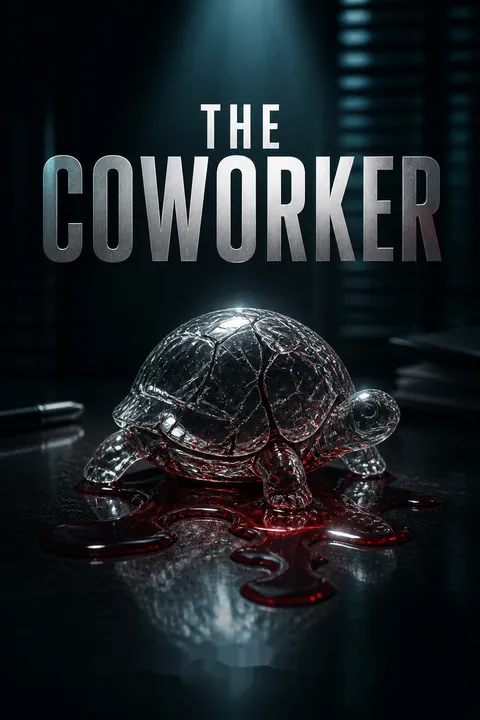
Natalie Farrell arrives at Vixed expecting the familiar order of her workday, but the cubicle beside hers is empty. Dawn Schiff, the meticulous accountant who normally arrives at the same time every morning, has not called in or answered Natalie’s messages. A small turtle figurine has appeared on Natalie’s desk, and dark red residue stains her fingers when she picks it up.
Then Dawn’s desk phone rings. Natalie answers and hears a frightened plea before the caller hangs up. Seth, their manager, treats the call as a possible customer problem and refuses to involve police. Dawn had also emailed Natalie the previous afternoon about an urgent matter, so the silence now feels less like lateness than a warning.
The opening makes routine itself a form of evidence. Natalie knows Dawn through repetition, so a missed arrival carries more weight than it would for a less predictable coworker. Yet Natalie’s instincts compete with her desire not to seem anxious, and Seth’s dismissal gives her permission to doubt what she heard. The turtle and the stain add physical unease before the story can explain them. This is a carefully managed shift from workplace comedy into threat: ordinary objects and schedules become charged because the people around Dawn have mistaken her precision for harmless eccentricity.
Blood Among the Turtles
After a day without a reply, Natalie drives to Dawn’s Quincy home and finds Dawn’s car outside but no lights or movement inside. She enters through an unlocked back door, telling herself that a worried coworker has a right to check.
In the kitchen, an open bottle of wine and one shattered glass suggest a sudden disturbance. Carrying a knife for protection, she searches the dark living room and finds an overturned chair, a toppled ottoman, and a wall of turtle ornaments with one conspicuous empty space.
Blood covers the carpet, but Dawn is gone. Natalie calls emergency services. Detective Santoro questions her about the visit, her relationship with Dawn, and her whereabouts, beginning an investigation in which Natalie’s own actions may look suspicious.
Natalie's decision to enter the house is compassionate, but it also contaminates the scene and gives investigators reasons to scrutinize her. The room's abundance of turtles first appears comic, then turns into an inventory with a missing piece. That shift mirrors the novel's larger method: familiar habits and clutter acquire forensic meaning only after violence enters the frame. Natalie wants to be the person who noticed Dawn's distress, yet her account depends on memories she is not certain of and a house she has touched. Concern and self-protection begin to occupy the same space.
Welcome to Vixed
Nine months earlier, Dawn starts work as Vixed’s accountant and meets Natalie, the company’s gifted salesperson. Shy and socially uncertain, Dawn privately compares herself to a turtle that retreats from danger.
Natalie welcomes her, organizes a small office gathering, and once shares lunch with her and colleague Kim Healey. Dawn writes enthusiastically to her longtime friend Mia Hodge, hoping Natalie might become a casual friend too. She copies small parts of Natalie’s style, offers her a turtle figurine, and treats each exchange as a chance to build closeness.
Natalie’s attention, however, is intermittent, and Dawn often misreads politeness as intimacy. Her isolation makes small gestures feel unusually consequential, while her detailed emails preserve a record of what the office forgets.
Dawn's longing is not simply for popularity; it is for a relationship whose rules she can understand. She studies social behavior as if it were a system, borrowing advice and gestures because spontaneous connection has repeatedly failed her. Natalie’s genuine welcome matters, but it is never a promise of the intimacy Dawn wants. Their mismatch creates a painful feedback loop: Dawn interprets attention as commitment, while Natalie experiences her attempts as intrusive. The emails to Mia give Dawn a private witness and a stable narrative, but they also show how a desire to belong can turn observation into certainty without confirming another person's intentions.
Small Cruelties, Broken Shells
As months pass, Natalie and Kim increasingly exclude Dawn from lunches and office gatherings. Natalie mocks her turtle fixation with Kim, makes a joke about Dawn’s presumed lack of sexual experience, and rebuffs her efforts to join conversations.
Dawn’s treasured turtle mug breaks after a confrontation with Natalie, and Dawn later finds her cupcakes discarded before Kim’s bridal shower. She also believes Natalie has misled her about meeting times and destroyed the turtles decorating her cubicle.
Dawn reports the pattern to Seth, but he dismisses her concerns and tells her to resolve matters herself. Whether every suspicion is accurate or not, the repeated slights confirm Dawn’s belief that Natalie is deliberately targeting her and leave her with no trusted ally at work.
The office's cruelty accumulates through acts small enough to deny individually. A ruined mug, a missed gathering, or a joke can each be recast as an accident or harmless teasing; together they define who is permitted to belong. Dawn's difficulty reading social cues makes it easier for colleagues to dismiss her account, but that vulnerability does not make the harm imaginary. Seth's refusal to investigate converts workplace hierarchy into protection for the popular and exposure for the isolated. The scene also complicates moral judgment: the narrative asks readers to distinguish between Dawn's sometimes uncertain interpretation and the plainly observable contempt around her.
Numbers Do Not Lie
Dawn audits Vixed’s accounts and finds money missing from large sales associated with Natalie, with similar discrepancies reaching back into earlier records. She has already challenged Natalie’s expensive sales lunches and urged Seth to cut costs, but he brushed her off.
Despite believing Natalie may be responsible, Dawn decides to warn her privately rather than report her at once. She emails Natalie to arrange an after-work meeting, then tells Mia that she hopes the discovery might finally give them a reason to work together.
Natalie agrees to investigate the discrepancy with her, and Dawn prepares her home for a rare guest, laying out wine and anticipating an evening that might become a friendship. The appointment gives the disappearance a concrete motive and a last planned meeting.
Dawn's accounting skill is the quality the company hired her for, yet it becomes dangerous precisely because it exposes a colleague's hidden conduct. Her decision to approach Natalie first reveals both ethical care and emotional vulnerability: she would rather preserve a possible friendship than immediately trigger punishment. The numbers offer Dawn a firmer language than social intuition, but she still interprets Natalie's willingness to meet as evidence of personal closeness. This turning point binds the workplace conflict to the mystery. It also establishes that the missing money is not merely a theory invented after Dawn vanishes; she found a traceable discrepancy before the crisis began.
An Alibi Made of Lies
Natalie tells Santoro that she spent the night Dawn vanished with Caleb McCullough, the website contractor she has been dating, though he left her home around nine-thirty. She persuades Caleb to support the fuller story, framing the lie as protection for them both.
Meanwhile, newly separated Seth visits Natalie, and they resume their affair while she is still with Caleb. The detective returns to Vixed, finds Natalie’s fingerprints on a knife and wineglass at Dawn’s home, and notes the missing turtle from the display shelf.
Coworkers also describe Natalie’s jokes and exclusions as bullying. Rather than treating the investigation as a simple search for Dawn, Santoro begins testing Natalie’s relationships, explanations, and motives, while Natalie’s overlapping loyalties make her increasingly unable to keep her account straight.
Natalie’s central defense is not a carefully designed scheme but the familiar social skill of persuading others to accommodate her. She treats a false alibi as a minor convenience, unable to see how the request transforms Caleb from boyfriend into witness. Her affair with Seth repeats that pattern: she separates desire from responsibility by naming the encounter temporary. Meanwhile, Santoro reads inconsistencies as behavioral evidence, and Natalie’s confidence in her charm begins to fail. The plot's pressure comes from small choices that can be explained separately but form a damaging pattern when seen together.
A Body in Cohasset
Police find a badly beaten woman in the woods at Cohasset and initially identify her as Dawn. Santoro tells Natalie that the victim died from repeated blows to the head, and the apparent murder turns office gossip into public accusation.
Dawn’s emails, recovered from her computer, describe Natalie’s supposed cruelty and her discovery of the missing Vixed money. Coworkers confirm that Natalie sometimes mocked Dawn, while an online campaign brands the company a nest of bullies.
Natalie insists that she tried to be kind and that the charity run she is organizing honors a childhood friend with cerebral palsy. Yet the emails, fingerprints, and absent alibi give investigators a compelling story in which Natalie had motive, opportunity, and a history of hostility.
The mistaken identification gives suspicion a body before it gives the victim a name. In that gap, Dawn's emails acquire unusual authority: they are intimate documents that sound like testimony, even though readers cannot yet know what is true, mistaken, or constructed. Public outrage simplifies the situation into a familiar morality play, making workplace bullying a satisfying explanation for murder. The novel does not excuse Natalie's cruelty, but it shows how a plausible account can harden into apparent fact when evidence is partial and the accused is already disliked. The case becomes a contest over who controls the story of Dawn.
Evidence Comes Home
Natalie discovers a large ceramic turtle stained with blood at the bottom of her laundry hamper. Its size and shape match the missing space in Dawn’s bookcase, and she fears it was the weapon used to kill her coworker. Rather than call Santoro, Natalie smashes the turtle and throws the pieces into the sea at Wollaston Beach, destroying evidence while telling herself someone planted it to frame her.
The blocked calls continue, and a phone app eventually traces one to a Rhode Island motel. Before she can investigate, police arrest her in front of cameras at the charity 5K. Caleb is present, and Natalie manages to ask him to follow the motel lead as Santoro takes her away in handcuffs.
The turtle functions as both evidence and a test of character. Natalie recognizes its likely significance, but fear of being blamed drives her to destroy it rather than preserve it. Her decision makes her look guilty even if her suspicion about the frame is correct. At the 5K, a public event built around charitable repair becomes the setting for her public disgrace. The scene exposes the distance between Natalie's self-image as a capable organizer and her instinctive response under threat. She tries to manage the optics, but the investigation has moved beyond anything her usual performance can control.
Amelia’s Other Name
The viewpoint shifts to Dawn, alive in a motel and watching footage of Natalie’s arrest. She has been working with Caleb, who is not merely Natalie’s boyfriend but Amelia Hodge’s brother. Amelia, whom Dawn called Mia, was Dawn’s closest friend.
In high school, Natalie and her friend Tara Wilkes tormented Amelia, including a cruel Valentine’s prank that preceded Amelia’s suicide. Dawn has spent years believing Natalie caused her friend’s death and escaped consequences.
She and Caleb designed the disappearance to frame Natalie: Dawn cut her own wrist to leave blood, Caleb planted the turtle and other traces, and forged emails made Dawn’s suspicions look like a detailed record. Their plan uses an unrelated dead woman to make the murder appear real.
The reversal makes the book's two central women legible in a new way without making either innocent. Dawn's revenge is rooted in a real history of cruelty, but she converts grief into an elaborate punishment that repeats the logic of her own isolation: other people become instruments in a private moral design. Caleb's participation links sibling guilt to romantic loyalty, while the fabricated emails exploit readers' trust in documentary evidence. The reveal also reframes Natalie's charity work. Her remorse may be real, but Dawn sees it as self-serving theater, and the unresolved gap between public penance and private accountability drives the conflict forward.
Caleb’s Motel Secret
DNA testing proves the body in Cohasset is not Dawn, weakening the case but leaving Natalie in jail under a murder charge. Caleb has voluntarily told police that Natalie’s alibi was false and described her hostility toward Dawn. Seth, regretting his own accusation that Natalie stole from Vixed, posts bail and drives her to the Rhode Island motel.
The clerk confirms Caleb stayed there with a woman resembling Dawn. Back at Natalie’s house, Caleb admits he planted evidence and reveals that Dawn is alive, then explains that she is now intent on making the scheme end with a real death. He believes she may be heading to the shore to drown herself. Natalie, Seth, and Caleb split up to search before Dawn can act.
The false body collapses the simplest version of the prosecution but does not restore Natalie’s freedom or credibility. Caleb’s betrayal is especially destabilizing because he has moved from lover to informant, then from apparent accuser to the person asking her to help save Dawn. Seth’s decision to post bail offers a counterpoint to his earlier reflexive favoritism and disbelief. The revelation that Dawn is alive turns a murder mystery into an immediate rescue problem. Evidence has not merely misled the police; it has trapped every character inside a story that Dawn herself may now be unable to stop.
The Pier at High Tide
Natalie searches Wollaston Beach and finds Dawn at the end of a pier with a cinderblock tied to her ankle. Dawn intends to drown herself so the authorities will have a genuine body and Natalie will remain implicated. When Natalie explains that Caleb exposed the plan, Dawn lifts the heavy block and turns on her, now ready to kill the woman she blames for Amelia’s death and for losing Caleb.
Natalie sprays her with mace, forcing her to drop the block. She then admits that she has carried guilt over Amelia for years and explains that Caleb never loved her. Dawn begins to accept that his panic was genuine. The two women remain on the pier as the tide rises, alive but altered by the near violence.
The climax places two forms of self-destruction beside each other. Dawn intends to erase herself to make her accusation irreversible; Natalie, who has spent the novel protecting her image, finally speaks without salesmanship and names her own wrongdoing. Her apology cannot repair Amelia's death, and the scene does not pretend that it can. What changes is Dawn's immediate belief that Caleb's betrayal proves she is unloved. Mace interrupts the physical danger, but the deeper intervention comes from recognizing the difference between punishment and accountability. The women gain time, not absolution.
Tara’s Face, Dawn’s Shadow
After Dawn’s rescue, police identify the woman found in Cohasset as Tara Wilkes, Natalie’s former high school friend. Natalie realizes the body was not a coincidence: Dawn has avenged Amelia by killing Tara, the other participant in the Valentine’s prank. Dawn’s fixed gaze confirms what she will not say aloud, and Natalie understands that the danger has not disappeared with the rescue.
The discovery also changes the meaning of Dawn’s plan: she was willing to frame Natalie, take her own life, and commit a real murder in pursuit of justice. Natalie must decide what to reveal, while Dawn and Caleb face the consequences of the false disappearance and the real crime that has remained hidden.
The identification of Tara refuses a clean ending. Natalie has just helped prevent Dawn's suicide, yet she learns that Dawn has already carried out another act of revenge. The danger is no longer hypothetical, and Natalie cannot rely on the moral clarity of having saved someone. Her silence will later become part of a mutual bargain, but here the decisive change is knowledge: she sees Dawn as both a victim of past cruelty and a person capable of lethal retaliation. The title's coworker relationship has become a fragile truce between people who know enough to destroy one another.
Epilogue
One year later, Dawn and Caleb live together, and he proposes after they finish a charity 5K in Amelia’s honor. Dawn has continued to conceal Tara’s murder, while Natalie has kept quiet about it too. In return, Dawn does not expose Natalie’s embezzlement from Vixed, which Natalie continues to conceal beneath her polished public life.
Natalie and Seth are now openly together after his divorce. The race raises record donations, but its cheerful finish line stands over a private arrangement built on blackmail and shared guilt. Dawn has found a life she once thought impossible, yet her account of that life still depends on a secret no one else knows.
The ending grants its characters outward repair without offering moral resolution. Dawn and Caleb build a domestic future, Natalie finds a public and romantic life with Seth, and the charity succeeds. Yet each arrangement rests on a concealed harm: Dawn has killed Tara, Natalie continues to steal, and both women protect one another because exposure would implicate them both. The 5K's public language of remembrance and generosity therefore carries a private irony. Amelia's legacy genuinely helps others, but it also serves as cover for self-interest. The book closes not with justice delivered, but with a balance of secrets that could fail at any moment.
Analysis
The Coworker builds suspense by making social interpretation as consequential as physical evidence. Dawn’s emails, Natalie’s polished account of herself, and the police’s deductions all offer narratives that seem credible because they contain recognizable details. The novel then shows how a story can be both factually grounded and strategically misleading. Dawn really was isolated, Natalie really did participate in cruelty, and the missing money is real. Yet those truths do not make every accusation reliable or every act of retaliation just. The book’s treatment of workplace bullying is especially sharp because the harm is cumulative and deniable. No single insult explains the whole conflict; exclusion, mockery, and managerial indifference create an environment in which Dawn’s attempts to speak are easy to dismiss. Natalie’s eventual guilt over Amelia does not undo the past, just as Dawn’s suffering does not justify framing Natalie or killing Tara. Accountability and revenge remain distinct, even when characters try to fuse them.
Turtles give this conflict a memorable physical language. Their shells suggest protection and retreat, while the repeated figurines make private attachment visible and manipulable. Dawn’s orderliness offers safety but cannot prevent betrayal; Natalie’s attention to surfaces helps her succeed socially but also helps her evade responsibility. Both women attempt to control how others see them, one through meticulous records, the other through charm and presentation.
The final bargain refuses the comfort of a clean moral verdict. Natalie saves Dawn, Dawn remains dangerous, and their shared secrets preserve both a future and a threat. The charity run can do real good while also serving Natalie’s self-interest. The novel’s unsettling conclusion is that people may change, grieve, and perform kindness without becoming innocent. Justice is not achieved simply because someone suffers, and a life rebuilt on secrecy remains vulnerable to the truths it contains.
Review Summary
The Coworker received mixed reviews, with an average rating of 3.76 out of 5. Many readers found it a fast-paced, engaging thriller with unexpected twists. Some praised the portrayal of an autistic character, while others criticized it as stereotypical. The frequent mentions of turtles were divisive. Critics felt the plot was implausible and characters unlikeable. Fans of McFadden's work generally enjoyed it, though some found it less impressive than her previous novels. Overall, it was seen as an entertaining but flawed psychological thriller.
People Also Read










Characters
Natalie Farrell
The polished salespersonNatalie is Vixed’s most successful salesperson, a socially fluent woman who knows how to make customers feel seen and coworkers feel included when it suits her. She values appearance, professional achievement, and the security of being admired. Her confidence can shade into entitlement: she treats other people’s reactions as manageable obstacles and often excuses conduct that threatens her preferred self-image. She is also capable of remorse, though her efforts to make amends for the past do not erase the damage she caused. Her relationships with Caleb and Seth reveal how strongly she wants to be chosen, while the pressure of the investigation exposes the limits of her charm and improvisation.
Dawn Schiff
The watchful accountantDawn is Vixed’s precise, literal-minded accountant, devoted to routines, clean arrangements, and the study of turtles. Social cues often evade her, so she works hard to understand relationships through observation, written records, and advice from the one friend she trusts. Her need for order is not simply fussiness; it gives her a sense of safety in a world where other people have repeatedly rejected or misunderstood her. Dawn wants friendship and fairness, but her loyalty can become rigid, especially when grief and resentment take hold. She is intelligent, diligent, and capable of tenderness, yet her private certainty can distort her judgment of other people.
Caleb McCullough
The quiet web contractorCaleb is a part-time web developer at Vixed and Natalie’s boyfriend. Tall, understated, and technically skilled, he initially appears to offer the steadiness Natalie wants in a partner. He is shaped by the loss of his father and by a strong attachment to family, which makes loyalty and protection central to his sense of self. His kindness is real, but kindness does not make him immune to resentment or moral compromise. Caleb is capable of keeping secrets and playing a role, yet the tension between his conscience and his loyalties becomes increasingly important. He wants intimacy and a future, but carries obligations that complicate both.
Seth Hoffman
The accommodating managerSeth manages Vixed’s Dorchester branch and prefers an easy, informal atmosphere over close scrutiny. He trusts Natalie because her sales results are strong, while Dawn’s repeated requests for attention test his patience. His charm helps him move between professional authority and personal intimacy, sometimes blurring boundaries he should keep clear. Seth is not a careful judge of people; he tends to accept the version that makes his life simpler. Still, when his assumptions are challenged, he can recognize that he has treated someone unfairly and offer concrete help. His marriage and affair history reveal how avoidance can become a form of harm.
Kim Healey
Natalie’s office confidanteKim is Natalie’s closest friend at work, a sociable colleague whose attention turns increasingly toward marriage and her comfortable new life. She joins in gossip about Dawn and helps establish the office culture that treats Dawn’s differences as entertainment. Kim does not regard herself as cruel; she sees the jokes as ordinary workplace banter and therefore underestimates their cumulative effect. Her position beside Natalie gives her influence over how others interpret events, although she is also protective of her own secrets. Kim’s character shows how complicity can grow from convenience rather than deliberate malice.
Amelia Hodge, called Mia
The absent charity namesakeAmelia, known to her closest friend as Mia, is a young woman with cerebral palsy whose life and memory shape the present-day conflict. She is remembered as warm, resilient, and unwilling to hide her disability, though she faces persistent cruelty from classmates. Her bond with Dawn gives Dawn a rare experience of being chosen and defended. Natalie presents Amelia as the inspiration for her annual charity run, making Amelia’s name visible in public while concealing the complicated history attached to it. Her absence is central to the novel, but the story resists reducing her to a symbol: she had plans, loyalties, and a future she imagined for herself.
Detective Santoro
The suspicious investigatorSantoro investigates Dawn’s disappearance and death, pressing Natalie about her fingerprints, relationships, and changing account of the night in question. He is observant and persistent, but his confidence in his reading of people sometimes outruns the evidence. His attention to workplace bullying reflects his own history of being targeted, making him alert to forms of cruelty others might dismiss. That experience gives him insight, but it can also narrow his judgment. Santoro’s role is to turn private suspicion into formal pressure, forcing Natalie to confront the difference between being innocent of murder and innocent of every harm.
Melinda Hoffman
Seth’s estranged wifeMelinda is Seth’s wife during his affair with Natalie. Her marriage has been weakened by distance and disappointment, including painful disagreement about their future. She reacts fiercely when she learns of Natalie’s involvement with Seth, and her anger becomes a source of fear in Natalie’s life. Melinda appears mostly through other characters’ accounts and actions, which makes her less a full presence than a reminder that private desire has consequences beyond the people who choose it.
Tara Wilkes
Natalie’s former school friendTara is Natalie’s friend from high school and a participant in the cruelty directed at Amelia. In the present-day story, her connection to Natalie belongs to an earlier life that Natalie would rather regard as distant and settled. Tara’s place in the past becomes relevant as the investigation expands, but she remains a comparatively elusive figure, defined by her association with Natalie and the events surrounding Amelia.
Greg Lowsky
The office tech helperGreg is Vixed’s occasional computer technician, an awkward, earnest employee who offers to help Natalie identify blocked calls. He is friendly and hopeful about a closer connection with her, though she gently redirects his attention toward another colleague. Greg’s practical assistance becomes useful at a tense moment, showing how small acts of competence can matter more than social status.
Rhonda Schiff
Dawn’s critical motherRhonda is Dawn’s mother, a demanding and often dismissive presence in her daughter’s life. She criticizes Dawn’s habits and appearance, while also relying on her for financial help after her husband dies. Their strained relationship helps explain why Dawn turns to Mia rather than family when she needs reassurance. Rhonda’s influence is quiet but persistent: she teaches Dawn that affection may arrive entangled with judgment and obligation.
Plot Devices
Turtle figurines
A trail of turtle cluesTurtles begin as Dawn’s sincere source of comfort and a conspicuous part of her identity. Figurines decorate her cubicle and home, while her knowledge of turtle behavior fills her private letters. The objects later become evidence: a small blood-marked turtle appears on Natalie’s desk, and a larger ceramic one disappears from Dawn’s collection before turning up in Natalie’s laundry. Their repeated presence encourages Natalie and the reader to associate the animal with Dawn, but the objects also expose how easily a personal symbol can be used to manipulate suspicion. In the epilogue, Dawn’s continued fascination with turtles remains part of her daily life, even as her actions contradict their harmless appearance.
Dawn’s email archive
A private record becomes evidenceDawn writes detailed emails to Mia, recording office interactions, private fears, and her interpretations of Natalie’s behavior. The documents give readers access to Dawn’s loneliness and literal-minded perspective while making her claims seem unusually concrete. When police find them, they appear to establish Natalie’s motive and Dawn’s discovery of missing money. Their evidentiary force is deceptive, however, because the correspondence has been shaped to support a plan, and the alleged replies from Mia are fabricated. The device asks how much trust a written account deserves when its author’s identity, perspective, and purpose are not yet known.
The false alibi
A lie that isolates NatalieNatalie claims Caleb was with her for the entire night Dawn disappeared, although he left earlier. She pressures him to confirm the story because she thinks an alibi will protect them both. Caleb initially agrees, then later voluntarily corrects the record and describes Natalie’s behavior toward Dawn. The lie gives investigators a reason to distrust Natalie and severs the trust between the couple. It also obscures Caleb’s own movements and involvement. The alibi functions less as a clever defense than as a small act of self-preservation that expands into a major liability.
The charity 5K
A public stage for reversalNatalie’s annual 5K raises money for research connected to cerebral palsy and honors Amelia, whose death shaped Natalie’s past. The event initially shows Natalie at her most competent, organizing volunteers, media coverage, and donations. After Dawn’s disappearance makes the company a target of public outrage, the race becomes a test of whether Natalie can continue her work under scrutiny. Police arrest her in front of the cameras, turning a charitable event into a public spectacle. In the epilogue, the race returns as a genuine memorial and a setting for new promises, even while its organizers conceal serious wrongdoing.
The mistaken body
A corpse misdirects the investigationA badly beaten woman found in Cohasset is initially believed to be Dawn because her face and teeth have been severely damaged. That identification gives the police apparent confirmation that a murder occurred and strengthens the case against Natalie. DNA later proves the dead woman is not Dawn, undoing the central assumption and exposing a second, hidden crime. The victim is eventually identified as Tara Wilkes, a person connected to Natalie’s past. The false identification buys time for Dawn’s plan, while the real identity turns the apparent coincidence into evidence of revenge.
FAQ
Synopsis & Basic Details
What is The Coworker about?
- Routine shattered by absence: The story begins with Natalie Farrell, a successful salesperson at Vixed, noticing the uncharacteristic absence of her peculiar, routine-bound coworker, Dawn Schiff. This seemingly minor disruption quickly escalates into a mystery.
- Mysterious call ignites fear: Natalie receives a chilling phone call from Dawn's desk, hearing a panicked voice whisper "Help me," which propels her to check on Dawn at her home, fearing something terrible has happened.
- Investigation uncovers dark secrets: As a police investigation into Dawn's disappearance unfolds, led by Detective Santoro, hidden workplace dynamics, past traumas, and surprising connections between Natalie, Dawn, and other colleagues like Caleb McCullough and Seth Hoffman are gradually revealed, pointing towards a complex web of motives and deception.
- Twisting plot challenges perception: The narrative alternates perspectives and timelines, revealing layers of perceived reality versus hidden truths, leading to shocking discoveries about Dawn's fate, the true nature of her relationships, and a calculated plan for revenge that implicates multiple characters.
Why should I read The Coworker?
- Masterclass in narrative misdirection: Freida McFadden expertly uses unreliable narrators and shifting perspectives to constantly challenge the reader's assumptions, making you question every character's motives and the reality of events until the final reveals.
- Deep dive into psychological complexity: The novel offers a compelling look at social isolation, the long-term impact of bullying, and the psychological toll of trauma, particularly through the character of Dawn, providing a nuanced exploration of how past hurts can fuel present actions.
- Engrossing, fast-paced thriller: With short chapters, alternating viewpoints, and a relentless build of suspense, the book is designed to be a page-turner, keeping you hooked as the mystery deepens and the stakes rise for Natalie.
What is the background of The Coworker?
- Contemporary workplace setting: The primary setting is a modern office environment at Vixed, a nutritional supplement company, highlighting the mundane routines, social hierarchies, and underlying tensions that can exist in such spaces, contrasting sharply with the dark events that unfold.
- Exploration of social dynamics: The story delves into themes of social awkwardness, fitting in, and the cruelty that can arise from perceived differences, particularly through Dawn's experiences and the reactions of her coworkers, reflecting broader societal challenges around neurodiversity or social isolation.
- Focus on perception vs. reality: A key element is how characters perceive each other based on limited information or prejudice (e.g., Natalie's initial view of Dawn as merely "strange"), contrasting with the complex inner lives and hidden histories revealed through their private thoughts and communications.
What are the most memorable quotes in The Coworker?
- "Help me.": This chilling, disembodied plea from Dawn's desk phone (Chapter 1) is the catalyst for the entire plot, instantly transforming a mundane absence into a desperate mystery and highlighting the isolation Dawn felt.
- "If you touch my husband again, I will kill you.": The threatening note left by Seth's wife for Natalie (Chapter 18) starkly reveals the hidden affair and the dangerous consequences of Natalie's actions, foreshadowing future conflict and highlighting the destructive nature of secrets.
- "My sister is dead because of you!": Caleb's anguished accusation to Natalie on the pier (Chapter 57) delivers the shocking truth about his connection to Mia and the depth of his and Dawn's long-held desire for revenge, revealing the true motive behind the elaborate framing plot.
What writing style, narrative choices, and literary techniques does Freida McFadden use?
- Alternating first-person perspectives: The novel primarily shifts between Natalie's and Dawn's first-person viewpoints, often alternating chapter by chapter, which allows for dramatic irony as the reader gains insight into each character's thoughts, motivations, and skewed perceptions of events.
- Non-linear timeline: The story jumps between "Present Day" (Natalie's perspective during the investigation) and earlier periods ("Nine Months Earlier," "Eight Months Earlier," etc., primarily Dawn's emails), gradually revealing the history of the characters' interactions and the build-up to the central conflict.
- Use of epistolary elements: Dawn's emails to her friend Mia (and others) serve as a crucial narrative device, providing her unfiltered perspective, detailing specific incidents of perceived mistreatment, and revealing her deep-seated feelings and plans, offering a stark contrast to Natalie's public persona.
- Subtle foreshadowing and red herrings: McFadden employs subtle clues (like the red stain on the turtle, the unlocked door, the blocked calls) and narrative misdirection (Natalie's affair, the initial focus on workplace bullying) to build suspense and keep the reader guessing about the true nature of Dawn's disappearance and the identity of the culprit.
Hidden Details & Subtle Connections
What are some minor details that add significant meaning?
- Red stain on the turtle figurine: Natalie initially dismisses the dark red material on the turtle as paint or ketchup (Chapter 4), but after finding blood in Dawn's house, she suspects it was blood. This detail subtly foreshadows the violence and connects the seemingly innocuous gift to the crime scene, hinting at a deliberate message or plant.
- The unlocked front door: Natalie finds her own front door unlocked after visiting Dawn's house (Chapter 9), initially attributing it to her own carelessness. This seemingly minor detail later becomes crucial evidence that someone had access to her home, allowing them to plant incriminating items like the ceramic turtle.
- Dawn's monochromatic meals: Dawn's consistent preference for eating food of a single color (Chapter 6, 30) is presented as one of her many quirks. This detail highlights her need for order and control, but also her social isolation, as it's something only her closest friend (Mia) understood and accepted, contrasting with her coworkers' reactions.
What are some subtle foreshadowing and callbacks?
- Dawn's early emails about Natalie: Dawn's initial emails to Mia express admiration for Natalie but quickly shift to detailing perceived slights and growing resentment (Chapters 6, 8, 15, 18, 20, 23, 27, 30, 33, 36, 38). This meticulously documented history of grievances subtly foreshadows the depth of her animosity and her motivation for revenge, building a case against Natalie long before the main plot begins.
- Seth's missing wedding ring and photo: Natalie notices Seth's missing wedding band and the absence of his wife's photo on his desk early in the investigation (Chapter 2). This detail hints at the breakdown of his marriage, later revealed to be partly due to his affair with Natalie (Chapter 19), adding a layer of complexity to his character and his interactions with Natalie and Dawn.
- The recurring blocked phone calls: Natalie receives repeated calls from a blocked number after Dawn's disappearance (Chapters 9, 17, 35, 44). These calls, initially perceived as harassment or spam, are later revealed to be from Dawn herself (Chapter 45), using the calls to gauge Natalie's reaction and add to her psychological distress as part of the framing plan.
What are some unexpected character connections?
- Dawn and Caleb's relationship: The most significant unexpected connection is that Caleb McCullough, Natalie's seemingly new boyfriend, is actually Dawn's long-term partner and Mia's brother (Chapter 47). Their relationship, hidden from Natalie, is the foundation of the revenge plot, revealing that Caleb's interactions with Natalie were entirely calculated.
- Dawn recommending Caleb for his job: Seth reveals that Dawn was the one who recommended Caleb for his position at Vixed (Chapter 54). This detail underscores the depth of Dawn and Caleb's planning and access, showing how they strategically placed Caleb within Natalie's orbit to execute their scheme.
- Natalie and Tara Wilkes's past: The revelation that the unidentified body found was Tara Wilkes, Natalie's former best friend and accomplice in bullying Mia (Chapter 61), creates a shocking connection between Natalie's past and Dawn's present actions, revealing that Dawn's revenge extended beyond Natalie.
Who are the most significant supporting characters?
- Caleb McCullough: Initially presented as Natalie's charming new boyfriend, Caleb is revealed to be Dawn's partner and Mia's brother, making him a central figure in the revenge plot. His internal conflict between his love for Dawn and his discomfort with the plan drives key moments, and his actions directly impact Natalie's fate.
- Seth Hoffman: Natalie's boss and former lover, Seth provides crucial support for Natalie during the investigation, bailing her out and offering legal help. His perspective on Natalie contrasts with Dawn's, and his discovery of Caleb and Dawn's deception helps Natalie uncover the truth, highlighting the complexities of workplace relationships and loyalty.
- Mia Hodge: Though deceased, Mia is arguably the most significant character, as her tragic death is the catalyst for Dawn's elaborate revenge plot. Her character is built through Dawn's emails, portraying her as Dawn's only true friend and a victim of Natalie's past cruelty, providing the emotional core for Dawn's actions.
Psychological, Emotional, & Relational Analysis
What are some unspoken motivations of the characters?
- Dawn's need for validation and belonging: Beyond revenge, Dawn's meticulous routines, attempts to connect with coworkers (especially Natalie), and deep attachment to Mia and her turtles stem from a profound sense of isolation and a desperate, often clumsy, need for acceptance and belonging that she rarely found.
- Natalie's insecurity masked by confidence: Natalie's focus on appearance, sales success, and dating "the one" (Caleb) masks deep insecurities, particularly stemming from past mistakes (Amelia's death) and a fear of being alone or perceived as a failure, driving her need for external validation.
- Caleb's guilt over Mia's death: Caleb's willingness to participate in Dawn's elaborate and dangerous plan is fueled by immense guilt over not protecting his sister, Mia, from Natalie's bullying, leading him to seek a form of justice he couldn't achieve legally.
What psychological complexities do the characters exhibit?
- Dawn's potential neurodivergence/social difficulties: Dawn exhibits traits consistent with significant social difficulties, struggling to read social cues, adhering rigidly to routines, having intense special interests (turtles), and experiencing intense emotional reactions to perceived slights, suggesting a possible neurodivergence that contributes to her isolation and misunderstanding by others.
- Natalie's narcissistic tendencies and lack of empathy: Natalie displays narcissistic traits, focusing heavily on her own success, appearance, and how others perceive her. Her initial lack of genuine empathy towards Dawn's feelings and her casual cruelty (the turtle joke, the cupcakes) highlight a self-centeredness that makes her a plausible suspect in the eyes of others.
- Caleb's complex grief and moral compromise: Caleb's character grapples with complex grief over Mia's suicide, leading him to compromise his own moral code by engaging in deception and framing Natalie. His internal struggle is evident in his discomfort with lying to the police and his eventual decision to save Dawn, showing the powerful, sometimes destructive, nature of unresolved grief.
What are the major emotional turning points?
- Natalie finding the blood in Dawn's house: This moment (Chapter 5) transforms Natalie's mild concern into genuine terror and the realization that something truly horrific has occurred, shifting the narrative from a missing person case to a potential murder investigation and deeply impacting Natalie's emotional state.
- Dawn finding her cupcakes/turtles destroyed: Dawn's discovery of her destroyed cupcakes (Chapter 27) and later her smashed turtle figurines (Chapter 36) are pivotal moments that solidify her belief that Natalie is deliberately targeting her, escalating her resentment into a burning desire for revenge and justifying her extreme actions in her own mind.
- Caleb's confession on the pier: Caleb revealing the truth about Dawn being alive and his involvement in the framing (Chapter 57) is a major emotional turning point for Natalie, shifting her fear and confusion towards Caleb and forcing her to confront the reality of Dawn's plan and the depth of their shared history.
How do relationship dynamics evolve?
- Natalie and Kim's superficial friendship: Their relationship starts as a typical workplace friendship based on shared interests (sales, gossip, Kim's wedding) but reveals its superficiality under pressure. Kim's quickness to believe Natalie bullied Dawn (Chapter 25) and her reluctance to support Natalie during the investigation highlight the conditional nature of their bond.
- Natalie and Seth's complicated connection: Their relationship evolves from a secret affair with a power imbalance to a complex bond where Seth, despite past hurt and accusations, ultimately provides crucial support for Natalie, demonstrating a deeper loyalty or affection that transcends their professional and romantic history.
- Dawn and Caleb's bond forged in shared trauma: Their relationship is built on their shared grief and desire for justice for Mia. While seemingly loving, it's also transactional, with Caleb facilitating Dawn's plan. Their dynamic is tested by the plan's execution and Caleb's moral conflict, revealing the intensity and potential fragility of a relationship founded on revenge.
Interpretation & Debate
Which parts of the story remain ambiguous or open-ended?
- The exact nature of Dawn's social difficulties: While strongly implied through her behavior and internal monologue, the novel doesn't explicitly label Dawn's social challenges (e.g., as autism or a related condition). This leaves the reader to interpret the source of her struggles and the extent to which her actions are influenced by a different way of processing social interactions.
- The full extent of Natalie's self-awareness: The degree to which Natalie truly understands the impact of her past actions on Amelia and Dawn is debatable. While she expresses remorse for Amelia's death (Chapter 59), her continued rationalization of her behavior and focus on her own suffering (Chapter 50, 52) leave room for interpretation regarding her capacity for genuine empathy and change.
- The future of Dawn and Caleb's relationship: Despite their engagement in the epilogue, the long-term viability of their relationship is uncertain. It was founded on a shared desire for revenge and involved significant deception and moral compromise. Whether their bond can survive the aftermath and build a healthy future is left open to interpretation.
What are some debatable, controversial scenes or moments in The Coworker?
- The high school bullying of Mia: The detailed accounts of Natalie and Tara's cruelty towards Mia, culminating in the fake Valentine's Day notes (Chapter 47), are deeply uncomfortable and raise questions about the severity of teenage bullying and its devastating consequences, sparking debate about accountability for past actions.
- Natalie's reaction to the "Help me" call: Natalie's initial hesitation and Seth's dismissal of the call (Chapter 2) can be debated. Was Natalie genuinely concerned, or was her reaction performative? Was Seth's lack of concern reasonable, or negligent? This scene highlights differing perceptions of urgency and responsibility.
- Dawn's framing of Natalie: Dawn's elaborate plan to frame Natalie for her own staged murder, including planting evidence and manipulating Caleb, is highly controversial. It forces readers to grapple with whether her desire for revenge, fueled by past trauma, justifies such extreme and harmful actions against an arguably less culpable adult Natalie.
The Coworker Ending Explained: How It Ends & What It Means
- Dawn is alive and orchestrated the framing: The major twist is that Dawn Schiff is not dead but faked her disappearance and framed Natalie for her murder as revenge for Natalie's role in her best friend Mia's suicide years earlier (Chapter 45, 47). The body found was actually Tara Wilkes, Natalie's former friend and accomplice in the bullying (Chapter 61), whom Dawn also killed.
- Caleb was Dawn's accomplice and Mia's brother: Caleb McCullough, Natalie's boyfriend, was in a relationship with Dawn and is Mia's brother (Chapter 47). He helped Dawn execute the framing plan, including planting evidence and lying to the police, driven by his own grief and desire for revenge against Natalie for Mia's death.
- Secrets bind Natalie and Dawn: In the epilogue, a year later, Dawn and Caleb are engaged, and Natalie is free, having been cleared when Dawn resurfaced. Natalie knows Dawn killed Tara and framed her, while Dawn knows Natalie embezzled money from Vixed (Epilogue). They maintain an unspoken truce, their shared dark secrets ensuring mutual silence and a fragile, unsettling peace.
About the Author
Other books by Freida McFadden




Download PDF
Download EPUB
.epub digital book format is ideal for reading ebooks on phones, tablets, and e-readers.








