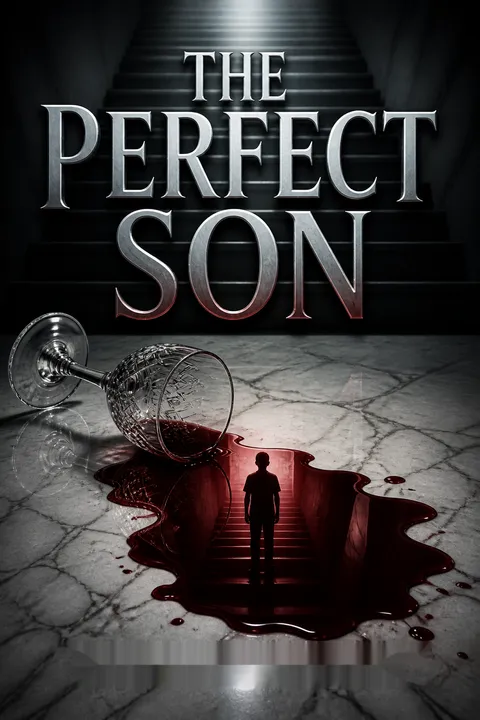


Plot Summary
Prologue
The novel opens with Erika Cass in a police interview. Officers have found a stabbed man, and Erika admits that she killed him, insisting she would make the same choice again.
The confession arrives before the reader knows who died, what drove Erika to violence, or why a mother who fears her son has become part of a murder investigation. The story then rewinds one week, turning the opening statement into a question that shadows every family scene.
Beginning with a confession reverses the usual suspense question. The mystery is not whether Erika can be connected to a killing, but how a woman who has spent years trying to control danger reached the point of accepting responsibility for it. Her calm insistence that she would repeat the act establishes a moral pressure point before the narrative offers context. The rewind also makes domestic normality feel provisional: breakfast, school runs, and family jokes are not safety, only the surface the story will steadily strip away.
The Favorite Son
At breakfast, fourteen-year-old Hannah needles her brother Liam about having a crush on Olivia, and their mother, Erika, immediately turns the name into a warning. Liam is sixteen, handsome, disciplined, and so practiced at pleasing adults that his polished manners make Erika more uneasy than proud. She remembers the disturbing behavior that marked his childhood, including cruelty to animals and a kindergarten girl left bound in a closet.
When Liam leaves for a debate, Erika goes too, watching for the girl he likes. She sees blonde debater Olivia Reynolds beside him and mistakes her for the Olivia Hannah mentioned. Rather than ask Liam what he feels or trust him to choose, Erika decides she must prevent another girl from getting close.
Erika's favoritism is not merely affection for a well-behaved child. It is also a form of surveillance: Liam's charm reassures her public self while his private history keeps her alert to danger. Her protective instinct has become entangled with management, so she treats romantic interest as a threat to contain rather than a normal step toward independence. The opening family scenes place this control beside Hannah's resentment and Liam's unruffled performance. Each child is responding to a family structure Erika believes she can hold together, but her fear has already made the household unequal.
Two Olivias, One Mistake
After the debate, Liam invites Olivia Mercer, his shy classmate, to watch him compete and then to join his friends at Charlie's diner. Erika, meanwhile, sees him talking with Olivia Reynolds and asks a private investigator, Frank Marino, to dig into that girl's life and frighten her away from Liam. Frank accepts, charging nearly twice his old fee.
His intimidation succeeds: Olivia Reynolds later agrees to stop spending time with Liam rather than let private photographs reach her family and school. But Erika has chosen the wrong target. The real Olivia Mercer is falling for Liam, and he has begun making space for her in his life. Erika's intervention injures an uninvolved girl while leaving the relationship she fears untouched.
The mistaken identity is a plot mechanism with an ethical edge. Erika believes that information and money can let her steer desire from a safe distance, but her intervention turns a daughter's ordinary vulnerability into leverage for a stranger. The two Olivias also expose the limits of Erika's attention: she watches Liam closely, yet sees the girl through her own fear rather than through who she is. Frank's work translates maternal anxiety into coercion. The result is not protection but a parallel injury, one that Erika can barely acknowledge because she does not know it has happened.
Milkshakes and Warnings
Olivia Mercer arrives at the diner after Madison, her best friend, warns that Liam seems false and Tyler Martinson has called him dangerous. Tyler's own record of bullying makes Olivia dismiss the warning, even after he grabs her arm outside her home and urges her to stay away.
At Charlie's, Liam shares a milkshake with Olivia and confronts Tyler when the football player deliberately jostles him. Liam unsettles Tyler by showing that he knows intimate details about Tyler's family, then returns to Olivia with an unreadable calm.
When Olivia's mother cuts the evening short, Liam visits her house after midnight. They kiss for the first time, and Olivia believes his tenderness confirms what she hoped. She cannot know that another adult has noticed the late-night meeting.
Olivia's attraction is sincere, but sincerity does not make her judgment infallible. She weighs Liam's visible kindness against warnings delivered by people she distrusts, and the balance shifts toward romance because Liam's gestures feel personal and gentle. Tyler complicates the warning: his own cruelty gives Olivia good reason to discount him, even when his fear may contain truth. Liam's knowledge of Tyler's family functions as a threat without requiring a fight, revealing how effectively he can control a room. The scene lets charm and menace occupy the same space without asking Olivia to recognize the difference yet.
The Empty Bedroom
In the night, Erika finds Liam's bedroom empty and wakes Jason, who assumes their son is simply taking a walk. Liam returns after a call, but the next morning a high-school student, Olivia Mercer, is reported missing from her bedroom. Erika checks her car's GPS and finds an unfamiliar address: the Mercer home. She understands that Liam used her Toyota to visit Olivia, though he denied leaving the neighborhood.
Police question him; he claims he last saw Olivia at the diner, until a neighbor identifies him outside her house and recognizes Erika's car. Jason stops further questioning until a lawyer is present. Olivia, meanwhile, wakes in a dark underground pit with a broken ankle, a small supply of water, and human bones in one corner.
The disappearance converts Erika's private suspicion into a public crisis, but the evidence initially points toward Liam without explaining what happened. Her GPS discovery is especially destabilizing because it gives her a concrete fact after years of uncertainty about her son, while his calm denial repeats the very pattern she fears. Jason's confidence in Liam and Erika's distrust split the marriage into competing interpretations. Olivia's captivity supplies the reality neither parent can see: a young woman is suffering, yet the family and police are still trying to infer her fate from appearances and traces.
A History of Cruelty
As detectives pursue Olivia's disappearance, former teachers and Liam's childhood psychologist describe a pattern Erika has tried to keep contained. A kindergarten principal recalls the girl Liam duct-taped and locked away; his second-grade teacher remembers a disturbing fantasy about trapping a wife; Dr. Alice Hebert says he starved a hamster and learned to conceal his thoughts rather than change them.
Tyler adds memories of cruelty to animals and calculated deception, though his own bullying makes him an imperfect witness. On the same terrible day, Erika's mother reveals that Erika's father is alive, recently paroled after serving decades for poisoning a woman. Erika's fear shifts from Liam's behavior alone to the possibility that violence runs through her family.
The interviews build a portrait through testimony, but they also expose how easily a history becomes a verdict. Liam's actions are troubling; the witnesses' memories are not all equally reliable, and Tyler's self-interest complicates his claims. Dr. Hebert distinguishes between outward adaptation and genuine change, leaving Erika to wonder whether therapy taught Liam empathy or merely discretion. Her mother's revelation intensifies that uncertainty by offering heredity as an explanation, a tempting story because it makes frightening behavior feel legible. Yet the novel keeps explanation separate from proof: family history can shape fear without determining what Liam has done now.
Evidence in the Trunk
Police search Erika's home and Toyota, then find Olivia's blood and several hairs in the trunk. At school, Tyler punches Liam after accusing him of taking Olivia; the principal suspends both boys, while Madison publicly blames Liam.
Their lawyer warns the family that an arrest is likely. Detectives soon handcuff Liam for kidnapping and murder, and Erika can only watch him leave while Hannah insists her brother is innocent. At a bail hearing, the prosecution cites the neighbor, Liam's visit, and the forensic evidence; the judge sets bail at two hundred thousand dollars.
The family scrapes together the bond, but their return home brings no relief. Olivia's mother arrives holding a kitchen knife, desperate for Liam to reveal where her daughter is.
The evidence gains force because each item fits a story the town already wants to believe. Liam's past makes the blood in the trunk seem like confirmation, while his composure reads as guilt to some and innocence to others. The school fight and public accusations turn suspicion into social punishment before a trial can test it. Hannah's loyalty and Erika's doubt show how evidence divides a family along existing emotional lines. The bail decision offers procedural mercy, not exoneration; the Mercer mother's grief then makes the cost of uncertainty physically present in the Cass home.
The Father in Queens
After Liam's arrest, Erika visits her newly discovered father, Marvin Holick, in his cramped Queens apartment. He says he poisoned a woman during an affair, claiming he meant to end her pregnancy and never intended to kill her; Erika cannot tell whether this is remorse or another performance. She leaves without promising him a place in her family's life.
Meanwhile, Olivia rations the food left in the pit, uses a bone from the dead woman she names Phoebe to build a mound, and strikes the locked hatch. Her ankle worsens and infection sets in. When her captor returns with meager food and water, he describes starvation as if observing an experiment. Olivia understands that escape, not rescue, may be her only chance.
Erika's visit to Marvin is an attempt to locate the source of what frightens her in Liam, but his account offers no stable answer. He may be minimizing a deliberate crime, or describing a catastrophic choice through the language of regret; Erika has no way to verify his account. Olivia's survival story provides a stark counterpoint. Where Erika seeks knowledge through family resemblance, Olivia acts with whatever is at hand, turning a bone into a tool and naming the dead woman so she is not reduced to evidence. Both women confront the danger of treating another person's explanation as the truth.
The Husband's Real Face
The narrative shifts into Jason's perspective and reveals the man Erika never knew. He has killed women for years, concealed his past behind a successful technology career, and recognized Liam's childhood cruelty as a reflection of himself. Jason arranged the carbon-monoxide incident at Liam's teacher's home to protect his son from scrutiny, then saw Olivia's disappearance as a chance to frame him.
After Liam returned from kissing Olivia, Jason used Erika's Toyota to lure the girl away, drugged her, and imprisoned her in a cabin pit. He planted her blood and hair in the trunk. Now Hannah has followed him to the cabin, threatening his plan to make Liam take the blame and remove his family from his life.
Jason's point of view overturns the apparent family roles. The father who seemed too relaxed to notice danger has been controlling it for years, while Erika's fear of Liam has concealed the more practiced predator beside her. His framing plan is not simply self-preservation: he treats wife, daughter, and son as obstacles to be disposed of once they threaten his preferred freedom. The earlier evidence now changes meaning, and Liam's troubling past becomes a resource Jason exploits. The reversal does not absolve Liam's history; it shows how a real vulnerability can be weaponized by someone who understands it better.
Hannah Follows the Car
Hannah has secretly followed Jason to the cabin and returned with a bicycle, a key, and the location written down. She opens the pit and finds Olivia alive, though too weak and injured to climb out. Before Hannah can get help, Jason comes back and catches her beside the trap.
He tells her Olivia will not leave alive and offers Hannah a chance to choose his side. At home, Liam realizes Hannah is missing and tells Erika their father may be dangerous. He leads his mother to the cabin, where Jason's Prius and Hannah's bicycle confirm the warning. They arrive as Jason steps outside with a knife and claims that both girls are dead.
Hannah's decision to investigate turns sibling loyalty into action rather than reassurance. She has trusted Liam through the accusations, but she tests the truth herself by following Jason and entering the cabin. Olivia's weakness makes the rescue dependent on timing and outside strength, while Jason's return closes the brief opening Hannah creates. Liam's warning forces Erika to revise her image of Jason, but the information comes from the son she has spent years doubting. The family reaches its crisis with trust inverted: Erika must decide which familiar person is dangerous before she has time to establish certainty.
A Knife Changes Hands
Jason embraces Erika and frames Liam for the girls' supposed deaths, but Liam sees the knife in his father's hand and tackles him before he can strike. The struggle spills outside; Jason is larger, yet Liam pins him long enough for Erika to seize the fallen blade. She gives it to Liam, who stabs Jason in the chest. Only then do they hear Hannah and Olivia beneath the cabin floor.
Liam unlocks the hatch, climbs into the pit, and carefully lifts both girls out. Olivia is alive, though her infected, broken ankle requires urgent treatment. Erika and Hannah are shaken but unharmed. At the police interview that follows, Erika claims that she, not Liam, stabbed Jason, protecting her son from another murder charge.
The climax turns on Erika's choice of whom to trust, but it does not offer a clean moral resolution. She recognizes Jason's deception only when the knife makes it visible, then hands the weapon to Liam, whose past has taught her to fear him. Liam's violence saves the family, while Erika's false account takes legal responsibility for it. The rescue also changes Olivia from an object of competing male claims into a survivor carried to medical care. The scene compresses the book's central conflict into an action: protection can be love, complicity, or both, depending on what the protector chooses to conceal.
The Story Erika Tells
At the hospital, Erika maintains that she stabbed Jason, even as Detective Rivera doubts her account and Olivia's presence supports the family's explanation. Liam asks why his mother would take the blame; Erika says she will not let him return to jail. He rejects the belief that he cannot love, telling her that he cares for her and Hannah.
Olivia undergoes surgery for her broken, infected ankle and recovers from dehydration. Once she is strong enough for visitors, Liam brings her flowers. Madison remains wary, but Olivia accepts Liam's visit and later invites him to share vanilla milkshakes when she leaves the hospital. Their tentative date begins after danger, not before it.
Recovery here is not a return to innocence. Erika's account protects Liam, but it also binds mother and son through a secret that the police may still question. Her apology matters because she admits that suspicion has made her misread the person closest to her, though the novel does not erase the evidence that shaped that suspicion. Liam's insistence that he loves his family challenges the clinical certainty Erika absorbed from Dr. Hebert. Olivia's invitation is deliberately modest: a milkshake cannot undo captivity, but it lets her choose the terms of a next meeting.
Epilogue
One year later, Erika's account of her husband's crimes has made her a national news figure, and DNA evidence has linked Jason to twelve murders. Liam and Olivia are still together, and his debate team has just won in Albany.
While Erika cooks breakfast, a radio report announces that an eighteen-year-old woman has disappeared in Troy, only a short drive away. Erika checks the distance and hears Liam singing in the shower. She has no proof that he is involved, but the coincidence is enough to make her hands shake and the eggs burn.
The ending refuses the reassurance its resolution seemed to promise. Jason's crimes are exposed, Olivia survives, and Liam's family life appears to have resumed, yet Erika's last fear is not based on evidence so much as proximity, timing, and memory. The Albany trip links Liam to the missing woman without proving guilt, making the reader inhabit the same uncertainty that has shaped Erika's motherhood throughout. Her burnt breakfast returns the story to domestic routine, now rendered fragile by knowledge. The final question is not whether violence is inherited, but whether fear can ever distinguish a warning from a repetition.
Analysis
The novel builds suspense by making interpretation itself dangerous. Erika notices genuine warning signs in Liam, but her fear encourages her to treat suspicion as certainty. Jason benefits from that distortion: Liam's childhood history makes a fabricated case credible, while Jason's apparently ordinary persona keeps him outside the family's scrutiny. The thriller's reversals therefore do not simply replace one guilty person with another. They show how evidence acquires meaning through the expectations people bring to it.
Parenthood is the emotional engine of the story. Erika's impulse to protect Liam is compromised by favoritism, shame, and a wish to manage his future; Hannah's loyalty, by contrast, prompts her to investigate rather than merely defend. Olivia's captivity strips the plot down to the bodily consequences of adult deception: thirst, pain, darkness, and the slow work of staying alive. Her eventual rescue does not erase the vulnerability that brought her there, but it returns her the right to choose what happens next.
The book also questions whether a family can distinguish inheritance from imitation. Erika links Liam's behavior to her father's criminal past, while Jason explicitly recognizes himself in his son and tries to shape him. The final uncertainty prevents an easy declaration that Liam is either cured or doomed. His love for his mother and sister is real within the story, yet the missing woman's proximity to his Albany trip reopens the possibility that the pattern may continue. The ending leaves Erika, and the reader, with a more difficult task than identifying a monster: deciding how to respond when fear is reasonable but proof is absent.
Review Summary
The Perfect Son receives mixed reviews, with an average rating of 4.05/5. Many readers praise the suspenseful plot and unexpected twists, while others criticize predictable elements and flat characters. Some find the writing style engaging, while others describe it as simplistic. The book's ending is frequently mentioned as surprising or impactful. Opinions on character development vary, with the mother character often described as annoying. Despite criticisms, many readers find it a quick, entertaining read and appreciate McFadden's ability to keep them guessing.
People Also Read









Characters
Erika Cass
The watchful motherErika is a former Manhattan journalist who now writes for a small local paper while raising Liam and Hannah. She is perceptive about her son but often lets fear outrun evidence, and her favoritism toward Liam leaves Hannah acutely aware of being second-best. Erika's need to protect her children is intensified by years of private worry and by the secrets she keeps from her husband. She wants to believe that vigilance can prevent catastrophe, yet her impulse to control Liam's relationships shows how easily care can become intrusion. Her marriage and family life are the structures through which she measures both safety and failure.
Liam Cass
The polished sonLiam is a handsome, intelligent sixteen-year-old who excels at debate and track, reads adults well, and rarely shows what he is thinking. His composure earns admiration but unsettles his mother, who remembers troubling behavior from his childhood and cannot decide whether his charm is genuine or strategic. He is close to his younger sister Hannah, patient with her irritability, and drawn to Olivia, whose attention makes him visibly less controlled. Liam's central tension is the gap between his public reputation and the private history others interpret for him. He has learned to manage how people see him, but that skill also makes it difficult for those who love him to know when to trust him.
Olivia Mercer
The hopeful classmateOlivia is a high-school student with a close friendship with Madison and a strong investment in her education. She has never had a serious relationship, so her attraction to Liam feels exhilarating and destabilizing at once. Olivia is self-conscious about her appearance and prone to romantic fantasy, but she is also capable of reassessing danger and concentrating on practical survival when circumstances demand it. Her perspective brings the story close to the ordinary hopes that make a teenager vulnerable: wanting to be chosen, wanting to trust, and wanting a first romance to mean what it seems to mean.
Jason Cass
The easygoing husbandJason is Erika's husband and the father of Liam and Hannah. He works in technology, commutes into Manhattan, and often appears relaxed where Erika is anxious. His humor, domestic affection, and confidence in Liam shape how the family reads him. Jason's absence during much of the children's daily life leaves Erika carrying more of the emotional labor, while his calm manner can make her worries seem excessive. He presents himself as a practical, good-humored partner, someone who prefers solutions to prolonged suspicion.
Hannah Cass
The loyal sisterHannah is Erika and Jason's fourteen-year-old daughter and Liam's younger sister. She is sharp-tongued, funny, and often frustrated by school and her mother's comparisons with Liam. Beneath her eye-rolls, she is deeply attached to her brother and trusts him in a way she does not always trust their parents. Hannah notices more than adults assume, especially the emotional patterns inside her family. Her loyalty is not simple obedience: she can argue fiercely, act independently, and challenge the version of events that other people accept.
Tyler Martinson
The hostile former friendTyler is a football player who was once Liam's closest childhood friend. He has a history of bullying and aggression, which makes his warnings about Liam difficult for others to trust. His rivalry with Liam carries old fear, resentment, and unresolved guilt over things they did together as boys. Tyler often speaks from a self-serving position, but his discomfort around Liam is not merely jealousy. He is a flawed witness whose own conduct complicates the truths he tries to tell.
Madison Hartman
Olivia's blunt confidanteMadison is Olivia's longtime best friend and a teenager who is more experienced with dating than Olivia. She is direct about her dislike of Liam and trusts her uneasy impressions, though she cannot fully persuade Olivia to share them. Her loyalty becomes especially visible when Olivia disappears: Madison insists that her friend would not willingly abandon her family and is quick to suspect Liam. Madison's confidence can sound dismissive, but it comes from intimacy and a genuine desire to keep Olivia safe.
Dr. Alice Hebert
Liam's former therapistDr. Hebert treated Liam as a child after concerns arose about his behavior at school and at home. She is professionally observant and willing to speak to investigators when she believes a young person's safety is at stake. Her account gives Erika language for fears she has struggled to explain, but it also leaves open the question of what therapy can change when a child is unwilling to engage. Dr. Hebert's caution about diagnosis contrasts with the certainty other characters seek from her.
Marvin Holick
Erika's estranged fatherMarvin is Erika's father, a man she believed had died when she was young. His reappearance forces her to reconsider the family story she grew up with and to examine what she thinks can pass from one generation to another. He is lonely and eager to reconnect, but Erika has little reason to accept his account of the past without reservation. His relationship with her is defined by a long absence and the difficult possibility of beginning again.
Jessica Martinson
The PTA power brokerJessica is Tyler's mother and a highly visible parent at the school, skilled at remembering social details and organizing other families. She and Erika were once close through their sons' friendship, but distance and judgment have weakened that bond. Jessica values reputation and community order, and she is comfortable expressing a harsh opinion when she believes a child poses a danger. Her polished friendliness can soften a request or sharpen a rejection.
Frank Marino
The hired investigatorFrank is a private investigator Erika hires to learn about a girl Liam likes. He is capable and transactional, willing to use private information as leverage when a client asks him to interfere. His work gives Erika a sense of control, while his casual cynicism hints at the harm hidden inside that arrangement.
Detective Rivera
The skeptical investigatorDetective Rivera leads the investigation into Olivia's disappearance alongside Detective Murphy. She studies contradictions in Liam's account and follows the physical evidence rather than accepting the family's preferred explanation. Rivera is controlled and persistent, aware that finding a missing teenager is more urgent than protecting anyone's reputation. Her skepticism remains active even when the case takes an unexpected turn.
Mrs. Mercer
Olivia's desperate motherOlivia's mother is protective and attentive, worried when her daughter stays out later than expected. When Olivia disappears, fear pushes her toward desperate action. Her grief gives the case a human cost beyond the police investigation and the Cass family's crisis.
Plot Devices
Police interview transcripts
Clues from later testimonyThe book opens and periodically returns to interview transcripts from teachers, friends, the therapist, and family members. Each witness supplies a different version of Liam, Olivia, or the Cass household, allowing the reader to assemble a case before knowing which details have been misunderstood or manipulated. The clipped format also creates a contrast with the close first-person narration, which is more intimate but no less limited. In retrospect, the transcripts show how testimony can reveal behavior while still failing to identify the person responsible.
The two Olivias
Misguided maternal surveillanceLiam's interest in Olivia Mercer is confused with his debate teammate Olivia Reynolds. Erika hires Frank Marino to frighten Reynolds away, believing she is protecting the girl Liam likes. The mistake exposes the limits of Erika's control and creates a separate act of coercion that does not stop the real romance. The name confusion is more than a puzzle for the reader: it shows how Erika sees a perceived threat before she knows the person involved.
The Toyota's GPS and trunk
A trail that incriminates LiamThe GPS history leads Erika to Olivia's home and confirms that Liam used her Toyota to visit the girl. Later, investigators find Olivia's blood and hair in the trunk, making the car appear to connect Liam to her disappearance. The two clues seem to reinforce each other, giving the police a persuasive account of events. Their apparent certainty is part of the trap: a true record of Liam's visit is combined with planted forensic evidence to make the wrong conclusion feel inevitable.
The cabin pit
A prison built from evidenceThe underground pit holds Olivia in darkness with a broken ankle, limited food and water, and the bones of a previous victim. Its physical constraints turn suspense into a survival problem: Olivia must ration supplies, build a mound, and use a bone to reach the hatch. The pit also embodies the difference between the story told about the crime and the actual crime. While investigators search Liam's past, Olivia is trapped beneath the place where the truth is being hidden.
Inherited violence
A family history of fearErika discovers that her estranged father served time for murder, while she already fears Liam's childhood cruelty. This history tempts her to treat violence as something passed through blood, giving her a framework for understanding what she sees in her son. The revelation appears to support that fear, but the final crisis complicates it by revealing how much she failed to know about her husband. The device shifts the question from whether a family inherits evil to how trauma, secrecy, and selective attention shape the stories its members tell about one another.
FAQ
Synopsis & Basic Details
What is The Perfect Son about?
- Family secrets unravel: The story centers on Erika Cass, a mother grappling with the unsettling behavior of her seemingly perfect son, Liam, while also confronting dark secrets from her own family's past.
- A community in fear: When a local girl disappears, Erika's fears intensify, leading her to suspect Liam's involvement and forcing her to confront the possibility of inherited darkness.
- Moral dilemmas explored: The narrative explores the complexities of familial relationships, the lengths a mother will go to protect her child, and the difficult choices between love and justice.
Why should I read The Perfect Son?
- Psychological suspense: The novel offers a gripping exploration of a mother's internal conflict, blending suspense with psychological depth as she questions her son's true nature.
- Twisting narrative: The story is full of unexpected turns and shocking revelations, keeping readers engaged and guessing until the very end.
- Exploration of morality: The book delves into complex ethical dilemmas, challenging readers to consider the gray areas between right and wrong and the impact of past actions on the present.
What is the background of The Perfect Son?
- Suburban setting: The story is set in a seemingly normal suburban community, which contrasts sharply with the dark secrets and violence that unfold within it.
- Contemporary context: The novel is set in the present day, reflecting modern concerns about family dynamics, social media, and the impact of past actions on the present.
- Psychological themes: The narrative explores themes of inherited trauma, the nature of evil, and the complexities of human behavior, drawing on psychological concepts to enhance the story's depth.
What are the most memorable quotes in The Perfect Son?
- "I did it. I killed him, Detective. And I would do it again.": This opening line from Erika's confession immediately establishes the novel's dark tone and raises questions about her motivations.
- "He's my favorite, even knowing what he's capable of. And I will protect him with every fiber of my being.": This quote reveals Erika's deep-seated favoritism towards Liam and her willingness to protect him at any cost, despite her knowledge of his potential for harm.
- "I'm just saying. I feel like I don't trust him entirely. He's a phony. You know?": Madison's observation about Liam's seemingly fake persona highlights the novel's theme of deception and foreshadows the dark secrets that will be revealed.
What writing style, narrative choices, and literary techniques does Freida McFadden use?
- First-person perspective: The story is primarily told from Erika's point of view, creating a sense of intimacy and allowing readers to experience her internal conflict and emotional turmoil firsthand.
- Suspenseful pacing: McFadden uses a fast-paced narrative with short chapters and cliffhangers to maintain tension and keep readers engaged.
- Foreshadowing and misdirection: The author employs subtle hints and red herrings to create a sense of unease and keep readers guessing about the true nature of the characters and events.
Hidden Details & Subtle Connections
What are some minor details that add significant meaning?
- Erika's egg-making: Her meticulous method of cooking eggs, "low and slow," mirrors her approach to parenting and her attempts to control the unfolding chaos in her life.
- Hannah's eye-rolling: This recurring habit highlights her teenage angst and her strained relationship with her mother, while also serving as a subtle indicator of her awareness of the family's dysfunction.
- Liam's tie-tying: His meticulous practice of tying his tie symbolizes his need for control and perfection, which contrasts with his underlying dark tendencies.
What are some subtle foreshadowing and callbacks?
- The duct tape incident: Liam's childhood incident with duct tape foreshadows his later manipulative and controlling behavior, hinting at his potential for violence.
- The hamster incident: Liam's deliberate starvation of the hamster foreshadows his capacity for cruelty and his lack of empathy, hinting at his sociopathic tendencies.
- The mention of the English teacher: The brief mention of the English teacher and the carbon monoxide incident foreshadows the reveal of Jason's true nature and his capacity for violence.
What are some unexpected character connections?
- Erika and Frank Marino: The private investigator's role in Erika's life reveals her willingness to go to extreme lengths to protect her son, even if it means hiring a shady character.
- Liam and Olivia Reynolds: Their connection as debate partners and potential romantic interests adds a layer of complexity to the story, highlighting Liam's ability to charm and manipulate those around him.
- Tyler and Liam's fractured friendship: The history between Tyler and Liam reveals a past of manipulation and control, hinting at Liam's darker side and foreshadowing his potential for violence.
Who are the most significant supporting characters?
- Hannah Cass: As Liam's sister, she provides a contrasting perspective on their family dynamics and serves as a foil to Liam's manipulative nature, highlighting the impact of their family's secrets on her.
- Olivia Reynolds: As a potential love interest for Liam, she serves as a catalyst for the events that unfold, highlighting Liam's ability to charm and manipulate those around him.
- Frank Marino: As the private investigator, he provides a glimpse into Erika's desperation and her willingness to go to extreme lengths to protect her son, while also revealing the dark secrets of her past.
Psychological, Emotional, & Relational Analysis
What are some unspoken motivations of the characters?
- Erika's need for control: She tries to control her family and her environment, stemming from her fear of the darkness she sees in Liam and her own family history.
- Liam's desire for power: He seeks control over others, manipulating them to get what he wants, stemming from his lack of empathy and his need to dominate.
- Jason's hidden rage: He harbors a deep-seated anger and resentment, which he masks with a charming facade, ultimately leading to his violent actions.
What psychological complexities do the characters exhibit?
- Erika's maternal conflict: She struggles with her love for Liam and her growing awareness of his potential for harm, leading to a constant internal battle between her protective instincts and her moral compass.
- Liam's sociopathic tendencies: He displays a lack of empathy, a need for control, and a talent for manipulation, hinting at a deeper psychological disorder.
- Jason's psychopathic traits: He exhibits a lack of remorse, a tendency towards violence, and a manipulative nature, revealing a dark and dangerous side beneath his charming exterior.
What are the major emotional turning points?
- Erika's discovery of her father's past: This revelation forces her to confront the possibility of inherited darkness within her family, intensifying her fears about Liam.
- The police search of the house: This event marks a turning point in Erika's perception of Liam, as she begins to question his innocence and the extent of his deception.
- The confrontation with Jason: This climactic scene forces Erika to confront the true nature of her husband and make a life-altering decision to protect her children.
How do relationship dynamics evolve?
- Erika and Liam's strained bond: Their relationship is marked by Erika's favoritism and her growing fear of Liam, leading to a complex dynamic of love, protection, and suspicion.
- Erika and Jason's fractured marriage: Their relationship is revealed to be built on lies and deception, culminating in a violent confrontation that exposes the true nature of their bond.
- Hannah and Liam's sibling loyalty: Despite their differences, Hannah remains fiercely loyal to Liam, highlighting the complexities of family bonds and the lengths to which siblings will go to protect each other.
Interpretation & Debate
Which parts of the story remain ambiguous or open-ended?
- Liam's true nature: The extent of Liam's sociopathic tendencies and his capacity for violence remain open to interpretation, leaving readers to question whether he is truly a monster or a victim of his circumstances.
- Erika's culpability: The novel leaves readers to debate the extent of Erika's responsibility for Liam's actions, as well as the moral implications of her choices to protect him.
- The possibility of redemption: The ending leaves open the question of whether any of the characters can truly find redemption or escape the darkness of their pasts.
What are some debatable, controversial scenes or moments in The Perfect Son?
- Erika's favoritism towards Liam: Her blatant preference for Liam over Hannah raises questions about her parenting and the impact of her biases on her children.
- The violence against Jason: The graphic depiction of Jason's death and Erika's role in it raises questions about the nature of justice and the morality of taking a life, even in self-defense.
- The ending's ambiguity: The final scene, with Liam's seemingly genuine love for his mother, leaves readers to question whether he is truly capable of empathy or if it is just another act.
The Perfect Son Ending Explained: How It Ends & What It Means
- Jason's exposure: The climax reveals Jason as the true villain, a serial killer who has been hiding in plain sight, subverting the initial suspicion of Liam.
- Erika's act of violence: She kills Jason to protect herself and her children, highlighting the lengths a mother will go to protect her family, even if it means crossing moral boundaries.
- Liam's ambiguous future: Despite his apparent love for his mother, the ending leaves open the question of whether Liam is truly capable of empathy or if he is destined to follow in his father's footsteps, leaving his future uncertain.
About the Author
Other books by Freida McFadden




Download PDF
Download EPUB
.epub digital book format is ideal for reading ebooks on phones, tablets, and e-readers.








