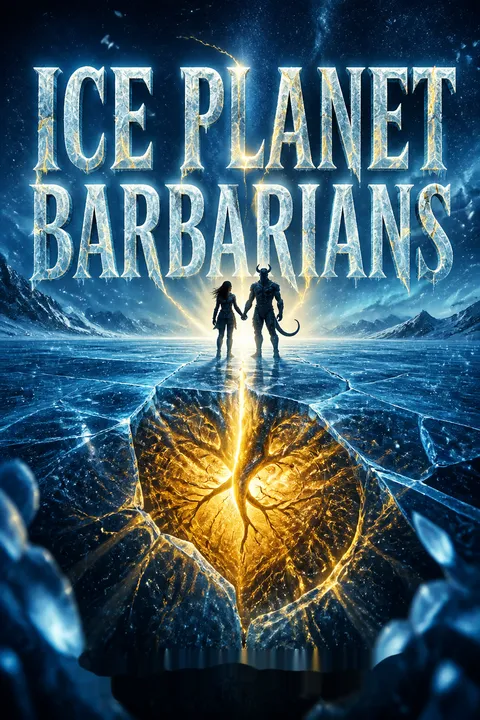


Plot Summary
The Cargo Hold
After an ordinary evening at her bank job, Georgie wakes beneath alien lights, drugged and caged with women whose names and bodies she does not know. Liz, a fellow captive, explains that their abductors select young, healthy women for sale, implant trackers, and keep them in filthy conditions. The cargo includes women sealed in stasis tubes, while guards punish noise and resistance.
Georgie sees a newly captured redhead, Dominique, scream after waking; the guards drag her away and sexually assault her as the others are forced to watch. Liz stops Georgie from intervening, but the sight turns terror into resolve. Georgie begins studying the bars, guards, and their habits, looking for a chance to strike back.
The cage turns ordinary social rules into instruments of captivity: the women must stay quiet, share a bucket, and watch punishment without drawing attention to themselves. Georgie’s shame at being unable to help Dominique is not simple timidity; it is the predictable result of a system designed to make collective action feel more dangerous than individual suffering. Yet she does not let fear become consent. Her shift toward studying the guards marks the first form her resistance can take, observation before force. The stasis tubes sharpen the horror by showing that the captors treat the women as inventory, not people with futures.
A Gun Without a Trigger
Georgie, Liz, and Kira, the captive who understands the aliens through an implanted translator, plan to provoke a guard into opening the cage and rush him. When the ship lurches and the guards become distracted by engine trouble, Georgie spits at the lone guard and prepares to hurl the waste bucket at him. The others hesitate as he grabs her, leaving her to struggle alone.
A sudden loss of gravity sends them all flying; Georgie lands beside the guard and beats him with his own weapon, killing him. The ship then crashes on a frozen world. Two women die in the impact, and the survivors discover snow blowing through a breach in the hull. Their captors are gone, but so is any certainty that rescue will come.
The escape is neither a clean victory nor a heroic group charge. Georgie’s plan depends on solidarity, but the other captives freeze when violence arrives, exposing how prolonged coercion has narrowed their sense of possibility. The ship’s malfunction gives her an opening, yet survival still requires a brutal act she cannot reduce to self-defense without moral residue. Afterward, freedom is immediately complicated by death, cold, and scarcity. The crash removes the captors’ direct control while leaving their victims with the same material vulnerability: they have no food, clothing, or safe shelter. The novel makes liberation a condition to be built, not a door that simply opens.
The Hunter's Snare
With the others injured and supplies dwindling, Georgie climbs through the wreck and scouts the snowbound landscape alone. Two suns convince her that Earth is far behind; a strange stream nearly feeds her to a fish hidden beneath its surface, and a tree snare leaves her hanging upside down.
Vektal, a horned hunter from a nearby tribe, finds her unconscious and carries her to a shelter. His people’s living symbiont, the khui, resonates at the sight of her, so he believes she is his destined mate.
Georgie wakes to find him touching her sexually while she is still helpless. She is startled, then recognizes pleasure, but resists when he tries to go further. Vektal sees her fear and chooses to wait, though they cannot yet understand each other’s words.
Their first encounter makes attraction inseparable from unequal power. Georgie is injured, isolated, and unable to communicate, while Vektal interprets a biological signal as certainty about their relationship. His belief explains his confidence but does not erase the problem of touching an unconscious stranger. Georgie’s response is deliberately mixed: pleasure does not cancel alarm, and her refusal when he advances establishes a boundary that matters. Vektal’s recognition of her fear becomes the first evidence that he can revise his assumptions rather than treat his own desire as permission. Their romance begins not with mutual understanding, but with the difficult work of creating it.
The Mountain Detour
Hungry and unable to eat Vektal’s heavily spiced raw rations, Georgie follows him toward food and discovers that the planet’s warm streams conceal flesh-eating fish. Vektal drives them away with crushed berries, then shows her how to drink safely and wash. Georgie bargains for his help returning to the wreck, using kisses and sexual attention to make her urgency understood.
Vektal instead tries to shelter her from the cold, and she storms off toward the mountain. Snow hides a crevasse; she falls into a cavern occupied by hostile, furred creatures. Vektal breaks through the ice, kills one attacker, and carries her out. He brings her to a hunting cave, warms and feeds her, binds her injured wrist, and gives her a knife.
The pair’s communication is practical before it is intimate. Food, water, warmth, and injury become a shared vocabulary, each gesture correcting a dangerous misunderstanding. Georgie’s flirtation is also purposeful: she uses the form of leverage available to her because the lives of the other women depend on getting back to them. Vektal reads the same landscape through a hunter’s knowledge and mistakes protection for the answer she needs. Her fall demonstrates the cost of that mismatch, while his rescue does not make her foolishness disappear or his judgment infallible. The knife he gives her is significant because care now includes helping her defend herself, not merely keeping her close.
Dominique in the Snow
While Vektal checks his traps, he finds a frozen human foot and understands that Georgie’s urgency concerns other people like her. He carries her back toward the wreck, where she recognizes Dominique’s frozen body in the snow.
Georgie begs him to continue uphill, and they find Liz, Kira, Megan, Tiffany, and Josie alive inside the damaged cargo bay. The women are starving, sick, and cold; Georgie gives them the furs she has been wearing, while Vektal returns with food and supplies.
Kira’s implanted translator lets the humans and Vektal begin communicating. Georgie learns Dominique fled the wreck after the others heard creatures outside, then died in the cold. Vektal cannot safely move the injured women alone, so he promises to bring help from his tribe.
Georgie’s return transforms private survival into responsibility for a group. Dominique’s body makes the cost of delay visible, while the five living women reveal that rescue cannot mean simply getting Georgie to safety. Vektal’s resources matter, but so does Georgie’s refusal to hoard warmth: she gives away the furs that kept her alive because the others need them more. The translator creates a bridge without resolving the ethical distance between the groups. Vektal’s inability to carry everyone home is a practical limit, not indifference, and his promise forces the story into a new phase: survival now depends on whether his people will extend help to strangers.
The Cave That Flies
Vektal leaves Georgie’s friends with shelter and food, then carries her toward his tribe. On the way, they stop at an elders’ cave whose smooth walls conceal a spacecraft buried beneath ice. Georgie clears its controls with fire and activates the ship’s artificial intelligence.
It explains that Vektal’s ancestors arrived 287 local years earlier, after their own vessel malfunctioned, and that the planet’s atmosphere is toxic to humans without a khui. The symbiont filters the toxin and helps its host survive; removing it would be fatal without a replacement.
The ship also teaches Georgie Vektal’s language through a neurological upload. She can finally explain that she may want to go home, while Vektal admits he would follow her, even though neither knows how.
The buried vessel turns the apparent divide between Georgie’s modernity and Vektal’s hunting culture into a shared history of displacement. His people are not native to the world either; they survived because the khui adapted their bodies to a place that would otherwise kill them. For Georgie, technological knowledge arrives with a trap: the symbiont is neither a simple cure nor an easily reversible choice. The language upload changes the romance more profoundly than any declaration could, because it lets each person describe what the other cannot assume. Vektal’s willingness to follow her respects her attachment to home, but his promise cannot solve the biological and logistical limits they have just discovered.
A Tribe of Waiting Men
Vektal brings Georgie into the warm tribal caves, where his fellow sa-khui greet him and stare at the human outsider. His friend Raahosh is stunned to learn that other human women are waiting to be rescued.
Maylak, the tribe’s healer, tends Georgie’s broken wrist but cannot fully heal it without a khui. Vektal explains that the clan has few adult women and many unmated hunters, and he expects the khui to choose mates among the newcomers. Georgie pushes back: no woman should be claimed without her agreement.
Vektal accepts that condition, though he still hopes Georgie will take a khui. After they sleep together, he explains that a khui pairing can produce children. Georgie realizes she may be pregnant, adding a future to the choice she must make.
The tribe offers warmth and care, but its scarcity gives the human women social value before they have agreed to anything. Georgie recognizes that rescue can slide into another system that decides women’s futures for them, even when the men intend kindness. Her demand for consent therefore tests Vektal’s authority as chief as much as his affection. He yields on the principle, but his belief in the khui remains stronger than her uncertainty. The pregnancy possibility makes the disagreement intimate and consequential: Georgie is not choosing between abstract cultures, but considering a child, a partner, and a permanent bodily adaptation under conditions she did not choose.
Eleven in the Wreck
Vektal and his hunters return to the wreck expecting five women, but Georgie and her friends are growing weaker from the planet’s toxic air. After food revives them, Georgie tells the group about the khui, the chance that captors may return, and her own possible pregnancy.
The women discuss the risks and choose to stay with the tribe rather than gamble on escape or renewed capture. Georgie then reveals six more women remain sealed in the ship’s stasis tubes. The tribe helps open the compartments, and the newly awakened women emerge frightened and confused.
Before the group can settle, the trackers in the humans’ arms activate, warning that the traffickers are returning. The women cut out the devices and send them toward a metlak den, then leave the wreck with Vektal’s hunters.
The group’s decision is made under pressure, but the story gives it a collective form: Georgie states her own bias, the others weigh their condition and uncertain prospects, and they decide together. That process contrasts with the abduction, when choices were taken without discussion. The six sleepers complicate any simple idea of consent, since they awaken into danger without having chosen the tribe or the khui. Their immediate need is protection, not a fully informed vote. The trackers convert the captors’ lingering control into a countdown, and removing them is an act of bodily reclamation as well as concealment. The women leave the ship carrying both the danger and the responsibility of making room for new arrivals.
The Khui's First Song
As the trackers’ warning drives them from the wreck, Vektal’s hunters lead the women toward a massive sa-kohtsk, a dangerous creature whose heart contains khui. The hunters bring it down, and Vektal offers Georgie the symbiont despite her fear of letting a living organism enter her body.
She accepts, knowing the planet will otherwise kill her and choosing the life she wants with Vektal. The other women take khui as well. Georgie wakes warm and stronger, and her own khui resonates with Vektal’s, making the bond she had questioned physically undeniable without replacing the choice she made.
Later, the traffickers’ ship returns to the abandoned wreck, searches, then leaves without them. Georgie and Vektal remain together, bound to a home and future the women have chosen to build.
The hunt makes survival a communal undertaking: the sa-khui risk themselves to obtain the organisms that can keep the humans alive. Yet the khui is not a cost-free rescue. Georgie’s consent is meaningful because she understands the danger and chooses a future, but that decision is constrained by the planet’s lethal atmosphere and the absence of a safe route home. The resonance then gives bodily force to Vektal’s earlier belief, while the narrative preserves the difference between biological recognition and ethical permission. The traffickers’ return closes the escape fantasy without resolving every loss. Their departure confirms the humans are no longer cargo, but it does not return the home or lives captivity took from them.
Analysis
The novel builds its romance inside a series of captivity problems, so intimacy is never separable from power. Georgie is first treated as cargo by the traffickers, then faces Vektal’s certainty that biology has already selected her. The meaningful change is not that she stops resisting, but that she gains information, language, and allies with which to make decisions. Her demands for consent challenge both the captors’ ownership and the sa-khui assumption that resonance settles a relationship. The book does not give her an unconstrained choice: the planet’s atmosphere makes the khui necessary, and no credible route home appears. Still, Georgie’s eventual commitment differs from the abduction because she understands the stakes and speaks for herself and her fellow captives.
The frozen landscape functions as an active pressure on every relationship. Food must be cooked for humans, streams hide predators, and shelter is as consequential as affection. Vektal’s competence is therefore not merely a romantic trait; it is a form of care that Georgie can test through observable actions. In turn, she expands his sense of responsibility beyond one mate by insisting he help the other women. The ancient ship reveals that his people also descend from stranded outsiders, giving their encounter a history of displacement rather than a simple contrast between civilization and barbarism.
The ending resolves immediate survival without undoing the harm that preceded it. The traffickers leave, the women gain the means to live on the planet, and Georgie’s bond with Vektal becomes mutual in a way it was not at their first meeting. Yet the story’s strongest ethical distinction is between a biological signal and a human decision. Resonance can intensify attachment, but Georgie’s choice, and the group’s vote, remain the actions that make a future feel like theirs.
Review Summary
Ice Planet Barbarians received mixed reviews, with ratings ranging from 1 to 5 stars. Many readers found it entertaining and humorous, despite its outlandish premise of human women mating with blue alien barbarians. Some appreciated the world-building and character development, while others criticized the rushed plot and repetitive descriptions. The book's explicit sexual content and dubious consent themes were controversial. Many readers acknowledged the book as a guilty pleasure, with some unexpectedly enjoying it despite initial skepticism. The series' popularity on social media platforms like TikTok was frequently mentioned.
People Also Read







Characters
Georgie Carruthers
Reluctant survivor and leaderGeorgie is a young bank teller whose ordinary life gives her little preparation for abduction, wilderness survival, or leading other captives. She responds to fear by looking for practical choices: she studies the guards, ventures out from the wreck, and repeatedly returns to help the women who depend on her. Her humor keeps panic from becoming paralysis, though it can also hide how much guilt she carries when others suffer. Georgie is not a natural authority figure so much as someone unwilling to let everyone else wait for rescue. Her insistence that women decide their own futures reflects a deep need to reclaim agency after her body and circumstances have been controlled by others.
Vektal
Protective hunter and chiefVektal is a skilled hunter and leader among the sa-khui, a people adapted to the frozen planet by the khui symbiont. He approaches life through practical knowledge, physical protection, and the certainty of his people’s customs. When his khui responds to Georgie, he interprets the sensation as a bond already decided, a conviction that sometimes blinds him to her need for time and consent. Yet he can observe her fear, reconsider his behavior, and learn how to communicate rather than demand understanding. His strength is matched by a capacity for tenderness: he feeds, shelters, and listens to the people Georgie brings into his care.
Liz
Blunt survival strategistLiz is one of Georgie’s fellow captives and the first person to explain the trafficking operation to her. Practical and sharp-tongued, she treats fear as something to manage rather than deny, warning Georgie about the guards while helping plan resistance. Her humor can sound abrasive, but it also keeps the other women connected when despair threatens to isolate them. Liz is willing to challenge Georgie and the sa-khui, and her bluntness makes her an important counterweight to Georgie’s instinct to carry every burden herself.
Kira
Captive translator and witnessKira is the longest-held captive and the only woman with an implanted translator, so she passes along what she can understand of the aliens’ plans. Her quiet caution reflects the danger of being the group’s information source: she must distinguish what the device translates from what remains unclear. Kira helps Georgie and Vektal communicate, but she is not simply a tool between them. She thinks carefully about risks and often voices the practical doubts that keep a desperate plan from being mistaken for a safe one.
Dominique
Captive carrying deep traumaDominique is a red-haired captive who becomes a target of the guards after panicking on waking. Her experience leaves her withdrawn and unable to accept comfort easily. The other women’s efforts to protect and understand her show how trauma can persist after immediate danger passes, and how solidarity does not guarantee that every wound can be reached in time.
Megan
Gentle, vulnerable captiveMegan is one of the women held in the cargo bay, physically weakened by captivity and the alien planet. She offers care to Dominique and later needs care herself, linking the group’s mutual protection to the simple tasks of feeding, warming, and staying close. Her exhaustion makes her a reminder that survival is not only a matter of courage.
Tiffany
Frightened but determined captiveTiffany is among the women Georgie tries to protect after the crash. She is frightened by the unfamiliar world and its dangers, yet she helps Georgie when there is practical work to do. Her vulnerability makes the need for warmth, food, and patient support concrete rather than abstract.
Josie
Quiet, fragile captiveJosie is one of the surviving women in the wreck, weakened by hunger and cold. She tends to speak less than Liz or Georgie, but her needs help make clear that the group’s plans must account for the least able to travel or fight.
Raahosh
Scarred sa-khui hunterRaahosh is Vektal’s fellow hunter, recognizable by his broken horns and facial scars. He is capable in the wilderness and carries the loneliness common among the clan’s unmated men. His directness can make him seem harsh, especially when human customs challenge the assumptions he has lived by. He is an important example of the clan’s hopes and tensions as it encounters the human women.
Maylak
Healer and tribal motherMaylak is the sa-khui healer, a mother who is expecting another child and one of the few adult women in the tribe. Her healing ability is tied to her khui, which limits what she can do for Georgie before Georgie has one. Calm and observant, Maylak explains her people’s customs without pretending that every person welcomes them in the same way.
Aehako
Hopeful tribal hunterAehako is one of Vektal’s hunters. His humor softens the men’s tense anticipation as the tribe prepares to meet the human women, while his longing for family reveals how deeply the lack of mates weighs on the clan.
Salukh
Strong, patient hunterSalukh is one of the tribe’s powerful hunters. He joins the effort to reach the human women and help provide for them, representing the practical strength the group needs in the frozen wilderness.
Haeden
Grim tribal hunterHaeden is a serious hunter among Vektal’s people. He helps transport the weakened humans, and his reserved manner contrasts with the excitement some of the other men feel about the newcomers.
Rokan
Quick-minded tribal hunterRokan is one of the hunters who joins the rescue effort. Alert and impatient, he shares the clan’s hope that the human arrivals may change their community, while recognizing that the women need time to adjust.
Kashrem
Tanner and family manKashrem is Maylak’s mate and a tanner in the sa-khui tribe. His presence helps show that the clan’s roles extend beyond hunting and that family life is central to its small community.
Krissy
Fellow captive and survivorKrissy is one of the women imprisoned aboard the traffickers’ ship. Like the others, she is caught in circumstances she did not choose, and her presence contributes to the captives’ shared vulnerability.
Peg
Fellow captive and survivorPeg is another of the women taken aboard the alien ship. She belongs to the frightened, improvised community Georgie tries to protect after their captors’ vessel fails.
Plot Devices
The Khui
Symbiont, survival, and bondThe khui is a living symbiont that allows its host to survive the planet’s toxic atmosphere and cold. It improves recovery from illness and injury, and it is central to reproduction among the sa-khui. When it recognizes a mate, it produces resonance, a powerful physical and emotional signal that the sa-khui treat as certain knowledge. For Georgie, the khui is both a biological necessity and a difficult decision: accepting it means adapting to life on the planet, while refusing it means her body cannot survive there. Its role joins the book’s romance plot to its survival stakes, while raising questions about whether instinct can substitute for consent.
The Elders' Ship
History, translation, and truthBuried beneath ice, the elders’ cave is actually the spacecraft that brought Vektal’s ancestors to the planet. Its artificial intelligence supplies the missing history of their arrival, explains why the khui is necessary, and teaches Georgie Vektal’s language through a neurological upload. The ship makes it possible for the two leads to discuss choice and home with more precision than gestures allow. It also reveals that Vektal’s people are themselves descendants of stranded travelers, complicating Georgie’s sense that she is the only outsider in an alien world.
The Trackers
Captors' lingering controlThe traffickers implant tracking devices in their captives’ arms, treating the women as cargo that can be located and recovered. The devices initially make escape seem impossible, since the women do not know when their captors will return or how closely they are being monitored. When the trackers activate, the warning forces the humans and sa-khui to leave the wreck quickly. The women cut the devices from their bodies and dispose of them, turning a mark of ownership into a practical act of resistance.
The Stasis Tubes
Hidden captives and added stakesThe long tubes in the cargo bay contain women held in suspended animation. Georgie and the other awake captives know the tubes are there but initially avoid waking their occupants, since they cannot offer safety or explain what has happened. The tubes conceal six additional women, doubling the number of humans who need help once the sa-khui return. Their awakening complicates the group’s decisions: rescue must include people who have not yet had time to understand the danger or choose what happens next.
The Sa-kohtsk
A dangerous source of lifeThe sa-kohtsk is an enormous, dangerous creature whose heart contains khui. Vektal’s tribe hunts it only when new symbionts are needed, because killing one requires coordinated effort and real risk. The creature’s size and ferocity make the human need for the khui a physical ordeal rather than a simple medical procedure. Once the hunters bring it down, the women must confront the living organisms that can save them, and Georgie must decide whether survival on the planet is a future she can accept.
FAQ
Synopsis & Basic Details
What is Ice Planet Barbarians about?
- Stranded women find love: The story follows human women abducted by aliens who are then stranded on a frozen planet, where they encounter a tribe of blue, horned aliens called the sa-khui.
- Symbiotic matchmaking: The sa-khui have a symbiotic organism called a khui that helps them survive and also leads them to their fated mates through a process called resonance.
- Unexpected pairings: The narrative focuses on Josie, the last single human woman, who unexpectedly resonates with Haeden, a grumpy sa-khui male she dislikes, forcing them to confront their feelings and past traumas.
Why should I read Ice Planet Barbarians?
- Unique alien romance: It offers a unique blend of sci-fi and romance, featuring a compelling world with a distinct culture and biology.
- Emotional depth: The story delves into the characters' emotional struggles, exploring themes of loneliness, rejection, and the search for belonging.
- Character-driven narrative: The focus on character development and relationship dynamics makes the story engaging and emotionally resonant, going beyond typical romance tropes.
What is the background of Ice Planet Barbarians?
- Alien abduction: The story begins with human women being abducted from Earth by aliens, highlighting a sense of displacement and vulnerability.
- Harsh environment: The setting of Not-Hoth, a frozen planet, creates a challenging backdrop that forces the characters to adapt and rely on each other for survival.
- Sa-khui culture: The sa-khui are a tribal society with a unique culture centered around hunting, family, and the symbiotic relationship with their khui, which influences their social structure and mating practices.
What are the most memorable quotes in Ice Planet Barbarians?
- "This isn't happening. This isn't us.": This quote captures Josie's initial denial and resistance to her resonance with Haeden, highlighting her internal conflict.
- "We do not choose, Jo-see. The khui chooses!": This quote emphasizes the sa-khui belief in the power of the khui and the lack of control over resonance, showcasing the central conflict of the story.
- "I will not touch you until you ask me.": This quote reveals Haeden's attempt to respect Josie's boundaries, despite his own desires, showcasing his growth and willingness to change.
What writing style, narrative choices, and literary techniques does Ruby Dixon use?
- First-person perspective: The story is told from Josie's point of view, allowing readers to intimately experience her thoughts, feelings, and internal struggles.
- Dialogue-driven: The narrative relies heavily on dialogue to reveal character relationships and advance the plot, creating a sense of immediacy and intimacy.
- Emotional language: Dixon uses vivid and emotional language to convey the characters' feelings, making the story emotionally resonant and engaging for readers.
Hidden Details & Subtle Connections
What are some minor details that add significant meaning?
- Josie's IUD: The IUD, initially a source of frustration, becomes a symbol of Josie's potential for motherhood and her ability to resonate, highlighting the khui's influence.
- Haeden's past: The mention of Zalah, Haeden's previous resonance, foreshadows his fear of loss and his reluctance to embrace his connection with Josie, adding depth to his character.
- The surgery machine: The broken surgery machine at the elders' ship, initially a plot point for Josie's IUD removal, becomes a symbol of her desire to control her own fate and escape resonance.
What are some subtle foreshadowing and callbacks?
- Haeden's protectiveness: Haeden's initial overbearing protectiveness of Josie foreshadows his deep-seated fear of losing her, stemming from his past with Zalah.
- The sky-claws stories: The stories of sky-claws, initially dismissed as folklore, foreshadow the danger Josie faces and Haeden's fierce protectiveness, highlighting the harsh realities of Not-Hoth.
- The "jerk" comment: Josie's initial description of Haeden as a "jerk" who "thinks with his male parts" is later subverted as she comes to understand his motivations and his genuine care for her.
What are some unexpected character connections?
- Haeden and Zalah: The connection between Haeden and Zalah, though tragic, reveals a pattern of his khui choosing women who are initially resistant to him, adding complexity to his character.
- Josie and Kira: Both Josie and Kira share a history of being abducted and experimented on, creating a subtle bond of shared trauma and resilience.
- Josie and Farli: Josie's interactions with Farli, a young sa-khui, highlight her nurturing side and her desire for a family, contrasting with her initial feelings of rejection.
Who are the most significant supporting characters?
- Tiffany: As Josie's best friend, Tiffany provides emotional support and a contrasting example of a successful resonance, highlighting Josie's feelings of isolation.
- Vektal: As the chief, Vektal represents the sa-khui culture and provides a framework for understanding their beliefs and traditions, influencing the plot and character development.
- Harlow: As the tribe's tech expert, Harlow's attempts to fix the surgery machine and her knowledge of the elders' ship provide a potential solution for Josie's dilemma, driving the plot forward.
Psychological, Emotional, & Relational Analysis
What are some unspoken motivations of the characters?
- Haeden's fear of loss: Haeden's gruffness and overprotectiveness stem from his deep-seated fear of losing another mate, a trauma rooted in his past with Zalah.
- Josie's need for control: Josie's initial resistance to resonance is driven by her need to control her own life and avoid the feeling of being unwanted, stemming from her past in foster care.
- The khui's influence: The khui's influence on the characters' desires and actions highlights the power of biological drives and the struggle between free will and fate.
What psychological complexities do the characters exhibit?
- Josie's insecurity: Josie's past experiences with rejection and abandonment lead to deep-seated insecurities, making her wary of relationships and quick to assume the worst.
- Haeden's trauma: Haeden's past trauma with Zalah has left him emotionally guarded and fearful of vulnerability, making it difficult for him to accept love and connection.
- The conflict of desire and fear: Both Josie and Haeden struggle with the conflict between their desire for love and connection and their fear of vulnerability and loss, creating internal tension and driving their actions.
What are the major emotional turning points?
- Josie's IUD removal: The removal of Josie's IUD is a turning point, as it allows her to resonate and confront her feelings for Haeden, marking the beginning of their relationship.
- Haeden's confession: Haeden's confession about his past with Zalah and his fear of losing Josie marks a turning point, as it allows Josie to understand his motivations and see his vulnerability.
- The sky-claws attack: The sky-claws attack forces Josie and Haeden to confront their feelings and realize the depth of their bond, pushing them to embrace their resonance and love for each other.
How do relationship dynamics evolve?
- From dislike to understanding: Josie and Haeden's relationship evolves from mutual dislike and resistance to understanding and acceptance, driven by their shared experiences and vulnerabilities.
- From fear to trust: Their relationship progresses from fear and mistrust to a deep sense of trust and reliance, as they learn to depend on each other for survival and emotional support.
- From individual to couple: The story charts the evolution of Josie and Haeden from isolated individuals to a loving couple, highlighting the power of connection and the importance of finding a place to belong.
Interpretation & Debate
Which parts of the story remain ambiguous or open-ended?
- The nature of the khui: The exact nature and origin of the khui remain ambiguous, leaving room for interpretation about its role in the characters' lives and the larger universe.
- The future of the tribe: The story leaves open the question of how the tribe will adapt to the new human women and the challenges of the harsh environment, hinting at future conflicts and developments.
- The fate of the missing sister: The fate of the missing sister, mentioned at the end, remains unresolved, leaving a lingering sense of unease and hinting at potential future storylines.
What are some debatable, controversial scenes or moments in Ice Planet Barbarians?
- The initial rejection of resonance: Josie's initial rejection of resonance and her desire to remove her khui can be seen as controversial, challenging the idea of fated mates and raising questions about free will.
- Haeden's possessiveness: Haeden's possessiveness and overprotectiveness of Josie can be interpreted as both a sign of his love and a reflection of his controlling nature, sparking debate about the nature of healthy relationships.
- The power dynamics: The power dynamics between the sa-khui males and the human females, particularly the emphasis on the males' strength and protectiveness, can be seen as controversial, raising questions about gender roles and equality.
Ice Planet Barbarians Ending Explained: How It Ends & What It Means
- Acceptance of resonance: The ending sees Josie and Haeden fully embrace their resonance, signifying their acceptance of fate and their commitment to each other, highlighting the power of love and connection.
- Hope for the future: The discovery of new human women and Josie's pregnancy offer hope for the future of the tribe, suggesting that they will continue to grow and thrive on Not-Hoth.
- A new beginning: The ending marks a new beginning for Josie and Haeden, as they embark on their journey as a couple and parents, leaving behind their past traumas and embracing a future filled with love and family.
Ice Planet Barbarians Series


About the Author
Other books by Ruby Dixon


Download PDF
Download EPUB
.epub digital book format is ideal for reading ebooks on phones, tablets, and e-readers.








