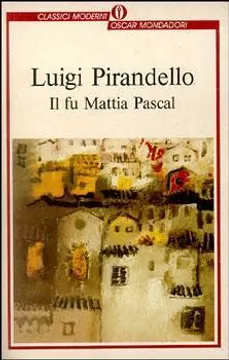


Plot Summary
The Mole in the Inheritance
Mattia Pascal1 begins his account from a neglected town library, describing how a childhood inheritance became a trap. His father dies when Mattia1 is four, leaving land and houses to his mother, who entrusts their management to Batta Malagna.8
Malagna8 claims bad harvests and debts require one sale after another, while the careless Mattia1 and his handsome older brother, Roberto,11 spend freely and fail to challenge him. Their sharp-tongued aunt, Scolastica,10 recognizes the theft and urges their mother to remarry for protection, but her warnings go unheeded.
Mattia1 grows up without much schooling, under an eccentric tutor,18 and relies on his charm and his friend Gerolamo Pomino4 rather than learning a trade. By adulthood, the family fortune is nearly gone.
The estate’s collapse is not simply the work of a cunning manager. Malagna exploits a household already trained to avoid conflict: Mattia’s mother trusts rather than investigates, while her sons enjoy comfort without accepting responsibility for its source. Scolastica can see the danger but cannot make others act on it. Mattia’s later resentment of being trapped therefore grows beside an uncomfortable recognition that he helped waste the very resources that might have protected him. His comic self-portrait keeps blame unstable, making irresponsibility part of the inheritance as surely as the houses and fields.
A Match Turns to Scandal
To investigate Malagna’s8 dealings, Mattia1 visits the house of Malagna’s niece,2 Romilda,2 where her mother, Marianna Dondi,7 watches him warily. He decides to help Pomino4 win Romilda,2 but his visits and flirtation lead Romilda2 to fall for him instead.
Their affair leaves her pregnant, and Marianna7 presses her daughter to turn the situation into a marriage that will secure her future. At the same time, Oliva,9 Malagna’s young wife,9 is pregnant after years in which he blamed her for their childlessness.
Mattia1 realizes Malagna8 is the father, confirming that the supposed barrenness was his own. Malagna8 accuses Mattia1 of compromising Romilda2 and demands that he repair the damage by marrying her. Mattia1 resists, then yields when his mother pleads with him to save the family from scandal.
Mattia’s supposedly benevolent matchmaking is mixed with vanity and appetite: he enjoys directing Pomino’s life, then discovers that his own feelings have outrun his plan. The parallel pregnancies expose Malagna’s double standard. He treats Oliva’s fertility as a threat to his authority while using Romilda’s pregnancy as leverage against Mattia. Mattia’s marriage is therefore neither a simple romantic choice nor an entirely imposed punishment. His earlier carelessness has made him vulnerable to manipulation, and his mother’s plea turns private desire into a family obligation. The novel makes responsibility difficult to separate from coercion.
A Home Becomes a Cell
Marriage brings Mattia1 no peace. Marianna7 insults him, Romilda2 grows bitter, and the remaining property is sold until the family is forced into increasingly cramped circumstances. Mattia’s mother1 lives under the same roof as the hostile in-laws, while Scolastica10 finally takes her away after a violent quarrel.
Pomino4 helps Mattia1 obtain a poorly paid position at the neglected Boccamazza library. There, among rats, dust, and old books, Mattia1 begins to read philosophy and brood over his stagnant life. Romilda2 gives birth to twin girls; one dies within days.
The surviving child becomes Mattia’s1 beloved, but she dies before reaching her first birthday, on the same day as his mother. After tending both through their final days, he collapses into grief and returns to work with no family left to comfort him.
Mattia’s first real education begins only after the life his family prepared for him has failed. The library offers books, but it is also a social dead end, a place where neglect has settled into dust and routine. His losses deepen that confinement: he has learned to love his daughter just as the household’s misery takes her away, and his mother’s death closes the last bond to his childhood. The sequence complicates his later hunger for freedom. He is not fleeing mere inconvenience; he is trying to escape a domestic world in which love and dependency have repeatedly ended in helplessness.
Monte Carlo's Merciless Gift
After another quarrel at home, Mattia1 leaves with the money Roberto11 sent for their mother’s burial, intending to reach America. In Nice, he buys a roulette manual and goes to Monte Carlo, at first planning only to risk enough for the return journey.
His initial winnings become a feverish streak: over twelve days he accumulates roughly eighty-two thousand lire, repeatedly staking more than he can afford. A gambler who has followed his play dies by suicide in the casino garden, and Mattia1 covers the dead man’s face before fleeing.
The sight breaks his gambling trance. He leaves for Italy, imagining he can use the money to restore his life, but a newspaper on the train reports that a body found in the millrace at his family’s Stìa estate has been identified as Mattia Pascal.
The fortune arrives through chance at the moment Mattia has almost stopped believing in any future, but it does not restore the self he lost. Roulette briefly gives him the sensation of mastery, even as each wager makes him more dependent on an unpredictable mechanism. The suicide in the garden punctures that exhilaration with a human cost he cannot dismiss. Then the newspaper transforms his escape into something more radical than he intended. Mattia has not chosen to die, but other people have given his name to a corpse, and that public mistake offers a freedom his winnings alone could never buy.
The Dead Man's Newspaper
Mattia1 first reacts to the report as a grotesque error and considers sending word home. At a station, however, he sees what the mistake has made possible: his creditors, wife,2 and mother-in-law7 can no longer claim him.
He gets off the train and travels to Alenga to obtain the local paper, which confirms that the town mourned him and buried the unidentified stranger under his name. Mattia1 feels remorse for the dead man and unease at deceiving the stranger’s family, but decides the bereaved can still hope their missing relative may return.
He does not correct the record. Instead, he begins altering his appearance, cutting his beard and inventing a new identity. In a passing argument on the train, he finds a name for that invented person: Adriano Meis.
The mistaken identification is a gift only because Mattia accepts the obligations that come with it. His new freedom rests on a stranger’s death, a grieving family’s uncertainty, and a town’s willingness to treat a resemblance as proof. Mattia tries to soften the moral cost by telling himself that the stranger’s relatives may still hope, but the rationalization also shows how quickly he turns other people’s pain into a condition of his own release. The name Adriano Meis is not yet a life. It is a blank surface on which Mattia hopes to write one without inheriting his past.
Freedom Has No Address
As Adriano Meis, Mattia1 shaves, wears tinted glasses, and travels through Italy and Germany, pleased at first to be answerable to no one. He invents a childhood and a grandfather to give his false identity some substance, but discovers that he cannot form honest friendships or settle anywhere without documents.
In Milan, he refuses to buy a shivering puppy because owning it would mean paying a tax and accepting a public obligation. Tired of drifting, he chooses Rome, where the crowds might hide a stranger, and rents a room in the Paleari household.
Anselmo Paleari,6 a retired civil servant absorbed in spiritualism, welcomes him; Paleari’s gentle daughter3 Adriana3 manages the home. Their lodger Silvia Caporale12 and the absent son-in-law, Terenzio Papiano,5 complete a household already strained by grief and money.
Adriano’s invented past is an attempt to make solitude feel like self-creation, but it cannot supply the ordinary evidence by which people recognize one another. The puppy episode makes the contradiction small and concrete: even affection carries civic consequences, and he has chosen a life in which he cannot safely accept them. His arrival in Rome is therefore not a simple retreat into anonymity. By renting a room, he enters a household, precisely the kind of shared life his false identity cannot sustain. The room gives him company, but it also makes intimacy and scrutiny unavoidable.
The House on Ripetta
Adriana’s3 quiet care gradually draws Adriano out of his guarded silence. She replaces the holy-water basin beside his bed with an ashtray after finding his cigarette stub in it, a small act that reveals both her faith and her practical nature.
Her father talks endlessly about spirits and life after death, while Silvia Caporale,12 lonely and drinking, confides that Papiano5 took her savings and now presses her to help secure Adriana’s3 marriage to him. Papiano5 returns from Naples, watches the household closely, and tries to displace Adriano.
Adriana3 resists his authority, and once calls Adriano to her side when Papiano5 corners her on the terrace. Their growing trust brings warmth to Adriano’s borrowed life, but Papiano’s5 interest in Adriana’s3 dowry makes the house feel increasingly unsafe.
The household gives Adriano what wandering could not: repeated contact, shared routines, and the possibility of being noticed without first inventing a grand history. Adriana’s basin-and-ashtray gesture is modest, but it lets care cross a difference in belief without erasing it. Papiano’s control works through more than force. He uses money, family dependency, and the appearance of helpfulness to make coercion seem like ordinary household management. Adriano recognizes the danger, yet his attraction to Adriana also keeps him from leaving. The new home is both refuge and trap, and his emotional needs begin to undermine the detachment he promised himself.
A Kiss in Darkness
Paleari6 arranges a séance in Adriano’s room, inviting Adriana,3 Silvia,12 Papiano,5 and the young Pepita Pantogada15 with her Spanish painter, Manuel Bernaldez.16 Papiano5 manipulates the seating and claims that the dead musician Max is directing the table.
When Silvia12 is struck in the mouth, the performance nearly breaks apart, but the group resumes it. In the darkness, Adriano holds Adriana’s3 hand, and their hidden touches lead to a kiss. Then, in the light, the table rises without anyone visibly lifting it, and even Papiano5 and Silvia12 look alarmed.
The unexplained event unsettles Adriano, who wonders whether the stranger buried under his name has somehow reached him. The séance leaves him more deeply bound to Adriana3 and more conscious that his supposed freedom has become a performance.
The séance turns the novel’s questions about identity into physical theater: unseen hands move objects while the people present struggle to decide what they have actually witnessed. Papiano’s fraud makes belief useful to him, while Paleari’s faith gives the trick an audience eager to interpret it. Yet the table’s movement in full light resists an easy explanation, preserving uncertainty rather than granting the reader a clean revelation. Adriano’s kiss with Adriana is similarly divided. The darkness permits a real intimacy, but the conditions that permit it are temporary and deceptive. He can touch the life he wants, not yet claim it.
Twelve Thousand Missing
After an operation corrects Adriano’s wandering eye, he spends forty days confined to a darkened room. Once he can see again, he discovers that twelve thousand lire have vanished from his unlocked cabinet.
Adriana3 suspects Papiano5 and urges Adriano to report the theft, but he knows the police would first ask who he is and where the money came from. He cannot establish either under the name Adriano Meis. To spare Adriana3 and her father a public scandal, he falsely claims he has found the money.
The lie saves Papiano5 from immediate accusation, but Adriana3 sees through it and leaves in tears. Adriano has gained a clearer face and lost his remaining chance to act freely: his affection now requires him to conceal both a crime and his own helplessness.
The theft makes Adriano’s legal nonexistence more than an abstract inconvenience. He can identify the likely thief, yet cannot invoke the institution designed to protect people from theft without exposing his own fraud. His silence is not pure generosity: he is protecting Adriana, but also protecting the identity on which his present life depends. The false claim that the money has been found converts this structural helplessness into a personal wound. Adriana reads it as distrust or betrayal, while Mattia experiences it as necessity. Their incompatible interpretations show how a lie can injure intimacy even when its speaker believes it is meant to prevent harm.
A Name Cannot Duel
To punish Adriana3 and himself, Adriano visits the Marquis Giglio d’Auletta and openly courts Pepita15 while Bernaldez16 paints her dog, Minerva. Bernaldez16 takes the provocation as an insult, strikes Adriano, and challenges him. Papiano5 and Paleari6 refuse to serve as seconds, advising him instead to seek army officers.
At a café, officers laugh when Adriano tries to arrange a duel without the required formalities. Their laughter exposes the real barrier: a man without recognized papers cannot defend his honor through the law or its rituals. Near Ponte Margherita, he decides to kill the invented Adriano Meis, not himself. He leaves his hat, cane, and a note on the bridge, then escapes toward the station wearing a travel cap.
The duel exposes the limit of Adriano’s borrowed identity with brutal precision. He can be insulted, but he cannot claim the socially recognized standing required to answer the insult. The officers’ laughter reduces what he thought was a private crisis to a public absurdity: without a legal self, honor is unavailable too. His staged suicide is an attempt to regain agency by ending the role he invented. Yet he does not return directly to Mattia. He leaves another convincing sign of death, extending the same deception that first liberated him. Each escape solves the immediate problem by making the next return more difficult.
The Wife Remarried
Mattia1 travels to Pisa, cuts Adriano’s long hair, and prepares to return under his original name. In Oneglia, his brother Roberto11 recognizes him and welcomes him back, but warns that Romilda2 has married Pomino4 and has a baby daughter. A lawyer confirms the consequence: if Mattia1 officially reappears, Romilda’s2 second marriage can be annulled and she would again be his wife.
Mattia1 is furious that his return could undo the life she has built, yet he insists on going to Miragno rather than resuming the stateless existence he has just abandoned. He wants to be alive in public again, even if that means confronting the legal bond he once believed the false death had erased.
Mattia’s return begins with an apparent recovery of self, then immediately reveals that identity is relational and legal as well as inward. Romilda has not simply waited in suspended grief; she has made a new life with Pomino. The law treats Mattia’s reappearance as a command to reverse that life, regardless of what the people involved now want. His insistence on returning is understandable after the humiliation of being unable to protect himself as Adriano, but it risks imposing his restored status on others. The episode refuses to equate legal recognition with justice. Becoming visible again may recover Mattia’s name while creating fresh injury.
A Grave Keeps His Name
Mattia1 reaches the Pomino4 home at night and startles Romilda,2 Pomino,4 and Marianna.7 He meets Pomino’s4 infant daughter, then confronts the couple with the fact that his return could invalidate their marriage. His anger ebbs as he holds the crying baby. He decides not to enforce his legal claim, leaves Romilda2 with Pomino,4 and refuses to rebuild his former household.
In the morning he discovers that Miragno’s residents barely recognize him; Don Eligio13 finally welcomes him, and the news spreads through town. Mattia1 settles with Scolastica10 and returns to the library, but does not restore his civic status. He visits the grave bearing his name, places flowers there, and remains unsure what name or life can now be called his own.
The ending offers no triumphant restoration. Mattia can return to town, but he cannot recover the old household without treating the law as a weapon against Romilda and her child. By relinquishing his claim, he acts with more consideration than he did when he first fled, yet the decision leaves him outside the ordinary structures that make a person legible. The grave becomes an uneasy double: it marks the stranger who died, but also the social identity Mattia lost and cannot fully reclaim. His survival is real, though not equivalent to belonging. The final irony is that he can visit his own memorial more easily than he can explain who he is.
Analysis
The novel treats identity as something assembled from several incompatible materials: memory, bodily appearance, intimate relationships, and civic records. Mattia1 can alter his beard and choose a new name, but he cannot make Adriano Meis socially complete because no institution recognizes him and no shared past can support his friendships. The law is not merely an outside obstacle. It is one of the mechanisms through which a person becomes legible to others, and its absence leaves Mattia1 exposed even when he has done nothing wrong.
Pirandello’s comedy keeps this predicament from becoming a simple tragedy of victimhood. Mattia’s1 early irresponsibility contributes to the misery he later escapes, and his narration repeatedly reveals self-serving motives beneath his claims of generosity. The novel asks readers to notice how people revise their accounts of themselves, especially when suffering makes them feel entitled to compensation. Mattia’s1 wit is both perceptive and evasive: it lets him recognize absurdity while delaying painful recognition of his own desires.
The failed second identity also challenges the fantasy that freedom means having no obligations. Without ties, Mattia1 is not independent so much as unable to act. He cannot protect Adriana3 through the courts, answer Bernaldez’s16 insult, or remain with the people he loves without exposing the lie that sustains him. His eventual return does not restore a former life. It forces him to choose between legal claims and the people whose lives have continued without him.
The grave bearing Mattia’s1 name gives the conclusion its unresolved shape. He is alive, but the social identity attached to his name belongs to a dead stranger, and his old marriage has become another person’s home. By visiting the grave, Mattia1 acknowledges both the mistake that freed him and the life he cannot wholly recover. The novel’s lasting insight is not that identity is unreal, but that it is made real through fragile agreements among individuals, families, and institutions.
Review Summary
Readers broadly praise Il fu Mattia Pascal as a profound meditation on identity, freedom, and self. Many appreciate Pirandello's blend of humor and philosophy, noting how Mattia's attempt to escape his miserable life by embracing a false death ultimately traps him in greater isolation. Reviewers highlight the novel's tragicomic tone, its exploration of existential themes, and the poignant realization that true freedom without human connection is illusory. Some critics found certain sections overly theatrical or verbose, but most consider it an essential and rewarding work of world literature.
People Also Read


Characters
Mattia Pascal
Man between identitiesMattia is an impulsive, observant man whose humor often protects him from shame. Raised amid inherited wealth and poor supervision, he avoids practical responsibility until loss forces him to consider what his choices have cost. He is quick to read other people, but less reliable when interpreting his own motives; generosity, vanity, resentment, and self-interest often occupy the same gesture. His physical awkwardness and wandering eye contribute to his sense of being misfitted, yet he also uses wit to seize attention and direct events. Mattia’s deepest desire is not simply escape from hardship. He wants to feel that his life belongs to him, even as he discovers that identity depends on relationships and public recognition.
Romilda
Daughter under pressureRomilda is the daughter of Marianna Dondi7 and the niece of Batta Malagna8. Her beauty draws attention, but her life is shaped less by romantic freedom than by the adults who bargain over her future. She can be tender and emotionally direct, yet she is also capable of accepting expedient choices when vulnerability leaves few alternatives. Her attachment to Mattia1 develops amid family pressure and financial insecurity, making desire difficult to separate from survival. Romilda’s position exposes the unequal costs of scandal: men around her can argue, scheme, or withdraw, while she must live with the bodily and social consequences. Her quietness should not be mistaken for simplicity.
Adriana Paleari
Gentle household anchorAdriana is Anselmo Paleari’s daughter6, a modest and devout young woman who shoulders much of the household’s daily care. Her reserve comes from temperament and responsibility, not indifference; she notices small needs and responds without making a display of her kindness. She is wary of her father’s spiritual experiments and increasingly uncomfortable with the authority Papiano5 exercises in the home. Adriana’s moral steadiness is tested by affection, loyalty to her family, and the wish to protect people she loves. She offers a contrast to the novel’s theatrical self-invention: her care is practical, embodied, and rooted in shared life, precisely the kind of ordinary intimacy that an invented identity cannot easily sustain.
Gerolamo Pomino
Timid loyal companionPomino, usually called Mino by Mattia1, has been his friend since childhood and is the son of a prosperous local official. He is gentle, hesitant, and easily led by Mattia’s1 confidence, but his caution is not mere cowardice: he fears conflict and depends on his father’s approval. Mattia1 often treats him as a project, encouraging him toward romance while enjoying the power of giving advice. Pomino’s loyalty survives their rivalry because his affection is genuine, even when jealousy and insecurity complicate it. His character reveals how Mattia’s1 playfulness can have consequences for people who lack his appetite for risk.
Terenzio Papiano
Helpful-seeming schemerPapiano is Adriana’s brother-in-law3 and Anselmo Paleari’s son-in-law6, an energetic operator who manages other people through money, talk, and carefully performed courtesy. He serves the Marquis Giglio while pursuing his own financial interests, and he is skilled at making self-serving conduct appear practical or generous. His concern for family can be real without making his methods benign. Papiano’s quick attention to weaknesses gives him power in a household where others are grieving, trusting, or economically dependent. He embodies a social intelligence Mattia1 both distrusts and, at times, envies.
Anselmo Paleari
Retired spiritual seekerAnselmo Paleari is Adriana’s father3, a retired civil servant whose pension and attention are absorbed by theosophy, spiritualism, and questions about death. He is eccentric and distractible, but not simply foolish; his metaphysical curiosity gives him a framework for enduring uncertainty. His trust makes him vulnerable to manipulation, especially when experiments promise contact with a world beyond ordinary experience. Anselmo’s theories about personal perception and mortality echo Mattia’s1 predicament, even when the old man cannot see how closely they apply.
Marianna Dondi
Romilda's domineering motherMarianna, Romilda’s mother2 and Mattia’s1 eventual mother-in-law, is sharp, proud, and fiercely determined to control her daughter’s prospects. She can recognize an opportunity quickly and turn social shame into leverage. Her conduct is often cruel, especially toward people with less power, but it grows from a fear of poverty and a belief that security must be seized before it disappears. Marianna’s forceful personality makes the household conflict impossible to ignore.
Batta Malagna
Predatory estate managerMalagna manages the Pascal family’s property after Mattia’s father1 dies. He is outwardly mild and plaintive, presenting each loss as the unavoidable result of bad harvests or debt. Beneath that performance, he is a calculating man who uses the family’s inexperience for his own advantage. His conduct around both Oliva9 and Romilda2 exposes how easily paternal concern and respectability can disguise self-interest.
Oliva
Honest young wifeOliva is the daughter of a Pascal family farm manager and the second wife of Batta Malagna8. She is warm, direct, and deeply conscious of the moral meaning of intimacy. Mattia1 knows her before her marriage, and her later distress makes visible the harm caused by Malagna’s8 suspicion and control. Oliva’s decency is not naivety; she understands the unfairness of her position but has limited power to change it.
Scolastica
Fierce family protectorScolastica is Mattia1 and Roberto’s11 paternal aunt, an unmarried woman whose temper is matched by a blunt sense of justice. She sees Malagna’s8 exploitation before the rest of the family does and refuses to confuse politeness with goodness. Her attempts to protect Mattia’s mother1 are practical and sometimes explosive. Beneath her abrasive manner is a loyalty expressed through action rather than consolation.
Roberto Pascal
Mattia's polished brotherRoberto, or Berto, is Mattia’s older brother1, handsome, carefully dressed, and concerned with maintaining his social standing. He is less inclined than Mattia1 to disrupt his comfortable arrangements, especially when family obligations threaten them. His affection for Mattia1 is genuine, though limited by self-preservation and the expectations of his marriage. The contrast between the brothers shows two different ways of avoiding responsibility.
Silvia Caporale
Lonely pianist and mediumSilvia Caporale is a piano teacher who lodges with the Paleari family and is presented as a medium by Anselmo6. She is lonely, financially vulnerable, and prone to drinking, yet she retains artistic feeling and a strong capacity for compassion. Papiano’s5 treatment of her deepens her dependence on the household. Her yearning to be loved shapes her behavior, sometimes making her an accomplice to schemes she also resents.
Don Eligio Pellegrinotto
Library friend and witnessDon Eligio is a priest and Mattia’s1 friend in the library where Mattia1 writes his account. He is patient with the town’s neglected books and willing to listen to Mattia’s1 unusual history without forcing it into a neat lesson. His presence connects the story’s opening and closing frames, offering companionship without pretending that Mattia’s1 identity has been resolved.
Scipione Papiano
Vulnerable younger brotherScipione is Terenzio Papiano’s younger brother5, a quiet man subject to epileptic episodes. His illness makes him dependent on his brother and an easy subject for other people’s assumptions. He spends much of his time withdrawn from the household.
Pepita Pantogada
Marquis's spirited granddaughterPepita is the Marquis Giglio’s granddaughter, a lively young woman who resists being arranged or managed by others. Her bluntness and independence unsettle the decorum surrounding her aristocratic household. She is accompanied by her small dog, Minerva.
Manuel Bernaldez
Spanish painter and suitorBernaldez is a Spanish painter who moves within the Marquis Giglio’s circle and paints Pepita’s15 dog. His pride and romantic interest make him quick to take offense when Mattia1 provokes him. He represents the honor culture that Mattia1 cannot fully enter.
Filippo Brina
Old mill workerFilippo Brina is an elderly mill worker who remembers the Pascal family. When Mattia1 wanders to the estate in grief, Filippo offers him shelter and a consoling account of the dead, expressing a simple tenderness the rest of the household lacks.
Pinzone
Unruly childhood tutorPinzone is the eccentric tutor hired to educate Mattia1 and Roberto11. He tolerates the boys’ tricks, entertains them with obscure wordplay, and sometimes betrays their schemes to their mother. His chaotic teaching reflects the loose, improvised upbringing that leaves Mattia1 unprepared for adult life.
Romitelli
Displaced librarianRomitelli is the elderly, nearly deaf and blind librarian Mattia1 replaces. He continues to visit the library and read his chosen reference book as though nothing has changed, embodying the institution’s stubborn, almost comic inertia.
Plot Devices
The mistaken corpse
Accidental death certificateA drowned stranger is identified as Mattia Pascal1 because he resembles Mattia1 and is found near the family mill after Mattia1 disappears. The town’s acceptance of the identification turns a practical error into a social fact: Mattia’s1 family mourns him, creditors settle around his supposed death, and he gains the chance to live under another name. The mistake is not merely a convenient plot twist. It tests whether a person exists through private consciousness or through records and other people’s recognition. Mattia’s1 choice to accept the error also makes his freedom morally entangled with the stranger’s fate.
Adriano Meis
Identity without legal standingMattia1 invents the name Adriano Meis, changes his appearance, and fabricates a background to make his second life seem credible. The identity initially promises escape from his marriage, debts, and past, but it has no documents, relatives, or public record to support it. As a result, Adriano cannot claim stolen money, defend his honor through a duel, or build lasting relationships without lying. The device turns the fantasy of beginning again into a test of social recognition: a name may feel real to its bearer, but it cannot function fully unless institutions and other people can verify it.
Roulette winnings
Fortune that opens escapeMattia’s1 astonishing run at Monte Carlo provides the money he needs to imagine a different future. The winnings seem to reward a man who has just lost his family, but the casino’s randomness offers no lasting control. Mattia’s1 increasingly reckless play and the suicide he witnesses expose the dangerous gap between luck and security. The fortune helps him travel and sustain his invented identity, yet it cannot give him documents, belonging, or a lawful place in the world. Its function is therefore double: it enables escape while demonstrating that money alone cannot make a person socially real.
Paleari's lantern theory
A model of limited perceptionAnselmo Paleari6 describes human consciousness as a small lantern whose light creates a limited, colored view of reality. The image gives philosophical form to Mattia’s1 changing sense of self: each identity illuminates some possibilities and hides others. Paleari’s6 spiritualist séances extend the problem into action, as staged tricks and unexplained phenomena make the household question what it has really seen. The device does not settle whether the supernatural exists. Instead, it keeps perception uncertain and reminds the reader that people often mistake the boundaries of their own understanding for the boundaries of reality.
Download PDF
Download EPUB
.epub digital book format is ideal for reading ebooks on phones, tablets, and e-readers.








