

Plot Summary
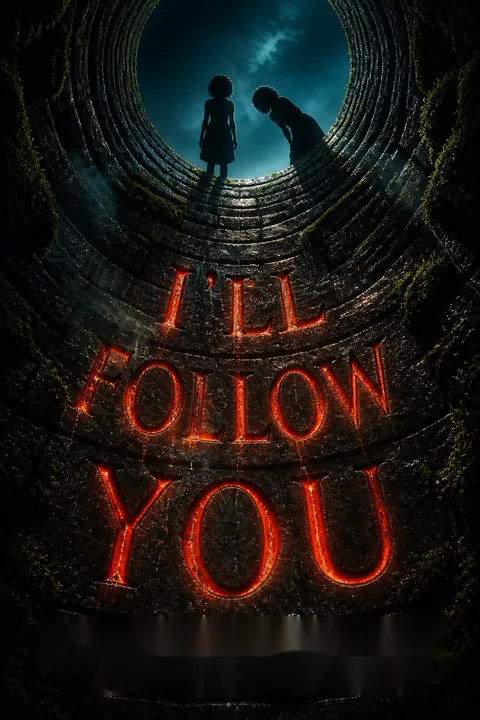
The Well's First Lesson
Faith, a lonely girl growing up in Gator Park, meets Kayla when she steals money from the property office to copy keys. Faith pays her back, and the two become inseparable. Years later, Kayla plans a parkour video at an abandoned well, convinced it will make them famous. After Kayla climbs out safely, she pressures Faith to take the same leap.
Faith falls fifteen feet when the carabiner breaks and wakes injured at the bottom. Kayla runs for help, then becomes a local news hero. At the hospital, Faith realizes Kayla sees risk as proof of friendship, while Faith has learned to clean up the consequences. The well becomes their first lesson in how far loyalty can be stretched.
The well establishes the friendship's operating logic before either girl has language for it. Kayla invents the risk and controls its meaning, while Faith's practical competence turns into complicity. Their unequal roles are not simply boldness versus caution: Faith wants the possibility Kayla represents, and Kayla needs Faith to make possibility survivable. The rescue gives them a shared origin story, but the news coverage shows how easily the public can mistake a dangerous instigator for a hero. That mismatch between private truth and public framing will become the novel's central social technology.
Hannah Gets a Face
At fourteen, Faith and Kayla build Hannah Primrose, an idealized online persona whose polished Southern life contrasts with their trailer park. Kayla supplies the face and poses; Faith writes captions and shapes the character.
A Goodwill dress, a counterfeit shopping bag, and careful photography help them pass off Greenville as a distant luxury mall. Their posts eventually reach thousands, but their partnership strains when Kayla accepts money and gifts from young followers and dismisses Faith's objections.
Meanwhile, teacher Mrs. Pierce urges Faith to apply to Harkness College, where her late mother's abandoned ambition once pointed. Faith wins a full scholarship and hides the news from Kayla. In New Orleans, their secrecy erupts when Kayla announces a move to an influencer house and Faith reveals she is leaving for college.
Hannah is both a creative collaboration and a rehearsal for self-erasure. Faith's writing gives the persona continuity, but Kayla's appearance makes that labor publicly legible as hers alone. The girls understand online identity as authored, yet they underestimate how much the audience will attach to the visible body rather than the unseen maker. Faith's concealed college admission repeats the same authorship problem in private: she has a future, but cannot claim it without seeming to betray the friend who imagined escape as a joint project. Their New Orleans rupture is therefore not a sudden misunderstanding. It is the cost of a partnership that never agreed on ownership.
The College Door Opens
Faith reaches Harkness alone after Kayla leaves Paradise on a bus, and discovers that her assigned roommate has accepted a place at Harvard. In a dorm full of confident, wealthy freshmen, Faith's awkwardness and secondhand belongings make her feel like a visitor.
She takes a night cashier job at the dining hall and lies to her uncle Randy that she works in the library. There she meets Charles Wyman, a celebrated art historian and former Metropolitan Museum curator, who notices her thoughts about a book and gives her a museum catalog.
Faith discovers that Harkness connects her to her mother's unrealized dream, but her economics classes threaten her scholarship. When Wyman invites students to a conservation club, the possibility of belonging arrives through art rather than the social world she expected.
Harkness offers Faith access without automatically offering membership. The empty roommate slot gives her literal space, but it also exposes how institutional privilege makes sudden changes look effortless to students who can afford them. Her lie to Randy reveals shame as an early form of class performance: she wants to spare him the humiliating details of the work that sustains her. Wyman's attention feels transformative because it recognizes her intelligence in a setting where she has been treated as background. Yet that recognition is already entangled with authority. The college's promise of reinvention and the professor's personal attention arrive together, making it difficult for Faith to distinguish opportunity from dependence.
Kayla Returns to Smith
Faith joins Alpha Rho sorority and begins attending Wyman's conservation club, where students examine a damaged Renaissance painting with an unknown maker. She befriends Callie, another eager newcomer, but keeps her past and her estrangement from Kayla private.
On Halloween, Kayla suddenly appears outside Faith's dorm with two bags of clothes. She has dyed her hair blond and admits that online abuse followed her first sexualized posts. Faith lets her stay, though she is supposed to attend a sorority party.
Kayla then walks into the party anyway, charms the influential students, and takes up a place beside Faith. For the first time, Faith's carefully assembled campus life feels vivid, but Kayla's return also begins a new deception: no one is told that she is not enrolled.
Kayla's return answers Faith's loneliness while destabilizing the identity Faith has begun to build apart from her. The change in Kayla's appearance registers the costs of attention, but her admission about online abuse does not undo her appetite for visibility. Instead, vulnerability becomes another resource she can manage. Faith's welcome is emotionally understandable and ethically consequential: she mistakes intimacy for permission to suspend the rules. The party scene also shows Kayla's social fluency functioning as camouflage. Her ability to make others feel chosen helps a stranger enter an elite community, even as Faith becomes responsible for concealing the entrance.
A Roommate Without Papers
Kayla tells Harkness students she is a psychology major recovering from mono, borrows ID cards, and settles into Faith's room. Faith does not expose her. Instead, they restart Hannah Primrose with dark-academia photographs taken around campus, and the account's audience surges.
Kayla quickly becomes a campus favorite, even appearing in the student magazine's beauty list. At a Halloween party, Callie passes out after drinking with fraternity members; her necklace disappears, and the sorority leaders avoid calling campus safety to protect the house.
Kayla draws close to Callie afterward, while Henry Taylor, a fraternity president, pursues Kayla. Faith senses danger but cannot separate concern from jealousy. The new arrangement gives both girls attention, yet it also ties Faith's scholarship and reputation to Kayla's increasingly public impersonation.
The fake-student scheme succeeds because Harkness recognizes the signs of belonging more readily than it verifies them. A borrowed card, a familiar costume, and a plausible illness are enough to make Kayla socially real. Hannah's growth and Kayla's campus popularity reinforce each other, allowing the online persona to lend credibility to the impersonation and vice versa. Callie's blackout and missing necklace expose a second institutional bargain: the sorority values its reputation enough to delay help. Faith's failure to act is not indifference so much as divided attention, but the distinction offers little protection to the person who may need her.
The Professor's Private Studio
As Faith struggles in economics and risks losing her scholarship, Wyman gives her a place in his conservation work and treats her observations as valuable. Their late-night meals and lessons become intimacy, then a sexual relationship.
Faith's first sexual experience unfolds inside the imbalance between a professor and his student, though she interprets his attention as recognition and possibility. She begins sharing their encounters through Hannah's posts, turning private experience into a fast-growing story.
Meanwhile, she works on the damaged painting and helps uncover the initials M.C.F. beneath its varnish, suggesting a rare woman artist. Wyman praises Faith's hands and invites her deeper into the work, while Kayla pushes the account toward more dramatic content. Faith's academic life falters as art, desire, and performance begin occupying the same space.
Wyman's mentorship and sexual attention become difficult for Faith to disentangle because both are delivered as access. He offers knowledge, artistic responsibility, and a possible career, but the same relationship places her future in the hands of someone with institutional power. Faith's consent is real, yet the conditions around it are unequal, a distinction the novel refuses to flatten into either simple romance or simple coercion. The painting's hidden initials provide a counterpoint: an anonymous woman's skill survives beneath layers applied by others. Faith sees herself in that obscured maker, even as she begins making her own life legible to an audience through a manufactured character.
Two Blackmail Schemes
Kayla and Callie grow close, and Faith discovers they have been confronting Henry over what happened to Callie at the Halloween party. Kayla arranges a meeting in New Orleans and pressures Henry to pay for his silence about the accusation; he refuses to meet the demand, but his fear and resentment deepen.
At the same time, Hannah's posts about Faith and Wyman attract a large following, and an agency offers the pair representation. At the New Year's Eve party, the agency praises their storytelling but warns that the professor affair may limit brand deals.
Faith and Kayla argue over whether Faith's relationship with Wyman is real or merely useful content. Later, an anonymous Harkness account leaves a comment hinting that Wyman has other women. Faith begins to suspect the story is larger than the two of them.
The parallel schemes expose a grim asymmetry in how young women seek leverage. Callie wants Henry to feel the fear she felt, while Kayla converts that desire into a financial threat. The tactic can be understood as retaliation against a system that has failed to protect Callie, but it also reproduces coercion without resolving what happened. Hannah's agency offer repeats the same logic at a larger scale: pain is valuable when it can be packaged, but commercially inconvenient when it becomes too complicated. The anonymous warning interrupts Faith's preferred narrative of exceptional intimacy. If Wyman's attention is not unique, then her sense of being chosen may be less proof of love than part of a pattern.
The Missing Photograph
After returning from winter break, Faith goes to the Observatory and finds that a section of the painting has been expertly repaired while Wyman claimed to be away. The documentation photograph that would identify when the work was done is missing.
Realizing someone else worked on the canvas with Wyman, Faith confronts him at a party with Kayla. Kayla threatens a Title IX complaint and demands one hundred thousand dollars, while Faith identifies the altered fill as evidence.
Wyman does not deny the affair pattern, but disputes the demand and gives them until the end of the week. The threat briefly turns the women into the authors of a negotiation with a powerful man. Outside the party, however, Faith and Kayla still have no proof of what Wyman will do, or what he may already know.
The painting becomes an evidentiary object because conservation depends on precise records, not merely confident interpretation. Faith notices the discrepancy through the very attention to detail Wyman taught her, then uses that craft against him. Yet the missing photograph makes certainty unstable: she can see the altered surface, but the institutional proof has been removed. Their demand reverses the professor's power only briefly and imperfectly. Kayla speaks with the force Faith cannot yet summon, while Faith supplies the technical observation that gives the threat credibility. Their shared action resembles partnership, but its terms remain unclear, especially when money begins to replace justice as the imagined solution.
The Account Turns Inward
When Wyman delays, Faith notices that Hannah's engagement has become suspiciously bland and finds messages showing Kayla and the agency have been deleting criticism while planning a pivot to Los Angeles. A threatening text from Henry leads Faith to meet him secretly.
Henry reveals that Kayla and Callie demanded twenty-five thousand dollars from him, and that he had tried to leave a cashier's check before discovering Kayla was not a Harkness student. Faith recognizes the anonymous account that warned her about Wyman as Kayla's, and understands that Kayla has been shaping the crisis around her.
Rather than confront Kayla immediately, Faith calls Wyman. She says she loves him, persuades him to meet, and accepts fifty thousand dollars, half the original demand, while planning to use the money to send Kayla away.
The revelation changes Faith's central question from whether Wyman has harmed her to whether Kayla has been directing her toward a profitable crisis. Kayla's actions are neither wholly fabricated nor wholly sincere: Henry's behavior and Wyman's power are real, but she treats those facts as instruments in separate campaigns. Faith responds by adopting the same strategic habits, withholding information and arranging a private bargain. Her decision to call Wyman as a lover rather than as a complainant shows how deeply she still depends on his recognition. The money appears to offer a clean exit, but it is also a new secret that binds all three characters together.
The Bayou Takes the Car
Faith brings the fifty thousand dollars to Kayla and asks her to leave Harkness. Kayla rejects the separation, and their argument turns to the years of unequal credit and loyalty inside their friendship. Driving too fast along a dark road, Kayla refuses to slow down. The car hits black ice on a narrow bridge and plunges into the bayou.
Faith frees herself, then tries to reach Kayla through the rising water, but the door and seat belt defeat her. With her own chance to escape narrowing, Faith stops trying and swims out alone. She flags down a passing couple and tells them Kayla is still in the car. When rescuers arrive, Faith gives police a rehearsed account that casts Kayla as Wyman's blackmailer and herself as a frightened passenger.
The crash turns the novel's old well into a final test, but the moral arithmetic has changed. As a child, Faith fell because Kayla's dare made risk feel like the price of belonging; now Faith can choose between her own survival and another attempt to follow. Her decision is understandable as self-preservation, yet it remains inseparable from resentment, exhaustion, and the years of mutual manipulation. The lie to police is not an afterthought. It is the next act of authorship, an effort to determine which version of the friendship will survive. Faith escapes the water, but not the story she has built around leaving Kayla behind.
A Dead Girl's Story
Kayla's funeral draws only a small group, including Faith, Callie, Randy, and Brenda. Callie admits she wanted Henry to feel afraid, not to profit from him, and speaks warmly about Kayla when Faith cannot. News coverage soon reframes Kayla as a con woman after Wyman's lawyer claims she impersonated a student and blackmailed him.
Harkness avoids naming her as a student, while campus gossip invents explanations for the cash and the crash. Henry posts a viral account accusing Hannah Primrose of blackmailing him.
Faith remains entangled with Wyman, spending the summer in Brooklyn and interning at the gallery he arranged. She helps identify the painter behind the restored work, but the painting sells privately, and Faith realizes she no longer wants to build her life by elevating other people's stories.
The funeral offers a rare moment when Kayla is treated as a person rather than a headline, but even there Faith cannot speak. The competing public accounts then expose how quickly a dead woman can be assigned a role that benefits the living: predator, victim, influencer, cautionary tale. Harkness protects its institutional image by withholding recognition, while Wyman's legal statement casts himself as the deceived party. Faith's continued relationship with him makes her survival materially easier and morally harder. Her work on the painting yields genuine scholarship, yet the sale and her loss of interest reveal the cost of confusing access to art with ownership of a future.
The Women Behind the Painting
As Faith prepares to return to Harkness, she meets Avery Chen, a chemistry student who had also worked with Wyman. Avery's questions and an archaeology book in Wyman's car make Faith reconsider his claims about the winter break.
They meet at a diner, where Avery explains that Wyman spent the holiday working on the painting with her, then reveals he had also been involved with her and other scholarship students. He had offered internships and attention while concealing each relationship from the others.
Avery had tried to reach Faith earlier, but Faith was too absorbed in her own crisis to respond. The two women contact the others and gather messages documenting Wyman's pattern. Faith then begins preparing a public account that includes her own part in the lies and blackmail.
Avery's account dismantles the exceptionalism that kept Faith attached to Wyman. The pattern does not erase Faith's feelings, but it changes what those feelings can mean: intimacy was produced alongside repetition and concealment. Avery also complicates the story's moral center. She has been living with her own compromise, accepting a funded opportunity while withholding judgment, and still chooses to gather evidence with the other women. Faith's earlier inattention has consequences for Avery, just as her silence about Callie did. The alliance begins not with instant trust, but with an admission that each woman's version has been partial and that evidence must be shared.
Epilogue
Seven years later, Faith agrees to discuss the case in Florence beside Artemisia Gentileschi's Judith Slaying Holofernes. She finally publishes the full account: she and Kayla created Hannah Primrose together, Faith slept with Wyman, and both women participated in the blackmail. She also shares evidence from Avery and the other students, showing Wyman's pattern of trading academic opportunities for sex.
Faith receives probation, leaves Harkness, and becomes a successful influencer under Hannah's name. Wyman resigns after a formal complaint. At the Uffizi, a glimpse of a red-haired stranger briefly makes Faith think Kayla has returned. The stranger is not Kayla, but Faith still takes photographs, then posts for the audience waiting online.
The ending refuses to equate exposure with liberation. Faith tells the truth, but she does so through the same machinery that once turned pain into engagement, and her confession becomes another viral product. Her public honesty matters because it restores the other women to the story and implicates her own choices, yet the audience still rewards a singular face and a compelling narrative. The final false sighting of Kayla shows grief as a perceptual habit, not a solved mystery. Faith can acknowledge the illusion and continue working. Her last post is both livelihood and repetition, suggesting that reclaiming a narrative does not mean escaping the systems that make narratives profitable.
Analysis
I’ll Follow You treats identity as something made jointly and then fought over. Faith writes Hannah Primrose, Kayla embodies her, and the audience completes the character by rewarding an image that appears spontaneous. This division of labor makes their friendship feel productive and intimate, but it also hides a persistent imbalance: one girl is seen, while the other determines what that seeing means. Harkness repeats the same structure institutionally. It offers Faith a scholarship and intellectual access, yet its social rituals make class performance a daily test, and its leadership often protects organizational standing before vulnerable students.
The novel is especially attentive to how authority disguises itself as recognition. Wyman's teaching, praise, and professional opportunities feel like rescue to Faith because they answer needs formed by poverty, grief, and exclusion. The professor's power does not make Faith's desire unreal, but it changes the conditions under which desire operates. Conservation provides a precise metaphor for the ethics of looking: surfaces preserve traces, yet every intervention changes what can be seen. Faith's discoveries matter because she learns to document what the more powerful man would rather leave unrecorded.
The book's treatment of retaliation is deliberately uncomfortable. Kayla and Faith identify real failures in the systems surrounding Callie and Wyman's students, but blackmail does not become justice simply because the targets are privileged. Their leverage brings money and danger without restoring what was taken. Faith's survival after Kayla's death is likewise not framed as clean redemption. She lives, lies, and benefits from the story she constructs, then later returns to the evidence and includes her own complicity. Her confession is an ethical act, but it also becomes content. The ending's unease comes from recognizing that telling the truth can challenge a public narrative without escaping the attention economy that first made the lies valuable.
People Also Read



Characters
Faith Thibodeaux
The hidden storytellerFaith is an observant, bookish girl raised in Gator Park by her uncle Randy after her mother's death. She is skilled at noticing details and arranging them into persuasive stories, but often uses that skill to accommodate other people rather than claim her own desires. Kayla's charisma gives Faith a sense of possibility, while Harkness offers her an intellectual future she is not sure she deserves. Her hunger for recognition makes her vulnerable to anyone who treats her as exceptional. Faith's defining tension is between the careful witness she is and the protagonist she wants to become.
Kayla Lightfoot
The dazzling instigatorKayla is Faith's childhood best friend, a red-haired girl with striking presence and a gift for reading what people want to see. She dreams of escaping Gator Park and treats risk, appearance, and attention as tools for making that escape possible. Kayla can be generous, funny, and protective, especially toward people who remind her of herself, but she also expects loyalty to be demonstrated on her terms. Her ease in front of a camera contrasts with Faith's talent for words, creating a partnership whose creative intimacy never quite resolves into equal credit.
Charles Wyman
The celebrated art mentorWyman is a prestigious art historian and former museum curator whose warmth and showmanship make difficult ideas feel intimate. He notices Faith's perceptiveness and introduces her to conservation, offering both intellectual encouragement and access to an elite professional world. His authority is part of his appeal: he can make a student feel recognized while shaping the opportunities available to her. Wyman's cultivated charm and appetite for beautiful objects coexist with a guarded private life. His character raises the question of where mentorship ends when the mentor controls both knowledge and opportunity.
Avery Chen
The careful witnessAvery is a chemistry student and conservation-club member whose practical habits and dry humor distinguish her from Harkness's polished social performers. Like Faith, she studies on scholarship and understands the pressure of maintaining grades while working. Avery is more direct about discomfort, but she is not immune to compromise or the lure of professional access. Her careful attention to other people gives her an independent perspective on the campus's hidden arrangements. She serves as a counterweight to Faith's inward focus, asking for honesty without demanding that it arrive perfectly formed.
Callie
Faith's first campus friendCallie is a friendly, anxious freshman from a comfortable family who hopes sorority life will give her lasting friendships. She tries hard to please and uses routines, affirmations, and social rituals to manage insecurity. Her warmth makes Faith feel less alone, though both girls often perform confidence rather than risk frankness. Callie is also a debate-trained thinker who can see the absurdity in campus culture. Her friendship with Faith becomes strained by the things Faith chooses not to ask.
Randy
Faith's working uncleRandy takes Faith in after her mother dies and works multiple jobs to keep their household afloat. His blunt manner can hide pride and affection, and he understands the practical cost of education better than its promise of transformation. Randy does not share Faith's hunger for Harkness's prestige, but he supports her chance to go. His working life gives the novel a grounded measure of the labor and money that wealthier students barely notice.
Regina Campbell
The candid campus workerRegina supervises Faith at the dining hall while juggling other campus jobs. She is funny, perceptive, and unusually clear about what she wants from life, including a future in comedy and television. Regina's straightforwardness offers Faith a welcome alternative to the polished social performances around Harkness. She understands the scholarship students' material pressures without romanticizing them.
Henry Taylor
The entitled fraternity leaderHenry is a popular Delta Omega president whose confidence comes from belonging to Harkness's privileged social core. He expects attention and access, and his encounters with Kayla and Callie reveal how quickly he can treat women as challenges to manage rather than people to understand. His public charm and private resentment are not opposites so much as two expressions of entitlement.
Brenda
Kayla's complicated motherBrenda is Kayla's mother, living with her daughter in Gator Park and trying to navigate a troubled household. She can see Kayla's desire to leave even when she cannot offer a stable path out. Her relationship with Kayla is marked by distance, resentment, and flashes of tenderness, leaving both women unsure what they owe each other.
Andy Burwell
Alpha Rho's polished gatekeeperAndy is a confident Alpha Rho member who is active in student government and campus governance. She presents sorority life as welcoming and orderly, but her friendliness is shaped by the institution's assumptions about class and belonging. Andy is competent and ambitious, and she expects others to follow the rules that preserve her community's standing.
Ginny Spears
The sorority presidentGinny leads Alpha Rho with practiced warmth and a strong instinct for status. She is adept at making newcomers feel included when it serves the house, while remaining alert to anything that could threaten its reputation. Her polished sociability reflects the unspoken labor required to keep elite organizations looking effortless.
Mrs. Pierce
Faith's first championMrs. Pierce is Faith's exacting English teacher, a careful reader who recognizes the ability Faith has not yet learned to claim. She encourages Faith to apply to Harkness and connects her with a scholarship that makes attendance possible. Her support gives Faith a model of adult attention based on work and potential rather than appearance.
Dean Walters
The institutional adviserKnown to students as Bugz, Dean Walters is Faith's long-serving adviser. She speaks in the language of academic planning, institutional policy, and accountability. Her concern for students operates within the school's need to manage its reputation, making her a figure of both support and institutional distance.
David
The predatory talent scoutDavid is a New Orleans social media manager who uses industry promises to draw young creators into his orbit. His professional vocabulary disguises his sexual interest and the power imbalance in his dealings with Kayla and Faith.
Brian Marquez
The brand strategistBrian is a polished agency representative who understands how creators build audiences and how brands limit what they will sponsor. He recognizes the storytelling behind Hannah Primrose, but views that identity chiefly as a marketable asset whose image must be adjusted for commercial use.
Michelle
The philanthropy chairMichelle is an Alpha Rho philanthropy chair with an easy smile and a busy social presence. Her public role suggests generosity and community service, while her private life shows that Harkness's polished students can have unseen pressures and secrets.
Danielle Shipley-Carpenter
The sharp-tongued freshmanDanielle is Faith's wealthy dorm neighbor, skilled at spotting social missteps and turning them into gossip. Her confidence depends on knowing the codes of Harkness and using them to rank other people.
Esther Fishburns
The skeptical art studentEsther studies art history and questions the authority of celebrated male scholars, including Wyman. Her sharp skepticism offers a counterpoint to Faith's admiration, although Esther's own critique is not enough to make the club's power dynamics disappear.
Kelly
Faith's resident adviserKelly is the Smith Hall resident adviser, a busy student preparing for the LSAT. She manages dorm life with procedural cheer and is often preoccupied with her own future, making her a small but telling part of Harkness's self-contained world.
Plot Devices
Hannah Primrose
A shared online maskFaith and Kayla invent Hannah as an idealized influencer whose photographs and captions make their real lives look affluent, romantic, and effortless. Kayla provides the visible image while Faith writes the voice, a division that generates both their early success and their conflict over credit. The persona later becomes a vehicle for campus deception, commercial growth, and the public argument about who owns a story. Hannah is not simply a disguise. She is a collaborative artwork that allows the girls to imagine escape while hiding the unequal work and risks beneath its polished surface.
The Abandoned Well
A test of loyaltyThe well first appears in the girls' teens, when Kayla turns a dangerous parkour stunt into a bid for online attention and persuades Faith to follow her. Faith's fall establishes a pattern in which Kayla initiates risk and Faith manages its consequences. The memory returns as an emotional measure whenever Faith must decide whether following Kayla is proof of love or a surrender of judgment. The image of the well also prepares the novel's final water-bound crisis without making the later choice feel like a repeat of the childhood rescue.
The Renaissance Painting
Evidence beneath varnishThe damaged painting at Wyman's conservation club is both a practical training object and a parallel to the novel's hidden histories. Its unknown maker, layered varnishes, missing documentation, and newly exposed initials make careful observation essential. Faith's skill with the surface lets her notice work that Wyman has concealed, while the eventual research into the painter gives her a path toward authorship beyond Hannah. The painting's restoration also raises the ethical question of who gets credit when someone else's labor brings an overlooked work into view.
The Anonymous Account
A warning with no faceAn unnamed Harkness account posts a short warning beneath Hannah's content, telling Faith that Wyman is not involved with only one woman. The lack of profile information turns the message into a puzzle, while its precise timing makes Faith question the story she has built around her relationship. The account later becomes evidence of Kayla's hidden involvement in shaping Faith's choices. It functions as both a genuine warning about Wyman's pattern and a manipulation by someone close to Faith, forcing her to consider that useful information can arrive through compromised motives.
The Cash Demand
Leverage becomes a trapThe demand for money grows out of real power imbalances, secret relationships, and the women's justified anger at how institutions protect reputations. Kayla and Faith use the threat of a Title IX complaint to pressure Wyman, while Kayla separately targets Henry with Callie's grievance. Their plan makes money look like a route to safety and independence, but it also deepens their reliance on secrecy. The cash ultimately becomes physical evidence that shapes the accident investigation and the public story, turning a private bargain into the object around which competing accounts are built.
Download PDF
Download EPUB
.epub digital book format is ideal for reading ebooks on phones, tablets, and e-readers.








