

Key Takeaways
Tell your story as memory, not as a courtroom verdict.
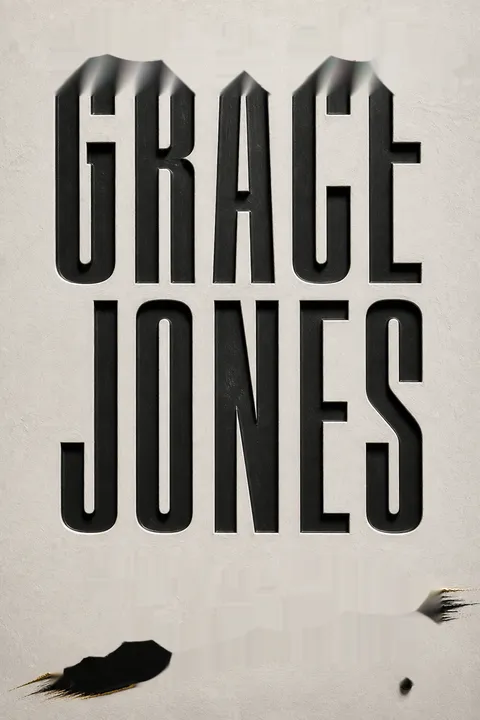
Memory, not verdict. Jones begins with a promise she once made in a song: she would never write her memoirs. She breaks it, but not to settle every rumor or produce an official record. Instead, she offers what she remembers, including uncertainty, gaps, contradictions, and details she chooses to keep secret. Her life has already been enlarged, reduced, and reshaped by other people’s stories. Writing becomes a way to put another version into circulation without demanding that readers accept it as the only one.
A self in motion. Jones treats memory as personal material, not a neutral archive. She remembers events out of order and sees different versions of herself in Beverly, Grace, and the public figure. The point is less to prove what happened than to show how experience made her.
What's striking is the memoir's refusal to confuse a vivid account with a final ruling. Research on autobiographical memory describes recollection as reconstructive: people organize experience through present concerns, not by replaying a perfect recording. Jones makes that instability part of the form, which gives readers a useful distinction between honesty and certainty. Her candor about omissions strengthens that distinction. Still, self-authorship has limits. A narrator can challenge an outside caricature, but cannot fully control what audiences repeat, believe, or simplify.
Recognize when 'discipline' is fear dressed in religious language.
A child under watch. In Spanish Town, Jones and her siblings grew up inside a tightly controlled Pentecostal community. Their school, social life, and daily schedule revolved around the church. Their guardian, whom the family called Mas P, beat them for breaking rules, for suspected disobedience, and sometimes before any offense had occurred. Jones recalls belts marked with the children’s names, intercepted letters, and a sense that someone was always watching. Her curiosity about a boy brought a prolonged family deliberation and further punishment.
Escape came gradually. Her parents had moved to America, believing the children were better off with relatives, and did not know the full extent of the abuse. Jones describes how fear made cruelty seem ordinary until distance allowed her to see it differently. Her account concerns a specific family and church, not every Pentecostal community.
The memoir makes a sharp distinction between spiritual belief and the use of spiritual authority to control bodies, information, and family ties. That distinction matters because religious communities can offer belonging and mutual aid, while closed institutions can also make dissent feel like moral failure. The children’s surveillance and punishment show how control becomes most effective when it is presented as care. Their experience should not be generalized to a whole faith tradition, but it does make a strong case for judging authority by what it permits people to question, and what happens when they do.
Use reinvention to escape inherited roles, not merely to shock.
A new name, a new life. When Jones left Jamaica for Syracuse at about twelve, she was still known as Beverly at home. At school she was called Grace, her first name, and it took time to recognize that name as hers. She began testing the rules she had lived under: makeup, an Afro, late nights, and eventually a life beyond her parents’ home. Theater gave that rebellious energy a direction. A college teacher invited her into summer stock, where she discovered performance as a way to explore lives beyond the roles assigned to her.
Identity through experiment. In Philadelphia and New York, she modeled, danced, and tried on different looks and names. Shaving her head became a deliberate refusal of expectations about femininity and commercial beauty. Reinvention was not simply a bid for attention; it helped her decide which parts of her past belonged to her.
Jones presents identity as something partly made through action: a name used, a hairstyle chosen, a stage entered. That idea resonates with social psychology, where identity is understood not only as an inner essence but also as a set of roles tested in particular settings. Reinvention can create room to grow, especially when inherited roles have been coercive. It is not cost-free, though. Constantly adapting can become exhausting, and not everyone has the financial or social freedom to leave one life for another. Jones’s story is an unusually mobile case, not a universal recipe.
Choose collaborators who turn your difference into deliberate form.
Difference becomes design. In Paris, designer Issey Miyake showed Jones that stillness could command attention. His theatrical fashion shows, including one built around twelve Black models, helped her imagine performance as more than singing or walking a runway. She also learned from Kabuki, a Japanese theatrical tradition that uses stylized gesture and makeup to make emotion precise rather than naturalistic. Photographer and artist Jean-Paul Goude transformed conversations and memories into images, but Jones insists she was an active participant, not a passive muse.
Art and intimacy collide. Their collaboration shaped her visual identity and the minimal, confrontational staging of A One Man Show. Yet Goude’s drive to perfect an image could clash with the person living inside it. Jones’s account shows both the creative power of close collaboration and the danger of being treated as an ideal instead of a partner.
The section complicates the familiar story of the lone genius. Jones’s performance language emerges through exchange: Miyake supplies a lesson in restraint, Kabuki offers a vocabulary of stylization, and Goude helps translate ideas into images. This resembles distributed creativity, in which a distinctive work is produced through a network of people and forms, while the artist still exercises judgment over what to keep. The relationship also raises a useful question: who controls an image when collaboration becomes intimate? Mutual influence can be genuine without making the power between collaborators equal.
Stop imitating the voice you were told a singer needs.
A voice that did not fit. Jones once believed her low, unusually deep voice disqualified her from singing. An early audition for Philadelphia producers Kenny Gamble and Leon Huff went badly: nerves made her voice shake, and she left convinced she had failed. Her first records were made in a disco system that often built the track before adding the singer. Producer Tom Moulton shaped those early songs into dance hits, but Jones felt increasingly like a face attached to someone else’s musical design.
A sound with roots. Chris Blackwell assembled the Compass Point All Stars around her: Jamaican rhythm section Sly Dunbar and Robbie Shakespeare, keyboardist Wally Badarou, and other musicians whose reggae, rock, and electronic instincts could meet. Jones stopped trying to imitate conventional soul singers. Her low, part-spoken delivery became an essential part of the music’s identity.
The creative lesson is not that every limitation automatically becomes an advantage. Jones’s voice became distinctive because she found collaborators and arrangements that made its qualities useful, then stopped treating convention as the only standard. This is a familiar pattern in design: constraints can generate original solutions when the maker has enough craft and control to work with them. The less romantic fact is that many artists with unusual voices are simply excluded. Individual ingenuity matters, but it does not erase the institutions that decide which sounds receive attention.
Turn gatekeepers' rejection into fuel without accepting their categories.
A blunt exclusion. When Jones arrived in Paris, model agent John Casablancas told her that selling a Black model was like selling an unwanted old car. She had not understood her lack of bookings as racial discrimination; he made the prejudice explicit. Instead of treating his judgment as a verdict on her prospects, she joined a newer agency that was willing to represent her alongside Jerry Hall and Jessica Lange. Photographers such as Helmut Newton then sought her out for the very qualities that made conventional agencies hesitate.
Success did not fix the system. Jones describes being expected to act grateful, to fit a narrow idea of Black beauty, and to accept that one Black model could satisfy a market. Her later frustration with record companies followed a similar pattern: executives wanted a safe, repeatable version of her. She tried to keep decision-making power over her image and sound.
The story captures a useful difference between feedback and gatekeeping. Casablancas’s comment did not identify a flaw in Jones’s work; it disclosed a market organized by racial preference. Her response shows how rejection can reveal the rules of a system, rather than the limits of a person. Still, her eventual success should not be used to imply that prejudice can always be defeated by confidence or persistence. Her talent mattered, as did access to unusually adventurous photographers and a different agency. Individual agency and structural exclusion operated at the same time.
Protect the person behind the spectacle with explicit boundaries.
Pleasure needs limits. Jones describes a public life of clubs, drugs, sex, and parties, but also insists that spectacle was not the whole of her private self. She preferred to perform sober, learned that some substances made her feel unsafe or physically unwell, and became increasingly careful about what she took. Her first LSD experience occurred in a supervised communal setting; later, she saw friends suffer through addiction and the AIDS crisis. The deaths of people close to her made the apparent freedom of the 1970s feel more fragile.
A rule for the party. Jones says she wanted people to enjoy themselves without dying. That line reveals the tension in her story: she sought extreme experiences, yet believed she needed enough control to return from them. Exercise, discipline, and private routines helped her manage the intensity of touring and public performance.
Jones’s account resists the easy equation of transgression with freedom. Her chosen boundaries, such as performing sober and avoiding substances that did not suit her, suggest that pleasure can require deliberate self-protection. The section also shows the limits of retrospective control: surviving an era of drugs and an epidemic does not prove that personal rules can neutralize every danger. AIDS was a public-health disaster, not a moral consequence of individual behavior. Her story is most useful as a record of how she assessed risk, not as a model others should copy.
Return to Jamaica beyond the church that taught you to fear it.
A different island appears. For years after leaving, Jones and her siblings vowed not to return to Jamaica. Her aunt Sybil eventually urged her to travel beyond Spanish Town and see the country for herself. The trip revealed a landscape she had barely known as a child: mountain roads, dense vegetation, villages, beaches, Kingston’s crowded energy, and the visible contrast between tourist wealth and poverty. Jamaica was no longer only the site of religious control and childhood punishment.
Roots change the music. Jones says that reconnecting with the island helped her recognize what was already Jamaican in her: its physicality, humor, pride, rhythm, and inventiveness. That recognition strengthened her music. Instead of treating Jamaica as a past to escape, she could draw on it as a living source of artistic identity.
The return is not a simple homecoming or a claim that beautiful scenery heals trauma. It is an act of separating a place from the institution that had once defined it. That distinction resembles the work of reconstructing collective memory: landscapes hold many histories at once, including colonial violence, local creativity, tourism, and everyday life. Jones does acknowledge poverty and the island’s painful past, which keeps the rediscovery from becoming pure romance. Her account suggests that belonging can be revised through direct experience, though it cannot erase what happened there.
Keep making the next version when audiences demand the old one.
A career is not a museum. At the end of the memoir, Jones argues with Chris Blackwell about what she should perform. He favors familiar songs; she wants to include new work and give the past a different context. Her career has repeatedly changed shape: from modeling and disco to the reggae-inflected Compass Point records, the theatrical A One Man Show, film roles, and the later album Hurricane. She resists being reduced to one era, even when that era is what audiences most clearly recognize.
Change is the through-line. Jones does not describe reinvention as abandoning everything that came before. She wants new work to carry traces of earlier selves without repeating them. Her closing ambition is to keep moving, keep performing, and refuse the idea that a successful image must remain fixed.
Jones’s insistence on new work makes longevity an artistic problem, not merely a question of staying visible. A recognizable style can open doors, then become a constraint when audiences and companies demand repetition. Her answer is to treat past work as material that can be reinterpreted, rather than as a finished identity. There is a genuine tension here: audiences often seek shared memories, and an artist who ignores that connection risks losing them. The challenge is not novelty for its own sake, but change that still communicates why the earlier work mattered.
Analysis
This memoir is built around a contradiction: Grace Jones wants to control how she is seen, yet her art depends on being looked at. The book repeatedly turns that tension into creative material. A childhood in which adults dictated her behavior becomes a later practice of choosing costumes, poses, names, and stages. The transformation is not a tidy recovery story. The same force that helps her resist control can also make intimacy difficult, and the same public image that gives her leverage can threaten to replace the private person.
Its structure is associative rather than strictly chronological. Jamaica links to Paris, a childhood stare to a stage persona, a club’s sound to a recording studio, and a romantic argument to a song or image. This is not just decorative storytelling. It reflects Jones’s view that the past remains active in the present, and that identity is assembled through repeated encounters. The reader is asked to notice connections without assuming every remembered detail is settled fact. Her explicit uncertainty about chronology and disputed stories makes the memoir’s self-awareness part of its evidence.
The book also offers a particularly revealing account of collaborative authorship. Jones names the photographers, designers, producers, musicians, and friends who shaped her work, while resisting the idea that any one of them created her. That position is both artistically persuasive and politically important: she claims agency without pretending to have worked alone. At the same time, her descriptions of the fashion and music businesses show that creative freedom is unevenly distributed, especially across race and gender.
The memoir’s greatest strength is its refusal to make difference respectable before it becomes valuable. Jones’s voice, body, Jamaican roots, and unruly presence are not problems to be corrected. They become the raw materials of a form that others can recognize but never fully contain. Her account of survival is compelling, though her personal methods of managing risk should be read as experience, not advice. The book’s deeper claim is that reinvention can be a way of reclaiming authorship, but it cannot make a person invulnerable.
Review Summary
I'll Never Write My Memoirs is a candid, often repetitive memoir by Grace Jones, detailing her journey from Jamaica to international stardom. Readers appreciate Jones' honesty, fascinating anecdotes, and insights into her artistic process. The book offers glimpses into her relationships with celebrities and her experiences in the entertainment industry. While some found it disjointed and poorly edited, many fans enjoyed the raw, unfiltered perspective on Jones' life. Critics praised her unique voice and cultural commentary but noted the narrative could be unfocused at times.
People Also Read



Glossary
The Giant Octopus
A web of life connectionsJones’s metaphor for the sprawling network of coincidences, relationships, places, and historical echoes that seem to connect events across her life. She uses it to describe how people and experiences from Jamaica, New York, Paris, and elsewhere appear to link up in unexpected ways. It is a personal image for interconnectedness, not a formal theory.
A One Man Show
A theatrical solo concertJones’s concert and film project developed with Jean-Paul Goude. It combines singing with visual art, fashion, theatrical characters, minimal staging, and direct engagement with the audience. Rather than presenting a conventional pop concert, the production makes Jones’s changing public image part of the performance itself.
Compass Point All Stars
Blackwell’s studio music collectiveThe group of musicians assembled by Chris Blackwell to help create Jones’s distinctive early-1980s sound at Compass Point Studios in the Bahamas. Its core included Jamaican rhythm musicians Sly Dunbar and Robbie Shakespeare, keyboardist Wally Badarou, and other collaborators. Their work joined reggae rhythms with rock, funk, and electronic textures.
Duppy
A malevolent Jamaican spiritIn Jamaican folklore as Jones describes it, a duppy is more than a ghost: it is a dangerous or malicious spirit. The stories she heard as a child gave duppies frightening physical traits, including a backward-facing head and a chain. Belief in them existed alongside, and sometimes conflicted with, the church’s religious teachings.
mas
A title meaning masterJones explains that people in positions of male authority in her family’s church could be addressed as mas, a shortened form of master. Her step-grandfather Peart was called Mas P. The term carries a disturbing resonance for her because it echoes the language of mastery associated with Jamaica’s history of slavery.
Mauger
Thin, weak, lacking powerA Jamaican term Jones uses for a person considered meager, frail, or lacking physical strength and fullness. She recalls that Jamaican standards of beauty favored a fuller body, while she and her mother were regarded as mauger because they were tall and thin. The word shows how local ideas of appearance differed from later fashion ideals.
FAQ
1. What’s I’ll Never Write My Memoirs by Grace Jones about?
- Autobiographical journey: The memoir traces Grace Jones’s life from her childhood in Jamaica to her rise as a model, singer, actress, and cultural icon.
- Themes of identity and rebellion: Jones explores her struggles with family, religion, and societal expectations, emphasizing her refusal to be limited by others’ perceptions.
- Artistic evolution: The book details her transformation through music, fashion, and performance art, highlighting her impact on pop culture and her collaborations with influential figures.
- Candid and unfiltered narrative: Jones offers behind-the-scenes stories, personal reflections, and a frank, sometimes provocative, look at fame and creativity.
2. Why should I read I’ll Never Write My Memoirs by Grace Jones?
- Unique perspective: Grace Jones provides an unfiltered, insider’s view of the entertainment world, sharing insights few artists reveal.
- Inspiration and empowerment: Her story is one of self-discovery, defiance, and maintaining integrity amid intense industry pressures.
- Cultural and historical context: The memoir captures the spirit of the 1970s and 1980s underground scenes, the evolution of pop culture, and the challenges faced by black female performers.
- Artistic innovation: Readers gain an understanding of how Jones revolutionized performance art and music, influencing generations of artists.
3. What are the key takeaways and themes from I’ll Never Write My Memoirs by Grace Jones?
- Authenticity and control: Jones stresses the importance of owning your narrative and resisting external pressures to conform or sell out.
- Breaking barriers: She challenges racial, gender, and artistic stereotypes, creating a persona that transcends traditional categories.
- Resilience and reinvention: The memoir highlights her ability to reinvent herself and survive personal and professional hardships.
- Creative collaboration: Jones’s partnerships, especially with Jean-Paul Goude, show how artistic relationships can be both inspiring and complicated.
4. Why did Grace Jones decide to write I’ll Never Write My Memoirs despite her earlier vow not to?
- Breaking her own promise: Jones originally vowed never to write a memoir, but changed her mind, embracing the idea that changing one’s mind is a strength.
- Desire to control her narrative: She wanted to correct exaggerated or diminished stories about her life by telling her own version.
- Intimacy and honesty: Jones views the memoir as an intimate act, offering enough secrets to intrigue but not spoil her mystique.
- Embracing vulnerability: Writing the book required her to be open and vulnerable, which she acknowledges as a form of personal growth.
5. How did Grace Jones’s Jamaican upbringing influence her life and career in I’ll Never Write My Memoirs?
- Strict Pentecostal background: Raised in a deeply religious family, Jones experienced severe discipline and fear-based control, shaping her early worldview.
- Family dynamics and rebellion: The tension between her strict, religious upbringing and her rebellious spirit fueled her desire to break rules and defy expectations.
- Cultural and spiritual influences: Exposure to Jamaica’s colonial history, Rastafarian culture, and vibrant traditions informed her identity and artistic expression.
- Musical roots: Her Jamaican heritage later influenced her music, especially through reggae rhythms and collaborations with Jamaican musicians.
6. What role did Grace Jones’s family play in shaping her values and identity in I’ll Never Write My Memoirs?
- Religious authority and control: Her grand-uncle and step-grandfather enforced strict Pentecostal rules, using fear and physical punishment.
- Parental migration and separation: Her parents’ move to America left Jones and her siblings in the care of relatives, contributing to feelings of abandonment.
- Supportive siblings and mentors: Close relationships with her brothers and later mentors helped her find confidence and direction.
- Complex family dynamics: The memoir explores both the hardships and the support systems within her family.
7. How did Grace Jones transition from Jamaica to America, and what challenges did she face according to I’ll Never Write My Memoirs?
- Cultural adjustment: Moving to Syracuse, New York, Jones was the only black family in an Italian neighborhood and struggled with her accent and identity.
- Rebellion and self-expression: She began experimenting with makeup, fashion, and nightlife, challenging her parents’ values and exploring new freedoms.
- Educational and artistic growth: Jones excelled academically and found mentors who introduced her to acting and singing, setting the stage for her future career.
- Navigating outsider status: Her experiences as an outsider fueled her determination to stand out and embrace her uniqueness.
8. How did Grace Jones’s modeling career begin and evolve, especially her move to Paris, as described in I’ll Never Write My Memoirs?
- Early struggles in New York: Jones faced rejection due to her accent, skin tone, and unconventional look, with agencies often dismissing her potential.
- Paris breakthrough: Moving to Paris, she found greater acceptance and success, working with top photographers who appreciated her unique style.
- Collaborations with fashion icons: In Paris, Jones worked with Helmut Newton, Hans Feurer, and others, helping her become a fashion icon.
- Integration of fashion and persona: Her modeling career was integral to crafting her bold, androgynous public image.
9. What impact did disco, the club scene, and counterculture have on Grace Jones’s artistic development in I’ll Never Write My Memoirs?
- Disco’s cultural emergence: Disco was a social movement that brought together marginalized communities, with Jones becoming an accidental but pivotal figure in the genre.
- Club scene influence: Venues like Studio 54 and the Garage shaped her performance style and public persona, blending music, fashion, and theater.
- Drug culture and liberation: Jones experimented with drugs in a controlled way, using them for exploration and creativity rather than self-destruction.
- Performance innovation: The club scene encouraged her to push boundaries, integrating theatricality and unpredictability into her shows.
10. Who were the key collaborators and influences in Grace Jones’s artistic development according to I’ll Never Write My Memoirs?
- Jean-Paul Goude: Her partner and creative collaborator, Goude transformed her image through photography, design, and video, emphasizing androgyny and theatricality.
- Chris Blackwell: The Island Records founder encouraged her to embrace her Jamaican roots and unique sound, assembling the Compass Point All Stars for her albums.
- Fashion and art icons: Collaborators like Issey Miyake, Antonio Lopez, Richard Bernstein, and Helmut Newton helped bridge fashion, art, and music in her work.
- Musical collaborators: Jamaican musicians like Sly and Robbie contributed to her genre-blending sound, especially on her Compass Point albums.
11. How does Grace Jones describe her approach to performance, stage presence, and identity in I’ll Never Write My Memoirs?
- Theatrical minimalism: Influenced by Kabuki theater and Japanese aesthetics, Jones favored stillness and controlled intensity over elaborate dancing.
- Use of props and space: She creatively used stage elements to extend her performance, often interacting unpredictably with the audience.
- Integration of fashion and music: Costumes and visual storytelling were central to her performances, enhancing their emotional and visual impact.
- Multiplicity of selves: Jones acknowledges multiple versions of herself, embracing change and unpredictability as strengths.
12. What are the best quotes from I’ll Never Write My Memoirs by Grace Jones and what do they mean?
- “I’ll never write my memoirs seemed like a good commandment... Now is the time to break that commandment.” Reflects her evolving attitude toward self-expression and taking control of her narrative.
- “I didn’t grow older. I grew wiser.” Emphasizes that experience and growth matter more than age or societal expectations.
- “I am my own sugar daddy.” Highlights her fierce independence and refusal to depend on others for success or validation.
- “If you do not want to limit yourself, then be prepared to change your mind—often.” Encapsulates her philosophy of embracing change and unpredictability as strengths.
Download PDF
Download EPUB
.epub digital book format is ideal for reading ebooks on phones, tablets, and e-readers.








