

Key Takeaways
Make readers inhabit a character's urgent problem, not hear about it.
From confusion to craft. Jerry Cleaver describes years of receiving writing advice that identified flaws but offered no practical way to fix them. A mentor finally gave him a simple story structure. Applying it to a stalled story opened new possibilities, and his second story written with the method sold to Playboy. The point is not that one formula guarantees publication. It is that craft can turn vague effort into purposeful revision.
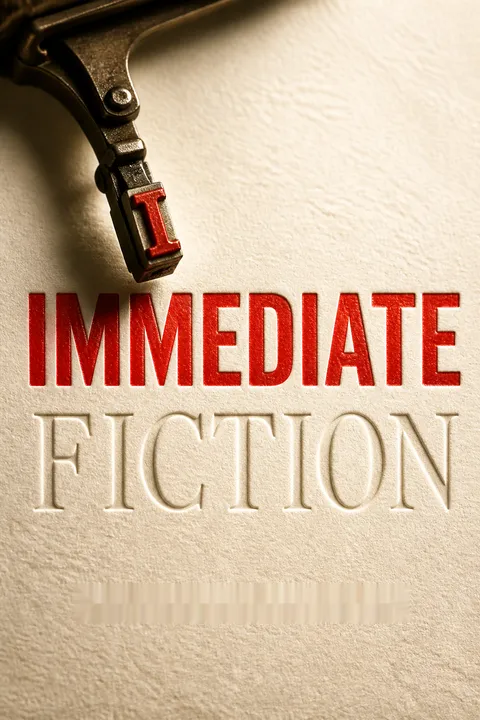
Create an experience. Cleaver calls this approach Immediate Fiction: writing that makes events feel as if they are unfolding in the character and reader now. Identification is the reader's imaginative experience of a character's feelings. A report about a pleasant dinner leaves the reader detached; a glimpse that suggests betrayal gives the reader something to fear and anticipate.
What's compelling is the shift from judging a story as good or bad to asking what experience it creates. That resembles narrative transportation, the psychological absorption that can make a reader temporarily adopt a character's goals and concerns. The connection also clarifies why vividness alone is insufficient: description may paint a scene without giving the reader a stake in it. Cleaver's emphasis on urgent problems offers a practical route into engagement, though stories can also hold attention through curiosity, voice, or atmosphere when immediate danger is absent.
Build conflict from a desperate want and an obstacle that can truly hurt.
Define the struggle. Cleaver's dramatic conflict is not simply an argument, insult, or unpleasant event. A character must want something urgently, and an obstacle must actively prevent it. The character should feel that life cannot continue as it is, while ignoring the obstacle should carry a real cost. A person seeking a promotion faces dramatic conflict if losing it threatens something important; a rude comment alone may not create a story unless it blocks a meaningful goal.
Make both sides strong. If the obstacle is weak, the character can get what they want too easily. If the want is weak, the character can simply walk away. Conflict can begin with the obstacle, such as discovering a lover's apparent betrayal, or with a want. Either way, the two forces need to meet quickly enough to generate pressure and action.
This model separates dramatic conflict from everyday friction. That distinction is useful because a quarrel is not automatically consequential: the reader needs to understand what each person stands to lose. The model also travels well beyond external confrontations. A character can want to act honestly while fearing rejection, or crave independence while fearing loneliness. One caution is that life-or-death intensity need not mean literal danger. Emotional, social, or moral consequences can create equally serious stakes when the story makes their meaning specific.
Pressure characters until their choices reveal who they are.
Action exposes character. Cleaver's basic story form is conflict, action, and resolution. Conflict pushes a character to act; those choices reveal more than a biography or a list of personality traits. In Romeo and Juliet, the lovers' efforts to overcome their families' opposition show the depth and cost of their attachment. The writer's task is to place meaningful resistance in their path, not to explain that they are passionate.
Escalate with purpose. Every scene needs a local struggle and an outcome, even when the larger story remains unresolved. Cleaver recommends ending scenes with the character facing a more troubling situation, often still thinking through what to do. He calls the writer's willingness to impose hardship on fictional people sadistic license. The pressure should expose character and complicate the story, rather than merely pile on louder disasters.
The principle has a close cousin in behavioral psychology: values become visible when a person must choose among competing costs, not when asked to describe themselves. Fiction can make that pressure unusually legible by controlling the conditions around a character. Still, escalation is not the same as increasing spectacle. A quiet refusal can deepen a conflict more than a physical threat if it changes a relationship or closes off an important option. The useful test is whether each new difficulty forces a revealing decision.
Turn abstractions into scenes readers can see, hear, and feel.
Show the lived moment. Cleaver distinguishes showing, which presents specific experience as it unfolds, from telling, which summarizes or explains an idea. Calling a character unhappy gives the reader a label. Showing the character rehearsing an apology, hiding a letter, or dodging a call lets the reader infer the feeling through behavior. In Elizabeth Brown's piece about being called homely, a childhood insult becomes vivid through the later dental visits, posture lessons, and a mother's disappointed attention.
Choose where to slow down. Scene is the fullest form of showing, with action and dialogue unfolding moment by moment. Summary can efficiently bridge less important material, but too much summary keeps readers outside the experience. Cleaver suggests drafting a full scene first, then compressing it if needed. Specific details should do work: reveal character, sharpen emotion, or move the story.
Showing invites the reader to perform some of the interpretive work. Instead of receiving an emotion as a conclusion, the reader assembles it from gestures, choices, and context. That participation can strengthen involvement, much as a concrete example often makes an abstract concept easier to remember. Yet the instruction should not become a ban on summary. Skilled narration can compress time, establish a pattern, or offer a striking judgment. The craft question is not whether a sentence tells, but whether its distance serves the reader's experience.
Put emotion in private thoughts, especially fear, hope, and hurt.
Let the mind speak. Cleaver argues that emotion is the point where reader and character connect. Physical reactions such as trembling or a pounding heart can help, but they are generic unless paired with the character's particular interpretation. A person threatened at gunpoint might think first of a child waiting at home, an unpaid debt, or the possibility of dying before making amends. Those thoughts reveal both fear and the person experiencing it.
Find the vulnerable layer. Anger often covers pain, so a scene of insults may feel thin until the reader sees what hurt the character. Cleaver's practical prompt is to ask what the character worries about, fears, and hopes for at each important moment. Emotions can contradict one another: grief may sit beside guilt, relief, or resentment. Fiction can present these private thoughts directly, an advantage that stage and screen have to handle differently.
The emphasis on interior thought recognizes that emotion is not only a bodily state. It includes appraisal: what a person believes an event means, what they predict, and what they wish could happen. That makes inner narration a strong tool for distinguishing characters who face the same event differently. The claim that emotion rules human behavior, however, is broader than the writing lesson requires. Thought and feeling continually influence each other. On the page, the more useful principle is to make their interaction specific, rather than treating either one as a single master cause.
Draft freely, then diagnose story mechanics before polishing sentences.
Expect rough material. Cleaver treats disorder, false starts, and mistakes as normal ingredients of creation. Trying to produce a finished story in the first draft can silence ideas before they have a chance to develop. He estimates that five drafts is a common path, while ten drafts are not unusual; these are observations, not a required quota. His key distinction is between rewriting, which reshapes characters, scenes, and story movement, and polishing, which improves wording.
Revise from the engine outward. When a draft feels flat, locate the character's want, the obstacle, and the action taken against it. Then check the outcome, the character's emotional experience, and whether the scene is dramatized or summarized. Cleaver also recommends exploring alternatives, raising the stakes, asking why a moment matters, and cutting material that does not earn its place. The order keeps sentence-level tidying from disguising a structural problem.
This approach resembles debugging: identify the failing function before optimizing the surface. A polished sentence cannot repair a scene whose character has no compelling reason to act. Separating generative drafting from diagnostic revision can also protect creative fluency, since evaluation and invention demand different kinds of attention. The risk lies in turning the checklist into a mechanical template. The story elements are most useful as questions that reveal possibilities, not as boxes that every scene must visibly tick.
Treat blocks as process trouble, and make a tiny daily return.
Separate the work from the verdict. Cleaver describes blocking as a collision between two modes: a loose flow that produces material and an editing mode that judges it. When judgment takes over too early, writers may condemn their talent instead of addressing a solvable problem on the page. His response is practical: write down the complaint, identify whether the obstacle is craft, emotion, or work method, and take a concrete next step rather than waiting to feel inspired.
Keep contact small. The Five-minute method begins with a short daily appointment, even if the writer initially does nothing but sit and settle in. Cleaver recommends trying the routine for thirty days before judging it, and using bedtime reflection or routine chores to let ideas surface. Five minutes is not a promise of a finished manuscript. It is a way to preserve contact with the work and lower the barrier to returning.
A tiny appointment works as a behavioral cue: it turns an identity-level ambition into a repeatable action. Writing complaints on the page can also make an internal judgment easier to inspect, rather than treating it as unquestionable fact. The method's strongest claim is continuity, not output. Five minutes may maintain momentum, but complex projects often need longer protected sessions, feedback, or research. The flexible fallback is valuable precisely because it does not pretend a short ritual solves every practical constraint.
Grow a short story into a novel by adding invested characters.
Expand the conflict, not the padding. Cleaver illustrates the difference between a brief romance and a novel by adding people with something at stake in the couple's choices: current and former partners, parents, and families whose values collide. Each new relationship creates fresh obstacles and opportunities for confrontation. The plot grows because the central problem becomes more entangled, not because the same events are stretched across more pages.
Make every arrival matter. More characters create many possible pairings and group scenes, but the writer need not use every combination. A character belongs when their presence changes the pressure, reveals someone, or alters the available choices. A parent who quietly supports the couple creates a different story from one who threatens to disinherit a child. Expansion should generate consequential scenes while keeping the central struggle clear.
The account treats a novel as a social system: add people whose interests overlap, and the central decision produces new consequences. This resembles network thinking, where relationships create more possible interactions than isolated individuals do. The insight is generative, but character counts alone do not create depth. A large cast can scatter attention or make every scene feel like a subplot audition. The discipline is to ensure each additional person changes the protagonist's problem in a way no existing character already does.
Choose viewpoint and writing method for access, not by universal rules.
Use the angle that earns its place. Cleaver distinguishes the grammatical person used to narrate from the character whose experience the reader inhabits. A character with the most at stake often offers the strongest access to the story. A minor-character narrator can work, as Nick does in The Great Gatsby, if that narrator has a meaningful stake and a way to reveal the central character. Multiple viewpoints can widen the story, but abrupt shifts may weaken intimacy.
Keep the process flexible. Some writers plan extensively, while others discover the story as they draft; a writer may use both approaches in different projects. The same flexibility applies to stage and screen, where outward action and dialogue must carry material that prose can place inside a character's mind. The constant is not a preferred method or viewpoint. It is whether the choice helps reveal character and sustain the story's movement.
This is a useful distinction between craft principles and personal workflow. The first can be tested against a reader's experience; the second often depends on temperament, project, and working conditions. Point of view is not merely a pronoun choice: it controls what evidence the reader receives and how uncertainty is managed. The medium matters too. Prose can make private thought immediate, while performance must translate it into behavior, speech, or other visible signals. Flexibility does not mean every choice is equally effective; it means testing choices by their consequences.
Treat rejection as one reader's answer, then send the story onward.
Separate submission from self-worth. Cleaver argues that writers should not wait for perfect confidence before submitting. He points to Gone with the Wind, reportedly rejected twenty-six times, to show that rejection is not a final verdict on a work. His practical advice is to keep writing while a piece is under consideration, research suitable publications or agents, and build a repeatable submission routine instead of turning each response into a referendum on talent.
Follow current rules. The book recommends approaching multiple outlets and discusses agents, contests, and manuscript preparation. Its marketplace details date from 2002, so specific magazines, fees, procedures, and contacts must be checked against current sources. Editors are people with differing tastes, but submission policies still matter. A professional process pairs persistence with accurate research and respect for each publisher's stated requirements.
The strongest lesson is emotional as much as commercial: rejection gives information about one decision, not a complete measurement of a writer's potential. A submission pipeline reduces the tendency to make one editor's response feel like the whole market. The historical example supports persistence, but it cannot establish that every rejected manuscript is ready or that repeated submissions will find a home. Market conditions and policies change. Resilience works best alongside revision, fit, and current knowledge of where a piece belongs.
Analysis
Cleaver's course is built around a sharp pedagogical reversal. Instead of treating fiction as a mysterious gift that only becomes intelligible after years of imitation, it offers a small set of practical questions: what does the character want, what prevents it, what do they do, and what changes? The method is memorable partly because it separates effect from cause. Reader involvement is the desired effect; conflict, action, emotional access, and scene construction are ways to produce it. This makes the book less a theory of literature than a diagnostic toolkit for writers who cannot tell what to fix.
Its deepest contribution may be psychological rather than structural. Cleaver recognizes that a writer's judgment can become an obstacle when it arrives before there is enough material to judge. The alternating modes of generation and editing give that experience a usable explanation. The advice to write badly first is not permission to avoid standards. It is a way to delay standards until revision can make them productive. Likewise, the five-minute routine is valuable less as a productivity hack than as protection against the all-or-nothing belief that meaningful writing requires a perfect stretch of time.
The book's strongest claims also need limits. Conflict is a powerful engine, but not every worthwhile story depends on escalating danger, and not every quiet scene is dramatically inert. A character's changing interpretation, attention, or relationship can create movement without a steadily worsening external crisis. Cleaver's model works best as a way to identify pressure and consequence, not as a demand for melodrama. His marketing advice is also historically situated, and some of its submission tactics should not override present-day publisher guidelines.
Taken as a whole, the course teaches writers to convert intuition into craft without pretending craft can replace intuition. Its procedures are scaffolding: they help a writer locate the live problem in a draft, then return to imagination with more control and less self-accusation.
Review Summary
Immediate Fiction receives generally positive reviews, with praise for its practical advice on storytelling fundamentals. Readers appreciate Cleaver's no-nonsense approach, focusing on want, obstacle, action, and resolution. The book's emphasis on consistent writing habits and overcoming writer's block is well-received. Some criticize the repetitive nature and simplistic view of writing, while others find it invaluable for beginners and experienced writers alike. The book's straightforward style and concrete examples make it a popular choice for those seeking to improve their fiction writing skills.
People Also Read





Glossary
Immediate Fiction
Lived, present-tense storytellingCleaver's name for fiction that gives readers an immediate experience of events through a character, rather than merely explaining what happened. The term also describes a practical approach to beginning and continuing work without waiting for inspiration. Its central craft elements are conflict, action, resolution, emotion, and showing.
Identification
Experiencing a character from withinCleaver's term for the reader's imaginative connection with a character, in which the reader feels the character's emotions as part of the reading experience. Identification is the intended effect of a successful story. The writer creates its conditions by revealing character through pressure, action, and emotional thought.
Dramatic conflict
Urgent want meets resistanceA struggle in which a character wants something urgently and an obstacle is determined to prevent it. The character must face meaningful consequences if the want is denied or the obstacle ignored. In Cleaver's model, ordinary disagreement becomes dramatic only when it threatens something the character deeply values.
Story Form
Conflict, action, and resolutionCleaver's core model of story movement. A character encounters a problem, acts in an effort to overcome it, and reaches an outcome that settles the struggle. Emotion and showing support this structure by making the character's experience accessible and vivid to the reader.
Showing
Presenting experience in specificsA technique that gives the reader an event through concrete actions, thoughts, dialogue, and sensory details, rather than summarizing it as an abstract idea. Scene is its fullest form, unfolding moment by moment. Showing aims to let readers experience and interpret what the character is going through.
Scene resolution
A temporary scene outcomeThe result of a scene's local struggle. It settles the immediate encounter without necessarily resolving the larger story problem. Cleaver recommends that the outcome complicate the character's situation, leaving them with new worries, decisions, or obstacles to face.
Sadistic license
Permission to trouble charactersCleaver's deliberately provocative name for the writer's willingness to place characters under serious pressure. Fictional hardship forces characters to make choices that reveal them. The term refers to creating difficulty for invented people, not to mistreating real people or adding arbitrary suffering without story purpose.
Flow process
Generating material without judgmentThe generative mode of writing in which ideas, scenes, and language are allowed onto the page before they are evaluated. Cleaver describes it as fast, loose, emotional, and nonjudgmental. It supplies raw material that can be shaped in a separate editing mode.
Editing process
Evaluating and reshaping materialThe deliberate mode of reviewing what has been written and deciding what to retain, remove, or revise. Cleaver describes it as slower, more organized, and judgmental than the flow process. Blocking can occur when this evaluative mode takes over before enough material has been generated.
Five-minute method
Daily contact with writingA routine that asks writers to make a short daily appointment with their work, even when they feel unable to produce much. Cleaver recommends maintaining it for thirty days before evaluating the results. The practice may begin with quiet reflection and can expand into writing, planning, or capturing ideas.
Universal plot
A person struggles against a problemCleaver's reduction of many plot categories to a shared pattern: a character tries to overcome a threatening problem, whether the source is another person, society, nature, technology, or the character's own mind. The specific obstacle changes, while the underlying struggle remains recognizable.
Download PDF
Download EPUB
.epub digital book format is ideal for reading ebooks on phones, tablets, and e-readers.








