

Key Takeaways
Investigate strange sightings without deciding in advance what they are
Start with the encounter. In 1991, Australian Annie Farinaccio said she and two security officers saw a dark, diamond-shaped object near the North West Cape naval station. She described it moving abruptly and at extraordinary speed. The officers reportedly took photographs, which she said were later confiscated. The account is startling, but it does not establish what the object was. UAP, meaning unidentified aerial phenomena, is a deliberately neutral term for an observation that has not been identified.
Resist the easy verdict. Coulthart opens with this episode to challenge two reflexes: ridicule witnesses as fantasists, or accept their interpretation as fact. He argues the incident deserves investigation because other sightings had been reported near the same sensitive base. His central appeal is for sustained inquiry, not instant belief in visitors from another world.
The case makes a useful distinction between taking a person seriously and treating every conclusion as reliable. Investigative practice depends on both: respectful interviews help preserve detail, while independent records and testing help evaluate it. This approach also counters a familiar social trap, in which ridicule drives witnesses away and leaves only the most committed believers speaking. The account remains limited, however, because the photographs and independent records described by the witness are not available for readers to examine. A credible investigation should make that evidentiary gap explicit rather than letting a vivid story stand in for documentation.
Let converging evidence strengthen a case, not identify its source
Compare independent channels. The book revisits the 1978 Kaikoura sightings in New Zealand, where people aboard an aircraft reported unusual lights, while radar operators said they tracked targets nearby. The air force attributed the events to atmospheric effects, fishing boats, and radar problems. A Wellington controller later told Coulthart that he had not been interviewed and that the radar was functioning normally. The disagreement makes the case worth re-examining, but it does not establish that the targets were craft.
Ask what agrees. A useful investigation checks whether witness reports, radar, infrared images, and contemporaneous records point to the same event. It also checks whether the instruments were calibrated, whether observers were independent, and whether ordinary explanations fit. More evidence can reduce uncertainty about what happened without resolving what caused it.
This is a form of triangulation: confidence rises when independent methods converge, because each method has different weaknesses. Yet apparent agreement can mislead if sources share information, if sensors are not truly independent, or if analysts interpret ambiguous data through the same assumptions. The strongest case therefore exposes its raw data and methods, including uncertainty, rather than presenting a bundle of reports as self-authenticating. That standard is useful well beyond UAP research, from accident investigations to intelligence analysis. Convergence tells observers where to look more closely; it does not automatically deliver an explanation.
Official reversals invite scrutiny, but they do not prove aliens
Roswell made mistrust durable. In 1947, an Army press release said personnel near Roswell had recovered a disc. Officials soon replaced that account with a weather-balloon explanation. In 1994, the Air Force said the debris came from Project Mogul, a classified balloon program intended to monitor Soviet nuclear tests. The Government Accountability Office later reported that records from the relevant Roswell Army Air Field period had been destroyed without apparent authorization.
The investigation record is mixed. Project Blue Book, the Air Force program that examined reports from 1952 to 1969, logged 12,618 cases. It explained most as ordinary objects or misidentifications, while retaining a smaller unresolved category. The changing Roswell explanations and dismissive handling of some cases give reason to question official accounts. They do not, by themselves, establish an extraterrestrial recovery.
Institutional credibility is cumulative. When an agency changes its explanation, the public reasonably asks what evidence changed and why the earlier account was given. That is a governance question, not proof of the most dramatic alternative. The Roswell episode also shows how secrecy can create a vacuum that speculation fills: a protected military project may explain concealment, but only surviving records or physical evidence can test that possibility. A stronger public response would separate what is known, what is classified, and what remains conjecture. That transparency could reduce both unjustified trust and unfalsifiable suspicion.
Keep an unexplained observation separate from an alien explanation
Unknown is a real category. The book challenges the habit of treating unidentified as a synonym for extraterrestrial. Project Blue Book consultant J. Allen Hynek, once a skeptic, argued that some reports from trained military observers could not simply be dismissed. The same record also includes mundane explanations, mistaken identifications, and cases that could not be resolved. Those outcomes are not interchangeable.
Extraordinary stories need stronger checks. At Skinwalker Ranch in Utah, the Sherman family and later investigators described unusual lights, animal deaths, and apparent creatures. Researchers reported observing some events, but the dramatic claims were not supported by publicly available recordings that could independently verify them. The book presents these reports as intriguing, while also showing why an unexplained event does not settle whether its cause is natural, human, psychological, or nonhuman.
Separating observation from explanation is a basic discipline of science and good intelligence work. It prevents an absence of explanation from becoming evidence for whichever theory feels most compelling. The same discipline should apply in both directions: unusual testimony should not be dismissed merely because it is inconvenient, and confidence or professional status should not substitute for corroboration. Skinwalker Ranch also illustrates a practical problem: when instruments fail to record the event, investigators cannot later distinguish an unusual external stimulus from perception, memory, or environmental interference. That limitation narrows what conclusions the evidence can support.
Treat unknown objects near military sites as security questions first
Location changes the stakes. Across the book, reports cluster around military facilities, nuclear sites, and aircraft exercises. Australian files describe unexplained sightings at Woomera, a remote weapons testing range, and near North West Cape, a naval communications station connected to submarine operations. US records also include reports near nuclear installations. Such locations make a sighting important even if its origin remains unknown.
Investigate the operational risk. An unidentified object in restricted airspace can endanger pilots, interfere with training, or reveal a gap in surveillance. That is true whether the object turns out to be a drone, sensor error, foreign technology, or something unexplained. Coulthart suggests that officials sometimes preferred silence to admitting they did not know what had entered their airspace. The consequence is that a potential safety issue can be buried along with any more sensational interpretation.
A safety-first frame offers common ground for skeptics and believers. Aviation authorities do not need to settle an object's origin before recording a near miss, preserving sensor data, and preventing a repeat hazard. This also reduces the pressure to make premature claims about national security or extraterrestrial life. The concentration of reports near military facilities needs careful interpretation, since those sites have more sensors, more trained observers, and stronger reporting procedures than many civilian locations. More sightings there may reflect greater observation as well as greater activity. Either way, the operational question is answerable enough to justify consistent reporting.
The Nimitz encounter is compelling because several systems agreed
The 2004 encounter had unusual corroboration. Operators aboard the USS Princeton tracked objects on radar over several days near the USS Nimitz carrier group. Other ship and aircraft systems reportedly detected them too. Fighter pilot David Fravor then described seeing a white, elongated object hovering above disturbed water and moving in ways he could not explain. Another pilot later recorded an infrared video of an object, which the Pentagon eventually authenticated while continuing to call it unidentified.
Describe the observations carefully. Former Pentagon investigator Luis Elizondo grouped commonly reported features as the Five Observables: apparent lift without conventional propulsion, rapid acceleration, hypersonic speed, low detectability, and movement between air, water, and space. These are descriptions of reported behavior, not proof of a particular machine or origin. Some speed and acceleration estimates depend on assumptions about distance and timing.
The Nimitz case is powerful as a research problem because it combines trained observers with multiple sensor types and a consequential military setting. It still requires access to the full, calibrated records: partial videos, recollections, and later calculations cannot answer every question about range, sensor performance, or motion. A useful scientific report would distinguish direct observation from inference, then publish enough metadata for independent analysts to reproduce the analysis. The Five Observables give investigators a compact way to compare cases, but they should remain a descriptive checklist, not a hidden diagnosis. Unusual performance is not yet evidence of a specific propulsion system.
Secrecy can conceal evidence, but it can also manufacture suspicion
The official picture was incomplete. The book describes Project Blue Book as a public-facing investigation while a separate Air Force intelligence squadron screened reports with potential security significance. It also recounts Operation Moon Dust, which sought to locate and recover foreign space vehicles and unidentified objects. These activities show that the government handled some reports outside the best-known public program. They do not prove that the objects were alien craft.
Access claims remain contested. Former officials and advocates, including Daniel Sheehan and Tom DeLonge, described efforts to obtain information or brief senior people. Leaked emails corroborate that DeLonge met prominent political, military, and aerospace figures to discuss the subject. They do not verify the more dramatic claims those meetings allegedly contained. The disputed Admiral Wilson memo illustrates the problem: its allegations are consequential, but Wilson denied the meeting it describes.
Secrecy is not merely a plot device. Classified systems can fragment knowledge, restrict oversight, and make it difficult for outsiders to distinguish routine compartmentalization from improper concealment. That is why the book's strongest institutional question concerns accountability: who can inspect the evidence, and who can verify that the rules are being followed? At the same time, an inaccessible file is not positive evidence for its most extraordinary imagined contents. A credible disclosure process would release non-sensitive records, identify what remains withheld, and allow independent review. That would make the case for secrecy testable instead of endlessly expandable.
Demand chain of custody before calling a scrap extraterrestrial
A sample needs a history. The so-called Art's Parts materials were sent anonymously to radio host Art Bell in 1996, accompanied by a story about a grandfather involved in the Roswell recovery. The samples included layered bismuth and magnesium-zinc pieces. Advocates suggested their construction was unusual; skeptics pointed to ordinary industrial explanations for at least some pieces and questioned the story's details.
Later attention did not settle provenance. To The Stars Academy bought samples and entered a Cooperative Research and Development Agreement with the US Army to study materials. Metamaterials, whose engineered structure can give them properties unlike their component substances, are a legitimate research subject. But a government laboratory's willingness to test a sample does not establish where it came from. Without documented collection, secure custody, reproducible results, and comparison samples, its origin remains unknown.
Material evidence can be more decisive than testimony, but only when its provenance is secure. Forensic science treats chain of custody as part of the evidence itself, because an analytically interesting object may still be unrelated to the event it is supposed to explain. Replication matters just as much: a surprising measurement is not robust until separate laboratories can obtain it under controlled conditions. The Army agreement makes the samples worth examining, not automatically extraordinary. It also creates a need for clear public reporting about methods, ownership, and results, particularly when an organization solicits investment while promoting the materials' potential.
A patent is a legal claim, not a working propulsion system
Ambitious filings are not demonstrations. Navy engineer Salvatore Pais filed patents describing a proposed craft using an inertial mass reduction device, along with claims involving a room-temperature superconductor and electromagnetic fields. The applications describe capabilities that would transform aerospace technology if they worked. The Navy supported some filings, but patent approval does not demonstrate that a device has been built or that its performance has been independently verified. The room-temperature superconductor application, for example, was rejected and later abandoned.
Look for the experiment. Coulthart finds no public evidence of working prototypes or reproducible tests for the claimed propulsion advances. To The Stars Academy also made ambitious statements about developing new technology, then reduced its science and commercialization focus. The book leaves the patents as a provocative mystery, not proof that the United States has mastered anti-gravity or copied an extraterrestrial vehicle.
Patents reward the articulation of an invention and define legal rights; they are not the same thing as peer-reviewed evidence, a functioning prototype, or verified performance. That distinction is especially important when a claim would overturn established engineering. The Navy's endorsement makes the filings worth scrutiny, but the appropriate next step is a transparent test with measurable outcomes and independent replication. The same standard protects against both premature dismissal and hype. A technology claim becomes credible through demonstrated function, not through a dramatic title, official sponsorship, or the possibility that a secret program exists.
Analysis
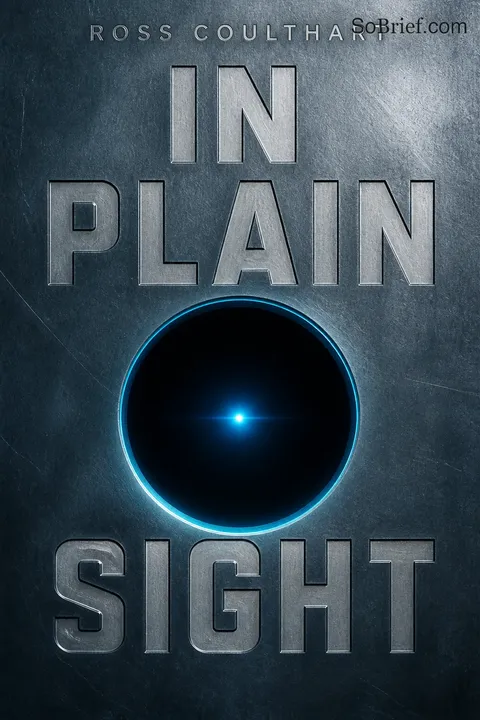
In Plain Sight is best understood as an investigative argument for disciplined attention, not as a demonstration that extraterrestrials have visited Earth. Its narrative moves from individual witnesses and archival cases to modern military encounters, then into the political machinery of classification, disclosure, and alleged recovered materials. The strongest thread is institutional: governments publicly minimized the subject while military and intelligence organizations sometimes collected reports, screened them, or treated them as potential security concerns. That mismatch helps explain why public trust eroded and why disclosure advocates gained an audience.
The book is strongest when it distinguishes an unidentified observation from an explanation and when it points readers toward primary records, radar accounts, official reports, and named witnesses. The Nimitz encounter is an especially useful case because it joins pilot testimony with multiple sensor systems and publicly authenticated video. Yet even there, the leap from unusual readings to nonhuman technology remains an inference, not an established finding. The author sometimes gives substantial narrative weight to anonymous sources, retrospective recollections, and documents whose authenticity or interpretation is disputed. Such material can generate leads, but it cannot carry the same evidentiary burden as accessible, independently reviewed data.
A further complication is the observation bias around military sites. These locations have unusually capable sensors and trained observers, so a cluster of reports may partly reflect better detection rather than a special concentration of unknown craft. The book's wider lesson survives that uncertainty: unrecognized objects in restricted airspace deserve systematic investigation, and public institutions should explain what they know, what they do not know, and what they cannot release. The responsible conclusion is neither automatic belief nor reflexive dismissal. It is that the data, the custody of evidence, and the methods used to interpret it must be open to scrutiny wherever possible.
Review Summary
In Plain Sight is praised as a well-researched, comprehensive exploration of UFO/UAP phenomena. Readers appreciate Coulthart's balanced approach, combining skepticism with open-mindedness. The book covers historical cases and recent developments, including government admissions. Many find it engaging and informative, suitable for both newcomers and enthusiasts. Some criticize the reliance on hearsay and lack of concrete evidence. Overall, reviewers commend Coulthart's journalistic integrity and the book's contribution to serious UFO discourse, despite occasional lapses into speculation.
People Also Read



Glossary
UAP
unidentified aerial observationsAn abbreviation for unidentified aerial phenomena, used for observations in the sky that have not been identified. Coulthart prefers it to UFO because UFO is often understood to mean an alien spacecraft. The term describes an unresolved observation, not an explanation of what caused it.
Project Blue Book
Air Force sighting investigationA United States Air Force program that investigated reports of unidentified flying objects from 1952 to 1969. It examined 12,618 reports, explaining most through conventional causes while leaving a smaller set unresolved. Coulthart argues that the program's public conclusions did not include every report considered relevant to national security.
AATIP
Pentagon UAP investigation effortThe Advanced Aerospace Threat Identification Program was a Pentagon effort associated with investigating reports of unidentified aerial phenomena and possible aerospace threats. The book describes it as part of a wider period of US government interest, including work connected to the Advanced Aerospace Weapons Systems Applications Program. Its scope and continuity have been publicly disputed.
Special Access Program
restricted classified projectA US government security designation that imposes additional controls on access to classified information or projects. Access is limited to people specifically approved for the relevant compartment, even when they hold high-level clearances. Coulthart discusses these programs because some witnesses claim UAP-related work was hidden in compartments inaccessible to senior officials.
The Five Observables
reported UAP performance traitsA descriptive grouping attributed in the book to former Pentagon investigator Luis Elizondo. It covers apparent lift without conventional propulsion, rapid acceleration, hypersonic velocity, low detectability, and movement between air, water, and space. The list summarizes reported characteristics. It does not prove that any particular sighting displayed all of them or identify the technology's origin.
metamaterials
engineered structure-based materialsMaterials whose properties depend substantially on the engineered arrangement of their internal structures, rather than only on the substances from which they are made. The book explains that such designs can affect how electromagnetic or sound waves interact with matter. Claims that particular UAP samples have extraordinary or anti-gravity properties require testing and independent replication.
FAQ
What is In Plain Sight by Ross Coulthart about?
- Comprehensive UAP Investigation: The book explores the history, evidence, and government responses to Unidentified Aerial Phenomena (UAP), commonly known as UFOs, focusing on credible sightings and official cover-ups.
- Government Secrecy and Disclosure: Coulthart examines how governments, especially the US and Australia, have secretly studied UAPs for decades, often concealing findings from the public.
- Historical and Modern Cases: The narrative spans from early 20th-century sightings to modern incidents like the 2004 USS Nimitz Tic Tac event, incorporating global perspectives and cultural implications.
Why should I read In Plain Sight by Ross Coulthart?
- Evidence-Based Approach: The book offers a detailed, investigative look at UAPs, presenting credible witness accounts, declassified documents, and insider interviews.
- Insight into Government Actions: Readers gain a rare perspective on how political, military, and intelligence agencies have managed, suppressed, or manipulated information about UAPs.
- Engaging Storytelling: Coulthart’s journalistic style combines rigorous research with compelling narratives, challenging skepticism and encouraging critical thinking about extraordinary claims.
What are the key takeaways from In Plain Sight by Ross Coulthart?
- Persistent Government Secrecy: The book reveals a long-standing pattern of official denial, ridicule, and classified research into UAPs.
- Credible Evidence Exists: Multiple sensor confirmations, physical effects, and insider testimonies suggest UAPs are real and unexplained by conventional science.
- Cultural and Scientific Shifts: The stigma around UAPs is slowly eroding as more credible evidence and official acknowledgments emerge, prompting calls for transparency and further investigation.
What are the most important historical UAP events covered in In Plain Sight by Ross Coulthart?
- Roswell Incident (1947): The book details the discovery of crash debris, military cover-up, and evolving explanations, framing it as a pivotal moment in UFO history.
- Project Blue Book and Early Investigations: It covers official US Air Force investigations, highlighting the tension between debunking and genuine concern within the military.
- Cold War and Global Sightings: Incidents like the RAF Bentwaters, Rendlesham Forest, and Australian military encounters illustrate the worldwide and persistent nature of UAP phenomena.
How does In Plain Sight by Ross Coulthart describe government and military responses to UAP sightings?
- Official Denial and Ridicule: Governments have often dismissed UAP sightings as misidentifications or hoaxes, using ridicule to discredit witnesses and discourage reporting.
- Secret Investigations: Behind the scenes, classified programs like Project Moon Dust, AAWSAP, and AATIP have conducted extensive research and recovery operations.
- Institutional Resistance: Efforts by presidents and Congress to access UAP information have been blocked by intelligence agencies, reflecting a deep culture of secrecy.
What evidence does In Plain Sight by Ross Coulthart present for the reality of UAPs?
- Multiple Sensor Confirmations: Cases like the USS Nimitz Tic Tac incident involved radar, infrared, and visual sightings by credible military personnel.
- Physical Effects: UAPs have reportedly interfered with nuclear weapons systems and caused communication blackouts, indicating tangible physical presence.
- Recovered Materials: The book discusses alleged recoveries of crashed craft and unusual materials, supported by insider and scientific testimonies, though definitive proof remains elusive.
What is the significance of the 2004 USS Nimitz Tic Tac incident in In Plain Sight by Ross Coulthart?
- Highly Credible Encounter: Multiple Navy personnel, including radar operators and fighter pilots, witnessed and engaged with a UAP displaying extraordinary flight characteristics.
- Sensor and Video Evidence: The incident was captured on advanced radar and infrared video, showing maneuvers impossible for known aircraft.
- National Security Implications: The event demonstrated UAPs’ ability to operate near critical military assets undetected, raising concerns about potential threats and ongoing secrecy.
Who are Tom DeLonge and Luis Elizondo, and what roles do they play in In Plain Sight by Ross Coulthart?
- Tom DeLonge’s Advocacy: Former Blink-182 musician Tom DeLonge founded To The Stars Academy (TTSA) to promote UAP disclosure and research, leveraging insider connections.
- Luis Elizondo’s Whistleblowing: Elizondo led the Pentagon’s AATIP program and became a key whistleblower, revealing efforts to conceal UAP information from the public.
- Bridging Public and Insider Worlds: Both figures are central to recent pushes for transparency, connecting government, scientific, and public spheres in the UAP debate.
What is To The Stars Academy of Arts & Sciences (TTSA) and its significance in In Plain Sight by Ross Coulthart?
- Public Benefit Corporation: TTSA was founded to investigate UAPs and develop advanced aerospace technologies, aiming to bridge government secrecy and public disclosure.
- Credible Personnel: The organization includes former CIA officers, military generals, and defense contractors, lending weight to its mission.
- Controversies and Challenges: Despite initial excitement, TTSA faced internal departures and skepticism about its claims regarding anti-gravity technology and metamaterials.
What are "Art’s Parts" and why are they important in In Plain Sight by Ross Coulthart?
- Alleged Alien Materials: "Art’s Parts" are metallic samples, purportedly from crashed UFOs, sent anonymously to radio host Art Bell and later studied by TTSA scientists.
- Scientific Scrutiny: While some claim these are advanced metamaterials, skeptics argue they resemble industrial byproducts, and no conclusive evidence has been presented.
- Potential Technological Breakthroughs: If genuine, these materials could revolutionize propulsion and energy, but their true nature remains unproven.
What are metamaterials, and how do they relate to UAP technology in In Plain Sight by Ross Coulthart?
- Definition and Properties: Metamaterials are engineered nanostructures designed to manipulate electromagnetic waves, sound, and potentially gravity, based on their geometry.
- Connection to UAPs: TTSA and associated scientists propose that some recovered UFO materials are metamaterials, possibly enabling anti-gravity propulsion.
- Scientific Challenges: While metamaterials are a real field, claims about their use in UAP technology remain unverified, and rigorous testing is ongoing.
What is the "Admiral Wilson Memo" and its relevance in In Plain Sight by Ross Coulthart?
- Leaked Document Alleging Cover-Up: The memo claims Admiral Tom Wilson revealed a secret US program to reverse-engineer recovered alien spacecraft, controlled by private contractors.
- Controversy and Denial: Admiral Wilson has denied the meeting and contents, fueling debates about the memo’s authenticity and the extent of government secrecy.
- Implications for Disclosure: If genuine, the memo would confirm systemic secrecy and illegal withholding of information from Congress and the public, making it a focal point in the UAP transparency debate.
Download PDF
Download EPUB
.epub digital book format is ideal for reading ebooks on phones, tablets, and e-readers.








