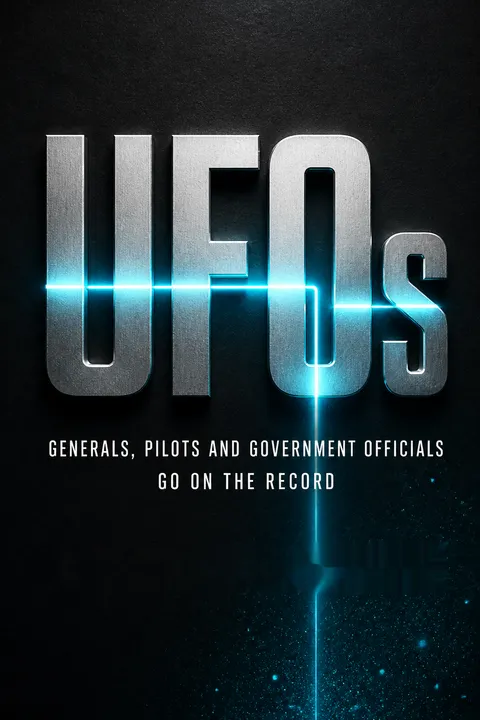


Key Takeaways
Treat UFO reports as an evidence problem, not a belief test
Define the question carefully. A UFO is an object that remains unidentified after serious scrutiny, not a synonym for an alien spacecraft. The book also uses UAP, or unidentified aerial phenomena, for reports that may involve lights or other aerial events rather than a clearly defined craft. Kean says roughly 90 to 95 percent of sightings can be explained; the remaining cases merit attention precisely because their origin is unresolved.
Keep the conclusion modest. An unexplained report establishes neither extraterrestrial visitors nor advanced technology. It tells investigators that available evidence has not identified the cause. The COMETA Report, a study by retired French military officers, scientists, and other officials, argued that an extraterrestrial origin was a plausible hypothesis in some cases, not a proven fact. Kean’s central stance is to investigate without deciding the answer in advance.
This distinction protects inquiry from two common errors: turning every light in the sky into an alien craft, and treating an unexplained case as impossible by definition. It resembles the logic of good diagnostic work: a symptom can be real even when its cause remains uncertain. The standard also needs discipline. “Unexplained” can mean evidence is incomplete, not that ordinary explanations have been conclusively eliminated. The book is strongest when it keeps those meanings separate and invites scrutiny of the underlying records, rather than asking readers to adopt a belief.
Converging evidence can establish an anomaly, not its origin
Look for independent checks. During Belgium’s 1989-91 wave, thousands of reports described mostly silent, low-flying triangular objects. Major General Wilfried De Brouwer says about 2,000 cases were registered, 650 investigated, and more than 500 remained unexplained. On the first major night, police officers and civilians in different locations described similar objects. In 1990, Belgian F-16s pursued reported targets, but the radar evidence was not conclusive: only one jet produced useful recordings, leaving electromagnetic interference as a possible explanation.
Evidence has different strengths. The 1986 Brazilian incident involved pilots, ground radar, and airborne radar, according to a later official report. Such convergence is more informative than a single recollection, but it still does not identify what was observed. Even the celebrated Belgian photograph was debated and technically analyzed; claims about what its image proves go beyond the fact that the image exists.
The cases invite a useful evidentiary ladder: independent witnesses, records made close to the event, and distinct instruments can strengthen confidence that something unusual was observed. Yet “multiple sources” are not automatically independent. Witnesses may share information, while radar systems can share vulnerabilities or be poorly suited to unusual targets. The right question is not whether a case feels impressive, but which competing explanations each piece of evidence excludes. This approach respects eyewitnesses without confusing credibility, which concerns a person, with certainty about an event’s cause.
Make aviation reporting routine before stigma hides the safety signal
Treat rare hazards seriously. Richard Haines compiled more than 100 pilot encounter cases affecting aviation safety, including 56 near misses. He described three recurring risks: close approaches that provoke sudden evasive maneuvers, possible interference with instruments or communications, and cockpit distraction. The book recounts Captain Júlio Guerra’s 1982 encounter in Portugal, when an object reportedly came within about 15 feet of his small aircraft. His account was witnessed by two other Air Force pilots and investigated by a multidisciplinary civilian team, which did not identify the object.
Silence distorts the record. Haines estimates that only 5 to 10 percent of pilot sightings are reported, in part because pilots fear ridicule or career consequences. The O’Hare Airport incident in 2006 involved multiple United Airlines employees reporting a hovering disc, but witnesses feared speaking publicly. Whether or not a report proves an extraordinary object, aviation authorities need it to assess potential hazards.
A safety system learns from near misses precisely because an accident is not required before a risk deserves attention. Normalizing reports would improve aviation data even if most cases turned out to be ordinary misidentifications. The comparison with bird strikes is helpful as a policy principle, though the book’s estimates of sighting frequency and underreporting depend on limited data. A reporting channel should therefore record uncertainty, witness conditions, and alternative explanations, while protecting careers. Confidential intake is not an endorsement of a claim; it is basic infrastructure for learning.
Remember how Cold War policy made ridicule part of the process
A public relations problem became policy. In 1947, Air Force General Nathan Twining wrote that reported flying discs appeared to be real rather than imaginary and recommended systematic study. The Air Force created successive programs, ending with Project Blue Book, which closed in 1969. In 1953, a CIA-convened scientific group, the Robertson Panel, recommended public education and media debunking to reduce interest in UFO reports, partly because officials feared false alarms could burden defense communications.
The record is contested. Kean argues that the panel’s approach helped stigmatize the subject. The University of Colorado’s 1968 Condon study later recommended ending government investigation, although critics cited a gap between its executive summary and some case findings. A 1969 Air Force memo, the Bolender memo, also said reports with national-security implications would be handled outside Blue Book. This complicates the public claim that no official interest remained, but does not by itself show that authorities knew UFOs were extraterrestrial.
The history shows how administrative choices can shape what counts as a respectable question. Once ridicule becomes the expected response, witnesses self-censor, and a thin record can then be cited as proof that the subject is unimportant. That feedback loop is more plausible than a single, all-powerful suppression plan. Still, the book’s account is advocacy journalism, and evidence that officials promoted debunking does not mean every skeptical explanation was dishonest. A fair history must distinguish strategic public messaging from the scientific merits of individual case assessments.
Compare national investigations instead of treating secrecy as the only model
Other countries built different tools. France placed its UAP investigation within CNES, the national space agency. Its program, now called GEIPAN, developed a reporting network involving police, aviation authorities, and scientific specialists. France classified cases by how well they could be identified, including a category for reports that remained unexplained despite good evidence. Chile created CEFAA within its civil aviation authority, with aviation safety as a central concern. Britain’s Ministry of Defence investigated reports for possible defense significance.
Institutions can be candid about limits. The French program investigated physical trace cases, including the 1981 Trans-en-Provence report, where soil and plant samples were studied but did not establish the object’s origin. The British official Nick Pope says his office explained about 80 percent of reports, lacked enough information in about 15 percent, and left roughly 5 percent conventionally unexplained. These programs did not solve the mystery, but they show that investigation and public acknowledgment are possible without declaring an alien explanation.
The international comparisons shift the debate from “believe or debunk” to institutional design. France emphasizes scientific case analysis, Chile aviation safety, and Britain defense assessment. Each mission produces different data and blind spots, so no single office can answer every question. Their shared value lies in procedures, trained investigators, and an honest category for uncertainty. Kean sometimes presents foreign systems as cleaner than American practice; their records are not necessarily complete or immune to error. Their most transferable lesson is modest: make the process visible and define what it can, and cannot, establish.
Separate evidence of official interest from proof of an alien cover-up
Secrecy has several explanations. Declassified documents show that U.S. agencies examined some cases, especially military encounters abroad. A Defense Intelligence Agency assessment of the 1976 Tehran incident called it a strong case for study, citing multiple witnesses, radar, and reported equipment disruptions. The Bolender memo indicates that some reports were handled outside Project Blue Book. These records contradict the simple claim that the government never paid attention.
They do not settle the larger story. The book also presents former FAA official John Callahan’s account of a 1986 encounter involving a Japan Airlines crew and radar returns. He says officials restricted discussion; the FAA’s later public assessment did not confirm the event as a UFO. Such discrepancies warrant investigation, but they do not prove a hidden program possesses alien craft. Kean considers that possibility and notes that much of the supporting testimony cannot be independently verified.
The distinction between institutional interest and a comprehensive cover-up is essential. Governments routinely classify information about air defense, intelligence sources, and unexplained events; classification can conceal ignorance as readily as knowledge. Conversely, an official denial is not automatically reliable simply because it is official. The best response is document-by-document verification, including provenance, dates, and corroboration, rather than treating either secrecy or disclosure as a verdict. The book is most persuasive when it asks for access and accountability, and least persuasive when suggestive fragments are made to carry more certainty than they can bear.
Treat ridicule as a barrier to evidence, not evidence against it
Stigma changes what gets reported. After the 1997 Phoenix Lights, Arizona Governor Fife Symington staged a press event with a staff member dressed as an alien. Years later, Symington said he had also seen a large, unexplained craft and regretted that his joke could be understood as ridicule. He feared that a public admission might damage his credibility as governor. In the book’s account, witnesses and officials often stay quiet for similar professional reasons.
The taboo can become self-reinforcing. Political scientists Alexander Wendt and Raymond Duvall call for “militant agnosticism”: publicly treating reports as legitimate objects of inquiry while withholding judgment about extraterrestrial origins. Their analysis argues that ridicule, official dismissal, and media framing can make the topic seem irrational before evidence is examined. This is an interpretation of social behavior, not proof that all dismissals are politically motivated. The practical lesson is to assess claims on evidence, not on the social status of the subject.
Symington’s episode captures the personal incentives behind institutional silence: an official can choose a joke over a careful admission because the short-term political cost of seriousness feels immediate. Sociology describes a related spiral of silence, in which people conceal views they expect will be punished, making apparent consensus stronger than it is. That framework helps explain underreporting, but cannot tell whether a particular sighting was accurate. Reducing stigma improves the flow of information; it does not lower the standard of proof. Those two goals belong together.
Build a transparent agency that gathers data before the next wave
The proposal is practical, not a verdict. Kean and the contributors call for a small U.S. government office to coordinate credible reports, aviation and radar records, scientific analysis, and cooperation with other countries. They suggest a few staff members, a network of specialists, public reporting, and clear oversight. The aim is not to announce extraterrestrial visitors, but to investigate incidents consistently and help aviation authorities respond safely.
Study patterns, not just memorable stories. Wendt and Duvall argue that progress requires finding new reports systematically, collecting physical evidence where possible, and comparing cases in aggregate. Historical files are valuable, but many were gathered unevenly and after the event, with missing environmental context. A standing office could standardize reports and preserve evidence promptly. The book’s closing demand is straightforward: an extraordinary unresolved phenomenon calls for a proportionate investigation, not a predetermined answer.
This is the book’s most durable recommendation because it does not depend on the extraterrestrial hypothesis being true. A transparent reporting system could identify ordinary aircraft, improve safety analysis, and preserve rare anomalies for research. It would also make official uncertainty legible, which is often more trustworthy than a quick, unsupported explanation. The challenge is governance: an agency must avoid becoming either a public-relations shield or a magnet for unsupported claims. Independent review, published methods, and explicit confidence levels would help keep investigation open-minded without becoming credulous.
Analysis
The book is best understood as investigative advocacy, not a neutral survey of every UFO report. Its method is to assemble testimony from pilots, military officers, government investigators, and officials, then use the convergence of accounts and records to argue that a small residue of cases deserves systematic study. Its most important contribution is procedural: it separates the reality of reports and unresolved observations from the claim that their source is extraterrestrial. That distinction makes a serious discussion possible without asking readers to accept a spectacular conclusion.
The strongest cases in the book combine independent witnesses with contemporaneous records, radar, photographs, or physical traces. But those forms of evidence are not interchangeable. A radar return may be anomalous without identifying a physical craft; a credible pilot can misjudge distance; a physical trace can establish an event without revealing its cause. The author sometimes moves from “not explained by investigators” toward “technology beyond known capability” more quickly than the record warrants. Unexplained is a status of knowledge, not a physical mechanism.
The historical argument about stigma is more convincing when treated as an institutional feedback loop than as proof of a unified conspiracy. Public ridicule discourages reporting, thin reporting weakens research, and weak research gives institutions little incentive to invest. The examples of Project Blue Book, the Robertson Panel, the FAA, and foreign investigative offices show how policy and professional norms can shape the evidence available for future inquiry.
The proposed remedy follows logically from that diagnosis. A transparent, safety-oriented office could standardize reports, preserve data close to an event, compare cases, and state uncertainty openly. Such an institution would not certify extraordinary explanations; it would create the conditions in which ordinary and extraordinary explanations could be tested on comparable terms. The book’s enduring argument is therefore not that aliens have arrived, but that an unresolved class of reports should not be made uninvestigable by ridicule or neglect.
Review Summary
UFOs: Generals, Pilots, and Government Officials Go on the Record presents compelling evidence for the existence of UFOs through credible eyewitness accounts from high-ranking officials. Leslie Kean's rigorous investigative approach and focus on well-documented cases lend credibility to the subject. The book calls for serious scientific investigation of UFOs and greater government transparency. While some readers found it repetitive or dry in places, many praised its sober, fact-based approach. The book challenges skeptics and provides a thoughtful examination of a often-ridiculed topic, making it a must-read for those interested in UFO phenomena.
People Also Read





Glossary
UAP
Unidentified aerial phenomenaUAP stands for unidentified aerial phenomena. In the book, it is an alternative to UFO, used to describe unresolved aerial observations without implying that they are spacecraft. The term can include lights or phenomena that do not clearly appear to be flying objects. Kean and the contributors generally use UAP and UFO for the same broad category.
COMETA Report
French defense studyThe COMETA Report was a 1999 study by a private group of retired French generals, scientists, and other specialists. It reviewed selected UFO cases and considered defense implications. The authors concluded that a small number of well-documented cases resisted ordinary explanations and treated extraterrestrial origin as a plausible hypothesis, not an established fact. The report was not an official French government investigation.
Project Blue Book
U.S. Air Force UFO programProject Blue Book was the U.S. Air Force’s public program for collecting and assessing UFO reports. It followed earlier Air Force projects and operated from 1951 until its closure in 1969, with investigations ending in 1970. Kean argues that it was poorly resourced and increasingly focused on explaining reports, while more sensitive cases could be handled through separate national-security procedures.
Robertson Panel
CIA-convened advisory groupThe Robertson Panel was a scientific advisory group convened by the CIA in 1953 to review UFO reports. It recommended public education to reduce misidentifications and also urged efforts to diminish public interest through media and other channels. Kean presents the panel as an important source of the stigma surrounding UFO research, while noting its Cold War concern that false alarms could burden defense systems.
GEIPAN
French UAP investigation officeGEIPAN is the French government office for the study and information of unidentified aerospace phenomena, housed within the national space agency CNES. It investigates reports through a network that can include police, aviation authorities, and scientific specialists. The office classifies cases according to how well they can be explained, including a category for cases that remain unexplained despite detailed testimony and evidence.
NARCAP
Aviation anomaly reporting centerNARCAP, the National Aviation Reporting Center on Anomalous Phenomena, is a nonprofit organization founded by aviation safety researcher Richard Haines and colleagues. It provides a confidential reporting channel for pilots, crew, and air traffic controllers, and collects and analyzes cases that may affect flight safety. The book presents it as a way to preserve reports that professionals might otherwise avoid making through ordinary channels.
militant agnosticism
Public inquiry without premature beliefMilitant agnosticism is Alexander Wendt and Raymond Duvall’s term for publicly taking UFO reports seriously while suspending judgment about their origin. It rejects both automatic dismissal and automatic belief in extraterrestrial explanations. The approach calls for systematic research, better evidence collection, and open debate, treating uncertainty as a reason to investigate rather than as a reason to declare either side correct.
law of diminishing reports
Stigma-driven underreporting loopThe law of diminishing reports is Richard Haines’s term for a feedback loop in which ridicule or career concerns discourage pilots and controllers from reporting unusual aerial encounters. Fewer reports then make the phenomenon appear rarer and less worthy of investigation, which further reduces the incentive to report. The term describes an obstacle to building reliable aviation data, not proof that any particular sighting occurred.
FAQ
What's UFOs: Generals, Pilots and Government Officials Go on the Record about?
- Focus on UFO Phenomena: The book presents firsthand accounts from credible military and aviation personnel regarding unidentified aerial phenomena (UAP), commonly known as UFOs.
- Call for Transparency: Leslie Kean advocates for government transparency and the establishment of a dedicated agency to investigate UFOs.
- Scientific Inquiry: It highlights the importance of scientific inquiry into UFOs, suggesting that many sightings remain unexplained and warrant further investigation.
Why should I read UFOs: Generals, Pilots and Government Officials Go on the Record?
- Credible Sources: The book features contributions from high-ranking military officials, pilots, and scientists, providing a unique perspective on the UFO phenomenon.
- Comprehensive Analysis: It offers a thorough examination of various UFO sightings and incidents, including the Belgian UFO wave and the O'Hare Airport incident.
- Encourages Critical Thinking: The book invites readers to question established beliefs about UFOs and consider the implications of their existence.
What are the key takeaways of UFOs: Generals, Pilots and Government Officials Go on the Record?
- Existence of UFOs: The book asserts that UFOs are real, physical phenomena that have been observed by credible witnesses worldwide.
- Government Secrecy: Kean discusses the historical context of government responses to UFO sightings, highlighting a pattern of denial and ridicule.
- International Cooperation: The text underscores the importance of international collaboration in investigating UFOs, as demonstrated by the efforts of countries like France and Chile.
What are the best quotes from UFOs: Generals, Pilots and Government Officials Go on the Record and what do they mean?
- “The time to pull the curtain back on this subject is long overdue.”: Reflects the urgent need for transparency regarding UFOs.
- “The UFO phenomenon is real and is not the result of fantasy.”: Reinforces the idea that UFOs are credible phenomena deserving of serious investigation.
- “The integrity of these lights was variable.”: Refers to the unusual characteristics of UFO lights observed during sightings.
What is the significance of the Belgian UFO wave discussed in UFOs: Generals, Pilots and Government Officials Go on the Record?
- Extensive Witness Accounts: Involved numerous sightings over a two-year period, with reports from credible witnesses, including police officers and military personnel.
- Government Response: The Belgian government took the phenomenon seriously, mobilizing military resources to investigate sightings.
- Unexplained Phenomena: Resulted in many sightings that could not be explained by conventional means, suggesting the presence of advanced technology or phenomena.
How does UFOs: Generals, Pilots and Government Officials Go on the Record address the relationship between UFOs and national security?
- Potential Threats: Discusses incidents where UFOs have been observed near military installations and nuclear sites, raising concerns about national security.
- Government Apathy: Critiques the U.S. government's historical indifference to UFO sightings, suggesting that this lack of action could pose risks.
- International Examples: Contrasts the U.S. approach with that of other countries, such as France and Chile, which have taken UFO sightings seriously.
What role do pilots play in documenting UFO sightings according to UFOs: Generals, Pilots and Government Officials Go on the Record?
- Trained Observers: Pilots are among the most qualified witnesses to UFO sightings, as they are trained to identify various aerial phenomena.
- Safety Concerns: Highlights instances where UFOs have posed potential safety risks to aircraft.
- Encouragement to Report: Advocates for a culture where pilots feel safe reporting UFO sightings without fear of ridicule or career repercussions.
What is the COMETA Report, and why is it important in UFOs: Generals, Pilots and Government Officials Go on the Record?
- French Government Study: A significant study conducted by a group of retired French military officials and scientists, asserting that UFOs warrant serious investigation.
- Extraterrestrial Hypothesis: Suggests that some UFO sightings may be of extraterrestrial origin.
- Impact on Policy: The findings have influenced discussions about UFOs in France and beyond, advocating for transparency and scientific inquiry.
How does UFOs: Generals, Pilots and Government Officials Go on the Record define UFOs and UAPs?
- Definitions Explained: UFOs are defined as any airborne object that cannot be identified, while UAP is a broader term that encompasses various types of unidentified objects or lights in the sky.
- Misconceptions Addressed: Emphasizes that the term UFO has been misused in popular culture, often equated with extraterrestrial spacecraft.
- Scientific Approach: Advocates for a scientific approach to studying UFOs and UAPs, encouraging researchers to investigate sightings without preconceived notions.
What are the psychological and societal factors influencing the UFO taboo in America according to UFOs: Generals, Pilots and Government Officials Go on the Record?
- Cultural Stigma: Discusses how societal attitudes toward UFOs have been shaped by ridicule and disbelief.
- Government Influence: Highlights the role of government policies in perpetuating the UFO taboo, particularly through disinformation and dismissive attitudes.
- Need for Change: Calls for a shift in how society views UFOs, advocating for open-mindedness and critical inquiry.
What actions does UFOs: Generals, Pilots and Government Officials Go on the Record suggest for future UFO investigations?
- Establishing a Dedicated Agency: Advocates for the creation of a U.S. government agency to investigate UFOs.
- International Collaboration: Emphasizes the importance of international cooperation in UFO research.
- Public Engagement: Calls for increased public awareness and education about UFOs, aiming to reduce stigma and encourage reporting.
What incidents are highlighted in UFOs: Generals, Pilots and Government Officials Go on the Record?
- Rendlesham Forest Incident: Involved multiple U.S. Air Force personnel witnessing a triangular craft in December 1980.
- Cosford Incident: A series of sightings reported by over a hundred witnesses, including military personnel, in the UK.
- O'Hare Airport Sighting: In November 2006, pilots and airport staff at Chicago's O'Hare Airport reported seeing a disc-shaped object hovering above the terminal.
Download PDF
Download EPUB
.epub digital book format is ideal for reading ebooks on phones, tablets, and e-readers.








