

Key Takeaways
Let a defining memory become a question the evidence can answer.
A childhood rupture became a research question. At nine, Eric Kandel was steering a new toy car around his Vienna apartment when Nazi police ordered his family out. During the violence of Kristallnacht, his father was imprisoned and their belongings were stolen. The sights, sounds, and fear stayed vivid. Kandel first tried to understand the events through history, then psychoanalysis, and finally biology: how could experience leave such durable traces in the brain?
Memory also shapes public history. Decades later, revisiting Vienna, Kandel found the old apartment smaller than he remembered and challenged the country’s tendency to deny its role in Nazi persecution. Personal recollection, scientific inquiry, and civic responsibility became parts of the same life story.
What's compelling is that a painful memory supplies the question, not the answer. Emotional intensity can make an event feel exceptionally clear, but vividness alone cannot guarantee accuracy. Kandel's scientific turn matters because it subjects private recollection to methods that can be tested and shared. His return to Vienna adds another layer: societies also select, preserve, and distort their past. Individual and collective memory are not identical, but both shape identity and what people believe they owe one another.
Mind is the brain's work, from ion channels to memory and consciousness.
A new science joins levels of explanation. Kandel argues that mental life is inseparable from the brain, whose specialized circuits support different functions. Those circuits are built from neurons, which communicate through electrical and chemical signals. The molecules involved are often shared with simpler organisms, reflecting mechanisms conserved across evolution.
The disciplines had to meet. Psychology described learning and thought, neuroscience examined the brain, and molecular biology uncovered how cells operate. Their convergence made it possible to investigate mental processes experimentally, from the firing of single cells to brain activity during perception. Brain imaging, for example, measures changes associated with neural activity while people perform tasks.
The strength of this account is its refusal to treat biology and psychology as competing descriptions. A molecule can help explain how a signal changes, while psychology describes what that change means for behavior. Neither level makes the other unnecessary. The caution is that tracing a process downward does not automatically explain its higher-level organization. A list of active brain regions is not yet a theory of thought. The book's synthesis is most persuasive when it links levels through experiments rather than assuming that one can simply replace another.
Choose the animal that makes a mechanism visible, not one that resembles us.
The right model made memory tractable. Kandel first tried to study memory in the mammalian hippocampus, but its small neurons and complex connections made experiments difficult. He shifted to Aplysia, a sea snail with about 20,000 neurons, many large enough to identify and record individually. Its simple gill-withdrawal reflex offered a behavior that could be followed from sensory input to movement.
A simplified experiment preserves the question. Kandel developed neural analogs of learning: electrical stimulation patterns designed to mimic the training used to produce habituation, sensitization, or conditioning in animals. The method let researchers examine how a particular cell responded when the pattern changed, without pretending that a dish of neurons contained a whole mind.
A model organism is valuable not because it is a miniature human, but because it isolates a mechanism that can be studied cleanly. Aplysia made visible the relationship between experience and synaptic change. That logic resembles using a stripped-down engineering model to locate a failure before analyzing an entire system. The limitation is equally important: a simple reflex cannot stand in for autobiographical memory, language, or consciousness. Strong research uses the simple system to identify a principle, then tests how far that principle travels.
Memory has multiple systems, so damage can erase one while sparing another.
H.M. exposed memory's divisions. After surgery removed parts of his medial temporal lobes, including the hippocampus, H.M. could not form new explicit memories, the conscious recollection of facts and events. Yet he retained short-term working memory and remembered much of his earlier life. Brenda Milner also found that he improved at tracing a shape in a mirror, despite having no recollection of practicing it.
Skill and recollection are not the same. This learning without conscious recall is implicit memory, which supports habits and skills. The case showed that the hippocampus is crucial for forming new explicit memories, but is not the permanent storehouse for every memory. Long-term memories are distributed across cortical regions involved in the original experience.
H.M.'s case changes the common assumption that memory is a single faculty that grows or shrinks as a whole. A person can lose the ability to narrate new experiences while still acquiring useful skills. That distinction matters clinically and philosophically: autobiographical continuity is one dimension of selfhood, not the only one. The case also demonstrates the power of careful clinical observation. Its boundary is that one dramatic patient cannot map every memory system, so the finding becomes stronger when combined with other cases and experiments.
Experience changes the strength of synapses, reshaping what a circuit can do.
Learning altered a working reflex. In Aplysia, a light touch to the siphon makes the gill withdraw. Repeating a harmless touch weakens the response, a change called habituation. A painful shock elsewhere on the body makes the same touch produce a stronger withdrawal, a change called sensitization. In Kandel's experiments, the sensory neurons' connections to motor neurons weakened or strengthened along with the behavior.
The wiring can stay, while its influence changes. A synapse is a communication site between neurons. Its ability to change with activity is synaptic plasticity. In classical conditioning, the timing matters: a neutral cue that reliably comes just before a noxious event acquires a stronger, more specific effect. Learning can also recruit additional parts of a circuit, changing the behavior it can produce.
The important shift is from asking where a memory sits to asking how a circuit's communication changes. That makes learning a physical alteration without requiring a new anatomical pathway for every experience. The results also give a concrete form to the idea that timing and context matter: the same cue can be ignored, amplified, or associated with danger. Still, Aplysia's reflex is an unusually clean case. Human learning involves many interacting systems, so this mechanism is a foundation for inquiry, not a complete account of what people remember.
Repetition turns brief chemical signals into lasting, gene-driven synaptic change.
Brief learning uses existing machinery. In Aplysia, serotonin released after a threatening stimulus raises cyclic AMP in a sensory neuron. This activates protein kinase A, which increases the release of glutamate and strengthens communication with a motor neuron for minutes. One training pulse can produce this short-lived effect without making new proteins.
Repeated experience reaches the nucleus. Repeated serotonin pulses send signaling molecules toward the nucleus, where CREB, a gene-regulating protein, helps activate genes needed for lasting synaptic change. New proteins support the growth of synaptic terminals. Local protein production, regulated in part by CPEB, helps maintain selected connections. Thus a brief experience can initiate a chain from chemical signaling to gene activity and structural change.
This account makes repetition more than practice in the everyday sense. Repeated input changes the kind of cellular work being done, shifting from temporary adjustment to gene expression and structural maintenance. It also shows that genes respond to experience rather than dictating behavior alone. The result is a more dynamic picture of heredity and learning. Yet molecular detail should not be mistaken for a simple memory switch: many cellular steps interact, and the findings from a simple reflex do not by themselves explain why a particular human event becomes personally meaningful.
Attention stabilizes a spatial map; mere exposure may not.
The hippocampus builds a map from experience. Place cells fire when an animal occupies particular locations. Together, their activity represents the surrounding space. In mice, the map takes time to form and can remain stable for weeks, but its durability depends on attention. A map formed during casual exploration may become unstable within hours; when the animal must attend to the environment to solve a task, the map can persist for days.
Salience helps make learning durable. Dopamine signals to the hippocampus are important for this stabilization. Blocking dopamine interfered with long-term map stability, while activating dopamine receptors could stabilize a map even when attention was low. These findings connect attention, spatial memory, and the molecular processes that support lasting synaptic change.
Attention is presented here not as an invisible spotlight floating above the brain, but as a biological process that changes what information is retained. That gives a practical distinction between being exposed to a place and actively learning its structure. It also helps explain why purposeful exploration can produce more durable knowledge than passive familiarity. The evidence comes from mouse navigation tasks, however, so it should not be stretched into a universal rule about studying or memory. Attention contributes to storage, but its effects depend on the task and the neural system involved.
Bring biological rigor to psychiatry without discarding lived experience.
Mental illness is not outside biology. Kandel rejects the old split between illnesses considered biological and those dismissed as merely functional. Mental processes depend on the brain, while psychiatric disorders can reflect interactions among many genes, neural circuits, and environmental conditions. A mouse can help isolate a component, such as working-memory difficulty, but cannot report a delusion or hallucination.
Treatment needs more than a mechanism. Kandel describes cognitive behavioral therapy as a short-term approach that tests and changes patterns of thought, with controlled studies supporting its use for mild and moderate depression. Brain imaging can examine changes associated with psychotherapy as well as medication. Research into memory-enhancing drugs raises a further question: whether enhancement for healthy people is desirable, a decision that requires public debate, not scientists alone.
A biological account can reduce stigma by treating psychiatric symptoms as real processes rather than moral failures. It can also sharpen diagnosis and guide treatment. But biological explanation is not a substitute for listening to a patient, and a mouse model captures only selected features of a human disorder. Kandel's appeal to evidence-based psychotherapy points toward integration: mechanisms, clinical outcomes, and personal experience should inform one another. The enhancement question makes that integration civic as well as medical, since technical possibility does not settle what society ought to permit.
Treat scientific disagreement as a test of ideas, not a verdict on people.
Controversy can expose the next experiment. Santiago Ramón y Cajal argued that neurons are distinct cells communicating at specialized junctions. Camillo Golgi, whose staining method helped make the cells visible, rejected that interpretation. Their dispute persisted until improved microscopy showed the gap between neurons. Later, the debate over whether synapses communicated chemically or electrically also proved more complex than either side first assumed.
A theory can fail productively. Philosopher Karl Popper encouraged physiologist John Eccles to treat the challenge to his electrical theory as a chance to test it, not as a judgment on his worth. Eccles eventually helped disprove his own position. Kandel's career similarly grew through mentors, collaborators, and frank criticism across disciplines.
The section's strongest lesson is that scientific humility is procedural. A claim earns confidence by surviving tests, not by belonging to a respected person. Disagreement can be productive when researchers distinguish evidence from interpretation and can revise their views. The social reality is less tidy: ambition and priority disputes can make debate personal. Collaboration does not eliminate competition, but shared methods give a field a way to correct itself despite those motives.
Map neural correlates, but do not mistake them for experience itself.
Consciousness poses two different problems. Researchers can look for neural activity associated with perception and attention, and investigate how separate sensory streams become a unified scene. But explaining why that activity feels like something to the person experiencing it remains unresolved. Kandel treats this subjective aspect as a harder question than locating brain processes linked to awareness.
The timing of intention complicates free will. In experiments described by Kandel, a readiness signal in the brain appeared before participants reported the conscious urge to move a finger. The finding raises questions about how conscious choice relates to unconscious processing, but it does not settle whether choice is an illusion. The book ends with scientific ambition and restraint: the brain is open to investigation, while some central questions remain unanswered.
The distinction between detecting a neural correlate and explaining subjective experience is essential. Correlation gives researchers a tractable target, but the felt quality of pain, color, or memory is not automatically explained by locating associated activity. The readiness-signal experiment likewise challenges a simple picture of conscious control without proving that people lack agency. The productive stance is neither to declare consciousness beyond science nor to claim that current measurements have solved it. Clear questions and calibrated conclusions keep the field moving.
Analysis
The book's structure mirrors its argument. A child displaced by persecution becomes a historian, then a psychoanalyst in training, then a biologist asking how experience alters neurons. That trajectory makes the science feel earned rather than detached from human stakes. The central methodological achievement is a chain of explanation: behavior in Aplysia, defined neural circuits, changing synapses, intracellular signaling, gene regulation, and comparison with memory systems in mammals. Each step reduces complexity while preserving a link to the level above it.
The strongest contribution is not a single molecule or experiment, but a research strategy. Choose a system suited to the question, make the behavior measurable, and connect cellular change to learning in the intact animal. The account also demonstrates how models can bridge disciplines without erasing their differences. A snail can reveal durable principles of synaptic change, but not reproduce the human meaning of remembering a parent, a trauma, or a city.
That boundary matters. Molecular mechanisms clarify how memory can persist, yet they do not alone explain why one event becomes central to identity, how social context shapes recall, or what subjective awareness consists of. Kandel acknowledges these open problems, especially consciousness, while arguing that they are legitimate scientific questions. The book's optimism is strongest when paired with this restraint. Its translational hopes for psychiatric treatment and memory enhancement are possibilities, not proof that every molecular discovery becomes a safe or effective human therapy.
The memoir's return to Vienna gives the scientific story a moral dimension. Memory is biologically embodied, personally reconstructed, and publicly contested. Kandel's insistence on confronting historical denial shows that inquiry is not merely a route to technical control. It is also a discipline of looking carefully, revising comforting accounts, and accepting responsibility for what evidence reveals.
Review Summary
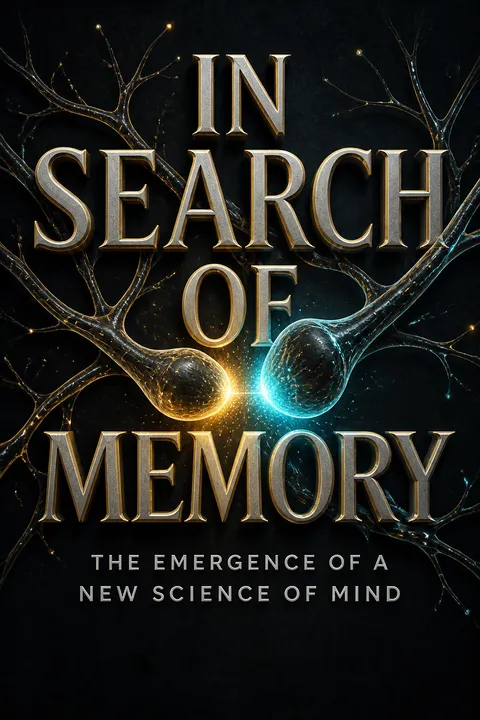
In Search of Memory is a compelling blend of autobiography and scientific exploration. Kandel's personal journey from Nazi-occupied Vienna to Nobel laureate intertwines with the history of neuroscience. Readers appreciate his clear explanations of complex brain processes and memory formation, though some find the technical details challenging. The book offers insights into the scientific method, the cultural impact of anti-Semitism, and the evolution of our understanding of the mind. While some readers found certain sections less engaging, many praise Kandel's ability to connect personal experiences with groundbreaking research.
People Also Read




Glossary
neuron doctrine
neurons as signaling unitsThe principle that the nervous system is made of distinct nerve cells rather than one continuous web. Neurons communicate at specialized junctions, and signals generally travel in an organized direction through circuits. Santiago Ramón y Cajal developed the key evidence and principles that made this view central to modern neuroscience.
neural analogs of learning
cellular models of learningExperiments that imitate learning protocols by applying patterned electrical stimulation to neural pathways in an isolated preparation. Kandel modeled habituation, sensitization, and classical conditioning in Aplysia to test whether different patterns of activity changed synaptic communication in ways resembling learning in an animal.
explicit memory
conscious facts and eventsMemory for people, places, objects, facts, and events that can usually be consciously recalled and described. Forming new explicit memories depends on the hippocampus and medial temporal lobe. Long-term storage is distributed across cortical areas involved in processing the original information.
implicit memory
learning expressed in performanceMemory that guides behavior without requiring conscious recollection. It includes skills, habits, and forms of conditioning such as habituation and sensitization. Different implicit memories depend on different neural systems, and simple forms can be studied in the circuits controlling reflexes.
synaptic plasticity
activity-driven synapse changeThe capacity of a synapse to change the strength of its communication in response to patterns of activity. Plasticity can increase or decrease transmission and can last briefly or persist. Kandel's Aplysia research linked such changes to habituation, sensitization, conditioning, and memory storage.
CREB
regulator of memory-related genesA gene-regulating protein activated through signaling pathways that include cyclic AMP and protein kinase A. In Kandel's Aplysia studies, CREB activity was necessary for long-term synaptic strengthening and growth. Related CREB mechanisms were also found in memory studies of other animals.
synaptic marking
tagging selected synapsesA proposed process by which activity at a particular synapse marks it for lasting change. Gene activation can supply proteins throughout a neuron, but marking helps ensure that only selected synapses use those proteins to sustain long-term strengthening and structural growth.
CPEB
local protein synthesis regulatorCytoplasmic polyadenylation element-binding protein, a regulator involved in protein production at synapses. Kandel's group found a neuronal form of CPEB in Aplysia that can take on a self-perpetuating, prion-like state. This activity may help maintain local protein synthesis and stabilize selected long-term synaptic changes.
long-term potentiation
persistent synaptic strengtheningA lasting increase in the effectiveness of a synaptic connection after particular patterns of activity. First studied in pathways to the hippocampus, long-term potentiation became a model for investigating mechanisms that may support learning and memory. It includes multiple forms and depends on different cellular signals.
cognitive map
internal spatial representationA brain representation of the relationships among locations in an environment. In the hippocampus, the activity of place cells contributes to a map of external space. Such a representation supports navigation and spatial memory, and its stability can depend on attention and molecular processes.
FAQ
What's In Search of Memory about?
- Exploration of Neuroscience: In Search of Memory is an intellectual autobiography by Eric R. Kandel, detailing his journey as a neuroscientist and the evolution of the science of mind, particularly focusing on memory.
- Biological Basis of Memory: The book discusses how understanding memory has shifted from philosophical inquiries to biological analysis, emphasizing molecular biology's role in uncovering memory storage mechanisms.
- Personal and Scientific Journey: Kandel intertwines his life experiences, from his childhood in Vienna to his Nobel Prize-winning research, illustrating how personal history can shape scientific inquiry.
Why should I read In Search of Memory?
- Insightful Perspective: The book offers a unique perspective on the intersection of personal history and scientific discovery, making complex neuroscience accessible to general readers.
- Inspiration for Future Scientists: Kandel's journey may inspire aspiring scientists by showcasing the excitement and challenges of a career in research, highlighting the importance of mentorship and collaboration.
- Understanding Memory: Readers will gain a deeper understanding of how memory works biologically, relevant to contemporary issues like mental health and education.
What are the key takeaways of In Search of Memory?
- Mind and Brain Connection: Kandel emphasizes that "mind and brain are inseparable," suggesting that understanding mental processes requires a biological perspective.
- Neural Circuits and Memory: The book outlines how different mental functions are carried out by specialized neural circuits, with memory being a complex interplay of these circuits.
- Role of Synapses: Kandel discusses how synaptic connections change with experience, leading to memory storage, highlighting synaptic plasticity's importance in learning and memory.
What are the best quotes from In Search of Memory and what do they mean?
- “The brain is a complex biological organ of great computational capability.”: This underscores the intricate nature of the brain and its role in processing information, emphasizing the need to understand the brain to understand the mind.
- “Memory is essential not only for the continuity of individual identity, but also for the transmission of culture.”: Kandel highlights memory's significance in shaping personal identity and cultural heritage, illustrating its broader implications.
- “The new science of mind will be to the twenty-first century what the biology of the gene was to the twentieth century.”: This reflects Kandel's belief in the transformative potential of neuroscience, suggesting that understanding the brain will be as revolutionary as genetic discoveries.
How does Kandel describe his childhood in Vienna?
- Cultural Richness: Kandel paints Vienna as a cultural hub, rich in music, art, and intellectual thought, which profoundly influenced his upbringing.
- Impact of Historical Events: His childhood memories are intertwined with the rise of Nazism, leading to his family's displacement, shaping his understanding of memory and identity.
- Personal Connections: The narrative includes personal anecdotes, such as his experiences with family and education, which laid the groundwork for his later scientific pursuits.
What is the significance of the hippocampus in memory storage according to Kandel?
- Critical for Long-Term Memory: Kandel identifies the hippocampus as essential for converting short-term memories into long-term storage, with damage to this area resulting in profound memory loss.
- Role in Explicit Memory: The hippocampus is particularly involved in explicit memory, which includes facts and events, crucial for forming new memories.
- Connection to Other Brain Regions: While the hippocampus is vital for memory formation, long-term memories are ultimately stored in the cerebral cortex, highlighting the interconnectedness of brain regions.
How does Kandel relate his scientific work to psychoanalysis?
- Interdisciplinary Approach: Kandel discusses how his interest in psychoanalysis influenced his scientific inquiries into memory, believing that understanding the biological basis of memory can enhance psychoanalytic practices.
- Memory and Identity: He draws parallels between the psychoanalytic focus on memory and his research, suggesting both fields seek to understand how past experiences shape identity.
- Scientific Validation of Psychoanalytic Concepts: Kandel's findings provide empirical support for some psychoanalytic theories, particularly regarding unconscious influences on behavior.
What methods does Kandel use to study memory in Aplysia?
- Neural Analogues of Learning: Kandel employs a reductionist approach by studying the simple nervous system of Aplysia to understand the cellular mechanisms of memory.
- Focus on Synaptic Changes: His experiments observe how synaptic connections change in response to learning tasks, such as habituation and classical conditioning.
- Use of Large Neurons: Aplysia's large neurons facilitate the recording of electrical activity, making it easier to study the effects of learning on synaptic strength.
How does Kandel explain the concept of synaptic plasticity?
- Definition of Synaptic Plasticity: Kandel defines synaptic plasticity as the ability of synapses to strengthen or weaken over time, in response to increases or decreases in their activity.
- Mechanisms of Change: He discusses how repeated stimulation can lead to long-lasting changes in synaptic strength, essential for memory formation.
- Implications for Learning: Different forms of learning may produce distinct patterns of synaptic plasticity, suggesting the brain encodes various types of memories through specific changes in synaptic connections.
What role do neurotransmitters play in memory according to Kandel?
- Chemical Messengers: Neurotransmitters are crucial for transmitting signals between neurons at synapses, facilitating communication within neural circuits essential for memory processing.
- Specificity of Action: Different neurotransmitters, such as acetylcholine and glutamate, have specific roles in various types of memory, influencing learning and memory storage.
- Connection to Mental Disorders: Imbalances in neurotransmitter systems can lead to memory-related disorders, linking findings to broader implications for understanding mental health.
How does Kandel's work contribute to our understanding of mental illness?
- Biological Basis of Disorders: Understanding the biology of memory can provide insights into various mental illnesses, such as depression and schizophrenia.
- Potential for Treatment: Elucidating the cellular and molecular underpinnings of memory may inform the development of new treatments for memory-related disorders.
- Integration of Science and Psychology: Kandel advocates for a more integrated approach to studying mental illness, combining insights from neuroscience with psychological theories.
How does Kandel connect psychoanalysis to neuroscience in In Search of Memory?
- Historical Context: Kandel provides a historical overview of psychoanalysis and its evolution alongside neuroscience, arguing that Freud's theories about unconscious processes can be informed by modern biological research.
- Unconscious Processes: He explores the idea that many mental processes occur unconsciously, paralleling Freud's concepts, suggesting neuroscience can validate and expand upon psychoanalytic theories.
- Integration of Disciplines: Kandel advocates for an integrated approach that combines insights from psychoanalysis with findings from neuroscience, leading to a more comprehensive understanding of the mind and behavior.
About the Author
Other books by Eric R. Kandel
Download PDF
Download EPUB
.epub digital book format is ideal for reading ebooks on phones, tablets, and e-readers.








