

Plot Summary
The Farm's First Lesson
In July 1943, Jenny Ryan leaves newspaper work to train as an OSS agent, while her lover, Kathryn Hammond, teaches the recruits how to survive and kill. When a cocky trainee challenges Kathryn's authority, she disarms and restrains him so swiftly that the class stops treating her as decoration.
Her lesson about possibly having to kill a fellow agent unsettles Jenny more than she admits. At home, Kathryn asks whether Jenny can face that work; Jenny insists that serving her country matters enough to try. Their affection gives the new training a personal cost: Kathryn is both instructor and lover, and Jenny must prove herself without leaning on her.
The opening binds professional initiation to intimacy. Kathryn teaches Jenny to question appearances, yet their relationship makes the lesson harder to apply: Jenny wants her lover's approval, while Kathryn must judge her as a trainee. Jenny's horror at killing is not presented as weakness but as evidence that training cannot make violence psychologically ordinary. The recruits are asked to accept both competence and vulnerability, while Kathryn's composure hides the lived history behind her expertise. Their shared life begins to narrow under the job's demands before either woman can control how much will be asked of them.
Cal Richards Is Already Dead
A call from Jenny's friend Bernie reveals that the Cal Richards buried by the Army died two years earlier, before the man Jenny remembers from the Daily Chronicle could have returned to the paper. Jenny realizes she may have known an impostor. At the same time, FBI agent Jake Russo interrogates her uncle, Paul Ryan, about debts to crime boss Marcus Forrester, the death of Paul's brother Daniel, and Cal's presence near the case.
Paul admits that he supplied Forrester with coded information but claims only Daniel knew how to decipher it. Russo gets the location of the material by threatening Jenny, then quietly tells his British counterpart, Colonel Holmes, to target her. The mystery is now personal and political.
The false identity unsettles Jenny's trust in ordinary memory: a familiar coworker may have been a construction, while the institutions investigating him manipulate people through partial truths. Paul is both protective uncle and compromised intermediary, and his evasions make family affection difficult to distinguish from concealment. Russo's coercion turns Jenny into leverage before she understands the larger case. Holmes's decision to target her reveals that the intelligence services are not neutral observers; they are competing actors willing to endanger the people they claim to protect.
Forrester's Price of Protection
Marcus Forrester's arrival at The Grotto ends the evening Kathryn promised to spend with Jenny. Kathryn sends Jenny a hurried note, then performs the attentive mistress for the criminal industrialist and his circle. At a later gathering, Forrester pressures her to sleep with the doctor Thierry Bouchaule while he watches. When she refuses, he slaps and bruises her.
Kathryn keeps her assignment alive by pretending the refusal proves devotion, and Bouchaule gives her his card, hinting that he may be more than a society musician. Jenny sees the bruises the next morning and challenges Kathryn for hiding the truth. She finally accepts that Kathryn must do her job, even when that means giving Forrester access to her.
Kathryn's work depends on making coercion look like choice. She can redirect Forrester's anger through performance, but the bruises show the cost of that control and the danger of confusing tactical compliance with consent. Jenny's jealousy is inseparable from concern: she dislikes seeing another person touch Kathryn, but she also sees that Kathryn's safety is being bargained away. Their agreement to endure the assignment together is an act of love, yet it places the burden of sacrifice unevenly on the woman whose body is the cover.
The Mission Clock Runs Short
When field exercises begin, Kathryn's team enters a mock German outpost with a safe to crack and a detonation clock to beat. Lieutenant Branson secretly alters the guard-response timing, while trainee Sam Hendricks freezes before a booby-trapped safe. Jenny spots the clock discrepancy and runs back to warn Kathryn, disobeying the order to stay put.
Kathryn clears the room just before the explosive blast, but Branson declares the team dead and exposes Jenny's breach of orders. Kathryn's anger turns personal when she accuses Jenny of being unfit for fieldwork. She later learns that Jenny has been reassigned to code work, not sent overseas. Jenny, meanwhile, discovers Bernie plans to enlist as a war correspondent.
The exercise tests competing definitions of courage. Jenny acts from loyalty and quick judgment, but her rescue attempt ignores the collective plan and risks both agents. Kathryn's harsh response is partly instruction and partly fear: she knows how a single impulsive decision can end in capture. Her judgment is compromised by love, just as Jenny's judgment is driven by it. The reassignment frustrates Jenny, but code work will place her closer to the information that has begun to reorganize her life. Bernie's enlistment mirrors her own desire to act, while exposing how little she can control another person's choices.
The Files Rewrite Jenny
Classified reports appear in Jenny's work tray, revealing that Daniel Ryan was not her biological father and that his research and family were entangled with a dangerous secret. Jenny takes the files home, destroys the house in shock, and carries an OSS gun to the dock, where Kathryn finds her before she can harm herself.
Jenny is taken for questioning by Colonel Holmes, who recruits her to investigate the coded research and the people connected to it. She interprets Kathryn's classified assignment to her as proof that their relationship began as a deception. Refusing Kathryn's apology, Jenny ends the relationship and tells her never to return. The truth has not merely changed her past; it has severed her safest bond.
The revelation makes identity feel confiscated: Jenny learns that institutions and relatives have shaped her story without her consent. Her anger at Kathryn is understandable because the agent's secrecy confirms the very fear the files awaken, that intimacy can be another form of surveillance. The dock scene shows the danger of forcing a life-altering truth into someone without support, while Kathryn's intervention cannot undo the betrayal she represents. Holmes turns Jenny's grief into recruitment, illustrating how state power converts private rupture into operational opportunity.
The Warehouse of Ghosts
After reconciling with Bernie, Jenny returns to the Chronicle and follows a suspicious storage payment linked to her uncle. Inside the unit, she finds a large reserve of cash, Daniel's ledger, records of payments to Cal Richards, and boxes of family belongings, including her mother's photographs and a silk scarf.
The discovery suggests Paul knew more about Cal than he admitted, but Jenny cannot explain the ledger's coded transactions. When she returns, the entire unit has been emptied.
A news ticker then reports that Forrester's private plane has crashed near Chicago, killing everyone aboard, including a woman assumed to be Kathryn. Grief pushes Jenny toward the shore, where she learns from Dominic that Kathryn is alive and hidden on an island.
The warehouse turns family history into material evidence: cash, handwriting, photographs, and a scarf make secrecy tactile rather than abstract. Yet each discovery deepens uncertainty instead of resolving it. The cleared unit demonstrates that Jenny is not the only investigator, and that whoever controls the records can erase them faster than she can interpret them. The plane report repeats the original wound of losing a loved one without warning. Jenny's frantic search shows that anger has not extinguished attachment; the possibility of Kathryn's death strips away the protective story Jenny has built around their breakup.
The Island After the Crash
Jenny reaches Kathryn's secluded shore refuge carrying the newspaper report of the crash and admits that she came because she could not bear losing her. Kathryn confirms that Forrester is dead, but she cannot accept that the revelation has repaired their relationship. She tells Jenny that love cannot erase the fact that Jenny stopped trusting her, and that Kathryn fears being abandoned again.
Jenny admits she never read the letter Kathryn left before the breakup; she burned it in anger. Back at the cottage, she promises not to doubt Kathryn's love again. Kathryn finally lets her return, and the two make love with a tenderness that restores their bond without removing the fear that first broke it.
Their reunion is built not on a convenient erasure of betrayal but on an explicit admission of what each woman did. Jenny's burned letter becomes a concrete symbol of how anger can destroy the information one most needs, while Kathryn's fear reveals that secrecy protects her professionally but damages intimacy. The island briefly separates them from institutions and obligations, allowing them to choose each other again. Yet the scene cannot guarantee safety: their renewed trust is a decision made under pressure, not proof that the pressures have vanished.
The Funeral's Living Ghost
At Forrester's funeral, Kathryn sees Thierry Bouchaule, presumed dead in the crash, pass in a car and leave her a private note. The reported crash was a cover: Bouchaule and Forrester were not simply victims of an accident, and Bouchaule has escaped the American investigation.
Kathryn returns to headquarters, where Holmes insists she may be needed again, while Smitty prepares to go overseas. Jenny and Kathryn resume their life together, but they both know their work will continue to intrude.
Kathryn also visits her estranged father, Jackson, by telephone after her brother Clayton reveals that Jackson is dying. She cannot finish the conversation before Jackson refuses to speak, leaving her with only a letter and a fragile opening toward her family.
The funeral converts public certainty into another intelligence fiction: death is an identity that can be staged, just as Cal's identity and Kathryn's cover were staged. Bouchaule's appearance makes the romantic past inseparable from the active case. At the same time, Kathryn's attempt to contact her father shows that professional secrecy is not her only unfinished business. The failed call offers no neat reconciliation, only the knowledge that delay has consequences. Both women are trying to reclaim ordinary bonds while the war keeps translating people into assignments, assets, and liabilities.
The Family She Left
As Jenny and Kathryn share a home, Kathryn introduces Jenny to her wartime past through paintings of her resistance cell, her lover Juliette Fournier, and codebreaker O'Brien. She explains that Juliette betrayed the cell, while O'Brien died by suicide rather than risk capture; Kathryn survived and has carried guilt ever since.
Meanwhile, Clayton returns and reveals that their father caused their mother's fatal car accident. Kathryn and Clayton begin repairing their estrangement, and she meets his daughter Stephanie, who welcomes her without reserve.
Jenny's uncle eventually returns her mother's effects, though his evasions keep suspicion alive. The fragile domestic happiness makes Kathryn's next professional danger more consequential, because she has finally allowed family, love, and a future to feel possible.
The paintings make memory visible while refusing to make it clean. Kathryn's art preserves the individuality of the dead, but she has treated remembrance as evidence against herself, repeatedly turning survival into culpability. Her brother's return complicates the idea that family can simply be discarded: the old harm remains, yet new relationships can still be made. Stephanie's trust offers a different model of intimacy, one not built on interrogation. The household gives both women a provisional refuge, but its very warmth raises the stakes of every secret kept outside it.
A Mask Cut from Within
An explosion at the training center exposes Kathryn and Sergeant Johnson to Lewisite, a blistering chemical agent. Kathryn suffers severe skin and respiratory distress, while Johnson dies after the infirmary treats him.
Jenny recognizes signs that the incident involved more than the gas and suspects that someone used Daniel's virus research. Later, investigators find Kathryn's gas mask hose deliberately cut; Branson admits he meant to humiliate her in a training exercise, but that does not explain how the virus reached Johnson.
The official inquiry calls the event an accident and dismisses Kathryn's suspicions. Her voice is damaged, her work at The Grotto falters, and her trust in the OSS deteriorates as she realizes she may have been used as bait.
The episode shows how bureaucratic explanations can absorb deliberate harm without resolving it. Branson's sabotage is real, but it does not account for Johnson's infection, leaving a gap the agency prefers not to investigate. Kathryn's body becomes evidence that competing institutions can manipulate and then dismiss. Jenny's knowledge of the virus gives her a way to interpret what she sees, but she withholds her theory to spare Kathryn, creating another protective silence between them. The event turns distrust from an interpersonal problem into a rational response to institutional behavior.
Books Beneath the Greenhouse
Searching for her mother's belongings, Kathryn explores the abandoned greenhouse and finds a concealed cellar, a tunnel, and a hidden laboratory beneath the house. Daniel Ryan's medical books are arranged there, and Kathryn recognizes that their page numbers and penciled corner figures form the key to his coded documents.
The papers point toward a virus project, an old medical experiment, and Daniel's efforts to keep the work from both the American government and the Germans.
Kathryn also learns from Bouchaule that her own cells resisted and repaired damage from the virus, accounting for her survival and partial return to singing. She withholds the books and her photographs from headquarters, increasingly convinced that someone inside the agencies may misuse the information.
The secret laboratory literalizes the buried history Jenny has been trying to reach, but Kathryn finds it first and assumes responsibility for deciding what may be revealed. Daniel's cipher makes knowledge dependent on access: the books are ordinary objects until paired with a private numerical key. Kathryn's choice to conceal them is ethically unstable. She believes secrecy may prevent a weapon, but she also repeats the paternal logic that kept Jenny ignorant. Her own miraculous recovery further entangles scientific discovery with personal exploitation, turning her body into a contested archive.
The Cruelest False Affair
Kathryn realizes that Jenny may be the biological source sought by the competing researchers, and that anyone close to her could lead them to the hidden project. Rather than explain the danger, Kathryn stages a betrayal with Jenny's former lover Marcella, then tells Jenny their relationship was merely sex and convenience.
Jenny is devastated, leaves, and seeks comfort from Smitty, who confirms that Kathryn has a history of using people and does not defend her. Kathryn has made herself appear unworthy of pursuit, hoping Jenny will sever the attachment that makes her vulnerable. The lie works too well: Jenny has no reason to believe that the cruelty conceals a desperate attempt to protect her.
Kathryn uses the very skill that once made her effective as an agent against the person whose trust matters most. Her plan assumes that emotional pain is safer than informed danger, a calculation that reproduces the paternal secrecy she resents in others. Jenny's belief in what she saw is not foolish; Kathryn carefully constructs evidence and then reinforces it with humiliating explanations. Smitty's complicity shows how affection can become a means of managing someone rather than helping them understand. Protection here becomes indistinguishable from control.
The Girl in the Research
Kathryn decodes older records and finds that Jenny's mother was part of a 1918 effort to produce natural resistance to influenza. Jenny's birth and her unusual biology make her the reservoir Bouchaule and Donnelly's circle are seeking. Kathryn infers that her own earlier blood contact with Jenny may explain why her body briefly acquired the same regenerative effect.
She chooses to cut Jenny out of her life and returns to Bouchaule, who claims to be resisting the weapon's use while pursuing the medical phenomenon for his research. When he disappears again, Kathryn spirals through grief, loses her Grotto position, and later resumes contact with him. Her uncertainty about his motives is matched by the danger of the work itself.
The revelation reframes Jenny's family history as a matter of biological ownership: her existence is treated by powerful men as a resource to locate and extract. Kathryn's decision to conceal the truth is rooted in genuine care, but it also repeats the structures that denied Jenny knowledge of her own origins. Bouchaule's stated opposition to weaponizing the virus does not make his pursuit harmless; scientific curiosity and political usefulness remain entangled. Kathryn's grief and professional collapse show that sacrifice does not automatically produce moral clarity or emotional strength.
A Tunnel Escape
After learning that Donnelly's group has identified Jenny as the reservoir, Kathryn races to warn her. She finds Paul's house empty and discovers that intruders have ransacked Jenny's home, leaving a dead agent near the concealed entrance to the laboratory. Jenny returns and initially refuses to follow Kathryn, convinced every appeal is another manipulation.
Kathryn offers Daniel's journal and admits that she wanted Jenny safe, but Jenny only agrees to listen when she recognizes the coded inscription and takes her father's books, photograph, and gun. The two hide in the underground lab as searchers enter the house. Kathryn directs Jenny through the tunnel toward Dominic's protection, then stays behind to draw the pursuers away.
The tunnel turns hidden knowledge into a route of physical escape, but it cannot instantly restore trust. Jenny's skepticism is earned, and Kathryn must act without expecting emotional forgiveness. The journal and books matter because they give Jenny evidence and agency, not simply because Kathryn asks her to believe. Their separation is now chosen under immediate threat, unlike the earlier breakup engineered through deception. Kathryn's decision to stay behind completes her pattern of taking danger onto herself, while Jenny finally carries the truth as well as the means to interpret it.
The Virus Takes Hold
At the estate, Donnelly's men capture Kathryn and restrain Bouchaule. Donnelly demands the research, then orders his scientist to inject Kathryn with a sedative followed by the virus, expecting her to die once she has served her purpose. Bouchaule tries to bargain for her life, and Bertrand, already wounded, intervenes with a gunshot that kills Donnelly and the men around him.
Bertrand dies from his injuries, but Bouchaule gets Kathryn out of the country. She wakes in a sugar-storage shed in Martinique, alive after the infection. Bouchaule confirms that he could find no ordinary explanation in her blood; the virus seems to have become part of her physiology, beyond what his available instruments can identify.
The climax makes the scientific stakes bodily and immediate: Kathryn is not an abstract specimen but a person strapped down while others decide what her survival is worth. Bouchaule's willingness to expose his research to save her complicates his earlier claim that work matters more than life, while Bertrand's intervention makes loyalty costly. Kathryn's survival does not resolve the mystery; it enlarges it. The body resists the categories that governments and scientists use to control it, but that resistance may also make her a permanent target.
The Road to Paris
In Martinique, Bouchaule prepares to leave for Paris, and Kathryn first believes he is abandoning her. He admits that he fears bringing her into danger, but Kathryn refuses to let him decide her future for her. She chooses to travel with him, accepting that their partnership is both intimate and bound to the work.
Back in New York, Jenny reaches Colonel Holmes with Daniel's journal and the research materials, offering what the agencies have been hunting. She now understands that Kathryn's staged cruelty was intended to save her, but the women have not reunited and their trust remains unfinished. Jenny intends to use the case to reach Kathryn, turning the secret that once trapped her into leverage for her own choices.
The ending resolves the immediate pursuit but not the relationship or the ethical conflict. Kathryn's decision to go with Bouchaule is neither uncomplicated romance nor simple professional duty; it is a choice made by someone who wants agency after being treated as bait and specimen. Jenny's return to Holmes likewise converts knowledge into bargaining power, though the institution she approaches helped create the danger. The two women are moving toward each other by separate routes, each newly informed but still divided by distance, secrecy, and the consequences of protection imposed without consent.
Analysis
The novel's central conflict is not simply secrecy versus truth, but who has the authority to decide what another person may know. Kathryn's training teaches her to compartmentalize, improvise, and protect a mission through performance. Those abilities save lives in the field, yet she carries them into love, where she treats Jenny's ignorance as a form of safety. Jenny's hurt is therefore not a failure to understand sacrifice; it is a response to being denied agency over her own life.
The scientific plot sharpens that conflict. Daniel's coded research, the hidden laboratory, and the hunt for a biological reservoir all turn bodies and documents into contested property. The governments and private patrons claim necessity, while the people whose lives make the research possible are left to bear its risks. Bouchaule complicates any easy moral division: his fear of weaponization coexists with an ambition capable of making Kathryn's body an instrument. The novel refuses to equate scientific brilliance with ethical innocence.
Its recurring objects make these arguments intimate. The cipher books are inherited knowledge locked behind technique. The mother's scarf and photographs provide Jenny with material traces where official records offer only categories. Kathryn's record preserves a promise, then becomes a painful test of whether that promise can survive betrayal. The greenhouse passage is both concealment and escape, a literal route out of a house whose history has been managed by others.
The ending offers neither a settled romance nor a clean victory. Kathryn leaves with Bouchaule, choosing a dangerous partnership while asserting that she will no longer be merely carried along by other people's plans. Jenny brings the research to Holmes and intends to find Kathryn, turning the knowledge once used against her into leverage. Their separation remains unresolved, but both women end with more agency than they possessed at the opening. The novel's hard question is whether protection without consent can still be called love, and its answer is that good intentions cannot erase the harm of withholding choice.
Review Summary
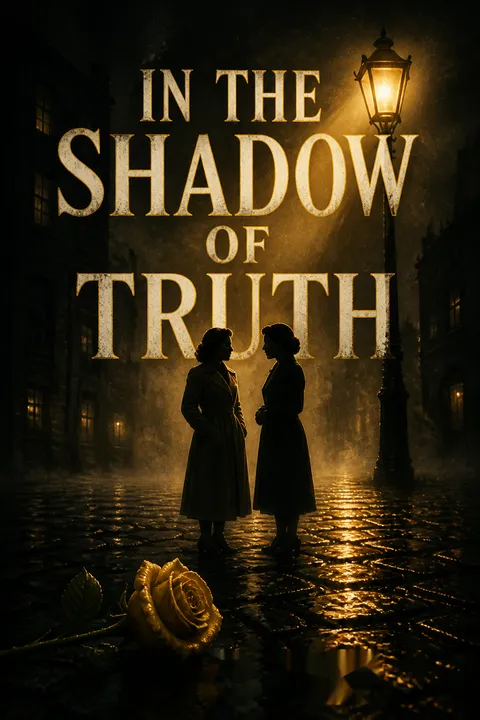
In the Shadow of Truth is the third book in J.E. Leak's Shadow series, receiving overwhelmingly positive reviews. Readers praise the complex characters, intricate plot, and emotional depth. The story follows Kathryn and Jenny's tumultuous relationship amidst espionage and war. Many found the book intense, unpredictable, and difficult to put down. While some felt frustrated by the characters' choices, most were captivated by the historical setting, romantic tension, and thrilling narrative. Fans eagerly anticipate the fourth and final installment.
Characters
Kathryn Hammond
The guarded field agentKathryn is an experienced OSS operative who also sings at a Manhattan nightclub. Her fluency in performance is both skill and defense: she can become what a mission demands, but that adaptability makes it difficult to separate genuine desire from practiced response. She is disciplined, resourceful, and protective, especially toward people she loves, yet she often mistakes silence and sacrifice for kindness. Her history of captivity and loss shapes her distrust of dependence and her tendency to absorb blame. Music and painting offer rare ways to express what her professional mask suppresses. Kathryn's central tension is not whether she can deceive others, but whether she can remain emotionally present without surrendering control.
Jenny Ryan
The searching codebreakerJenny begins as a newspaper columnist who wants to contribute directly to the war effort, then trains as an OSS agent and works with coded intelligence. Curious, quick-minded, and emotionally candid, she follows questions even when institutions warn her away. Her loyalty can become impulsive, as when she risks a mission to help Kathryn, but the same persistence allows her to pursue family secrets and learn the work behind them. Jenny values love and truth as forms of security, so concealed information wounds her more deeply than danger itself. Her growing competence does not erase her tenderness; it gives her new means to act on it.
Thierry Bouchaule
The driven French physicianBouchaule is a French doctor and researcher whose sophistication conceals an unusually single-minded devotion to scientific work. He moves easily among criminals, officials, and wealthy patrons, adapting his manner without surrendering his ambition. His relationship with Kathryn brings warmth and vulnerability into a life organized around research, but he remains difficult to read because affection and scientific need coexist. Bouchaule believes he can use dangerous alliances to pursue discoveries he considers valuable, even as others see those alliances as evidence of complicity. His polished charm is genuine in some moments and strategic in others, leaving Kathryn and the reader to judge what his promises can bear.
Smitty
Kathryn's steadfast partnerSmitty is Kathryn's longtime colleague and closest professional ally. His dry humor masks fierce protectiveness and a painful attachment he rarely voices directly. He understands her methods better than most, including the ways she can turn work into a refuge from grief. Smitty distrusts people who might hurt her, but his desire to protect her can also become controlling. His loyalty to Kathryn does not prevent him from offering Jenny practical support when she is in crisis.
Paul Ryan
Jenny's compromised unclePaul runs the Daily Chronicle and has spent years navigating debts, family tensions, and dangerous obligations. He loves Jenny and tries to keep her away from threats, but secrecy and evasions undermine that protection. His estrangement from Daniel and his role as intermediary make him appear culpable before the full family history is known. Paul is not a trained agent, yet pressure forces him to make consequential choices and to distinguish what he can reveal from what he must protect.
Marcus Forrester
The criminal power brokerForrester is a wealthy industrialist and criminal broker who treats information, influence, and people as instruments of leverage. He expects loyalty from Kathryn because he pays for her cover, and his possessiveness becomes volatile when she refuses his demands. His public respectability masks a network of violence and opportunism. Forrester is dangerous not because he is unpredictable at every moment, but because he can make exploitation look like ordinary business.
Colonel Holmes
The calculating SOE colonelHolmes represents the British intelligence service's hard-edged pragmatism. He is strategic, suspicious, and comfortable treating people as pieces in a larger operation. His confidence in his own judgment makes him dismissive of objections, especially when they come from those he considers less experienced. Holmes is effective at extracting cooperation, but his certainty obscures the human cost of the methods he approves.
Colonel Forsythe
The OSS commanding officerForsythe supervises Kathryn's work and tries to balance operational need with concern for his agents. He respects experience and often offers a more measured counterweight to Holmes. Yet he remains loyal to the institution, and that loyalty limits what he is willing to question when evidence threatens the agency's self-image.
Bernie
Jenny's loyal friendBernie is Jenny's oldest and closest friend, a newspaper colleague whose private life includes his boyfriend, Robert. His shock over Cal's identity unsettles him and strengthens his desire to document the war. Bernie wants to matter to the effort, even when Jenny fears the risks he is choosing. Their friendship survives resentment because he can recognize when her distress is greater than the argument between them.
Dominic Vignelli
The club's generous ownerDominic owns The Grotto and treats Kathryn as both a valued performer and part of his extended circle. He appreciates music as craft and feeling, and he notices when Kathryn's performances lose their inner life. His connections and practical kindness make him a discreet source of help for people in danger, though he does not try to control the choices they make.
Luciano Vignelli
Kathryn's wartime friendLuc is Dominic's son, an RAF serviceman and Kathryn's close friend. They first survive a London bombing together, an experience that gives their bond unusual intimacy. Luc is warm, expressive, and accepting of the stories people need to tell about themselves. His affection for Kathryn does not demand that she become someone different, which makes him a rare source of uncomplicated companionship.
Clayton Hammond
Kathryn's estranged brotherClayton is Kathryn's older brother, a practical and family-minded man whose anger is rooted in years of separation and grief. He believes in duty to family and struggles to understand choices that look like abandonment from the outside. Beneath his judgment is genuine longing for the sister he remembers, as well as a wish to offer her a place in his adult family.
Stephanie Hammond
The perceptive nieceStephanie is Clayton's observant daughter, curious about adults and far more attentive than they assume. She responds to Kathryn with direct affection and tests the explanations adults give her. Her cleverness and emotional candor reveal how children register family tensions even when no one explains them.
Betsy Ryan
Jenny's understanding auntBetsy is Paul's wife and a perceptive member of Jenny's family. She often sees emotional truths before Paul does and tries to mediate without denying the hurt beneath family arguments. Her compassion makes her a quiet bridge between Jenny and the history the older generation has kept hidden.
Lieutenant Jeremy Branson
The abrasive instructorBranson is a firearms instructor and Kathryn's professional antagonist at the training center. He needles her authority and enjoys exposing mistakes, but his military instincts are shaped by painful experience and strict ideas about obedience. His hostility is personal as well as procedural, making him difficult to dismiss as a mere bully.
Marcella
Jenny's former loverMarcella is a red-haired performer and Jenny's former lover. She is bold, sexually confident, and quick to recognize the emotional effect she has on other people. Her history with Jenny makes her presence potent, while her casual irreverence contrasts with Jenny's need to understand what intimacy means.
Bertrand
Bouchaule's silent protectorBertrand is Bouchaule's mute brother-in-law and bodyguard. A severe injury has left him without speech, but he communicates through notes, watchful gestures, and decisive action. His devotion to Bouchaule is shaped by shared loss, and his distrust of outsiders makes him a formidable presence around the doctor.
Colin Donnelly
The Chicago research patronDonnelly is a Chicago businessman whose interest in Bouchaule's research is driven by the prospect of power and profit. He presents himself as a practical partner but treats human beings as expendable once they obstruct his plans. His polished authority makes his violence feel institutional rather than impulsive.
Cal Richards
The puzzling newspaper contactCal is a man associated with the Daily Chronicle whose apparent familiarity with Jenny becomes a source of unease. His connection to the Ryan family and to the larger investigation is unclear, leaving Jenny to question what she remembers and who arranged their acquaintance.
Jackson Hammond
Kathryn's distant fatherJackson is Kathryn and Clayton's father, a grieving man whose family life is shaped by a painful history. His late attempt to reach Kathryn reveals affection beneath years of separation, though he struggles to speak openly about what happened.
Plot Devices
The OSS Cover
Love under surveillanceKathryn's work as Forrester's mistress and later as Bouchaule's intimate contact lets her enter circles closed to ordinary agents. The same cover blurs affection, coercion, and tactical performance, making it difficult for Jenny to know when Kathryn is acting. It also gives intelligence services leverage over Kathryn's private life, until the cover itself becomes a source of danger for the people she wants to protect.
Daniel's Book Cipher
A hidden key to historyDaniel Ryan encodes his research through page, line, and word references in his own medical books, then adds handwritten numbers to make the code harder to break. The system connects his laboratory, his stored documents, and the family secrets Jenny inherits. Because the books are both key and evidence, whoever controls them can either expose the research or keep it from people who might weaponize it.
The Greenhouse Tunnel
A hidden route to truthAn abandoned greenhouse conceals a cellar, passage, and laboratory beneath the Ryan house. Kathryn discovers it while searching for Jenny's mother's belongings, then uses it to conceal Daniel's books and later to help Jenny escape an armed search. The passage joins the novel's two central uses of secrecy: it hides dangerous research, but it also becomes a route by which Jenny can carry knowledge out of immediate danger.
The Reservoir
A life made into evidenceThe researchers seek a person whose biology can resist the virus and reveal how damaged cells might be repaired. Kathryn's survival first appears to make her the key, but later records and her connection to Jenny point toward a deeper source. The device turns a scientific mystery into a question of consent: the sought person is also a woman with a family, a history, and a right not to be treated as experimental material.
Kathryn's Record
A promise made audibleKathryn records a love song and a piano piece for Jenny, creating a tangible reminder of their intimacy. The record becomes a pledge Jenny carries through the breakup, and later a test of whether she can trust Kathryn's warning when danger returns. Its breaking during their confrontation makes the loss physical, while the promise behind it continues to shape Jenny's final decision to pursue the truth.


Download PDF
Download EPUB
.epub digital book format is ideal for reading ebooks on phones, tablets, and e-readers.








