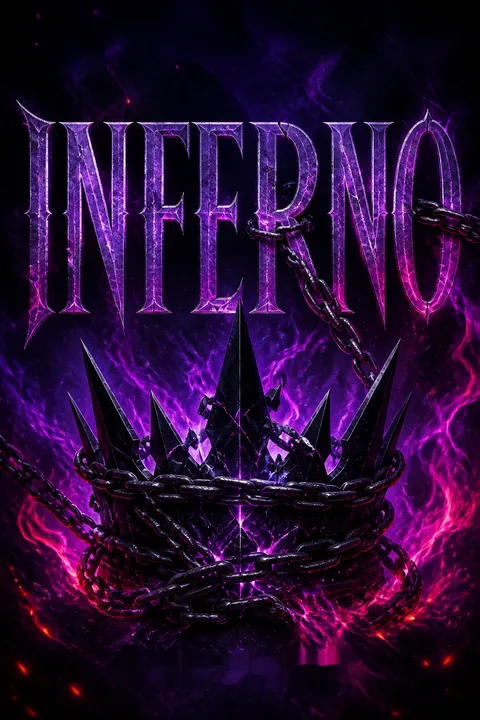


Plot Summary
Prologue
Ten years before the main story, on her eighteenth birthday in Chicago, Charlotte watches armed men break into her home. Her father reveals a hidden safe room, but a Russian crime boss named Vlad has come to collect a debt. When Charlotte’s mother attacks him, Vlad shoots her in front of Charlotte and takes Charlotte and her father captive.
Charlotte fights one of the intruders and nearly escapes, but Vlad stops her and declares that she will become his wife. Trained in martial arts and desperate to keep her father alive, Charlotte hides her terror and decides survival will require patience.
Charlotte’s captivity begins with a choice made under coercion: she must suppress her grief and anger to protect her father. Her martial arts training gives her a measure of agency, but it cannot overcome Vlad’s control of the people she loves. The birthday setting sharpens the rupture between adolescence and adulthood. Charlotte does not simply lose her mother; she loses the ordinary future she expected to enter. Her resolve to play patiently rather than surrender establishes the strategy that will sustain her through years of abuse, while also showing its cost: survival requires her to conceal the self she is trying to preserve.
The Cage Breaks the Truce
Five years before the present, Irish mafia heir Declan Quinn watches his youngest brother Conan fight a Bowen rival in an underground cage. The match is supposed to be fixed, with Conan losing on command to protect a fragile truce between their families. When the Bowen fighter insults their dead mother, Conan ignores Declan and beats him so badly that he dies.
Outside, Bowen leader Arthur declares the truce over and threatens the Quinn empire. Declan’s father responds by sending Declan, Conan, and their brother Finn to Italy to meet the powerful Enzo Testa. Their mission is to secure American allies before a feud at home becomes a war they cannot contain.
Conan’s fight turns private grief into public consequence. His violence is not a calculated challenge to the Bowen family, but an emotional reflex that Declan cannot control, and the resulting death gives their enemies a reason to abandon restraint. Declan’s role as eldest brother therefore becomes more than inheritance: he must manage the damage created by the family’s shared grief and individual impulses. Their father’s decision to send them abroad also reframes expansion as defense. The Quinns seek new power not simply to grow, but to keep a local vendetta from destroying the family they have left.
A Test in the Warehouse
In Italy, Enzo’s second-in-command, Romeo, separates Declan from his brothers and tests his judgment at a warehouse. Declan counts the crates, then watches Romeo accuse a trusted employee of stealing a shipment. Asked to demonstrate how he handles betrayal, Declan shoots the man rather than offer another chance. Romeo approves and gives him a phone for a private meeting with Enzo.
The test establishes that Declan can be both cautious and ruthless, qualities he will need to represent the Quinns in unfamiliar territory. At the resort, meanwhile, Charlotte is in Italy on a covert assignment, shadowing Enzo’s meeting without knowing yet that the man she has been sent to target will soon become personal.
Declan’s test makes trust a practical, lethal category rather than a sentimental virtue. He earns access by showing that loyalty has consequences and that he will act decisively when evidence is presented. Yet his judgment is being shaped by another man’s test, a pattern that later complicates his own authority as a game-master. The parallel introduction of Charlotte’s covert mission creates dramatic irony: both protagonists are operating under false identities and instructions, each treating the other as a temporary encounter while powerful organizations maneuver around them. Their attraction will not erase those pressures; it will make them harder to survive.
The Woman at the Resort
When a thief grabs Charlotte’s bag outside the resort, she disables him with practiced precision. Declan rushes to help and receives a punch to the groin for his trouble, then realizes the stranger is not helpless and is very much his equal. Their next encounters deepen the pull: Charlotte rebuffs the crude advances of her handler, Misha, while Declan keeps seeking her out.
At the bar, a man secretly drugs Charlotte’s cocktail after she refuses him. Declan restrains the would-be assailant while Charlotte forces him to drink his own concoction, and Declan sends his brothers to deal with the threat. Over dinner, the two share memories of their mothers and discover a brief, startling ease with one another.
Their first connection forms through action before confession. Charlotte’s competence challenges Declan’s usual position of control, while his decision to support her against the drugger gives her a glimpse of protection that does not demand ownership. Their shared grief over their mothers offers intimacy without requiring either to disclose the dangerous facts of their lives. Yet the scene also exposes the limits of attraction: Charlotte remains alert to exits and consequences, and Declan does not know why. Trust begins as a small, embodied experience of being believed, not as a promise that either character is ready to make.
One Night in Italy
Charlotte initially refuses Declan’s kiss, then returns to him after another encounter makes clear how strongly she wants him. In his penthouse, Declan slows their intimacy to ask for her consent and gives her room to set the pace.
Charlotte experiences sexual pleasure and tenderness she has never known, and the two spend the night building a connection neither can safely explain. Before dawn, she slips away for her assignment.
Declan wakes alone, but leaves to meet Enzo, who proposes that the Quinns buy a shuttered chocolate factory and turn its grounds into a secret club for the criminal elite. Declan sees the business opportunity immediately and names the venture Decadence, unknowingly carrying Charlotte’s private memory into the empire he is creating.
The night matters because it offers Charlotte a contrast to coercion: control is shared, consent is explicit, and pleasure is treated as something she may choose. That experience cannot free her, but it gives her a bodily memory of an alternative to Vlad’s abuse. Declan, meanwhile, interprets the encounter as the beginning of a relationship he can pursue, while Charlotte sees it as a rare interval outside her cage. Their different understandings make the separation painful without making either one’s feelings false. Naming the venture after their intimacy also binds private memory to public power, a connection that later makes their reunion unavoidable.
The Knife in the Penthouse
Misha discovers Charlotte slept with the man she was meant to observe and threatens to expose her to Vlad. Charlotte kills him with a knife, then follows Drago’s plan to make the crime appear to be Declan’s work. She leaves the bloodied weapon in Declan’s penthouse, forcing him to flee when police close in.
Enzo helps him escape Italy, but the delay keeps Declan from returning to Ireland before Arthur Bowen kills his father. The Quinn patriarch’s death ends the immediate threat of a Bowen war, yet leaves Declan burdened with his brothers and a growing American empire. Charlotte’s desperate attempt to protect her father and herself has instead cost Declan his own father, a consequence neither could foresee.
The knife is the material form of a survival decision whose moral cost exceeds Charlotte’s knowledge. She does not act from indifference to Declan; she acts under threat, with no safe way to explain herself. But the deception still changes his life, and his grief attaches itself to the only evidence he has of her betrayal. The resulting misunderstanding is not a simple failure to communicate. It is produced by coercive systems that make truth dangerous and then punish people for the lies those systems require. Both characters leave Italy believing they have lost something irretrievable, though for different reasons.
A Child Behind the Walls
Five years later, Charlotte remains Vlad’s concealed wife, forced to work as an assassin while Drago protects her as best he can. Her father is dead, and her young daughter Isabella is kept hidden from the wider family; Vlad uses the child’s safety to keep Charlotte obedient.
Drago gives Charlotte an invitation to Decadence, a BDSM survival contest in America, and tells her that winning may create leverage against Vlad and a chance to get Isabella out. Charlotte knows the contract threatens death, but accepts because remaining in the compound guarantees continued captivity.
Vlad signs her into the contest for his own ambitions. Charlotte leaves for Pennsylvania alone, carrying years of training, a private record of information, and the hope that this dangerous assignment may become her escape.
Motherhood changes the mathematics of Charlotte’s endurance. Earlier, she could imagine escape as a risk to herself and her father; now every choice is measured against Isabella’s safety. Vlad exploits that attachment by making protection indistinguishable from captivity. Drago’s offer is therefore both rescue strategy and renewed danger: Charlotte must enter another system that claims authority over her body, but this time she has a purpose of her own. Her decision does not signal confidence that the contest is fair. It shows how little freedom remains when a person must choose between a known prison and an uncertain chance.
Decadence Opens Its Gates
The Pennsylvania compound looks like an ordinary chocolate factory from the outside, but its guarded corridors lead to the Decadence games. Charlotte arrives as Contestant Three, under the false name Ebony West, and discovers that every detail of the contract has become real.
Declan, now the Quinns’ American boss and the games’ masked Master, sees her on the monitors and recognizes her tattoos and purple-tipped hair. He nevertheless lets the first challenges proceed.
In a freezing room, the contestants perform with chocolate sculptures while guards score them and punish mistakes. Charlotte endures the humiliation and cold, then survives a second task that combines a vibrating toy, a blindfold, and carving the Master’s emblem into her own thigh.
The factory turns the romance’s sensory language into an institution: chocolate, pleasure, and the name Decadence now belong to a system of surveillance and control. Declan’s recognition makes the games emotionally unstable, but he hides that response behind his role as Master. Charlotte, unaware of his identity, approaches the contest as another mission in which composure is survival. Her performance shows how skill can help her endure an ordeal without making the ordeal benign. The marks she cuts into her thigh also anticipate the book’s recurring distinction between imposed injury and chosen meaning, a distinction that the games repeatedly test.
Pleasure Becomes a Trap
In a candy-filled room, Charlotte chooses a toy for the next task and is led into the Cream Room, where contestants must make themselves squirt while restrained. Declan secretly guides her with his voice, and she completes the challenge by drawing on the memory of their night in Italy. The following room turns darker: the women are chained onto saddles and subjected to relentless stimulation and degradation.
The restraints and taunts reproduce the conditions of Charlotte’s abuse, and she loses consciousness before she can finish. Declan stops the game and orders Finn to examine her. He tells the contestants she has lost, but instead of killing her, his men take Charlotte to a holding room with the other eliminated women.
Charlotte’s collapse exposes a limit that training and determination cannot simply override. The game’s promise to balance pain and pleasure becomes dangerous when its staged domination resembles her actual abuse too closely. Declan’s intervention marks a breach in his own rules, though he still frames Charlotte as a contestant who has failed rather than a person needing care. Her body’s response is not weakness or deception; it is a trauma reaction produced by recognizable cues. The holding room then unsettles the game’s apparent logic. The sound of gunshots has made the women believe elimination means death, but their continued presence suggests the rules may conceal another purpose.
The Contestant Breaks Out
In the holding room, Charlotte learns that the other women were also brought there after apparent eliminations. She urges them to escape, disarms a guard, takes his keys, and cuts off his thumb to pass the factory’s biometric security. Reaching Declan’s office, she finds the lights and cameras disabled, but Declan catches her before she can get out.
He drugs her and takes her to the final room, where he demands her real identity and reason for coming. Charlotte gives her name and tells Enzo she was sent to uncover what he knows and kill the person behind the games. Enzo instead asks for information about Tatiana’s network. The contest’s surface story has collapsed, but Charlotte is still a prisoner among rival powers.
Charlotte’s escape is not a sudden reversal of vulnerability but the return of skills she has used throughout the story. She reads the guards, exploits a moment of distraction, and turns the institution’s own security measures against it. Her refusal to wait passively for permission is also ethically complicated: she offers the other women a route out, but cannot force them to take it. Declan’s capture of her restores his physical control, while Enzo’s questions reveal that the games sit inside a wider struggle for information. The danger has shifted from surviving individual challenges to deciding which powerful men can be trusted.
Isabella Changes Everything
After Enzo’s interrogation, Declan keeps Charlotte at his mansion while he tries to separate her truth from the betrayal he remembers. A nightmare breaks through her defenses: she begs him to protect Isabella, revealing that she has a daughter and that Vlad still controls them both. The next day, Charlotte explains how Vlad abducted her, forced her into marriage, and kept her obedient by threatening her father and then Isabella.
She confirms that the child was conceived during their night together in Italy. Declan realizes he is Isabella’s father, a fact Charlotte could not safely reveal before. His anger gives way to the knowledge that she has spent years protecting their child alone, and he chooses to help bring them both home.
The revelation changes the meaning of the years between Italy and Pennsylvania. Declan’s absence was not a choice Charlotte made lightly, and Charlotte’s silence was not evidence that their night meant nothing. Isabella makes their private bond a shared responsibility with immediate stakes. Declan must confront both grief for the life he missed and the temptation to turn protection into another form of control. Charlotte’s account also restores the context erased by the planted knife: she was acting inside a coercive system, not playing a harmless game. Belief becomes the first necessary act of partnership.
A Family Plans Its Counterattack
Charlotte gives Enzo her notes on Tatiana’s circle, but withholds Drago’s name because he is the only person she trusts inside Vlad’s organization. Declan and Charlotte share a photograph of Isabella, and he begins to understand the child through her drawings and the stories Charlotte has told her. At a meeting with Enzo, Finn, Conan, and Mikhail Volkov, Charlotte insists that rescuing Isabella must be the mission.
She proposes offering herself in exchange for the child, while Declan rejects any plan that treats her as disposable. The group settles on a feigned exchange backed by surveillance, a tracker, and armed allies. Charlotte contacts Drago, who confirms the plan and promises to keep Isabella safe until the handover.
The planning meeting establishes the difference between being protected and being overruled. Charlotte’s proposed sacrifice is rational within the life she has lived, where her body has repeatedly been used as collateral. Declan’s refusal matters only because it is paired with a larger plan, not because he can simply veto her judgment. The group’s resources let them imagine alternatives to the bargains Vlad has imposed, though no tactical advantage removes the risk. Charlotte’s loyalty to Drago also complicates the alliance: she will share information, but not at the cost of exposing the person who kept her and Isabella alive.
The Van Is a Bomb
At a Russian warehouse, Declan and Charlotte wait for Vlad while their allies surround the site. When his black truck arrives, armed men attack from several directions, and Declan and Charlotte fight through them toward the exchange point.
Vlad then reveals that Isabella is inside a van rigged with explosives and that his brother Emil can detonate it remotely. He demands Charlotte in return for the child. Thermal surveillance confirms Isabella is in the vehicle, so Declan honors the exchange rather than risk her life.
Charlotte climbs into the van with her daughter, urging Isabella to trust the father she has only heard about in stories. Declan takes Isabella away as Vlad drives Charlotte toward the farm, leaving the couple separated again.
The exchange weaponizes the family Charlotte and Declan have only just begun to form. Vlad understands that neither parent will gamble with Isabella’s life, so he converts love into leverage. Charlotte’s willingness to enter the van is not surrender to Vlad’s claim over her; it is a deliberate choice to move danger away from her daughter. Declan’s compliance is equally painful because it requires him to accept a separation he cannot control. Their shared promise now has a concrete test: can they protect Isabella without repeating the logic of sacrifice that has governed their lives?
The Barn Burns
At Vlad’s farm, Charlotte discovers Drago chained and badly injured. Vlad uses him to torment her, then turns his attention to Charlotte while waiting for calls from his sister. Declan and Conan locate the barn by tracking Charlotte and force their way inside in an armored Bugatti.
Declan fights Vlad in the adjoining building while Conan reaches Charlotte and cuts her free; Finn takes over Drago’s emergency care. Declan wounds Vlad but leaves the final decision to Charlotte. She chains Vlad where Drago had been held, stabs him, drenches him in fuel, and sets him alight. The fire ends Vlad’s control over her, while the rescue leaves Drago alive but critically injured.
The climax reverses the spatial arrangement that has defined Charlotte’s captivity: Vlad is bound, while Charlotte chooses what happens next. Her vengeance is not presented as a clean cure for trauma, but as the final answer to a man who has made continued survival depend on his permission. Declan’s restraint is significant because he does not take the killing from her, even though he has every motive to do so. Meanwhile, Drago’s rescue shows that liberation is collective labor, not an isolated triumph. The barn’s fire destroys Vlad’s immediate power, but healing and rebuilding remain work for the living.
The House Becomes Home
Declan brings Isabella to safety, and Charlotte returns from the farm to find her daughter and the father she has only known through stories. Drago survives and later recovers in Pennsylvania, where he can remain near the people he protected. Charlotte and Declan settle with Isabella on the Decadence estate, and Declan abandons his role as Master of the annual games.
He explains that the contestants were being rescued from criminal families, with their apparent deaths staged so they could begin new lives. In a final private game, Declan asks Charlotte to become his wife; she tears up the old contract and accepts. Their wedding follows, with Isabella and Drago among the people celebrating their new family.
The ending does not erase the coercive history that brought the family together; it changes who gets to define their future. Charlotte’s refusal to remain property is made literal when she destroys the contract before accepting marriage on her own terms. Declan’s departure from the games matters for the same reason: he gives up an identity built around controlling the conditions of other people’s survival. The staged deaths reveal the moral contradiction at Decadence, a rescue operation disguised as a lethal spectacle. The final household offers safety, but its deeper promise is choice: intimacy, parenthood, and work can now be entered freely.
Epilogue
At their woodland wedding celebration, Charlotte dances with Isabella while armed guards keep watch beyond the guests’ sight. Declan joins them, and the family moves through the evening without the fear that once shaped every decision. Drago dances with Isabella, while Finn and Conan remain part of the close circle around them.
Declan and Charlotte speak privately about building their family at a pace Charlotte chooses. Their future is not presented as a life without scars or danger, but as one in which Charlotte is cherished, Isabella is safe, and the people who love them stand nearby.
The wedding closes the romance by making security communal rather than solitary. Guards remain around the grounds, a reminder that the Quinns still inhabit a violent world, but Charlotte and Isabella are no longer required to monitor every threat themselves. Declan’s willingness to let Charlotte decide whether and when to have another child contrasts with Vlad’s entitlement to her body. Even the celebration’s family structure includes Drago and the brothers, recognizing that care has been built through loyalty as well as blood. The ending offers safety not as innocence restored, but as agency supported by people who will honor it.
Analysis
Inferno builds its romance around a difficult distinction: control can be imposed as violence or chosen as intimacy. Charlotte’s marriage to Vlad makes her body an instrument of his authority, while her encounter with Declan offers a different structure of dominance because he asks for consent and responds to her limits. The contrast is not merely erotic. It gives Charlotte a reference point for recognizing that her own desire and judgment still belong to her, even after years of coercion.
The plot’s repeated acts of concealment show how criminal power distorts truth. Charlotte hides her identity to survive; Declan misreads the planted knife because he cannot see the threat behind it; the games disguise rescue as execution. These deceptions are not morally equivalent. The story distinguishes lies used to preserve the powerful from lies forced on the vulnerable, while still allowing survival choices to cause real harm. Declan’s grief over his father cannot be undone by discovering Charlotte’s motives, so reconciliation requires more than revelation. He has to accept the consequences of the truth without demanding that Charlotte erase them.
The novel also treats family as a practice rather than a simple blood bond. Charlotte protects Isabella by absorbing danger, Drago chooses responsibility beyond formal kinship, and Declan’s brothers turn loyalty into practical aid. When Declan learns he is Isabella’s father, biological connection matters because it adds responsibility, not because it grants ownership. The ending’s decisive gesture is Charlotte tearing up a contract that labels her property before accepting marriage on her own terms. Her new family does not cure the past, but it changes the conditions under which she can live: safety is shared, care is chosen, and her strength no longer has to mean fighting alone.
Review Summary
Inferno by Luna Mason is a dark Irish mafia romance with mixed reviews. Many praise its intense plot, steamy scenes, and complex characters, particularly the strong female lead Charlotte and the dominant male lead Declan. The unique setting of a BDSM club disguised as a chocolate factory intrigued readers. Some found the book addictive and emotionally powerful, while others criticized it for being overly dark or convoluted. The spicy content and creative storytelling were frequently highlighted as strengths.
People Also Read





Characters
Charlotte Novikov
The trained survivorCharlotte is a martial artist from Chicago whose skill, observation, and patience become tools for surviving a life imposed on her by the Russian mafia. She is sharp, irreverent, and capable of startling tenderness, but years of coercion teach her to treat vulnerability as a danger she must manage. Her flower tattoos give private meaning to the lives she has taken under orders, turning evidence of violence into a record she controls. Her defining motivation is to protect the people she loves without surrendering her identity to those who claim ownership of her. Beneath the assassin’s discipline remains a woman who remembers humor, desire, and the possibility of choosing her own future.
Declan Quinn
The strategist with a woundDeclan is the eldest Quinn brother, a calculating Irish mafia leader shaped by grief, family responsibility, and the need to keep his brothers alive. He can be ruthless when loyalty is broken, yet his authority rests on more than violence: he studies people, anticipates consequences, and carries a strong attachment to the family his mother helped create. Charlotte unsettles his confidence because she meets his force with intelligence and refuses to become an easy object of his desire. His attraction draws out a more attentive side of him, especially when he recognizes the difference between chosen submission and coercion. He wants power, but also fears the personal cost of trusting anyone beyond his family.
Drago
Charlotte’s quiet protectorDrago is a skilled Russian operative who becomes Charlotte’s trainer and handler after finding her imprisoned. He understands that her fighting ability is both a weapon and a refuge, and he encourages her to preserve the self that existed before Vlad shaped her into an assassin. His loyalty is practical rather than sentimental: he plans, gathers information, and accepts personal risk to keep Charlotte and a child safe. Drago is caught between powerful people and cannot solve the system around them, but he offers Charlotte something essential within it: a person who believes her account and helps her prepare for a future beyond survival.
Isabella
The child at the centerIsabella is a bright, curious young girl who loves drawing, stories, numbers, and learning to fight. Kept away from the violence surrounding the adults, she experiences her world through the people who teach and care for her. Charlotte protects her by absorbing danger rather than letting it reach the child, while Drago helps provide education and stability. Isabella’s questions about the prince and queen in her mother’s stories reveal both her imagination and her instinct that there is a world beyond their guarded home. She represents a future Charlotte wants to make possible, not merely an obligation imposed by fear.
Vlad Kovalyov
The possessive crime bossVlad is a Russian mafia power broker who treats marriage, family, and loyalty as instruments of control. He is calculating enough to use threats selectively, especially when someone’s attachment gives him leverage, and he masks insecurity with cruelty and entitlement. His treatment of Charlotte turns her competence into a resource for his organization while denying her any freedom to decide how that skill is used. Vlad’s power depends on making other people believe that resistance will endanger those they love. He is dangerous not only because he can order violence, but because he understands how to make violence feel like the only available choice.
Enzo Testa
The empire’s brokerEnzo is a far-reaching mafia power who sees people, businesses, and intelligence as pieces in a larger strategic design. He brings Declan into the American underworld through the purchase of a chocolate factory, then backs the secret club and games built on the property. His manner is controlled and businesslike, but his curiosity about the Russian family gives him motives beyond the Quinns’ immediate concerns. Enzo rewards useful loyalty and expects information to be handled with precision. He can provide the resources needed to challenge Vlad, yet his secrecy makes him an ally whose full agenda is never entirely visible.
Finn Quinn
The calculating physicianFinn is Declan’s brother, a trainee surgeon whose medical knowledge sits beside a cool, strategic temperament. He often notices risks others miss and is willing to make hard decisions without displaying much emotion. Finn’s loyalty to his brothers is firm, though his suspicion of Charlotte reflects how carefully he guards the Quinn family. He supports the operation against Vlad and provides medical care when violence leaves allies injured.
Conan Quinn
The family’s blunt forceConan is the youngest Quinn brother, physically formidable and prone to letting anger outrun strategy. His grief over his mother contributes to the impulsiveness that threatens the family’s truce with the Bowens. Beneath the violence, he is loyal, affectionate, and capable of surprising gentleness, especially with people he considers family. His cage fighting gives him a place to direct his aggression, though Declan must often manage the consequences.
Arthur Bowen
The rival family’s heirArthur is the eldest Bowen brother and the Quinns’ chief rival in Ireland. He is patient enough to exploit a public mistake, but his threats are sharpened by old family hatred. Arthur understands that the balance between the families can turn on a single event, and he uses that fragility to press for power.
Misha
The predatory handlerMisha is assigned to supervise Charlotte on operations, but treats his position as permission to harass and threaten her. His opportunism makes him dangerous in a different way from Vlad: he exploits the protection of a larger organization for personal gratification. Charlotte regards him as both an obstacle to her work and a threat to her safety.
Emil Kovalyov
Vlad’s ruthless brotherEmil is Vlad’s brother and an enforcer within the Kovalyov organization. He participates in the violence that traps Charlotte and reinforces the family’s control through threats and intimidation. His place in Vlad’s circle makes him an important part of the danger surrounding Charlotte, even when Vlad directs the immediate action.
Tatiana
The hidden family authorityTatiana is the woman who rules the Kovalyov family, though she remains distant from Charlotte’s concealed existence and Vlad’s private abuses. Her authority shapes the behavior of the men around her, who fear the consequences of crossing her. To Charlotte, Tatiana is a powerful unknown; to Enzo, she is a source of information worth pursuing.
Mikhail Volkov
The Russian allyMikhail is a Russian mafia leader whose family’s conflict with the Kovalyovs gives him knowledge and resources relevant to Declan’s plans. He is direct, guarded, and pragmatic about the dangers of operating in Russia. His alliance with the Quinns provides access to people and locations, but his own family history keeps the partnership politically complicated.
Rowan and Reggie
The Quinns’ trusted twinsRowan and Reggie are identical twin operatives who serve the Quinn organization. They manage deliveries and support the running of Decadence, taking on practical work that lets Declan focus on larger decisions. Their close coordination and loyalty make them reliable members of the Quinns’ inner circle.
Emilia
The household’s steady handEmilia has cared for the Quinn family for years and moves with the warmth and authority of a trusted elder. She sees through Declan’s attempts to disguise his feelings and offers a domestic counterweight to the violence of his world.
Tara
The sheltered contestantTara enters Decadence believing her wealthy family’s influence will protect her. Her confidence and contempt for the other contestants make her difficult to trust, while her assumptions expose how little she understands the danger she has entered.
Emma
The hesitant contestantEmma is a contestant sent by her husband, who expects to gain money and influence from her participation. She fears the games but can recognize the possibility of escape when Charlotte offers help, showing the survival instinct beneath her uncertainty.
Charlotte’s father
The captive parentCharlotte’s father tries to shield his daughter from the criminal world that has caught up with him. His love and vulnerability become the leverage Vlad uses to keep Charlotte compliant, shaping the choices she makes long after she is taken.
Plot Devices
The Decadence Games
A perilous test with hidden aimsThe games appear to be a lethal BDSM contest in which women compete for one golden ticket while obeying the Master’s rules. Each room tests a different mixture of endurance, pain, pleasure, and self-control. Declan’s operation uses the spectacle to identify and remove women from criminal families that have treated them as bargaining chips. The apparent deaths help conceal their new lives from those families. Charlotte’s experience complicates that design because the games’ restraints and degradation resemble the real abuse she has endured, making the contest a danger even when its stated purpose is rescue.
The Golden Ticket
A promise of escapeThe ticket is presented as the prize for surviving Decadence, together with money and an invitation into Inferno for a contestant’s family. For Charlotte, it becomes a possible route out of Vlad’s control and a way to bargain for Isabella’s safety. The promise is deliberately entangled with the contract’s threats, so the contestants cannot know whether the offer is real until they survive. Its meaning shifts from a game token into evidence that escape can be organized, funded, and protected.
The Flower Tattoos
A private record of survivalCharlotte adds a flower to her arm for each person she kills on Vlad’s orders. The tattoos turn otherwise anonymous acts of violence into a record she can interpret for herself. They hold both pride in her skill and grief over the person she has been forced to become. The designs also create a recognizable mark that allows Declan to identify her when she appears in the games under a false name. Later, the empty spaces in the tattoo become a way for Charlotte to imagine reclaiming her body and choosing what her history will mean.
The Bloodied Knife
A lie with lasting consequencesAfter Charlotte kills Misha, she leaves the knife in Declan’s penthouse to make it appear that he killed the handler. The planted evidence protects her from Vlad’s suspicion in the short term, but it turns Declan into a fugitive and contributes to his inability to return home before his father is killed. The knife gives Declan a concrete reason to believe Charlotte betrayed him, while she carries the guilt of the consequences without knowing their full extent. It embodies the way coercion can turn a survival tactic into a wound shared by people who care for each other.
Chocolate and the Factory
A front that binds past to presentThe abandoned chocolate factory becomes the public face of the Quinns’ American business and the hidden entrance to Decadence and Inferno. Chocolate is both a legitimate product and a recurring sensory link to Charlotte and Declan’s night in Italy. Their private association becomes embedded in the name and identity of the enterprise, so the place functions as business infrastructure, contest arena, and memory trigger. Its polished factory floor conceals the violence of the games, while its sweetness offers a deliberate contrast to the criminal bargains and coercive power exercised behind the gates.
Beneath The Blaze Series

About the Author
Other books by Luna Mason





Download PDF
Download EPUB
.epub digital book format is ideal for reading ebooks on phones, tablets, and e-readers.








