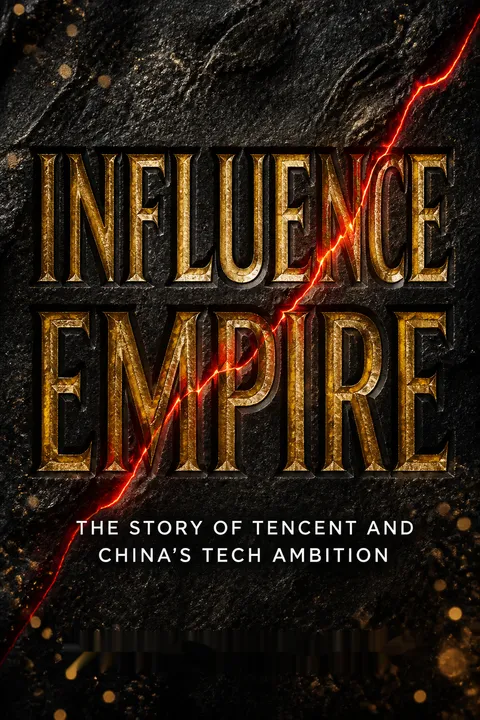


Key Takeaways
Design for the network users have, not the one they might someday get.
Constraints became advantages. Tencent’s first hit, QQ, grew out of a practical insight: China’s early internet users often had slow connections and used shared computers in internet cafés. The service was tiny enough to download in about five minutes, compared with more than half an hour for some rivals. It also stored contact lists online, so users could see their friends from any computer, and let them message people who were offline.
Survival came before scale. Tencent began by imitating ICQ, a successful overseas chat service, and initially expected only 10,000 users in three years. Instead, growth overwhelmed its servers while the company struggled to make money. Designing around local conditions helped QQ become a social network, not merely a chat program, and kept Tencent alive long enough to find a business model.
The case illustrates a durable principle in product design: what looks like a limitation can become a design brief. Slow connections, shared devices, and scarce computer access pushed Tencent toward lighter software and server-based contacts. Those choices improved convenience for the users it wanted to reach. The caveat is that successful infrastructure does more than serve users. A centralized service can also make it easier for a company or government to observe and control activity. Accessibility and accountability need to be designed together, not treated as separate questions.
In China's copycat market, local speed beat Microsoft's polished software.
Iteration beat prestige. Microsoft’s MSN appealed to many urban professionals with a cleaner interface, and at one point held a 53 percent share among business and white-collar users in China. Tencent responded by improving QQ’s file sharing and storage. Its local teams could make changes quickly, while proposals at Microsoft often had to pass through headquarters and took longer to reach users.
Execution mattered daily. MSN also kept key user data on US servers, making logins slow, and its shift to a broader platform confused users. Tencent’s teams fixed bugs and released updates frequently. That speed helped QQ fend off a powerful international rival, but the company’s habit of copying competitors damaged its reputation. The 2010 fight with security company Qihoo forced Tencent to confront public anger about imitation and user trust.
The contrast is not simply nimble local company versus lumbering multinational. Tencent’s advantage came from proximity to users and the authority to act on what it learned. In product markets, each release can function as a small experiment: observe behavior, revise, and test again. Yet speed can also make copying seem like a substitute for creating. The Qihoo backlash shows that a product can win usage while losing legitimacy. Sustainable advantage depends on learning quickly without making other builders or users feel disposable.
Let a small internal rival challenge the product that made you successful.
Tencent competed with itself. As smartphones emerged, Pony Ma worried that a mobile startup could displace QQ. Tencent allowed several internal teams to develop mobile messaging products. Allen Zhang’s small group built WeChat, which initially attracted only about one million users in six months. It later gained momentum through features such as voice messages and Moments, a social feed, and eventually surpassed Tencent’s desktop-era QQ.
The apparent threat was useful. WeChat’s success showed that protecting QQ would not preserve Tencent’s future. The same competitive instinct appeared in gaming, where separate Tencent teams developed rival mobile titles. Such internal rivalry can surface ideas that central planning misses, but it can also waste effort and create friction between teams. The challenge is to let competing products reach users without making cooperation impossible.
This is a practical form of organizational exploration: teams test different answers to an uncertain future instead of betting the whole company on one forecast. It resembles portfolio investing, but inside the firm, where teams can share technical infrastructure and user knowledge. The difficult part is preserving enough independence for a genuine challenge while preventing internal competition from becoming a fight over resources. A company that invites disruption needs clear rules for how the losing team’s work, talent, and lessons are reused.
Invest in capable founders when your own organization lacks their operating skills.
Tencent changed its role. After years of trying to build businesses itself, it began backing outside companies. In 2013, it invested $448 million for a stake in search company Sogou and merged its own search product into the business. It also sold its e-commerce operation to JD.com and took a minority stake, acknowledging it was not the best operator for that market.
Capital could do more than compete. Tencent brought startups money, users, and access to its platforms, while allowing many founders to retain control. This approach helped it build a broad portfolio, including stakes in businesses that became major companies. It also reduced the number of entrepreneurs treating Tencent as an enemy. The model was not pure generosity: investments could strengthen Tencent’s ecosystem and create financial returns, while founders remained responsible for running their companies.
The strategic shift recognizes that ownership and operating competence are different assets. A large company can provide distribution or capital without being the best place to develop every product. That logic is strongest when the smaller company retains enough independence to make decisions its investor would not make. Still, a platform investor holds quiet leverage through access to traffic, data, and financing. A hands-off posture can support entrepreneurship, but the real test is whether a partner can disagree without losing the resources it depends on.
Turn social rituals into payment habits before rivals notice the opening.
A tradition became a product. During Lunar New Year, Tencent employees traditionally queued to receive cash gifts from Pony Ma. WeChat staff turned the custom into digital red packets, which users could send to individuals or groups. The feature became a hit: more than 75 million packets were sent during the holiday in 2014. WeChat then encouraged users to connect bank cards, giving its payment service a fast route into everyday life.
A ride completed the loop. Tencent backed Didi and placed it inside WeChat, while Didi adopted WeChat Pay. Tencent helped shorten the wait for drivers to receive earnings from a day to under two hours. Subsidies encouraged customers to try the system. The strategy made payments useful at the moment of a real transaction, not just as a standalone wallet, and helped WeChat challenge Alipay’s early dominance.
The red packet shows how adoption can grow when technology fits an existing social practice rather than asking people to learn a new one. The transaction also carried an emotional meaning: giving and receiving, not merely transferring funds. Didi then connected that behavior to a frequent practical need. This combination of social motivation and utility can make a payment habit resilient. It also raises a governance question: when one platform becomes both the social venue and the checkout counter, users may have little meaningful choice about how much data they reveal.
Convenience concentrates power when one app mediates nearly every daily task.
WeChat became a digital town square. Its functions expanded from messaging to Moments, public accounts, payments, and Mini Programs, which let people use lightweight services without downloading separate apps. Users could order food, book rides, pay bills, read articles, or scan a restaurant code without leaving WeChat. The app connected people not only to one another, but also to businesses and offline services.
The same reach carried risks. China’s authorities could require platforms to remove content, monitor accounts, and cooperate with investigations. During Shanghai’s 2022 lockdown, users circulated a video documenting residents’ experiences, and censors repeatedly removed it. Users found ways to share it again. The platform that made daily life easier could therefore also shape what people could say, see, and preserve.
WeChat’s usefulness is a form of infrastructural power. Once communication, payments, and services converge, leaving the platform becomes costly even for someone uneasy about its practices. That is different from choosing a single social network: the app can become a gateway to ordinary participation in society. The book’s account makes this tension visible without reducing users to passive victims. People use the platform for real benefits and sometimes use it to resist censorship. Convenience does not erase agency, but it changes the price of exercising it.
Build games as social worlds with recurring reasons to return and pay.
Tencent learned beyond distribution. Early products such as QQ games used existing contact lists, alerts, and virtual items to make play social. Players could buy digital currency and customize their avatars. Tencent later backed studios behind global hits, including League of Legends, Fortnite, and Clash of Clans, often allowing them to keep operating with substantial independence.
Free access widened the audience. League of Legends and Fortnite used free-to-play models, earning revenue through optional purchases such as character skins and other virtual goods. Tencent’s own Honour of Kings was designed for mobile play and social competition, reaching a reported 55.9 percent user-retention rate on day 30. The model turned games into ongoing services rather than one-time boxed products, though it also intensified concerns about excessive play and spending.
The commercial strength of these games comes from combining a playable system with identity, social status, and repeated opportunities to participate. A cosmetic item can matter because friends see it, even if it gives no tactical advantage. This helps explain why virtual goods can feel valuable to players. It also complicates the idea that purchases are harmless because they are optional. Games that continuously reward attention can be enjoyable and socially meaningful, while still putting pressure on players to spend or stay longer than intended.
Treat regulation as part of the product's operating environment, not a footnote.
Permission shaped the business. China froze approvals for new game licences in 2018, leaving Tencent unable to charge for some popular titles. The company reworked PUBG into Game for Peace, removing graphic violence and changing its story to satisfy regulators. The changes drew complaints from players, but the new game received approval to generate revenue.
Compliance offered no guarantee of safety. In 2020, regulators halted Ant Group’s planned $35 billion IPO after Jack Ma criticized financial oversight. Didi listed in the United States in 2021 and soon faced a cybersecurity investigation and removal from Chinese app stores. Tencent, despite its reputation for cooperating with authorities, faced restrictions on games, apps, and payments. These episodes show that a product’s legal and political conditions can change abruptly, with consequences for users, investors, and entire industries.
In conventional product planning, regulation can look like an external constraint to manage after the core service is built. Here it is closer to a design parameter: what can be launched, monetized, or even discussed depends on political permission. Adapting to rules may preserve a business, as the game revision demonstrates, but compliance cannot eliminate uncertainty when regulators retain broad discretion. The useful distinction is between risks a company can engineer around and risks that require political judgment. A forecast of demand is not a forecast of permission.
A Chinese platform answers to users, investors, and political powers at once.
Tencent’s reach crossed borders. Through games and investments, it became connected to companies such as Tesla, Spotify, and Epic Games. Its WeChat service also mattered to Chinese-speaking communities abroad. That reach brought scrutiny in the United States, where officials raised concerns about data and Chinese government influence. In 2020, a threatened US ban prompted downloads to surge, but a court injunction blocked the proposed restrictions.
Global capital was entangled too. US pension funds, university endowments, and investment firms helped finance Chinese technology companies through public markets and private funds. At the same time, disputes over Hong Kong, auditing access, and Chinese data rules heightened political tensions. Tencent could not simply present itself as a neutral global business: decisions in one country could affect users, partners, investors, and regulators in another.
The company occupies a difficult position between incompatible expectations. Users value continuity and access, investors seek predictable rules, and governments prioritize security and political control. A platform with international reach cannot treat those demands as separate markets, because controversies travel across borders through the same network that carries products. The account also cautions against a simple West-versus-China story: the United States helped fund the very firms it later scrutinized, while users abroad depended on services they distrusted. Strategic interdependence creates both leverage and vulnerability.
Build the next interface, but distinguish a promising bet from an inevitable future.
Tencent prepared beyond the smartphone. Its cloud service began as infrastructure for its own products, then expanded to help other businesses manage users, transactions, and services through WeChat. The company described this approach as connecting consumers to businesses and back to consumers. It also invested in Tesla, anticipating that cars could become new places to access music and communication.
The metaverse remained a possibility, not a settled destination. Tencent saw gaming and social media as useful foundations for immersive virtual worlds, while its executives expected the necessary technology to take years to mature. The prospect of Web3, which imagines more decentralized control of online data and services, sits uneasily with a Chinese system that prioritizes state control. Tencent’s future depends not only on building new interfaces, but also on which futures are politically allowed.
The ending reframes technological foresight as a problem of both capability and permission. Tencent can build cloud infrastructure, invest in cars, and explore immersive entertainment, but none of those investments guarantees that users will adopt them or regulators will accept them. This distinction helps separate a technology narrative from a business strategy: technical possibility is only one condition for success. A disciplined company can prepare for several futures without pretending to know which one will arrive. The more powerful the platform, the more its imagined future becomes a political question.
Analysis
Tencent’s rise is a story of compounding connections, but not of unbounded power. QQ connected users across unreliable, shared computing environments. WeChat extended that logic into payments, entertainment, commerce, and offline services. Tencent then connected businesses to this user base through investment rather than trying to operate every service itself. Each layer strengthened the next: more users attracted developers, more services made the platform harder to leave, and more data made the system more useful to businesses and more consequential to government.
The same feedback loop produced fragility. Tencent’s reach gave it leverage over competitors, but also made it visible as a possible rival center of power. Its investments could diversify commercial risk, yet they did not insulate the company from government decisions. The book’s sharpest distinction is between market power and political sovereignty. Tencent could outmaneuver Microsoft, Alibaba, or Uber in particular contests, but it could not set the ultimate rules for data, capital, or acceptable speech.
The company’s culture contains a productive contradiction. Internal competition and rapid imitation helped it respond to new technologies, while its later investment strategy recognized that not every capable founder should be absorbed. Yet these practices also raise questions about fairness and control: copying can weaken smaller innovators, and a platform’s promise to empower partners is complicated by its control over distribution. The account is strongest when it shows how commercial decisions emerge from particular constraints, rather than treating Chinese technology as either pure ingenuity or mere state direction.
The broader lesson is not that one country’s model will simply replace another’s. Tencent demonstrates that platform design, social behavior, capital, and political institutions evolve together. Its story asks readers to evaluate digital convenience by asking who provides it, who can restrict it, and who bears the cost when a system becomes indispensable. The empire’s central asset is connection. Its central vulnerability is that connection makes the company impossible to ignore.
People Also Read







Glossary
QQ Show
Paid digital avatarsTencent’s virtual customization service for QQ users, introduced in 2003. It offered digital clothing, hairstyles, accessories, and other visual details that let people shape an online persona. Users could buy inexpensive items with virtual currency. The service gave Tencent an early way to earn revenue while making self-expression and social status part of the messaging experience.
Q coins
Tencent virtual currencyA digital currency used within Tencent services, including games and avatar customization. Users could obtain it through top-up cards or payment services and spend it on virtual items. Q coins helped Tencent monetize products that people expected to access for free, and made small in-game transactions easier before mobile payments became widespread.
Mini Programs
Lightweight apps inside WeChatSmall services that run within WeChat rather than requiring users to download a separate full application. They let people access functions such as ordering food, booking services, or unlocking shared bikes from inside the messaging platform. Mini Programs expanded WeChat’s role as a gateway to businesses while keeping users within its interface.
Internet +
Linking internet to industriesA concept promoted by Pony Ma in which internet services are connected to established sectors to change how those sectors operate. Linking the web to retail can produce e-commerce, while linking it to entertainment can support online gaming. The idea also extended to transportation, logistics, manufacturing, and local services.
C2B2C strategy
Consumers connect through businessesTencent Cloud’s model for linking individual consumers, businesses, and consumers again. WeChat users form the consumer base; businesses use Tencent’s platforms and cloud tools to reach and serve them; improved services can then attract or retain more users. The strategy tied Tencent’s enterprise offerings to the consumer network it had already built.
shark womb
Internal product competitionA metaphor used in the book for Tencent’s practice of allowing teams inside the company to develop competing products. Like competing embryos in some shark species, teams must adapt and prove their value. The approach can surface strong ideas, as with WeChat’s challenge to QQ, but may also duplicate work and intensify internal rivalry.
xiao bu kuai pao, kuai su die dai
Small steps, rapid iterationA Tencent product-development practice described as moving forward through small improvements and quick updates. Teams fix defects and refine services frequently rather than waiting for a large, polished release. The method helped Tencent respond to local user needs faster than organizations whose decisions depended on slower, more centralized approval processes.
Quan Zhen internet
All-real internetPony Ma’s name for a future in which internet technology is integrated more deeply into physical life, including manufacturing, work, entertainment, and services. The idea overlaps with visions of immersive virtual environments, but also includes the practical connection of digital platforms to offline activity and real-world industries.
Common prosperity
More broadly shared prosperityA political goal emphasized by Xi Jinping that calls for a more modernized socialist society and greater attention to how wealth is distributed. In the book, the concept helps explain the government’s increased scrutiny of powerful technology companies and concentrated fortunes, as well as its effort to redirect the economy toward priorities set by the state.
Download PDF
Download EPUB
.epub digital book format is ideal for reading ebooks on phones, tablets, and e-readers.








