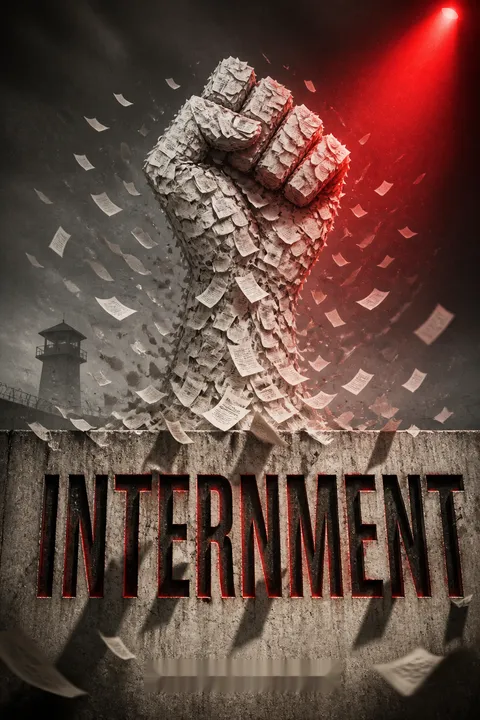


Plot Summary
Last Kiss Before Curfew
By the time Layla Amin is seventeen, anti-Muslim laws have cost her father his university job and pushed her parents to withdraw her from school. She slips out after dark to meet David, her Jewish boyfriend, while neighbors gather to burn banned books, including her father’s poetry.
A woman Layla has known since childhood refuses to acknowledge her, and the smoke from the bonfire follows Layla and David from their hiding place. When a flashlight catches them after curfew, David urges her to run while he draws the pursuer away. Layla reaches home alone, terrified that David has been caught and newly aware that their small acts of normal life can be treated as crimes.
The private meeting gives Layla a brief refuge, but the book burning makes clear that repression has entered ordinary relationships and familiar streets. The neighbor’s silence matters as much as the guards’ pursuit: public cruelty depends on people learning to look away. Layla’s decision to meet David is not a political strategy, yet it becomes a first refusal to let fear dictate every choice. Her return home marks the end of the life she expected, even before she knows how completely it will be taken.
Ten Minutes to Pack
That night, Exclusion Authority agents arrive at the Amin home with the local police chief and order Layla, her father Ali, and her mother Sophia to be relocated near Manzanar. The agents point to Ali’s poem about revolution as evidence, then allow the family ten minutes to pack one bag each. Layla cannot contact David before guards confiscate their phones.
At Los Angeles Union Station, officials scan their documents and stamp invisible identification numbers onto their wrists. The family boards a guarded train, then a bus to Camp Mobius, where razor wire, watchtowers, and FEMA trailers replace the home they were forced to leave. The journey turns a vague government threat into a numbered, controlled existence.
The seizure converts political rhetoric into administrative routine: paperwork, allotted minutes, numbered seats, and an invisible mark on the skin. Ali’s poem is treated as dangerous not because it describes a specific crime, but because it insists that speech can challenge power. Layla experiences the machinery first through small losses, especially the inability to say goodbye to David. The process makes the family’s dispossession look orderly, which is precisely how the state disguises violence as procedure.
Independence at Mobius
At the town of Independence, Layla meets Ayesha, a sharp-witted teenager traveling with her family. Their bus passes the abandoned Japanese American camp at Manzanar before entering Mobius, a vast prison ringed by electric fencing. At orientation, the Director presents segregation by ethnic background as a comfort, assigns local Muslims as minders, and promises a peaceful community.
When a woman protests, guards beat and tase her while the Director watches without intervening. Layla later meets Soheil, an outspoken young Arab American, after he confronts a guard who once knew him from school. The three teenagers recognize that Mobius’s friendly language, divided blocks, and surveillance are designed to make imprisonment seem ordinary.
The camp’s name and the nearby historical site sharpen the gap between American ideals and American practice. The Director does not merely impose force; he packages it as hospitality, while ethnic sorting encourages internees to see one another as separate groups. Layla, Ayesha, and Soheil respond differently to fear: humor, caution, and anger. Their early connection suggests that a community can begin in the very place designed to fragment it, though none of them yet knows what resistance will cost.
A Guard Breaks Rank
Unable to accept life behind the fence, Layla sneaks out after curfew to inspect a possible gap near the camp garden. Jake Reynolds, an Exclusion Guard with a compass tattoo, catches her but returns her to her trailer instead of reporting her. Later, Ayesha helps Layla persuade him to arrange a call.
Layla’s first attempt reaches David’s recorded message, and her frustration erupts at Jake, who lets her speak without punishing her. He then lends her a hidden burner phone. David answers the next call, learns where she is, and agrees to come. Jake’s quiet assistance offers Layla a fragile connection to the outside, but it also makes her question what a guard’s help can safely mean.
Jake’s first acts of kindness do not erase his uniform or the power it gives him over Layla. Their relationship begins in uncertainty, where trust is an inference made under pressure rather than a comfort freely chosen. Layla’s angry outburst after missing David’s call is also a shift: she stops performing calm for a moment and discovers that speaking honestly does not immediately bring punishment. The burner phone becomes both a lifeline and a test of how much danger she is willing to accept for connection.
David's Dangerous Bargain
Jake secretly brings David into a toolshed at Mobius. Desperate to free Layla, David suggests that her parents cooperate with the Exclusion Authority in exchange for release. Layla rejects the idea because it would make them inform on other Muslims, and the argument exposes how fear has begun to distort even their most loving choices.
Jake tells Layla that protests are growing outside the camp, giving her a reason to think beyond escape for herself. With Ayesha and Soheil, she studies the example of the White Rose resistance and decides to write accounts of Mobius for the outside world. They begin recruiting carefully and use a proposed vegetable garden as cover for planning a protest fast.
David’s proposal is meant as protection, but Layla hears its moral price: survival purchased by transferring danger to other people. Their conflict shows how oppression pressures intimate relationships to adopt the state’s logic of bargains and exceptions. Layla’s decision to tell the camp’s story redirects her desire to escape toward collective action. The garden is a practical disguise, but it also gives the teenagers a way to work together in public without surrendering their private purpose.
Testimony Through the Fence
When Noor, an internee Layla has befriended, is dragged down the Midway, two women, Asmaa and Bilqis, try to intervene. Guards assault all three and take them away as the Director watches. Layla writes a detailed account of the attack and other disappearances, then trusts Jake to get it to David.
David returns disguised in an Exclusion Authority uniform brought in with the sanitation crew. He apologizes for his proposal and carries Layla’s writing to a sympathetic reporter outside. The published account gives names and events to rumors the Director has tried to bury. Layla’s testimony is no longer private grief; it is evidence that can reach people beyond the fence.
The account of Noor, Asmaa, and Bilqis shifts resistance from rumor to witness. Layla does not claim to command the camp or control what happens next; she records what she has seen so that the Director cannot make violence disappear into official language. David’s apology repairs some trust, while his disguise reveals how porous the Authority’s control can be when people take risks for one another. Writing becomes an act of accuracy against a system built to manage what others are allowed to know.
The Director on Camera
David sneaks into the Mess again and tells Layla that her story has reached the news. He brings her a burner phone and prepares to leave with another account of camp life. The Director’s men arrive before they can escape. When a guard shoves Layla against a refrigerator, David films the encounter and broadcasts it online, identifying her as an American teenager.
Jake intervenes, invokes the rules protecting minors, and gets David out of the camp. The Director then threatens the internees over the leaked story and announces a Red Cross visit, ordering everyone to present Mobius as a model community. Layla’s reporting has gained an audience, but the Director responds by tightening control and preparing a public deception.
The broadcast makes the body of an internee visible where official messaging has tried to make suffering abstract. David’s camera changes the balance of the scene, not by physically stopping the Director, but by giving his actions witnesses he cannot control. Yet exposure also creates immediate risk for Layla and everyone around her. The planned Red Cross tour turns humanitarian scrutiny into a performance the Director hopes to manage, setting truth and staged appearance on a collision course.
Dinner Without Food
During the Red Cross visit, Layla, Ayesha, Soheil, and their recruits refuse to eat at the Mess. Soheil explains to the gathered journalists that Mobius holds citizens without trial and that people have disappeared. The Director punches him in the face. Guards flood the room, seize the reporters’ phones, and trigger a fire alarm as internees scatter through sprinklers and dust.
The Red Cross removes the injured Soheil for treatment, while the Director imposes roll calls, tighter curfews, and restrictions on movement. The demonstration has cost Soheil his safety and given the Director an excuse to punish everyone, but the reporters have witnessed his violence firsthand.
The fast is deliberately modest: the teenagers withhold participation in the camp’s routine rather than attempt a dramatic escape. The Director’s punch exposes the fragility beneath his polished performance, especially because outsiders are present to see it. The crackdown reveals the asymmetry of the protest: internees can make a moral claim, but the state controls their movement and bodies. Still, the Red Cross and reporters carry away firsthand evidence, preventing the Director from fully containing what happened.
The Fence Still Live
After several days of harsher rules, Layla and Ayesha help organize a silent protest near the camp entrance. A kitchen worker cuts power to the Mess and nearby buildings, allowing about thirty internees to slip out and face the protestors beyond the fence with raised fists. The outside crowd surges toward them, believing the blackout has disabled the electric barrier.
Layla realizes the fence is still live and tries to stop them. In the confusion, Soheil, now outside the camp, reaches for the wire and is electrocuted. Layla returns to her trailer in shock. Before she can recover, the Director’s security team comes for her; when her father resists, they strike him and drag Layla away.
The blackout creates a brief opening, but it cannot control the crowd’s assumptions or the camp’s lethal infrastructure. Layla’s effort to stop the protestors shows how leadership can mean recognizing a danger too late to prevent it. Soheil’s death is not a simple consequence of courage; it is made possible by a system that keeps the fence energized and obscures its threat. His loss deepens the cost of resistance while making the Director’s retaliation more immediate and personal.
The Director's Interrogation
Held in the camp’s brig, Layla is pressured to identify the writers and organizers behind the resistance. The Director’s private security hood her and take her to a hidden room, where he strikes her when she refuses to cooperate. Later, he attacks her again in her cell, but Jake enters with his weapon drawn and forces him away.
Dr. Han records Layla’s injuries and account, while Specialist Fred preserves camera footage. Jake then admits that his superiors had ordered him not to interfere earlier, hoping the Director would create evidence against himself. Layla is returned to her trailer, where she discovers that her parents have been seized and their whereabouts are unknown.
The interrogation makes the state’s violence intimate: Layla is isolated, physically hurt, and asked to convert friendship into information. Jake’s intervention matters, but his confession complicates any easy portrait of him as rescuer. He followed orders meant to expose the Director, leaving Layla to bear a danger she never agreed to carry. The recordings may create accountability, yet they do not undo the assault or locate her parents. Institutional evidence arrives after the human cost has already been paid.
Khadijah Raises the Fist
After Layla wakes from a long, medicated sleep, Ayesha tells her that guards took her parents away. At roll call, the minder Saleem grabs Layla and throws Ayesha to the ground when she objects. Fauzia tries to restrain her husband, and the elderly Khadijah strikes him with her cane and condemns his treatment of the girls.
Other internees step forward instead of dispersing. With no word from her parents and the camp on lockdown, Layla calls on residents from different blocks to march toward the gate. She asks people to bring pots and pans, and Fauzia, despite her role as a minder, gives Layla a bullhorn. The planned protest becomes a broader act of solidarity.
The confrontation with Saleem makes the camp’s divisions visible inside the community, but it also reveals that complicity is not irreversible. Khadijah’s intervention and Fauzia’s later support give Layla help from people whose roles once seemed fixed. Layla’s leadership is no longer sustained only by teenage friends; adults begin to choose a side in public. Her missing parents remain a source of fear, yet she acts without waiting for certainty or permission.
Guns Turn Inward
Layla leads a noisy march to the Hub, where internees and outside protestors demand the camp’s gates be opened. The Director brings Ali and Sophia out at gunpoint to force Layla to stop. She refuses, and the cameras and crowd prevent him from keeping the family as leverage; her parents are released.
When the Director orders the guards to shoot Layla, Jake and several soldiers stand with her, and others refuse the command. The Director draws his own weapon and fires. Jake falls with a gunshot wound after stepping in front of Layla. Security forces seize the Director as internees rush to help the injured. Jake dies from his wound, even as the camp’s authority collapses.
Layla’s refusal works because she is no longer standing alone: cameras, protestors, internees, and dissenting guards make the threat against her costly to conceal. The Director’s command tests whether institutional obedience will outweigh personal judgment, and the guards’ refusal marks a decisive break in his control. Jake’s choice to protect Layla gives the confrontation its human cost. The victory is therefore neither clean nor triumphant; the community wins a chance at freedom while carrying grief that no public exposure can repair.
The Road Out
The government orders Mobius closed and begins releasing the internees. Layla’s parents, reunited with her, tell her that Ayesha and her family have already left and that David will be waiting in Independence. Layla does not pack her belongings; she knows the camp will remain with her whether she carries anything or not.
She walks out between her parents, passing the people who survived and remembering those who did not. At the gate, Khadijah gives her a final sign of solidarity. Layla leaves without looking back, uncertain how life will feel beyond the fence but resolved to find her direction and keep the lost from being forgotten.
Release resolves the immediate confinement, not its psychological aftermath. Layla’s refusal to take her belongings suggests that home cannot be restored simply by returning to familiar rooms; the world outside has been altered by what she witnessed. Her final movement is forward but not healed, and the memory of the dead becomes a responsibility rather than a burden she can discard. The open gate offers possibility, while her uncertainty preserves the truth that liberation and recovery are different processes.
Analysis
Internment traces authoritarianism not as a single dramatic seizure of power but as a sequence of permissions granted to fear. A census becomes a registry; a poem becomes evidence; a train station becomes a processing center; a prison is renamed a community. Each euphemism invites bystanders to treat an extraordinary violation as ordinary administration. Layla’s perspective exposes that progression through concrete losses: school, privacy, family contact, bodily autonomy, and eventually trust in the people who claim to protect her.
The novel’s central conflict is not simply between courage and cowardice. Layla, her parents, David, and Jake all act from a desire to protect someone, but protection can mean very different things. Layla’s parents choose caution because they fear losing their daughter. David considers cooperation because he wants Layla released. Jake follows orders in hopes of building a case against the Director. These intentions do not erase consequences. The story insists that ethical action cannot be judged only by its hoped-for outcome, especially when another person bears the risk without consent.
Resistance grows through communication and coalition rather than individual heroism. Layla’s writing matters because it names people and events; Ayesha’s friendship sustains her; Soheil helps transform anger into collective action; and people across ethnic and generational lines eventually choose to stand together. The story also refuses to make that solidarity painless or magically effective. Soheil and Jake are lost, Layla is injured, and release does not restore the world she knew. The ending treats freedom as a necessary beginning, not a cure.
The novel’s most durable insight is that democratic collapse relies on ordinary participation as much as overt violence. Neighbors turn away, officials follow procedure, minders trade loyalty for limited control, and audiences accept a reassuring image until witnesses disrupt it. Layla’s growth lies in learning that speaking is neither a guarantee of victory nor a substitute for planning. It is a way to keep the reality of other people’s suffering from being rewritten out of public view.
Review Summary
Internment has received mixed reviews. While many praise its timely and important message about Islamophobia and resistance, some critics found the execution lacking. The book's strengths include its powerful premise, gripping opening, and raw emotional impact. However, some readers felt the characters were underdeveloped, the plot predictable, and the villain cartoonish. Despite these criticisms, many reviewers still recommend the book for its relevance to current events and its potential to spark important conversations about prejudice and oppression in America.
Characters
Layla Amin
Witness turned organizerA seventeen-year-old Muslim American and the story’s first-person narrator, Layla is observant, funny, stubborn, and deeply attached to her family, David, books, and the ordinary future she expected. Her parents’ cautious faith in American institutions often frustrates her, while their love gives her a foundation she does not fully understand until it is threatened. Layla is not fearless; she is repeatedly frightened, impulsive, and uncertain about whom to trust. Her strength develops through concrete choices: recording what happens, bringing others together, and accepting that courage does not guarantee safety. Her instinct to speak can endanger people she loves, forcing her to reckon with responsibility as well as conviction.
David
Bridge beyond the fenceLayla’s boyfriend since the previous year, David is a brown Jewish teenager whose family history includes both Ashkenazi and Yemeni Jewish roots. He shares Layla’s humor and affection for quiet, familiar rituals, and their relationship offers a glimpse of the life they hoped to build. David wants to protect her, but fear sometimes leads him toward solutions that conflict with her principles. He is also resourceful, willing to take personal risks to carry her writing outward and connect it with reporters. His bond with Layla is loving without being effortless; distance, danger, and competing ideas of survival test how well they understand one another.
Ayesha
Friend who steadies courageAyesha is a Pakistani American teenager Layla first meets while their families are being transported to Mobius. Quick with jokes and pop-culture references, she uses humor to make unbearable circumstances briefly livable, but she is also alert to danger and willing to challenge Layla when a plan seems reckless. Her family’s safety matters deeply to her, which makes resistance a difficult choice rather than an easy ideal. Ayesha becomes Layla’s closest ally inside the camp, contributing practical ideas, helping recruit others, and sharing the emotional work of fear. Her growing connection with Soheil adds tenderness to a life otherwise organized around rules and threat.
Jake Reynolds
Guard with divided ordersJake is a young National Guard corporal assigned to Mobius, recognizable by the compass tattoo on his forearm. Raised in a military household, he understands duty as obedience and protection, but the camp forces those ideas into conflict. His mother taught him to trust his judgment, while his father expressed care through order and discipline. Jake’s reserve and careful attention make him difficult for Layla to read, and his position gives him power over her even when he wants to help. His moral struggle is shaped by the distance between following a command and serving the people his oath is meant to protect.
Soheil Saeed
Anger with a conscienceSoheil is a young Arab American internee with a sharp tongue, a love of stories, and a strong instinct to challenge injustice. His grandmother, an archaeologist and storyteller, gave him an appetite for history and the dark humor of ancient curses. He is more willing than Layla to name the worst possibilities, which can unsettle others but also keeps danger from being politely ignored. Soheil’s friendship with Layla and growing affection for Ayesha bring warmth to his fierce political convictions. He believes resistance must be organized, not merely imagined.
Ali Amin
Poet father under pressureAli is Layla’s father, a poet and former university professor whose work values close observation and moral truth. Gentle and measured, he tries to protect his daughter by teaching her, maintaining family rituals, and urging caution. His instinct to avoid confrontation reflects genuine fear, not indifference, and it sometimes clashes with Layla’s urgency. Ali’s poetry gives Layla a language for courage and memory, even when she initially resists his quieter approach. He and Sophia share a deep partnership built on long habits of care.
Sophia Amin
Protective mother, fierce healerSophia is Layla’s mother, a chiropractor whose warmth and directness coexist with a fierce protective streak. She relies on prayer, meditation, and practical routines to keep fear from overwhelming her family. Sophia believes that preserving a sense of home can help people endure, while Layla worries that adapting may become surrender. Their conflict comes from love expressed in different forms: Sophia tries to shield Layla, and Layla wants her mother to speak and act against injustice. Sophia’s partnership with Ali offers Layla a model of intimacy built through small, reciprocal acts.
The Director
Camp's polished tyrantThe unnamed Director runs Mobius and presents the camp as a safe, well-managed community. He uses rehearsed civility, slogans, staged tours, and threats to make coercion appear legitimate. His need for control is visible whenever internees challenge the image he has constructed, and he treats public attention as a danger to his authority. The Director does not see himself as merely enforcing rules; he believes fear and obedience are necessary for national security. That self-justification makes him more dangerous, because he can describe cruelty as order.
Fred Adams
Soldier who intervenesSpecialist Adams, usually called Fred, is Jake’s friend and fellow National Guard soldier. His easy manner contrasts with the rigid conduct expected at Mobius, but he is careful about when and where he shows concern. Fred helps protect Layla and works with others who oppose the Director’s abuses. His choices reveal that dissent inside the camp does not belong to one exceptional guard; it can grow through quiet cooperation among people who recognize that orders have limits.
Khadijah
Elder with a steel spineKhadijah is an elderly internee who lives alone and carries a cane. She watches Layla’s actions closely and offers support when other residents blame the teenagers for provoking the Director. Her age does not make her passive; she is direct, physically brave, and willing to confront intimidation. Khadijah remembers Ali’s poetry and uses it to remind Layla that courage can be shared across generations. Her presence connects personal resistance with a longer history of communal endurance.
Suraya
Hijabi organizerSuraya is a Black Muslim teenager who wears hijab and works alongside Layla in the camp garden. She approaches Layla with an offer of solidarity and brings other young women into the resistance. Her faith is personal rather than a performance for others, and she rejects the assumption that visible religious identity makes her powerless. Suraya’s practical thinking helps turn a general desire to resist into plans that can be carried out under surveillance.
Noor
Defiant interneeNoor is an Arab American internee who wears an American flag hijab and treats rebellion as part of her identity as an American. She speaks openly about resistance and refuses to let the Authority define patriotism for her.
Asmaa
Internee who intervenesAsmaa is a young Black internee who attempts to protect Noor when the Director’s security team drags her away. Her quick action makes her solidarity visible, even when the guards respond with force.
Bilqis
Internee who resistsBilqis is a young Muslim woman who joins the effort to stop Noor’s removal. She is willing to confront armed authority directly, and her presence shows that resistance is not limited to Layla’s circle.
Saleem
Minder seeking controlSaleem is one of the Muslim minders assigned to supervise Layla’s block with his wife, Fauzia. He repeats the Director’s rules and pushes residents to obey, partly to preserve the privileges attached to his position. His conduct reflects the pressure of living between the Authority and the community he is meant to monitor, though he often chooses control over solidarity.
Fauzia
Minder with doubtsFauzia is Saleem’s wife and fellow minder. She performs the duties of camp supervision but shows unease with her husband’s harsher actions. Her hesitations suggest the strain of maintaining a role that requires her to police people who share her background. She is more than a functionary, and her choices reveal how small acts of assistance can matter inside a system designed to reward compliance.
Dr. Han
Doctor preserving evidenceDr. Han is a military physician who examines Layla after the Director assaults her. She documents the injuries and records Layla’s account, treating medical care and accurate evidence as linked responsibilities.
Plot Devices
The Exclusion Registry
Turns identity into custodyThe government uses census information and the family’s Muslim identity to identify people for forced relocation. At the station, officials scan documents and apply invisible barcodes to internees’ wrists, then use those numbers to control transport, camp assignments, and roll call. The registry makes persecution appear procedural: each step can be presented as routine administration rather than a decision to imprison citizens without trial. The invisible mark also gives Layla a lasting reminder that leaving the camp will not automatically erase what the state has done.
Mobius Surveillance
Makes every movement costlyCameras, drones, curfews, wrist scans, minders, and armed patrols restrict the internees’ ability to move or communicate. The Director also controls approved news and presents the camp through slogans, staged activities, and a managed Red Cross tour. Surveillance is not only a security measure; it teaches residents to monitor themselves and one another. Layla and her allies therefore use mundane cover, hidden phones, garden work, and carefully timed meetings to organize. The camp’s tight control makes any act of resistance legible as risk, even before guards intervene.
Layla's Testimony
Carries witness beyond the fenceLayla writes detailed accounts of assaults, disappearances, and camp restrictions, then relies on David and Jake to get them outside. Reporters and online broadcasts amplify the testimony, making specific people and incidents harder to bury beneath official claims of safety. The device shifts Layla’s role from frightened observer to witness whose words can influence public attention. It also creates danger for the people who help her, since the Director responds to exposure with tighter rules and retaliation. The testimony becomes one of the few forms of leverage the internees possess.
The Burner Phones
Keep private contact aliveBecause ordinary phones are confiscated and camp calls are monitored, Jake provides Layla with hidden burner phones. They let her reach David, arrange covert meetings, and pass writing beyond Mobius. Their usefulness depends on secrecy, timing, and trust: each call can connect Layla to the outside but also expose her and her allies to punishment. David’s disguise as a sanitation worker extends that fragile channel into the camp itself. The phones make communication a form of resistance rather than a background convenience.
The Garden and the Fast
Turns routine into resistanceThe Authority allows residents to plant a garden, creating a public activity that Layla, Ayesha, and Soheil use as cover to recruit allies. The garden’s ordinary tools and scheduled work offer a place to exchange plans under surveillance. Their first major collective action is a hunger strike timed to the Red Cross visit, when witnesses are present. Later, another protest uses a planned blackout to reach the camp entrance. The gardening and fast begin as modest tactics, but each makes visible the conflict between the community’s daily routines and its imprisonment.
FAQ
Synopsis & Basic Details
What is Internment about?
- Near-Future Dystopia: The novel is set "fifteen minutes" into America's future, where escalating Islamophobia leads the U.S. government to forcibly relocate Muslim American citizens into internment camps.
- Teenager's Fight for Freedom: Seventeen-year-old Layla Amin and her family are sent to Camp Mobius, where Layla grapples with fear and compliance before deciding to actively resist the oppressive regime and expose the camp's injustices to the outside world.
- Themes of Identity and Resistance: The story explores themes of American identity, religious freedom, complicity, and the power of individual and collective resistance and rebellion against systemic tyranny, drawing parallels to historical injustices like Japanese American internment.
Why should I read Internment?
- Timely and Relevant Themes: Internment offers a chillingly plausible near-future scenario that directly engages with contemporary issues of prejudice, nationalism, and civil liberties, making it a vital read for understanding current socio-political anxieties.
- Compelling Protagonist's Journey: Layla's transformation from a fearful teenager to a courageous leader provides an inspiring narrative arc about finding one's voice and fighting for justice even in the face of overwhelming oppression.
- Sparks Important Conversations: The novel prompts readers to consider difficult questions about complicity, the fragility of democracy, and the responsibility of citizens to resist injustice, encouraging dialogue about historical parallels and present-day realities.
What is the background of Internment?
- Echoes of Japanese American Internment: The novel is deeply rooted in the history of Japanese American internment during World War II, explicitly referencing Manzanar and the Korematsu v. United States Supreme Court case to highlight historical precedent for government-sanctioned discrimination and relocation.
- Critique of Post-9/11 Policies & Rhetoric: The narrative draws heavily on the climate of Islamophobia, surveillance and control, and erosion of civil liberties that intensified after 9/11, reflecting real-world fears about registries, travel bans, and the targeting of Muslim communities.
- Author's Note Provides Context: Samira Ahmed's author's note explicitly connects the fictional events to contemporary issues like family separation at the border, police brutality, and the rise of white supremacy, emphasizing that the fascism depicted is "here" in America's present.
What are the most memorable quotes in Internment?
- "Though you muffle my voice, I speak... I resist.": This epigraph, attributed to Layla's father, Ali Amin, encapsulates the core theme of resistance and rebellion through expression and defiance, foreshadowing Layla's own journey to use her voice and words as a form of rebellion.
- "Somebody, after all, had to make a start.": Layla recalls this quote, attributed to Sophie Scholl of the White Rose resistance, recognizing the necessity of initiating resistance and rebellion even when the odds are insurmountable, justifying her decision to act despite the immense danger.
- "A compass doesn't tell you where you are... It's up to you to always find your true north.": Jake shares his mother's words, which serve as a powerful metaphor for finding one's moral direction and purpose amidst confusion and oppression, influencing Layla's understanding of her own path and choices.
What writing style, narrative choices, and literary techniques does Samira Ahmed use?
- First-Person, Present Tense: The novel is told from Layla's immediate, visceral perspective, immersing the reader directly in her fear, confusion, and growing resolve, enhancing the sense of urgency and personal stakes.
- Integration of Poetry and Literary Allusions: Ahmed weaves in poems (Layla's father's, classic poets) and references to literature and history (Macbeth, Wordsworth, Dickinson, Crane, Whitman, Dante, Le Guin, Nietzsche, White Rose, Theresienstadt), enriching the narrative with layers of meaning and connecting Layla's struggle to broader human experiences of oppression and resistance.
- Symbolism and Motif: Recurring symbols like dust, fences, silence, the barcode branding, and the Director's motto "Unity. Security. Prosperity." are used effectively to underscore the themes of dehumanization, control, and the ironic perversion of American ideals.
Hidden Details & Subtle Connections
What are some minor details that add significant meaning?
- The Dust Motif: The pervasive dust in the camp, coating everything and everyone, symbolizes the way the oppressive system infiltrates and contaminates every aspect of the internees' lives, making them feel perpetually unclean and worn down ("dust in Mobius is woven into the fiber of every article of clothing").
- The Director's Physicality: The Director's recurring physical descriptions—his "blotchy red face," "swollen purple lips," and "meaty finger"—serve as subtle visual cues of his corruption, cruelty, and unhealthy obsession with control, contrasting with the worn, human faces of the internees.
- The Ketchup as a Vegetable: The absurd detail of ketchup being listed as a vegetable in the camp's rations highlights the dehumanizing and nonsensical nature of the Authority's rules and priorities, prioritizing bureaucratic control over the basic well-being of the internees.
What are some subtle foreshadowing and callbacks?
- Mrs. Brown and Jim's Complicity: Layla's early encounters with Mrs. Brown avoiding eye contact and Jim from Patriot's Alliance reporting David foreshadow the widespread complicity of ordinary citizens in the new oppressive order, showing how fear and prejudice turn neighbors into informants.
- The Theresienstadt Parallel: The detailed description of the Red Cross visit and the Director's efforts to create a "model" camp chillingly mirrors the Nazi propaganda efforts at Theresienstadt, subtly foreshadowing the potential for the outside world to be deceived and the severe consequences that could follow the inspection.
- Jake's Compass Tattoo: Jake's small compass tattoo, initially just a physical detail, is later revealed to symbolize his mother's lesson about finding one's "true north," subtly foreshadowing his internal moral struggle and eventual decision to align himself with justice rather than just following orders.
What are some unexpected character connections?
- Jake's Military Background and Family: Jake's revelation about his Army father and his mother's lesson about the compass provides unexpected depth to his character, explaining his initial adherence to orders while also highlighting the moral compass that eventually guides his actions against the Director.
- Ayesha's Pop Culture References: Ayesha's frequent use of pop culture references (Star Wars, Game of Thrones, Footloose) serves as a surprising coping mechanism and a way to connect with Layla, revealing her resilience and determination to hold onto normalcy and humor in an abnormal situation.
- Abdul's Internalized Prejudice: Abdul's questioning of Suraya's ability to understand oppression because she wears a hijab reveals the unexpected presence of internalized prejudice and division even among the internees, underscoring the Director's "divide and conquer" strategy.
Who are the most significant supporting characters?
- Ayesha: As Layla's closest friend and confidante within the camp, Ayesha provides crucial emotional support, strategic partnership in resistance and rebellion efforts, and represents the power of solidarity and shared humor in the face of adversity.
- Jake (Corporal Reynolds): Initially appearing as just another guard, Jake becomes a pivotal ally, risking his career and life to help Layla communicate with the outside world and providing crucial information and protection, embodying the potential for individuals within oppressive systems to choose morality over blind obedience.
- Soheil: Soheil's passionate anger and willingness to openly challenge authority serve as a catalyst for the initial organized resistance and rebellion, and his tragic death becomes a powerful symbol that galvanizes both the internees and the outside world against the camp.
Psychological, Emotional, & Relational Analysis
What are some unspoken motivations of the characters?
- Parents' Fear vs. Protection: Layla's parents' primary unspoken motivation is their overwhelming fear for Layla's safety, which drives their initial compliance and desire for her to "keep her head down," even when it conflicts with their own principles and Layla's need to resist.
- Minders' Desire for Control/Safety: Saleem and Fauzia's motivation as minders is likely a complex mix of seeking a semblance of power or privilege within the camp hierarchy and a desperate, misguided attempt to ensure their own safety and that of their families by cooperating with the Authority.
- The Director's Need for Absolute Power: Beyond simply following orders, the Director is motivated by a deep-seated need for absolute control and validation, viewing the camp as his personal domain and any act of defiance as a direct challenge to his authority and ego, as seen in his disproportionate rage.
What psychological complexities do the characters exhibit?
- Layla's Struggle with Fear and Anger: Layla grapples with the psychological toll of constant fear and surveillance and control, experiencing panic attacks and moments of paralysis, but she channels this fear into righteous anger and determination, demonstrating the complex interplay between vulnerability and resilience.
- Jake's Moral Conflict: Jake exhibits significant psychological complexity as he navigates the conflict between his military training and ingrained obedience to orders versus his growing moral unease and empathy for the internees, particularly Layla, leading to covert acts of defiance that risk his own safety.
- The Internees' Varied Coping Mechanisms: The diverse reactions of the internees—from passive compliance and attempts at normalcy (gardening, school, prayer groups) to quiet dissent and open rebellion—showcase a range of psychological coping mechanisms developed to survive the trauma and dehumanization of internment.
What are the major emotional turning points?
- The Family's Relocation: The moment Layla's family is forcibly taken from their home marks the initial emotional shock and trauma, shattering their sense of safety and normalcy and initiating Layla's journey into the harsh reality of internment.
- The Tasing at the Orientation: Witnessing the brutal tasing of the woman who speaks out at the Director's orientation is a pivotal emotional turning point, exposing the raw violence of the Authority and solidifying Layla's understanding of the severe consequences of open defiance, while also fueling her anger.
- Soheil's Death: Soheil's electrocution at the fence is the most devastating emotional turning point, transforming the abstract threat of death into a horrifying reality, deeply traumatizing Layla and the other internees, but also serving as a tragic catalyst that intensifies the resistance and rebellion and draws significant outside attention.
How do relationship dynamics evolve?
- Layla and Parents' Shifting Dynamic: Layla's relationship with her parents evolves from one of typical teenage rebellion against their protective fear to a complex dynamic where Layla's active resistance and rebellion creates distance and conflict, even as their mutual love and concern remain the underlying foundation.
- Layla and David's Connection Under Pressure: Layla and David's relationship is tested and strengthened by the internment; their clandestine communication becomes a vital lifeline, highlighting the depth of their bond, though moments of misunderstanding (like David's collaboration idea) reveal the immense pressure they are under.
- Emergence of Solidarity Among Internees: The shared experience of oppression fosters new relationships and strengthens existing ones among the internees, leading to the formation of a core group of resisters (Layla, Ayesha, Soheil, Nadia, Nadeem, Suraya) and a growing sense of collective identity and solidarity across different blocks.
Interpretation & Debate
Which parts of the story remain ambiguous or open-ended?
- The Fate of Disappeared Internees: The novel leaves the ultimate fate of internees taken to "black-ops sites" ambiguous, hinting at torture and death but never explicitly detailing what happens, leaving the reader to grapple with the horrifying possibilities and the unknown scale of the atrocities.
- The Long-Term Impact on Layla: While Layla walks out of the camp, the ending leaves open the question of the long-term psychological impact of her trauma, suggesting that the scars of internment, the barcode branding, and the loss of loved ones will forever shape her identity and ability to find normalcy.
- The Future of the Resistance and Rebellion Movement: The closing of Mobius is a victory, but the novel doesn't definitively state the future of the Exclusion Laws, the black-ops sites, or the broader fight against Islamophobia and tyranny, implying that the struggle for true freedom and justice is ongoing and uncertain.
What are some debatable, controversial scenes or moments in Internment?
- David's Suggestion of Collaboration: David's idea for Layla's parents to cooperate with the Authority to secure their release is a controversial moment that sparks debate about the ethics of collaboration under duress and whether survival justifies informing on others, even if the information seems harmless.
- Jake's Delayed Intervention: Jake's decision, under orders from High Command, to allow the Director to interrogate and assault Layla to gather evidence is a highly debatable moment, raising questions about the morality of sacrificing an individual's safety for a larger strategic goal and the nature of complicity within a corrupt system.
- The Minders' Role: The characters of Saleem and Fauzia, the minders who cooperate with the Authority and inform on other internees, present a controversial aspect of the narrative, forcing readers to confront the complex motivations and moral compromises people make when faced with extreme pressure and the illusion of self-preservation.
Internment Ending Explained: How It Ends & What It Means
- The Climax of the Protest: The novel culminates in a mass protest by internees marching to the front gate, demanding release. This act of collective defiance, amplified by outside media and external pressure and protestors, forces a confrontation with the Director, who attempts to use Layla's parents as leverage.
- Sacrifice and Exposure: Jake intervenes to protect Layla from the Director's final violent act, resulting in Jake being shot. This sacrifice, coupled with the live media coverage of the protest and violence (facilitated by David and Jake's earlier efforts), creates undeniable public pressure.
- Camp Closure and Uncertain Future: The widespread exposure of the Director's brutality and the death of a National Guard soldier lead to the immediate government order to close Camp Mobius and release the internees. However, the ending emphasizes that while the physical prison is gone, the emotional scars remain, and the fight against the systemic issues that created the camp is far from over, leaving Layla to find her way in a changed world.

Download PDF
Download EPUB
.epub digital book format is ideal for reading ebooks on phones, tablets, and e-readers.








