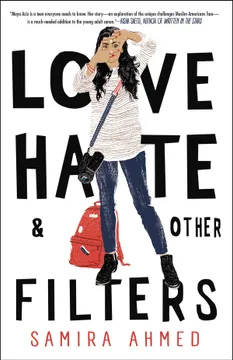


Plot Summary
Prologue
Six months before Maya’s story begins, an unnamed young man sits in a windowless basement while extremists argue over a loosely formed plan. When volunteers are called for, he raises his hand.
The others laugh at his youth and dismiss him as unfit for the task. This brief scene opens a second narrative thread, showing a lonely person reaching toward a group that offers purpose through violence.
The basement scene makes the novel’s danger visible before its characters can recognize it. The young man is not introduced through ideology alone, but through the humiliation of being laughed at and his wish to be taken seriously. That detail does not excuse what follows; it shows how grievance can be recruited into a false sense of belonging. Placing this fragment before Maya’s lively, comic voice also creates a sharp contrast. Her story begins among family, friends, and creative possibility, while his begins in a room where belonging is conditional on violence.
The Wedding Behind the Lens
At a crowded Indian wedding, seventeen-year-old Maya Aziz films her longtime friend Ayesha while her parents steer conversation toward a nearby college and an approved future. Maya has secretly been accepted to NYU, where she hopes to study filmmaking, but has not told them. Her camera lets her observe family rituals from a safe distance, and her aunt Hina is the one person who treats her ambition as more than a hobby.
Then Maya meets Kareem, a Princeton engineering student brought to the wedding by his parents. Their teasing over films feels unexpectedly easy, and Kareem invites her to a young people’s party. Maya leaves with his number, a new possibility, and the familiar fear that her parents will decide what her future should be.
Maya’s camera is both an artistic instrument and a social hiding place. Behind it, she can choose what deserves attention while avoiding the scrutiny of relatives who read her future through school, marriage, and respectability. Her secret NYU application is therefore more than a college preference: it is her first attempt to author a life without parental permission. Kareem’s easy interest unsettles her because he appears to fit the very category her parents would approve, yet she meets him on her own terms. The opening establishes the novel’s central tension in concrete form: Maya wants independence, but she still longs to be loved by the people whose approval constrains it.
Cake, Books, and Secrets
At school, Phil, the football captain Maya has quietly admired for years, asks her to help with an independent study on The Namesake. Their meetings at the Idle Hour bookstore turn into shared cake, easy teasing, and conversations about identity.
Phil remembers Maya’s childhood embarrassment when classmates mocked the Indian sweets she brought to school, and she begins to see that he has noticed her for a long time. He also asks to teach her to swim during spring break.
Their closeness is complicated by Lisa, Phil’s girlfriend, and by Brian, a football teammate whose hostility surfaces when he finds Maya with Phil at the bookstore. Meanwhile, Kareem’s messages keep their wedding flirtation alive. Maya is pulled toward two very different futures, without knowing what either boy truly wants.
The bookstore meetings give Maya a form of attention she rarely receives at home: Phil sees her as a specific person rather than as an Indian girl who should excel at school. His memory of the barfi incident matters because it reaches back beyond their current flirtation and suggests care that predates her awareness of him. Yet Maya’s habit of interpreting small gestures through romantic stories makes the evidence difficult to assess. Lisa’s presence and Brian’s contempt prevent the courtship from becoming a private fantasy. The scenes also establish a recurring asymmetry: Maya is candid about her dreams with Phil, while both teenagers conceal important truths from people around them.
Rain Between Two Kisses
Kareem takes Maya to a fondue restaurant in Chicago, where their jokes ease her nerves and his candid account of airport security screenings gives their shared Muslim identity a sharper edge. He respects her boundaries when she declines wine, and later, under a flowering tree in the rain, they kiss.
Maya enjoys the kiss and the attention, but back at Hina’s apartment she realizes she has imagined Phil in Kareem’s place. The next day, Phil’s planned swimming lesson offers a different kind of intimacy.
Maya is frightened of deep water, but Phil has prepared a quiet pond and patient instruction. As she learns to float, his steady presence helps her risk what she could not manage alone. The kiss and the lesson leave her less certain, not more, about which desire is truly hers.
Kareem’s date complicates the idea that compatibility can be calculated from shared background and family approval. He is not merely a suitable prospect: he is attentive, funny, and capable of discussing the prejudice he faces without asking Maya to soothe him. Her confusion is not evidence that the date was false; she genuinely enjoys it. But the kiss exposes the difference between being treated well and wanting a particular person. Swimming with Phil introduces another intimacy, one built on practical trust rather than romantic staging. Maya’s body learns to stay afloat before she can make sense of her feelings, suggesting that growth begins in action even when certainty has not arrived.
A Pond Made for Two
Over several lessons at the hidden pond, Maya learns to float and then swim a few strokes. Phil’s patience turns fear into a skill, while the two share sandwiches and talk about the futures their families and classmates assume for them.
Maya tells him she wants to make films and leave Batavia; Phil admits he hopes to attend Green Mountain College for outdoor recreation and emergency medical training, not play college football or return to his family’s gas station. He has not told Lisa, who expects him to join her at a nearby university.
Phil shows Maya a private list of adventures he wants to pursue, then rests his head in her lap and holds her hand. Their near-kiss never happens. When he pulls away, Maya leaves the pond believing she has mistaken closeness for a promise.
The pond functions as a temporary space outside Batavia’s social scripts. Phil can admit that football is not his whole identity, and Maya can practice a skill her mother’s fear helped keep beyond reach. Their trust grows through small acts: prepared goggles, remembered food restrictions, and the willingness to show a private list of hopes. Still, intimacy does not automatically produce courage. Phil has withheld his plans from Lisa, while Maya has yet to disclose NYU to her parents. His hesitation at the pond therefore echoes a wider pattern of postponed truth. Maya reads his retreat as rejection because she has no secure way to distinguish uncertainty from disinterest.
Permission With Conditions
At a family brunch, Maya tells Kareem she cannot return his feelings. He accepts her decision without punishing her for it, listens as she explains her crush on Phil, and encourages her to trust what she wants. With Hina beside her, Maya then tells her parents that filmmaking is her intended career and reveals her NYU acceptance.
Her parents resist the distance and the uncertain profession, but Hina reminds them that they, too, once crossed an ocean to pursue a different life. By the next morning, Maya’s parents agree to let her attend NYU, while adding rules about studying, safety, and staying in touch. Maya is relieved, but the permission remains fragile: it rests on family trust that she has only just begun to test.
Kareem’s response is a crucial counterexample to the belief that rejection must become conflict. He remains compassionate without asking Maya to revise her feelings for his comfort, and his support helps her name her desire rather than rationalize it away. The family conversation shifts the novel’s conflict from private longing to public agency. Hina’s argument works because it connects Maya’s wish to her parents’ own migration, placing independence inside the family history rather than outside it. The conditional permission is not a clean victory. Her parents agree to the destination but continue to imagine control as protection, so the next crisis will test whether their acceptance can survive fear.
A Passport in the Ashes
During French class, a lockdown announcement interrupts a film screening. Students learn that a truck bomb has devastated the federal building in Springfield, and rumors spread before officials can confirm details. Investigators find an Egyptian passport belonging to Kamal Aziz and identify him as a person of interest.
Maya shares his surname, so public suspicion reaches her family before the facts do. News coverage eventually establishes that Kamal was at the building for a citizenship ceremony, not responsible for the bombing.
The attacker was Ethan Branson, a young white supremacist with extremist connections who died in the blast. The revelation corrects the accusation but cannot undo the fear and anti-Muslim hostility already set loose. Maya watches a tragedy become a test of whether people will accept evidence over prejudice.
The mistaken identification makes the novel’s title operate as a problem of perception: a name becomes a filter through which strangers assign guilt. Maya’s fear is not abstract. She anticipates the security checks and harassment her family has experienced, and the school lockdown makes her feel both physically endangered and publicly suspect. Kamal’s citizenship ceremony sharpens the irony: a man preparing to affirm his belonging is first presented as a possible enemy. The later identification of Branson corrects the story’s central factual error, but the correction does not automatically repair social damage. The section asks who is granted individuality after violence and who is made to answer for it.
The Safe Future Shrinks
Before the bomber is identified, someone hurls a brick through the window of Maya’s parents’ dental clinic. Her father is cut by glass, patients are injured, and the note attached to the brick includes the family’s home address.
At school, Brian taunts Maya about the attack and treats her as responsible for the bomber because of her Muslim identity. Police protection offers little comfort to her frightened mother. Even after investigators clear Kamal and name Branson, Maya’s parents insist that a larger city is too dangerous and withdraw their agreement to NYU.
They begin discussing ways to keep her close, while Maya feels the future she had just won being taken away. Her growing distance from Phil and Kareem leaves her with few people to confide in.
The clinic attack makes political prejudice intimate by carrying it through the front window of a family business and attaching a threat to the address where they sleep. Maya’s parents respond by narrowing her world, not because they dismiss her talent but because danger has altered what they believe responsible love requires. Their decision is understandable and still damaging: safety becomes indistinguishable from control. Brian’s schoolyard hostility echoes the public accusation against Kamal, turning a national lie into a local relationship. The FBI’s correction cannot restore the earlier permission because fear does not update as quickly as evidence. Maya is caught between her parents’ protective panic and a world that insists her identity is a threat.
The Camera Catches Brian
On the senior class trip to an amusement park, Maya tries to avoid Brian, who has arrived with a shaved head and a hard new intensity. He corners her with two teammates, blames her for his brother’s injuries in Iraq, grabs her, slaps her, and knocks her down.
One teammate leaves, then the other, before Phil hears Maya scream and rushes in. Phil punches Brian and stops the assault, but police arrive and initially consider charging Phil as well. Maya’s elbow is fractured and her thigh badly bruised.
She remembers that her camera was recording and gives the footage to investigators. Its evidence can distinguish Phil’s intervention from Brian’s attack, but the incident leaves Maya injured and her parents even more convinced that she cannot safely make her own choices.
The park assault converts the novel’s diffuse atmosphere of hostility into immediate bodily danger. Brian’s grievance about his brother becomes a license, in his mind, to punish Maya for an identity she did not choose and a crime she did not commit. Phil’s intervention is courageous, but it also raises the question of what he failed to do earlier. Maya’s camera changes function again: it is no longer only a shield or a record of cherished moments, but evidence that can contest a false account. Even this practical agency has limits. The footage may clarify responsibility, yet it cannot prevent the injury or stop Maya’s parents from responding with tighter restrictions.
The Cottage Becomes Refuge
After her parents suggest restricting her movements and making her leave work, Maya slips out on her bicycle and hides in the abandoned cottage beside the pond. She manages a night without electricity, a working phone, or a proper bathroom, then realizes that escape has not solved the choice waiting for her.
When she returns from the pond, Phil is inside, exhausted from searching. He kisses her, then explains that Brian confessed to the assault and the clinic attack, and that Maya’s footage helped clear Phil of wrongdoing.
Phil also admits he had heard Brian make violent threats earlier and failed to challenge him. Maya returns home with Phil, where her parents are frantic and angry. Her temporary refuge gives her room to think, but not a way to avoid deciding what freedom will cost.
The cottage is a refuge built from borrowed supplies and improvised barriers, not a romantic escape from consequence. Maya’s injured body, dead phone, and lack of plumbing expose the limits of independence when it is attempted without resources or a plan. Yet the night alone gives her a brief interval in which her parents’ fear and her own desire are no longer merged. Phil’s confession complicates his role as rescuer: he acted when Maya was in danger, but had earlier avoided confronting Brian. His guilt and Maya’s anger belong in the same scene as their tenderness. Returning home does not resolve their conflicts; it makes clear that both romance and freedom require truth, not just secrecy.
Choosing the Unforgiving Road
With Hina supporting her, Maya tells her parents she will attend NYU, even if they refuse to pay. Her father turns the decision into an ultimatum: she must choose her parents or New York. Maya chooses New York. He says she is no longer his daughter and orders her to leave when she turns eighteen; her mother blames her for breaking their hearts.
Hina offers practical help and reminds Maya that her parents’ love and anger can coexist, though neither cancels the other. Violet also offers her a place to stay. When Phil visits, he and Maya acknowledge that their relationship has no easy future, but he asks her to prom. For the first time, Maya accepts that pursuing her own life may cost her family’s approval.
Maya’s final choice is not a simple triumph of individualism. She has depended on her parents emotionally and financially, so their ultimatum makes the cost of agency immediate rather than symbolic. Her decision also exposes a painful contradiction: the parents who crossed borders for their own future now interpret their daughter’s departure as rejection. Hina’s presence provides a model of care that does not require obedience, while Violet supplies a concrete place to land. Phil’s invitation offers tenderness, but it cannot solve the larger separation. Maya’s adult step begins not with certainty or independence from everyone, but with the willingness to act despite dependence, grief, and the possibility of estrangement.
A Prom Without a Gym
Violet helps Maya prepare for a prom that Phil has planned away from the school dance. He decorates the abandoned cottage with lights, flowers, and a dinner table, then takes Maya to their pond for food and dancing.
The celebration gives them a night together without classmates, parental rules, or the usual prom spectacle. Over the summer, they share one final swim before Maya leaves for NYU and Phil heads toward his own plans. At the pond, they kiss and part without pretending that distance will be easy or promising that their lives will merge.
Maya’s camera has taught her to preserve what matters, but this goodbye cannot be edited into a permanent happy ending. She leaves with the memory of a relationship that was real, even if it could not follow her to New York.
The improvised prom turns the pond from a secret classroom into a chosen setting for intimacy. Phil’s care is visible in the work of arranging lights, food, and music, while Maya’s willingness to accept the night marks a change from observing romance to inhabiting it. The celebration does not erase the structural facts that separate them: she is pursuing film school, and he is following a different path. Their goodbye resists the convenient promise that love guarantees a shared future. For Maya, memory is not a substitute for the life she wants; it is evidence that tenderness can matter without becoming permanent. The shortness of the relationship is part of its truth.
Epilogue
At NYU, Maya studies film and walks New York with her camera, finding the city both exhilarating and unfamiliar. A classmate named Rajiv invites her to a screening, and she agrees, while a brief kiss on the cheek stirs memories of Phil.
She plans to return to Illinois for Thanksgiving at Hina’s, where her parents will join them, and her mother has offered to bring the pink winter hat Maya once rejected. The gesture suggests a possible opening between them, not a full reconciliation. Maya carries the past with her, but her life in New York is no longer only a dream deferred.
The epilogue refuses to treat leaving home as a clean break or a cure. Maya has reached NYU, yet the memory of Phil remains physically present, and a new invitation from Rajiv does not instantly replace that attachment. Her mother’s offer to bring the old hat is modest, almost awkward, but it matters because it is care expressed without reopening the argument. The planned Thanksgiving offers a chance for contact rather than proof that the family has repaired itself. By placing Maya in motion through New York, camera in hand, the ending shows her practicing the life she chose while accepting that love, regret, and unfinished relationships travel with her.
Analysis
The novel links two kinds of misreading. Maya’s small-town community sees her first as Muslim and Indian, then makes her answer for a crime committed by someone with no connection to her. At home, her parents see her independence as a danger that can be managed by keeping her nearby. In both cases, a person is compressed into a category: a suspect, a daughter, a suitable match. The story’s resistance to that compression is practical. Maya films, swims, applies to NYU, tells Kareem the truth, and eventually chooses a future her parents cannot control.
The camera offers a useful model for the novel’s ethics. Filming does not make Maya neutral; she chooses where to point the lens and which moments to preserve. But looking carefully can counter the false stories imposed on her. Her footage records Brian’s attack, just as the novel’s shifts into Ethan’s past complicate the public story of terrorism without transferring responsibility away from him. The structure asks readers to recognize causes without confusing explanation with absolution.
Family love is not presented as either pure shelter or simple oppression. Maya’s parents have built a life through migration and hard work, but their own history does not automatically teach them how to let their daughter make a different choice. Hina’s support shows another possibility: care can remain loyal without demanding obedience. The romance follows the same refusal of easy resolutions. Kareem treats Maya’s rejection with generosity, while Phil’s tenderness cannot erase his delay in confronting Brian or guarantee a shared future. Maya’s achievement is therefore not a perfect ending. It is the harder act of becoming legible to herself, even when love, safety, and belonging remain unsettled.
Review Summary
Love, Hate & Other Filters receives mixed reviews, averaging 3.73/5. Many praise its timely exploration of Islamophobia, Indian-American identity, and a Muslim teenager navigating dual cultures. Readers appreciate Maya's passion for filmmaking and the authentic portrayal of immigrant parental dynamics. However, critics feel the romance overshadows more important themes, and some Muslim readers find the religious representation superficial, noting Maya barely acknowledges her faith. The dual narrative featuring a terrorist's perspective divides opinion, with some finding it purposeful and others unnecessary.
People Also Read







Characters
Maya Aziz
The filmmaker in waitingMaya is a seventeen-year-old Indian American Muslim senior in Batavia, Illinois, and the novel’s first-person narrator. She is observant, funny, and quick to turn awkwardness into a film reference, but her camera also lets her retreat from situations she cannot control. She wants to study filmmaking in New York, while her parents imagine a safer and more conventional future close to home. Maya’s central struggle is not choosing between family and ambition as if only one can matter; it is learning to speak clearly about what she wants while still loving people whose fear shapes her choices. Her romantic imagination can distort what she sees, but her capacity to revise her understanding is part of her growing independence.
Phil
The gentle football captainPhil is Maya’s longtime schoolmate, a popular football player whose easy confidence hides uncertainty about the life others expect him to lead. He is attentive in practical ways, remembers what Maya cannot eat, patiently teaches her to swim, and listens when she speaks about being treated as different. He hopes to pursue outdoor recreation and emergency medical training rather than follow the football path assumed by his friends. Phil’s kindness is genuine, but he can avoid difficult conversations and delay confronting harmful behavior. His relationship with Maya grows through shared trust, while his own future forces him to consider whether being liked by others is the same as being known by them.
Kareem
The generous first dateKareem is a Princeton engineering student Maya meets at a wedding through their parents. He is flirtatious and confident without reducing Maya to a cultural stereotype, and he shares her experience of navigating Muslim identity in America. His dinner date with Maya is attentive, romantic, and complicated by their different expectations. When she tells him she does not return his feelings, he responds with unusual generosity, helping her understand her attachment to Phil rather than demanding that she choose him. Kareem’s importance lies partly in the way he demonstrates that rejection need not become cruelty, and that compatibility cannot be decided solely by family approval or shared background.
Violet
Maya’s fiercely loyal friendViolet is Maya’s outspoken, glamorous best friend, a flirt who can turn a school hallway into a stage but knows when Maya needs protection more than a joke. She helps Maya navigate crushes, stands beside her during public hostility, and offers a place to stay when family conflict makes home feel impossible. Violet’s bluntness sometimes escalates a confrontation, yet it comes from fierce loyalty and a refusal to let Maya be isolated. Her friendship gives Maya a relationship in which she can be funny, frightened, ambitious, and uncertain without having to explain every part of herself.
Hina
The independent auntHina is Maya’s aunt and her mother’s younger sister, a graphic designer who lives independently in Chicago. She encourages Maya’s filmmaking and offers a model of adulthood that is not organized around marriage or obedience. Hina understands her sister’s fears without treating those fears as final authority over Maya’s life. She can translate between generations because she remembers her own family’s migration and the compromises it required. Her support is practical as well as emotional: she stands beside Maya in difficult conversations and is willing to help make school in New York possible. Hina’s independence has cost her family’s approval at times, which gives her advice unusual weight.
Sophia Aziz
Maya’s anxious motherSophia, whom Maya usually calls Mom, is an Indian Muslim dentist and Maya’s fiercely protective mother. She expresses care through food, reminders, family rituals, and constant attention, but she often mistakes closeness for the ability to keep Maya safe. Her expectations reflect both cultural continuity and the vulnerabilities she has experienced as an immigrant in a small Midwestern town. Sophia wants her daughter educated and secure, yet she also fears the distance and uncertainty that independence brings. Her love is real, even when it arrives as pressure, and her relationship with Maya is shaped by the difficulty of recognizing that a daughter can grow without rejecting her family.
Asif Aziz
Maya’s steady fatherAsif is Maya’s father, a dentist who shares a practice with Sophia. He tends to manage conflict with calm, practical reassurance and hopes Maya will choose a secure education close to home. Though less openly anxious than Sophia, he also worries about what may happen if Maya leaves. His restrained manner can make his judgments feel especially final, but he values his daughter and is capable of reconsidering what he once thought was settled. Asif’s own migration gives him a connection to Maya’s wish for a larger life, even when fear initially clouds that understanding.
Brian
The resentful teammateBrian is one of Phil’s football teammates and a classmate of Maya’s. He grows increasingly angry and withdrawn, carrying pain connected to his brother’s military service and injury. Rather than examine where that anger belongs, he directs it toward people he sees as outsiders and treats Maya as a target for grievances she did not cause. His presence shows how ordinary social spaces can become dangerous when prejudice is excused as frustration or locker-room behavior. Brian’s hostility is not presented as inevitable; it is reinforced by the choices he makes and by the silence of people around him.
Ethan Branson
The isolated young manEthan appears in a parallel narrative marked by isolation, a violent home, and a persistent longing to be recognized. As a child, he shows promise in writing, but encouragement is scarce and his father’s abuse leaves lasting damage. His story is presented in fragments, so readers see both the vulnerability of the boy he was and the danger of the person he may become. Ethan’s presence complicates easy explanations of violence without excusing it: suffering can help explain a path, but it does not make the harm inflicted on others less real.
Kamal Aziz
The citizenship hopefulKamal Aziz is an Egyptian immigrant whose life briefly enters Maya’s story through news reports and the shared surname that draws suspicion onto her family. He is connected to a citizenship ceremony and to parents who have built a life in Dearborn. The distance between his private intentions and the public story told about him exposes how quickly a name can be turned into evidence of guilt. Kamal’s role is not to represent every immigrant or Muslim; he is an individual whose ordinary hope for belonging is caught in a moment of national panic.
Lisa
Phil’s girlfriendLisa is Phil’s girlfriend and a familiar presence in the school’s social hierarchy. She expects their plans for college to continue together, while Maya’s growing closeness with Phil puts pressure on a relationship Maya does not fully understand. Lisa is mostly seen through Maya’s anxious perspective, which makes her easy to resent before Maya recognizes that Lisa has her own expectations and is not responsible for Maya’s uncertainty. Her presence keeps the romance grounded in actual commitments rather than allowing Maya’s private fantasy to erase another person.
Suraya
Kareem’s former partnerSuraya is Kareem’s former girlfriend, with whom he reconnects after his brief romance with Maya. Her off-page presence reminds Maya that Kareem has a life and history beyond being a possible match for her. Their renewed relationship is described as easy and honest, offering a contrast to the uncertainty Maya experiences with Phil.
Rajiv
The film-school classmateRajiv is a British Indian student in Maya’s film program at NYU. His teasing about food and colonial history makes their conversation playful, and he invites her to a documentary screening. His presence gives the epilogue a glimpse of Maya’s new social world and the possibility of meeting people without treating a new connection as a replacement for the past.
Plot Devices
Maya’s camera
A lens for agencyMaya’s camera begins as a way to disappear at family gatherings and becomes her preferred method of noticing the world. She films Ayesha’s wedding, records moments with Phil, and uses the camera to shape memories she fears losing. At the amusement park, its recording becomes evidence of Brian’s assault and helps distinguish Phil’s intervention from the attack. The device changes meaning as Maya does: it can protect her from exposure, preserve an experience, or support a claim that others might otherwise doubt. It cannot decide her future for her, but it lets her turn observation into action.
Ethan’s parallel chapters
A second line of causalityBrief third-person scenes follow a young man from an extremist basement meeting through memories of family abuse, childhood isolation, and a plan he believes will give him significance. Because Maya’s first-person narrative cannot see his life, these interludes create dramatic irony without immediately explaining how the two stories connect. They also shift attention away from a simplistic image of violence as an inexplicable event. The structure provides fragments of motive and experience while preserving the distinction between understanding a person’s history and excusing the harm he causes.
The hidden pond
A private practice groundThe pond and abandoned cottage in the Fabyan Forest Preserve give Maya and Phil a place outside school, family, and the roles others assign them. Phil teaches Maya to swim there, and their conversations reveal ambitions neither has fully shared elsewhere. The pond is also a physical measure of Maya’s growing confidence: she first fears entering it, then learns to move through the water and eventually returns alone. Its meaning changes from secret refuge to romantic setting and finally to a place of farewell. The space gives them privacy, but it cannot remove the different futures awaiting them.
The mistaken passport
Prejudice made proceduralA passport belonging to Kamal Aziz is found after the Springfield bombing, leading investigators and news coverage to treat him as a person of interest. Maya’s family shares his surname, so suspicion crosses from a distant crime into her school and home life. The later discovery that Kamal was a victim and Ethan Branson was responsible corrects the official account, but it does not undo the clinic attack or the hostility Maya has faced. This device shows how incomplete evidence can harden into public certainty, especially when the accused person already fits a group stereotype.
The NYU acceptance
A test of self-authorshipMaya’s concealed acceptance to New York University gives her a concrete future to pursue, rather than a vague wish to escape Batavia. First she must reveal that she applied without parental knowledge and persuade her parents to allow her to attend. After the bombing and hate crime, their fear reverses that permission, forcing Maya to decide whether she will keep waiting for approval. The acceptance therefore drives both the family conflict and Maya’s coming of age. It is not a magical solution: tuition, housing, family estrangement, and uncertainty remain, even when she chooses to go.

Download PDF
Download EPUB
.epub digital book format is ideal for reading ebooks on phones, tablets, and e-readers.








