


Plot Summary
Prologue
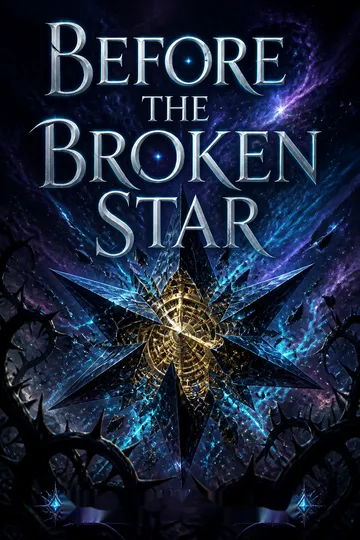
Before the worlds existed, two stars raced to prove their brilliance and collided. One star shattered, leaving a single fragment. The Creator shaped that remnant into the sword of Avelyn and entrusted it to a protector, since the blade could divide the worlds as readily as it had helped make them.
Forgotten for years, the sword eventually reached a lonely girl with a clockwork heart. When she held it, the blade remembered it had once been a star, and both broken creations seemed to have found a purpose.
The opening myth makes fracture the source of the story’s central power. The sword is not valuable because it escaped damage, but because its broken remnant could be remade for a purpose; the same possibility shadows Everley, whose clockwork heart marks survival as both miracle and wound. Yet the myth also introduces danger: a tool that can protect worlds can destroy them in the wrong hands. Its promise is therefore double-edged. Everley’s journey must discover not merely what the sword can do, but what kind of person can carry it without repeating the violence that made her broken.
A Storm Opens the Way
Everley Donovan sails with Captain Vevina’s outlaw crew, pursuing the whale that can carry her to Prince Killian Markham and the stolen sword of Avelyn. Her husband, Jamison Callahan, remains locked below after Vevina’s mutiny, while a Wyeth navy ship closes behind them. When the Terrible Dorcha appears, Everley offers pixie dust for passage to the Land Under the Wave.
Vevina refuses, fearing magic, and orders harpoons fired into the whale. Dorcha smashes the damaged ship as a storm and naval attack overwhelm the crew. Everley frees Jamison and even Markham’s accomplice Harlow, then climbs into a longboat with Jamison and others. Dorcha swallows them, carrying the group through the portal by force.
Everley begins with a clear objective, but her pursuit already depends on people whose aims diverge from hers. Vevina wants a prize she can control; Everley wants a route to the sword; Jamison wants a return home. When Vevina chooses force over negotiation, the expedition’s first catastrophe is not random weather but the consequence of competing definitions of safety. Everley’s decision to free Harlow amid the wreck shows a moral instinct that survives even when trust is scarce. The whale passage turns that instinct into a literal threshold: the group enters a world where their inherited assumptions will no longer protect them.
The Coast of Lost Ships
Inside Dorcha, Everley and the others find Claret alive, then wash ashore separately on a barren coast strewn with wrecked ships. During her fall through the sea, Everley experiences a vision of her father hiding the sword with her uncle, then of her childhood self learning to live under a false identity.
Alone with pixie Radella, she scavenges a wreck and hears a song drawing Jamison into the water. A green-haired merrow is leading him under when Markham throws a net over her. The survivors reunite, but Markham has no sword: he says a pirate captain took it to settle his debt and traded it to the merrow king. The group must now pursue the blade beneath the sea.
The coast makes isolation tangible before the group can rebuild itself. Everley’s memories arrive in fragments, so her history is not simply backstory but an unstable territory she must interpret. Her father’s appearance reinforces her longing for home, while the lesson in concealment shows how survival trained her to confuse privacy with safety. Markham’s rescue of Jamison complicates the usual division between enemy and ally, but the missing sword immediately exposes the limits of the gesture. He can be useful without becoming trustworthy, a distinction Everley will repeatedly struggle to maintain.
A Heart on Display
Markham summons Captain Redmond and his giant-led pirate crew with a battle horn, hoping to bargain for passage to the merrow king’s city. Redmond instead takes Everley and her companions prisoner. During the capture, Markham’s hand tears open Everley’s shirt, exposing the clockwork heart she has hidden since childhood.
Redmond sees her not as a person but as a rare addition to his collection of timepieces, and separates her from Jamison. His ship is full of clocks, yet none of them work in the salt-laden air. The giant mechanic Neely examines Everley’s ticker and confirms that it is failing, though he cannot repair it. Everley is left captive, frightened that her secret has become both spectacle and weakness.
The exposure of Everley’s heart converts an intimate secret into public property. Redmond’s collection is not merely eccentric: it reveals a worldview in which value depends on rarity and ownership. Everley’s fear of being reduced to her mechanism is therefore not vanity, but a practical recognition that others may disregard her agency once they see it. Neely’s inability to fix the ticker also blocks the easy fantasy that expertise can solve everything. Her body is both a marvel and a limit, and the crew’s attention makes her confront how much of her identity has been organized around hiding that contradiction.
The Pearl’s False Promise
After Markham persuades Everley that a blue pearl will silence the merrows, she throws it into the sea. Redmond and first mate Osric use the resulting finfolk response to stage Markham’s execution and let him escape with Harlow. Osric explains that Markham is an elven prince who once loved Osric’s sister, Brea, and that their history ended in grief and betrayal.
Markham had arranged to be captured, not rescued, and Everley’s attempt to bargain with him helped him get away. Osric then turns against Redmond’s plans and helps Everley, Jamison, and Laverick escape the ship. His assistance is not forgiveness: he wants Markham gone, while Everley still wants the sword and a way home.
The pearl episode shows how Markham weaponizes other people’s hopes rather than merely their gullibility. Everley acts because she wants relief for Jamison, and that compassion gives Markham the opening he needs. Osric’s account widens the conflict from personal revenge to accumulated damage: Markham’s charm has left old injuries across generations. Yet Osric’s help is not a clean moral conversion. His hatred supplies the immediate alliance, just as Everley’s mission does. The group escapes through overlapping motives, not restored trust, which makes cooperation both necessary and precarious.
Outrunning the Barghest
Osric guides the fugitives through Eventide, where the pirate crew is negotiating with traders. At the Blood Moon tavern, an elven guard and a tracking hound called a barghest hunt Markham. The prince appears with Harlow, admits he has traded for a way to reach Everblue, and needles Everley about her plan.
When the hound closes in, Osric leads Everley, Jamison, and Laverick through the village while the pursuit scatters the tavern crowd. They escape to a watchtower above the lagoon. Osric reveals that a land portal stands atop the mountain and that a second portal lies near Everblue. He proposes visiting Muriel, a powerful collector who may help them reach the underwater city before Markham.
Eventide’s crowded trade routes create a brief illusion of refuge, but the barghest turns the village into a landscape of surveillance. Markham exploits the chase to announce that he has already secured his own means of descent, pressing Everley to act without knowing the full terms. Osric’s route to the watchtower matters because it changes the group’s geography and their sense of possibility: there is a way home, but it competes with the sword’s location. Their flight is not just escape from a pursuer; it is a forced decision about which destination deserves their limited time.
Muriel Sees the Clock
Muriel welcomes the fugitives into a grotto crowded with rescued cats and identifies Claret as a captive maid in King Dorian’s castle, protected from drowning by enchantment. She is also a seer who trades visions for years of life. In private, Muriel reveals that Everley’s heartwood ticker runs on time her uncle gave up nearly a decade earlier.
Father Time confirms that the gift is almost spent and that the sword is needed to renew the life-preserving ritual. Everley refuses to ask anyone for more years, but Markham is already racing for the sword. Muriel proposes transferring the group’s spirits into merrow bodies so they can reach Everblue without bubble tonic. The plan offers access, but risks their bodies and their remaining time.
The revelation changes Everley’s mission from duty into a personal deadline. Her heart was never an independent machine: its continued beat carries her uncle’s sacrifice, making time a form of relationship rather than a neutral resource. That knowledge deepens her resistance to taking more years from anyone, even as it makes refusal dangerous. Muriel’s own bargain-based longevity provides a troubling counterexample, survival purchased through other people’s finite lives. The spirit transfer extends this moral pressure into the body itself. To pursue the sword, Everley must accept a temporary loss of the very self she has spent years guarding.
Borrowed Tails, Borrowed Time
The group lures merrows near Hangman’s Spit with a fisherman’s disguise, a stolen finperson skin, and Laverick’s black-powder explosions. They capture three, then use Muriel’s ritual to exchange spirits with them.
Everley deliberately takes the body of Princess Nerina, hoping her status will help them enter the castle. Underwater, the travelers follow glowing currents toward Everblue, enjoying the power and living heartbeat of merrow bodies. Finfolk soldiers intercept them before the city.
Markham is with the patrol, protected by bubble tonic, and recognizes Everley despite her disguise. He gags the group and presents them as leverage to King Dorian. Their plan has achieved the underwater journey, but Markham has turned their borrowed identities into another trap.
Everley’s choice to inhabit Nerina is both strategic and self-sacrificing: she assumes the greatest risk because she believes the mission is hers to complete. The brief pleasure of a flesh-and-blood heartbeat complicates her old belief that a clock heart has made her incapable of ordinary feeling. Yet the transformation does not grant freedom; it creates new vulnerability, since her borrowed body carries political meaning she cannot control. Markham’s recognition of her shows that identity cannot be reduced to appearance. The disguise changes what the group can do, but their intentions and histories remain legible to someone who knows how to exploit them.
A King Trades a Name
King Dorian refuses Markham’s demand for the identity of Father Time’s helmsman until Markham threatens Princess Nerina. To save his daughter, Dorian names Holden O’Shea, Everley’s uncle, and gives Markham the information he wanted. After the finfolk leave, Everley finds the sword beside the throne and persuades Dorian to let her take it.
Osric and Laverick meanwhile locate Claret among the castle servants and bring her out under enchantment. The reunited friends escape through the city gates and ride the current away from Everblue. Once Claret reaches open air, her protective bubble breaks and she wakes, terrified but alive. Everley has recovered the blade and her friend, but Markham now knows where Holden is.
Dorian’s bargain makes family love a political currency: he gives Markham the name to protect his daughter, while Everley risks the princess’s body to obtain the sword. Neither choice is simply noble or selfish; both arise from a relation someone refuses to abandon. The revelation that Holden is the helmsman suddenly connects Everley’s private family history to the machinery governing every world. Her victory is therefore inseparable from fresh danger. Recovering the sword solves the immediate quest but gives Markham a route toward the person Everley most needs to protect.
The Grotto Turns Bloody
The friends return to Muriel’s grotto and find Captain Redmond, who has killed the sea hag and cannot account for their original bodies. His crocodile, Tattler, attacks. Everley, Laverick, and Osric use their merrow strength and the sword to drive it back, then follow Radella along the coast while their borrowed spirits begin to slip free.
Everley keeps herself in Nerina’s body long enough to tow Claret and the sword to shore. Only after Jamison takes the blade and Claret reaches safety does Everley’s spirit return to her own body. She then tells her friends that her uncle’s ten-year gift is nearly exhausted. With Markham heading for the land portal, they set out to reach Holden before him.
Redmond’s attack strips away the apparent safety of Muriel’s refuge and forces Everley to choose between preserving herself and protecting Claret. She delays the return to her own body until her friend and the sword are secure, making care a physical act with immediate cost. Once she is home in her body, she finally discloses the truth about the diminishing ticker. This confession repairs no danger, but it changes the group’s ability to respond: her friends can now help with knowledge rather than guessing around her silence. The disclosure is a turning point in intimacy as much as logistics.
The Stairway to Home
Neely blocks the route to the mountain portal, explaining that Redmond has promised him a way back to the giants’ homeland. Osric stays to fight him while Jamison, Laverick, Claret, and Everley climb. Neely catches up, but Jamison shoots him and Radella opens a hole beneath his foot with pixie dust.
Laverick and Claret turn back to delay the giant, leaving Jamison to carry the weakening Everley toward the portal. At the summit, Everley receives a final note from Muriel, then leaps into the colored opening as Neely reaches the platform. She lands in the Everwoods and follows a trail of daisies through seven doors to her uncle’s clock shop. Markham is already there, demanding the infinity sandglass.
Neely’s betrayal is painful because it comes from a gentle figure whose longing for home resembles Everley’s own. His choice makes clear that desperation does not guarantee solidarity; people may pursue the same need through opposing loyalties. The friends’ counterattack distributes risk rather than leaving Everley to manage everything alone, a direct challenge to her habitual self-reliance. At the portal, she accepts uncertainty and jumps because delay would hand Markham the advantage. The Everwoods’ doors then turn her homecoming into a threshold test: the route delivers her to family, but also to the antagonist who has pursued her across worlds.
A Clock Runs Out
Markham forces Holden to turn the infinity sandglass, then knocks him down and takes the artifact. Everley’s shot sends both her and Markham’s spirits to the moon, where discarded objects vanished by pixies accumulate.
Markham retrieves four sky seeds, and Everley wounds his spirit with the sword before they return to the shop. Her strike wounds his arm but cannot stop him from escaping with the sandglass. Holden then presses his bleeding hand to Everley’s ticker and gives her the rest of his remaining time.
Her heartwood heart revives, but Holden dies. Constables enter and find Everley beside his body, so they arrest her for murder and sorcery. The sword is lost to the authorities, and Markham remains free with the tool that can carry him through time.
The scene brings the novel’s competing ideas of time into direct conflict. Markham treats the sandglass as an instrument of mastery, while Holden gives his remaining years freely, making time an expression of love. Everley’s sword can wound Markham but cannot end his power, so the victory is morally meaningful yet strategically incomplete. Holden’s sacrifice saves her life at the price of the relationship that gave that life its history. The constables’ misreading immediately converts private grief into public accusation, showing how institutions can turn visible difference into evidence of guilt.
Fire Cannot Hold Her
Queen Aislinn denies Everley a trial and orders her burned publicly, treating the clockwork heart as proof of sorcery and Holden’s death as murder. Dr. Alick Huxley visits in prison and explains that Quinn and Vevina are safe, but he has not seen Jamison or the others. At the execution, Everley condemns the queen’s false claims and warns the crowd of the coming war.
Radella frees Everley’s bindings as explosions collapse the courthouse and the execution platform. Alick supplies a pistol, and Everley retrieves the sword from Secretary Winters. Vevina drives a wagon through the chaos with Quinn aboard; the escape party evades the constables and hides in the northern countryside.
Aislinn’s sentence turns Everley’s exposed body into a political spectacle, repeating Redmond’s attempt to define her by the ticker rather than her choices. Everley counters by speaking publicly, using the crowd gathered to witness her death as an audience for a warning. Her escape depends on a network she once kept at a distance: Radella, Alick, Vevina, and Quinn each make the rescue possible. The courthouse explosions do more than create confusion; they expose the fragility of the queen’s authority. Everley survives not by proving herself acceptable to the regime, but by refusing its account of her.
A Home Not Yet Settled
At Jamison’s family estate, Everley reunites with Claret, Laverick, Osric, and Jamison. Laverick and Claret acknowledge their love for each other, while Jamison mourns his father, who died during their absence but restored him as heir. He and Everley learn that their wedding was never recorded, so the law does not recognize them as married.
Everley tells Jamison she loves him, and he returns the feeling, choosing their bond regardless of the missing record. The group confirms that Markham escaped with the infinity sandglass and the sky seeds, while the elven council has yet to identify his intended relic or destination. They rest at the estate, together for now, but the threat that drove Everley from home remains unresolved.
The ending offers emotional shelter without pretending the plot’s danger has passed. Everley and Jamison choose each other after the legal form of their marriage disappears, shifting commitment from status to repeated consent. Their intimacy is also shaped by grief: Jamison has lost his father, while Everley has lost Holden, and neither can offer the other a repaired family. Laverick and Claret’s relationship gives the group a second, quieter resolution built on mutual recognition. Yet Markham’s possession of the sandglass and seeds leaves the future open. Home becomes a place to recover, not a guarantee of safety.
Analysis
The novel makes time intimate before it makes it cosmic. Everley’s heart does not simply count down; it embodies the years her uncle surrendered so she could live. That origin turns the fantasy mechanism into a psychological problem: she experiences survival as debt and withholds the truth from friends because she fears becoming another burden. The more she hides, however, the less able those friends are to choose how they will help her. Her eventual disclosure does not remove the danger, but it changes care from a private obligation into a shared practice.
The book also repeatedly contrasts possession with relationship. Redmond collects clocks, Markham treats allies as instruments, and Aislinn controls public narratives. Each mistakes authority over an object or story for authority over another person. Against them, the sword’s remembered purpose and Holden’s freely given time suggest that power acquires meaning through consent and stewardship. Even the sea, which seems at first to swallow people indiscriminately, becomes a place where the characters must learn new forms of cooperation rather than impose familiar rules.
The ending deliberately offers emotional resolution without strategic closure. Everley and Jamison name their love despite the missing legal record, and Laverick and Claret recognize what their friendship has become. These relationships provide a provisional home after loss, not a return to the lives they had before. Markham remains free with the infinity sandglass, so love does not defeat danger by itself. Instead, it gives the characters a reason to face the next danger without pretending that any one of them can bear its cost alone.
Review Summary
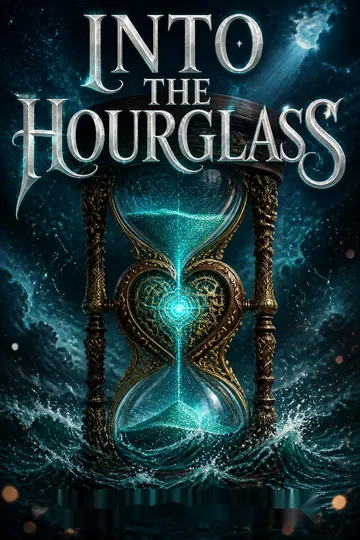
Into the Hourglass receives mostly positive reviews, with readers praising the expanded fantasy world, character development, and increased action. Many enjoy the romance between Everley and Jamison, though some find Everley's insistence on her inability to love frustrating. The pacing and world-building receive mixed opinions, with some finding the magic system unclear. Overall, readers appreciate the adventure, plot twists, and King's writing style, eagerly anticipating the final book in the trilogy.
People Also Read

Characters
Everley Donovan
Clock-hearted seekerEverley is a mapmaker and adventurer whose wooden-and-metal heart keeps her alive while making her wary of being treated as an object. She has learned to conceal her history and body, partly to protect herself and partly because she believes secrecy gives her control. Her quest for the sword is driven by loyalty to her father’s unfinished mission and fear of what Markham might do with it. She is courageous, sharply observant, and often impatient with uncertainty. Her care for others repeatedly pushes her beyond the boundaries she sets for herself, while her guardedness strains the relationships she most wants to preserve.
Jamison Callahan
Reluctant husband and allyJamison is a naval lieutenant, a disinherited earl, and Everley’s husband by a marriage neither initially entered for love. Practical and observant, he wants to return home and make peace with his father, but his loyalty to Everley repeatedly brings him into danger. He is careful with people’s vulnerabilities, particularly Everley’s concealed heart, and often offers steadiness where she expects judgment. His frustration grows when she withholds information, since he sees trust as a necessary part of partnership. Music and family remain important to him, even when his duty and pride make it difficult to speak openly about grief.
Killian Markham
Charming immortal adversaryMarkham is handsome, clever, and practiced at turning charm into leverage. He has crossed worlds for centuries and treats alliances as temporary arrangements, useful only while they advance his aims. His history with Everley makes their conflict unusually intimate: he knows her past and can exploit the wounds he helped create. Markham is capable of affection and regret, but these feelings do not reliably restrain his appetite for control. He often understands what others need and uses that understanding to make manipulation feel like rescue. His confidence can disguise how much of his life is still shaped by exile and loss.
Holden O’Shea
Everley’s clockmaker uncleHolden raises Everley after the destruction of her family and becomes her teacher, guardian, and closest remaining relative. A skilled clockmaker, he protects her by helping her live under a new identity and by keeping painful truths from her. His instinct to shelter Everley comes from love, but it also contributes to her belief that safety depends on hiding. He understands craft as both practical work and a form of care, and his quiet loyalty shapes Everley’s ideas about family, duty, and what a life can be given for.
Radella
Pixie guide and allyRadella is a tiny blue pixie sent from the Everwoods to accompany Everley. She communicates through gestures, trills, and conspicuous acts of mischief, and her magical dust can make objects disappear. Radella is brave when her friends are threatened but easily frightened by the sea and quick to resent being ignored. Her loyalty is not passive: she challenges the group, protects Everley, and makes her own judgments about whom to trust. She also embodies a connection to the Everwoods and to the larger powers shaping the journey.
Osric
Elven first mateOsric is the disciplined elven first mate of the Undertow, marked by a long, complicated history with Markham. He is controlled, skeptical, and sparing with his trust, though his choices show a deep concern for those caught in another person’s schemes. His grief over his family informs his hard judgment of loyalty and betrayal. Osric has practical knowledge of the Land Under the Wave and becomes an essential guide, but his personal motives are never entirely separate from the group’s mission.
Laverick
Inventive powder expertKnown as the Fox, Laverick is a quick-thinking sailor with a gift for black powder, improvised weapons, and bold plans. Her friendship with Claret is central to her emotional life, though she hesitates to expose how much she wants it to become something more. Laverick often responds to fear by making herself useful, especially when explosives or a dangerous distraction are needed. Her resourcefulness can shade into secrecy, but she is capable of acknowledging mistakes and standing beside friends whose choices frighten her.
Claret
Resourceful street survivorCalled the Cat, Claret is a streetwise sailor whose quick instincts have helped her escape trouble throughout her life. She and Laverick share a close friendship shaped by danger, humor, and an unspoken emotional attachment. Claret is resilient but not invulnerable; her confidence can conceal the costs of repeatedly having to land on her feet. She is adept at reading a situation and finding an exit, and her independence makes it difficult for others to know when she needs help.
Captain Vevina
Outlaw ship captainVevina is a former street gambler who commands the Cadeyrn of the Seas and dreams of building a name as a pirate queen. She judges danger through the safety of her crew, a sensible instinct that can harden into distrust of anything magical. Her mutiny against Jamison gives Everley the ship she needs but complicates their alliance. Vevina is ambitious and unsentimental, yet her loyalty to the people around her can lead her to reconsider what she once dismissed.
Harlow
Markham’s elusive accompliceHarlow is Markham’s companion and former spy, a capable survivor who reveals little about what she knows. She is watchful, physically brave, and fiercely attached to Markham, even when signs of harm complicate that devotion. Her guardedness makes her difficult for Everley to read, and she often keeps her own motives behind a calm or mocking exterior. Harlow carries a small inheritance from her family that matters deeply to her, although she is reluctant to explain why.
Muriel
Seer of the grottoMuriel is a human sorceress known as the sea hag, though her youthful glamour masks her age and the cost of her magic. She collects objects and cares tenderly for the cats she has rescued, while bargaining with visitors for years of their lives in exchange for visions. Her optimism persists alongside a sharp awareness of mortality. Muriel is playful, self-dramatizing, and difficult to predict, but she recognizes the larger patterns linking people and worlds. Her unusual perspective can help others while leaving them unsure what she has chosen not to say.
Captain Redmond
Giant pirate collectorRedmond is a giant captain whose immaculate ship and polished manners contrast with his habit of treating people as tradable possessions. He collects clocks in a world where clocks rarely function, hoping to recover a particular watch tied to his past. His desire to return home is genuine, but it does not prevent him from exploiting others to achieve it. Redmond’s resentment over the histories of the worlds informs his politics, and he can mistake a powerful ally’s promises for a path toward justice.
Neely
Giant ship mechanicNeely is a century-old giant and the Undertow’s mechanic, though the crew jokingly calls him its cabin boy. He approaches Everley with patience and curiosity, hoping to understand and repair her unusual ticker. His own history includes a painful break with his family and homeland, which leaves him vulnerable to promises of return. Neely is gentle by nature, but homesickness can pull him toward choices that endanger the people he likes.
Dr. Alick Huxley
Shipboard surgeon and friendAlick is a surgeon who serves as medic aboard the Cadeyrn of the Seas and helps teach Quinn to read and write. He once had romantic interest in Everley, but their relationship settles into comradeship and mutual care. Alick is observant enough to notice signs of injury and patient enough to wait for the truth. He is also an adult presence in Quinn’s life, combining practical medical skill with a protective sense of responsibility.
Quinn
Young sailor in the makingQuinn is the youngest member of the ship’s circle, a twelve-year-old girl who travels with her cat and grows more capable through the care of adults around her. She is curious about people and ideas, and Jamison’s palm readings offer her a way to imagine that her life has meaning beyond her age. Alick teaches her literacy, while the dangers of the voyage force her to become more resourceful. Her youth raises the stakes whenever the adults risk bringing her into conflict.
King Dorian
Grieving merrow kingDorian rules the merrow city of Everblue and is deeply devoted to his daughters after losing his wife. He rarely leaves the castle, preferring the company and safety of his children to the politics of the wider sea. His grief makes him protective and possessive, but also vulnerable to bargains that promise security for his family. Dorian’s authority rests on control of the underwater portals and the resources of his domain.
Queen Aislinn
Authoritarian queenAislinn rules the Realm of Wyeth through ceremony, religious authority, and a claim to prophetic insight. She presents herself as a guardian of order, but her rule punishes dissenting faith and rewards public obedience. Her refined manner makes her threats seem carefully reasoned rather than impulsive. Aislinn is invested in controlling how events are interpreted, particularly when her own authority is challenged.
Princess Amadara
Legendary princess and guardianAmadara is remembered through a famous story about her marriage to Markham, though the legend leaves out important parts of her life. She is associated with the sword of Avelyn and with a grave responsibility involving the worlds. Her story matters because its familiar version has been shaped by the people who survived it, making her an example of how history can conceal the choices and costs of women at its center.
Brea
Osric’s lost sisterBrea is Osric’s younger sister, remembered as someone who sought a life beyond the expectations her family set for her. Her relationship with Markham binds Osric to the prince through affection, regret, and a history he cannot undo. Though absent from the present action, her memory influences how Osric judges Markham and how carefully he watches for signs of harm in other relationships.
Plot Devices
The heartwood ticker
Life measured in borrowed timeEverley’s clockwork heart is made from elderwood heartwood and keeps her alive after Markham’s attack in childhood. Its wooden and metal gears set her apart, invite unwanted scrutiny, and make her dependent on time donated by another person. The weakening ticker creates a physical deadline that advances the plot, while its hidden origin gives Everley a reason to revisit memories she has buried. It also tests her beliefs about personhood: she fears that a mechanical heart makes her incapable of love, though her relationships challenge that assumption.
The sword of Avelyn
A weapon with a remembered purposeThe immortal sword was shaped from a fragment of a star and entrusted with protecting the worlds. Everley’s father found it, and the blade becomes the object of her pursuit after Markham carries it into the Land Under the Wave. Its history links the opening creation myth to Everley’s own fractured life. The sword is also an uncertain instrument: it can harm Markham under particular circumstances, but it does not simply solve every conflict or erase the damage he has caused.
The infinity sandglass
A clock governing every worldThis ancient hourglass keeps time across the seven worlds and is tended by Father Time’s helmsman. Its operation makes time more than a personal measure: turning it affects the shared order of the worlds, while opening it allows spirits to travel beyond ordinary portals. Markham seeks the artifact for his own designs, and its connection to Holden draws Everley’s private family history into a crisis with cosmic consequences. The sandglass provides the mechanism for the final struggle without resolving the deeper question of what Markham ultimately intends.
Pixie dust
Small magic, decisive openingsRadella’s dust can make objects disappear when it touches them, though it cannot erase living beings or things made from creation power. Its limitations keep it from becoming an easy solution, while its practical uses repeatedly alter the group’s chances. Radella uses it against iron restraints and during escape attempts, and later opens a hole that trips Neely. The dust also has value in the Land Under the Wave, where its rarity gives Everley a way to bargain with Dorcha.
Spirit transference
A borrowed body reaches EverblueMuriel’s ritual exchanges a person’s spirit with a merrow’s, allowing land dwellers to breathe and move underwater without bubble tonic. The exchange is temporary, requires a connection between the participants, and leaves each person’s original body exposed. Everley chooses Princess Nerina’s form to gain access to the castle, but Markham recognizes her and turns the disguise against her. The device makes identity physically unstable while preserving the characters’ intentions and memories, giving the underwater rescue both a practical method and a serious risk.
The Evermore Chronicles Series

About the Author
Other books by Emily R. King
Download PDF
Download EPUB
.epub digital book format is ideal for reading ebooks on phones, tablets, and e-readers.








