

Key Takeaways
Treat moral rules as maps to flourishing, not arbitrary fences
Morality is unavoidable. Everyone lives by rules, whether they are inherited, chosen, or never consciously stated. Plato’s Ring of Gyges asks whether a person would still act justly if an invisibility ring removed all consequences. Glaucon says morality is a compromise to protect people from one another. Socrates offers a different answer: justice is part of the good life itself.
Happiness means flourishing. The book calls this the morality of happiness: rules matter because they guide people toward a genuinely fulfilling life, not merely because an authority imposes them or promises a reward. That does not make every desire trustworthy. Reflection tests whether a rule helps people live well, and whether the authorities shaping it deserve their trust.
The Ring of Gyges makes moral motivation concrete by removing reputation and punishment from the equation. Its deeper challenge is whether integrity remains worthwhile when no audience is watching. The happiness-centered answer offers a strong alternative to mere compliance: justice can make a life better from within. Yet the account depends on a substantive view of human flourishing. People who disagree about what counts as flourishing still need shared methods for testing claims, including attention to harms, relationships, and whose voices carry authority.
Ask what your actions are for, because they shape who you become
Purpose gives acts meaning. An intention is the goal that guides an action. A student may study to understand a subject, earn parental approval, or secure a lucrative career. The visible act is similar, but its meaning differs. Moral analysis therefore examines the act itself, its intention, and its circumstances, rather than judging behavior by appearance alone.
Repeated choices form character. A habit is a stable disposition that inclines someone to act in a certain way. Repeated generous acts can form generosity; giving only to impress others forms a different disposition. Actions change the world around a person, and also shape the person acting. This is why the book emphasizes not only good deeds, but the motives and patterns behind them.
This approach links ethics to identity: choices are not isolated transactions, but rehearsals for future conduct. It also helps explain why identical behaviors can deserve different judgments when motives diverge. Still, motives are often mixed or opaque, even to the actor. The book's practical test, whether someone would act similarly without an audience or reward, can prompt useful honesty, but cannot settle every case. Patterns over time, effects on others, and candid feedback from trusted people offer necessary corroboration.
Seek freedom that makes choosing the good increasingly natural
Choice is not the whole of freedom. Freedom of indifference means being free when a choice is genuinely one’s own, whatever the choice. Freedom for excellence adds that freedom reaches its fuller purpose when people can choose what is good and life-giving. A person repeatedly unable to resist a destructive habit may choose freely in one sense, yet be less able to live well.
Virtue expands agency. The faithful spouse who no longer experiences infidelity as an attractive option is not less free merely because fewer alternatives tempt her. Her settled desire makes a good choice easier. This view does not deny responsibility for bad choices. It argues that freedom is more than having options: it includes developing the capacity to act well without being ruled by appetite or fear.
The distinction challenges the common equation of liberty with maximum choice. In practice, addiction, compulsion, and manipulation can leave formal choice intact while shrinking a person's ability to pursue valued ends. The excellence account captures that loss. Its risk is allowing authorities to define another person's good and then label dissent unfree. A sound use of the idea requires accountable standards and respect for agency, especially where people disagree about what a flourishing life should contain.
Train your desires, not merely your outward behavior
Temperance orders pleasure. Temperance is the habit of desiring and enjoying bodily pleasures reasonably, including food, drink, sex, and recreation. It is not the rejection of pleasure. Full virtue means not only doing the right thing for good reasons, but also having desires that support it. The book describes movement from uncontrolled conduct, through regret and self-restraint, toward desires gradually brought into better order.
Practice changes perception. The chapter calls one method cognitive manipulation: deliberately reconsidering a situation so feelings better match what is actually happening. Someone prone to angry outbursts might learn to interpret a sibling’s comment as harmless rather than insulting. Alcohol provides a test case: drinking can support conviviality, but if fun or friendship seems impossible without it, drinking may have taken an outsized place in life.
The account avoids two errors: treating emotion as an unquestionable command, and treating it as irrelevant noise. Feelings can carry judgments about danger, injustice, or pleasure, and reflection can correct those judgments. This resembles modern approaches that change emotional responses by examining interpretations, though the book frames the goal as virtue. Reframing must remain truth-seeking, not self-deception. A person rationalizing a harmful relationship can also reinterpret warning signs, so outside perspective matters.
Form conscience through truth-seeking, not sincerity alone
Prudence turns knowledge into action. Prudence is practical wisdom: seeing a situation accurately, choosing a good response, and carrying it out. A loving parent who sets inconsistent rules may mean well but still harm trust. Prudence draws on experience, accurate memory, openness to guidance, and the ability to decide when circumstances change.
Conscience can be mistaken. Conscience is a reasoned judgment about whether a particular action is right. The book says a person should follow a sincere conscience, yet conscience can be erroneous. Its example of a slaveholder who sincerely judged slavery acceptable distinguishes sincerity from truth. If the person should have known better, ignorance is vincible; if knowledge was genuinely beyond reach, it is invincible. Either way, a harmful act does not become good simply because its agent feels justified.
This framework usefully resists both moral arrogance and relativism. It permits humility about individual responsibility without pretending that sincere belief settles the moral question. Its account of conscience also makes education a moral practice: families, institutions, and cultures shape what people can see. The difficult question is how to assess culpability across historical and social distances. The distinction between preventable and unavoidable ignorance provides a starting point, but actual judgments require careful attention to access, coercion, and power.
Build justice and character through all four cardinal virtues
Four habits organize worldly life. The cardinal virtues are stable qualities for living ordinary human activities well. Prudence guides practical decisions. Justice gives others what is due and supports right relationships. Temperance orders pleasure. Fortitude helps people face difficulty. A person may need all four in one situation, which is why the book calls the virtues interdependent.
Justice includes shared flourishing. It is not limited to courts or laws. Families, workplaces, friendships, and nations all depend on fair practices. The common good is the set of social conditions that enables people and communities to flourish. Rules should serve that good, rather than merely protect the powerful. Since human lives are interdependent, private choices can affect other people, and justice belongs in everyday conduct as much as in public policy.
The cardinal virtues offer a compact map of recurring ethical pressures: judgment, relationship, appetite, and adversity. Their integration is persuasive because real decisions rarely fit one box. The common-good account also corrects an overly individual picture of freedom. Yet appeals to community can conceal exclusion or collective coercion. A credible common good must include the dignity and participation of individuals, particularly those whose interests are easiest for a group to overlook.
Judge war by justice, civilian immunity, and what you intend
War has moral rules. Just-war reasoning asks whether a war has just cause, legitimate authority, right intention, a reasonable chance of success, and whether peaceful options have been exhausted. During war, proportionality limits force, while noncombatant immunity forbids intentionally targeting civilians. These tests do not settle every historical dispute, but they clarify what must be argued.
The Hiroshima case separates outcomes from means. The book accepts that the 1945 atomic bombing may have been proportionate if it prevented an even greater loss of life. It still argues that the bomb failed the test of civilian immunity: destroying the city and using civilian suffering to pressure Japan were not merely accidental side effects. The doctrine of double effect tests whether an act has a good intent, whether harm is used as the means, and whether the good outweighs the harm.
The Hiroshima analysis models an important discipline: a beneficial result does not automatically make every method acceptable. It also makes the historical counterfactual problem visible. Casualty estimates, surrender prospects, and available alternatives remain contested, so proportionality judgments require humility about evidence. The author's strongest claim is narrower: even if the bombing shortened the war, a just end cannot by itself erase the moral significance of intentionally exposing civilians to destruction.
Let your deepest beliefs reshape ordinary choices
Everyone lives from a worldview. Big-picture beliefs about God, human purpose, and death shape what people think ordinary activities mean. The Roman Epicurean Lucretius, who saw reality as matter without personal survival after death, advised pursuing pleasure without the burdens of romantic attachment. The Christian account instead sees human life as created for self-giving love and union with God. Different beliefs can therefore produce different practices, including different sexual ethics.
Faith is more than a label. The book distinguishes fides qua, the way a person believes, from fides quae, the content believed. Christian faith holds that reason matters but cannot fully establish every ultimate truth; trust in God’s revelation completes, rather than replaces, reasoning. Practices also shape belief: how people treat neighbors, mourn the dead, and share resources can express and form their picture of reality.
This is a useful corrective to the idea that only religious people bring ultimate assumptions into ethical debates. Secular materialism also carries claims about human nature and destiny. The comparison between Lucretius and Christian belief shows how such assumptions reach into intimate conduct. But the connection is not mechanical: people who share a faith can still disagree about what a practice means. Worldviews frame judgment; they do not eliminate the need for careful argument about particular cases.
Face sin without denial, and hope without wishful thinking
Sin distorts the pursuit of happiness. In the Christian account, sin is not merely rule-breaking. It is a misordering of goods that harms relationships with God, others, and oneself. Pride is its root: treating the self as the final authority on what is good. The winter windshield image captures why some people recognize this damage more clearly: light makes the dirt visible, rather than creating it.
Hope keeps the story open. Hope is the theological virtue of longing for complete union with God despite present suffering and incompleteness. The book rejects both chasing perfect fulfillment in a partner, career, or pleasure, and giving up on fulfillment altogether. Heaven means complete union with God; hell, definitive separation; purgatory, a painful but healing purification. Christian hope also includes bodily resurrection, not simply a disembodied afterlife.
The pairing of sin and hope prevents two familiar distortions: optimism that minimizes harm, and guilt that treats failure as final. The account of hope also challenges consumer habits that promise completion through the next achievement or relationship. Its claims about judgment and an afterlife are theological commitments, not conclusions available to every reader. Even so, the distinction between genuine aspiration and counterfeit fulfillment can be examined within ordinary experience.
Receive grace as help to become more fully human
Christians claim help, not just instruction. The incarnation is the belief that God became human in Jesus Christ to reconcile humanity with God, reveal divine love, and show a life of self-giving service. The virtue charity means friendship with God and love of others in God. It is not mere warmth: it includes willing another person’s good, forgiving, serving, and correcting without contempt.
Grace changes how virtue is lived. Grace is God’s help toward union with God. The book distinguishes acquired virtues, developed through human practice, from infused virtues, received through grace. Infused cardinal virtues let Christian faith reshape ordinary decisions, not only prayer or belief. Augustine’s conversion illustrates the process: he wanted to change but felt trapped by established desire, then understood transformation as a gift he could accept rather than a feat he could accomplish alone.
This account refuses to reduce Christianity to moral imitation. Its distinctive claim is that the person who teaches virtue also actively enables it. The idea that help can increase rather than diminish freedom is compelling when assistance strengthens capacities the recipient genuinely owns. It also raises a serious theological question: how can divine influence be distinguished from social pressure or self-interpretation? The book answers through the fruits of truth, love, and transformed character, though those fruits still call for discernment.
Make sexual intimacy match the commitment it communicates
Chastity means using sexuality well. The book argues that sex is not an empty gesture whose meaning each couple invents. Because it powerfully joins partners and can create children, it communicates both exclusive, lasting commitment and openness to new life. The author therefore argues that marriage is the fitting setting for fully virtuous sex, while acknowledging that couples outside marriage can love one another and that not all nonmarital conduct is equally harmful.
Marriage is a promise, not a party. The argument distinguishes a wedding celebration from marriage as a public vow of permanence. Public commitment, the author claims, clarifies a couple’s intentions and brings communal support to a shared life. The claim is presented as natural-law reasoning, not only a religious command. Christian belief adds a further meaning: marriage can signify faithful, self-giving love modeled on God’s relationship with humanity.
The book treats sex as embodied communication, a stronger account than either prohibition alone or the claim that consent settles every question. Its central inference remains contested: some couples regard commitment, fidelity, and care as real before or without formal marriage. Public vows can support accountability, but can also be inaccessible or unsafe in some contexts. The useful test beyond the conclusion is whether conduct, stated promises, and responsibility for possible children genuinely align.
Welcome death when appropriate, but do not make killing care
End-of-life choices cannot be avoided. A decision to continue treatment, stop it, or use pain relief can affect how long a patient lives. Suffering is not good in itself, though the book distinguishes educative suffering, endured for a recoverable good, from redemptive suffering, which may acquire meaning through relationships, faith, or courageous endurance. Dependence is also not automatically a life without value.
Intention distinguishes euthanasia. The book defines euthanasia as intentionally ending a patient’s life to end suffering. Giving pain medicine that may foreseeably hasten death can differ from administering a lethal substance with death as the goal. Likewise, refusing extraordinary treatment, meaning treatment judged useless or excessively burdensome, need not mean intending death. The moral question is not simply whether the patient dies, but what the caregiver chooses and why.
The distinction between intending death and foreseeing it is ethically consequential, especially when medicine involves real risk. It protects the possibility of pain relief and refusing burdensome treatment without treating every outcome as equivalent. At the same time, judgments about futility, burden, and patient wishes can be distorted by inadequate care or social pressure. The framework therefore depends on genuine palliative support, informed deliberation, and vigilance that disability or dependence is not mistaken for a life lacking worth.
Analysis
Mattison builds a bridge from everyday moral experience to Catholic moral theology. The route is deliberate: begin with the ordinary question of happiness, examine how choices form character, then ask how Christian beliefs transform practices that people of any tradition must navigate. Its most powerful move is to treat morality as a craft of becoming, not a compliance checklist. Intentions, emotional habits, relationships, and whole-life priorities become visible parts of ethical judgment. This gives the book unusual reach across topics as different as drinking, war, sex, and end-of-life care.
The framework also demands more than private sincerity. If actions require truthful perception, then communities, education, memory, and authority help determine what people can see. The example of mistaken conscience makes humility essential: a person may be sincere and still wrong, yet responsibility depends partly on what could reasonably have been known. That combination resists both easy condemnation and the claim that every conviction is equally sound.
The theological half is not an optional supplement within the author’s account. Faith, hope, charity, and grace change the ultimate purpose of action, and the category of infused cardinal virtue explains how this purpose can alter ordinary conduct. Readers who do not share Christian premises may still assess the arguments about character, interdependence, intention, and care, while disagreeing about supernatural destiny.
The book’s most contestable applications are also its most useful tests. Its conclusions on Hiroshima, marriage, and euthanasia depend on interpretations of intention, historical facts, and what human practices mean. Those conclusions should not be mistaken for neutral findings. Their value lies partly in making hidden premises explicit, so disagreement can focus on evidence and reasoning rather than slogans.
Review Summary
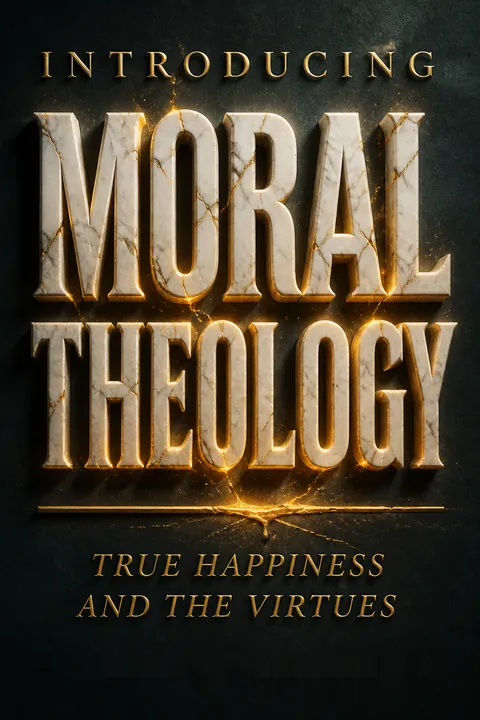
Introducing Moral Theology receives mostly positive reviews, praised for its clarity and accessibility. Readers appreciate Mattison's approach to virtue ethics, focusing on happiness rather than obligation. The book covers cardinal and theological virtues, with case studies on real-life scenarios. Some find it thought-provoking, while others note it drags in places. The emphasis on natural law and acquired virtues is noted, with some wishing for more focus on infused virtues. Overall, it's recommended as a helpful introduction to Catholic moral theology.
People Also Read







Glossary
morality of happiness
Morality as flourishingAn approach that treats moral rules as guides to a genuinely fulfilling human life. It differs from a morality of obligation, where rules are followed mainly because an authority imposes them or because obedience earns a separate reward. The approach assumes that acting well is part of happiness, not simply a sacrifice made to obtain it.
intention
The goal guiding actionAn intention is the purpose a person pursues through an action or purposeful inaction. It makes conduct intelligible and helps distinguish acts that look alike from the outside. In the book’s account, intentions also shape character because repeatedly acting for a particular purpose strengthens that way of seeing and pursuing the good.
habit
A stable personal dispositionA habit is an enduring but changeable quality that inclines a person to act in a certain way. It includes more than repeated outward behavior: the purpose behind the action matters too. A good habit is a virtue; a bad habit is a vice. Repetition can form habits, and established habits influence future choices.
freedom for excellence
Freedom developed toward goodThis account defines freedom not only as the ability to choose among options, but as a capacity whose fulfillment is choosing what is true and good. Someone can make a choice that is genuinely their own yet still act against their fuller freedom by choosing what damages their flourishing. Virtue makes good action more readily possible.
cardinal virtues
Four habits for worldly lifeThe cardinal virtues are prudence, justice, temperance, and fortitude. They govern practical decision-making, relationships with others, bodily pleasure, and the facing of difficulty. The book calls them central hinges of a good human life because ordinary activities require all four, often at once. Their full exercise depends on one another.
prudence
Practical wisdom in actionPrudence is the virtue that helps a person perceive a situation accurately, decide what should be done, and carry that judgment into action. It is not merely caution or abstract knowledge. It guides the other virtues by helping people identify fitting responses in particular circumstances and balance competing commitments.
conscience
Judgment about a concrete actConscience is a reasoned judgment about the moral quality of an action someone is considering, performing, or has completed. It must be followed when sincere, but it can be mistaken. The book distinguishes ignorance that a person could have corrected from ignorance that could not reasonably have been overcome.
fides qua and fides quae
Faith’s manner and contentFides qua means the faith by which a person believes, the habit or act of believing. Fides quae means the content believed, such as claims about God and humanity’s destiny. Mattison uses the distinction to show that people can share the human practice of belief while holding different, sometimes contradictory, accounts of reality.
doctrine of double effect
Test for mixed effectsThis moral reasoning method evaluates actions that may produce both good and bad effects. It asks whether the intention is good, whether the bad effect is used as a means to the good one, and whether the good achieved is proportionate to the harm. The book applies it to warfare and end-of-life pain relief.
infused cardinal virtue
Worldly virtue aided by graceAn infused cardinal virtue concerns an ordinary human activity, such as eating, justice, or decision-making, but is received through God’s grace and directed toward union with God. It differs from an acquired cardinal virtue, which is developed through human practice for natural flourishing. The same outward act can therefore have a different source and ultimate purpose.
charity
Friendship with God and othersCharity is the theological virtue of loving God for God’s own sake and loving other people in relation to God. It is primarily an act of the will, not merely a feeling. In the book’s account, it makes love of neighbor intrinsic to love of God and gives the other virtues their direction toward humanity’s ultimate good.
euthanasia
Intentional ending of lifeMattison defines euthanasia as an action or omission intended to end a patient’s life in order to end suffering. This definition distinguishes it from treatment intended to help or relieve pain that may foreseeably hasten death, and from refusing treatment judged useless or excessively burdensome. The key distinction is what the caregiver intends.
FAQ
What's Introducing Moral Theology: True Happiness and the Virtues about?
- Exploration of Moral Theology: The book delves into the intersection of moral theology and the pursuit of true happiness through the cardinal and theological virtues.
- Virtue-Centered Approach: It emphasizes the importance of virtues, particularly the cardinal virtues (prudence, justice, temperance, and fortitude), in shaping moral actions and character.
- Integration of Faith and Reason: The author, William C. Mattison III, integrates Christian moral theology with practical ethical considerations, making it accessible to a broad audience.
Why should I read Introducing Moral Theology: True Happiness and the Virtues?
- Practical Guidance: The book provides insights into how to live a fulfilling life by understanding the role of virtues in moral decision-making.
- Engaging Style: Mattison writes in a welcoming tone, drawing from his experiences teaching students, making complex theological concepts relatable.
- Addressing Contemporary Issues: It tackles relevant moral issues, such as alcohol use and justice in warfare, providing a framework for understanding these topics through a virtue lens.
What are the key takeaways of Introducing Moral Theology: True Happiness and the Virtues?
- Morality Equals Happiness: The book argues that living morally is intrinsically linked to achieving genuine happiness, challenging the notion that morality is merely about obligations.
- Importance of Intentions: It emphasizes that understanding one’s intentions is crucial for moral actions, as intentions give meaning to our actions.
- Role of Virtues: The cardinal virtues are presented as essential for living a good life, with each virtue guiding specific aspects of human behavior.
What are the best quotes from Introducing Moral Theology: True Happiness and the Virtues and what do they mean?
- "Justice is called natural.": This quote underscores the idea that justice is inherent to human relationships and communities.
- "Fortitude is the ability to face obstacles or difficulties well.": This definition of fortitude emphasizes the virtue's role in enduring hardships with courage.
- "Sin is an offense against reason, truth, and right conscience.": This quote encapsulates the book's view on sin, indicating that it harms our ability to live rightly.
How does Introducing Moral Theology: True Happiness and the Virtues define virtue?
- Good Habit: A virtue is defined as a good habit that inclines a person to act well, both in terms of actions and intentions.
- Character Formation: Virtues shape who we are, influencing our desires and how we respond to various situations in life.
- Contrast with Vices: Vices are bad habits that lead to poor actions and intentions, highlighting the importance of cultivating virtues for moral living.
What is the relationship between morality and happiness in Introducing Moral Theology: True Happiness and the Virtues?
- Morality as Fulfillment: The book posits that true happiness is found in living a moral life, where moral actions align with our deeper desires for fulfillment.
- Socrates vs. Glaucon: It contrasts Socrates’ view that the good life is inherently moral with Glaucon’s perspective that morality is a compromise to avoid suffering injustice.
- Moral Realism: The text supports the idea that there are objective moral truths that contribute to genuine happiness, regardless of individual perceptions.
How does Introducing Moral Theology: True Happiness and the Virtues define prudence?
- Practical Wisdom: Prudence is described as “right reason in action,” enabling individuals to see and act rightly based on a truthful grasp of situations.
- Preeminent Virtue: It is considered the charioteer of the virtues, guiding how the other virtues are exercised in practical decision-making.
- Importance of Context: Prudence requires understanding the specific circumstances surrounding an action to determine the best course of action.
How does Introducing Moral Theology: True Happiness and the Virtues address the concept of conscience?
- Judgment of Reason: Conscience is defined as a judgment of reason that recognizes the moral quality of an act, guiding individuals in their decisions.
- Formation of Conscience: The book emphasizes the need for a well-formed conscience, as it can be erroneous, leading to wrong actions despite sincere intentions.
- Moral Responsibility: It asserts that individuals must always follow their conscience, but acknowledges that one can act wrongly while believing they are acting rightly.
What role does hope play in Introducing Moral Theology: True Happiness and the Virtues?
- Hope as a Theological Virtue: Hope is presented as a virtue that inclines individuals to seek union with God as their ultimate destiny.
- Connection to Faith: The book emphasizes that hope is rooted in faith, as it is through belief in God's promises that individuals can maintain hope for eternal life.
- Hope's Impact on Daily Life: Hope enables individuals to live more virtuously in the present, as it provides motivation to pursue goodness and resist despair.
How does Introducing Moral Theology: True Happiness and the Virtues explain the relationship between faith and reason?
- Complementary Nature: The book argues that faith and reason are not opposed but rather complement each other in the pursuit of truth.
- Role of Reason in Faith: Reason is essential for examining and articulating the content of faith, allowing believers to engage thoughtfully with their beliefs.
- Faith Transcending Reason: While faith builds upon reason, it also transcends it by offering truths that go beyond human understanding.
How does Introducing Moral Theology: True Happiness and the Virtues address end-of-life decision-making?
- Quality of Life Judgments: The book emphasizes that quality-of-life judgments are essential in end-of-life decision-making, recognizing that suffering and dependency can influence choices.
- Euthanasia Definition: Euthanasia is defined as the intentional ending of a patient's life to alleviate suffering, and the text argues that this act is never virtuous.
- Prudential Decision-Making: The author advocates for prudential decision-making in end-of-life situations, encouraging individuals to weigh the circumstances and intentions behind their choices.
Download PDF
Download EPUB
.epub digital book format is ideal for reading ebooks on phones, tablets, and e-readers.








