


Key Takeaways
Stop treating male measurements as a complete model of humanity
The default is male. A gender data gap is the absence of information about women, whether because researchers never collected it or failed to separate it from men's data. The gap shapes what societies remember as human history. For decades, archaeologists assumed an armed Viking burial belonged to a man, despite a female pelvis. DNA later confirmed the warrior was a woman, yet some scholars continued to question the finding in ways they did not question comparable male burials. Cave handprints beside paintings of game animals were also assumed to be men's work, until analysis suggested many were made by women.
Absence changes interpretation. The same bias appears in language and culture: studies find that supposedly generic masculine terms are often understood as male, while textbooks, news, and film show men far more often than women. The result is a feedback loop: what is under-recorded becomes easy to overlook, then male experience is mistaken for universal experience.
What's striking is that the error does not require a conspiracy. A sample can quietly become a norm when no one asks who is missing, and then the norm shapes the next round of evidence. This is a measurement problem with cultural consequences: data does not merely describe the world, it helps decide what counts as normal. The book's historical examples make that mechanism vivid. Still, the remedy is not simply to add women to every story as a corrective category. It is to ask whether the original categories and questions were built to detect their lives at all.
Plan streets around care journeys, walking, and safety, not just commutes
Equal inputs can be unequal. In Karlskoga, Sweden, snow was cleared from major roads before pavements and cycle paths. Officials reconsidered the order after noticing that women were more likely to walk and use public transport, often while accompanying children or older relatives. These linked errands are called trip-chaining: several short journeys joined into one care-related route. Clearing pedestrian paths first reduced falls, especially among women, and the book reports that winter pedestrian injuries cost roughly twice as much as road maintenance.
Design for real use. Similar blind spots appear in public toilets. Equal floor space for men's and women's facilities is not equal capacity when urinals serve more people per area and women generally need longer. Good planning begins with how people actually move, wait, and use a space. Vienna widened pavements, added crossings and ramps, and placed housing near transit, childcare, shops, and health services.
This is a practical lesson in systems engineering: optimizing one visible metric, such as keeping car traffic moving, can shift costs onto pedestrians, caregivers, and hospitals. Mapping journeys rather than counting only peak-hour commuters reveals the hidden work a city depends on. Accessibility improvements often help more than the group first considered, including wheelchair users, parents with strollers, and older residents. The limitation is that gender averages can hide major differences within groups. Income, disability, age, and neighborhood safety all affect mobility, so useful planning needs detailed local evidence rather than a single imagined female traveler.
Count unpaid care before calling workers, budgets, or economies productive
Work does not vanish unpaid. In 1975, 90 percent of Icelandic women stopped both paid and unpaid work for a day. Offices, schools, and services struggled; men had to improvise meals and childcare. The action made visible labor that normally went uncounted. Across the world, women perform about 75 percent of unpaid care work, yet conventional GDP measures largely exclude household cooking, cleaning, and caregiving.
The omission shapes policy. Time-use surveys show women often work longer total days than men, but governments rarely use such evidence to design budgets or workplaces. When public childcare and eldercare are cut, the need does not disappear. It transfers to households, usually to women, reducing their paid work and income. The book argues that investing in care services can create jobs and enable more women to work, while properly paid parental leave and pension credits can recognize care responsibilities.
The economic point is deeper than assigning a price tag to housework. GDP is a convention, not a complete inventory of social value, and its boundaries influence which needs appear affordable. Counting care can expose how austerity shifts rather than eliminates costs. Yet valuation alone is not justice: unpaid work can be measured and still remain unequally assigned. The strongest policy response therefore has two parts, recognizing care in national accounting and redistributing it through public services, workplace design, and shared parental responsibility. Otherwise, a more accurate spreadsheet may describe the burden without changing who carries it.
Meritocracy needs bias checks, because confidence in fairness can hide favoritism
Fairness needs evidence. For much of the twentieth century, the New York Philharmonic hired almost no women. Blind auditions, in which musicians played behind a screen, changed the selection process; women soon made up half of new hires, and their share of the orchestra rose substantially. The screen did not improve anyone's talent. It reduced the chance that evaluators would mistake assumptions about gender for judgments of ability.
Good intentions are insufficient. Studies described in the book find that performance reviews use more personality criticism for women, and that women can receive smaller bonuses than equally performing men. Declaring an organization meritocratic can make managers less alert to bias, not more. Hiring algorithms can repeat the same mistake when they reward patterns associated with past successful candidates, such as activity in online communities where women may be less represented. Blind review, transparent pay data, and monitored decisions offer ways to test claims of fairness.
The orchestra example shows how a small procedural change can outperform exhortations to become less biased. It also illustrates a general principle of evaluation: when judgment is noisy, conceal irrelevant signals and audit outcomes. That does not mean every decision can be made blind. Collaboration, leadership, and long-term performance require context, and proxies can reintroduce bias under new names. The useful question is therefore not whether an institution believes in merit, but whether it can demonstrate that its measures predict the work it values and do so comparably across groups.
Test products on varied bodies before calling them universal
The average can injure. Car safety is a stark example. Crash testing historically centered on a male dummy, and the female dummy used in some tests was often a scaled-down male model. Yet women in crashes have been reported as more likely than men to suffer serious injury and to die. Differences in stature, seating position, muscle distribution, and pregnancy can affect how restraints and seats work. A smaller version of a male body is not automatically a good model of a female one.
Fit is a safety feature. The same assumption appears in workplaces: standard protective equipment may be too large, heavy, or poorly shaped for women, sometimes prompting workers to remove it or work less safely. Smartphones designed for larger hands can be hard to use, while speech-recognition systems trained mostly on male voices may recognize women's speech less accurately. Test with the bodies and voices that will actually use a product, then report results by sex.
Designers often treat the average as neutral, but an average is a choice about whose variation matters. Safety engineering offers a useful corrective: test boundary cases, not only the central case, because failures cluster at the margins. Here, women are not a marginal population, but the design process can make them one. Still, sex is not a complete proxy for body size or ability. A robust design program should test overlapping ranges of stature, strength, disability, age, and pregnancy, rather than replacing one universal template with another.
Make medical evidence sex-aware from cells through diagnosis and treatment
Medicine inherited a male norm. For generations, research treated male bodies as standard and women's bodies as complicated exceptions. After the thalidomide disaster, US rules excluded women who could become pregnant from many drug trials, deepening the evidence gap. But sex differences occur in organs, cells, disease patterns, and drug metabolism. Testing only male cells or animals can miss treatments that work differently in women.
Diagnosis can fail too. Women with heart attacks may lack the familiar chest-pain pattern, and are more likely to be misdiagnosed. The book also describes long delays for endometriosis, a condition affecting roughly one in ten women, and cases in which women's physical pain was dismissed as anxiety. Inclusion alone is not enough: researchers must analyze results by sex, and clinicians must learn that unfamiliar symptoms can reflect gaps in medical knowledge rather than unreliable patients.
The crucial distinction is between biological difference and social treatment. The book argues for studying sex-linked physiology while also examining how gender affects care, symptoms reported, and clinicians' responses. That approach strengthens precision medicine because treatments designed around a single reference body can fail predictably for others. Caution is still needed: group averages do not dictate an individual's diagnosis, and sex does not explain every disparity. Better evidence should widen clinical judgment, not replace it with rigid assumptions about what women or men are supposed to experience.
Put women in decision rooms, then give them real authority
Perspective changes priorities. Research cited in the book finds that women legislators are more likely to address education, family policy, and care, and that women's representation can shift public spending. In India, reserving seats for women in local councils increased investment in infrastructure linked to women's needs. The case is not that every woman thinks alike. It is that a decision-making group missing half the population is likely to miss needs its members do not encounter.
Presence is not power. Women in politics may be interrupted, excluded from informal negotiations, or threatened into silence. All-women candidate shortlists and party-list quotas have increased women's representation in some settings, but formal access does not ensure influence. Clear speaking rules, transparent decision-making, and enforceable protections against harassment help convert representation into participation. Without them, women may be present in the room while the consequential conversation happens elsewhere.
Representation is best understood as an information condition as well as a fairness principle. People bring situated knowledge: experience can reveal costs that a policy model omits. But no representative carries the experience of every woman, and a more diverse table can still reproduce established hierarchies. The design of deliberation matters: who sets the agenda, controls speaking time, and decides what counts as expertise can determine whether additional perspectives alter policy or merely decorate it. Representation creates the opportunity for better decisions, not a guarantee.
Build disaster response around women's risks, knowledge, and recovery needs
Crisis magnifies old omissions. After an earthquake in Gujarat and a tsunami in Sri Lanka, rebuilding plans produced homes without kitchens, overlooking work largely done by women. After Hurricane Katrina, displaced Black women were poorly represented in recovery decisions, and public housing communities that supported childcare, safety, and transit connections were demolished. These were not minor design oversights. They disrupted the systems people relied on to recover.
Safety must be designed in. Women face specific risks in conflict, pandemics, disaster shelters, and refugee camps, including violence, lack of reproductive care, and unsafe or inaccessible toilets. Yet women are often left out of planning and peace negotiations. The book cites analysis showing that peace agreements involving women are more likely to last. Asking women what they need, and giving them authority in recovery, can improve both the response and the information on which it rests.
Emergency planning often rewards speed and visible infrastructure, while overlooking the social networks and daily routines that make survival possible. This section argues that these omissions are not merely symbolic: they can determine access to food, shelter, sanitation, and safety. Community knowledge is a form of operational intelligence, especially when official records are incomplete. Still, including women cannot substitute for resources or protection from violence. Consultation matters when it changes budgets, services, and accountability, rather than serving as a procedural box checked after decisions have already been made.
Analysis
The book's central argument is that data gaps are not empty spaces. They are active design choices, even when no individual intends to discriminate. A male-centered sample becomes a supposedly neutral standard; institutions then build products, policies, and explanations around that standard. Those systems generate new evidence that appears to confirm the original assumption. This feedback loop connects cultural representation to material consequences: who is remembered influences who is researched, and who is researched influences who is protected.
The book is strongest when it follows this mechanism across unrelated settings. Snow clearance, crash tests, clinical trials, hiring software, and economic accounting look like separate topics, but each asks the same question: whose ordinary experience was treated as representative? Its examples also show why collecting data is not enough. Findings can exist without changing law, budgets, or practice. Measurement must be linked to decision-making and accountability.
A careful reading should distinguish the book's forceful pattern argument from any claim that every difference between women and men is caused by bias. Some examples concern biological variation, others social roles, and many involve both. Group-level statistics do not describe every individual. The book itself notes that data on women of color, disabled women, and working-class women is especially scarce, which means broad categories can conceal further exclusions.
The most useful practical test is therefore not simply whether a dataset includes women. It is whether the questions, sample, analysis, and resulting policy reflect the range of people affected. Representation improves that process, but it cannot guarantee sound conclusions on its own. Better data requires careful categories, transparent methods, and institutions willing to act when results expose unequal costs. The book turns invisibility from a metaphor into a testable institutional failure: identify who is missing, trace the consequences, and redesign around the evidence.
Review Summary
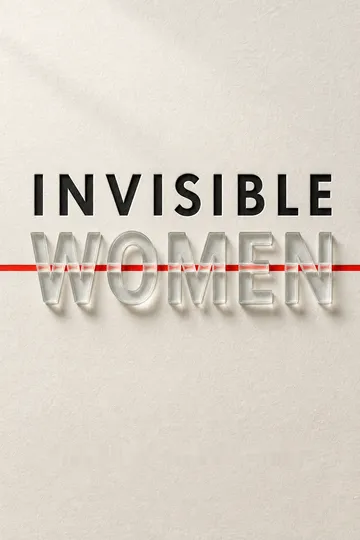
Invisible Women exposes systemic gender bias in data and design across various fields. Reviewers praise its eye-opening revelations about how the world is designed for men, often to women's detriment. Many found it informative and rage-inducing, highlighting issues in healthcare, urban planning, and technology. Some criticize its lack of intersectionality and trans inclusivity. Despite occasional repetitiveness, readers consider it an important, well-researched work that uncovers hidden inequalities. Many recommend it as essential reading for understanding gender disparities in modern society.
People Also Read









Glossary
gender data gap
missing information about womenThe systematic absence of information about women's lives, bodies, work, and experiences. It can result from failing to collect data, failing to separate it by sex, or interpreting male-centered evidence as representative of everyone. The gap influences research, design, policy, and cultural memory, often producing systems that serve men better while appearing neutral.
sex-disaggregated data
data separated by sexInformation collected and reported separately for females and males, allowing researchers and decision-makers to identify differences that pooled totals can conceal. In the book, the lack of this separation hides disparities in areas such as transport, employment, health, and public spending. Disaggregation can reveal a problem, though it does not by itself explain its cause.
trip-chaining
linked journeys for daily tasksA travel pattern made up of several connected short trips, often combining paid work with errands and care responsibilities. A person might accompany a child, travel to work, visit an older relative, and shop on the way home. The book describes women as more likely to make these journeys, which conventional commuter-focused transport planning can overlook.
Henry Higgins effect
fixing women to fit male normsThe tendency to treat male characteristics as the standard and respond to women's different needs by expecting women to adapt. The name refers to the character in My Fair Lady who wonders why a woman cannot behave more like a man. The book applies the term to policies and designs that change women rather than correcting a male-centered system.
Yentl syndrome
women's symptoms misread as atypicalA medical pattern in which women are more likely to be misdiagnosed or poorly treated when their symptoms do not match the male presentation treated as standard. The term comes from the film Yentl, in which a woman disguises herself as a man to gain an education. In medicine, the consequences can include delayed diagnosis and missed treatment.
brilliance bias
assuming brilliance is maleThe bias that associates exceptional intelligence or innate talent more readily with men than women. The book links it to cultural representations that repeatedly show men as scientists, geniuses, and experts, while women are less visible. This perception can shape children's ambitions and distort how students, employers, and institutions evaluate women's ability.
Reference Man
male body treated as standardA model of a typical adult male, often described using an assumed age, weight, and other physical characteristics, used in research or standards as though it represents humanity broadly. The book argues that this model is unsuitable as a universal reference because bodies differ in size, composition, hormones, and physiology, with consequences for safety and medical guidance.
zombie stat
unsupported statistic that persistsA statistic repeated so widely that it survives despite weak sourcing or a lack of data to verify it. The book uses the claim that 70 percent of people living in poverty are women as an example: it is often repeated, but the underlying data is insufficient to confirm or refute it. The term warns that a plausible-sounding number can shape policy without reliable evidence.
FAQ
What's Invisible Women: Data Bias in a World Designed for Men about?
- Focus on Gender Data Gap: The book explores how the world is predominantly designed around male experiences, leading to systemic disadvantages for women.
- Consequences of Male Default: It highlights how assuming male experiences as universal results in policies and designs that overlook women's needs, causing health risks and economic disadvantages.
- Call for Change: Caroline Criado Pérez urges for the inclusion of women in decision-making processes to ensure their needs are considered in data collection and policy-making.
Why should I read Invisible Women by Caroline Criado Pérez?
- Awareness of Systemic Bias: The book helps readers understand the subtle and overt ways gender bias permeates society, affecting women's lives.
- Empowerment through Knowledge: It empowers readers by providing knowledge about the gender data gap, encouraging advocacy for change.
- Engaging and Informative: Criado Pérez uses compelling anecdotes and well-researched data, making the book both engaging and informative.
What are the key takeaways of Invisible Women?
- Gender Data Gap Exists: A significant gender data gap exists across various sectors, leading to policies and designs that do not consider women's needs.
- Impact on Women's Lives: This gap affects women's health, safety, and economic opportunities, such as misdiagnoses in healthcare.
- Need for Inclusive Design: The book advocates for including women in decision-making to create a more equitable society.
What are the best quotes from Invisible Women and what do they mean?
- "Representation of the world...": This quote underscores how historical narratives and data have been shaped by male perspectives, neglecting women's contributions.
- "Garbage in, garbage out.": Highlights the importance of accurate data collection; flawed data leads to inadequate policies, especially for women.
- "Women’s rights are human rights.": Reinforces that advocating for women's rights is a fundamental human rights issue, calling for broader recognition.
How does Invisible Women address healthcare disparities?
- Misdiagnosis and Treatment Gaps: Women face misdiagnoses due to a lack of understanding of female-specific symptoms, like different heart attack symptoms.
- Underrepresentation in Research: Women are often underrepresented in medical research, leading to dangerous health outcomes.
- Need for Gender-Sensitive Healthcare: The book calls for inclusive research and treatment protocols to ensure appropriate care for women.
How does Invisible Women discuss urban planning?
- Transportation Bias: Urban transportation systems often neglect women's complex travel needs due to caregiving responsibilities.
- Safety Concerns: Women often feel unsafe in public spaces, affecting their mobility and access to services.
- Examples of Inclusive Design: The book provides examples of cities implementing gender-sensitive urban planning, improving accessibility and safety.
What is the significance of the "Henry Higgins Effect" in Invisible Women?
- Male Default Thinking: Refers to the tendency for male leaders to overlook women's needs, assuming male perspectives are universal.
- Real-World Implications: This effect results in environments that are often uncomfortable or unsafe for women.
- Call for Awareness: Criado Pérez urges readers to challenge this effect in their lives and workplaces for a more equitable society.
How does Invisible Women relate to technology and data?
- Bias in Algorithms: Algorithms often reflect existing gender biases, marginalizing women in various fields, especially tech.
- Need for Diverse Data: Emphasizes collecting sex-disaggregated data to ensure technology serves all users effectively.
- Examples of Gender-Sensitive Tech: Highlights tech companies that have successfully implemented gender-sensitive design principles.
What solutions does Invisible Women propose to close the gender data gap?
- Inclusive Decision-Making: Advocates for including women in all levels of decision-making to consider their needs in policy and design.
- Data Collection and Analysis: Calls for systematic collection of sex-disaggregated data across all sectors.
- Public Awareness and Advocacy: Emphasizes raising awareness about the gender data gap and advocating for change.
How does Invisible Women challenge traditional views on gender roles?
- Redefining Work: Challenges the notion that only paid work is valuable, highlighting the contributions of unpaid labor by women.
- Critique of Male-Centric Norms: Critiques norms that dominate sectors like healthcare and technology, perpetuating inequality.
- Empowerment through Change: Encourages readers to challenge traditional gender roles and advocate for supportive policies.
How does Invisible Women address the concept of Yentl Syndrome?
- Definition of Yentl Syndrome: Describes how women are misdiagnosed unless their symptoms conform to those of men.
- Impact on Health Outcomes: Leads to worse health outcomes for women, as their unique symptoms are often overlooked.
- Call for Awareness: Emphasizes the need for healthcare professionals to recognize and address this syndrome.
What role do men play in addressing the issues raised in Invisible Women?
- Advocacy for Change: Encourages men to become allies in the fight for gender equality and advocate for women's needs.
- Inclusive Decision-Making: Highlights the importance of including men in discussions about gender data gaps.
- Challenging Norms: Calls on men to challenge societal norms that perpetuate gender inequality.
About the Author
Other books by Caroline Criado Pérez
Download PDF
Download EPUB
.epub digital book format is ideal for reading ebooks on phones, tablets, and e-readers.








