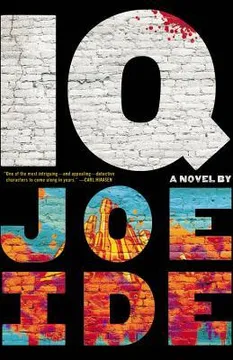


Plot Summary
Prologue
Boyd, a lonely and violent marine-supply worker, waits outside a school with duct tape, a knife, and homemade chloroform in his bowling bag. He has rehearsed a kidnapping in his head, recovering from a botched attempt to make the chemical and the loss of a front tooth.
Years of humiliation have curdled into entitlement: he believes a girl’s fear might finally make him feel powerful. When a long-haired student named Carmela leaves with her friends, Boyd selects her as his target and prepares to follow.
The prologue makes the predator’s ordinariness part of the threat. Boyd’s careful preparations coexist with childish grievances, so the danger does not arise from genius but from a mind that has converted rejection into permission. His imagined control over Carmela is a grotesque substitute for intimacy. The opening also plants practical clues, including the boat and the improvised chloroform, that later make his violence legible to Isaiah rather than supernatural or unknowable.
The Riverbank Rescue
After abandoning his watch for Carmela, Boyd spots Teresa, a younger girl walking alone, and knocks her unconscious with chloroform. Isaiah Quintabe, an unusually observant neighborhood investigator known as IQ, notices the pickup creeping past the store and catches the sweet chemical smell left behind.
He pursues the truck, infers from its trailer hitch that Boyd owns a boat, and races along the Los Angeles River as Boyd carries Teresa toward the harbor. Isaiah fires a fireworks grenade into the boat’s windshield, sending Boyd overboard and stopping the abduction.
He gets Teresa safely to shore, then leaves without waiting for praise. The rescue reminds him how easily he might have missed her, while Flaco’s approaching adulthood leaves him desperate for a paying case.
Isaiah’s rescue begins with attention, but the moment is not a clean triumph of intellect. He recognizes a pattern only after Teresa has disappeared, and every inference carries the possibility that he is wrong. His decision to pursue Boyd anyway turns observation into moral action. Leaving before the cameras arrive also distinguishes him from a man seeking public credit. Yet his urgency is personal: he needs money to secure housing for Flaco, the disabled young man he has taken responsibility for. Care and livelihood already pull in the same direction.
Marcus at the Crosswalk
The story returns to 2005, when seventeen-year-old Isaiah lives under the care of Marcus, the older brother who has raised him and insists that his rare intelligence should be used to help people. A silver Honda Accord runs a red light and kills Marcus as the brothers cross Anaheim Street. The driver escapes, and police have little beyond a witness’s brief description.
Isaiah shuts himself away, stops attending school, and clings to the apartment because Marcus’s belongings are all he has left. Rent and food force him back into the world, but ordinary work cannot quiet his rage. He resolves to find the driver himself, beginning with the few details the witness remembers and the disciplined observation Marcus taught him to trust.
Marcus’s death does more than remove Isaiah’s protector. It destroys the future Isaiah had imagined as something his brother would help him enter. His investigation begins as grief looking for an object it can punish, not as a settled vocation. The scarce evidence also imposes an ethical discipline: Isaiah must separate what he knows from what he hopes is true. Marcus’s advice about taking initiative becomes both a tool and a burden, since Isaiah can act on it only by entering a world where every decision may create new harm.
The Pet City Break-In
At school, Isaiah meets Juanell Dodson, a teenage hustler sleeping in a car after being thrown out by his aunt. Isaiah offers him the sofa in Marcus’s apartment, and Dodson eventually pays rent with the proceeds of drug dealing.
When the money runs short, Isaiah rejects guns and drug sales, then devises a burglary aimed at expensive, portable pet supplies. He studies Pet City’s alarm procedures, chooses a battering ram, and plans a six-minute entry. Dodson brings nerve and improvisation; Isaiah supplies research and precision.
Their first break-in is frightening, but they escape with valuable goods. For Isaiah, the adrenaline briefly displaces grief. For Dodson, the job reveals a profitable alternative to selling crack, and the two boys begin building a criminal partnership.
The partnership forms through mutual need, but its balance is unstable from the start. Isaiah wants control over risk because chaos has already taken Marcus from him; Dodson understands danger as a familiar condition and resists being managed. Their first burglary lets Isaiah transform his intelligence into a procedure, while Dodson’s presence gives him the nerve to execute it. The success is also psychologically dangerous: fear becomes pleasurable precisely because it interrupts mourning. Their shared crime offers temporary companionship, but not a shared moral code.
The Battering Ram Bandits
The boys repeat the method at stores selling hair extensions, sunglasses, fishing gear, and designer shoes, while Isaiah lists stolen goods online and tracks the money. Their notoriety grows after news reports dub them the Battering Ram Bandits.
Dodson, frustrated by slow sales and Isaiah’s restrictions, starts selling merchandise himself, spends lavishly, and brings Deronda into the apartment. During a kitchen-store burglary, he deliberately ignores Isaiah’s warnings and risks confronting a police officer.
The partnership finally breaks when Dodson sells tools Isaiah inherited from Marcus. Isaiah leaves the apartment and locks Dodson out of their storage unit, but Dodson attacks him with a gun. The injury and threat make clear that their arrangement has become as dangerous as the crimes it once organized.
The stolen tools sharpen the conflict because they are not merely valuable goods. They are one of the few remaining objects that connect Isaiah to Marcus, so Dodson’s sale converts practical disobedience into a violation of grief. Isaiah’s insistence on rules is partly sound risk management, partly an attempt to control a life that cannot be controlled. Dodson reads restraint as a challenge to his autonomy. Their split exposes the cost of treating a friendship as a business partnership when only one of them believes the rules are binding.
Junior's Eighty-Five Thousand
Deronda urges Dodson to use Isaiah’s planning skills to rob Junior, a cocaine supplier, during a drug resupply. Dodson studies the building and targets the money carried by Junior and his armed guards. The plan collapses when Junior refuses to surrender the bag and his guards overpower Dodson. Isaiah arrives in time to intervene, shoots both men, and escapes with Dodson and the cash.
The robbery leaves Junior and Booze Lewis critically wounded, and the Crip Violators blame the Latino Sureños Locos for the attack. Retaliation erupts across Hurston. Dodson had wanted a score that would free him from dependence; instead, his attempt makes the whole neighborhood answer for a robbery whose perpetrators were not the people he accused.
The robbery is a decisive escalation because Isaiah’s intelligence no longer merely evades harm. It helps create an event that others interpret through existing racial and gang rivalries. Dodson’s assumptions become public consequences, while Isaiah’s intervention saves his friend and makes him part of the violence. The gang war shows how quickly private motives disappear inside collective retaliation. Once the false accusation takes hold, neither boy can control what their choices mean to people who were never present at the robbery.
One Bullet, One Family
During the gang fighting, Dodson flees through a taqueria as the Locos chase him. Their gunfire kills the restaurant owners, Selena and Héctor Ruiz, and leaves their ten-year-old son, Flaco, with catastrophic brain injuries. Isaiah recognizes that his partnership with Dodson helped set the violence in motion.
He visits Flaco in hospital, admits his responsibility to the surgeon, and asks to become the boy’s family. Once allowed to visit, he reads to Flaco, learns how to support his rehabilitation, and gives up the burglary money for the child’s care. Over the following years Isaiah takes whatever work he can find, develops practical skills, and begins solving neighborhood problems for people the police cannot help.
Flaco turns abstract guilt into a daily obligation. Isaiah cannot reverse the bullet’s damage or compensate every person harmed by the gang war, but he can remain present for one boy who has been abandoned by circumstance. That distinction matters: care is not absolution, and Isaiah’s visits do not erase his role in the chain of events. They do, however, give his intelligence a direction beyond self-punishment. His later work as an unlicensed investigator grows from this attempt to make usefulness a practice rather than an aspiration.
Calvin's Killer Dog
Back in 2013, Isaiah’s old friend Dodson brings him a paying case: Calvin Wright, the rapper known as Black the Knife, believes his ex-wife arranged an attempt on his life. Security footage shows a huge pit bull chasing Cal through his mansion and into the swimming pool, while a masked man later leads the dog away.
Isaiah notices that the dog responds to whistles rather than shouted commands and reasons that its handler had studied the property. Cal’s manager, Bobby Grimes, presses Isaiah to reassure the star and get him back to work, but Isaiah refuses to call him safe. The attack has left Cal isolated, paranoid, and hiding in his house. Isaiah accepts the job because the evidence points to a deliberate, patient plan.
The dog attack gives Isaiah a puzzle whose apparent absurdity hides method. The attacker’s choice of animal is not spectacle alone; it is a workaround for security that makes the mansion’s protections part of the murder plan. Isaiah’s refusal to reassure Cal illustrates the difference between selling comfort and doing investigative work. He will not substitute a confident story for evidence, even when Bobby’s money and Cal’s career depend on one. At the same time, Cal’s psychological collapse complicates the case: the intended victim is not a reliable guide to his own danger.
The Breeder in Fergus
Isaiah and Dodson take the footage to Harry, an animal-shelter director who recognizes that the dog is far larger than an ordinary pit bull and may be mixed with a Presa Canario. Harry calls breeders until a trail of oversized dogs leads to Skip Hanson’s Blue Hill kennel in the desert town of Fergus.
Skip matches the masked handler’s build and gait, wears the same distinctive Crocs, and keeps trained attack dogs behind a barn. Isaiah confronts him among the puppies, exposing lies about his past and the dogs’ breeding.
Skip’s hidden history explains his expertise: after a criminal record and prison term, he built a kennel around fighting dogs and developed Goliath, a giant animal trained to attack. Isaiah identifies the likely hired killer, but not who hired him.
The investigation moves from visual inference to a social network of specialist knowledge. Harry’s expertise makes the dog’s body legible, while breeders’ gossip supplies a route that ordinary police databases would not. Skip’s kennel mirrors his own psychology: patient labor and technical skill are devoted to producing obedience through fear. Isaiah’s confrontation uncovers enough to identify the threat, but it also exposes a weakness in his method. Finding the instrument of violence is not the same as discovering who commissioned it.
The Bonfire Evidence
Cal tries to follow a self-help book by piling his possessions, weapons, liquor, and recording contracts into a bonfire. As the flames grow, Isaiah notices sealed bottles clouding under pressure and moves everyone away before they explode.
The spectacle gives him a chance to confront Bobby, who has dismissed Skip as an unverifiable dog breeder. Isaiah presents a specialized bullet recovered at Blue Hill and explains that Skip’s arsenal and long-range targets signal real expertise. Bobby still pushes Isaiah to tell Cal the threat is imaginary, but Isaiah will not.
Cal’s public breakdown makes clear that the record label’s deadline is worsening an already serious crisis. Isaiah leaves with the assassin identified, the client still vulnerable, and no confirmed link to the person behind the attack.
The bonfire literalizes Cal’s attempt to cure distress by destroying its material surroundings. It fails because possessions are not the cause of his illness, and the explosions turn a private ritual into a public emergency. Bobby’s response is telling: he treats the crisis chiefly as a threat to the album schedule. Isaiah’s evidence challenges that instrumental view, but it cannot yet provide the missing motive. The section keeps two forms of danger in view, Cal’s deteriorating mental health and the very physical threat waiting outside his guarded home.
Gunfire in Isaiah's House
Skip breaks into Isaiah’s home and waits in the bedroom with a suppressed pistol. He hears Isaiah return and mistakes Alejandro, Isaiah’s pet chicken, moving in a closet for the investigator. Skip fires into the bird and the noise alerts Isaiah, who escapes through the back door while bullets tear through the pantry and garage.
Isaiah uses a shirt and cap arranged on a lawn mower as a decoy, then lands a blow when Skip enters the dark garage. He gets away before Skip can reload. Isaiah could report the assault, but doing so might remove the only link to Cal’s unknown enemy. He chooses to keep investigating, accepting that the man who tried to kill him remains free.
The ambush briefly strips Isaiah of the distance that usually makes his reasoning effective. He survives because chance interrupts Skip’s plan, then because he recognizes the gun’s limited ammunition and makes the attacker misread a decoy. The chicken is comic in circumstance but consequential in cost, a living creature caught in the violence Isaiah has brought home. His decision not to call police is strategic, yet it also reveals how easily duty can become self-endangerment when he believes only he can complete the case.
Noelle's Hidden Channel
Seeking the people around Cal, Isaiah and Dodson consult Blasé, a singer who knows the rap industry, and learn how Charles and Bug once served as Cal’s backup before he became the star. They break into the Moody brothers’ home and find recording equipment and a demo featuring Noelle’s voice, linking Cal’s ex-wife to Charles’s plan to launch a solo career.
Isaiah also discovers that Noelle has been receiving updates from Anthony, Cal’s manager, who admits he is involved with her. These facts make Noelle look like the likely organizer, but they do not connect her to Skip. Bobby offers Isaiah twenty thousand dollars to invent evidence and close the case; Isaiah refuses. He and Dodson decide the dog may be their remaining path to proof.
This inquiry shows how motive can seduce a detective into premature certainty. Noelle has reasons to resent Cal, and Charles has reason to want the spotlight, but a plausible story is not yet a causal chain. Isaiah’s discovery about Anthony is a real leak, though it does not establish that Anthony arranged the killing. Refusing Bobby’s money protects the investigation from a manufactured conclusion, while also making Isaiah’s finances and Flaco’s housing more precarious. Integrity here is costly because it does not guarantee success.
Goliath's Narrow Closet
Isaiah and Dodson return to Blue Hill with an animal-control truck, a tranquilizer gun, and a gurney, hoping to capture Goliath and tie Skip to the attack. The plan unravels when Skip’s enormous dog finds them before Isaiah reaches the kennel. Dodson flees into the house and wedges himself behind closet doors as Goliath tears through the slats.
Isaiah finally reaches the dog and shoots it with a dart; the drug takes effect after Goliath knocks him down. They load the animal and escape just as Skip returns. He rushes Goliath to a veterinarian, then vows to kill Isaiah. The capture removes the dog from Skip’s control, but leaves Isaiah and Dodson with little time before the hitman comes after them.
The attempted capture makes Dodson’s old fear of dogs physical again. His panic is not simply comic cowardice: the attack returns him to a childhood mauling, while Isaiah’s delayed rescue forces him to endure that memory in real time. Isaiah succeeds only by treating Goliath as an animal whose body can be managed, not as a monster to be destroyed. The outcome is morally uneasy. The dog is a victim of deliberate training and also a lethal threat, so saving it cannot mean pretending it is harmless.
Roofing Roll Verdict
Cal slips out with Bug for what he believes is an appointment with Dr. Freeman, arranged by a caller using the therapist’s name. Isaiah recognizes the setup and follows clues from Cal’s phone call to the office building where Skip is waiting. Anthony’s affair with Noelle explains one channel of information, but it does not explain the murder plot.
Isaiah and Dodson reach the building as Cal wanders toward the wrong exit. Skip corners Isaiah in the passage and raises his gun. From the roof, Dodson drops a heavy roll of roofing paper onto Skip, knocking him down before he can fire again. Cal survives, shaken and confused. The attack is stopped, but the identity of the person who hired Skip still has to be established.
The climax turns Isaiah’s strength, acute inference, into a race against the consequences of incomplete knowledge. Cal’s confusion nearly delivers him to the killer because the false appointment exploits his illness rather than overcoming his security. Dodson’s intervention matters as much as Isaiah’s reasoning: the partner who once resisted every plan now acts at the decisive instant. The scene also refuses a neat detective’s victory. Saving the intended victim ends the immediate danger, but the larger question of responsibility remains open.
The Ashes in the Wind
Skip is arrested while recovering from his injuries, and his later account helps expose Hegan, Bobby’s former fighter and the go-between who connected the record executive to the hitman. Bobby wanted Cal dead so he could release hundreds of unreleased songs as posthumous albums and strengthen a sale of his company.
Charles and Bug turn on Bobby; Cal enters rehabilitation, while Bobby’s business collapses. The bonus Isaiah expected disappears in Cal’s bankruptcy, but Dodson gives him his share of the money stolen from Junior, enough to secure Flaco’s accessible condo.
Isaiah takes Flaco to see Margaret Cho, then scatters Marcus’s ashes and recognizes that the brother’s voice has finally quieted. He has not undone his past, but he has built a future around care rather than crime.
The motive reframes the case as an industry’s conversion of a person into an asset. Bobby sees Cal’s death as a way to monetize the work that Cal refused to release while alive. Against that logic, Isaiah’s final acts are deliberately material: a home suited to Flaco’s needs, a shared outing, and the scattering of Marcus’s ashes. Dodson’s money comes from the crime that began the gang war, so the gift cannot purify its source. It can, however, be put to a different use. Repair here is practical and incomplete.
Epilogue
At TK’s wrecking yard, Isaiah searches among discarded Audis for a replacement part after scraping his car while chasing a pedophile. He finds a long-abandoned vehicle with its front end stripped and its interior gutted. A fragment of a purple Lakers decal remains on the broken rear window.
The mark matches a clue from Marcus’s hit-and-run investigation, suggesting that the car he has spent years trying to identify may finally be within reach. Isaiah has not yet found the driver, but the wreck gives his old grief a concrete direction again.
The final image turns the novel’s apparent closure into a reopening. Isaiah has made peace with Marcus’s absence, but the Lakers decal brings the unresolved murder back into the world as evidence rather than memory. That distinction matters: grief can quiet without becoming justice. The abandoned car also echoes the book’s central tension between what has been discarded and what can still be recovered. Isaiah leaves the reader not with a solved past, but with the renewed possibility that attention may yet make it answerable.
Analysis
IQ makes intelligence ethically consequential rather than automatically virtuous. Isaiah’s ability to see patterns can rescue Teresa, expose Skip, and protect Cal, but it also helps him and Dodson carry out burglaries that ignite a gang war. The novel refuses to separate cleverness from its uses: the same mind that designs a safe robbery can help set violence in motion, and the same investigator who reads a crime scene must reckon with the lives damaged by his earlier choices.
The book’s two major timelines make that reckoning structural. Marcus’s death gives Isaiah a private reason to investigate, while Flaco’s injury makes his guilt communal and lasting. Isaiah cannot repair the past by solving one more case. His more meaningful response is sustained care: visiting Flaco, arranging a home suited to his needs, and refusing to sell Cal a comforting lie. This work does not absolve him, but it changes what his abilities serve.
Dodson provides a difficult counterpoint. He understands survival as refusing dependence and treats authority as something to outmaneuver. His loyalty to Isaiah emerges through action rather than confession, especially when he risks himself to help save Cal. Their relationship does not become morally simple; it becomes more capable of repair because both men finally act for someone other than themselves.
The celebrity plot extends the same question into the music industry. Bobby treats Cal’s songs, public image, and even continued existence as business variables. Cal’s illness exposes the human cost of that logic, while his attempt to burn his possessions shows that discarding wealth cannot by itself restore meaning. The novel’s modest answer is practical rather than triumphant: knowledge matters when it is joined to responsibility, and repair begins with the particular person one can still help.
Review Summary
IQ receives generally positive reviews, averaging 3.77/5 across nearly 23,000 ratings. Readers consistently praise Joe Ide's fresh reimagining of Sherlock Holmes through Isaiah Quintabe, a brilliant unlicensed detective navigating East Long Beach. Highlights include sharp, authentic dialogue, complex character relationships—particularly between IQ and his frenemy Dodson—and a dual timeline structure that, while divisive, effectively builds Isaiah's backstory. Critics note uneven pacing and predictable plotting, but most agree IQ is an original, entertaining debut with a compelling protagonist worth following.
People Also Read


Characters
Isaiah Quintabe
Neighborhood problem-solverKnown as IQ, Isaiah is a self-taught investigator whose quiet manner can make people mistake concentration for coldness. He notices mismatches between what people say and what the world around them shows, then tests those observations against practical knowledge. Marcus, his older brother, taught him to use his gifts for other people, and Isaiah measures himself against that charge. Grief and guilt can make him controlling, especially when he believes he is responsible for preventing harm. He is resourceful without being invulnerable: his reasoning can be clouded by anger, and his desire to help can put him in danger. His defining struggle is to make intelligence an instrument of care rather than evasion.
Juanell Dodson
Shrewd streetwise partnerDodson is a quick-talking hustler with a talent for reading people, improvising under pressure, and turning practical skills into money. He grew up amid instability and values independence because dependence has often meant humiliation or danger. His humor and swagger protect a more anxious, wounded person, particularly around dogs and authority. He and Isaiah share history, but they disagree about control, risk, and what a partnership entitles each man to do. Dodson can be reckless and self-serving, yet he is capable of loyalty and unexpected tenderness. His street experience complements Isaiah’s analytic mind, even as their different moral instincts repeatedly threaten to split them apart.
Marcus Quintabe
Older brother and compassMarcus raised Isaiah after their parents died and became both family and moral guide. A gifted builder and capable problem-solver, he could make a life from limited resources without treating poverty as an excuse to abandon responsibility. His warmth contrasts with Isaiah’s reserve: Marcus sings, jokes, and speaks openly about the future he hopes his brother will claim. He believes Isaiah’s intelligence carries an obligation to ease suffering, not merely a route to status or wealth. Even when absent from the present-day action, Marcus remains central to how Isaiah interprets success, guilt, and the proper use of his abilities.
Flaco Ruiz
Young man seeking independenceFlaco is a physically fragile young man with cognitive and speech difficulties who wants the ordinary freedoms of adulthood, including a home of his own and a social life. His enthusiasm for Margaret Cho reflects his attraction to a person who has made a place for herself beyond other people’s expectations. Flaco is not simply someone Isaiah protects; he has preferences, humor, and an insistence on making choices for himself. His need for practical support exposes the gap between independence as an ideal and the resources required to live it. His relationship with Isaiah is shaped by care that must leave room for agency.
Deronda
Dream-chasing neighborDeronda is Isaiah’s neighbor, an aspiring celebrity whose brief local fame as a fast-food model never became the breakthrough she expected. She treats visibility as a route out of a life she feels has been assigned to her, and she resists advice that sounds like surrender. Her confidence can become entitlement, especially when she tries to recruit Isaiah into advancing her ambitions. She also understands how to influence Dodson and recognizes the practical value of Isaiah’s intelligence. Deronda’s hopes are comic at times, but they arise from a real hunger for recognition and a belief that a single opportunity could change everything.
Skip Hanson
Reclusive dog breederSkip presents himself as a solitary enthusiast devoted to breeding and training large dogs. He is technically skilled, patient, and intensely attached to the animals in his care, but he treats discipline as a matter of fear and force. His self-invented identity conceals a history of social rejection and criminal behavior. Skip wants to command attention and produce reactions in others, and his fascination with weapons and spectacle gives that desire a dangerous outlet. His bond with his dogs is genuine, though it does not prevent him from shaping them into instruments of violence. He is both a capable planner and a man whose grievance can overwhelm judgment.
Calvin Wright
Burned-out rap starCalvin, known as Black the Knife, is a successful rapper whose celebrity has brought wealth, attention, and a life he no longer knows how to inhabit. His confidence and swagger conceal exhaustion, isolation, and a loss of purpose. He has built his identity around performance and possessions, yet the demands of fame leave him unsure what he wants to create or become. His deteriorating health makes him vulnerable to people who treat his career as more important than his wellbeing. Calvin can be selfish and domineering, but his distress is real, and his struggle to recover begins with admitting that his old habits no longer work.
Noelle
Rapper's estranged wifeNoelle is a former singer whose marriage to Calvin brought celebrity, luxury, and a public identity shaped by other people’s attention. She is stylish, socially perceptive, and unwilling to pretend that the marriage was happier than it was. Beneath her polished presentation is dissatisfaction with a life organized around spending and her husband’s career. She wants a project and an identity that belong to her, though her choices remain entangled with Calvin’s influence and the people around him. Noelle’s history with Calvin is marked by mutual resentment, public humiliation, and the difficulty of separating emotional injury from material dependence.
Bobby Grimes
Record-label executiveBobby is an experienced music executive who has survived years of setbacks by cultivating confidence, persuasion, and an instinct for leverage. He believes that staying in control is the same as staying safe, and he often manages people as though they were parts of a business plan. Calvin’s career is crucial to Bobby’s ambitions, so he struggles to distinguish concern for the artist from fear of losing his company. His charm can make pressure sound like reasoned advice, while his insecurity surfaces when others refuse to follow his plans. Bobby understands the music business, but his survival instinct narrows his sense of what success should cost.
Anthony
Cal's capable aideAnthony manages Calvin’s schedule and serves as the practical intermediary between the rapper and the people seeking access to him. Educated and organized, he has spent years in a job that offers proximity to fame but little authority of his own. He is often impatient with Calvin’s deterioration and the demands it places on everyone around him. His personal life and professional loyalties overlap in ways that make his judgment difficult to read. Anthony’s desire for a future beyond being someone else’s assistant competes with his sense of obligation to the people who depend on him.
Harry Haldeman
Shelter's dog expertHarry runs the Hurston animal shelter and brings decades of experience with dog behavior, breeding, and rescue to Isaiah’s investigation. His blunt impatience with irresponsible owners is balanced by patient care for animals most people overlook. He understands that a dog’s behavior has causes, and he refuses to treat cruelty as an unavoidable feature of the breed. Harry gives Isaiah specialized knowledge without pretending that expertise removes every risk. His work is practical and compassionate, grounded in the conviction that human choices shape an animal’s capacity to live safely.
Hegan Swaysie
Former fighter and guardHegan is a former heavyweight fighter whose damaged arm ended his career in the ring. He now works in security and moves through the music business’s private world of managers, performers, and entourages. His physical presence can intimidate, but his experience has also taught him to watch people carefully and understand how power is exercised behind polished appearances. Hegan has his own loyalties and practical reasons for staying close to influential clients. His life reflects the difficult transition from a public identity built on strength to work that depends on discretion.
Plot Devices
Inductive observation
Clues become a working theoryIsaiah builds conclusions from small, testable observations: a chemical smell, a trailer hitch, a dog’s response to whistles, or a pattern in someone’s calls. The method gives the investigation its forward motion and distinguishes a useful clue from an appealing guess. It also creates risk, since incomplete evidence can produce a convincing but false account of events. Marcus’s lessons and Isaiah’s mathematical training support the process, while the novel repeatedly shows that reasoning requires humility as well as confidence.
Goliath
A trained animal defeats securitySkip’s unusually large dog is both weapon and evidence. Its size, behavior, and response to whistles reveal specialized breeding and training, leading Isaiah from surveillance footage to Harry’s expertise and then through a network of breeders to Skip. The dog also complicates the moral terms of the case: Goliath is dangerous, but human beings deliberately shaped that danger. Capturing him requires Isaiah and Dodson to risk their lives without treating the animal as simply evil.
The battering ram
Planning turns theft into a systemIsaiah and Dodson use a heavy ram to break reinforced commercial doors, then rely on preparation, short time limits, and carefully chosen merchandise to escape before police arrive. The tool represents Isaiah’s effort to replace improvisation with controlled procedure. Its repeated use becomes recognizable to the public and police, giving the boys notoriety as the Battering Ram Bandits. As Dodson starts disregarding the plan, the same device that enabled their partnership marks how easily a shared method can become a source of conflict.
Posthumous recordings
A career becomes a death motiveCal’s unreleased songs represent a large commercial catalogue that Bobby cannot freely exploit while Cal is alive and exercising control over his work. The possibility of selling records after Cal’s death connects the music business’s financial pressure to the murder plot. Earlier details about Cal’s recording contract, Bobby’s threatened company sale, and the hundreds of unused tracks make the motive possible before it is finally exposed. The device turns the novel’s celebrity setting into more than scenery: the artist’s creative output becomes an asset other people are willing to protect or steal.
Download PDF
Download EPUB
.epub digital book format is ideal for reading ebooks on phones, tablets, and e-readers.








