

Key Takeaways
Treat not knowing as room to explore, not proof you're behind
Uncertainty is part of the launch. McMillan opens with her own graduation in 1969: she slept through the speech, eager to begin adulthood, with grand plans but no clear route. Decades later, when asked to address high school graduates, she wanted to offer the honesty missing from the speeches she remembered. A young person need not arrive at graduation with a life plan fully assembled. The unknown can be exciting, not evidence of failure.
Move while you figure it out. The advice is not a promise that everything will work out, but permission to feel scared and keep going. McMillan compares the transition to entering rough water without a raft: uncertainty is real, and so is the possibility of finding a direction by trying.
What's valuable here is the distinction between uncertainty and inadequacy. Young adults often mistake a missing plan for a personal defect, when it may simply mean they have not encountered enough possibilities to choose well. Developmental research commonly treats identity as something explored and revised, not uncovered in one perfect flash. Still, exploration is easier for people with financial and social room to experiment. The advice works best when paired with practical questions about cost, support, and risk. Uncertainty can be welcomed without pretending that every detour is equally affordable.
Choose your direction without living out your parents' unfinished plans
Borrow advice, not a destiny. McMillan urges students not to mistake parental hopes for personal obligations. A parent might imagine a child becoming a doctor or lawyer, while the student feels drawn to art, racing, music, or another path. The point is not that parents have nothing useful to say. It is that their preferences cannot substitute for the young adult's own judgment.
Let the outside match the inside. Pay attention to what feels compelling, then act with integrity. McMillan warns against lying, cheating, or hurting people to get ahead. Independence is not permission to disregard others; it is the responsibility to make choices that are genuinely one's own and to accept their consequences.
This is a strong account of autonomy as authorship rather than rebellion. Self-determination theory, a major framework in motivation research, distinguishes acting from personal conviction from acting mainly to satisfy external pressure. That distinction helps explain why a prestigious path can feel draining when it belongs to someone else's ambition. Yet family advice may contain hard-won knowledge about debt, discrimination, or job stability. A useful conversation separates the underlying concern from the prescribed career: students can take the concern seriously without accepting the parent's preferred answer.
Use college to test interests before declaring a lifelong identity
A major is a trial, not a vow. McMillan says many students do not know what they want to study when they arrive, and some who think they know change majors more than once. A subject that seems promising can lose its appeal; an unexpected class can spark interest. College offers time to investigate rather than forcing a premature career decision.
Watch what holds your attention. McMillan's son loved making music beats, although his university offered no major for that interest. She tells him not to dismiss it simply because it falls outside the curriculum. Hobbies and activities that absorb a person can point toward strengths or a calling. The aim is not to turn every pleasure into a job, but to notice what deserves further exploration.
The idea of college as an exploration space is more useful than treating a major as a fixed identity badge. In decision theory, early choices have option value when they preserve room to learn before making costly commitments. Courses, projects, and conversations can provide information that introspection alone cannot. The approach also respects interests that institutions do not neatly credential. Its limit is that changing direction can cost money and time, so experimentation benefits from deliberate checkpoints. Curiosity is not the opposite of planning; it is one of the ways a sound plan gets better evidence.
Judge success by the life you feel, not the life you display
Status is a poor measuring stick. McMillan challenges the idea that a luxury car, designer clothes, a large house, or public recognition proves that someone is flourishing. Those things reveal what a person owns or how they appear to others, not whether their life feels satisfying. Wealth and fame can coexist with misery, while people without either can feel successful.
Choose a more personal measure. She points readers toward daily joy, a sense of worth, and the feeling of doing one's best. Fame may be welcome when it follows meaningful work and can be used generously, but chasing attention as the main goal risks making self-worth depend on a spotlight that can disappear. The deeper question is whether the life being built feels worth living to the person living it.
This reframing exposes the difference between visible achievement and experienced well-being. Social comparison makes visible markers tempting because they are easy to rank, while contentment and purpose are harder to display. The book's emphasis on joy offers a useful corrective, but joy alone is not a complete ethical scorecard. A satisfying life can still involve obligations to others, and material security matters greatly to people facing hardship. A richer measure combines felt quality of life with agency, relationships, and contribution, without mistaking any single status symbol for proof.
Study for judgment, not just the transcript
College asks for active thinking. McMillan distinguishes higher education from simply memorizing facts and repeating them. Students should question what they learn, examine information, and notice when their own conclusions differ from the material. A degree is not proof of wisdom, and collecting credentials is not the same as becoming educated.
Give learning your attention. Her practical warning is pointed: reading about a difficult subject while music blasts and messages keep arriving is not focused study. She urges students to set aside phones, email, and web distractions long enough to concentrate. College work may involve fewer routine assignments than high school, but sustained reading and thought matter. The reward is not merely passing a test; it is becoming better able to form and defend a judgment.
The distinction between information recall and judgment is central to education. Learning requires more than exposure: attention allows ideas to be compared, questioned, and connected. That makes McMillan's advice about shutting off distractions an intellectual argument, not just a productivity trick. The other half is equally important: questioning instruction should mean testing claims against reasons and evidence, not rejecting whatever feels unfamiliar. Critical thought is disciplined openness. A student who can explain why a claim seems wrong has learned more than one who merely performs agreement or dissent.
Give your chosen work full effort, even when it looks ordinary
Commit to what you choose. McMillan argues that halfhearted work tends to produce weak results. Whatever a student decides to do, from coursework to a personal pursuit, deserves genuine attention rather than a token effort. The counsel is deliberately broad: there is no single prestigious activity that makes effort worthwhile.
Make effort a practice. This standard fits her account of finding writing: it became a way to make sense of life, and she chose to follow it rather than resist it. Her experience suggests that commitment can deepen an interest, not merely express one already fully formed. The advice is not to do everything at maximum intensity. It is to choose carefully, then take the chosen commitment seriously enough to learn from it.
Wholehearted effort matters because skill usually develops through repeated engagement, feedback, and revision, not through vague enthusiasm. McMillan's framing also resists the status hierarchy that treats only prestigious work as deserving care. A student can bring seriousness to a modest job or an unconventional hobby. The necessary nuance is that effort is not the same as relentless intensity. Rest, changing priorities, and recognizing a poor fit are part of sound judgment. Full commitment means being present to the task, not sacrificing health or pretending every choice must become permanent.
Make other people's inner lives real in your decisions
Practice perspective, not self-importance. McMillan asks students to remember that other people have feelings and hardships as vivid as their own. Compassion and empathy can make a person less quick to judge and more willing to hear criticism from someone they respect. The goal is not to agree with everyone, but to notice that other people are not props in one's own story.
Make decency concrete. Her examples are small: look at someone while speaking, listen closely, offer a kind word to a person who seems overlooked, and try to act honorably. She links goodness with ordinary social conduct rather than grand declarations. The religious language of making God proud leads to a broadly human test: does an action show care, civility, and responsibility toward others?
Perspective-taking is a practical social skill: it interrupts the assumption that one's own view is the whole scene. Small acts of attention can make respect visible, especially to people who are routinely ignored. The insight also connects to virtue ethics, where character is built through repeated choices rather than a single dramatic gesture. Empathy, however, does not require limitless accommodation. People can recognize another person's feelings while setting boundaries or challenging harmful behavior. Compassion is strongest when it includes both care for others and a clear sense of what is fair.
Read widely and travel beyond your familiar world
Curiosity enlarges your map. McMillan recommends reading well beyond assigned coursework, from newspapers to popular magazines. Different subjects and voices can introduce experiences a reader may never encounter directly, make unfamiliar ideas more imaginable, and spark questions. A narrow reading life, she argues, can leave the world feeling as small as one's immediate concerns.
Compare your world with others. Travel offers a similar education through direct contact with different ways of living. Seeing other places can make familiar customs look less inevitable and help travelers notice what people share across distance. McMillan also encourages students to try unfamiliar experiences and accept some unpredictability. Reading, travel, and adventure all serve one larger purpose: keep gathering perspectives that challenge the boundaries of what seems possible.
The common thread is intellectual decentering. Books let readers enter lives beyond their immediate reach; travel can make cultural assumptions visible by contrast. Neither automatically produces wisdom. A person can read only to confirm existing beliefs or travel without paying attention to local perspectives. The useful habit is to ask what a new account complicates about one's own assumptions. Access also matters: international travel is expensive, but curiosity can be practiced through local communities, libraries, and unfamiliar subjects. The point is not distance traveled, but how much the mind is willing to revise its map.
Treat sleep, meals, breathing, and exercise as academic equipment
The body affects the day. McMillan tells students not to treat sleep, nutrition, and physical activity as optional extras. She recommends aiming for about eight hours of sleep at night, eating vegetables and other nourishing foods, and finding regular movement beyond walking to class. Her examples include swimming, jogging, basketball, and dance. She also reminds students that hygiene is part of caring for themselves and sharing space with others.
Use breath to interrupt stress. She describes inhaling deeply, holding for a count of four, then exhaling slowly for a count of seven, repeated several times. The exercise is meant to help students notice shallow or held breathing during tense moments. In her account, a calmer body supports concentration and a steadier mood, both useful when coursework and campus life become demanding.
This advice recognizes that learning happens in an embodied person, not in a disembodied mind. Sleep, food, movement, and deliberate breathing can support the attention and energy that study requires. The framing is practical because it makes basic care part of education rather than a reward for finishing work. Individual needs vary, though, and students may have health conditions, disabilities, or schedules that make a standard routine difficult. The principle is more durable than any single prescription: notice what helps the body function, and seek appropriate support when ordinary self-care is not enough.
Set limits on campus freedom before the party sets them
Freedom needs self-management. College can offer a party every night, but students still have papers, reading, and deadlines. McMillan urges them to do the work before the event when possible, learn to decline an invitation, and avoid leaving a major assignment until the night before. If parents are paying tuition, that support is another reason to treat college responsibilities seriously. A summer job, she adds, can introduce the reality that adult life is not free.
Know when a good time turns risky. Her advice on alcohol is to recognize personal limits and take repeated loss of control seriously. She discourages drug use, especially substances she identifies as particularly dangerous. The underlying point is that getting intoxicated to escape stress is not the same as resolving it. Growing up means choosing how to spend freedom, not simply doing whatever is available.
The chapter's most useful concept is self-parenting: freedom becomes meaningful when a person can regulate immediate pleasure in light of commitments and risk. This is not a case against social life. It is a reminder that repeated choices accumulate into academic, financial, and health consequences. The warning about substances is blunt, while real experiences range from occasional use to serious dependency. When someone cannot reliably stay within personal limits, shame is less useful than seeking help and changing the conditions that encourage harm. Responsibility includes knowing when self-management is no longer enough.
Stay connected to home without handing home your adulthood
Independence does not erase attachment. McMillan jokes that students should bring laundry home, help with chores, and ask parents for money even when they do not need it. Under the humor is a real observation: parents may miss their children and want evidence that they are still part of their lives. A brief call or message can matter even when there is no major news to report.
Expect the first night to feel strange. Dorm life can make freedom feel less glamorous when a familiar bed is replaced by a small room and new roommates. McMillan tells graduates that homesickness is ordinary and suggests calling home if loneliness hits. Staying in touch does not cancel independence. It can provide reassurance while a student adjusts to a new place and learns to stand on their own.
The advice captures a transition often mistaken for a clean break. Young adults can seek autonomy while still needing familiar relationships, and a small signal of connection can ease that shift. The humor about laundry and money also turns dependence into a source of affection rather than embarrassment. Not every family is safe or supportive, so contact should never be treated as an obligation when boundaries are needed. For students who do have caring family ties, connection can coexist with adulthood: closeness is not the same as surrendering one's choices.
Analysis
This short advice book is built around a useful tension: adulthood demands self-direction, but nobody becomes self-directed by pretending not to need help. McMillan writes from two positions at once, the young graduate who slept through a commencement speech and the parent watching her son enter college. That double perspective gives the advice its warmth. It is not an expert's blueprint for success so much as an older person's attempt to spare young people the shame of being uncertain, lonely, inexperienced, or still attached to home.
Its strongest ideas reinforce one another. Students should resist living out a parent's ambition, but they must also take responsibility for their choices. They can change majors, but should use college to learn what genuinely holds their attention. They should pursue joy rather than status, while bringing effort and integrity to the work they choose. Even the practical reminders about sleep, food, study, parties, and phone calls serve the broader argument: independence is made from ordinary decisions, not announced at graduation.
The book's conversational humor makes its counsel memorable, especially when it punctures the fantasy that college is simply freedom without chores or consequences. Its limits come from the same directness. Advice to travel, experiment, or take an unconventional path assumes room to absorb cost and risk. Some students face financial pressure, caregiving, unsafe homes, or institutions that offer fewer choices. The text does not develop those structural differences in depth, and a modern reader should not mistake permission to explore for a guarantee that exploration is easy.
Still, the central message holds: a life is discovered through attention, experiment, care, and revision. The book does not promise that following curiosity will produce fame or a tidy career. It offers something more credible, the permission to keep changing while remaining accountable to oneself and other people.
Review Summary
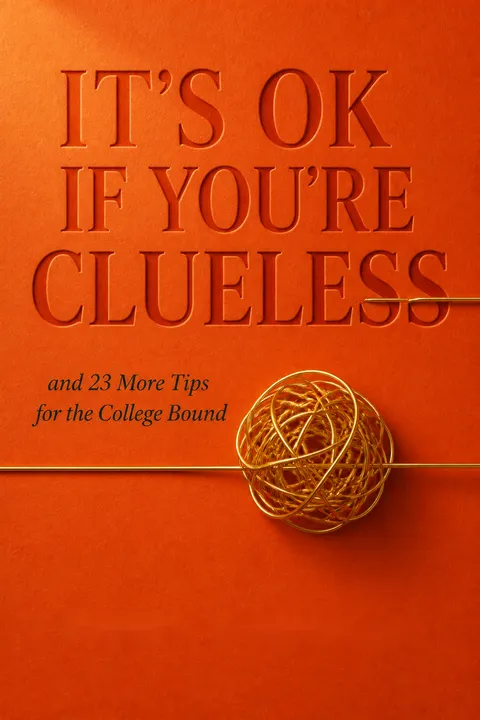
"It's Ok If You're Clueless" receives mostly positive reviews, with an average rating of 3.81/5. Readers appreciate its concise advice for college students and young adults. Many find it relatable, humorous, and insightful, praising its practical tips on navigating college life and personal growth. Some reviewers note that while the advice is good, it may not be groundbreaking for everyone. The book is frequently described as a quick, enjoyable read that offers reassurance and perspective to those feeling uncertain about their future.
People Also Read





Download PDF
Download EPUB
.epub digital book format is ideal for reading ebooks on phones, tablets, and e-readers.








