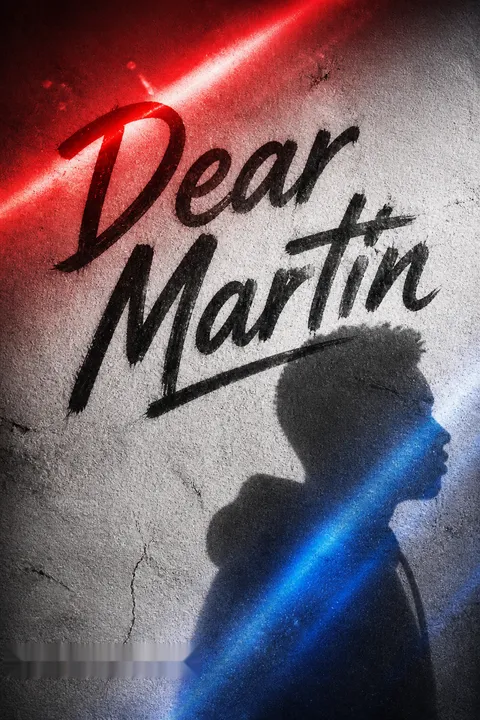


Plot Summary
The FarmFresh Arrest
At three in the morning, seventeen-year-old Justyce McAllister1 finds his drunk ex-girlfriend, Melo Taylor,4 beside her car and tries to get her home safely. Officer Castillo12 arrives, assumes Justyce1 is a threat, slams him against the car, and arrests him while Melo4 sits inside. Her father and an attorney eventually help secure Justyce’s1 release, but the bruises remain.
Justyce1 begins writing letters to Martin Luther King Jr., hoping to understand how to respond with dignity when others see danger in him before they see a person. At first he thinks achievement might protect him from racial suspicion. The arrest makes that belief impossible to maintain, and his attempt to live by King’s17 example begins as a private experiment.
Equality Has Witnesses
Justyce1 learns that a Nevada grand jury has declined to indict the officer who killed Shemar Carson, then discovers that Manny Rivers’s2 cousin8 Quan Banks8 has been charged with killing Castillo.12 At Braselton Prep, a discussion about equality turns into an argument over whether racism still shapes policing, education, and opportunity.
Jared Christensen7 dismisses the problem; Sarah-Jane Friedman3 challenges him with evidence, while Justyce1 struggles to speak from his own experience. Later, he overhears Jared7 and the other boys celebrating a supposedly color-blind society, and Manny2 joins their toast.
Justyce1 leaves for home, but his mother5 pushes him back to school rather than letting him retreat. He returns with a sharper question: how can he keep going among people who deny what he has endured?
The Halloween Exit
Jared’s7 plan to dress the boys as stereotypes ends with Blake Benson15 in a Ku Klux Klan robe. Justyce1 and Manny2 go to a party anyway, hoping the costumes can pass as satire. Trey,14 a neighborhood acquaintance, confronts them with a gun nearby and accuses them of siding with white friends who will never accept them.
Justyce1 leads the group out; he and Manny2 remove their costume pieces, each recognizing how the scene has exposed their divided loyalties. That night, Justyce1 tells Sarah-Jane3 what happened and admits he fears being rejected by both communities. Sarah-Jane3 apologizes for speaking over him in class. Her care draws him closer, even as his mother’s5 opposition to interracial dating makes that closeness feel like another risk.
Yale and Two Girls
Justyce1 gets into Yale and calls Sarah-Jane3 before his mother,5 revealing how much her approval matters to him. At school, Jared7 claims Justyce1 took a place that should have gone to him, then Sarah-Jane3 explains how unequal resources shape applicants’ records.
Justyce1 earns his place, but the argument leaves him anticipating suspicion at college. Melo4 reappears, flirts with him, and draws him back into their unstable relationship, while his feelings for Sarah-Jane3 deepen. Manny2 tells Justyce1 he is avoiding a good relationship because his mother5 disapproves of Sarah-Jane’s3 race.
Justyce1 and Sarah-Jane3 choose a racial-profiling argument for their final debate tournament, knowing it could cost them a win. Their preparation gives him a way to use his education for more than personal escape.
A Win, Then Distance
At the state tournament, Justyce1 and Sarah-Jane3 present evidence that racial profiling shapes criminal-justice outcomes. The judges award them the championship, and Justyce1 feels he has finally spoken publicly about what happened to him.
When he tries to kiss Sarah-Jane3 afterward, she turns away and ends their closeness without explaining why. He is still reeling when news arrives that Tavarrius Jenkins, a Black teenager shot by police while trying to help a stranded driver, has died.
Manny2 takes the grieving Justyce1 to Blake’s15 birthday party, where racist memorabilia and Blake’s15 plan to use a Black girl for sex push him past restraint. Justyce1 punches Blake15 and Jared.7 Manny2 tries to stop him, and Justyce1 calls Manny2 a sellout before walking away alone.
Manny Comes Back
After the fight, Justyce1 wakes hungover in his dorm and tells Doc6 about his father’s alcohol-fueled violence, frightened that his own blackout resembles it. Doc6 helps him see that grief and anger do not excuse his actions, while still acknowledging why the insults cut so deeply.
Manny2 visits with a taped hand and bruised lip. He admits he finally challenged Jared7 after hearing him mock a Black mother and her children, then quit basketball, a role he had accepted because others expected it of him.
The friends apologize for reducing each other to their worst moments. Manny’s father9 later explains that even his executive authority has not protected him from racism. The warning becomes immediate when the Christensens pursue an assault complaint against Manny.2
Shots at Thirteenth Street
With the hiking trip canceled after the complaint, Manny2 drives Justyce1 around to clear his head. At a red light, a white driver beside them objects to their loud music and shouts a racial slur. Manny2 answers angrily, while Justyce1 tries to calm him and reach for the volume control. The driver, Garrett Tison,11 is an off-duty police officer.
He fires into their SUV, killing Manny2 and critically wounding Justyce.1 Justyce1 wakes weeks later with a damaged shoulder and lung, then attends Manny’s2 funeral after the Rivers family9 delays it until he can come. Tison11 is indicted, a rare contrast with the earlier cases that shaped Justyce’s1 fears. Manny’s parents9 invite him to dinner and entrust him with a family watch meant for their son.2
Quan Names the Pattern
At the Riverses’9 request, Justyce1 visits Quan8 in youth detention. Quan8 reveals that Tison11 was present when Quan8 killed Castillo,12 his police partner. He describes a world where his crew offers protection and where repeated unequal punishment convinced him that trying to behave well was pointless.
He gives Justyce1 a way to reach Martel Montgomery,13 the Black Jihad leader. Soon afterward, a television pundit uses an old Halloween photo of Justyce1 dressed as a thug to suggest he and Manny2 were gang members.
Doc6 challenges Justyce1 to decide what kind of man he wants to be, even if others refuse to change. Then Justyce1 learns Manny’s father9 has lost his executive job after joining public protests. Feeling isolated, Justyce1 takes the bus to Martel’s13 house.
The Door He Leaves
Martel13 welcomes Justyce,1 listens to his grief, and frames Black identity as a legacy of endurance. For a moment, the attention feels like relief. Then Justyce1 spots a shotgun and sees an online story presenting him as a violent thug.
Trey14 and the others praise the article as proof he belongs with them. Justyce1 leaves before accepting their invitation. He goes to Sarah-Jane’s3 home, tells her how close he came to joining, and breaks down in her arms. When she asks whether he wants more than friendship, he admits he loves her and stops letting his mother’s5 prejudice decide for him.
They begin a relationship. At graduation, police question Justyce1 about an arson attack at Tison’s11 home after Trey14 and another gang member implicate him. Justyce1 tells the truth, and Sarah-Jane3 verifies where he was.
The Verdict Stays Open
Justyce’s mother5 is angry that he hid Sarah-Jane3 and his contact with the neighborhood boys, but their argument exposes her own fear-driven prejudice. At Tison’s11 trial, the defense uses Justyce’s1 fight with Blake15 and Jared,7 the loud music, and his brief contact with Quan8 to cast him and Manny2 as threats. The jury convicts Tison11 of several charges, including aggravated assault, but cannot agree on felony murder.
Two days later, Tison11 is found dead in jail, and three men are implicated. As Justyce1 prepares to leave for Yale, a new roommate’s chilly reaction revives his fear that he will always be judged through race. In a letter to Martin, he concludes that imitation cannot tell him who to be. He must decide that for himself.
Epilogue
Four months later, Justyce1 finds Jared7 standing alone at Manny’s2 grave. Jared7 mourns the friend2 he expected to keep for life and shares how Manny’s2 music still appears in his college roommate’s playlist. He has begun studying civil rights law and African American history.
Justyce1 tells Jared7 that he and Sarah-Jane3 are still together, and the two young men agree to see each other again. They leave the cemetery with Manny’s2 memory between them, no longer as a reason to keep their distance.
The grave scene does not erase Jared’s earlier harm or turn grief into instant absolution. Instead, it gives him a concrete practice of change: he studies the history he once denied and chooses a future in civil rights law. Justyce’s willingness to stand beside him is not surrender; it is a cautious judgment based on what Jared has begun to do. Manny remains the link neither can replace, but the friendship he fostered becomes a possible bridge between people who once treated each other as symbols.
Analysis
Dear Martin refuses the comforting idea that exemplary behavior can purchase safety. Justyce1 is academically accomplished, careful, and committed to fairness, yet he is arrested while protecting an intoxicated girl4 and later shot while sitting beside his friend.2 The repeated contrast between his conduct and other people’s assumptions makes racial profiling a lived mechanism, not merely a topic for classroom argument.
The novel also complicates the choice between resistance and respectability. Jared’s7 denial and Trey’s14 coercive version of racial loyalty pull Justyce1 in opposite directions, while Quan8 explains how repeated punishment can make lawful behavior seem futile. Neither accommodation nor retaliation offers a clean escape. Justyce’s1 mistakes matter, but they do not make him responsible for violence committed against him.
His letters begin with a question about what Martin Luther King Jr.17 would do, as if moral action could be copied from a finished example. Doc6 redirects the problem toward character: what kind of person will Justyce1 choose to be when the world remains unjust? By the end, Justyce1 does not claim to have solved racism or mastered nonviolence. He has learned to make decisions without surrendering them to fear, public stereotypes, a gang’s promise of belonging, or his mother’s5 prejudice. The final reconciliation with Jared7 does not erase past harm. It suggests that accountability and changed understanding can begin where certainty ends.
Review Summary
Dear Martin is a powerful, thought-provoking novel that addresses racism, police brutality, and identity. Readers praise Stone's ability to tackle complex issues in a concise, impactful way. The story follows Justyce, a Black teenager navigating prejudice and injustice. Many compare it favorably to The Hate U Give, noting its engaging characters and raw emotions. While some found certain plot points unrealistic, most agree it's an important, eye-opening read that sparks necessary conversations about race in America. The book's short length and accessible writing make it ideal for classroom discussions.
People Also Read



Characters
Justyce McAllister
Scholar under pressureA gifted Black student at an elite Atlanta prep school, Justyce is ambitious, observant, and accustomed to believing that achievement can shield him from prejudice. His letters to Martin Luther King Jr. help him test how ideals survive contact with daily humiliations. He wants to act with dignity, but grief, anger, and fear repeatedly complicate that goal. His central struggle is not simply how to be accepted, but how to define himself when others insist on defining him first.
Manny Rivers
Loyal childhood friendJustyce’s1 best friend, Manny is a confident athlete raised in comfort, but his easy place among wealthy white classmates can make him overlook their racism. He values loyalty and humor, and he often supports Justyce1 without fully understanding what Justyce1 is carrying. His uncertainty about fitting into Black life outside his largely white school reveals how isolation can exist even inside privilege.
Sarah-Jane Friedman
Debate partner and allyKnown as SJ, Sarah-Jane is a brilliant debater, lacrosse captain, and Justyce’s1 closest intellectual peer at school. She is outspoken about inequality, but learns that advocacy can become speaking for someone rather than standing beside him. Her Jewish identity shapes her awareness of inherited prejudice, while her directness and loyalty make her an important counterweight to Justyce’s1 isolation.
Melo Taylor
Unsteady first loveJustyce’s1 beautiful, privileged ex-girlfriend moves between affection and selfishness. He is drawn to her appearance and the status of being wanted by her, even when their relationship repeatedly leaves him hurt. Melo represents the difference between desire and trust.
Justyce’s mother
Protective, uncompromising parentA hardworking single mother, she has raised Justyce1 to aim high and keep moving when the world makes room reluctantly. Her protection is fierce, shaped by what she knows Black men face. That fear also hardens into prejudice about whom her son1 should love.
Dr. Jarius Dray
Teacher who listensCalled Doc, he advises the debate team and gives Justyce1 a trusted adult who neither dismisses his anger nor treats it as the whole of him. His own experience navigating academic institutions lets him offer perspective without pretending that persistence makes discrimination fair.
Jared Christensen
Confident classmateA wealthy white student and Manny’s2 longtime friend, Jared treats his own opportunities as evidence that the system is fair. He can be funny and loyal, but his certainty leaves little room for experiences unlike his own. His friendship with Manny2 and proximity to Justyce1 make his assumptions consequential rather than abstract.
Quan Banks
Childhood friend turned prisonerOnce Justyce’s1 neighborhood playmate and now Manny’s2 cousin, Quan has been shaped by repeated contact with the justice system and by the protection offered by a gang. He explains his choices through survival and loyalty. His account forces Justyce1 to confront an alternative to patient respectability, even when that alternative carries danger.
Julian Rivers
Manny’s accomplished fatherManny’s father2 is a senior financial executive whose success does not spare him from racial disrespect at work. He wants to prepare young people for prejudice without letting it determine their ambitions. His calm response contrasts with the anger Justyce1 and Manny2 are still learning to manage.
Tiffany Rivers
Manny’s perceptive motherA psychologist and warm presence in Manny’s2 home, Dr. Rivers cares for Justyce1 almost as family. She and her husband9 try to support both boys while confronting the limits of their own ability to protect them.
Garrett Tison
Officer shaped by suspicionAn off-duty police officer whose response to a dispute over music turns catastrophic, Tison embodies the lethal consequences of treating Black teenagers as threats. The story also places his actions within a wider public argument about policing, fear, and accountability.
Tomás Castillo
Officer who profiles JustyceThe officer who arrests Justyce1 while he is trying to help Melo4, Castillo treats the teenager’s presence and appearance as evidence of criminal intent. His encounter initiates Justyce’s1 effort to understand racialized suspicion.
Martel Montgomery
Gang leader and recruiterLeader of the Black Jihad, Martel offers young men a language of Black history, pride, and solidarity. His attentiveness gives him influence, while the weapons and criminal world around him expose the danger beneath his appealing promise of belonging.
Trey Filly
Neighborhood enforcerA member of the Black Jihad, Trey knows Justyce1 from the neighborhood and challenges his ties to white classmates. He uses intimidation to enforce a rigid idea of loyalty.
Blake Benson
Careless racist classmateOne of Manny’s2 wealthy friends, Blake treats racist costumes, memorabilia, and language as harmless until others object. His refusal to recognize the harm he causes helps expose the distance between intent and impact.
Sarah-Jane’s parents
Welcoming family alliesSarah-Jane’s parents welcome Justyce1 into their home and treat him with affection. Their support offers him a form of care that is steady rather than pitying.
Martin Luther King Jr.
Chosen ethical modelKing appears through the books, sermons, and letters Justyce1 studies. He is not a speaking character in the plot, but Justyce1 uses his example to test his own ideas about nonviolence, dignity, and what kind of person to become.
Plot Devices
Letters to Martin
Private moral sounding boardJustyce’s1 dated letters to Martin Luther King Jr.17 record events as he tries to interpret them. They expose the gap between his ideals and his immediate emotions, track changes in his confidence, and let the reader hear questions he cannot yet ask aloud. As his circumstances worsen, the letters also register how little a revered model can offer when Justyce1 expects a ready-made answer.
Classroom debates
Ideas tested in publicSocietal Evolution discussions and competitive debate give characters a place to make claims about equality, merit, and racial profiling. Jared’s7 certainty and Sarah-Jane’s3 evidence expose the assumptions beneath apparently neutral arguments. Justyce’s1 final presentation lets him turn private experience into a public case without pretending that winning an argument ends the injustice it describes.
News coverage
Public narratives shape blameReports on Shemar Carson, Tavarrius Jenkins, and the shootings surrounding Justyce1 influence what he fears and how others judge him. A television pundit later crops an old costume photograph into evidence of supposed criminality. The changing coverage shows how incomplete facts and racial stereotypes can steer public sympathy before a case reaches court.
Manny’s watch
Inheritance made tangibleThe Rivers family9 watch carries a history of men in the family and becomes a physical reminder of Justyce’s1 bond with Manny2. When Manny’s parents9 entrust it to Justyce1, the gift gives grief a concrete object to hold. Later, its imprint against his wrist connects memory to the choices he makes about friendship and identity.
FAQ
Synopsis & Basic Details
What is Dear Martin about?
- Teen faces racial injustice: Dear Martin follows Justyce McAllister, a Black high school senior striving for academic success, as he navigates the complexities of racial bias and injustice in modern America after being wrongly arrested.
- Seeking guidance from MLK: Justyce begins writing letters to Dr. Martin Luther King Jr., seeking guidance on how to respond to the prejudice and discrimination he experiences in his predominantly white prep school and community.
- Exploring identity and belonging: The novel explores Justyce's journey to understand his identity, find his place in a society marked by racial tensions, and determine how to live authentically in the face of systemic challenges.
- Tragedy and its aftermath: The story also deals with the tragic consequences of racial bias, including the death of Justyce's best friend, Manny, and Justyce's struggle to cope with grief, anger, and the pursuit of justice.
Why should I read Dear Martin?
- Addresses timely social issues: Dear Martin offers a relevant and thought-provoking exploration of race, privilege, and police brutality, prompting readers to examine their own biases and consider the experiences of others.
- Provides diverse perspectives: The novel presents multiple viewpoints on race and justice, encouraging critical thinking and empathy as Justyce interacts with friends, family, and peers who hold differing beliefs.
- Offers a personal and emotional narrative: Through Justyce's letters and experiences, readers gain a deeply personal understanding of the emotional toll of racism and the challenges of navigating a world marked by inequality.
- Inspires reflection and action: Dear Martin encourages readers to reflect on their own roles in promoting equality and justice, inspiring them to take action and work towards a more inclusive and equitable society.
What is the background of Dear Martin?
- Inspired by real events: Nic Stone was inspired to write Dear Martin by the shooting deaths of unarmed African American teenagers, including Trayvon Martin and Michael Brown, and the subsequent Black Lives Matter movement.
- Explores contemporary racial tensions: The novel reflects the ongoing racial tensions and systemic inequalities in the United States, particularly the disproportionate impact of police brutality on Black communities.
- Draws on Civil Rights Movement: Dear Martin references the teachings and philosophy of Dr. Martin Luther King Jr., connecting contemporary struggles for racial justice to the historical context of the Civil Rights Movement.
- Addresses social and political issues: The book engages with contemporary social and political issues, such as racial profiling, affirmative action, and the Black Lives Matter movement, providing a platform for discussion and critical analysis.
What are the most memorable quotes in Dear Martin?
- "There are no more 'colored' water fountains...but if I can be forced to sit on the concrete in too-tight cuffs when I've done nothing wrong, it's clear there's an issue.": Highlights persistent inequality This quote encapsulates Justyce's realization that despite legal advancements, racial bias and discrimination continue to exist in subtle and overt forms.
- "In order to do that, they have to be able to afford boots.": Exposes economic disparity: SJ's sharp retort during the Socio Evo class discussion highlights the economic barriers that prevent marginalized communities from achieving upward mobility, challenging the notion of equal opportunity.
- "If nothing in the world ever changes, what type of man are you gonna be?": Focuses on personal responsibility: Doc's question to Justyce emphasizes the importance of individual character and moral integrity, regardless of external circumstances or societal injustices.
What writing style, narrative choices, and literary techniques does Nic Stone use?
- First-person perspective for intimacy: The novel is primarily narrated in the first person from Justyce's point of view, creating a sense of immediacy and allowing readers to connect with his thoughts, feelings, and experiences on a personal level.
- Epistolary form for reflection: The use of letters to Dr. Martin Luther King Jr. provides a framework for Justyce to reflect on his experiences, articulate his thoughts, and grapple with complex issues, offering readers insight into his evolving understanding of race and justice.
- Realistic dialogue for authenticity: Stone employs realistic dialogue that captures the vernacular and speech patterns of contemporary teenagers, enhancing the authenticity of the characters and their interactions.
- Juxtaposition for contrast: Stone juxtaposes Justyce's experiences in the predominantly white world of Braselton Prep with his encounters in his predominantly Black neighborhood, highlighting the stark contrasts in perspectives, opportunities, and treatment.
Hidden Details & Subtle Connections
What are some minor details that add significant meaning?
- Melo's Norwegian heritage: Melo's mixed heritage (Norwegian mother, Black NFL player father) highlights the complexities of race and identity, and how even those who appear "white" can experience prejudice. This subtly foreshadows Justyce's later relationship with SJ and his mother's disapproval.
- The brand of Manny's car: Manny's Range Rover symbolizes his family's wealth and privilege, but also becomes a target for racial profiling, as it's the car they're driving when Tison shoots them. This detail underscores that wealth doesn't protect Black individuals from racism.
- The Altoid-covered feet ointment: The Norwegian ointment Melo gives Justyce for his wrists, while seemingly a throwaway detail, subtly connects back to Melo's heritage and the complexities of her relationship with Justyce, highlighting the cultural differences and challenges they face.
- The "FarmFresh" sign: The glowing green "F" of the FarmFresh sign that Justyce focuses on during his arrest symbolizes a false sense of security and prosperity, contrasting with the harsh reality of his unjust treatment.
What are some subtle foreshadowing and callbacks?
- Manny's "Captain Save-A-Ho" comment: Manny's early warning to Justyce about his tendency to rescue Melo foreshadows the trouble Justyce encounters when trying to help her, ultimately leading to his arrest.
- The eighth-grade Heritage Play: Jared's recollection of playing Martin Luther King Jr. in eighth grade foreshadows his later insensitivity and lack of understanding regarding racial issues, highlighting the superficiality of his engagement with Black history.
- The "Equality Brigade" Halloween costumes: The Halloween party and the costumes foreshadow the deep-seated racial biases and insensitivity of Jared and his friends, setting the stage for the violent confrontation and Manny's eventual death.
- The recurring wrist pain: Justyce's recurring wrist pain serves as a physical reminder of his unjust arrest and the trauma he experienced, subtly foreshadowing the lasting psychological impact of racial profiling.
What are some unexpected character connections?
- Quan and Castillo's connection: The revelation that Quan Banks killed Officer Castillo, the same officer who arrested Justyce, creates a complex web of interconnectedness, highlighting the cyclical nature of violence and injustice.
- Manny and Jared's long-term friendship: The deep-rooted friendship between Manny and Jared, despite their differing perspectives on race, underscores the complexities of interracial relationships and the challenges of navigating privilege and bias.
- SJ's mother and Justyce's case: SJ's mother being a lawyer who defends "thugs" connects her to the broader themes of racial injustice and the legal system, highlighting her commitment to fighting for equality and justice.
- Justyce and Shemar Carson: Justyce initially dismissing Shemar Carson's case because he didn't see himself as "threatening" creates a connection between them, highlighting the internalized biases and the realization that respectability politics don't protect Black individuals from racism.
Who are the most significant supporting characters?
- Sarah-Jane Friedman (SJ): Ally and confidante: SJ serves as Justyce's intellectual equal and emotional support, challenging his perspectives and offering unwavering support, even when their relationship becomes complicated.
- Emmanuel "Manny" Rivers: Best friend and foil: Manny's death is the catalyst for Justyce's transformation, and his contrasting background highlights the complexities of navigating race and privilege.
- Dr. Jarius "Doc" Dray: Mentor and guide: Doc provides Justyce with guidance and support, offering a nuanced perspective on race and identity and encouraging him to find his own path.
- Justyce's Mother: Protective and concerned: Justyce's mother represents the older generation's fears and concerns about race relations, highlighting the challenges of bridging generational divides and navigating differing perspectives on identity and safety.
Psychological, Emotional, & Relational Analysis
What are some unspoken motivations of the characters?
- Justyce's desire for acceptance: Justyce's initial attempts to "be like Martin" stem from a desire to be seen as respectable and non-threatening, hoping to avoid the negative stereotypes associated with Black men.
- Manny's need for validation: Manny's loyalty to his white friends stems from a need for validation and acceptance in a predominantly white environment, even if it means compromising his own identity and values.
- SJ's guilt and desire to help: SJ's strong advocacy for racial justice is fueled by a sense of guilt about her own privilege and a desire to use her position to help those who are marginalized.
- Garrett Tison's fear and prejudice: Tison's actions are driven by a combination of fear, prejudice, and the trauma of witnessing his partner's death, leading him to make a snap judgment based on racial bias.
What psychological complexities do the characters exhibit?
- Justyce's internalized racism: Justyce grapples with internalized racism, initially believing that his academic achievements and "respectable" behavior will shield him from discrimination.
- Manny's identity crisis: Manny struggles with his identity as a Black man in a predominantly white environment, torn between his loyalty to his friends and his awareness of racial injustice.
- SJ's white guilt: SJ experiences white guilt, grappling with her privilege and the historical injustices perpetrated by her ancestors, leading her to become a passionate advocate for racial equality.
- Tison's PTSD and paranoia: Tison's PTSD from witnessing his partner's death contributes to his paranoia and quick trigger finger, highlighting the psychological toll of law enforcement and the potential for bias to influence decision-making.
What are the major emotional turning points?
- Justyce's arrest: Justyce's unjust arrest shatters his sense of security and forces him to confront the reality of racial profiling, setting him on a path of self-discovery and activism.
- Manny's death: Manny's death is a devastating blow that shakes Justyce to his core, fueling his anger and grief and prompting him to question the value of nonviolence.
- The mistrial: The mistrial in Garrett Tison's case leaves Justyce feeling defeated and disillusioned, questioning the fairness of the justice system and the possibility of achieving true equality.
- Justyce and SJ's reconciliation: Justyce and SJ's reconciliation after a period of estrangement provides a sense of hope and healing, reaffirming the importance of love, support, and allyship in the face of adversity.
How do relationship dynamics evolve?
- Justyce and Manny's friendship: Justyce and Manny's friendship evolves from a close bond to a strained relationship as they grapple with differing perspectives on race and privilege, ultimately leading to a tragic separation.
- Justyce and SJ's romantic relationship: Justyce and SJ's relationship evolves from a debate partnership to a romantic connection, providing Justyce with a source of strength and support as he navigates the complexities of race and identity.
- Justyce and his mother's relationship: Justyce and his mother's relationship is strained by their differing views on race and his relationship with SJ, highlighting the challenges of bridging generational divides and navigating differing perspectives on identity and safety.
- Justyce and Jared's evolving understanding: Justyce and Jared's relationship evolves from animosity to a grudging respect as Jared begins to confront his own biases and understand the impact of his actions, reflecting the potential for growth and change in the face of adversity.
Interpretation & Debate
Which parts of the story remain ambiguous or open-ended?
- Tison's true motivations: Whether Tison's actions were solely motivated by racial prejudice or influenced by PTSD and fear remains ambiguous, prompting readers to consider the complexities of human behavior and the potential for bias to influence decision-making.
- The effectiveness of nonviolence: The novel leaves open the question of whether nonviolence is always the most effective response to injustice, as Justyce grapples with anger and frustration and considers more radical approaches.
- The future of race relations: The ending of Dear Martin offers a glimmer of hope, but the future of race relations in America remains uncertain, prompting readers to consider the ongoing challenges and the need for continued activism and change.
What are some debatable, controversial scenes or moments in Dear Martin?
- Justyce's initial attraction to gang life: Justyce's brief consideration of joining a gang is a controversial moment, prompting debate about the appeal of such groups to marginalized youth and the factors that contribute to their involvement.
- The portrayal of Garrett Tison: The portrayal of Garrett Tison as a complex character, rather than a one-dimensional villain, sparks debate about the potential for empathy and understanding, even in cases of extreme violence and prejudice.
- The ending's optimism: The relatively optimistic ending of Dear Martin, with Justyce heading to Yale and finding love with SJ, is debatable, with some arguing that it downplays the systemic challenges and ongoing struggles faced by Black individuals.
Dear Martin Ending Explained: How It Ends & What It Means
- Justyce attends Yale: Justyce's acceptance to Yale symbolizes his potential for success and upward mobility, but also highlights the challenges he will face as a Black man in a predominantly white institution.
- Relationship with SJ endures: Justyce's relationship with SJ represents hope for interracial understanding and allyship, but also acknowledges the complexities and challenges of navigating such relationships in a society marked by racial tensions.
- Visiting Manny's grave: Justyce's visit to Manny's grave signifies his commitment to honoring his friend's memory and continuing the fight for justice, even in the face of loss and adversity.
- Jared's transformation: Jared's decision to study civil rights law suggests the potential for growth and change, even in those who initially hold prejudiced views, offering a glimmer of hope for a more just and equitable future.
Download PDF
Download EPUB
.epub digital book format is ideal for reading ebooks on phones, tablets, and e-readers.








