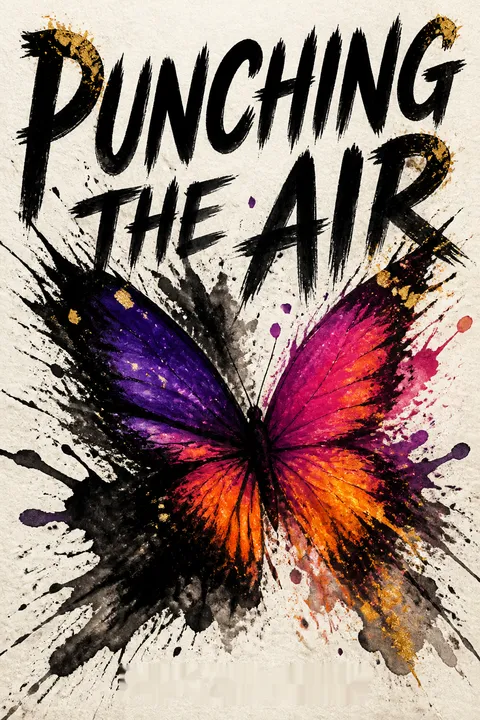


Plot Summary
A Verdict in Gray
At trial, Amal Shahid,1 a Black teenager and gifted art student, watches the prosecution turn his hoodie, gestures, failing grades, and past fights into evidence of a violent nature. His art teacher, Ms. Rinaldi,4 testifies that she had to channel his anger through painting, though Amal1 feels she recognizes his work more readily than the boy who made it.
The jury deliberates only a few hours. It rejects the most serious charge but finds him guilty of aggravated assault and battery. Amal1 has admitted throwing the first punch, yet the verdict leaves the question of who struck the blow that put Jeremy Mathis5 into a coma unanswered. From his seat, Amal1 cannot make the jury see a fuller version of him.
The courtroom is not simply where Amal is judged. It is where competing descriptions of him become more powerful than his own account. His clothing and school record are treated as evidence of character, while his teacher’s praise still frames his creativity as a way to manage dangerousness. The verdict turns ambiguity into certainty without resolving what happened to Jeremy. Amal’s gray suit cannot soften the racial meanings assigned to his body, and his silence in court exposes a central imbalance: he is present, but others control the language that will define him.
The Door to the Tombs
After the verdict, officers handcuff Amal1 and take him from the courtroom to the county jail known as the Tombs. His lawyer, Clyde Richter,3 tells him the case is not likely to end in a life sentence, but Amal1 no longer trusts that Clyde’s3 reassurance means the lawyer3 truly understands him.
Umi,2 Amal’s mother,2 and Grandma,16 his grandmother,16 watch as he is taken away; Uncle Rashon,15 cousins Shay17 and Dionne,18 and other supporters have stood by him through the trial. The family had raised bail money before conviction, but now their help cannot keep him home. Amal1 memorizes his new inmate number and crime as he is transferred toward juvenile detention, leaving behind school, plans for college, and the people who know him.
The transfer marks a change in who has control over Amal’s time and identity. The family’s fundraising had offered a temporary return home, but the conviction converts their care into helpless witnessing. Even the lawyer’s reassurance fails because trust depends on more than professional effort; Amal needs to believe that Clyde sees him as a person rather than a case. The new inmate number replaces the identifiers that once pointed toward a future, such as his school ID and college ambitions. The journey into custody therefore begins as both physical removal and forced renaming.
The Night Across the Line
Amal1 reconstructs the night behind his conviction. He had planned to skate, but went with Omari7 and Omari’s friend Antwon7 toward basketball courts where white boys from East Hills were using the neighborhood as if it belonged to them. Amal1 sensed trouble and considered leaving, yet stayed with Omari.7
As the boys skated through the area, insults and a racial slur sharpened an argument over who had the right to be there. Amal1 threw the first punch. The confrontation widened into a group fight, and he later remembers running, abandoning his skateboard, and stopping on a curb to catch his breath. Police arrived, pinned him down, and arrested him. Four other boys took plea deals; Amal1 went to trial.
The backstory complicates the courtroom’s clean division between aggressor and victim without erasing Amal’s agency. He recognizes the warning in his own unease, yet loyalty to Omari and the pressure to remain present overcome his instinct to leave. The fight is also shaped by territory: East Hills’ changing boundary turns an ordinary skate route into a test of belonging. Amal’s admission that he struck first becomes a point of moral honesty, not proof that every later injury was his doing. The legal process, however, has little room for the distinction between beginning a fight and causing its final, most damaging blow.
School Behind the Locks
At the juvenile facility, Amal1 is stripped of his belt and shoelaces, issued an orange uniform, and assigned a cell where the doors, furniture, and routines make every movement feel supervised.
He is already carrying bruises from an assault on the transport bus, and an officer’s careless handling makes him fall again when he steps down. Classes resemble school, but now the students are detainees and missed work can keep them locked in their cells.
Amal1 remembers how an elementary-school fight earned him suspension and intensified adult scrutiny, then how Ms. Rinaldi’s4 art classes made him feel both talented and unwelcome. During free time, he tries drawing an exit. An officer’s14 racist tattoo enrages him; Amal1 shoves a table and is restrained, then confined for two days.
The facility borrows the appearance of school while removing the freedoms that make learning meaningful. Amal is expected to follow schedules and demonstrate good behavior, even as the institution treats him as a risk before he has a chance to speak. The tattoo collapses distance between private prejudice and official authority: the officer’s body carries an image Amal cannot ignore, while the officer can summon force with impunity. Amal’s outburst has an immediate cost, confinement, but the incident also shows how his anger is provoked, embodied, and then used to justify tighter control.
Rhymes Through Metal
Amal1 initially refuses to join the activities he sees through his cell window, including a poetry session led by Imani Dawson,10 a poet and prison abolitionist. Cheryl-Ann Buford,12 the facility administrator, warns that creative workshops are privileges he must earn.
Umi’s letters urge him to pray and endure, but a letter from Zenobia,8 a girl at his school, affects him differently: she believes him and wants to hear from him. Amal1 replies with a drawing and a poem built around her name.
He also begins rapping through his cell door. Kadon,9 a quick-witted detainee who had first tested him, applauds the work and invites him to connect. Their new rapport attracts attention from other boys, who recognize Amal1 from the case and warn that he is being watched.
Amal’s voice returns through relationships that do not demand immediate performance. Zenobia’s letter matters because she sees him as someone worth addressing, while Kadon’s approval gives his writing a place among peers rather than treating it as a private escape. The institution makes art conditional, but the boys create their own informal audience across locked doors and mess-hall tables. Amal’s response remains guarded: he raps, yet does not assume that recognition means safety. Creativity becomes both a means of connection and a risk, since anything that makes him visible can draw scrutiny.
First Punch, Many Truths
When Amal1 finally takes part in Imani’s writing program, he meets Dr. Kwesi Bennu,11 a former prisoner who says he was convicted of a crime he did not commit. Dr. Bennu11 asks the boys to write down something they regret, mix the papers together, and read another person’s entry aloud. Amal1 writes that he threw the first punch; the paper he draws describes being born.
Seeing both statements displayed forces him to confront how a single act can coexist with shame imposed by circumstance. Dr. Bennu11 then has the boys link arms in a circle. When he pushes, they keep one another from falling. Amal1 understands that the group’s separate stories are connected, even when the institution isolates them.
The exercise rejects two easy stories: that every incarcerated boy is innocent of every harm, or that a mistake explains the whole person. Amal can acknowledge his first punch without accepting responsibility for the final blow or surrendering his identity to the conviction. The exchanged papers make that distinction bodily and social, as he must hold another person’s burden before recognizing his own. The linked circle offers a counter-image to the facility’s individual cells. Interdependence is not a cure for the legal system, but it gives the boys a way to resist being understood only as separate cases.
Letters Through the Glass
Amal’s1 family visits bring him into the same room with Umi,2 Grandma,16 Shay,17 and Dionne,18 his cousins. He cries when Shay17 and Dionne18 embrace him, and he asks about Dionne’s18 college life, one of the futures he had imagined for himself. Letters from Zenobia8 affirm that she remembers the artist she knew at school; Lucas,6 his best friend who had disappeared during the trial, writes to explain that his mother kept him away and that he still cares.
Amal1 reads in the library and searches for the ideas Uncle Rashon15 had once tried to teach him about the system. Kadon9 helps him earn access to the poetry workshop. These connections do not free Amal,1 but they give him reasons to keep attending class and making work.
The letters and visits do not erase the institution’s separation; they create narrow channels through it. Each relationship offers a different form of recognition: Umi and Grandma remember his childhood, Dionne embodies an interrupted educational future, Lucas acknowledges the cost of his absence, and Zenobia sees his artistic self. Books extend that network beyond the people who can visit. Amal’s renewed participation is not a sudden recovery but a series of small acts supported by others. The scene insists that belonging is made through repeated attention, especially when physical access and ordinary conversation have been taken away.
A Fight Inside the Fight
When violence erupts in the dayroom, Amal1 sees a boy beating Kadon9 and jumps in to pull him away. The officers rush in, and Amal1 stops fighting first, raising his hands so he will not be blamed for continuing the assault. He is nevertheless locked in his cell.
Alone, he relives the East Hills fight with greater clarity: he threw the first punch, but says he did not deliver the blow that left Jeremy5 unconscious. In the darkness, Amal1 imagines his absent father20 appearing among butterflies and hears him acknowledge the things he failed to teach his son.1
Later, Amal1 sees Kadon9 being taken away with a badly swollen face. His anger turns toward Buford,12 who dismisses his questions about Kadon9 and warns him to stop treating the facility like a game.
Amal’s choice to protect Kadon echoes the loyalty that kept him at East Hills, but this time he tries to stop the harm rather than join its momentum. Raising his hands is an effort to control how the event will be recorded, a strategy learned from a courtroom where appearances carried more weight than context. Isolation then turns memory into the closest thing he has to testimony. His father’s imagined visit supplies care and knowledge he misses, while Kadon’s injuries reveal that solidarity cannot shield everyone from institutional violence.
A Wall Becomes a Canvas
After Amal1 writes openly in Imani’s class, she announces that she is leaving and asks what she should tell people who have power over the boys’ lives. Amal1 wants her to stay, but Imani10 explains that she must carry their experiences beyond the facility. Before she goes, she brings paint supplies that officials had delayed approving and asks Amal1 to repaint the decaying children’s mural.
He invites Kadon,9 Amir, Smoke, and Rah to help. Together they create a large, angular scene inspired by Picasso’s Guernica, filling it with the boys’ figures and wings. Their jokes and shared brushwork make the dayroom briefly feel less like a cell block. When families visit, the mural earns attention and Amal1 feels recognized for work he chose to make.
The mural changes the scale of Amal’s art. Earlier, he could draw only on scraps or in the privacy of his cell; now he makes an image with other boys on a wall everyone must pass. Imani’s departure is painful, but her insistence that she carry their stories outward prevents the workshop from becoming a sealed refuge. The group painting also revises the usual meaning of a crew: instead of a source of pressure toward violence, it becomes a structure for making something together. The facility grants the wall, yet the boys determine what it will mean.
White Paint Over Wings
Amal1 expects Umi2 to see the finished mural during a visit, but she is absent because Jeremy5 has awakened from his coma. She goes to be present in case he can describe the fight, leaving Amal1 to wait for news about the testimony that could change his case. Soon Kadon9 tells him that staff have painted over the mural, citing facility rules against gang symbols.
Amal1 is devastated: the artwork had been made with approved supplies and under supervision, yet the institution has erased it without giving him a chance to defend it. Kadon’s9 own face is still marked from the earlier violence, and his news deepens Amal’s1 sense that both bodies and creations can be controlled. He has no photograph to preserve what they made.
The mural’s erasure exposes the limits of permission. The facility allowed the boys to paint, but retained the authority to decide afterward that their image was unacceptable. The official explanation turns a collaborative artwork into a suspected threat, echoing the way Amal’s body and behavior were interpreted in court. At the same time, Jeremy’s awakening opens a possible route toward a more complete account of the night. Amal’s hope now depends on another person’s memory, while the loss of the mural reminds him how easily institutions can remove visible evidence of his own.
A New Lawyer, A New Door
Uncle Rashon15 finally visits Amal1 and brings books by Black writers and thinkers, admitting that he had needed time to face what happened. The books give Amal1 and Kadon9 material to read and discuss when they meet in the library. Rashon’s15 visit also helps repair a distance that had left Amal1 wondering why his uncle15 stayed away.
Later, Umi2 calls to say she has replaced Clyde3 with Tarana Hudson,19 a lawyer who has followed the case and taken time to learn about Amal1 and his family. Tarana19 brings the crucial news: Jeremy5 is ready to speak. No new testimony has yet cleared Amal,1 and he remains in detention, but the prospect of Jeremy’s5 account gives his family a concrete next step beyond waiting.
Rashon’s books and Tarana’s appointment offer different forms of agency. The books help Amal build an intellectual framework for experiences that once felt like a private chain of bad luck; Tarana may be able to turn new testimony into legal action. Rashon’s delayed visit is not treated as uncomplicated comfort. Amal has felt abandoned, and the books cannot undo that absence, but his uncle’s willingness to appear and speak honestly begins a repair. The new lawyer matters because she seeks to understand the family, not merely process the case. Hope remains conditional, tied to what Jeremy can say.
Truth in Four Paintings
With no poetry teacher to replace Imani,10 Amal1 begins drawing again using the supplies Stanford13 quietly places in his cell. Kadon,9 Smoke, and Rah sit with him as he paints, and Amal1 tells them how a butterfly’s small movement can alter something much larger. He creates four watercolors that reshape famous paintings through his own experience: war becomes butterflies, a watch grows wings inside its box, and a Black mother sits without a mouth.
The images hold the book’s recurring questions about confinement, memory, and whose stories are allowed to be seen. Amal1 gathers the paintings into an envelope for Imani10 and sends them out as his account of himself. Jeremy’s5 statement is still pending, and Amal’s1 legal fate remains unresolved.
The ending offers expression rather than legal closure. Amal cannot control Jeremy’s testimony, the facility’s rules, or the court’s eventual decision, but he can decide what images leave his hands. Reworking canonical paintings lets him enter an art history that once seemed to exclude him, while changing their subjects and meanings. The butterfly no longer promises that one small action will certainly transform the world; it becomes a fragile image of possibility that Amal can share. Sending the paintings to Imani turns private creation into a public claim: his life cannot be reduced to the charge that brought him inside.
Analysis
Punching the Air follows Amal1 through two systems of interpretation: the courtroom, which turns behavior into evidence, and the detention facility, which turns behavior into a schedule and a record. In both places, people describe him before he can describe himself. His hoodie, grades, anger, and first punch are treated as proof of a fixed character, while context and uncertainty struggle to remain visible. The novel does not make Amal1 spotless to argue that he deserves care. He acknowledges that he struck first. The sharper question is whether a real mistake can be used to explain every consequence, including a blow he says he did not deliver.
Art supplies a counter-practice. Drawing forces Amal1 to observe, select, and compose; poetry lets him shape what institutions flatten into reports. His creative work is not separate from his social world. The mural matters because Kadon9 and the other boys help make it, and because the facility’s decision to erase it reveals who controls public space. When Amal1 sends his final paintings to Imani,10 he cannot dictate how officials will respond or what Jeremy5 will say. He can, however, refuse to let the institution’s account be the only one that travels.
The novel also treats hope as relational rather than sentimental. Umi’s2 persistence, Zenobia’s letters, Lucas’s6 return, Kadon’s9 companionship, Rashon’s15 books, and Imani’s10 attention each give Amal1 a different reason to continue. None removes the harm or guarantees a favorable legal outcome. Their combined effect is to keep him from being reduced to isolation. The story ends before the case is resolved because its deepest resolution is not acquittal or release; it is Amal’s1 growing ability to make an account of himself that contains accountability, tenderness, anger, and imagination at once.
Review Summary
Punching the Air is a powerful verse novel about a Black Muslim teen wrongfully convicted of a crime. Readers praise the raw, emotional writing that conveys Amal's experiences with racism and injustice. Many found the poetry and imagery impactful, though some wanted more resolution to the story. The book is described as timely, important, and a must-read that illuminates systemic issues in the justice system. Overall, reviewers were moved by Amal's journey and the book's themes of art, faith, and perseverance in the face of oppression.
People Also Read


Characters
Amal Shahid
Artist under accusationAmal is a sixteen-year-old Black student, skater, poet, and painter whose life is reorganized by a conviction tied to a neighborhood fight. He is quick to notice how adults read his clothes, anger, and race before listening to his account. His loyalty to friends can pull him toward danger, while his art gives him a way to examine choices without letting one choice define his whole self. Amal resists being treated as either a perfect victim or an irredeemable threat. His faith, family ties, reading, and relationships with other boys help him keep asking who he is beyond the case file.
Umi
Amal's steadfast motherUmi is Amal’s mother1, a Muslim woman who raised him with discipline, affection, and belief in his capacity to become more than the world expects. She works hard, keeps close watch over her son1, and tries to protect him through rules, prayer, and practical support. Her love is not passive: she organizes help, visits him, and questions the people responsible for his care. Umi also has to manage her own fear without making Amal1 carry all of it. Her relationship with him holds both tenderness and tension, especially when her efforts to keep him safe cannot prevent him from making his own choices.
Clyde Richter
Amal's defense attorneyClyde is Amal’s1 court-appointed defense attorney. He works to reduce the most serious charge and tries to explain the case in terms Amal1 can understand, but Amal1 doubts whether Clyde is truly on his side. Clyde offers books during the long wait and remains one of the adults whose actions shape Amal’s1 sense of justice. His intentions and Amal’s1 trust do not always align.
Ms. Rinaldi
Art teacher and witnessMs. Rinaldi teaches art and recognizes Amal’s1 talent, helping him prepare a portfolio for an arts program. She also becomes a character witness at his trial. Her high expectations can feel like support, but her rigid judgments about classroom behavior leave Amal1 feeling that she sees the art more clearly than its maker.
Jeremy Mathis
The injured teenagerJeremy is the white teenager left in a coma after the fight at the center of Amal’s1 case. He is represented in court through descriptions supplied by others, while his inability to speak leaves the events unresolved. His family’s grief and Amal’s1 uncertainty make Jeremy more than a legal symbol, even as the people around him compete to define what happened.
Lucas
Amal's missing best friendLucas is Amal’s1 longtime friend, known for his confidence, humor, and attention to girls. He is absent during the trial because his mother keeps him away, leaving Amal1 to feel abandoned. Their friendship is rooted in shared school memories and mischief, not solemn promises, which makes the distance between them especially painful.
Omari
Friend at the courtsOmari is the friend Amal1 accompanies toward the basketball courts on the night of the fight. He asks Amal1 to stand by him, and Amal’s1 loyalty helps keep him in a tense situation he has begun to distrust.
Zenobia Angel Garrett
Amal's distant school crushZenobia is a girl from Amal’s1 school whose blue braids and presence have stayed in his memory. She writes to him when he is in detention, offering belief and attention without claiming to know everything about his case. Her letters give Amal1 a connection to ordinary teenage longing and to the person he was before incarceration.
Kadon
A wary prison allyKadon is a fellow detainee who first approaches Amal1 with blunt curiosity about his bruised face. He tests Amal’s1 confidence, recognizes his talent for rap, and gradually becomes a companion who understands how quickly the facility can turn dangerous. Kadon is alert to status and risk, but he is also capable of humor and encouragement. He helps Amal1 navigate the social world inside, where belonging can offer protection while also feeling like another set of walls.
Imani Dawson
Poet and prison abolitionistImani is a poet, educator, and activist who leads writing workshops at the juvenile facility. She asks the boys to examine mistakes, misgivings, and truths rather than merely comply with a lesson plan. Amal1 initially resists her prompts, but she treats his writing as serious work and creates room for him to develop it. Imani understands that her presence is temporary and that listening inside must connect to action outside. She wants the boys to remember their lives are larger than their confinement.
Dr. Kwesi Bennu
Formerly imprisoned mentorDr. Bennu visits the facility as a speaker who says he was wrongly convicted and spent years in jail. He leads the boys through an exercise in which they exchange written regrets, making each person encounter another’s burden. His account gives Amal1 a model for speaking about injustice without denying personal responsibility.
Cheryl-Ann Buford
Detention administratorBuford oversees the juvenile detention program and controls Amal’s1 schedule, educational access, and privileges. She presents participation as a choice while attaching consequences to refusal. Amal1 experiences her as an authority who records his behavior but does not always hear what he is trying to explain.
Officer Stanford
Guard with divided signalsStanford is a Black officer who helps receive Amal1 at the facility and later supervises the dayroom. His manner can be gentle, but his actions also belong to an institution that makes Amal1 wary of trusting kindness. Stanford notices Amal’s1 quietness and creative work, offering small gestures without being able to remove the conditions around him.
Officer Beale
The tattooed officerBeale is the officer Amal1 privately associates with a racist tattoo depicting a Black baby in a noose. His presence makes the facility’s power feel personal and physical, and Amal’s1 reaction to the tattoo leads to a forceful restraint.
Uncle Rashon
A distant father figureRashon is Amal’s uncle1, a sharp-minded man who shares ideas about history and power and tries to guide his nephew. He has often been a source of books and political conversation, but his absence during Amal’s1 early incarceration leaves a wound. Rashon’s complicated concern reflects the limits of advice when a young person needs direct presence.
Grandma
Faith-filled elderAmal’s grandmother1 offers him Christian faith, affectionate rituals, food, and reminders that he can shape his own destiny. Her religious tradition differs from Umi’s2 Islam, but both women give Amal1 language for hope. Grandma’s warmth steadies him even when she cannot change the forces surrounding his case.
Shay
Protective older cousinShay is one of Amal’s cousins1 and part of the family support that visits him. His teasing, affection, and familiar presence help restore some of the ordinary closeness Amal1 misses.
Dionne
College-bound cousinDionne is Amal’s cousin1, whose college life represents a future he had hoped to pursue. She visits, holds his hand, and offers him a connection to the world beyond the facility without pretending that his situation is easy.
Tarana Hudson
Amal's new attorneyTarana is the lawyer Umi2 hires after losing confidence in Clyde’s representation3. She has followed Amal’s1 case and taken time to learn about him through his family. Her work gives the family a new legal path while keeping the outcome uncertain.
Baba
Amal's absent fatherAmal’s father1 is largely absent from his daily life, leaving Amal1 with unanswered questions about what he might have taught him. He appears in Amal’s1 imagination during isolation, reflecting the boy’s longing for guidance and recognition.
Plot Devices
The courtroom frame
Judgment before explanationThe story begins with Amal1 already on trial, so readers first encounter the public version of him: a defendant watched by jurors, reporters, witnesses, and family. Memories then supply the circumstances that the courtroom compresses into evidence. This structure makes the gap between accusation and lived experience part of the plot itself. It also keeps the central question active: what happened in the fight, and who gets to decide which details count?
Art and white space
A second language for truthDrawing, painting, and poetry give Amal1 forms of expression when adults control the official account of his life. Lessons about white space and perspective become ways to think about what witnesses leave out and how a viewer’s assumptions alter an image. The facility’s scraps, walls, and delayed paint supplies shape what he can create. Art does not instantly change his legal circumstances, but it lets him describe himself with more complexity than a charge or inmate number permits.
Letters and books
Connection across confinementLetters from Umi2, Zenobia8, and Lucas6 carry distinct kinds of recognition into Amal’s1 cell. Their words preserve family bonds, teenage affection, and friendship when visits are restricted. Books from Clyde3 and Rashon15 give Amal1 ways to place his experience in a wider history. These objects are small and vulnerable to institutional rules, but they make relationships and ideas tangible. Amal1 can reread them, answer them, and use them to imagine a self beyond the facility.
The prison school
Routine disguised as opportunityClasses, schedules, work assignments, and recreation imitate the structure of a school while keeping the boys under constant surveillance. The program offers credits and activities, but access depends on behavior and staff approval. Amal1 recognizes the resemblance to earlier schooling, where discipline and adult assumptions already shaped how his anger and intelligence were read. This parallel shows how educational institutions can promise advancement while narrowing a young person’s choices.
The butterfly effect
Small acts, uncertain changeThe butterfly image begins as an idea Amal1 hears about small actions producing wider consequences. In detention, it becomes a way to think about the choices that led to the fight, the lives affected by the conviction, and the possibility that art or testimony might travel beyond the walls. The metaphor does not guarantee that one poem or painting will transform the system. Its force comes from the uncertainty: Amal1 can make something and send it outward without knowing what change it will cause.
FAQ
Synopsis & Basic Details
What is Punching the Air about?
- Artist faces injustice: The novel follows Amal Shahid, a sixteen-year-old Black Muslim artist and poet, who is wrongfully convicted of a crime he didn't commit after a fight leaves a white boy in a coma.
- Navigating incarceration: The story chronicles Amal's experience within the juvenile detention system, detailing the dehumanization, violence, and systemic biases he faces while grappling with his past choices and the loss of his freedom.
- Art as resistance: Through verse, Amal uses his creativity—drawing, painting, and poetry—as a means of survival, self-expression, and resistance against the confines of his physical and metaphorical boxes, ultimately finding hope and asserting his truth.
Why should I read Punching the Air?
- Powerful poetic voice: The novel's unique verse format offers an intimate and raw portrayal of Amal's internal world, making his emotional journey deeply resonant and immediate for the reader.
- Explores systemic injustice: It provides a searing look at the racial biases embedded within the American legal and carceral systems through the eyes of a young Black protagonist, prompting critical reflection on justice and identity.
- Celebrates art's power: The story powerfully illustrates how creativity can be a vital tool for survival, healing, and maintaining humanity in the face of dehumanization, highlighting the importance of artistic expression.
What is the background of Punching the Air?
- Inspired by the Exonerated Five: The book is co-authored by Ibi Zoboi and Dr. Yusef Salaam, one of the Exonerated Five (formerly known as the Central Park Five), drawing inspiration from his personal experience as a wrongly incarcerated teen artist and poet.
- Context of racial injustice: Set against the backdrop of contemporary America, the narrative is deeply informed by the historical context of systemic racism, police brutality, and the disproportionate incarceration of Black youth, explicitly referencing the 13th Amendment and the legacy of slavery.
- Art and activism: The story is rooted in the power of art and activism as tools for social change and personal liberation, reflecting the authors' shared belief in using creative expression to speak truth to power and challenge oppressive systems.
What are the most memorable quotes in Punching the Air?
- "Amal means hope": This recurring phrase, first appearing after the verdict ("The Last Judgment"), becomes Amal's mantra and a central theme, reminding him and the reader of his inherent worth and the possibility of a future beyond his circumstances, even when everything feels lost.
- "Dust rises": Quoted by Umi and later echoed by Amal ("Dust"), this line, referencing Maya Angelou, symbolizes resilience and the refusal to be crushed or erased by the system, asserting that even when broken down, one can find the strength to rise again.
- "I threw the first punch / but I didn't throw the last": This confession and subsequent denial ("Blank Canvas II," "Surrealism") encapsulates the ambiguity of the inciting incident and the core injustice of Amal's conviction, highlighting that while he participated in the fight, he was not responsible for Jeremy Mathis's critical injury, a truth the system ignores.
What writing style, narrative choices, and literary techniques does Ibi Zoboi use?
- Free verse poetry: The narrative is written entirely in free verse, allowing for a fluid, stream-of-consciousness style that mirrors Amal's thoughts and emotions, emphasizing key words and phrases through line breaks and spacing ("The thing about being born / with an old soul / is that...").
- First-person perspective: Told from Amal's point of view, the reader gains direct access to his internal struggles, observations, and artistic interpretations of his reality, creating a powerful sense of empathy and immediacy.
- Extensive use of metaphor and symbolism: Zoboi employs rich metaphors drawn from art (white space, black ink, canvas, specific paintings), nature (butterflies, ocean, dust), and history (slave ship, Middle Passage, chains) to explore complex themes of race, identity, confinement, and liberation.
Hidden Details & Subtle Connections
What are some minor details that add significant meaning?
- The gray suit: Amal wears a gray suit to his trial ("Gray Suit"), chosen by Umi for "optics," but he notes it "didn't make me any less black." This seemingly small detail about clothing choice immediately highlights the performative nature of the courtroom and the inescapable reality of racial perception overriding attempts at conformity or neutrality.
- Officer Stanford's badge: Amal notes the name "Officer Stanford" on a black guard's badge ("America"), who later hisses racial slurs ("little nigga"). This detail reveals the complex and sometimes contradictory roles individuals play within oppressive systems, showing that even those from marginalized communities can perpetuate harm.
- The chipping mural: The cartoon mural in the detention center ("Auction Block," "Art School IV") is described as "fading and chipping," a subtle visual detail that symbolizes the decay of the facade of care or rehabilitation the institution attempts to present, contrasting sharply with the harsh reality of confinement and later, the erasure of Amal's own mural.
What are some subtle foreshadowing and callbacks?
- Umi's warning about rage: Early on, Umi tells Amal, "Rage is a deadly feeling... It just makes you wanna punch a wall or a face" ("The Scream"). This foreshadows Amal's later struggles with controlling his anger, particularly in confinement, and his eventual channeling of that energy into art ("punching the air," painting the mural).
- The fifth-grade fight: Amal's detailed recollection of fighting Shawn in fifth grade ("The Watch") serves as a callback to an earlier instance where a physical altercation led to trouble and disappointment, subtly foreshadowing the more severe consequences of the fight with Jeremy Mathis and highlighting a pattern of conflict in his life.
- Zenobia's name meaning: Amal's later poetic exploration of Zenobia's name ("Meditation") connects her to concepts of "zenith" and "angel," subtly foreshadowing her role as a source of hope and a connection to a better world outside the prison walls, a stark contrast to the "hell" of his confinement.
What are some unexpected character connections?
- Ms. Rinaldi's failure and Imani's success: While not a direct connection, the contrast between Ms. Rinaldi, who "failed" Amal and couldn't truly see him ("Schooled III," "White Space III"), and Imani Dawson, who sees his talent and encourages his truth ("Art School," "Art School III"), highlights the difference between performative or limited support within institutions and genuine, transformative mentorship.
- Officer Stanford and Tattoo: The connection between Officer Stanford, who initially seems gentler but uses racial slurs and later oversees the painting over of the mural, and Officer Beale ("Tattoo"), who has the racist tattoo and is physically aggressive, reveals a subtle spectrum of complicity and overt racism within the guards, showing different faces of the same oppressive system.
- Kadon's vulnerability: Despite presenting a tough exterior and being involved in the violence within the facility, Kadon's later appearance after being beaten ("Brotherhood IV," "Brotherhood V") shows a profound vulnerability ("like a pink balloon ready to burst"), revealing the shared pain and fragility beneath the hardened exteriors of the incarcerated youth, connecting him to Amal's own moments of breaking.
Who are the most significant supporting characters?
- Umi: Amal's mother is his unwavering anchor, providing emotional support, faith, and a connection to his identity and home ("Family Portrait," "Dust," "Hope IV"). Her love and belief are crucial to his survival and ability to maintain hope.
- Imani Dawson: The poetry teacher and activist introduces Amal and others to the power of words and self-expression, challenging them to find their truth and offering a vision of resistance and abolition ("Art School," "Brotherhood VI"). She is a catalyst for Amal's artistic resurgence.
- Kadon: A fellow inmate, Kadon represents the complex dynamics of brotherhood and survival within the system. He offers both camaraderie and exposure to the harsh realities of prison life, serving as a mirror to Amal's own struggles with anger and belonging ("Brotherhood," "Hype Man," "Brotherhood IV").
Psychological, Emotional, & Relational Analysis
What are some unspoken motivations of the characters?
- Clyde Richter's limitations: While Clyde claims to be "in it for justice" ("Conversations with God"), his actions and Amal's perception ("speaks with two mouths") suggest an unspoken motivation tied to the constraints of the system or perhaps a lack of deep understanding of Amal's world, leading to a defense that ultimately fails him.
- Ms. Rinaldi's desire to "save": Ms. Rinaldi's focus on Amal's art for college applications and her later testimony, despite having previously failed him ("Schooled III"), hints at an unspoken motivation to "save" him through conventional paths ("She thought she could / save me"), revealing a potential savior complex or a limited view of his potential outside of her prescribed artistic world.
- The guards' dehumanization: Beyond simply enforcing rules, the actions of guards like Tattoo and Stanford (using slurs, painting over the mural) suggest an unspoken motivation to actively dehumanize and break the spirits of the inmates ("They will try / to crush your spirit until / you're nothing but— / Dust"), stemming perhaps from their own biases or the nature of the carceral environment itself.
What psychological complexities do the characters exhibit?
- Amal's fragmented identity: Amal grapples with multiple identities imposed upon him ("man," "criminal," "monster," "boy") versus his true self (artist, old soul, hope), leading to internal conflict and a sense of being "processed" or split ("Processed," "Picasso Face"). His psychological complexity lies in his struggle to integrate these fragmented parts and assert his authentic self.
- Umi's conflicted strength: Umi presents a strong, faithful front for Amal, but her "thick glass" eyes holding back tears and her later admission of being "tired so tired" ("Family Portrait," "Family Portrait II") reveal the immense psychological toll his incarceration takes on her, showcasing the complex burden of being a supportive parent within this system.
- Kadon's performance of toughness: Kadon's initial "hype man" persona and joking ("Hype Man") mask a deeper psychological vulnerability, exposed after he is beaten ("like a pink balloon ready to burst"), illustrating how the environment forces inmates to perform toughness as a survival mechanism, hiding fear and pain.
What are the major emotional turning points?
- The guilty verdict: The moment the juror says "guilty" ("Counting Game II") is a devastating emotional turning point, described with physical weight ("stone in my throat," "brick on my chest") and leading to a flood of rage and despair ("The Scream"), marking the abrupt end of his freedom and the beginning of his confinement journey.
- Zenobia's first letter: Receiving Zenobia's letter ("Conversations with God VI") is a significant emotional shift, bringing unexpected connection and belief from the outside world. It acts as "glue" to "fix me and put me back together again," offering a powerful counterpoint to the dehumanization he experiences daily.
- The mural's erasure: The painting over of the mural ("American Graffiti II") is a crushing emotional blow for Amal and the others, representing the system's power to erase their collective expression and hope. It triggers a moment of intense breaking ("I b r e a k"), highlighting the vulnerability of their artistic resistance.
How do relationship dynamics evolve?
- Amal and Clyde: The relationship shifts from cautious hope ("I liked Clyde at first") to disillusionment and distrust ("my lawyer speaks with two mouths," "he never really told me / he was on my side"), reflecting Amal's growing awareness of the limitations of the legal system and his attorney's inability to truly save him.
- Amal and the "Corners": Amal's relationship with Kadon, Amir, Smoke, and Rah evolves from initial wariness and forced association ("Brotherhood," "Cubism II") to a form of solidarity and mutual support ("Brotherhood VI," "American Graffiti"), demonstrating how shared experience and vulnerability can forge unexpected bonds within confinement.
- Amal and Zenobia: Their relationship develops entirely through letters, moving from Amal's distant admiration ("Middle Passage") to a tangible connection based on her belief in him and his artistic expression ("Conversations with God VI," "Meditation," "Butterflies II"), showing how emotional intimacy and support can transcend physical barriers.
Interpretation & Debate
Which parts of the story remain ambiguous or open-ended?
- Jeremy Mathis's statement: The story ends with Jeremy Mathis awake and "ready to talk" ("Hope IV"), but his actual statement and its impact on Amal's case are left unresolved, leaving the reader to ponder whether his testimony will corroborate Amal's truth or further condemn him.
- Amal's ultimate fate: While there is a sense of renewed hope and purpose through his art, Amal is still incarcerated at the end of the book, leaving his release date and long-term future uncertain, emphasizing that the struggle for justice and freedom is ongoing and not guaranteed.
- The system's potential for change: While figures like Imani and Dr. Bennu represent efforts to challenge the system, the repeated instances of dehumanization, violence (Kadon's beating), and erasure (the mural) leave it ambiguous whether true systemic change is possible from within or if Amal's hope is primarily personal resilience.
What are some debatable, controversial scenes or moments in Punching the Air?
- Ms. Rinaldi's testimony: While presented as a character witness, Ms. Rinaldi's statement that she works with Amal "To channel his anger into his art" ("Anger Management") can be debated as either supportive or subtly reinforcing a narrative of Black anger needing control, highlighting the complexities and potential pitfalls of how even well-intentioned allies can frame marginalized individuals.
- The fight with Jeremy Mathis: The narrative presents Amal's perspective that he "threw the first punch but not the last" and that it was "just a fucking fight" ("Counting Game II," "Blank Canvas II"), but the severity of Jeremy's injury leaves the exact sequence of events and the degree of Amal's responsibility open to interpretation and debate, mirroring the ambiguity of real-life legal cases.
- The erasure of the mural: The decision by the facility to paint over Amal's mural ("American Graffiti II") is a controversial act within the story, sparking debate about censorship, the suppression of inmate expression, and the institution's fear of allowing narratives that challenge its control or portray the inmates' truth.
Punching the Air Ending Explained: How It Ends & What It Means
- Jeremy Mathis awakens, offering potential hope: The ending reveals that Jeremy Mathis has woken up from his coma and is "ready to talk" ("Hope IV"). This is presented as a significant development that could potentially lead to Amal's exoneration or a reduced sentence if Jeremy's testimony aligns with Amal's truth that he didn't inflict the final, fatal blow.
- Amal finds purpose in art and connection: Despite the uncertainty of his legal fate and the erasure of his mural, Amal rediscovers his artistic drive, using new supplies to create smaller paintings that remix famous works with his own experiences ("Hope V"). He shares his art and story with the "Corners" and sends them to Imani, signifying his commitment to using his voice and art to connect and inspire, finding purpose beyond his confinement.
- Meaning: Hope persists through creative truth: The ending emphasizes that while external circumstances remain precarious, Amal's internal state has transformed. He has embraced his identity as an artist and storyteller ("Young Basquiat III"), finding hope not in guaranteed freedom, but in the act of creating and sharing his truth ("My art— / My truth"). The final image of him covering a page in butterflies symbolizes the enduring power of small acts of creation and hope to potentially effect change, both within himself and in the world outside the walls.
Download PDF
Download EPUB
.epub digital book format is ideal for reading ebooks on phones, tablets, and e-readers.








