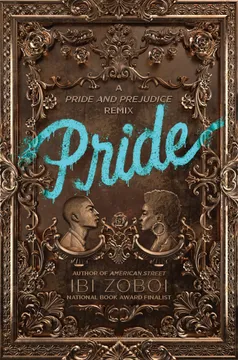


Plot Summary
A Mansion Across Jefferson
Seventeen-year-old Zuri Benitez watches a renovated mansion fill the empty house across her Bushwick street. The new family is Black and wealthy, with teenage brothers Darius and Ainsley, not the white newcomers she expected. Zuri distrusts their polished clothes and Darius's disdain for leaving Manhattan. Her older sister, Janae, is drawn to the friendly Ainsley, while Zuri bristles at Darius.
Then a cyclist nearly hits her, and Darius yanks her out of the way. His quick rescue unsettles her certainty but does not erase his manner. When Janae returns from college and Ainsley immediately gravitates toward her, Zuri sees the boys as a threat to her sister's attention as well as an intrusion into the neighborhood.
The opening makes Zuri's suspicion more than personal prejudice: the mansion is a visible sign of a neighborhood being remade without its residents' consent. Her quick judgments protect a place she fears losing, but they also flatten the Darcys into symbols before she knows them. Darius's rescue creates the first contradiction, an act of care from someone she has already cast as indifferent. Janae's instant connection with Ainsley adds a second pressure. Zuri is not simply guarding Bushwick from outsiders; she is guarding the family arrangement that made her feel secure while Janae was away.
The Block Party Test
At Janae's welcome-home dinner, their family and neighbors crowd the Benitez apartment, while Madrina jokes that the Darcy brothers could become future husbands. Zuri rejects the idea and plans instead for Howard University and a career. On the roof, Janae admits that college has made her want to travel and return to Syracuse, while Zuri fears that her sister is already outgrowing home.
Zuri begins an essay about preserving Bushwick, then watches the block party bring the neighborhood to life in front of the Darcy house. Ainsley joins the dancing, but Darius looks uncomfortable when thirteen-year-old Layla dances with him. Zuri pulls Layla away and confronts Darius, turning her instinct to protect her sister into an angry public clash.
The sisters attach different meanings to leaving. Janae experiences distance as an opening, while Zuri experiences it as the first stage of loss. Their shared roof is a refuge from a crowded home, but its view also forces them to see the changed mansion. At the block party, Zuri's defense of Layla is sincere, yet she interprets Darius's discomfort as contempt without asking what he feels. That misreading parallels her response to gentrification: she notices real power imbalances, then treats her interpretation of every individual as certain. Her essay begins where those two impulses meet.
Inside the Darcy House
When Janae visits Ainsley, Zuri follows in a sudden downpour, carrying her laptop beneath her shirt. Darius lets her into the immaculate house and leads her upstairs, where Janae is relaxing with Ainsley and his schoolmate Carrie. Carrie assumes Zuri has never seen a large home, so Zuri answers by pointing out how much space the Darcys could have used for housing.
Darius remembers Zuri's full name, and she leaves with Janae, forgetting her laptop. Later, Darius brings it back to her building. Zuri takes the computer and shuts the door before either of them can make the moment more intimate. She then seeks advice from Madrina, who urges her to let Janae make her own choices and accept that change will reach Zuri too.
The house turns class difference into physical space: polished floors, spare rooms, and security contrast with the Benitez family's compressed apartment. Zuri's critique of unused space is both political and personal; she wants room for herself but distrusts the wealth that could provide it. Darius's attention to her name and his return of the laptop complicate her belief that he sees her only as a local inconvenience. Madrina's advice shifts the problem inward. Zuri has been monitoring Janae's choices as if vigilance could prevent separation, but the person most threatened by change may be Zuri herself.
The Festival's Local Boy
Janae insists that Zuri join her and Ainsley on a walk through Bushwick, with Darius tagging along to see the neighborhood. At Maria Hernandez Park, Zuri complains that the festival and its mostly white audience have displaced the park's older uses. Darius challenges her assumptions, but their argument exposes how differently they read the same place.
When Warren, a boy from the nearby projects who attends the same private school as Darius, arrives, Zuri is immediately attracted to his confidence and local fluency. She gives him her number and stays to hear the band instead of leaving with Janae. Warren seems to embody what she wants in a boy: neighborhood roots, ambition, and ease in his own skin. Darius watches her choose him.
The park is a small-scale map of the novel's central conflict: familiar public space remains physically open while its culture and social use shift around Zuri. She reads the festival as evidence of loss; Darius sees her reading as too narrow. Neither has the full picture, but their disagreement begins to make each other visible. Warren's entrance offers Zuri an appealing alternative to Darius, a young man who appears to reconcile local belonging with educational opportunity. Yet Zuri's attraction is also shaped by what Warren represents. She has not learned his history; she has selected him as an answer to her fears about Darius.
A Date Across Brooklyn
Warren takes Zuri by cab to the Brooklyn Heights Promenade, where he describes his work tutoring and coaching while studying at an elite school. His plans to bring neighborhood children to places they have never seen impress her, and the city feels newly accessible beside him.
He walks her home but does not kiss her, leaving Zuri frustrated and intrigued. Later, she finds Darius at Hernando's bodega, where he needs pencils for SAT practice. When local boys try to intimidate Darius, Zuri guides him away and explains the small gestures that signal respect on the block.
Darius admits he needs the pencils for his own test preparations, and he apologizes to Layla and Kayla for refusing to dance. Zuri still resists liking him, but his attention to her sisters begins to matter.
Warren's date enlarges Zuri's map of Brooklyn without asking her to abandon Bushwick. His work and community-minded plans make ambition seem compatible with loyalty, exactly the balance she hopes to find. The delayed kiss leaves her with less control than she expected, revealing that her insistence on defining the encounter as casual is partly armor. The bodega scene gives Darius a different kind of vulnerability: he does not know the local codes Zuri treats as instinctive, but he is willing to apologize and learn. The contrast is not yet a verdict on either boy. It is the beginning of Zuri's recognition that belonging cannot be measured by appearance alone.
The Cocktail Party Cut
The Darcys invite the Benitez family to a formal dinner, where the contrast between their guests' polished clothes and the Benitezes' crowded, exuberant arrival makes Zuri feel judged. After Darius speaks privately with Ainsley, Ainsley withdraws from Janae and ends their brief romance, leaving her devastated.
Zuri blames the Darcy brothers and tries to comfort her sister, but Janae insists that her feelings were real. That night, Zuri goes to Madrina's Santería ceremony, where drummers and singers call on Ochún, the goddess associated with love.
Wearing a borrowed white skirt, Zuri dances until she feels her guardedness loosen. The experience does not solve Janae's heartbreak, but it gives Zuri a way to feel emotion without treating it as weakness.
The dinner turns manners and hospitality into tests of status. Mama brings food as an offering of connection, while the setting makes the Benitez family feel exposed to judgment. Ainsley's sudden retreat wounds Janae because it breaks the future she had begun to imagine, not because the relationship was long. Zuri's impulse is to convert that pain into anger on Janae's behalf. Madrina's ceremony offers another response: embodied feeling, held within a community rather than hidden or weaponized. The dance begins Zuri's movement from observing love as a risk to experiencing it as something that can unsettle and strengthen her.
Howard Opens the Map
Janae buys Zuri a round-trip bus ticket to Washington, D.C., so she can visit Howard, the historically Black university she hopes to attend. The campus feels expansive and welcoming, and a student tour gives Zuri a glimpse of the future she wants.
At Busboys and Poets, she signs up for an open mic and performs a poem about girls from neighborhoods like hers. Darius is in the audience with his younger sister, Georgia, and Carrie. He praises Zuri's work and invites her to get food with them.
When she risks missing her bus, he offers to drive her to Brooklyn. Zuri accepts, then discovers that the trip includes a stop at his grandmother's home. His grandmother treats her as an unwelcome guest, turning a promising day into another encounter with the Darcys' class divide.
Howard gives Zuri a concrete vision of a life beyond the limits of her daily route, but the visit does not make her want to discard Bushwick. Her poem lets her speak publicly from that home rather than translate herself out of it. Darius encountering her there disrupts the roles they have assigned each other: he sees her as an artist, and she sees him away from the neighborhood where she judges his behavior. The ride is a practical decision with emotional consequences. Zuri depends on Darius to get home, while his grandmother's reception reminds her that access and welcome are not the same thing.
The Highway's First Kiss
At dinner, Darius's grandmother dismisses Bushwick as a place her grandchildren do not belong, and Zuri answers her directly before leaving the house. Darius drives her toward New York. During a rest stop, their wary conversation softens, and he kisses her; Zuri kisses him back. On the highway, however, she asks why Ainsley ended things with Janae.
Darius admits that he urged his brother to break it off because he had judged Janae and worried about her intentions. Zuri hears the same class prejudice she has feared from the family and turns on him, rejecting his invitation to date and insisting he has no right to judge her or Warren. He warns her that she does not know Warren as well as she thinks, but she refuses to listen.
The kiss arrives through a moment of mutual attention, but it cannot erase the history that precedes it. Darius's admission exposes his capacity to reproduce his family's assumptions even while he resents being judged himself. Zuri's anger is justified, though it also protects her from the vulnerability of wanting someone whose values remain uncertain. Her insistence that Warren is different from Darius demonstrates how quickly she has made one boy a moral counterweight to the other. The highway holds them in the same confined space, but emotional intimacy does not make their judgments disappear. Instead, it makes the disagreement impossible to treat as abstract.
One Secret, One Chance
The next day, Darius texts Zuri that Warren once took sexual photographs of Georgia, then shared them with other students, damaging her privacy and reputation. Zuri confronts Warren on her stoop; he admits there is a story to explain, but she ends their relationship and sends him away.
Darius asks for another chance, and Zuri agrees to see him. On their outing in Williamsburg, she and Darius share food, browse a vintage shop, talk about their lives, and kiss without disguising their attraction.
Darius listens as she describes how familiar train stops can feel changed when the people around them change. By the time he walks her home, Zuri no longer sees him only as a wealthy outsider, though she has not yet decided what trust between them requires.
The revelation about Georgia changes Zuri's understanding of Warren from a promising symbol to a person whose actions have harmed someone vulnerable. Darius's warning is not proof that his own motives are pure, especially after his role in Janae's breakup, but it gives Zuri information she could not safely ignore. Her choice to end things with Warren is an act of moral judgment rather than romantic competition. The Williamsburg date then becomes a cautious experiment in seeing Darius without the caricature she built. Their shared attraction grows alongside, not instead of, difficult questions about class, privacy, and accountability.
Carrie's Party Turns
At Carrie's party, Darius falls into the performance expected of him by his wealthy school friends, leaving Zuri isolated while they treat Bushwick as a spectacle. She confronts him and walks away. On the train platform, she spots a photograph of thirteen-year-old Layla with Warren at the party and rushes back. Carrie helps Zuri find Layla, who is drunk but says Warren did not force her or take nude pictures.
Outside, Zuri finds Darius fighting Warren and pulls Darius away before the confrontation escalates further. Carrie gives the sisters water and a bag for Layla's nausea. Unable to take her drunken sister home without alarming their parents, Zuri accepts Darius's offer to shelter Layla in his basement until she can walk steadily.
The party makes Zuri's fear of being turned into an exhibit literal: Darius's friends ask about Bushwick as if it were an adventure, and his attempt to fit in leaves her alone. Her departure is a refusal to be treated as an accessory. Layla's presence then collapses the distance between romantic conflict and family responsibility. Zuri has to respond to her sister's choices without assuming that rescue means control. Carrie's help complicates Zuri's earlier picture of her as merely jealous and shallow. The situation forces Zuri and Darius to cooperate at the moment when neither can pretend that their private feelings exist apart from other people's safety.
The Roof Above Both
Darius brings Layla and Zuri into his basement, where Layla can sleep while she sobers up. Zuri discovers Darius's canvases, instruments, plants, fish tank, and books, a private world far removed from the polished rooms above. He admits he has felt out of place in both his old Manhattan neighborhood and Bushwick, while Zuri explains why she distrusted a family whose wealth seemed to put her home at risk.
They meet on his rooftop and kiss after acknowledging their mutual misjudgments. An ambulance's lights then appear outside Zuri's building. They hurry across the street and see EMTs carrying Madrina away beneath a sheet. Zuri recognizes her mentor and collapses in grief, devastated that she had been with Darius instead of beside Madrina.
The hidden basement and rooftop reveal that Darius has a self the grand house does not display: artistic, curious, and not entirely at ease with his social position. Zuri's willingness to see that self does not invalidate her critique of wealth; it lets her distinguish a person from the structures that benefit him. Their rooftop conversation is the first time both name their own part in the conflict. Its tenderness is immediately interrupted by loss. Madrina's death makes the contrast between romantic happiness and family grief painfully concrete, and Zuri's guilt reflects how fiercely she feels responsible for everyone she loves.
A Home Sold Away
At Madrina's funeral, Zuri reads an elegy while the neighborhood's Catholic and Santería communities gather around her. Afterward, Papi tells Zuri that Colin has accepted a developer's offer for Madrina's building, and the Benitez family will have to leave their long-time apartment.
Zuri accuses her father of selling their home, but Papi explains that the buyout will help provide for his five daughters and that the family, not the building, is what they carry with them. As packing begins, Janae and Ainsley cautiously reconnect; Ainsley offers to drive her back to Syracuse. Zuri watches her sister take a new chance while she struggles with losing both Madrina and the place that held their shared memories.
The funeral gathers a community that gentrification cannot reduce to property values: mourners bring distinct religious traditions into one public act of remembrance. The sale that follows makes displacement intimate. Papi's choice is not a betrayal of home so much as a painful calculation made under economic pressure, yet Zuri initially experiences it as the loss of a world he promised to protect. Janae's renewed connection with Ainsley quietly echoes her earlier willingness to travel. Both sisters must face change, but their responses differ: Janae moves toward possibility while Zuri is still grieving what cannot be kept.
The Last Mark
On the family's final day in the building, Darius finds Zuri crying outside their emptied apartment and comforts her. She leaves for Canarsie with her family, where the larger home offers space but little of Bushwick's street life or familiar community.
After starting senior year, Zuri returns to her old block with Darius. Their former building has been gutted for renovation, but Darius has carved their initials inside a heart into the newly repaired sidewalk. Zuri teases him about how long the mark will last, then kisses him.
The gesture cannot restore the building or halt the neighborhood's transformation. It gives their relationship a place in the landscape Zuri has lost, while her new home and college plans point toward a life still being made.
The ending refuses the easy consolation that leaving is harmless because love travels. Canarsie gives the family more physical room but strips away the everyday networks that made Bushwick feel alive. Zuri's grief is therefore social as well as personal. Darius's inscription is vulnerable to the same redevelopment that erased her home, which keeps the romantic gesture from becoming a magical cure. Its value lies in being made together and remembered, not in permanence. Zuri can carry Bushwick forward without pretending it has not been taken from her, and she can desire a future without treating the past as disposable.
Analysis
Pride treats the familiar romance plot as a meeting between two young people and a neighborhood that is also being courted, judged, and displaced. Zuri's attraction to Darius develops beside her suspicion of the wealth his family represents, so intimacy cannot be separated from questions of housing, access, and belonging. The novel does not resolve those questions by declaring either newcomers or long-time residents morally simple. Darius benefits from privilege and sometimes repeats its judgments; Zuri sees the harm clearly but also misreads individuals when fear hardens into certainty. Their relationship becomes credible when each can name both the other's injury and their own responsibility.
The sisters' differing responses to departure deepen this conflict. Janae's college experience teaches her that distance can enlarge a life, while Zuri fears that enlargement means abandonment. Howard gives Zuri a future that does not require her to stop loving Bushwick, and poetry lets her articulate that contradiction rather than choose one side. Her writing is not only self-expression. It is a record of local knowledge, a claim to intellectual authority, and a means of imagining public change.
Madrina's spiritual practice offers a counterpoint to the novel's material pressures. Her rituals situate love and grief within communal memory, while the story's economic realities remain stubbornly concrete: rent, education costs, a building sale, and the scarcity of space. The eventual move does not defeat the family's bonds, but it shows that resilience should not be mistaken for justice. Zuri can carry home with her, yet the community loses a building and the ordinary encounters built around it. The novel's most honest hope is therefore double-edged: people can grow beyond the places that formed them, but love alone cannot protect those places from forces powerful enough to price their residents out.
Review Summary
Reviews for Pride are mixed, averaging 3.74/5. Praise centers on Zoboi's culturally rich portrayal of Bushwick's Haitian-Dominican community, sharp commentary on gentrification and class, and Zuri's compelling slam poetry. Many appreciated Elizabeth Acevedo's audiobook narration. Common criticisms include weak character development, an unconvincing romance between Zuri and Darius, heavy "telling" rather than "showing," and underdeveloped themes. Some felt the Pride and Prejudice framework was either skillfully adapted or unnecessarily constraining, depending on the reviewer.
People Also Read








Characters
Zuri Benitez
Bushwick's sharp-eyed poetSeventeen-year-old Zuri is the observant middle daughter of a Haitian-Dominican family and the story's first-person narrator. She reads her neighborhood through its buildings, people, music, and history, then turns those observations into poems and college essays. Her pride in Bushwick protects her from the shame others project onto it, but it can also make her suspicious of anyone who seems to threaten its culture. Zuri is fiercely loyal to Janae and her younger sisters, sometimes confusing protection with control. Her ambition to attend Howard gives her a way to imagine a larger life without surrendering her ties to home. She is funny, defensive, perceptive, and still learning that seeing clearly requires questioning her own first impressions.
Darius Darcy
The guarded new neighborDarius is an eighteen-year-old student from a wealthy family that has moved from Manhattan into Bushwick. Carefully dressed and often tight-jawed, he initially appears to Zuri as a snob who looks down on her neighborhood. He is intelligent, ambitious, and accustomed to an upbringing that has protected him from the local codes Zuri knows instinctively. His confidence can conceal uncertainty about where he belongs, while his habit of judging other people exposes the same defensiveness he dislikes in others. Darius draws, paints, reads, and plays music, interests that complicate his polished public image. His relationship with Zuri asks him to distinguish genuine selfhood from performance and to take responsibility when his assumptions hurt people.
Janae Benitez
The ambitious older sisterJanae is Zuri's older sister, a Syracuse student who has spent her first year away from the crowded family home. She has long served as a steady, affectionate presence for her younger sisters without trying to replace their mother. College gives Janae room to imagine travel, work, and experiences beyond Bushwick, and she returns more independent than Zuri expects. Janae is warm and hopeful, qualities that make her open to romantic possibility but also leave her vulnerable to disappointment. She wants her family's closeness without being limited by it. Her relationship with Zuri is loving but not static: the sisters must learn that separation and change do not automatically mean abandonment.
Madrina, Paola Esperanza Negrón
The neighborhood's spiritual guideMadrina is the Benitez family's elderly neighbor, the owner of their building, and a Santería priestess associated with Ochún. She is known for her white clothing, colorful beads, vivid basement ceremonies, and an instinct for reading the people who come to her. Her humor and forceful affection make her a trusted presence in the sisters' lives. Madrina offers Zuri guidance through stories, ritual, and observation rather than simple instructions. She embodies a connection between neighborhood memory and inherited spiritual practice, while her advice repeatedly asks Zuri to allow others their freedom. To Zuri, Madrina's home is both a sanctuary and a place where emotion can be expressed without apology.
Papi, Beni Benitez
The family's quiet anchorPapi works long hours, reads history, and often retreats to his recliner, but his quietness should not be mistaken for distance. He shows love through practical care, from supporting his daughters' education to tending to Mama after meals. His own experience of limited opportunity informs his wish for his children to see more of the world than he has. Papi values family loyalty and expects his daughters to be treated with respect, yet he also understands that security sometimes requires painful choices. Zuri looks to him for approval and worries when she sees disappointment in his face. His steady perspective helps her distinguish a home from the people and memories that make it home.
Mama
The block's generous heartMama is a loud, affectionate Haitian mother who fills the family's small apartment with food, teasing, and guests. Her cooking regularly feeds neighbors as well as her five daughters, making hospitality a practical form of community care. She encourages her daughters to enjoy their youth and make their own choices, even when Papi is more cautious. Mama's early motherhood shaped the family's close quarters and her own interrupted education, but she does not want her daughters' futures to be similarly narrowed. Her exuberance can embarrass Zuri, though it also gives the family a resilient warmth.
Ainsley Darcy
The sunny older Darcy brotherAinsley is Darius's older brother, friendly and eager to explore his new neighborhood. His open smile and easy sociability make a strong impression on Janae when they first meet. He is more willing than Darius to join the block's activities, though his manners and social world still mark him as an outsider to Zuri. Ainsley's charm encourages Janae to imagine a connection with someone who seems different from the boys she has known. He is affectionate toward his brother, and the brothers' closeness gives Darius's judgments and advice particular weight.
Warren
The ambitious local charmerWarren is a confident boy from the nearby Hope Gardens projects who attends an elite Manhattan school through an academic program. He knows Bushwick's social codes and carries himself with the ease Zuri associates with home. Warren works as a tutor and coach, and he speaks about using his education to create opportunities for neighborhood children. His appeal lies in the apparent balance between ambition and local roots. He is also part of Darius's school history, though Zuri initially knows little about the tensions between them. Warren's presence tests how easily Zuri treats shared background as proof of shared values.
Marisol Benitez
The family finance whizMarisol is Zuri's younger sister, known for her glasses, braces, and confident interest in money. She likes calculations, budgets, and practical plans, often puncturing family arguments with a financial perspective. Her business-minded humor makes her a distinctive voice among the sisters, and she sees the value of making money without pretending that affection alone solves material problems. Marisol is close to her sisters and participates in the family's shared routines, though she prefers to assess situations in concrete terms.
Layla Benitez
The impulsive younger twinLayla is one of Zuri's thirteen-year-old twin sisters and the more openly boy-crazy of the pair. She is curious, bold, and eager to be treated as a teenager rather than a child. Her enthusiasm can outrun her judgment, especially when she feels that her older sisters have freedoms she does not. Layla brings humor and movement to the household, but her independence creates real friction with Zuri, whose protectiveness can become controlling. Their relationship tests how a sister can offer care without assuming she should make every decision.
Kayla Benitez
The watchful younger twinKayla is Layla's twin and one of Zuri's youngest sisters. She shares the twins' interest in teen culture, clothes, and boys, but often watches the family dynamics before joining in. Kayla can be mischievous and quick to laugh, especially when she and Layla turn a private family moment into a shared joke. She looks up to her older sisters while beginning to test the limits of their authority. Her presence helps make the Benitez home feel like an ensemble, where even small reactions become part of the family's conversation.
Georgia Darcy
The curious Darcy sisterGeorgia is Darius and Ainsley's younger sister, spending the summer with her grandmother while she completes an internship in Washington, D.C. She is bright, sociable, and accustomed to travel and educational opportunities that Zuri has not experienced. Georgia's enthusiasm can make her unaware of how her assumptions sound to someone from a different background, but she is capable of recognizing when she has caused offense. She gives Zuri a glimpse of the Darcy siblings outside their Bushwick house and helps connect their family history to the choices Darius makes.
Charlise
Zuri's basketball-playing confidanteCharlise is Zuri's close friend, a talented basketball player headed to Duke on a scholarship. She is direct, funny, and comfortable challenging Zuri when the younger girl is acting self-righteous. Charlise loves neighborhood gossip but also has a clear sense of her own ambitions. Her conversations with Zuri broaden the story's view of young women negotiating reputation, attraction, and independence. She is familiar enough with Bushwick to understand its codes, yet focused enough on the future to leave for college.
Colin
Madrina's adopted nephewColin is Madrina's nephew, raised close to the Benitez sisters and treated by them as an older brother when they were children. As he grows older, his attention shifts toward romance and adult responsibilities, creating new awkwardness in relationships that once felt uncomplicated. He is outgoing and flirtatious, and his long connection to the building makes him part of the neighborhood's social fabric. Colin's bond with Madrina and Papi gives him a place between the Benitez family and their wider community.
Mrs. Catherine Darcy
The formidable Darcy matriarchDarius and Ainsley's paternal grandmother is polished, wealthy, and accustomed to managing the family's public image. She supports philanthropic work and has strong expectations for her grandchildren's education and prospects. Her manner can be formal and dismissive, especially toward people she believes do not fit her standards. Through her, Zuri encounters a version of class judgment that is more explicit than the assumptions she first reads in Darius. Mrs. Darcy's influence helps explain the pressures surrounding the brothers without excusing their choices.
Carrie
Darius's guarded schoolmateCarrie attends school with Darius and moves comfortably within the wealthy social circle that Zuri encounters at the Darcy house and at her party. She is wary of Zuri's arrival and initially treats her as a rival for Darius's attention. Beneath that defensiveness, Carrie can be more perceptive and helpful than Zuri expects. Her character complicates the easy division between local warmth and wealthy coldness, showing that social position does not determine every person's capacity for care.
Hernando
The neighborhood bodega ownerHernando runs the local bodega, where residents gather, exchange news, and keep an eye on the block. He teases Zuri and knows her family well. His store gives the neighborhood a dependable meeting point.
Plot Devices
Bushwick's changing streets
Makes displacement visibleThe renovated mansion, changing park, new businesses, and altered transit routes give Zuri's fear of displacement a physical setting. These changes do not function as background scenery alone: they shape who feels welcome, what residents can afford, and how Zuri interprets the Darcy family. The neighborhood is neither frozen in a golden past nor simply improved by new investment. Its transformation brings opportunity and loss together, forcing the characters to ask who benefits from change and who gets to remain.
Zuri's poetry and essays
Turns observation into actionZuri's poems and college writing make her internal life legible without reducing her to a narrator who only explains what she feels. She uses language to record the sounds, people, and histories of Bushwick, and to test arguments she cannot yet settle in conversation. Her performance at Busboys and Poets lets her claim an audience beyond her block, while her application essay turns her observations into a concrete plan for college. Writing helps her move from anger and uncertainty toward a more complex account of home.
Madrina's Ochún rituals
Gives feeling a ritual formMadrina's candles, songs, drumming, and devotion to Ochún create a spiritual language for love, grief, and change. Zuri does not begin as a believer, but the rituals offer her a space where emotion can move through the body rather than remain locked behind pride. The ceremonies also connect present-day romance to inherited community memory. Their function is not to predict a fixed future; they help Zuri notice what she is feeling and consider what she has been resisting.
The shared rooftops
Reveal private selvesThe Benitez and Darcy rooftops mirror one another while exposing the differences between the families' homes. Zuri's roof is a secret refuge where she and Janae talk about travel, college, and fear of separation. The Darcy roof and private rooms later show aspects of Darius that are invisible in his polished public manner. These elevated spaces allow the characters to step away from neighborhood performance and speak more honestly, while the views keep their conversations connected to the changing blocks below.
Misjudgment and revision
Drives the romance forwardZuri and Darius initially read one another through class markers, manners, and assumptions about how Black people should behave. Their attraction develops through repeated moments that challenge those readings: practical help, conflict over family, encounters away from Bushwick, and honest accounts of their histories. The device echoes the novel's broader concern with how communities are judged from the outside. Romantic recognition matters here only when it accompanies a willingness to admit error and see another person in fuller context.

Download PDF
Download EPUB
.epub digital book format is ideal for reading ebooks on phones, tablets, and e-readers.








