

Key Takeaways
Let childhood play become serious craft by keeping stories alive through retelling.
Stories began as play. Joanne Rowling grew up in a house full of books. Her parents read to her, and she invented tales for her younger sister, Di. One early story followed a rabbit visited by a giant bee. Di loved hearing it, so Joanne began writing it down. The habit formed before she had a plan for publication: imagination first, an eager listener close by.
Readers became an audience. Joanne shared stories with friends, often casting them as heroes in adventures. Two childhood friends, Ian and Vikki Potter, joined her games of witches and wizards, and she liked their surname. At school, she read widely, from fantasy to Jane Austen, and continued writing privately. The Harry Potter world grew from this long practice of reading, inventing, and testing stories on people she trusted.
What's notable is that early creativity appears as a social activity, not a solitary lightning bolt. Di's laughter gave Joanne a reason to repeat and refine a story; school friends supplied another small audience. That resembles a useful pattern in creative work: private invention needs safe feedback before it can withstand public judgment. The childhood details also resist the myth that a writer must begin with a polished ambition. Joanne's early stories were playful and rough. Their value lay in the habit they built, not in their resemblance to the books that made her famous.
A private ambition stays imaginary until its maker risks outside judgment.
Talent did not remove fear. Joanne knew she wanted to write, but she kept stories in folders and boxes, rarely showing them beyond a small circle. She did not submit work to magazines, partly because she feared exposing it to rejection and did not know how publishing worked. Her parents advised her to study French and literature, which seemed a sensible route to a stable job. She followed that advice to Exeter University, though writing remained her real ambition.
Work postponed the test. After graduating, she took a series of jobs, including office and secretarial work she found dull. She wrote during breaks and sometimes when she should have been taking meeting notes. She later lost some jobs or quit them, but the central obstacle was not a lack of ideas. It was the distance between wanting to be a writer and asking strangers to judge the work.
The distinction here is between practicing a craft and submitting it to the conditions that make it a profession. Private writing can preserve pleasure, but it also protects the writer from information: whether a story communicates to anyone beyond its creator. Joanne's experience does not imply that everyone should abandon practical employment; her later poverty shows why security matters. It does suggest that a dream can remain emotionally vivid while receiving no real-world test. Small acts of exposure, such as sharing a draft or sending a submission, turn aspiration into evidence.
Notice an idea before you can explain where it came from.
A commute became a beginning. In 1990, while traveling by train between London and Manchester, Joanne was delayed for hours. Tired and without paper or a pen, she watched cows in a field. Then she imagined a boy who did not know he was a wizard, and a school where young wizards learned magic. She held the idea in her head until the train reached London, then began collecting names, characters, and plot fragments over the following weeks.
The premise met real grief. Joanne's mother, Ann, died from multiple sclerosis soon after the idea arrived. Joanne regretted that her mother had never read the story. The loss deepened her understanding of the orphaned Harry's vulnerability, while writing gave her something absorbing to return to. The book's origin was sudden, but building its world took sustained attention.
The train story is memorable because it joins an ordinary setting to an idea too large to dismiss. Yet the biography also shows why origin stories can mislead: a vivid moment sounds like the cause of a book, while the months of elaboration, discarded material, and revision do the less glamorous work. The practical lesson is to notice and preserve promising fragments without demanding that they arrive fully explained. A passing image can be a seed, but it is not yet a finished project. Curiosity starts the process; deliberate work gives it shape.
Write around the life you have, not the life you wish you had.
Motherhood changed the conditions. After a failed marriage, Joanne moved to Edinburgh with her baby daughter, Jessica, little money, and three chapters of the novel. She was depressed and worried that writing might be an indulgence when she needed to support her child. Public assistance covered basic costs, but the system did not provide the child care she needed to take a job. She wrote by hand because she could not afford a computer or even a typewriter at first.
Routine made room. To get out of a cold, one-room flat, Joanne walked Jessica in a carrier until she fell asleep, then wrote in cafés over an inexpensive drink. When she later received a Scottish Arts Council grant, she could arrange child care and take teaching work. The writing did not happen under ideal conditions. It happened in the available hours, with help from family and friends.
This account makes adaptation look less like a motivational slogan than a response to material limits. A café was not a magical productivity tool; it was warm, public space where a sleeping baby and a cup of coffee bought a short stretch of concentration. That distinction matters because romanticizing hardship can obscure the need for child care, income, and social support. Joanne's ingenuity helped her continue, but it did not make poverty beneficial. The durable insight is to redesign a routine around actual constraints while recognizing which constraints require assistance, not just resourcefulness.
Write the book you would read, then survive the industry's no.
Her own taste set the tone. Joanne worried that a children's book might talk down to its readers. She chose instead to write the story she herself wanted to read, allowing the characters to be funny, imperfect, and sometimes in genuine danger. Harry's world could be welcoming and frightening at once. The children faced adult burdens, and the story treated their choices as consequential rather than merely cute.
Publication took persistence. Joanne completed the manuscript, found agents through a library directory, and sent the book to publishers. Several rejected it, describing it as too long, slow, or literary. Bloomsbury eventually accepted it for a modest advance of £2,000. Interest in foreign rights grew, and American editor Arthur Levine ultimately bid $100,000 for the U.S. rights. A book once rejected by multiple publishers became a major international success, but its first step was simply reaching readers who could say yes or no.
The creative choice to respect young readers is more specific than the familiar advice to follow one's passion. Joanne trusted that children could handle moral complexity, humor, and fear without having the story softened into a lesson. That choice helped the books work across age groups, though success cannot prove that every rejected manuscript deserves persistence. Rejection is noisy evidence: it may reflect the work, the market, or the fit with a particular editor. The useful response is neither automatic surrender nor blind faith. Keep improving the work, and keep seeking readers capable of recognizing what it is trying to do.
Protect the work from deadlines that turn success into an assembly line.
A series needed a larger map. Once the first books succeeded, publishers offered a contract for seven Harry Potter novels. Joanne plotted the remaining stories to reassure herself that she could sustain the series and knew where the characters were headed. That plan did not eliminate revision. While writing the fourth book, she found that the plot had developed a major gap and had to rethink it. The fifth book grew to more than 250,000 words.
Popularity did not set the pace. The growing press demands and fan expectations left less time for writing. Joanne missed deadlines and refused to rush the fifth book simply to match the earlier publication rhythm. She described herself as a perfectionist and wanted time to adjust the manuscript. That choice frustrated readers and publishers, but she argued that a rushed book would not be her best work. A demanding project needed both a long view and permission to change course.
The series plan gave Joanne a structure without freezing the story. That balance is difficult: a long project needs enough architecture to support continuity, yet enough flexibility to repair a plot that fails in practice. Her delays also reveal the cost of turning a creative success into a production schedule. Still, perfectionism has two faces. Revision can protect quality, but endless tweaking can become a way to avoid completion. The standard cannot be total certainty. A useful boundary is to allow time for meaningful repair while recognizing that deadlines can also help work reach its audience.
Fame can finance freedom while consuming the solitude that made the work.
Success altered the writing room. Joanne had once written in cafés because they offered space away from a bleak flat. After the books became famous, those same cafés became places where strangers watched, interrupted, or asked for photographs. Reporters sometimes appeared at her home, and publicity obligations competed with the hours she needed to write and spend with Jessica. Wealth removed the fear of not affording shoes or rent, but it did not restore privacy.
She defended the story's shape. The film adaptation brought a second negotiation. Joanne objected when Steven Spielberg discussed making the story more American and adding international characters. She preferred a British setting and had input into the adaptation and its marketing. Chris Columbus later directed the first film. Joanne welcomed the screen version, but worried about what might be changed or sold alongside it. Fame enlarged the audience and the pressures around the work at the same time.
The book's rise is not presented as a simple upgrade from poverty to comfort. Money brought security, while visibility disrupted the conditions under which the writing had begun. That tradeoff is especially clear in the café, first a practical refuge and then a stage for public attention. The film negotiations add another layer: creative control can preserve the identity of a work, but adaptations also require translation into another medium. The case invites a distinction between influence and control. An author can protect essential choices without expecting every viewer to experience the story exactly as a reader does.
Use success to address hardships you know firsthand.
Personal experience guided her causes. Having lived as a single mother with little money, Joanne supported the National Council for One Parent Families and donated $725,000 to it. She objected to accounts that made poverty sound picturesque, emphasizing how humiliating it had felt. Her mother's death from multiple sclerosis also shaped her support for related causes. Proceeds from books she wrote under fictional names, including guides to Quidditch and magical creatures, went to charity.
Care could be personal, too. When nine-year-old fan Natalie McDonald was dying of leukemia, Joanne's reply arrived after the girl had died. She honored her by giving a character her name. Joanne also corresponded with Catie Hoch, a seriously ill young reader, and read unpublished passages of the fourth novel to her over the phone. These gestures did not replace broader support, but they made a vast public success feel attentive to individual lives.
What's striking is the range between institutional giving and intimate attention. Donations can fund services; a letter or reading can make a frightened child feel seen. Neither form of help substitutes for the other. The biography also shows how lived experience can clarify which public causes deserve attention, while leaving open the limits of a celebrity's individual influence. Personal testimony gives an issue emotional texture, but durable support depends on organizations and policy, not goodwill alone. The strongest response combines the human scale of care with resources capable of reaching people beyond one moving encounter.
Finish the story you planned, even when success begs for an extension.
The ending was part of the design. Joanne had planned the Harry Potter series as seven books and resisted suggestions that she keep Harry's adventures going beyond Hogwarts simply because the audience was enormous. She knew the emotional resolution she wanted, though details changed as the books developed. The final novel was completed on January 11, 2007, in a hotel room in Edinburgh. She recorded the moment by writing a note on a bust in the room.
Completion brought mixed feelings. Joanne described the ending as both painful and satisfying. Harry had been part of her life for years, and she expected a sense of loss when she stopped writing about him. At the same time, she wanted to move on to other work and spend time with her family. The choice to end the series did not erase its success. It protected the shape of a story whose conclusion mattered to its creator.
A planned ending can be an artistic decision rather than a rejection of readers. When a fictional world becomes commercially valuable, every continuation offers an apparent reward, but more installments can weaken the force of a conclusion. Joanne's commitment to seven books gave the series a destination, while her willingness to revise the route kept the plan from becoming mechanical. There is a tension here: endings belong to creators, but readers also form attachments and may want more. Respecting that attachment does not require satisfying it indefinitely. A finished work can remain alive in its audience without being continually extended.
Analysis
This biography traces Rowling's path from a child who entertained her sister with invented tales to a writer whose work became a global cultural event. Its most useful thread is not simply that hardship preceded success. It is the changing relationship between imagination and circumstance. Reading and play created early habits; fear delayed public exposure; grief and motherhood gave writing emotional weight; poverty forced practical improvisation; publication required tolerating rejection; and fame later threatened the time and privacy that the work had once depended on. The narrative makes that progression unusually concrete through recurring places: the delayed train where the premise emerged, the Edinburgh café where a mother wrote while her baby slept, and the hotel room where she completed the final manuscript.
The account also emphasizes that success did not make Rowling's life frictionless. Financial security arrived with publicity demands, interrupted writing, commercial negotiations, and anxiety about adapting the books for film. Her efforts to protect the British setting and her characters show that authorship continued after publication, as decisions about screen versions and merchandise shaped the public identity of the story. Her charity work extends the biography beyond career, especially where it responds to single parenthood, multiple sclerosis, and ill children.
The book is a celebratory, interview-driven biography rather than a critical study of the novels. It often frames Rowling's life as a fairy tale, a compelling but simplifying metaphor that can make poverty, depression, and professional uncertainty appear like setup for inevitable triumph. They were not inevitable. The source also ends in 2007, so its claims about future books, films, and Rowling's life are contemporary expectations, not a complete account. Read with those limits in mind, the biography offers a vivid case study in how creative ambition depends on habits, support, persistence, and boundaries, while resisting the idea that fame alone explains lasting work.
Review Summary
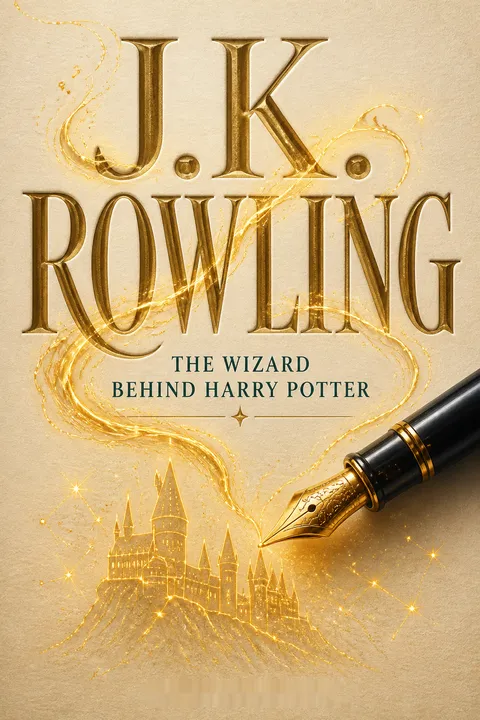
J.K. Rowling: The Wizard Behind Harry Potter receives mixed reviews from readers. Many appreciate the insights into Rowling's life and the origins of Harry Potter, finding it fascinating and inspirational. However, some criticize the book for factual errors and a superficial approach. Fans note that it was published in 2000, covering only the early Harry Potter books, limiting its scope. Despite its flaws, many readers still find value in learning about Rowling's journey from struggling single mother to worldwide phenomenon.
People Also Read

FAQ
What's "J. K. Rowling: The Wizard Behind Harry Potter" about?
- Biography of J.K. Rowling: The book is a biography of J.K. Rowling, detailing her life from childhood to becoming the world-renowned author of the Harry Potter series.
- Journey to Success: It covers her struggles, including financial hardships and personal challenges, before achieving success with Harry Potter.
- Behind the Scenes: The book provides insights into the creation of the Harry Potter series, including Rowling's inspirations and writing process.
- Impact and Legacy: It also discusses the global impact of the Harry Potter books and movies, and Rowling's influence on literature and popular culture.
Why should I read "J. K. Rowling: The Wizard Behind Harry Potter"?
- Inspiration: The book offers an inspiring story of perseverance and creativity, showing how Rowling overcame numerous obstacles to achieve her dreams.
- Insight into Creativity: Readers gain a deeper understanding of the creative process behind one of the most successful book series in history.
- Cultural Impact: It provides context on how the Harry Potter series became a cultural phenomenon and its lasting impact on readers worldwide.
- Personal Connection: Fans of Harry Potter can connect more personally with the author and understand the real-life experiences that shaped the magical world they love.
What are the key takeaways of "J. K. Rowling: The Wizard Behind Harry Potter"?
- Perseverance Pays Off: Rowling's journey emphasizes the importance of persistence and resilience in the face of adversity.
- Creative Process: The book highlights the meticulous planning and imagination involved in creating the Harry Potter universe.
- Impact of Literature: It illustrates how a single book series can influence global culture and inspire millions of readers.
- Personal Growth: Rowling's story is also about personal growth, learning from failures, and staying true to one's passion.
How did J.K. Rowling come up with the idea for Harry Potter?
- Train Journey Inspiration: The idea for Harry Potter came to Rowling during a delayed train journey from Manchester to London in 1990.
- Vision of a Wizard School: She envisioned a young boy attending a school for wizards, which became the foundation for the series.
- Character Development: Rowling spent years developing the characters and the magical world, drawing from her own experiences and imagination.
- Detailed Planning: She meticulously planned the series, ensuring consistency and depth across all seven books.
What challenges did J.K. Rowling face before publishing Harry Potter?
- Financial Struggles: Rowling faced significant financial difficulties, living on welfare as a single mother while writing the first book.
- Rejections from Publishers: She received numerous rejections from publishers before Bloomsbury finally accepted the manuscript.
- Personal Loss: The death of her mother deeply affected her, influencing the themes of loss and love in the Harry Potter series.
- Balancing Life and Writing: Rowling had to balance her responsibilities as a mother with her passion for writing, often writing in cafes while her daughter slept.
How did J.K. Rowling's personal life influence the Harry Potter series?
- Childhood Experiences: Rowling's own childhood experiences and memories influenced the creation of characters and settings in the series.
- Themes of Loss and Love: The death of her mother and her own struggles are reflected in the themes of loss, love, and resilience in the books.
- Character Inspirations: Many characters, like Hermione, are based on people from Rowling's life, including herself.
- Moral Lessons: Her personal values and beliefs are woven into the moral lessons and themes throughout the series.
What impact did the Harry Potter series have on popular culture?
- Global Phenomenon: The series became a global phenomenon, selling millions of copies and being translated into numerous languages.
- Film Adaptations: The books were adapted into a successful film series, further expanding their reach and influence.
- Cultural References: Harry Potter has become a cultural touchstone, referenced in various media and inspiring countless fan works.
- Literary Influence: The series has influenced a generation of readers and writers, contributing to the popularity of fantasy literature.
What role did J.K. Rowling play in the film adaptations of Harry Potter?
- Creative Input: Rowling had significant creative input in the film adaptations, ensuring they stayed true to her vision.
- Casting Decisions: She was involved in key casting decisions, advocating for a predominantly British cast.
- Script Approval: Rowling reviewed and approved the scripts, maintaining consistency with the books.
- Protecting the Brand: She worked to ensure that the films and associated merchandise aligned with the values and themes of the books.
How did J.K. Rowling handle the fame and success of Harry Potter?
- Maintaining Privacy: Despite her fame, Rowling has worked to maintain her privacy and protect her family's personal life.
- Philanthropy: She has used her wealth and influence to support various charitable causes, particularly those related to children and single parents.
- Continued Writing: Rowling has continued to write, exploring new genres and projects beyond Harry Potter.
- Public Engagement: She engages with fans through social media and public appearances, sharing insights and updates on her work.
What are some of the best quotes from "J. K. Rowling: The Wizard Behind Harry Potter" and what do they mean?
- "I always find it difficult to be objective about Harry." This quote reflects Rowling's deep personal connection to her creation, highlighting the emotional investment she has in the series.
- "I don’t think anyone could enjoy reading them more than I enjoy writing them." It underscores her passion for storytelling and the joy she finds in the creative process.
- "I have known Harry and I have been writing about Harry for ten years." This quote emphasizes the long-term commitment and dedication Rowling has had to the Harry Potter series.
- "I’m going to find it very difficult. But it must be done." This reflects her mixed emotions about ending the series, acknowledging both the sadness and necessity of concluding Harry's story.
What lessons can aspiring writers learn from J.K. Rowling's journey?
- Persistence is Key: Rowling's journey shows the importance of persistence in the face of rejection and adversity.
- Draw from Experience: Using personal experiences and emotions can enrich storytelling and create relatable characters.
- Plan Meticulously: Detailed planning and world-building are crucial for creating a consistent and immersive story.
- Stay True to Your Vision: Rowling's commitment to her vision, despite external pressures, is a testament to the importance of staying true to one's creative instincts.
How did J.K. Rowling's life change after the success of Harry Potter?
- Financial Security: The success of Harry Potter brought Rowling financial security, allowing her to focus on writing and philanthropy.
- Public Attention: She became a public figure, with her life and work closely followed by fans and media worldwide.
- Creative Freedom: The success gave her the freedom to explore new writing projects and genres beyond Harry Potter.
- Legacy and Influence: Rowling's work has left a lasting legacy, influencing literature, film, and popular culture for generations to come.
Download PDF
Download EPUB
.epub digital book format is ideal for reading ebooks on phones, tablets, and e-readers.








