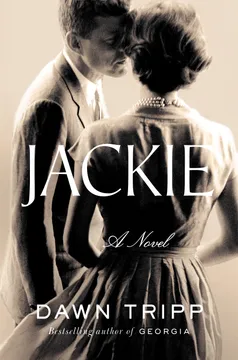


Plot Summary
Prologue
The novel opens in Dallas, where Jackie Kennedy1 sits in a hospital corridor with her husband’s2 blood on her clothes and roses crushed between them. The seconds in the motorcade return in flashes, mixed with the warmth of an earlier marriage and the practical choices closing around her.
When Jack’s2 coffin is taken toward the plane, she refuses to separate from it. The opening frames the life to come as both private love and public catastrophe, then turns back to the young woman she was before either had become a national story.
The opening does not offer the assassination as a clean historical fact. It gives the reader Jackie’s fractured experience of it, where a few seconds hold both unbearable detail and gaps she cannot fill. The crushed roses make public ceremony and bodily violence occupy the same space. By placing an intimate marriage beside the image of a coffin surrounded by officials, the prologue establishes the book’s central tension: Jackie is both a person who loves and a figure the world will interpret. The backward turn to 1951 asks what the later icon looked like before history claimed her.
The Bartletts’ First Meeting
In spring 1951, twenty-one-year-old Jacqueline Bouvier1 arrives at a Georgetown gathering with plans for Europe, a writing prize, and a life that does not end in marriage.
Jack Kennedy,2 a Massachusetts congressman with a reputation for flirting, catches her attention by remembering their earlier meeting on a train and keeping pace with her references to books and politics. She recognizes his humor and intelligence, but also his appetite for winning. After earning a Vogue position, Jackie1 realizes the polished New York office is not the work she wants.
She turns it down and takes a reporting job at the Washington Times-Herald instead. Her decision makes independence more than a daydream, even as Jack’s2 presence begins to complicate the future she has chosen.
Jackie’s first consequential act is not choosing a man but choosing work that gives her access to the world. Her attraction to Jack grows alongside her resistance to being arranged into a familiar social role. The conversation matters because he recognizes her mind without asking her to make it smaller, a rare form of attention in a culture that prizes feminine agreeableness. Yet his pleasure in the contest also contains risk: she sees his talent for leaving once he has won. The scene plants the contradiction that will structure their intimacy. Recognition draws them together, while the freedom each protects makes lasting closeness difficult.
The Ring Goes Back
When Jackie1 meets Jack2 again in 1952, she is engaged to Wall Street lawyer Johnny Husted and refuses to give up her newspaper column simply because marriage is expected. Jack2 challenges her with questions about her work, while she sees the loneliness beneath his practiced ease.
After she breaks off her engagement, their flirtation turns physical during a Fourth of July weekend at Hyannis Port. Jack’s2 noisy, competitive family overwhelms her, but she wins over his father, Joe,9 through quick wit and genuine curiosity.
Jack2 later wins a Senate seat, and their courtship deepens through campaign visits, shared books, and her research on Southeast Asia for his speeches. In June 1953, the couple announces their engagement, binding her independent ambitions to a politician who is often absent.
The ring returned to Johnny marks more than a romantic choice. Jackie recognizes that a safe match could become another kind of confinement, so she accepts a relationship whose dangers she already understands. Jack’s family tests her capacity to move among power without surrendering her judgment; Joe’s approval is earned through intelligence, not obedience. Their shared reading and her research create a partnership of minds before marriage formalizes it. Yet the courtship already contains an unequal rhythm: Jack disappears into campaigns, while Jackie waits and supplies intellectual labor. The relationship offers vitality, but its terms are being set before either fully acknowledges them.
A Marriage Under Strain
Jackie1 and Jack2 marry in Newport in September 1953 before hundreds of guests, though her father misses the ceremony and her wedding dress has been remade after a studio accident. On their honeymoon, desire makes the new marriage feel vivid; back in Washington, Jack’s2 absences and affairs soon puncture that intimacy.
At a dinner dance, he leaves with a woman in a silver dress while Jackie1 watches the room notice. She rides through dawn to burn off her anger, then stops asking whether he will come home.
The marriage freezes into separate routines until Jack’s2 damaged back worsens. When doctors warn that he may lose the use of his legs without surgery, Jackie1 faces his physical vulnerability alongside the emotional distance she has been trying to survive.
The wedding’s public perfection and private disappointments establish how quickly Jackie’s life becomes a performance others can mistake for reality. Her father’s absence echoes the instability of her childhood, while Jack’s infidelity repeats a family pattern she has seen and fears. Riding gives her a physical language for anger when ordinary confrontation has failed. Her withdrawal is not simple indifference; it is a strategy for limiting the damage of wanting more than Jack seems able to give. The diagnosis changes the balance of care, but illness alone cannot repair trust. The marriage is now tested by whether vulnerability can produce mutual presence rather than temporary dependence.
The Hospital Manuscript
In 1954, Jack2 undergoes spinal surgery in New York, but a severe infection leaves him feverish and close to death. Jackie1 stays beside him, then helps him rebuild through books, jokes, food, and a demanding intellectual task. When he proposes writing about political courage, she gathers research, takes dictation, organizes drafts, and edits the manuscript that becomes Profiles in Courage.
Jack2 returns to the Senate in 1955, determined to regain strength and needing her less. Jackie1 had hoped their ordeal would bring lasting closeness; instead, his recovery restores the old distance. Her work has mattered, but it has also been absorbed into his public achievement, while she remains without a profession of her own.
The hospital crisis briefly makes care reciprocal: Jackie supplies practical competence, and Jack lets her see his fear and dependence. Turning his proposed essay into a book shows that her intelligence is not ornamental to his career; it actively shapes its products. Yet the book’s public authorship and her largely private labor reproduce the imbalance she has resisted since their courtship. Recovery restores Jack’s autonomy without resolving what his dependence revealed. Jackie’s disappointment therefore concerns more than loneliness. She has helped create meaningful work, but cannot claim it openly or convert it into a life independent of his ambitions.
Arabella’s Empty Nursery
In 1956, Jackie1 becomes pregnant while Jack’s2 political ambitions intensify. She loses their daughter, whom she had hoped to name Arabella, after a premature labor that nearly kills her.
Bobby Kennedy3 stays at her hospital bedside and arranges the funeral; Jack2 is away on a trip and does not return until after the burial. His delayed arrival confirms a loneliness Jackie1 had tried to explain away. She tells him their marriage will need a different beginning, then decides to remain while guarding her heart.
The following year she becomes pregnant again. Jack’s2 Pulitzer recognition and her father’s sudden death arrive alongside the birth of Caroline,5 a daughter5 who gives Jackie1 a new center of attention and a fierce reason to protect private family life.
Arabella’s loss turns an existing marital pattern into an ethical injury: Jack is absent when Jackie most needs him, and his absence cannot be repaired by political purpose. Bobby’s presence provides care without demanding that she minimize grief, making their bond one of the book’s quiet emotional counterweights. Jackie’s decision to stay is neither forgiveness nor surrender. She reduces her exposure by withholding the most vulnerable part of herself. Caroline’s birth gives her a concrete future to protect, but it does not erase the child who died or the marriage’s unresolved failures. Motherhood becomes both profound attachment and a deliberate defense against public appropriation.
The Campaign Wife’s Choice
After her father dies in 1957, Jackie1 gives birth to Caroline5 and begins shaping the couple’s public image without abandoning her private judgment. When Jack2 runs for president in 1960, she joins parts of the campaign but stays home during the late stages of pregnancy.
During the campaign, Jack2 calls Coretta King after Martin Luther King Jr. is jailed; Jackie’s1 insistence that the choice carry moral as well as political weight helps move him toward action. He wins the election.
Their son John6 arrives prematurely that November, survives after emergency treatment, and becomes a source of shared tenderness. Jackie1 enters the presidency with two small children and a clear concern that they should have routines and privacy, not simply serve as props in a national spectacle.
Jackie’s political influence operates through attention to people excluded from the campaign’s calculations. Her pressure on Jack over King does not erase electoral strategy, but it forces him to see that strategy is not the only measure of a decision. At the same time, her choice to limit campaigning during pregnancy asserts that the family has claims on her beyond public duty. John’s precarious birth makes vulnerability immediate for both parents, while Caroline has already taught Jackie what she most wants to preserve. The presidency begins as a negotiation over visibility: Jackie will help construct a public story, but refuses to let the children become its raw material.
The House Becomes History
At the start of 1961, Jackie1 enters a White House she finds neglected and undertakes a restoration that treats the residence as national inheritance rather than presidential décor.
With designer Sister Parish, she searches storage rooms for historic furniture, consults experts, and builds a committee to secure funds and authentic objects. She also creates a schoolroom, playground, and ordinary routines for Caroline5 and John,6 asking staff to protect their privacy.
The televised tour introduces Americans to the restored rooms and to Jackie1 as an articulate steward of history. Her work gives her a distinct public purpose, though it also increases the distance between the poised figure on screen and the private woman trying to keep a family life intact.
Restoration gives Jackie a form of authorship that public office does not formally grant her. She selects, researches, and arranges objects so that the house can tell a story larger than the occupants who temporarily live there. This is not merely aesthetic labor: she understands that beauty influences what a nation believes it has inherited. At the same time, building private routines inside a public institution exposes the limits of her control. The White House can be made more coherent, but its occupants remain watched. Jackie’s achievement and vulnerability therefore share one source: she knows how to shape images, yet cannot decide how others will use them.
The Bay of Pigs
In April 1961, Jack2 approves a covert invasion of Cuba by U.S.-trained exiles, despite doubts about air support and the plan’s secrecy. The landing collapses; Castro’s forces trap the invaders, and hundreds are killed or captured. Jack2 blames himself rather than hiding behind the CIA and inherited advice. Jackie1 sees his humiliation become resolve.
After the Soviet Union sends a man into space, Jack2 asks Congress to fund a race to the moon, turning national embarrassment into an ambitious civilian project. Jackie1 also presses him to treat civil rights as more than a tactical threat to Southern votes. The administration’s failures and decisions sharpen her belief that political power matters only when it can be joined to a moral purpose.
The invasion exposes the danger of inherited plans and institutional confidence: Jack accepts advice from men whose assumptions he has not adequately tested, then must own the consequences. His response matters because he does not convert failure into a public excuse, even while his public account remains carefully managed. The space program offers a new organizing ambition, not as a denial of defeat but as an attempt to create a future worth pursuing. Jackie’s parallel pressure on civil rights insists that purpose cannot be reduced to national prestige. The episode makes the couple’s partnership most effective when she challenges the moral frame and he has the authority to act.
The World Comes Close
Jackie’s1 state visits through Europe, India, and Pakistan let her speak with leaders and encounter cultures beyond the ceremonial script. In Vienna, she sees Khrushchev charm her before he humiliates Jack2 over Berlin, while Jack’s2 weakened position after Cuba magnifies the danger.
In October 1962, Soviet nuclear missiles are discovered in Cuba. Jack2 weighs air strikes against a naval quarantine and keeps much of the crisis from Jackie,1 but brings the children5 into the Oval Office as a reminder of what his decisions could cost.
She stays in Washington rather than flee. Khrushchev eventually agrees to remove the missiles after private negotiations, and the crisis ends without nuclear war. The shared danger briefly draws Jack2 and Jackie1 closer, though secrecy remains part of their marriage.
Jackie’s diplomacy shows that her public intelligence exceeds the decorative role often assigned to her. She builds rapport through language, cultural knowledge, and curiosity, while Jack’s face-to-face encounter with Khrushchev reveals how Cuba has weakened his standing. The missile crisis then converts abstract policy into a domestic fact: the children playing near the president’s desk embody the future he is trying not to destroy. Jackie’s decision to remain is an act of solidarity, but his refusal to tell her everything preserves the marriage’s familiar compartmentalization. Their closeness grows not from transparency, but from a shared awareness that political choices reach into the family room.
Patrick and the Open Door
In 1963, Jackie1 confronts Jack2 about his affair with Mary Meyer,16 explaining that their children5 will eventually bear the public cost of his behavior. He ends the relationship. That summer, their son Patrick is born six weeks early with a severe lung condition.
Jack2 flies with the baby to Boston, where Patrick dies after thirty-nine hours; Jackie,1 recovering from surgery, receives the news in the hospital. Jack2 returns and grieves openly with her, and for a time they become more tender and present.
When he asks her to stay, she leaves for Greece with her sister Lee,7 needing distance from Washington and from the nursery already cleared of Patrick’s things. The choice wounds Jack,2 but gives Jackie1 space to feel grief without performing recovery.
The loss of Patrick changes the marriage because Jack finally shares the helplessness Jackie has carried alone. His repeated account of the baby’s struggle becomes a form of witness, while her departure shows that closeness cannot instantly cure accumulated hurt. The trip to Greece is not a rejection of Jack so much as a refusal to make grief another public or marital assignment. The cleared nursery underscores how institutions and households rush to restore order before the bereaved are ready. Jackie’s decision protects a self that has spent years converting pain into composure. It also creates an irretrievable interval just before the last crisis of Jack’s life.
Dallas, Then Arlington
In November 1963, Jackie1 joins Jack2 on the Texas trip despite hostility toward him and warnings about the political climate. In Dallas, gunfire strikes the open motorcade; Jack2 is fatally wounded beside her. At Parkland Hospital, she refuses to leave him, then rides with his coffin on Air Force One as Lyndon Johnson20 takes the oath.
Back in Washington, she rejects suggestions to hide her bloodstained clothes and uses the Lincoln funeral as a model. She plans the lying-in-state, the riderless horse, and a procession through the capital. At Arlington, she walks behind the caisson with her children5 and Bobby.3 The ceremony gives the country a form for its grief, while Jackie1 makes the decisions that preserve Jack’s2 chosen public legacy.
Jackie’s composure is often mistaken for emotional distance, but here it functions as labor. She does not overcome shock before acting; she acts while shock fractures her sense of time. Choosing Lincoln’s funeral gives the family and country a ritual sturdy enough to contain what no explanation can repair. Her insistence on the bloodstained suit resists the sanitizing impulse to make violence invisible. The riderless horse makes absence physically legible, turning an empty saddle into an image no speech can resolve. Yet the ceremony is also a choice about history: Jackie protects the children and shapes a public memory while privately refusing the idea that grief can be completed.
A Widow’s Private Record
After the funeral, Jackie1 tells the story of Dallas repeatedly, trying to make its seconds bearable. She cooperates with journalist Theodore White, then reviews his account and helps fix the public image of Jack2 as a brief, luminous presidency.
She moves with Caroline5 and John6 to New York, where she can escape the White House’s constant attention. Bobby3 remains close, caring for the children5 and sharing their grief, but she cannot make their bond simple.
In 1966, she fights publication of William Manchester’s13 book about the assassination, furious that men have treated her permission as theirs to grant. She later agrees to a settlement. In 1968, Bobby3 is shot after winning California’s primary and dies in Los Angeles, reopening the grief she had barely begun to live beyond.
...
Skorpios and the Sea
After Bobby’s3 death, Jackie1 accepts Aristotle Onassis’s4 offer of refuge and marries the Greek shipping magnate4 in 1968. On Skorpios, she can raise Caroline5 and John6 away from the American crowds, travel, read, and arrange a life on her own terms.
The marriage, however, becomes a new confinement: Onassis4 resents her independence, criticizes her habits, and spends long stretches elsewhere. When his son Alexander dies in a plane crash, Onassis’s4 grief consumes the island and he grows more controlling.
Jackie1 eventually leaves the marriage and returns to New York. Onassis4 dies in 1975. At his funeral, she recognizes that public blame may sever her remaining obligations to his family and give her the freedom to live without performing the role of a Greek wife.
Onassis offers Jackie what political power never could: distance from the American audience and material means to protect her children. The refuge is genuine, but it is not a final identity. Onassis’s wealth gives him the capacity to build an island around his preferences, while Jackie’s need for independence makes that environment feel increasingly small. Alexander’s death deepens Onassis’s despair and exposes how little control money can exert over loss. Jackie’s departure is therefore not a simple rejection of a second husband; it is a refusal to let safety become ownership. Public condemnation, which once threatened her, becomes a route out of a role she no longer accepts.
The Editor’s Small Office
Back in New York, Jackie1 decides that attending openings cannot be the rest of her life. She approaches Viking publisher Tom Guinzburg18 and accepts a modest consulting-editor position, prepared to learn the work from the bottom.
The crowds and threats follow her into the office, but she reads manuscripts, writes editorial notes, and develops projects on subjects she cares about. When disclosures about Jack’s2 affairs and Mary Meyer’s16 murder reignite tabloid coverage, Jackie1 continues working rather than retreating.
She later moves to Doubleday and builds a private home on Martha’s Vineyard, where her children5 and grandchildren can gather. Editing gives her a way to shape stories without making herself their subject, a distinction she had struggled to claim since the years when every photograph became public property.
The office matters because Jackie accepts ordinary professional limits: she lacks formal publishing experience, takes notes, waits for equipment, and earns authority through the quality of her attention. Public fascination does not vanish, but it no longer defines the only available version of her. Her editorial practice reverses the old arrangement in which others framed her life for consumption. She can help a manuscript become more truthful without placing her own name at its center. The Vineyard home extends that choice into family life, creating a place where children and grandchildren are not supporting figures in a national image but participants in an everyday world she has designed.
A Life Beyond the Portrait
In her later years, Jackie1 keeps editing, reads constantly, and makes a home on Martha’s Vineyard for her children5 and grandchildren. A fall during a Virginia hunt leads doctors to investigate the exhaustion and fevers she has been hiding; they diagnose cancer. She continues working through treatment until the disease reaches her brain, then refuses further intervention and asks to go home.
Caroline,5 John,6 Maurice,14 and the grandchildren gather around her. Jackie’s1 thoughts return not to the image of the First Lady but to the books, horses, sea, art, and ordinary family scenes that have sustained her. The novel closes with her walking slowly through a spring park beside Maurice14 and her family, watching the grandchildren run ahead.
The final illness does not resolve Jackie into a single meaning. The public may divide her into wife, widow, and editor, but her own inventory is wider and less orderly: books, landscapes, work, desire, motherhood, grief. Her decision to stop treatment asserts agency at the edge of life, not as triumph over death but as a claim about how she wants to spend the time remaining. The park walk answers the book’s early wish to disappear without making disappearance the final goal. Jackie is visible to those she loves, yet the moment belongs to no audience. Her life’s meaning rests in attention to the living, not in the permanence of legend.
Analysis
Jackie1 is a novel about the struggle to remain a person while history converts a life into an image. Its central tension is not simply private love versus public duty. Jackie1 understands public images well enough to use them: she restores the White House, stages a funeral, and helps shape the story of Jack’s presidency. But she also knows that the same tools can erase the living person beneath the icon. Her problem is therefore authorship. She can influence how the world remembers events, yet she cannot make the public accept the whole, contradictory woman who experienced them.
The marriage gives this tension its emotional force. Jack’s2 intelligence and tenderness are real, but so are his evasions, infidelities, and absences. Jackie’s1 decision to stay is never presented as uncomplicated devotion. She repeatedly adjusts herself to preserve the relationship, then withdraws when that adjustment becomes too costly. Their final months of greater openness matter because they arrive late, after years of injury and after the deaths of Arabella and Patrick have altered both of them. The assassination then freezes a relationship still in motion, leaving Jackie1 to grieve not only Jack2 but the future they had barely begun to imagine together.
Motherhood provides a practical counterweight to myth. Jackie1 tries to keep Caroline5 and John’s6 lives ordinary, and later builds a home where grandchildren can move freely through rooms she has chosen. Work gives her another form of agency. In publishing, she can attend to another person’s words, improve them, and shape what reaches readers without making herself the story. Her editorial instinct echoes the novel’s own method: history provides facts, but arrangement determines meaning.
The ending does not claim that grief has been mastered. Jackie’s1 cancer narrows her time, but the final scene gathers her attention around family, movement, and spring light. The novel’s answer to public myth is not a truer statue. It is the particular life that continues beyond the statue: reading, working, loving, choosing, and noticing.
Review Summary
Reviews for Jackie are overwhelmingly positive, with readers praising Dawn Tripp's lyrical, intimate writing style that renders Jackie Kennedy's life as a deeply personal, memoir-like narrative. Many readers felt emotionally moved, particularly during assassination scenes, and appreciated the well-researched historical detail. Reviewers highlight the book's exploration of Jackie's inner strength, identity, and resilience amid JFK's infidelities and public scrutiny. Some minor criticisms include pacing issues, occasional info-dumping, and an asymmetrical structure due to JFK's perspective chapters. Most recommend it as exceptional historical fiction.
People Also Read









Characters
Jacqueline Bouvier Kennedy
The image-making readerJackie is a brilliant, observant woman whose appetite for books, art, travel, and solitude exceeds the social roles available to her. Her humor protects her from being underestimated, while her wish to be useful can make her accept unequal arrangements for too long. She loves with intensity but learns to reserve parts of herself when closeness becomes unreliable. As a mother, she works to give Caroline5 and John6 a life less shaped by publicity than her own. Her eye for design and narrative becomes a form of power: she can restore a room, edit a manuscript, or shape an event so others see what matters. Beneath the polished public presence is a mind continually testing what is true, what is staged, and what she still wants.
John F. Kennedy
The restless politicianJack is charismatic, funny, intellectually curious, and uncomfortable with stillness. His habit of asking questions helps him read a room, but it also lets him keep his own feelings at a distance. Political ambition is rooted partly in family expectation and partly in a genuine belief that public action can alter the future. Chronic pain and illness leave him acutely conscious of weakness, which he often hides behind ease and appetite. Jackie1 attracts him because she meets his mind rather than simply admiring his position. He can be tender and attentive, then retreat into work or compartmentalized desire. His relationship with her exposes the difference between loving someone and consistently making room for her.
Robert Kennedy
The fierce younger brotherBobby is Jack’s2 younger brother, a hard-driving political operator whose reserve hides a powerful capacity for loyalty and care. He is often the person who stays when others cannot bear to witness suffering, and Jackie1 trusts him with moments she cannot make public. His instinct is to protect his family and pursue justice, though those aims can become entangled with ambition and control. He argues fiercely with Jack2 and challenges institutions he believes are corrupt, yet he also shares the Kennedy family’s difficult inheritance of power. With Jackie1, grief creates an intimacy marked by tenderness, guilt, and boundaries they do not always know how to name.
Aristotle Onassis
The wealthy outsiderOnassis is a Greek shipping magnate whose immense wealth and restless self-invention make him an outsider to Washington’s rules. He watches people closely, understands the power of stories, and is drawn to Jackie’s1 intelligence as much as her public image. His life carries displacement, risk, and a hunger to control what can be controlled. He can be generous, perceptive, and unexpectedly vulnerable, but he also expects the world around him to bend to his wishes. His private island and yacht offer Jackie1 a radically different landscape from the White House. Their connection tests whether privacy and material security can provide freedom without creating another form of possession.
Caroline Kennedy
Jackie’s first daughterCaroline is Jackie1 and Jack’s2 perceptive daughter. Her quiet attention often reveals how much she understands even when adults assume she is too young to notice. Jackie1 fiercely protects her ordinary childhood, while Jack’s2 bond with her is particularly tender. As she grows, Caroline develops an independent mind and a strong sense of her own boundaries, inheriting her mother’s1 intelligence without being reduced to the family’s public image.
John Kennedy Jr.
The younger Kennedy childJohn is Jackie1 and Jack’s2 son, a lively child whose affection and curiosity bring domestic warmth into the political household. His precarious early health sharpens Jackie’s1 determination to protect her children from public intrusion. As he grows, his energy and humor give the family a source of ordinary mischief amid grief and ceremony.
Lee Bouvier
Jackie’s beautiful sisterLee is Jackie’s1 younger sister, glamorous, impulsive, and drawn to romance and social adventure. Their bond is intimate but not always easy: each can see the other’s evasions, and Lee sometimes names the unhappiness Jackie1 would rather manage privately. She represents both the family world Jackie1 knows and the freedom of a life not wholly organized around Jack2.
Janet Auchincloss
Jackie’s watchful motherJanet, Jackie’s1 mother, values social security, discipline, and a carefully composed life. Her own painful marriage to Jackie’s father1 makes her wary of romantic risk, though she can offer perceptive advice when her daughter1 is willing to hear it. Her reserve and Jackie’s1 wit often clash, but beneath the friction lies a shared understanding of how women are judged.
Joseph Kennedy Sr.
The ambitious patriarchJoe Kennedy is Jack’s2 father, a wealthy patriarch who treats family life and politics as arenas where influence must be carefully managed. His ambition can make people seem like assets, yet he also recognizes Jackie’s1 intelligence and enjoys her humor. He is a powerful presence in the family, shaping Jack’s2 expectations while remaining difficult to separate from the opportunities he provides.
Clint Hill
The watchful protectorClint Hill is Jackie’s1 Secret Service agent, a disciplined observer who gradually becomes a trusted presence. He understands her need for both security and space, learning when to stay close and when not to crowd her. His steady attention is practical rather than sentimental, which makes it especially valuable in a life where nearly every gesture is watched.
Ethel Kennedy
Bobby’s steadfast partnerEthel is Bobby’s3 wife, warm, energetic, and deeply rooted in family life. Her ease with children and her Catholic faith contrast with Jackie’s1 more solitary habits. She belongs to a marriage and household that Jackie1 sometimes regards with envy, but Ethel is more than an ideal of domestic sweetness; she has her own strength and convictions.
Rose Kennedy
The composed family matriarchRose is Jack’s2 mother, disciplined, religious, and protective of the Kennedy family’s traditions. Her formality can make Jackie1 feel like an outsider, but she also offers support through rituals and practical care. Rose’s composure reflects a way of surviving loss by keeping family structure intact.
William Manchester
The relentless biographerManchester is the writer commissioned to chronicle the assassination and its aftermath. A former Marine, he approaches the event with an intensity sharpened by his own experience of war. He wants Jackie’s1 memories in intimate detail, believing that the personal account matters to history. His determination can feel invasive, raising a central question for her: who has the right to shape a survivor’s story?
Maurice Tempelsman
The patient confidantMaurice is a diamond merchant and later a close companion who shares Jackie’s1 interest in books, art, and ideas. He is gentle, discreet, and attentive to the difference between helping and taking over. His steadiness offers a kind of companionship distinct from political ambition or spectacle, allowing Jackie1 to speak about memory without having to turn it into a public narrative.
Bill Walton
The trusted artist friendBill Walton is a journalist and artist who becomes one of Jackie’s1 most trusted friends. His interest in painting and his clear-eyed affection give them a shared language beyond political work. He helps her find places to escape the public gaze and offers company without demanding that she perform cheerfulness.
Mary Meyer
The artist in their circleMary is a Washington artist and friend whose life brings private loss and public scrutiny into Jackie’s social world. Her independence and her history with Jack2 complicate the boundaries between friendship, marriage, and secrecy. She remains a person in her own right, not merely a name in the stories others tell about powerful men.
Norman Mailer
The probing observerMailer is a writer whose sharp, often provocative attention unsettles Jackie1. He studies the Kennedys as both people and public symbols, and his prose can feel like an intrusion even when it captures something real. His work helps dramatize the uneasy exchange between private experience and a public audience hungry for intimate detail.
Tom Guinzburg
The publishing mentorTom is the Viking publisher who gives Jackie1 a route back into paid work. He does not offer her a grand title or pretend she already knows publishing. Instead, he gives her room to learn editorial practice and prove her judgment, helping her enter a professional world on terms she can respect.
Theodore Sorensen
Jack’s speechwriting partnerSorensen is Jack’s2 close adviser and speechwriter, skilled at turning political ideas into clear public language. He belongs to the intellectual machinery of the Kennedy campaigns and administration, and Jackie1 engages with him as someone who understands the power of words. His polished accounts of Jack2 also raise questions for her about how much a public record should idealize its subject.
Lyndon Johnson
The powerful vice presidentJohnson is Jack’s2 vice president, a formidable politician whose blunt manner and deep knowledge of Congress contrast with the Kennedys’ style. Jackie1 sees both his awkwardness in their social world and his capacity for political action. His relationship with the Kennedy circle is shaped by rivalry, necessity, and shifting alliances.
Lady Bird Johnson
A steady political allyLady Bird is Johnson’s20 wife, gracious and perceptive. She offers Jackie1 practical kindness at moments when public protocol becomes overwhelming. Their relationship shows that the political world can also contain solidarity between women asked to embody institutions.
Gore Vidal
The sharp-tongued stepbrotherGore is Jackie’s1 witty stepbrother, a writer who treats humor as a way to expose the damage beneath family respectability. His intelligence delights her, though his appetite for provocation can strain a room.
John White
The newspaper friendJohn White is a journalist who knows Jack’s2 family history and Jackie’s1 early work at the Times-Herald. He offers warnings about Jack’s2 habits without pretending he can decide Jackie’s1 life for her.
Bunny Mellon
The discreet design allyBunny Mellon is a designer and friend whose taste and command of privacy appeal to Jackie1. She helps shape gardens and domestic spaces, showing Jackie1 how quiet craft can carry meaning without inviting an audience.
Plot Devices
The airport photograph
Private life in a frameA photograph of Jack2 and Jackie1 at an airport, taken before the presidency, recurs as an image of intimacy the public cannot fully see. Its value lies in what it leaves out: the private exchange before the camera catches them and the feelings neither can explain later. Jackie’s1 attention to candid images shapes how she understands the split between the woman living a moment and the woman being watched. The photograph also gives Jack2 a way to remember a tenderness he often failed to meet in real time. It is not proof of a perfect marriage; it is a surviving fragment that resists the neatness of public myth.
Books and poetry
A shared language of thoughtBooks connect Jackie1 and Jack2 before their marriage, give them a way to speak indirectly about grief and desire, and later shape Jackie’s1 public work. She brings political and literary reading into Jack’s2 speeches, helps him develop a book during recovery, and uses poetry to make sense of history without pretending it is orderly. Books also give her a life beyond the role of wife: she reads, edits manuscripts, and eventually works in publishing. The motif carries a key distinction in the novel. Stories can preserve experience, but they can also simplify it, so Jackie’s1 love of literature is both a source of intimacy and a method of resistance.
White House restoration
History made visibleJackie’s1 restoration of the White House turns rooms, furniture, gardens, and art into a public argument about national memory. She searches storage spaces for overlooked objects, consults specialists, and arranges a televised tour so Americans can see the building as more than a backdrop for political power. The work mirrors her effort to shape her own image: both require selection, interpretation, and an awareness of what has been erased. Yet the restored house remains a public institution, and Jackie1 cannot control every meaning attached to it. The project gives her genuine authority while exposing the limits of authority available to a woman beside the presidency.
The riderless horse
Absence made ceremonialJackie1 studies the Lincoln funeral and incorporates a riderless horse into Jack’s2 state funeral. Its empty saddle and reversed boots turn absence into a visible presence as the procession moves through Washington. The horse also links Jack’s2 love of history and heroic stories to Jackie’s1 understanding of ritual: ceremony cannot undo violence, but it can give mourners a shared form for facing it. The image later remains intensely private to her, attached to the smell of leather and horse rather than merely to public spectacle. It is a symbol the audience sees and a sensory memory that belongs to the widow who arranged it.
The public story
Image against lived memoryPhotographs, interviews, television appearances, biographies, and newspaper accounts repeatedly turn Jackie’s1 life into an object for public interpretation. She sometimes uses those forms deliberately, as in the White House tour and funeral planning, but she also resists when writers claim access to her private grief without permission. The story of Camelot gives Americans a consoling picture of Jack’s2 presidency, while Jackie1 herself remains troubled by what that polished image leaves out. Later, editing becomes a counter-practice: she shapes other people’s books while keeping her own experience partly unspoken. The device tracks the difference between being seen and being known.
Download PDF
Download EPUB
.epub digital book format is ideal for reading ebooks on phones, tablets, and e-readers.








