

Key Takeaways
Treat thrift as a way to thrive, not a vow of deprivation
Thrift creates room to live. In this book, thrift means more than spending less. It is careful management that helps people prosper, preserve independence, and enjoy what matters. Jane Austen had limited access to wealth and earned little from her novels during her lifetime. She reportedly sold her interest in Pride and Prejudice for £110, yet her letters and fiction show close attention to everyday money and practical choices.
Moderation beats mere denial. Austen’s characters illustrate different outcomes: Anne Elliot and Charlotte Lucas plan within their means, while Sir Walter Elliot spends to maintain an image and risks financial ruin. The aim is neither to hoard money nor to reject pleasure. It is to spend deliberately, meet obligations, save where possible, and make room for generosity and enjoyment.
The book’s most useful reframing is that thrift concerns agency, not austerity. It treats money as a way to protect choices and relationships, rather than as a score of personal worth. That connects with behavioral economics: people often spend to satisfy immediate wants or social comparison, even when those choices undermine longer-term goals. Still, a moral language of prudence can blur the difference between avoidable overspending and hardship caused by low income, illness, or unequal opportunity. The principle is strongest when applied as a tool for greater freedom, not as a judgment of people whose finances are already constrained.
Write a spending plan before impulse becomes a bill
Make the numbers visible. Anne Elliot helps Lady Russell devise a retrenchment plan for her family after Sir Walter’s spending pushes them toward serious financial trouble. The lesson is practical: list income, fixed costs, flexible spending, debts, and assets before deciding what to cut. A written budget turns vague anxiety into choices, such as reducing restaurant meals or postponing a purchase.
Treat promises as obligations. The book argues that ignoring debts transfers the cost of one person’s indulgence to creditors and workers. Paying bills, cutting discretionary costs when necessary, and avoiding purchases that cannot be repaid protect both peace of mind and other people’s livelihoods. The goal is not to deprive a household of every comfort. It is to align spending with available income and make a realistic plan for obligations and future needs.
A written plan helps because it moves decisions out of the heat of the moment. In decision science, this resembles a commitment device: a rule made in advance can limit the influence of temptation when it arrives. The book also gives budgeting a social dimension by asking who bears the cost when bills go unpaid. That is a valuable corrective to treating debt as a private matter alone. Yet the ethical framing needs care. Borrowing can fund necessities or investment, and unpaid bills can reflect genuine hardship rather than selfishness. A useful plan distinguishes behavior that can change from circumstances that require support.
Save 10% first, then use employer matching to build long-term security
Pay your future first. The authors relay a recommendation to save at least 10 percent of after-tax income, while imagining that the financially alert Lucy Steele would aim higher. Small, regular transfers can start the habit; automatic payroll deductions make saving easier because the money is set aside before it becomes available for everyday spending.
Use available advantages. The book recommends contributing enough to a workplace retirement plan to receive the full employer match, if one is offered, and considering tax-advantaged retirement accounts. It also advises diversifying investments because no investment is guaranteed to gain value. Credit cards can be useful for convenience and consumer protections, but the book’s rule is to track purchases and pay the balance in full whenever possible. Buying a home also requires counting taxes, insurance, repairs, and fees, not just the mortgage.
Automation is powerful because it changes the default. Instead of repeatedly deciding whether to save, a person makes one decision and lets a routine carry it out. Employer matching can likewise make a contribution more valuable than the same amount saved alone. These are sound general principles, but a fixed percentage cannot suit every income, debt load, or emergency. The most useful version is flexible: begin with an achievable amount, protect a basic cash cushion, and increase contributions when circumstances allow. The book’s emphasis on comparing ownership costs with rent also guards against a common mistake: treating a house as automatically affordable simply because a lender approves it.
Judge bargains by lifespan, quality, and hidden costs
Look beyond the price tag. Austen’s letters describe shopping carefully for items such as tea, gloves, fabric, and jewelry. The family sometimes paid more to buy from a trusted tea seller rather than risk adulterated goods from a cheaper source. The authors make the same point with clothing: a well-made shirt that lasts years can cost less per year of use than a cheap garment that quickly wears out.
Compare the whole transaction. Check construction, condition, return policies, transport, repairs, and whether the item will actually be used. Outlet prices can be misleading if the goods were made specifically for outlets or the advertised original price is not a meaningful comparison. For antiques and auction purchases, research beforehand, inspect carefully, and set a maximum price. A bargain that creates waste, repair bills, or regret is not a bargain.
This approach anticipates life-cycle costing, a method used in engineering and procurement to compare an item’s total cost over its useful life rather than its purchase price alone. It also resists the retail trick of making a discount look substantial by starting from an inflated reference price. The book’s examples encourage a more informed consumer, not a wealthier one. There is a limit, though: durability is difficult to judge, and higher prices do not always mean better labor conditions or better construction. Comparison is most reliable when buyers check concrete features and use, not brand prestige as a shortcut.
Plan meals and routines to stop household waste at its source
Let planning do the saving. Charlotte Lucas represents a household manager who thinks ahead: she stores staple foods, uses seasonal produce, and plans meals so ingredients are less likely to spoil. The book recommends choosing meals before shopping, making a list, and buying bulk only when the household can use or store what it buys.
Give ingredients more than one job. A roast chicken can become dinner, sandwiches, and soup made from the bones and scraps. Labeling and dating food before freezing helps a household use it in time. The same logic applies to cleaning: a simple schedule prevents important tasks from being neglected and reduces the need to replace items damaged by neglect. The point is not to turn the home into a factory. It is to make ordinary care more predictable and less wasteful.
Meal planning can reduce both food waste and decision fatigue. It turns a vague intention to cook into a small sequence of choices, and using leftovers makes the first purchase work harder. The approach also links household economics with environmental concerns: food that is eaten instead of discarded represents less wasted money and fewer wasted resources. But the method should not become another burden placed on whoever already performs most unpaid domestic labor. Time, kitchen access, storage, disability, and unpredictable schedules affect what is realistic. A simple plan that fits a household is more useful than an elaborate ideal that requires someone to manage every detail.
Repair and remix possessions before buying replacements
Treat what you own as material. The book encourages readers to try “shopping in your own closet,” meaning recombining clothes already on hand before seeking something new. A neglected skirt may work with another sweater; a plain bag or jacket can be changed with paint, stitching, or other embellishment. Exchanges with friends can circulate clean, wearable clothing that no longer suits its original owner.
Use the leftovers. Eleanor Tilney’s example is careful reuse: fabric from worn clothes or household linens can become a small bag, a quilt, a pillow, or another useful object. Austen herself pieced a quilt from many different fabrics. If a project no longer appeals, it can be exchanged, finished with help, or donated in usable condition. The discipline is not to preserve every scrap forever, but to look for a second life before throwing useful material away.
Reuse is a household version of a circular economy, where materials stay in circulation instead of moving quickly from purchase to landfill. It can also make possessions more personal: a repaired garment or quilt carries a history that a replacement does not. The practical caution is that do-it-yourself work is not free simply because it uses no new cash. Time, skill, tools, and unfinished projects all have costs. The best test is whether repair or transformation is likely to produce something valued and used. Otherwise, donation or responsible disposal may be more sensible than turning every object into a permanent project.
Choose inexpensive pleasures that feed your body, mind, and friendships
Pleasure need not be costly. Austen and her characters enjoy walking, dancing, reading, gardening, music, letter writing, and conversation. The book presents walking as accessible exercise and notes how Elizabeth Bennet’s long walk to visit her sister leaves her looking more animated. Its beauty ideal is less about buying products than about health, activity, and inner character.
Use public resources. A library can provide books, films, music, classes, discussion groups, and a place to meet people. Parks, community concerts, local theatre, and shared hobbies also offer entertainment without expensive tickets. These activities matter because they combine enjoyment with movement, learning, or connection. The proposed life is not joyless restraint. It replaces the assumption that fun must involve shopping with a wider menu of things that engage the senses and the mind.
The book’s catalogue of low-cost pleasures challenges a consumer model in which leisure is something to purchase. Many of its alternatives are active and social, which can make enjoyment less dependent on money and more connected to place and community. This also echoes a distinction in wellbeing research between material rewards and activities that build relationships, competence, or meaning. The advice should not imply that exercise, positive thinking, or a natural appearance can solve illness or unequal access to care. Its more durable claim is modest: some forms of recreation and cultural participation are available without buying a new product.
Make hospitality memorable through care, not expensive display
Elegance is a matter of choices. After her family loses its former wealth, Elinor Dashwood learns to make a home comfortable without recreating an expensive lifestyle. The book recommends finding furniture and tableware secondhand, then spending selectively on details that make a meal or room feel welcoming. Good bread, coffee, or butter may matter more to guests than an elaborate spread.
Fit the occasion to the budget. A potluck, tea, or simple brunch can bring people together without asking one host to pay for everything. The same principle applies to weddings: couples can choose a smaller ceremony, a homemade meal, or a meaningful public setting instead of going into debt for a large event. The celebration should reflect the people involved, not an imagined standard of luxury. Thoughtful preparation and attention are the substance of hospitality.
Hospitality can create social connection without requiring costly performance. That makes the book’s advice especially useful in a culture where hosting is often presented as a display of purchasing power. Shared meals, potlucks, and secondhand tableware make participation easier and distribute effort. The idea also recalls the sociological concept of social capital: trust and mutual support accumulate through repeated acts of welcome. Still, a modest event is not automatically inclusive if guests are expected to contribute food, travel, or labor they cannot afford. Generosity works best when the format leaves room for people with different resources to take part comfortably.
Give time, skill, and attention when money is scarce
Generosity has many forms. Miss Bates, an impoverished character who cares for her mother, is valued for her goodwill and readiness to help others. Mrs. Smith, whose health and finances have declined, makes small crafts to earn money for poorer neighbors. Their examples show that giving is not limited to writing a check.
Offer what is genuinely useful. The book suggests listening to someone who is lonely, sharing practical knowledge, mentoring, volunteering, or bringing cheer to a difficult day. A skilled person might help with gardening, repairs, cooking, or other work. These gifts can strengthen relationships and make a concrete difference, especially when offered discreetly. The aim is not to imitate self-sacrifice without limit. It is to notice where a person’s abilities and attention can meet a real need.
This account of generosity broadens charity from money transfer to care, knowledge, and companionship. It recognizes that practical help and being heard can matter as much as material aid, while also portraying people with little money as contributors rather than only recipients. That is a valuable shift in perspective. Yet celebrating Miss Bates’s devotion risks making unpaid caregiving look effortless or obligatory. The distinction between generous support and unsustainable self-erasure matters. A healthy ethic of giving allows people to offer what they can while respecting their own limits and recognizing when institutions, not individual kindness, must address a larger need.
Accept gifts only when they carry no unwanted obligation
A present should feel like a present. The book advises choosing gifts that suit the recipient’s actual tastes and circumstances, rather than passing along unwanted possessions or buying something that reflects the giver more than the receiver. A thoughtful used item can be appropriate if the recipient is comfortable with secondhand goods. A simple, sincere thank-you is enough when accepting.
Notice what a gift implies. In Sense and Sensibility, Willoughby offers Marianne an expensive horse before making a firm commitment. The gesture creates romantic expectations without the security of an engagement. The book recommends declining gifts that feel pressuring, require unwanted care, or create financial responsibility. Its broader rule is that gifts should express affection without secretly demanding intimacy, repayment, or compliance. A polite refusal protects both the giver’s understanding and the recipient’s freedom.
Gifts are not only objects; they can communicate status, affection, obligation, and claims on a relationship. This connects with anthropological accounts of gift exchange, where giving often creates social ties that are not entirely free of expectation. The book’s advice is strongest when it treats refusal as a legitimate boundary rather than a breach of manners. Its romantic examples are rooted in a particular social world, so modern relationships may interpret gestures differently. The practical test remains useful: can the recipient accept freely, without feeling pushed into a commitment or burden they did not choose?
Travel cheaply without mistaking hospitality for a free hotel
Plan the journey as carefully as the visit. Catherine Morland’s trip to stay with the Tilneys provides the book’s model for low-cost travel through friends and family. A good guest respects a household’s routines, helps where welcome, and shows appreciation with a modest gift or a useful contribution. Hospitality should deepen a relationship, not turn someone else’s home into a no-cost resort.
Compare costs and prepare. The book advises checking flight dates and rental rates, considering transport and location before choosing lodging, and packing snacks to avoid expensive convenience purchases. It also discusses house-sitting, home exchanges, hostels, and other lower-cost options, with safety and clear agreements as priorities. Combining work travel with personal time may help when an employer permits it. Careful planning makes travel more affordable without making the trip less considerate or enjoyable.
The section treats travel as both a financial problem and a social relationship. It usefully pairs cost-saving with reciprocity: a guest benefits from local knowledge and a place to stay, while contributing respect, time, or practical help. That resembles reciprocal exchange in community life, where support circulates across visits rather than being reduced to a price. The boundary is important. House-sitting and informal lodging require explicit expectations, and personal safety cannot be traded away for a cheaper room. The advice works best when saving money does not obscure the value of the host’s labor, privacy, or resources.
Analysis
This book turns Jane Austen’s fiction into a practical argument about how money shapes independence, reputation, and care. Its organizing device is character: Anne Elliot models retrenchment, Charlotte Lucas household management, Lucy Steele investment-minded calculation, and Miss Bates generosity. That structure makes abstract advice memorable because the reader encounters financial habits as choices with social consequences. The comic tone also prevents a manual about budgets, shopping, and domestic labor from becoming a dry list of restrictions.
The strongest idea is the book’s insistence that thrift should create a fuller life, not merely a smaller bill. It joins financial planning to repair, hospitality, shared leisure, and giving. This makes the book broader than personal finance: its implied measure of prosperity is having room to act honorably, welcome others, and enjoy ordinary pleasures without depending on constant consumption. Its attention to secondhand markets and reuse also resonates with contemporary concerns about waste, though the authors primarily frame these practices as economical and enjoyable.
The Austen lens has limits. The original novels portray a society in which women’s financial security often depended on inheritance or marriage; modern readers face different institutions, but they still encounter unequal pay, expensive housing, and unpaid care work. The book sometimes treats careful management as an answer to circumstances that budgeting alone cannot fix. Its practical suggestions also reflect the period in which it was written: specific retailers, financial products, and shopping habits can date, and natural beauty or home remedies should not be mistaken for medical guidance.
Read most persuasively, the book is neither a universal financial plan nor an endorsement of deprivation. It is a cultural argument for deliberate consumption and reciprocal care, using Austen’s sharp social observation to ask whether money serves a person’s life or merely props up appearances. Its lasting contribution is to make thrift feel less like surrender and more like authorship: choosing what deserves resources, and what kind of life those resources should support.
Review Summary
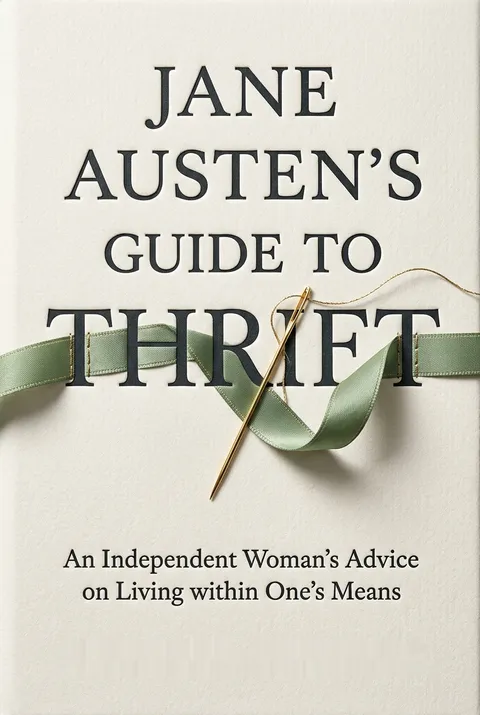
Jane Austen's Guide to Thrift offers a unique blend of Austen-inspired advice on frugal living. Readers appreciate its clever character tie-ins and witty writing style, though some find the Austen references forced at times. The book covers various aspects of thrifty living, from budgeting to shopping smart. While some reviewers wished for more practical resources, many found value in its approach to economy and finance through an Austenesque lens.
People Also Read

Glossary
thrift
Prudent living that supports flourishingThe book uses thrift to mean more than frugality. It connects careful management of money, time, and possessions with the ability to prosper, maintain independence, and enjoy life. Thrift is therefore not simply refusing pleasure or accumulating savings. It is choosing how to use limited resources so that present needs, future security, and care for others can coexist.
spunging
Getting goods or help for freeIn the book, spunging means obtaining free items, favors, or useful knowledge from other people. Aunt Norris in Mansfield Park provides the comic model, often seeking benefits for herself through flattery or manipulation. The authors adapt the idea into a discussion of free goods and mutual help, while distinguishing ethical sharing from stealing, lying, or taking advantage of someone.
vulgar economy
Thrift that rejects worthwhile pleasuresThe book uses this Austen-related phrase for an overly narrow form of economy that treats every pleasure or higher-quality purchase as wasteful. Its alternative is to economize in ordinary areas while spending selectively on details that improve hospitality, celebration, or daily enjoyment. The phrase does not mean abandoning financial limits; it marks the difference between thoughtful restraint and joyless penny-pinching.
shopping in your own closet
Creating outfits from existing clothesThis named technique means reviewing clothes already owned and combining them in new ways before purchasing replacements. A garment that seems dated or difficult to wear alone may work with a different item, accessory, or simple alteration. The practice extends the use of past purchases and can reveal useful combinations without adding new spending.
reticule
Small Regency-era handbagA reticule was a small bag carried by women as Regency fashions became less suited to the larger separate pockets worn beneath earlier clothing. It held small personal items such as coins, a handkerchief, or a mirror. The book presents it as both a historical accessory and an inspiration for making a compact, reusable modern bag.
Download PDF
Download EPUB
.epub digital book format is ideal for reading ebooks on phones, tablets, and e-readers.








