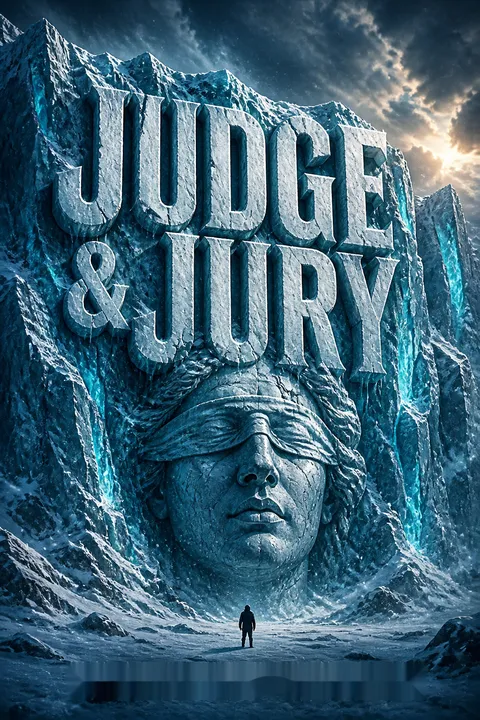


Plot Summary
Prologue
FBI agent Nick Pellisante watches a Long Island mob wedding through binoculars, waiting for Dominic Cavello, the crime boss he has pursued for years. Cavello appears disguised as a frail guest in a wheelchair, but the arrest team is exposed before it can close in.
During the escape, Cavello shoots agent Steve Taylor, then kills Nick’s colleagues Manny Oliva and Ed Sinclair on the beach. Nick wounds Cavello and corners him near a helicopter. The arrest succeeds, but it costs Nick two friends and gives Cavello a personal enemy who knows exactly what he is capable of.
The arrest begins as a professional victory and immediately makes victory feel insufficient. Nick gets Cavello into custody, yet Manny and Ed die because the target is willing to turn a family celebration into a battlefield. The wedding’s disguises and conviviality conceal a lethal structure: Cavello’s social world protects him until violence breaks through it. Nick’s relationship to the case is therefore personal before the trial begins. His determination is grounded in grief and responsibility, but that same intimacy will make it harder to distinguish justice from revenge.
A Jury Gets Its Star
Four months after Cavello’s arrest, Andie DeGrasse arrives at federal court hoping to escape jury duty. The single mother and aspiring actress jokes her way through questioning, then is selected as juror eleven despite her efforts to appear unsuitable. Nick watches from the prosecution’s side, carrying the memory of the wedding and the deaths of his agents into the courtroom.
Across the ocean, chess instructor Richard Nordeshenko receives a call offering him work on Cavello’s behalf. He travels to New York under an assumed identity, carrying the habits of a trained killer into the same city where Andie is being asked to judge the man who ordered murders.
The story places two kinds of performance beside each other. Andie uses comic exaggeration to avoid a civic role, while Nordeshenko uses aliases and controlled manners to hide a violent profession. Both are trying to manage how strangers read them, but only Andie is forced into public responsibility. Her selection turns the trial from Nick’s private reckoning into a test of ordinary judgment, while Nordeshenko’s arrival signals that Cavello’s influence reaches beyond the courtroom.
Witnesses Name The Boss
Prosecutor Joel Goldenberger builds his case around Samuel Greenblatt’s murder and the chain of cover-ups that followed. Louis Machia admits he shot Greenblatt, then describes how his friend Steven Mannarino used Machia’s household license plates for the getaway car. When police trace the plates, the crime family turns on the nervous young accomplice.
Captain Ralph Denunziatta confirms Cavello ordered Mannarino killed, and Thomas Mussina backs him up with stories of other murders and union extortion. Cavello’s lawyer attacks the witnesses as habitual liars, but their accounts reinforce one another. Outside court, Andie finds her car windshield smashed and begins to fear that the defendant’s reach extends beyond testimony.
The prosecution’s strongest evidence is not moral purity but convergence. Machia and the other witnesses have every reason to protect themselves, yet their overlapping details make the crime family’s command structure legible. The stolen plates are more than a comic blunder: they expose how the organization’s practiced competence rests on fallible people. Andie’s damaged windshield shifts that structure from courtroom evidence to bodily risk. Her concern is rational, but she must still separate fear of Cavello from the evidence required to judge him.
The Bus Becomes A Bomb
After a threatening newspaper appears in Judge Miriam Seiderman’s locked home, she confronts Cavello and orders the jury sequestered. Nick testifies that Cavello killed Manny and Ed during the Montauk escape; Cavello erupts, insults the court, and is removed.
To mark Jarrod’s birthday, Nick arranges for Andie’s nine-year-old son to ride with the jurors back to their guarded motel. As the bus waits at a city intersection, Andie sees two workmen flee a nearby van and recognizes the danger too late. The van explodes. Nick reaches the wreckage and finds Jarrod dead, while Andie, pinned beneath wreckage, is the sole survivor.
The attack destroys the trial’s central promise: that evidence can be heard safely and judged by citizens. Cavello’s outburst provides a vivid public threat, but it does not prove who planted the bomb; the plot keeps suspicion and evidence distinct. Jarrod’s presence makes the security failure intimate rather than statistical. Nick had arranged the birthday visit as a humane gesture, and that kindness becomes inseparable from his guilt. Andie’s survival gives the story a living witness, but not a way to restore what the trial was meant to protect.
Grief Leaves No Verdict
Andie wakes in Bellevue Hospital and understands from Nick’s face that Jarrod is gone. The bombing has killed the jury, leaving Cavello without a verdict. Nick visits the jail and beats him, then faces suspension and takes leave from the FBI. Five months later, he teaches criminal ethics while Andie struggles through surgery, grief, and the first steps back toward acting.
She returns to an audition; Nick, still drawn to her, invites her to the coming retrial. Their shared loss gives them a fragile connection, though neither pretends that comfort can undo the bombing. Meanwhile, investigators recover the gun used to kill Manny and Ed, creating new murder charges against Cavello.
The aftermath refuses the quick repair common to action thrillers. Andie’s return to an audition is small, physically difficult work, not a declaration that grief has ended. Nick’s assault on Cavello exposes the cost of confusing personal rage with public duty, and his teaching post gives that conflict a daily vocabulary. Their bond grows from recognition rather than rescue: each understands the other’s loss, but neither can make it useful enough to erase it. The recovered weapon reopens the legal path without promising that the system can contain Cavello.
A Second Trial Breaks
The government prepares a secret retrial at Fort Dix, but Cavello first appears at a Foley Square hearing. Nordeshenko has coerced courthouse employee Monica Romano into carrying a concealed pistol inside; a separate explosion in the underground garage draws security away.
When Cavello is moved between floors, Nordeshenko steps into the elevator, shoots the two marshals, disguises Cavello, and helps him escape through a gunfight in the lobby. Nick runs after them and is grazed by a bullet, but the getaway vehicles vanish into traffic. Monica is later found murdered. The man once poised to face a jury is free again, and the second prosecution collapses before it can begin.
Nordeshenko exploits routine rather than defeating security by sheer force. The hidden weapon, timed blast, elevator stop, and disguise turn the courthouse’s own procedures into parts of an escape mechanism. Monica’s coercion also makes the institution’s vulnerability personal: a worker’s trust and family obligations become tools of violence. Nick’s wound is minor beside the strategic loss. The escape repeats the novel’s central injury, but with a difference: this time Nick must investigate without the authority or confidence that once defined his professional role.
The Shoes Point East
After recovering, Nick returns to courthouse footage and notices the distinctive shoes worn by Cavello’s masked rescuer. He matches them to Israeli military footwear, then uses old contacts and image analysis to identify the man as Kolya Remlikov, a Russian-born former special forces soldier living under aliases in Israel.
The Bureau refuses to put Nick back on the case, so he seeks confirmation through unofficial contacts instead. He tells Andie what he has found, including evidence that Remlikov was present during the first trial. Andie chooses to go with him. The evidence points to Haifa, and the two leave the United States before official channels can alert the fugitive.
A mundane visual detail succeeds where force and institutional scale have failed. The shoes are useful because they carry a trace of a life the disguise cannot fully conceal. Nick’s decision to bypass the Bureau is not simply impatience; he believes a formal process will warn Remlikov and give Cavello time to disappear again. Yet this choice converts a criminal investigation into a private operation. Andie’s agreement makes her more than a grieving observer, while also drawing her into methods that echo the coercion she has suffered.
A Son For A Location
In Haifa, Nick confirms Remlikov is living as Richard Nordeshenko, a family man who drives his gifted son Pavel to chess lessons. Andie spots Reichardt, the blond mercenary she saw fleeing the bus bombing, at Nordeshenko’s home. Nick and Andie abduct Pavel, then use the boy to force Nordeshenko into an exchange at the Baha’i Gardens.
Nordeshenko gives them Cavello’s remote ranch near Ushuaia, Argentina, and Andie returns Pavel unharmed. Reichardt ambushes Nick afterward and wounds a bystander during the chase. Nick shoots Reichardt, who is ultimately struck by a bus, then escapes with Andie. Their location is secured, but their pursuit has crossed a line neither can call lawful.
The exchange turns the story’s revenge logic back on itself. Nick and Andie exploit a parent’s attachment because they believe it is the only leverage Nordeshenko will respect; Andie recognizes the resemblance to the harm done to her. Their promise to return Pavel unharmed limits the act, but does not make the kidnapping innocent. Reichardt’s attack confirms the danger of the choice, while his death adds another irreversible consequence. The location they gain is not a clean victory. It is knowledge purchased through a tactic that compromises the people seeking justice.
The End Of The World
Nick and Andie travel south through Patagonia and search the remote ranches around Ushuaia. A hotel clerk’s local knowledge finally points them toward El Fin del Mundo, a guarded compound hidden in a mountain valley. They watch Cavello’s routine and learn that he visits town twice a week.
Andie dyes her hair, invents the identity of Alicia Bennett, and approaches him in a cigar shop. She plays the part of a lonely American and persuades Cavello to meet her for lunch. Her performance draws him toward a hotel room, but Cavello notices inconsistencies in her story and realizes she is not who she claims to be.
Andie’s acting becomes a tactical skill, but the performance exacts a private cost. She must make herself desirable to the man who helped destroy her family, using familiarity and flirtation as instruments. Cavello’s routine reveals how isolation has not changed his appetite for control; it has only narrowed its setting. The ranch’s remoteness makes an official arrest unlikely, which is why the plan depends on deception. When Cavello detects the false story, the scene’s theatrical premise collapses into immediate physical danger.
The Glacier Keeps Him
When Cavello pins Andie down and questions her identity, Nick breaks into the hotel and shoots the bodyguard on the third floor. Cavello escapes through a window, wounded, and Nick pursues him in a Land Cruiser. Their vehicles race from Ushuaia into a mountain canyon until Nick rams Cavello’s Range Rover off the road near a glacier.
Cavello keeps fighting, so Nick shoots him in the leg and ankle, sending him into a deep ice crevasse. Nick can kill him or leave him trapped with his injuries and the cold closing in. He chooses to walk away, telling Cavello that Jarrod was ten. Cavello remains alive, but unable to climb out.
The climax denies the satisfaction of a courtroom verdict and makes Nick’s final restraint morally unstable. He has the power to execute Cavello, yet chooses exposure and injury as a punishment that leaves the criminal’s fate uncertain. The choice may be read as resistance to becoming an executioner, but it also abandons due process and any chance of verified accountability. Andie’s participation in the ambush has brought her close to the violence she once watched from a jury box. The glacier is not justice; it is the landscape in which Nick decides what he can live with.
A Home After The Hunt
Nick and Andie return to New York uncertain whether Nick will keep his job or face consequences for what he did abroad. In the cab, Andie admits she cannot return to her old apartment and pretend to be unchanged. Nick asks her to come home with him, and she accepts.
Their choice does not replace Jarrod or settle the legal questions left by Cavello’s disappearance; it gives them a shared life in which grief need not be carried alone. A year later, Andie auditions for a courtroom role and learns she has received a callback to play a jury forewoman. The work brings her back to the place where her public and private lives first collided.
The ending makes domestic commitment a form of continuation, not cure. Andie refuses the demand to resume her former life unchanged, and Nick offers companionship rather than a promise that pain will disappear. Their reunion is shaped by choices that remain morally unresolved, especially Nick’s abandonment of legal process. The later audition gives Andie a way to enter the courtroom as an actor rather than a threatened juror. That shift matters: she can use performance to reclaim agency, though the story does not suggest that a role can restore her son.
Epilogue
One year later, Nordeshenko returns to New York under another name and meets Andie at a poker club, unaware that she has recognized him through a Homeland Security lead. She accompanies him to his hotel, then kills him with a knife.
Nick reads the report of the unidentified woman’s crime and confronts Andie; she explains how she found Nordeshenko and makes clear that she acted because he helped destroy the jury and Jarrod. She has also won a callback for a Law and Order role as a jury forewoman. Her fictional verdict will be spoken in a courtroom, while her real one has already been delivered in private.
The epilogue refuses to let the couple’s domestic resolution stand as moral closure. Andie’s killing of Nordeshenko is an act of deliberate revenge, not an accident or a consequence of Nick’s pursuit. By ending with her audition, the novel places public justice beside private retaliation without reconciling them. Andie can perform a forewoman who announces a verdict, yet the killing she has carried out has bypassed every institution that made a verdict meaningful. The final irony sharpens the book’s question: whether the law has failed its victims, and what a person becomes when she answers that failure herself.
Analysis
Judge and Jury sets legal procedure against a criminal organization that understands procedure well enough to exploit it. Cavello does not merely intimidate witnesses; he attacks the conditions that allow a jury to listen, deliberate, and return a verdict. The first bombing turns the court’s promise of impartial judgment into a failure of protection. The second escape proves that the institutions can adapt, but adaptation arrives too late to restore trust. Nick’s arc measures the danger of professional identification. He begins as an agent whose expertise and loyalty make him formidable, then discovers that grief can make the law feel like an obstacle rather than a restraint. His final pursuit of Cavello is not a clean restoration of justice. It bypasses the Bureau, uses a child as leverage, and ends with Cavello abandoned in a crevasse rather than tried. Nick’s refusal to shoot him matters, but it cannot erase the choices that brought him there.
Andie’s development is equally resistant to simple consolation. Humor first helps her avoid responsibility, then helps her endure the jury room and the dangerous performance she stages in Patagonia. After Jarrod’s death, returning to acting becomes a modest reclaiming of agency, not proof that she has healed. The epilogue complicates that recovery by showing her kill Nordeshenko. The novel leaves the reader with a deliberate conflict: institutions fail the people they are meant to protect, yet private revenge repeats the violence it claims to answer. Its most unsettling question is not whether the law is imperfect, but what becomes of judgment when the people who need it most stop believing it can reach them.
Review Summary
Judge & Jury receives mixed reviews, with an average rating of 4.01 out of 5. Readers praise Patterson's ability to create page-turning suspense and fast-paced action. Many enjoy the plot involving a mobster trial and the characters of FBI agent Nick and juror Andie. However, some criticize the writing as average and predictable, with unrealistic plot points. The short chapters and quick read are appreciated by fans, while others find the story formulaic. Overall, it's considered an entertaining but not exceptional thriller.
Characters
Nicholas Pellisante
The relentless FBI hunterNick leads the FBI’s organized-crime unit and has spent years pursuing Dominic Cavello. He is intelligent, disciplined, and personally invested in the people he protects, a combination that makes him effective and vulnerable. His memories of growing up near mob culture help him read its codes, while his loyalty to colleagues turns their deaths into a wound he cannot keep professional. Nick tends to meet helplessness with action, even when action risks his career or moral judgment. His relationship with Andie grows from a shared loss, but he must confront the difference between protecting someone and deciding what justice should look like for them.
Andie DeGrasse
The jury’s unwilling voiceAndie is a Bronx single mother, community newspaper proofreader, and aspiring actress. She initially treats jury duty as an obstacle to work and childcare, masking anxiety with humor and theatrical exaggeration. Her quick reading of people makes her a useful juror, but her strongest instinct is protective: she measures every public danger against the safety of her son. Acting gives her both a livelihood and a way to shape how others see her. Her grief does not erase that wit or her capacity to make choices; it complicates them, especially when the pursuit of Cavello asks her to use deception and risk.
Dominic Cavello
The hidden crime bossCavello, known as the Electrician, heads the Guarino crime family and treats violence as an ordinary instrument of command. He is patient enough to cultivate a respectable public image and arrogant enough to believe no court can truly contain him. His power depends on intermediaries, fear, and the ability to make other people carry out his decisions. Rather than needing to be physically present at every crime, he controls the structure that gives orders their force. His composure unsettles witnesses because it suggests that consequences are for other people. He is both Nick’s professional target and the source of Andie’s most intimate loss.
Richard Nordeshenko
The chess-playing assassinNordeshenko is a former special forces soldier who has turned discipline, disguise, and careful observation into a career as a contract killer. He approaches danger like a game of probabilities, confident that preparation can control what chance introduces. Chess gives him a language for foresight, while poker appeals to the risk and bluff that military training cannot supply. At home he is a father and husband, and he tries to keep that identity separate from his work. That division gives him composure, but it also leaves him exposed when the people he loves become part of the conflict.
Jarrod DeGrasse
The boy at the centerJarrod is Andie’s nine-year-old son and closest companion. Curious, affectionate, and quick with a correction, he brings ordinary school-day concerns into a story dominated by federal security and organized crime. His bond with Andie shapes her decisions, while his openness gives Nick a glimpse of the family life he has neglected. Jarrod’s presence makes the consequences of the trial impossible to keep abstract.
Ellen Jaffe
The overworked partnerEllen is a gifted anesthesiologist whose demanding hospital work and medical studies collide with Nick’s fixation on the Cavello case. She cares for him, but she is unwilling to pretend that affection alone can repair the time and attention their lives no longer share. Her choices expose a quiet cost of Nick’s devotion to work: even a loving relationship can become another casualty when neither person can make room for the other.
Miriam Seiderman
The measured federal judgeJudge Seiderman runs Cavello’s first trial with a belief in open proceedings and confidence in the court’s ability to manage danger. She is experienced, ambitious, and conscientious, but Cavello’s intimidation tests the boundary between procedural fairness and practical protection. Her willingness to confront him helps preserve the dignity of the courtroom, even as events reveal the limits of what a judge can control.
Joel Goldenberger
The detail-minded prosecutorGoldenberger is the government’s lead prosecutor, a persuasive young lawyer who organizes a complicated criminal history into testimony a jury can follow. He understands that the witnesses are compromised and uses the accumulation of specific, corroborating details to make their accounts credible. His method is patient rather than theatrical, and his case depends on helping jurors distinguish a witness’s character from the evidence that witness can provide.
Hy Kaskel
The theatrical defense lawyerKaskel, nicknamed the Ferret, defends Cavello with showmanship and an instinct for exposing a witness’s self-interest. He does not need the jury to admire the mobsters; he needs them to question whether criminals seeking reduced sentences can be trusted. His skill makes the trial a contest over standards of belief, not simply a parade of accusations.
Manny Oliva
Nick’s trusted field partnerManny is Nick’s colleague in the FBI’s organized-crime unit, a sharp investigator with a law degree and a history of working closely with Nick. His loyalty and competence make him part of Nick’s professional family. His wife and newborn twins underline the life he has built beyond the job.
Ed Sinclair
The exemplary field agentEd is a respected FBI agent who works alongside Nick and Manny. Nick regards him as steady and capable, while Ed’s wife and son represent the family ties that coexist with dangerous fieldwork. His role embodies the human cost hidden inside operational language such as backup and perimeter.
Louis Machia
The compromised star witnessMachia is a former Guarino family soldier who has admitted to murder, drug trafficking, and other crimes. His blunt humor makes him unexpectedly engaging, but his history of lying gives the defense a powerful way to challenge him. He is also capable of describing the petty mistakes and personal pressures that reveal how the crime family functions.
Ralph Denunziatta
The fearful family captainDenunziatta, called Ralphie D., is a former captain in the Guarino family with a business degree and a criminal inheritance shaped by his father. He once hoped to stay near the family’s legitimate businesses without taking part in violence. His testimony shows how accommodation can become complicity, and how status inside the organization depends on carrying out its demands.
Thomas Mussina
The connected mob captainMussina, known as Tommy Moose, is a former captain who reports directly to Cavello. He helps connect the testimony about Greenblatt’s murder to the broader system of intimidation, extortion, and concealed violence. His calm familiarity with criminal routines makes those routines sound chillingly ordinary.
Reichardt
The mercenary’s hard edgeReichardt is a South African mercenary and a longtime associate of Nordeshenko. He is physically imposing, professionally ruthless, and skilled at inflicting pain. Unlike a political zealot, he treats violence as work, which makes him both practical and difficult to predict. His loyalty is governed by the job and by the dangerous ties it creates.
Pavel Nordeshenko
The gifted young chess playerPavel is Nordeshenko’s twelve-year-old son, a talented chess student who wants more independence than his protective father allows. He is curious about poker and the wider world, while his father tries to shape his education and keep him safe. Pavel’s intelligence and ordinary impatience make him a child with his own life, not merely an extension of his father’s secrets.
Monica Ann Romano
The pressured courthouse workerMonica works at the federal courthouse and cares for her mother, whose fragile health makes Monica especially vulnerable to threats. She is lonely and eager for affection, qualities a manipulator exploits. Her familiarity with courthouse routines makes her an unwitting point of access to the institution.
Frank Delsavio
The wry mob underbossDelsavio is Cavello’s longtime number two and a senior figure in the Guarino family. He has enough humor to disarm Nick, but his loyalty to the organization is not in doubt. Their uneasy rapport shows how familiarity can coexist with an irreconcilable divide in values.
Rosella
The civic-minded jurorRosella is a housekeeper and recent American citizen who welcomes jury service for practical and personal reasons. Her warmth, knitting, and concern for her family give the jury room a domestic texture amid the grim testimony. She approaches public duty with a sincerity Andie initially lacks.
Plot Devices
The jury and its sequestration
Ordinary people under threatThe jury turns a mob trial into a story about people who did not choose to enter organized crime but must judge its leader. Andie’s selection gives the reader a civilian perspective, while the jurors’ different jobs and family obligations keep them from becoming an anonymous legal instrument. Sequestration is intended to protect them, yet it also isolates them from ordinary life and makes their safety dependent on the state. The bombing exposes the gap between a court’s authority to order protection and its ability to guarantee it.
Aliases and disguises
Identity as camouflageCavello’s wheelchair disguise, Nordeshenko’s shifting passports, and Andie’s assumed identity as Alicia Bennett all turn appearance into tactical cover. These disguises are not equivalent: the killers use them to evade accountability, while Andie uses performance to approach a target who would otherwise be inaccessible. The repeated changes of name and presentation raise a practical question of recognition, but also a moral one. In this story, concealment can enable violence or create the narrow opening needed to confront it.
Shoes in the courthouse footage
A clue survives disguiseAfter the courthouse escape, Nick reviews the security recording repeatedly but finds the decisive trace in the killer’s footwear rather than his covered face. The Israeli army shoe brand narrows the search, and Nick’s own memory of military training helps him recognize its significance. The clue converts a grainy image into a route toward Nordeshenko’s identity and location. It rewards close observation rather than a sudden confession, while underscoring that a disguise can hide a face more easily than a person’s habits and history.
Chess and poker
Strategy under uncertaintyChess and poker recur through Nordeshenko and Pavel, giving father and son a shared language that differs from the violence shaping the plot. Chess suggests preparation and controlled sequences; poker rewards risk, bluff, and reading another player. Nordeshenko uses both games to understand his work, while the story repeatedly frustrates the fantasy that careful planning can master every outcome. The games also give their family bond a tender, ordinary dimension, making the secrets surrounding Nordeshenko’s profession more consequential.
About the Author
Other books by James Patterson




Download PDF
Download EPUB
.epub digital book format is ideal for reading ebooks on phones, tablets, and e-readers.








