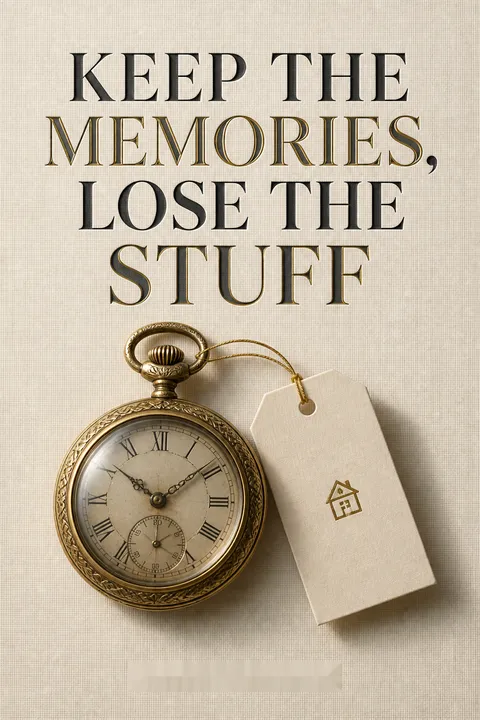


Key Takeaways
Keep the memory by telling its story, not by keeping every object.
Objects open stories. After his father died, Paxton had to clear a crowded house filled with art, clothes, and keepsakes. Sorting through it with family brought laughter and unexpected discoveries, including a prank his father had left behind. The experience taught him that possessions can help people remember, but the story is what makes an object matter. Years later, an old photograph helped Etta recall meeting her future husband after his return from the war. To Paxton, it was an ordinary snapshot; to her, it held a whole chapter of her life.
Listening changes the work. Etta had grown up with Depression-era scarcity, which helped explain why she saved even small, useful things. An attentive listener let her explain what those belongings meant before asking her to part with them. The work became less like throwing things away and more like making room for the life behind them.
The book’s most persuasive reframing is that decluttering is partly a practice of narration. An object can act as a prompt, helping someone retrieve and share memories that might otherwise remain private. That makes the listener’s attention practical, not merely sentimental: it can build the trust needed for difficult decisions. The idea also guards against treating every crowded home as a simple failure of discipline. Still, an object may hold value that its owner cannot yet explain, or may be part of a shared family history. A story-first approach makes room for that uncertainty instead of demanding immediate disposal.
Choose your next home before deciding what belongings can follow.
Start with the destination. Paxton calls the desired outcome the finish line: the place and kind of life a person is moving toward. Lauren, a widowed retired teacher, began sorting before deciding where she would live. She was focused on leaving her large house, not on what she wanted next. Paxton helped her compare options, including staying put, moving to a smaller home, sharing a home, and choosing an independent or assisted living community. Her priorities became clearer as she admitted she wanted more company and less upkeep.
Plan for real space. Lauren initially insisted on bringing a large dining set and her many handmade blankets. They did not fit comfortably in her first apartment. Once she settled in, she realized that a crafting room and the community’s shared entertaining spaces mattered more. A floor plan, careful measurements, and visits to prospective homes could have helped her make those choices sooner.
A destination turns decluttering from an abstract demand into a design problem: what will support daily life in the next place? Lauren’s change of mind shows why planning should account for activities and relationships, not just furniture dimensions. The framework also restores agency when a move feels like something imposed by relatives or circumstances. Its limit is that life plans are not perfectly knowable; health, finances, and preferences can change. A useful finish line should therefore be specific enough to guide decisions, but flexible enough to allow a revised route without treating revision as failure.
Turn an overwhelming house into ten-minute wins with a deadline.
Make starting manageable. Jesse and Maggie inherited a home packed with three generations of belongings just as they were grieving his parents and preparing for a baby. They could not see how to begin. Paxton suggested a Ten-Minute Sweep: work for ten minutes at the same time each day, five days a week, and take weekends off if needed. They also set a five-month deadline, tied to the baby’s arrival. The goal was to establish a repeatable practice, not to empty the house in a weekend.
Choose a visible win. Rather than start with the emotionally loaded den, they cleared the dining room table, which had less connection to family memories. The first cleared surface made progress visible. Paxton also warned against buying bins and labeling gadgets as a way to postpone decisions. Their crowded home, layered with generations of possessions, was what he calls a Pompeii hoard.
The method lowers both the practical and emotional cost of beginning. A small, repeatable session gives a stalled project a foothold, while a deadline prevents preparation from becoming permanent postponement. Choosing a less charged area is equally important: early progress builds confidence without requiring the hardest decisions first. These are strong design principles, but ten minutes is a starting structure, not a moral test. Grief, disability, caregiving, or a rushed move can make even that cadence unrealistic. A plan should preserve the method’s kindness by adapting its pace to the person, not treating adherence as proof of character.
Keep a few objects that carry your story, not inherited obligations.
Choose keepsakes deliberately. A Legacy List is a short selection of meaningful possessions that help someone remember loved ones or pass stories to another generation. Paxton suggests identifying roughly five or six must-have items, rather than trying to preserve everything. Jesse, grieving his parents, felt that discarding their belongings would mean discarding them. A temporary Maybe Pile helped him consider separation without making every decision immediately. After a few weeks, he kept only a small number of items, including his father’s suit and his grandmother’s crossword books.
Release the imagined self. Some belongings represent a version of life a person thinks they should pursue, such as unused exercise equipment or clothes kept for a future change in size. Paxton calls these fantasy self items. Letting them go can be an act of accepting present interests and abilities, rather than condemning the person who once bought them.
The Legacy List offers a useful alternative to the false choice between preserving everything and erasing the past. Its strongest feature is that emotional significance, rather than resale price or conventional heirloom status, sets the standard. The Maybe Pile adds time and psychological distance, making a decision less absolute at the moment of discovery. Yet a short list is a guide, not a universal quota. A community archive, a large family, or a culturally significant collection may call for different stewardship. The deeper principle is to choose intentionally and document meaning, not to reach a particular number of possessions.
Edit photos and papers, but preserve the context that makes them meaningful.
Save the story with the image. Linda and Eric, both librarians, had carefully kept photographs documenting their family’s history, including images of Black relatives who broke barriers. They still had more pictures than they could take to a smaller home. Paxton recommends removing duplicates, blurry images, and generic scenes, then preserving a manageable selection. He describes 80/20 as one possible target, while often advising an even smaller print collection. Digitizing valued images helps protect them, but a digital folder without names, dates, places, and explanations can become another unsearchable pile.
Protect essential records. Keep original vital documents, such as birth certificates, deeds, wills, and powers of attorney, and securely store digital copies with backups. Sort and shred outdated paperwork rather than keeping every bill and statement. A brief time capsule of account, insurance, medical, and access information can help family members find essentials in an emergency.
This section distinguishes preservation from accumulation. A useful archive is not simply a large one; it is a collection that can be understood and passed on. Metadata, captions, and recorded stories preserve the interpretive layer that raw images lack. Digitizing also reduces physical bulk, but it does not remove the need for maintenance: files can be scattered, backups forgotten, and sensitive records exposed. The book’s numerical photo targets are best treated as prompts rather than rules, especially when images hold historical or family significance. The key test is whether the material remains findable, legible, and meaningful to someone besides its current owner.
Find the recipient before deciding what useful belongings to donate.
Give with a purpose. Ben inherited his brother Darren’s carpentry tools, worth about $40,000. His family preferred selling them, but Ben wanted them to help someone starting out. He gave the tools to Kevin, a former apprentice who could not afford the equipment to build his own business. The gift honored Darren’s commitment to teaching young carpenters and gave the tools a future use. Ben also donated Darren’s books to a library, where readers could encounter them in his memory.
Match items to need. Paxton advises identifying a personal mission first, then finding a recipient or organization that can use the specific goods. A local food bank, a work-clothing program, a library, or an individual may offer a better fit than a general drop-off point. Check what organizations accept, verify a charity’s credibility, and keep donation receipts if pursuing a tax deduction.
Giving becomes more satisfying when it connects an object to a real person or purpose. Ben’s decision turns the tools from estate inventory into working equipment, linking Darren’s generosity to a new craftsperson’s livelihood. This is a broader model of disposal: usefulness can be a better measure than either sentiment or market price. The practical caution is that donation itself takes coordination, and recipients may not want what donors imagine they need. A mission-led approach works best when paired with consent and verification, so generosity does not simply transfer the burden of unwanted goods to someone else.
Price belongings by the market, not by the memories attached to them.
Separate two kinds of value. A possession can be emotionally priceless to its owner and worth little to a buyer. Mary’s grandfather clock was a beloved fixture in her home, but her daughters had no space for it. Paxton urged her to think of the decision to part with it as already made, then assess likely buyers and selling channels. Comparable listings and, for potentially valuable items, a qualified appraisal can replace guesswork. Age alone does not make an object rare or valuable.
Set a stopping point. Paxton suggests reducing an online price if interest is absent, then donating the item if it still has not sold after a short trial. Mary’s clock became an unusual success: an online auction drew a winning bid above $35,000, but the book presents this as a surprise, not a normal outcome. Her ordinary furniture brought too little to justify selling and was hauled away instead.
The market-value distinction protects people from allowing sunk costs to dictate what happens next. It also makes selling serve the larger goal of creating a livable space, rather than turning the home into an open-ended resale project. Mary’s auction shows the upside of reaching a wider pool of buyers, but its exceptional result should not anchor expectations. The process has costs in time, fees, and attention, even when an item appears valuable. A preset selling window helps contain those costs and makes it easier to honor a decision to let go when interest is weak.
Treat every attic cleanup as a safety job before a treasure hunt.
Prepare for hazards. Cleaning an apparently ordinary home can expose dust, insulation, mold, pests, sharp objects, chemicals, or unsafe flooring. Paxton recommends protective gloves, a mask, eye protection, and sturdy shoes, especially in attics and basements. He warns against walking on boxes or unsupported attic surfaces. Mold, firearms, ammunition, unidentified chemicals, medications, and medical sharps require appropriate professional guidance or disposal, not improvisation.
Search before clearing. Janice hired Paxton’s crew to clean her parents’ neglected house and hoped to find train identification plates her father had collected. The team searched, cleaned, and made a final walk-through. Under a basement stair, they found twenty-one hidden plates, which later sold for more than $60,000. The discovery is an argument for checking carefully before discarding, not for entering unsafe spaces or handling suspicious objects.
The cleanup stage is both a physical reset and a final audit of what remains. Janice’s discovery makes clear that thoroughness can uncover items with substantial financial or historical value. But the story’s excitement can obscure the more important rule: safety comes before recovery. Hidden value is uncertain; exposure to mold, unstable surfaces, or dangerous materials is not worth guessing about. A responsible search distinguishes ordinary inspection from work that needs trained help. The best final walkthrough is systematic, but it should never turn a household cleanup into an amateur hazardous-materials operation.
Move toward the life you want, not a replica of the old one.
Plan the transition. Paxton recommends setting a clear timeline, arranging insurance, checking floor plans, and hiring qualified movers when possible. His own move from Virginia to Georgia forced him to part with much of what he owned. Before leaving, he and his children photographed rooms and favorite places, shared memories, and said goodbye to friends without packing every final meeting into moving week. These rituals made the departure feel acknowledged rather than abrupt.
Make room for new routines. On moving day, Paxton’s son reminded him that the family could create new memories in a new home. That idea becomes concrete during unpacking: set up bedrooms first, then the kitchen, and let children help establish their own rooms. Paxton also reconsidered rarely used sports gear at the last minute, sold it, and found that renting replacements would be an option. Six months later, he did not miss the belongings he had released.
A move changes more than an address; it rearranges routines, relationships, and a person’s sense of continuity. Photographs, shared stories, and planned goodbyes give the old place a deliberate ending, while unpacking helps turn the new one into a lived environment. The account also shows why possession decisions can remain revisable until the move is complete. Still, the promise of new memories should not be used to minimize genuine grief or distance from a community. Change can be worthwhile and painful at once. Treating both as real makes the transition more honest and more humane.
Analysis
The book’s organizing insight is that downsizing is not primarily a contest in self-control. It is a sequence of decisions made under emotional pressure, and each decision becomes easier when the previous one has clarified what matters. First, stories make objects legible. Then a chosen destination gives the work direction. Small sessions make action possible, while a limited set of keepsakes protects memory from being confused with inventory. Practical steps follow: document and digitize, give useful items a destination, sell selectively, clean safely, and move with a plan.
That sequence is unusually humane because it treats listening as part of the method rather than as a preface to the real work. Etta’s possessions make sense when her experience of scarcity and hospitality is understood. Jesse’s inherited furniture is not simply clutter while he is grieving. The approach avoids mistaking attachment for irrationality, yet still insists that keeping everything can prevent a household from serving its current residents.
The book is strongest when its stories complicate its rules. Lauren’s needs changed after moving. Mary’s clock brought an extraordinary auction price, while her furniture was not worth selling. These examples reveal that decisions depend on context, and that flexibility is not failure. Some prescriptions, including strict time limits for keeping items or aggressive photo-reduction targets, may not fit every family, archive, or stage of grief. They are useful defaults, not universal laws.
The method also carries the perspective of a working downsizing professional. That yields grounded advice about movers, appraisers, donations, and hazards, but recommendations and services can change, and readers should verify current details. The lasting value lies less in any vendor list than in the sequence of questions: What life is this space supposed to support? Which objects help tell the story? Who can use what remains? Answering them converts a daunting cleanout into a deliberate transition, where memory survives without requiring every object to do the work of remembering.
Review Summary
Readers generally found Keep the Memories, Lose the Stuff helpful for decluttering and downsizing, particularly for older adults or those dealing with estates. Many appreciated the focus on preserving memories while letting go of physical items. Some found it more practical than emotional, with useful tips and resources. The book's storytelling approach resonated with many readers. While some felt it wasn't what they expected, most found value in Paxton's compassionate and experienced perspective on decluttering. Overall, reviewers recommended it for those facing major life transitions or seeking to simplify their lives.
People Also Read


Glossary
Legacy List
Selected memory-bearing keepsakesA short, intentional selection of possessions kept because they help someone remember loved ones, express personal values, or pass family stories to another generation. Paxton suggests choosing a small number of particularly meaningful items rather than trying to preserve everything. The item’s emotional and storytelling role matters more than its resale price.
Ten-Minute Sweep
Brief daily decluttering sessionsA routine of working on decluttering for ten minutes at a consistent time, five days a week. It is designed to make an intimidating project easier to begin and sustain. The short session is a starting structure, not a claim that a whole home can be cleared in ten minutes.
Pompeii hoards
Homes buried under accumulated belongingsPaxton’s term for homes that may be otherwise ordinary or clean but have been overwhelmed by layers of possessions accumulated across multiple generations. Like the ancient city covered by volcanic ash, the home’s usable space is smothered by material that arrived over time, often through inheritance as well as the current residents’ own accumulation.
Maybe Pile
Temporary undecided belongingsA designated place for objects a person is not ready to classify as keeps, donations, sales, or discards. Moving an item there allows time to imagine being without it and consider its meaning without forcing an immediate choice. Paxton stresses that the pile should be revisited rather than left as permanent storage.
finish line
The intended next living situationThe destination or desired outcome that guides a downsizing project. It may be a smaller home, a different community, or staying in the current house with changes. Defining the finish line helps determine what belongings and arrangements fit the next phase, instead of sorting without knowing what the work is meant to accomplish.
Five-Minute Time Capsule
Quick reference for essential informationA compact record of practical information that family members may need if something happens to the person preparing it. Paxton suggests gathering account and insurance details, contact information, medication and doctor information, and access details for important online accounts, then keeping the record securely. Sensitive information should be protected from casual access.
fantasy self items
Possessions for an imagined future selfBelongings kept for activities, body sizes, or ambitions that a person imagines adopting someday, despite not using them in current life. Paxton’s examples include unused exercise or sports equipment and clothes kept for a hoped-for change in size. Releasing them is framed as acknowledging present preferences, not condemning past hopes.
FAQ
What's "Keep the Memories, Lose the Stuff" about?
- Decluttering and Downsizing: The book focuses on helping readers declutter and downsize their possessions while preserving meaningful memories.
- Emotional and Practical Guidance: It provides both emotional support and practical steps for letting go of items that no longer serve a purpose.
- Author's Expertise: Written by Matt Paxton, a decluttering expert known for his work on "Hoarders" and "Legacy List with Matt Paxton."
- Step-by-Step Process: The book outlines a nine-step process to help readers systematically tackle their clutter and move forward with their lives.
Why should I read "Keep the Memories, Lose the Stuff"?
- Expert Advice: Gain insights from Matt Paxton, a leading expert in decluttering and downsizing.
- Emotional Support: The book addresses the emotional challenges of letting go of possessions, making it easier to part with items.
- Practical Steps: It offers a clear, step-by-step guide to decluttering, making the process manageable and less overwhelming.
- Legacy Focus: Learn how to preserve important memories and create a meaningful legacy through selective keepsakes.
What are the key takeaways of "Keep the Memories, Lose the Stuff"?
- Legacy List Concept: Focus on keeping a few meaningful items that tell your story and let go of the rest.
- Emotional Attachment: Understand the emotional reasons behind keeping items and how to overcome them.
- Step-by-Step Process: Follow a structured approach to decluttering, from uncovering stories to moving forward.
- Community and Support: Involve friends, family, and professionals to help with the decluttering process.
How does Matt Paxton suggest starting the decluttering process?
- Uncover Stories: Begin by understanding the stories and emotions attached to your possessions.
- Set a Finish Line: Define what you want your life to look like after decluttering.
- Take Baby Steps: Start with small, manageable tasks to build momentum.
- Use the Ten-Minute Sweep: Dedicate ten minutes a day to decluttering to make the process less daunting.
What is the Legacy List, and why is it important?
- Selective Keepsakes: A Legacy List is a collection of a few meaningful items that hold significant emotional value.
- Preserve Memories: It helps preserve important memories and stories for future generations.
- Simplify Decisions: By focusing on a few key items, it simplifies the decision-making process during decluttering.
- Emotional Connection: The Legacy List emphasizes the emotional connection to items rather than their material value.
How does "Keep the Memories, Lose the Stuff" address emotional challenges in decluttering?
- Acknowledge Emotions: The book encourages readers to acknowledge and understand their emotional attachments to items.
- Storytelling: Sharing stories about possessions can help process emotions and make it easier to let go.
- Support System: Involving friends, family, or professionals can provide emotional support and encouragement.
- Focus on the Future: Emphasizes the benefits of a decluttered life and the new opportunities it brings.
What are some practical tips from "Keep the Memories, Lose the Stuff" for decluttering?
- Ten-Minute Sweep: Spend ten minutes a day decluttering to gradually make progress.
- One-Month Rule: If you haven't used an item in a month, consider letting it go.
- Maybe Pile: Create a "Maybe Pile" for items you're unsure about, revisiting them later with a fresh perspective.
- Use a Spreadsheet: Track items and their potential value to make informed decisions about selling or donating.
How does Matt Paxton suggest dealing with photographs and documents?
- Digitize Photos: Scan and store important photos digitally to preserve them without physical clutter.
- Tell Stories: Share the stories behind photos to keep memories alive even if the physical photo is discarded.
- Organize Documents: Keep only essential documents and digitize the rest for easy access and storage.
- Use Photo Managers: Consider hiring professionals to help organize and digitize large photo collections.
What advice does "Keep the Memories, Lose the Stuff" offer for selling items?
- Set Realistic Expectations: Understand that most items won't sell for as much as you hope.
- Research Market Value: Use online platforms like eBay and Facebook Marketplace to gauge item value.
- Choose the Right Venue: Select the best selling method, whether online, consignment, or auction, based on the item.
- Focus on Decluttering: Prioritize getting rid of items over making a profit to simplify the process.
How does the book suggest involving others in the decluttering process?
- Ask for Help: Reach out to friends, family, or professionals for assistance and support.
- Share Stories: Use storytelling to engage others and make the process more meaningful.
- Professional Services: Consider hiring move managers or organizers for expert guidance and efficiency.
- Community Involvement: Engage with local charities or online groups for donating items and reducing clutter.
What are some of the best quotes from "Keep the Memories, Lose the Stuff" and what do they mean?
- "Less is more." This quote emphasizes the value of simplicity and the benefits of having fewer possessions.
- "It's not just stuff; it's the memories behind the stuff." Highlights the emotional connection to items and the importance of preserving memories.
- "You can't win a race when you don't know where the finish line is." Stresses the importance of setting clear goals for decluttering.
- "The item is the vehicle to the story—the item isn’t the story." Reminds readers that the true value lies in the memories and stories, not the physical items.
What resources does "Keep the Memories, Lose the Stuff" provide for further assistance?
- Professional Organizations: Lists organizations like NASMM and NAPO for finding move managers and organizers.
- Donation and Recycling Centers: Provides resources for donating or recycling various items.
- Photo Management Services: Recommends services for organizing and digitizing photos.
- Online Platforms: Suggests websites and apps for selling items and connecting with local communities.
Download PDF
Download EPUB
.epub digital book format is ideal for reading ebooks on phones, tablets, and e-readers.








