

Plot Summary
A Recruit in the Holding Cell
In December 1978, Billie Webster waits in an Austin jail after a protest turned violent. A British veteran, Richard Halliday, visits her there and sees more than her bruised knuckles: her intelligence, impatience with injustice, and refusal to shape her life around marriage or convention.
He explains that an independent organization called the Museum hunts Nazis and other dangerous people beyond the reach of governments. Its first all-women team, Project Sphinx, needs recruits.
Billie challenges Halliday about who funds the Museum and who decides its targets, then agrees to train after he offers her a way to turn her anger into useful skill. The choice gives her a purpose, but also binds her to an institution whose authority she has already begun to question.
Billie is recruited not because she is obedient, but because she asks the question that the Museum would prefer to leave implicit: whose justice is being served? Her decision is therefore both an act of idealism and a wager on institutional trust. The arrest gives Halliday access to a young woman whose courage has outrun her technique; recruitment promises to discipline that courage without extinguishing it. The contradiction that will shape the story is present from the beginning: Billie wants to resist power, yet accepts a role that grants her power over life and death.
Four Sphinxes Take Shape
At Benscombe Hall, Constance Halliday, Richard's formidable sister and a former wartime operative, trains Billie alongside Helen Randolph, Natalie Schuyler, and Mary Alice Tuttle. Helen becomes a precise sharpshooter, Natalie favors explosives, and Mary Alice discovers a talent for poisons.
Billie falters with firearms until Constance recognizes that she distrusts weapons she can lose; a hand-to-hand instructor teaches her to make her own body the weapon. The four women learn disguise, languages, etiquette, and the useful art of being underestimated.
In November 1979, their first mission targets a Bulgarian criminal aboard a plane. When a bodyguard survives Mary Alice's injection and attacks her, Billie kills him with a knife. Helen protects the passenger's poodle, and the squad escapes by parachute with the crucial case.
The team is not made interchangeable. Its strength comes from distinct competencies, and Billie becomes valuable precisely when she stops competing with the others on their terms. Constance's training treats femininity as tactical material, but the lesson is more complex than seduction: composure, observation, and adaptation are skills, not innate traits. Their first mission tests that education against disorder. A failed injection, a panicking dog, and a wounded teammate expose the distance between a clean plan and actual work. The women succeed because Billie improvises and the others follow, turning individual training into mutual reliance.
Fruitcake for a Bishop
In Rome in 1980, the squad targets Bishop Timothy Sullivan, who is helping divert missionary supplies into an arms deal for a brutal regime. Mary Alice bakes miniature fruitcakes and injects them with thallium, while the others disguise themselves as American nuns and their colleague Günther Paar poses as a priest.
At St. Peter's Square, the bishop accepts the cakes as a gift and eats several. Their method leaves no immediate sign of violence; he grows gravely ill over the following weeks, and officials accept a false explanation for his death.
The mission allows the four women to plan and execute a complicated operation with little interference. It also demonstrates the Museum's core bargain: they can prevent harm, but their methods depend on secrecy, deception, and a judgment no court has reviewed.
Mary Alice's poisoning is both a display of craft and a glimpse of the moral insulation the Museum provides. A target's documented crimes make the operation feel justified, while disguise and delayed illness keep the agents beyond public scrutiny. The mission's elegance can obscure its central danger: certainty is supplied by the organization, not tested in an open process. That arrangement lets the women act decisively, but it also makes their trust in the Museum indispensable. Their capacity for independent judgment is real, yet the institution controls which facts reach them before they act.
Zanzibar's Stolen Queen
In 1981, Billie joins a Museum operation in Zanzibar against Baroness Elisabeth von Waldenheim, a former Nazi hiding with looted paintings. Vance Gilchrist leads the mission and expects to kill the baroness himself. When she fires and grazes him, Billie strikes first with a knitting needle, killing the target and saving him.
The team recovers the paintings, including Sofonisba Anguissola's The Queen of Sheba Arising, which bears a small bullet hole. Vance resents Billie for taking what he considers his historic kill.
Later that year, Billie meets Christopher Taverner, an English field agent, on another assignment. Their attraction becomes a relationship, but Taverner wants marriage and children while Billie refuses to trade away the life she has chosen. They part, leaving affection and regret unresolved.
Zanzibar plants two different forms of unfinished business. Vance experiences Billie's intervention not as rescue but as an injury to status, revealing how easily service can become possession when recognition matters more than the mission. Billie, by contrast, regards the dead target as the point and the credit as incidental. Her relationship with Taverner tests the same principle privately: she can love someone without accepting the future he wants. The painting survives as a material record of the operation, while the emotional and institutional consequences remain dormant for decades.
Retirement With a Fuse
In December 2018, Billie, Helen, Natalie, and Mary Alice board the Amphitrite for a retirement cruise after forty years with the Museum. Their reunion exposes different kinds of wear: Helen is grieving her husband, Mary Alice is hiding her work from her wife Akiko, and Natalie fears losing the danger that makes her feel alive.
Billie discovers Brad Fogerty, a younger Museum operative disguised as crew, and the women's suspicion leads them to his cabin. There they find a timed bomb powerful enough to sink the ship.
Fogerty returns and attacks Billie and Helen; Billie kills him, but he has not left the override code. With hundreds of passengers at risk and the timer running, retirement becomes a fight to get everyone clear before the device detonates.
The cruise turns the language of retirement into a trap. The Museum marks the women's service with luxury while apparently treating their lives as expendable, making the welcome aboard feel cruelly hollow. Their private vulnerabilities sharpen the danger: Helen's grief compromises her confidence, Mary Alice's secrecy has kept Akiko at a distance, and Natalie has not made peace with leaving the work. Billie recognizes the threat first, but the group survives only by pooling old skills. Age is neither an automatic weakness nor a comic disguise; it changes what their bodies can do while making their experience harder to anticipate.
Four Names Go Overboard
With Fogerty dead and the bomb impossible to disarm, Billie hides it in the engine room, starts fires around the ship, and helps trigger an evacuation. The four women avoid the lifeboats, steal the small motor launch, and jump into the sea as the Amphitrite explodes behind them.
They reach Nevis, destroy the launch, and use one of Billie's concealed passports and cards to secure a room while a contact, Minka, prepares new documents. In New Orleans, Minka shelters them in Billie's hidden former convent.
Mary Alice calls Akiko, who arrives and learns that her wife and the others are assassins, not spies. The women have escaped the first attempt, but the Museum can still find them, and their chosen lives have become impossible to resume unchanged.
The escape requires the women to abandon more than a ship. They leave behind legal identities, financial access, and the people those identities connected them to. Billie treats this loss as an operational necessity, while Mary Alice immediately feels its cost through Akiko. The hidden convent offers refuge, but its damaged rooms and improvised comforts contrast with the Museum's resources: this time no institution will clean up after them. Akiko's arrival forces the secret into the open, converting Mary Alice's protective silence into a shared crisis. Survival begins to demand honesty as well as concealment.
A Friend at the Tarot Table
Billie arranges to meet Charles Sweeney, a retired Museum pilot, in Jackson Square because she hopes he can explain the attack. She disguises herself as a fortune-teller while Helen watches from a balcony and Mary Alice plays cello nearby.
Sweeney reports rumors that the four women have been taking unauthorized contracts, then admits a bounty has been offered for them. Billie realizes he came to collect it. Mary Alice's music changes to signal another threat, and Helen freezes instead of taking the shot.
Billie shoots Sweeney through the table before he can act. A second operative, Nielssen, follows her through the French Quarter, but she loses him by slipping into a hotel crowd and joining a wedding parade. The failed reunion leaves the women with a dead former friend and a larger mystery.
Sweeney's betrayal converts professional history into danger: familiarity makes him a plausible source of help and a more efficient hunter. The tarot performance gives Billie time to read him, but the decisive evidence is not mystical. His changed posture, the bounty, and the music's warning turn a social meeting into a tactical problem. Helen's paralysis matters because it is the first visible crack in a skill that has defined her for decades. Billie compensates without humiliating her, protecting the team while keeping the cost of that silence close.
The Museum Wants Silence
Curator Martin Fairbrother confirms that a dossier accusing the women of freelance killings bypassed normal research channels. Provenance director Naomi Ndiaye tells Billie the order cannot simply be withdrawn: someone inside the Museum is arranging paid murders, and the Board may be killing the four as scapegoats.
If they disappear, the institution can discourage questions and conceal the real corruption. Billie argues that hiding would leave them hunted and powerless. Mary Alice, Akiko, Natalie, Minka, and Helen agree to help confront the Board, despite the danger and the loss of their old lives.
They travel separately to England, where Helen reveals she secretly owns Benscombe Hall, their abandoned training home. The women choose to strike back rather than spend their remaining years waiting for another assassin.
The revelation changes the conflict from a mistaken order to an institutional cover-up. The Museum's procedures, once a safeguard against arbitrary killing, have been bypassed, and its leaders appear more concerned with preserving authority than establishing truth. Billie sees that silence will not keep the women safe; it will make them useful examples. The decision to retaliate is not presented as uncomplicated justice. They are trained killers choosing targets without the very process they once trusted. The moral burden shifts onto them, forcing the team to confront what remains of its principles when the institution has betrayed them.
Mud Wrap for Günther
At Benscombe, the women prepare for Günther Paar, the Museum director who helped sustain the order against them. Helen impersonates an aristocratic client to obtain rooms at his favorite Swiss spa, while Billie manufactures nicotine poison from cigarettes and hides it in toiletry bottles. Mary Alice and Billie pose as spa attendants and cover Günther with poisoned mud, then wrap him in plastic.
When the poison does not kill quickly enough, Billie smothers him and stages the death to resemble choking during a heart attack. The team escapes by train without drawing suspicion. Paar's death removes one director from the Board, but it does not answer who built the false case against them or how much of the Museum is compromised.
The operation turns the women's age into both camouflage and a practical constraint. They exploit assumptions about older women, yet the poison's slow effect forces them to improvise under time pressure. Billie and Mary Alice's work is efficient, but staging an accidental death sharpens the contrast between their professed pursuit of justice and their reliance on manufactured appearances. The sequence also reactivates the team's old competence after betrayal: they can still plan, adapt, and protect one another. Their success buys leverage, not moral certainty.
Paris Beneath the Bones
The women trace Provenance director Thierry Carapaz to a Paris house once owned by the family who employed his parents. Because cameras guard the property, Natalie uses her knowledge of the catacombs to lead Billie through underground passages and into the house's cellar. They find a concealed route through a plumbing chase and return with a plan.
On the night of the operation, they climb into Carapaz's bathroom and attack him in his bedroom. He sounds an alarm, fires at them, and wounds Billie's shoulder, but the women escape through the tunnel as his guards shoot blindly behind them. Billie takes a dossier from his room. It is the first piece of evidence that can identify who fabricated the charges against the team.
Natalie's supposed frivolity conceals a form of spatial intelligence the others need. Her memory of Paris below ground turns a public ossuary into a route past modern surveillance, while Billie's instinct to take the dossier creates the next investigative lead. The violence is messier than the spa operation: Carapaz wakes, the alarm sounds, and Billie is injured. Their escape depends on cooperation rather than a flawless plan. The catacombs also make the mission's ethics physically present, as the living pass among the dead while trying to prevent the living from being hunted.
The Queen's Bullet Hole
Inside Carapaz's dossier, Billie finds a single set of initials, linking its preparation to Martin. A message Martin left on an answering service includes a phrase Billie recognizes as the name of Tollemache's, a London auction house. There she finds The Queen of Sheba Arising listed for sale, its catalog noting a tiny repaired puncture in the canvas.
Billie knows the damage came from the baroness's shot in Zanzibar. The Museum had stored the painting for decades, so its sudden appearance suggests Vance has removed it and wants the women to notice. The auction offers a likely place to find him, but the clue is also a trap: he can choose the ground, the witnesses, and the moment he moves against them.
The painting binds the present conspiracy to a shared past, turning a nearly invisible repair into evidence. Its value is not only financial or aesthetic; the bullet hole carries the precise history Vance has tried to control. The clue demonstrates Billie's characteristic method of joining fragments others might dismiss: a coded dossier, an overheard phrase, an art catalog. Yet discovery does not restore the women's advantage. Vance has made the evidence public enough to lure them while retaining control over the encounter, so knowledge becomes both a weapon and an invitation to danger.
Taverner Comes Back
As the team prepares for Tollemache's, Helen contacts Christopher Taverner, Billie's former partner, without asking Billie first. Billie resents being excluded and Taverner is hurt that she never told him she survived the cruise. After they face that old wound, he agrees to help without taking command or payment.
The women plan around their limited resources: Akiko and Minka will support the operation, while Taverner prepares improvised distractions and the team uses Minka's disguised messaging app to coordinate. Constance's old lesson about trusting a team returns to Billie as she accepts that she cannot control every part of the plan. She heads to the auction as bait, trusting the others to protect themselves at Benscombe.
Taverner's return makes the operation intimate as well as tactical. Billie has treated emotional distance as a form of self-protection, but the false report of her death reveals the human cost of that habit. Their reconciliation does not erase the different lives they chose; it allows them to work together without pretending the past was simple. Helen's decision to recruit him also exposes a flaw in the team's communication, then forces Billie to practice the leadership she once resisted. Trust becomes an action: assigning risk to others without confusing care with control.
The Auctioneer's Bait
At Tollemache's, Billie watches the auction house sell The Queen of Sheba Arising to filmmaker Mona Rae, then takes the open seat beside Vance Gilchrist. She shows him the forged dossier and asks for a chance to clear the women's names. Vance rejects the appeal and reveals that a team at Benscombe has already captured Helen, Natalie, and Mary Alice.
He searches Billie, surrounds her with armed operatives, and forces her into a vehicle. Martin is inside as well, injured and under guard. During the drive, Vance explains that Martin fabricated the accusations to remove the Board and rise through a succession rule. Vance recognized the scheme, allowed it to proceed, and now intends to use the chaos to seize control himself.
The auction is a staged encounter in which art, surveillance, and personal grievance converge. Billie accepts the risk because public scrutiny limits what Vance can do openly, but his threat to the others shifts the balance. Martin's scheme and Vance's ambition are distinct motives, not a single conspiracy: one sought succession, the other wants a stronger, more centralized Museum. Both treat the women as instruments. Billie's apparent defeat therefore clarifies the conflict's structure: the real contest is not simply who controls the organization, but whether its agents can be reduced to pieces on someone else's board.
Benscombe Turns to Fire
At Benscombe, Vance gathers Billie, Helen, Natalie, and Mary Alice under armed guard and plans to kill them together. The team's prepared distractions begin when synchronized phones sound and fireworks hidden in potatoes burst through a window, giving the women cover.
They overturn a table reinforced with tractor steel and use smoke, cooking oil, and a burning creamer canister to fight their way through the guards. Billie faces Vance in the garden. Remembering Constance's lesson, she lets go of rage and kills him with a concealed barrette and a neck-breaking hold.
Martin then takes Billie hostage, but Helen, finally steady with Constance's old revolver, shoots him before he can escape. The women survive the ambush by relying on the very teamwork their enemies underestimated.
The climax resolves several forms of damaged agency at once. Billie defeats Vance not through youth or strength but through adaptation, using a hair accessory and training shaped decades earlier. Helen's return to marksmanship is not a sudden cure for grief; it is a choice made at the moment the group needs her. The improvised weapons also make the victory collective, with domestic objects and technical ingenuity replacing institutional resources. Vance and Martin both tried to use the women as instruments of succession. Their defeat comes when the team acts as authors of its own plan.
A Museum Reopened
Naomi Ndiaye arrives at Benscombe after following Martin and confirms that she had monitored his efforts to manipulate the Museum. She admits she did not warn the women, believing their experience might let them survive the first attack, but says the Board had also protected the corruption. Now able to act as director, she offers to lift the termination order and restore their pensions in exchange for a quiet transition.
The women accept after securing those terms. Mary Alice and Akiko begin to repair their marriage; Natalie plans to study ikebana in Japan; Helen chooses to restore Benscombe. Billie plans to go to Greece with Minka and leaves open the possibility of seeing Taverner again. Their future is uncertain, but it belongs to them.
The settlement is deliberately practical. Naomi's new authority can stop the immediate hunt and restore the women's material security, but it cannot make the Museum innocent or erase her earlier choice to withhold a warning. The women accept reform because it gives them room to live, not because trust has been fully repaired. Their separate plans answer the opening's fear that retirement means becoming nothing: each now chooses what to do with time outside the institution. The ending treats justice less as a final verdict than as the difficult redistribution of power and possibility.
Analysis
The novel's central tension is not whether assassination is morally clean. It is whether people entrusted with lethal authority can distinguish justice from obedience after the institution that certifies their targets becomes compromised. The Museum's original safeguards, including research, collective votes, and a stated prohibition on freelance killing, offer a procedural answer to the problem of private violence. The plot tests that answer by showing how easily a forged dossier and a colluding leadership can turn procedure into camouflage.
Billie's response is not to claim that the women are beyond reproach. She knows they have acted on information they did not independently verify, and she accepts that the Museum's corruption may have contaminated past missions. Yet she refuses the Board's proposed solution, which would silence them rather than investigate the harm. Her choice to fight is ethically unstable but psychologically coherent: she would rather accept responsibility for a decision than let powerful men decide that her life is expendable.
Age gives the story its distinctive texture. The women are not made invulnerable by experience; their knees hurt, stamina falters, and grief can interrupt a practiced skill. Their competence has to change shape. A barrette, a hidden passport, a memory of an underground passage, and a well-timed act of trust matter as much as strength. The plot treats adaptation as a form of earned intelligence rather than a denial of bodily limits.
The team also offers a countermodel to the Museum's hierarchy. Billie leads, but the decisive work belongs to different people at different moments: Helen's precision, Natalie's spatial instinct, Mary Alice's method, Minka's technical ingenuity, and Akiko's willingness to join them. Even the final victory depends on tools that seem too ordinary to count as weapons. The ending restores their pensions and gives Naomi authority to reform the institution, but it does not ask readers to mistake restoration for absolution. The women's strongest victory is that they can choose what comes next.
Review Summary
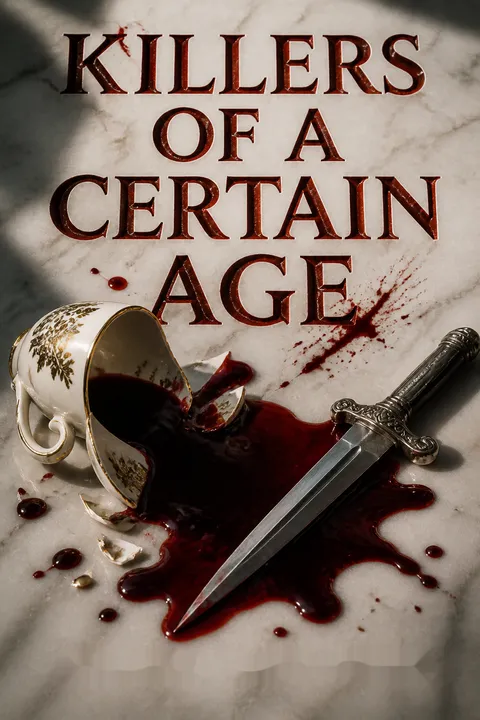
Killers of a Certain Age receives mixed reviews averaging 3.86 stars. Readers praise the unique premise of four 60-something female assassins discovering their organization wants them dead during a retirement cruise. Many enjoy the humor, action, and representation of older women, calling it cinematic and fun. However, critics cite weak character development, juvenile humor, predictable plotting, and characters who don't seem age-appropriate. Several reviewers note the women act younger than their years. Positive reviews highlight the friendship dynamics, wit, and commentary on ageism and invisibility of older women in society.
People Also Read









Characters
Billie Webster
The improvising assassinBillie is the team's quick-thinking center, a former protester whose appetite for justice led her into the Museum's clandestine work. She trusts instinct, adapts under pressure, and prefers using her hands to relying on weapons that can be taken away. Her humor can make her seem untouched by violence, but she is deeply loyal and often carries responsibility alone rather than risk burdening her friends. Billie values the life she chose, including its freedom from conventional expectations, while struggling to understand whether the Museum's ideals still justify its methods. Her relationship with Taverner reveals how much she can love without wanting the same future he does.
Helen Randolph
The exacting sharpshooterHelen is refined, observant, and precise, with a trained eye that makes her the team's sharpshooter and a meticulous keeper of names and details. Her polished manner can look like coldness, but it often serves as structure in a dangerous life. She is loyal to her friends and attentive to their needs, even when grief or self-doubt makes her own needs difficult to voice. Helen's marriage to Kenneth gave her a private life alongside the work, and his loss unsettles the competence on which she has long relied. She values discipline, memory, and the small rituals that help a person keep functioning.
Natalie Schuyler
The explosive free spiritNatalie is impulsive, flirtatious, and theatrically irreverent, but her apparent carelessness conceals an excellent sense of place, danger, and timing. She favors explosives and bold solutions, and she often sees routes or possibilities the more cautious members of the team miss. Her family history carries the shadow of war, though she resists any idea that she must inherit guilt along with it. Natalie values pleasure and independence, yet she depends deeply on the women who have shared her risks for decades. The prospect of ordinary retirement unsettles her because danger has become one of the clearest ways she knows herself.
Mary Alice Tuttle
The principled poisonerMary Alice is thoughtful, methodical, and guided by a strong belief that the Museum's work can prevent greater harm. Her skill with poisons suits her patience and attention to detail, while her love of music, knitting, and domestic routines gives her a life beyond the field. She is married to Akiko, whom she has kept at a distance by hiding the truth about her work. That secrecy comes from fear rather than indifference: Mary Alice worries that full knowledge might cost her the relationship she cherishes. Her steady reasoning balances Billie's instinct, though concern for Akiko can make her hesitate when action threatens the life she has tried to protect.
Constance Halliday
The uncompromising mentorConstance, known within the Museum as Shepherdess, trains Project Sphinx and brings the authority of a decorated wartime operative to Benscombe Hall. Her blunt assessments are part discipline and part provocation; she expects recruits to discover what they can do rather than accept someone else's measure of them. She values cunning, preparation, and survival over showy bravado. Her history with an earlier all-women team shapes her desire to train women who can outwit the dangers that destroyed her comrades. Constance's lessons become part of the team's shared vocabulary long after their training ends.
Christopher Taverner
Billie's former partnerTaverner is an experienced English field agent and Billie's former lover. He is capable, composed, and warm beneath a dry wit, with a private life shaped by the family he chose after their relationship ended. He once hoped Billie would want marriage and children; she did not, and he respected that difference even as it hurt. Their connection persists as mutual understanding rather than a simple unfinished romance. Taverner's presence tests Billie's habit of treating independence as a reason not to ask for help, while his willingness to assist shows that affection can survive divergent choices.
Akiko
Mary Alice's candid wifeAkiko is Mary Alice's wife, a practical and affectionate woman whose confidence is shaken when she discovers how much of her partner's life has been concealed. She is not easily placated by protective excuses and expects Mary Alice to treat her as an adult capable of hearing the truth. Though she has no field-agent background, she proves willing to face danger beside the women once she understands what is at stake. Her relationship with Mary Alice gives the story a domestic measure of trust: love is not protected by withholding reality, especially when both partners must live with its consequences.
Minka
The resourceful technologistMinka is a young app developer and Billie's trusted friend, living in the unconventional New Orleans safe house she helps maintain. Quick with code, documents, and practical improvisation, she contributes tools that the older women cannot simply request from the Museum. Her history has taught her more about danger than her age suggests, although Helen worries that joining the conflict will cost her the freedom to build a different life. Minka is direct, proud of her skills, and protective of the people she considers family. Her bond with Akiko and the team's cat helps her create a small community amid the upheaval.
Vance Gilchrist
The veteran field leaderVance is a senior Museum operative who has led missions and worked closely with the Sphinxes. Confident and experienced, he understands the organization's operations from the field and expects others to respect his authority. He can be charming when it serves a mission, but his pride is easily touched when he believes someone has taken credit or control from him. His working relationship with Billie is marked by a long history of competing judgments about what the mission requires. Vance represents the generation of leadership that helped build the Museum and now faces pressure to define what it should become.
Martin Fairbrother
The careful curatorMartin is a curator in the Museum's Acquisitions department, responsible for the equipment, supplies, and logistics that make field missions possible. Quiet and meticulous, he tends to express care through useful details rather than easy conversation. The agents appreciate that he remembers their preferences and anticipates small needs that others overlook. He is ambitious in a system where proximity to leadership can matter as much as competence, but his diffidence makes him difficult for the field agents to read. Martin's position gives him access to the administrative machinery behind the Museum's operations.
Naomi Ndiaye
The sharp Provenance directorNaomi leads Provenance, the Museum department that researches targets and recruits, and is known for intelligence, bluntness, and technical skill. A mother of young children with another on the way, she balances professional authority with the bodily demands of pregnancy. She is wary of emotional appeals and prefers evidence, surveillance, and calculated judgment. Naomi understands the inner workings of the Museum better than the field agents do, but her position also makes her responsible for choices that affect them. She can be funny and unsentimental in the same breath, particularly when stress has made patience scarce.
Richard Halliday
The discreet recruiterRichard Halliday, a retired British major and Constance's brother, recruits Billie after noticing her in an Austin jail. He is courteous, observant, and patient enough to let a skeptical young woman question the organization before she signs on. His own history in wartime service has left him convinced that official institutions can fail the causes they claim to defend. Richard represents the Museum's founding generation and its original argument for taking action when governments will not.
Günther Paar
The spa-loving directorGünther is a Museum director and a creature of routine, especially devoted to health retreats and elaborate restorative treatments. His habits make him easier to locate than a more cautious target, while his position gives him influence over the organization's decisions. He is accustomed to the comforts his work provides and assumes his private routines are secure.
Thierry Carapaz
The guarded directorThierry Carapaz directs Provenance and has a taste for luxury, women, and the rewards his career can provide. He grew up in a working family in Burgundy and carries a sharp awareness of the class world he hopes to enter. His professional role gives him access to sensitive research and the Museum's target-selection process. He protects his privacy with heavy security and a carefully maintained home.
Charles Sweeney
The retired pilotSweeney is a former Museum pilot whose past includes missions with the Sphinxes and a brief romantic connection with Natalie. He is sociable, fond of jokes, and familiar enough to the women to seem like a possible source of help. His long service makes him part of their shared professional history, though retirement has placed him outside their day-to-day circle.
Kevin
The hostile traveling catKevin is Mary Alice and Akiko's cat, an irritable passenger who resents carriers, unfamiliar houses, and long journeys. He adds a small, stubborn piece of home to the women's life on the run. Akiko treats him as family, and the others make room for his needs even when his travel complaints are difficult to ignore.
Plot Devices
The Museum
A hidden justice systemThe Museum is an independent organization with research, logistics, and field divisions, founded by former wartime agents who believed governments had abandoned justice. Its departments use museum terminology to disguise their work, and its Board must normally agree unanimously before targets are selected. This structure supplies the women's missions, equipment, and moral framework for decades. It also makes them vulnerable when internal safeguards are bypassed. The Museum is not merely a secret employer: it is the institution whose authority the women trust, whose corruption puts them in danger, and whose future becomes part of the conflict.
Cover identities
A life built from aliasesThe women use false names, forged documents, costumes, and convincing roles to move through guarded places unnoticed. Training encourages aliases with matching initials so that tired agents are less likely to expose their real names. Cover stories range from flight attendants and nuns to tourists and spa workers. These disguises are practical protections, but they also reflect the split between the agents' private selves and the work they do. When the women flee the cruise, abandoning their old identities becomes a real loss rather than a routine change of paperwork.
Menopaws
A harmless-looking signal systemMinka adapts a menopause-tracking app into a discreet communication channel for the group. Its bright kitten interface helps the women exchange messages without relying on ordinary texts, and its subject matter offers a plausible screen if a phone is inspected. In the final operation, synchronized alerts become part of the timing for the team's prepared distractions. The app embodies Minka's particular contribution: turning something men in security may dismiss as embarrassing into a technical advantage. Its cheerful design also suits the novel's habit of pairing domestic objects with lethal work.
The Queen of Sheba
A bullet hole becomes a clueSofonisba Anguissola's painting was recovered during the Zanzibar mission and damaged by a bullet fired by the baroness. The Museum stores it after no surviving owners can be found. Decades later, its sudden appearance in a London auction catalog, together with a record of the small repaired puncture, links the sale to the old mission and draws Billie toward Vance. The painting acts as evidence because its physical damage preserves a history the Museum's paperwork cannot erase. It also connects a private artistic treasure to the power struggles surrounding the institution.
Astraea and the Sphinx
Images of justice and survivalConstance uses classical figures to explain the qualities she wants in her recruits. The Sphinx names a team expected to combine beauty, intelligence, and force; Astraea, the goddess of justice, represents the sword and scales that Billie must decide whether to take up. These images give the women a shared vocabulary without making their choices simple. The Sphinxes are trained to survive rather than die nobly, while Astraea's abandoned sword asks whether justice can remain meaningful when institutions fail. Their symbolic force returns when Billie must decide how to lead the team.
Download PDF
Download EPUB
.epub digital book format is ideal for reading ebooks on phones, tablets, and e-readers.








