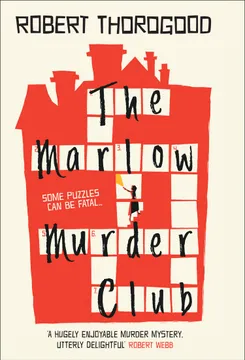


Plot Summary
A Shot Across the Thames
At seventy-seven, Judith Potts enjoys her riverside mansion, solitary routines, and evening swims in the Thames. One sweltering night, she hears her neighbor Stefan Dunwoody shout, then hears a gunshot. Unable to climb out beside his reed-choked garden, she races home and calls the police.
The first officer searches briefly and leaves, and a detective sergeant later assures Judith that nothing seems wrong. Unconvinced, Judith investigates Stefan’s watermill herself.
She follows a narrow stream from its pond to a weir, where she finds Stefan’s body trapped beneath the water, a bullet wound in his forehead. The discovery turns her private unease into a purpose: if the police will not treat the death as murder, she will find out what happened.
Judith’s entrance into the mystery grows from a practical refusal to let an unanswered emergency stand. Her age and eccentric habits initially make her easy to underestimate, but the story gives her attention a professional shape: she notices what the first officer overlooks and pursues the evidence herself. The river is more than scenery. It is both her refuge and the route by which she encounters violence, turning a familiar private landscape into a crime scene. Judith’s independence is not simply a pose; it has made her capable of acting without permission, though it will also make collaboration difficult.
The Alibi in the Choir
At Stefan’s gallery, assistant Antonia Webster tells Judith that Stefan recently argued with Elliot Howard, a silver-haired auction-house chairman, and threatened to involve the police. Judith confronts Elliot, who calls Stefan dishonest and says he attended choir practice during the shooting.
Vicar’s wife Becks Starling helps Judith check the church’s security footage. It shows Elliot present throughout rehearsal, apparently ruling him out, but as he leaves he looks directly at the camera with unmistakable satisfaction.
Becks, initially reluctant to get involved, joins Judith in wondering why an innocent man would seem so pleased with his alibi. Meanwhile, Detective Sergeant Tanika Malik keeps the case open to accident or suicide, leaving Judith and Becks with suspicion but no proof.
The camera offers a clean fact with an ambiguous emotional residue. Elliot’s presence at choir practice is not evidence of guilt, yet his look suggests that he understands how an alibi can become a performance. The novel makes the women’s interpretation psychologically plausible without making it conclusive: they notice demeanor, but they also risk turning dislike into certainty. Becks’s involvement begins through this tension. Her cautiousness is not lack of intelligence; it reflects a life in which she has learned to avoid disruption. Judith’s invitation to investigate gives Becks a first opportunity to act beyond that role.
Hope Beside the Body
Before Judith can make sense of Stefan’s death, a second Marlow resident is found shot in bed: Iqbal Kassam, a taxi driver who lived alone. Tanika discovers a bronze medallion marked Hope in his mouth, matching the Faith medallion found on Stefan, and ballistics confirms that both men were shot with the same antique German Luger.
The pattern makes suicide untenable and suggests another killing may follow. Judith meets Suzie Harris, Iqbal’s blunt, independent dog walker, who describes him as generous and quietly devoted to his dream of buying a boat.
Iqbal had cared for a dying neighbor, Ezra Harrington, and inherited Emma, Ezra’s Dobermann. His kindness offers no obvious motive for murder, so Judith begins to suspect that he witnessed something rather than caused it.
The second murder changes the scale of the story: the question is no longer whether Stefan was killed, but how two apparently unrelated men came to share a method and a message. Iqbal’s decency complicates the familiar mystery assumption that victims are killed because of a hidden vice. His modest dream of a boat and his care for Ezra give him a life defined by generosity, making his death feel both unjust and narratively disruptive. Suzie enters through practical loyalty to Iqbal and Emma, bringing local knowledge that does not resemble formal investigation but proves just as important.
A Funeral and an Inheritance
Suzie tells Judith and Becks how Iqbal had helped Ezra Harrington, who promised to leave him his house and savings. At Iqbal’s funeral, Imam Latif recalls that Iqbal believed a short, heavyset man had persuaded Ezra to change his will and take the inheritance instead.
Becks identifies Ezra’s bungalow as a valuable property, and Judith orders a copy of the will. It names Ezra’s solicitor, Andy Bishop, as executor and sole beneficiary. Judith visits Andy, who says he cared for Ezra and brushes aside her concerns.
When she returns to his office, she catches him feeding a glossy document into a shredder. His haste turns an ethically questionable inheritance into a possible crime, and the three women begin planning how to retrieve what he destroyed.
The funeral gives Iqbal a community he seemed to lack in life, while also revealing how little the women know about his private disappointments. His grievance is not merely financial: the inheritance represented a boat, travel, and a future he had imagined for himself. Andy’s legal authority creates a sharp asymmetry. He can shape the official account of Ezra’s wishes, while Iqbal’s belief that he was cheated has no force without evidence. The scene also deepens the group’s friendship through shared mourning. Their curiosity is no longer an abstract puzzle; it is a response to a good man whose story was cut short.
The Frame Without a Painting
A torch-bearing intruder breaks into Stefan’s house while Judith and Becks are nearby. Judith rushes in, is struck by the intruder’s thrown torch, and watches the masked figure escape. Becks notices that one painting has lost its frame, while the rest of Stefan’s carefully arranged collection remains untouched.
A label on the frame traces it to Elliot’s auction house in 1988. Postman Fred Smith explains that Stefan once misidentified a painting from Elliot’s father’s estate, allowing Stefan to buy a valuable, unsigned Mark Rothko sketch for very little.
Judith suspects Elliot has returned to reclaim it and may have substituted a forgery. The theory supplies Elliot with a powerful motive, though his choir alibi and the unexplained frame leave the women without a clear account of what happened.
The frame is a deliberately incomplete clue: its removal makes the crime visible while withholding its purpose. Judith treats this oddity as a puzzle, and her crossword habits encourage her to search for a concealed rule rather than accept the surface explanation. Fred’s account complicates the women’s early moral sorting. Stefan, whom Judith remembered as a kind neighbor, may have profited from deception; Elliot, whose manner feels menacing, may have been wronged. The story asks readers to separate a person’s character from the evidence of a particular act, a distinction the amateur investigators repeatedly struggle to maintain.
The Shredder’s Secret
Judith, Suzie, and Becks decide to recover the shredded paper from Andy’s office. Suzie plans the break-in, Judith poses as a client in a wheelchair, and Becks sets off the fire alarm by jamming thick slices of bread into a toaster.
While staff evacuate, Suzie replaces Andy’s shredded-paper bag with shredded hamster bedding and photographs his computer calendar. The escape is narrow, but the women get away with the evidence. Becks’s ease at deceiving Andy unsettles her, while Suzie regrets lingering at his computer instead of following the plan exactly.
Judith reassures her, then tells Suzie about her unhappy marriage to Philippos, who died in a boating accident. Her guarded account leaves Suzie wondering why Judith still wears her wedding ring and keeps a locked room in her house.
The break-in turns the women’s differing temperaments into a working method. Suzie supplies nerve and improvisation, Becks uses the competence she usually directs toward household life, and Judith makes the scheme legible as a puzzle. Their transgression is comic, but it also marks a shift from asking the police to notice evidence to obtaining it themselves. The quieter conversation afterward exposes the costs of such intimacy. Judith offers Suzie a fragment of her past, then keeps its central wound protected. Their new friendship is real, but Judith’s self-reliance still governs how much she will allow others to know.
Charity Marks a Third Death
Judith and Suzie visit Liz Curtis, who runs Marlow’s rowing centre and has auburn hair like the woman Judith saw near Stefan’s house. Liz denies knowing either Stefan or Iqbal, but her husband Danny later confirms that she visited Stefan’s gallery and took Iqbal’s taxi.
Suzie also accuses Liz of having a healthy dog, Crumble, put down, though Liz denies it. Soon afterward, Liz is found shot at the rowing centre, with a third medallion, marked Charity, beside her.
She had been alive shortly before the body was discovered, while Danny was away coaching in Nottingham and Elliot was livestreaming an auction. Tanika confirms the same Luger killed all three victims. The apparent pattern grows stronger, but the fresh alibis make the women’s favorite suspects harder to place.
Liz’s death converts the investigators’ overconfidence into grief and self-reproach. They had treated her evasions as signs of guilt, without understanding that fear can also make an innocent person behave strangely. Her death establishes the cost of turning suspicion into a verdict before the evidence is complete. The three medallions seem to promise a single, orderly explanation, yet the victims’ lives remain stubbornly different: an art dealer, a taxi driver, and a rowing-centre owner. The growing neatness of the pattern may be precisely what makes it dangerous to trust.
Dead Witnesses on Paper
Judith painstakingly reconstructs the paper Suzie stole and discovers it is a page from the Borlasian school magazine. Its obituaries list the two people named as witnesses to Ezra’s will, both of whom had died before the document was signed.
Judith concludes that Andy forged their signatures to inherit Ezra’s estate. Iqbal had attended the same school and kept a copy of the magazine with the relevant page torn out. The discovery gives Andy a motive to silence Iqbal, but Tanika reveals that Andy was in Malta during both Stefan’s and Iqbal’s murders.
When the women join Tanika’s investigation as civilian advisers, they learn that Liz knew both victims, while Andy and Elliot have no direct links to her. Their strongest suspect has a motive, but no opportunity for the first two killings.
The reconstructed page shows how a crime can hide inside ordinary paperwork until time makes its details legible. Andy’s forgery depended on the witnesses being absent from the present, but the school magazine restores them to the record through their deaths. Judith’s skill is not simply cleverness; it is a willingness to stay with tedious fragments until they form a pattern. Yet the revelation also demonstrates the limits of motive. Andy’s fraud explains why he might want Iqbal silenced, but the Malta alibi prevents the women from forcing every clue into that explanation. Evidence offers structure, not permission to ignore contradiction.
The Missing Crew Photograph
The women compare the victims’ records and notice that Liz’s diary marks a rowing dinner on the same night Elliot visited Stefan. Judith searches her archive of old local newspapers after spotting that Elliot has removed a rowing-team photograph from his office.
The papers also reveal Stefan’s dislike of rowing and boats, while Liz and Elliot both had competitive rowing histories. As Judith examines an old report about her own husband, Suzie begins to suspect Judith has hidden the truth about his death.
Judith instead follows the clues toward a school rowing crew: Elliot, Andy, and Danny had competed together at Borlase’s. She recognizes that their airtight alibis may be coordinated rather than exculpatory. When Elliot says he will be away that night and Andy’s office confirms he is in Plymouth, Judith realizes she may be their next target.
The missing photograph makes absence function as evidence: Elliot’s attempt to remove a record points Judith toward a shared past that the digital world cannot easily retrieve. Her private archive, initially a source of concealment, becomes the instrument that lets her recover that past. At the same time, Suzie’s discovery about Judith reverses the usual investigator’s gaze. The person solving a mystery may also be protecting one. The three men’s alibis acquire a new meaning once Judith allows for coordination; what looked like independent proof may be a designed pattern. Her conclusion turns the investigation from retrospective explanation into immediate danger.
The Storm Reaches Judith
In a violent storm, Danny enters Judith’s house carrying the Luger. Judith recognizes him as the man who killed Stefan by canoe, then explains the exchange she has inferred: Danny killed Stefan for Elliot, Elliot killed Iqbal for Andy, and Andy killed Liz for Danny.
The same weapon and Faith, Hope, and Charity medallions disguised three separate killings as one. A fallen tree blocks Tanika and Becks from reaching Judith. Suzie, who cannot swim, attempts the flooded Thames; Emma pulls her back to shore.
Inside, Danny fires and misses. Judith blinds him with icing sugar from her travel-sweet tin, stabs his arm with a sharpened pencil, and reaches for the gun, but Danny knocks her down. Emma leaps through the broken window and attacks him as Becks and police arrive.
The climax tests each woman through the very trait that has both helped and endangered her. Judith’s confidence becomes a tactical risk, but her ability to improvise buys seconds. Suzie’s impulsiveness nearly costs her life, yet her attempt to cross the river is an act of loyalty rather than mere recklessness. Becks, whose timidity often kept her on the margins, mobilizes the church and town to clear the blocked road. The rescue is therefore communal in both practical and emotional terms. Danny’s plan depended on isolation and misdirection; the women survive by turning their separate forms of competence into a shared response.
Three Murders, One Secret
With Danny restrained, Judith explains that the three murderers were former members of one school rowing crew, with Andy as cox. Each killed for one of the others, relying on the shared Luger, planted Masonic medallions, and prepared alibis to disguise the exchange.
Tanika moves to arrest Elliot and Andy, and the three men are charged. Later, Judith explains that Elliot had intended to replace Stefan’s Rothko with a forgery, but when interrupted he left the authentic painting on the wall and escaped with its frame.
The women celebrate with a river picnic. Suzie confronts Judith about the old report suggesting she was aboard Philippos’s boat when he died. Judith refuses to confirm or deny that she caused his death, but her quiet response signals that her own past remains unresolved.
The resolution restores order without pretending that every moral question has been settled. The murders are solved through collaboration, but the women do not become extensions of the police; they retain their eccentric ways of seeing and acting. The final Rothko explanation also reframes the apparent theft as a failed attempt to reclaim a history Elliot believed had been stolen from him. Meanwhile, Judith’s silence about Philippos prevents the mystery plot from consuming her private life. Her friends have earned enough trust to ask, and she has grown enough to remain with them, but intimacy does not require full confession.
Analysis
The novel’s mystery is built around the difference between a pattern and an explanation. Three people die by the same antique pistol, and three matching medallions seem to confirm a single author behind the crimes. That coherence is deliberately false. The murders arise from separate grievances, then become one design because the perpetrators exchange victims and coordinate their alibis. The central intellectual challenge is not merely identifying who benefits from each death; it is recognizing that one killing can be evidence of a relationship between offenders rather than proof of one offender.
Judith’s puzzle-making offers a model for reading the case, but the story also shows its risks. She is skilled at noticing anomalies, yet she sometimes mistakes a compelling theory for a demonstrated fact. Her friends and Tanika provide necessary friction: each brings forms of knowledge Judith lacks, from local dog-walking networks to police procedure and social observation. Solving the mystery becomes a collective practice, not a triumph of solitary genius.
The town’s domestic and professional roles also conceal power. Andy’s legal authority lets him manipulate the record of an inheritance; Becks’s household competence disguises her intelligence from people who underestimate her; and the former rowers’ public respectability masks a private bargain. The book’s comic surface never erases the serious cost of these arrangements. Iqbal’s kindness does not protect him, and Liz’s private fear is misread as guilt. The mystery asks readers to resist treating demeanor as proof.
Finally, Judith’s guarded history gives the investigation an intimate echo. She can uncover what others have hidden because she has spent decades preserving evidence, but her own archive has served both memory and concealment. Her refusal to explain Philippos’s death leaves the ending morally unsettled. The women solve the public crime and build a genuine friendship, yet trust does not demand total disclosure. Their achievement is not perfect transparency, but learning when to act together and when to let another person keep a door closed.
Review Summary
The Marlow Murder Club received mixed reviews, with an average rating of 3.79 out of 5. Many readers enjoyed the charming characters, particularly 77-year-old Judith Potts, and the cozy mystery atmosphere. The story follows Judith and her friends as they investigate murders in their small town. Some praised the humor and clever plot twists, while others found the ending predictable or over-the-top. The book drew comparisons to Richard Osman's Thursday Murder Club series, with some readers preferring this as a lighter, more entertaining read.
People Also Read







Characters
Judith Potts
The crossword-solving neighborA sharp-minded seventy-seven-year-old crossword compiler, Judith lives alone in a grand, cluttered house beside the Thames and fiercely values her independence. She notices patterns others miss, trusts her own judgment, and has little patience for rules that seem to obstruct common sense. Her eccentric rituals, from nude swimming to evening Scotch, make her easy to dismiss, but her intelligence is disciplined by decades of puzzle-making. Beneath her confidence lies a guarded past she rarely discusses. Her developing friendships with Becks and Suzie challenge her belief that doing everything alone is the safest way to live.
Becks Starling
The vicar’s restless wifeBecks is married to Colin, the vicar of Marlow, and is mother to Chloe and Sam. She is observant, conscientious, and skilled at managing a household, but those skills have become a narrow definition of her identity. Anxiety makes her retreat into tidying and careful social manners, while an anonymous online persona hints at a more daring self. Judith’s friendship gives Becks room to act on her intelligence and courage rather than merely support other people. Her relationship with her family is affectionate but strained by the sense that her work and desires often go unnoticed.
Suzie Harris
The dog walker with nerveSuzie is a practical, outspoken dog walker who knew Iqbal through caring for his Dobermann, Emma. She distrusts authority, speaks plainly, and reacts quickly, qualities that make her valuable to Judith’s informal investigation. Beneath her brash humor is a lonely woman whose years of single parenting have left her estranged from parts of her family. Her growing friendship with Judith and Becks offers more than a mystery to solve: it gives her a place among peers again. Suzie’s tenderness toward animals and loyalty to friends coexist with a habit of acting before she has measured the danger.
Tanika Malik
The methodical detectiveDetective Sergeant Tanika Malik becomes acting senior investigator when her superior is absent, carrying responsibility for a case that quickly overwhelms her resources. She values procedure and evidence, partly because they are the foundation of her professional confidence. At home, she is also a wife, mother to Shanti, and daughter expected to help her father, leaving her stretched across competing duties. Judith’s intuition can frustrate her, but Tanika recognizes that unconventional observers may see what a strained police team misses. Her challenge is to balance disciplined investigation with the judgment to use help when it appears.
Elliot Howard
The proud auctioneerElliot chairs the Marlow Auction House and carries himself with the assurance of someone accustomed to being listened to. His long hair, polished manners, and sharp opinions contribute to an unsettling first impression. In his youth he was a rower, and art remains bound up with his sense of identity and unrealized ambition. His marriage to Daisy gives him companionship, though she appears more clear-eyed about their life together than he is. Elliot’s history at the auction house connects him to Stefan and to the town’s art trade, making him a natural focus of suspicion.
Andy Bishop
The town’s polished solicitorAndy is a senior partner at a local law firm, a man who understands the authority carried by paperwork and professional status. He presents himself as helpful and composed, especially when discussing clients and their affairs. His physical presence contrasts with the confidence of his position, and he can be condescending when challenged. Andy’s work brings him into contact with wills, inheritance, and the town’s older residents, placing him near the legal and financial seams of the story. He is an important figure to understand as both a professional and a local power broker.
Danny Curtis
The rowing-centre co-ownerDanny runs Marlow’s rowing centre with his wife, Liz, and coaches a junior canoeing team. He is proud of his work on the water and of the effort it takes to keep the family business operating after repeated floods. He describes himself as the less easygoing partner, while presenting Liz as patient and admired. His life is shaped by old athletic ambitions and the practical pressures of a business tied to an increasingly unpredictable river. Danny’s account of his marriage and work makes him a significant presence in the town before the investigation clarifies his deeper connections.
Stefan Dunwoody
The art dealer next doorStefan owns Dunwoody Arts and lives in a converted watermill near Judith’s house. Their contact is limited but warm, and he has shown concern for Judith without prying into her private life. His assistant remembers him as kind and interested in younger people’s ideas. He is also an experienced figure in Marlow’s art world, where reputation and valuation carry real financial consequences. Stefan’s quiet presence in Judith’s life makes his fate the event that draws her into the investigation.
Iqbal Kassam
The generous taxi driverIqbal is a modest taxi driver who works nights and saves toward a boat of his own. He is remembered for helping people in difficulty, including his neighbor Ezra and Ezra’s dog, Emma. Suzie walks Emma while Iqbal sleeps, and she values his decency and trustworthiness. Quiet and private, he rarely speaks about family and is more animated when discussing boats. His modest hopes and kindness make him a vivid part of Marlow’s community, even though few people knew the full shape of his life.
Liz Curtis
The former Olympic rowerLiz runs the Marlow Rowing Centre with Danny and is an accomplished former rower who won an Olympic silver medal. Becks knows her through church, where Liz keeps her faith private and tends to remain self-contained. She is disciplined and focused, with a strong attachment to the rowing centre despite its financial and physical difficulties. Suzie remembers her through the story of Crumble, the dog Liz inherited from her father. Liz’s reputation and private choices do not always align in the eyes of the people around her.
Antonia Webster
Stefan’s young assistantAntonia works at Dunwoody Arts during the summer before university. She respects Stefan because he takes her ideas seriously and treats her as a person rather than a temporary employee. Judith recognizes her from an earlier moment when she intervened as Antonia was being hassled outside a pub. Antonia’s memory of an argument in Stefan’s office provides an early lead, and her grief shows how much the art dealer meant to those who worked closely with him.
Fred Smith
Marlow’s observant postmanFred is a lifelong Marlow resident whose post rounds give him an intimate knowledge of the town and its people. Before becoming a postman, he worked for the Marlow Auction House and knew Elliot and Stefan during the years when the business was run by Elliot’s father. He enjoys conversation but is careful about professional discretion. His memories of the auction house’s past help Judith understand the relationships behind the art-world clues.
Daisy Howard
Elliot’s watchful wifeDaisy works alongside Elliot at the auction house and is known for her decisiveness in business. When Judith first meets her, Daisy is welcoming and quick-witted. Later, she shows a more protective side when the police question Elliot at home. She met him through their shared interest in art and sees him as both kind and vulnerable. Her perspective on their marriage differs from the confident public image Elliot presents.
Colin Starling
Marlow’s parish vicarColin is Becks’s husband and the vicar of All Saints’ Church. He changed careers from banking after experiencing a religious calling, a decision that reshaped the family’s finances and daily life. He is caring but can take Becks’s domestic work for granted, and his focus on his parish sometimes leaves her feeling unseen. He is also the father of Chloe and Sam and a familiar presence in the community.
Emma
Iqbal’s loyal DobermannEmma is a Dobermann inherited by Iqbal from his dying neighbor Ezra. Suzie walks her daily and knows her as affectionate and devoted, despite the breed’s intimidating reputation. Her bond with Suzie offers the dog walker companionship, while her trust in the people who care for her reflects the quiet network of responsibility in Marlow.
Plot Devices
The cryptic crossword
A method for spotting patternsJudith’s work as a crossword compiler shapes how she investigates. She separates surface appearances from hidden structure, looks for links between words or events, and keeps testing possible solutions rather than settling for the first plausible answer. Her habit of treating an oddity as a clue helps her notice the frame missing from Stefan’s painting and later connect seemingly separate details. The method is not infallible: it can encourage her to force evidence into a neat pattern. Its value lies in disciplined curiosity, not guaranteed correctness.
The bronze medallions
A misleading message at each sceneA medallion is found with each victim, bearing one of the words Faith, Hope, or Charity. Their matching design, together with the shared Luger bullet, appears to point toward a single killer and a religious or Masonic motive. The sequence also implies that the killings form a complete set. The women and police spend time trying to interpret the symbols, while the medals help disguise the fact that the murders have different perpetrators. Their meaning is therefore both a clue and a deliberate misdirection.
The Rothko frame
A theft that hides a forgeryThe empty frame connects Stefan’s death to Elliot’s long-standing grievance over a Rothko painting. Elliot believes Stefan took advantage of him when the artwork was valued years earlier. A break-in and the later removal of the frame lead Judith and her friends to suspect that Elliot intends to replace the original with a copy. The painting’s history supplies a credible motive, but its role is not what the women initially think. It is also a separate crime from the murders, which makes it a useful distraction while the central pattern remains obscure.
The antique Luger
A shared weapon disguises separate killersA Second World War German Luger kills all three victims. The weapon’s unusual age links the deaths and encourages investigators to search for one person who could have obtained and used it. In fact, its common use helps conceal an exchange of murders among people with different motives and alibis. The pistol turns the apparent signature of a single serial killer into the mechanism that binds the killers’ plan together. Its antiquity also becomes a telling detail when someone outside the police investigation knows what kind of weapon was used.
Judith’s newspaper archive
A private past becomes evidenceJudith has kept decades of local newspapers, magazines, and pamphlets in locked rooms inside her house. The collection begins as a way to preserve and control information about a painful period in her life, but its value changes when she needs to investigate rowing records that predate online archives. Searching the old papers helps her recover a connection modern databases cannot provide. The archive also exposes how Judith’s devotion to keeping records is entangled with what she refuses to discuss about her marriage and her husband’s death.
The Marlow Murder Club Series
About the Author
Other books by Robert Thorogood
Download PDF
Download EPUB
.epub digital book format is ideal for reading ebooks on phones, tablets, and e-readers.








