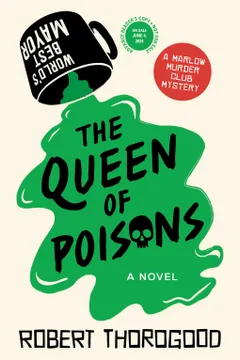


Plot Summary
Coffee Before the Fall
Dog-walker Suzie Harris attends a Marlow planning meeting to learn who might approve her latest money-making scheme, a pod hotel in her garden. She sizes up the committee: charming estate agent Marcus Percival, severe secretary Debbie Bell, rule-bound architect Jeremy Wessel, wealthy wellness enthusiast Sophia De Castro, and popular mayor Geoffrey Lushington, who chairs the group.
Suzie decides Geoffrey could be her ally. As he drinks coffee he has made himself, he begins choking, falls from his chair, and lies motionless. Suzie suspects murder and calls her friends, crossword setter Judith Potts and vicar’s wife Becks Starling. The scheme that brought her into the room has put her at the scene of a death.
The opening makes Suzie’s opportunism both comic and consequential. She enters the meeting to study people as potential leverage, but her keen observation becomes useful for a far graver reason. Geoffrey’s death also overturns the town’s easy assumptions about safety: the victim is not a distant public figure but a neighbor whose kindness has made him part of ordinary life. His sudden collapse converts civic routine into a crime scene, while Suzie’s self-interested motive gives the investigation an immediately personal, slightly compromised beginning.
A Missing Sugar Bowl
Detective Tanika Malik arrives with the police and tries to keep Suzie, Judith, and Becks away from the scene. Judith notices that sugar cubes remain on a saucer, although no sugar bowl can be seen.
Since Geoffrey collapsed within seconds of drinking, she reasons that the poison might have been in something added to his coffee rather than the coffee itself. Tanika, newly promoted to detective inspector, brings the three friends into the investigation as civilian advisers.
The postmortem identifies aconite, a highly toxic plant, and tests find sugar in Geoffrey’s stomach and cup. No one can explain where the sugar came from. Judith sets up an evidence board in her newspaper-filled archive and begins with the question of why anyone would kill a man everyone describes as good.
Judith’s first insight is a lesson in resisting the apparent story. Poison in a coffee cup seems to settle the mechanism, but the missing bowl makes the evidence less, not more, conclusive. Her habit of collecting records and connections becomes a working method: she externalizes uncertainty on the board instead of accepting the first plausible answer. Tanika’s promotion adds a second tension. She has authority now, but choosing to use the friends means balancing institutional procedure against the practical knowledge that Marlow’s residents may reveal more informally.
Sophia’s Poison Garden
The friends list the committee members and focus on Sophia, whose tense exchange with Geoffrey caught Suzie’s attention. At Sophia’s riverside home, they learn she maintains a garden of poisonous plants, including aconite, and she freely explains its hazards. Sophia denies harming Geoffrey and says he once protected her after she mishandled graveyard records, helping families avoid a public scandal.
She still owes him gratitude. A visiting man, her husband Paul, passes her without warmth; Sophia hastily fixes her appearance, then kicks his briefcase out of sight. The women leave with two competing impressions: Sophia has access to the poison, but she also seems to have a strained marriage and an old, unexplained closeness to Geoffrey.
The garden supplies a powerful but incomplete form of evidence. Sophia’s knowledge makes her look dangerous, yet her openness also demonstrates how easily expertise can be mistaken for guilt. Her past error in the graveyards introduces a more intimate history of dependence: Geoffrey once absorbed blame to protect her, creating a debt that could plausibly produce gratitude, shame, or resentment. Meanwhile, the briefcase and the couple’s awkward encounter suggest that Sophia’s polished public self may be a shield. The investigation is beginning to distinguish access from motive, even as the friends repeatedly confuse the two.
The Server Who Vanished
Police find Debbie’s fingerprints on the coffee capsule Geoffrey used, but she says she removed it after the machine jammed. Judith secures permission to revisit the meeting room and learns from Jeremy that the sugar had been kept in a glass Kilner jar.
The jar is missing from the kitchenette, yet Judith finds it hidden behind files in a cabinet. It contains no poison, and Marcus’s fingerprints have an innocent explanation: he says he passed it to Geoffrey. The search jogs Suzie’s memory.
A short-haired blond man with glasses and a goatee had prepared the kitchenette, but none of the committee members mentioned him. Becks recognizes the regular caterer, Alec Miller, who says Sophia phoned that morning to cancel his shift. The unknown server becomes the central puzzle.
This sequence turns an apparently damning object into a test of interpretation. The jar is suspicious because it was hidden, but its clean contents and Marcus’s prints do not prove it delivered the poison. More important is the gap in the witnesses’ accounts: everyone remembers the meeting, yet no one thought the person serving them worth mentioning. That omission reveals the committee’s social blind spot. The story’s mystery now depends not only on what people saw, but on whose presence their assumptions trained them to ignore.
The Kestrels’ Witness
Tanika traces an anonymous tip to a public phone, but its surfaces have been wiped clean. When the caller phones again and urges the friends to scrutinize council spending, Becks remembers the kestrel webcam on All Saints Church’s spire.
Its archived footage shows an overweight man using a mobility scooter to make the call, then carefully cleaning the handset. Sophia recognizes him from a photograph as Dave Butler, the reclusive IT technician who installed her podcast equipment.
Dave avoids the police and refuses to answer his door, so the friends cannot yet learn why he is steering them toward the council’s finances. The image confirms that the caller has been monitoring the case, but it offers no clear connection between Dave and Geoffrey’s murder.
The webcam’s accidental surveillance gives the investigation a witness without human memory or motive. Yet its apparent clarity is deceptive: the footage identifies a body and a routine, not the person’s history or intention. Dave’s isolation also unsettles the friends. He is close enough to Marlow’s institutions to monitor them, but absent from the social world in which their suspicions circulate. His insistence on anonymity can read as fear, manipulation, or both, keeping the investigators from treating information as truth simply because it proves useful.
Secrets in the Committee
Someone breaks into Geoffrey’s house and tries to force open a locked metal case. Inside, Tanika finds a magazine-letter threat warning that a secret will be exposed. Marcus’s fingerprints are on it, so Judith confronts him.
Marcus claims he received the threat and had asked Geoffrey to keep it safe; he later entered the house with a spare key to retrieve it, then hid the sugar jar because he feared suspicion. Jeremy admits he sent the threats, hoping to frighten Marcus after discovering that he ran the hateful online account Marlow01628.
He insists Geoffrey had confronted him about the blackmail. The committee members are no longer merely witnesses: Marcus has concealed evidence, Jeremy has committed blackmail, and both men have reasons to fear what Geoffrey knew.
The blackmail thread changes the moral atmosphere of the case without immediately solving it. Marcus’s evasions make him look guilty, but his actions arise from panic about a secret of his own. Jeremy’s revenge is less impulsive than self-justifying: he believes Marcus deserves exposure, yet chooses coercion because it lets him control the timing and keep his own identity protected. Their behavior complicates the town’s tidy divisions between respectable and criminal. Each man has weaponized information, but neither has yet been connected conclusively to the poison.
Receipts in the Archive
The anonymous caller’s renewed warning sends the friends back through years of council petty-cash receipts. The totals balance, but Judith notices that recent annual spending has risen sharply. Two receipts for the same unusual amount lead to Hunt’s Hardware, a shop that had closed before one receipt was supposedly issued.
The records point to Debbie, who admits she fabricated expenses to pay for private medical care when menopause symptoms were damaging her health and her employer, Paul, offered little support.
She continued taking money to fund treatment and buy collectible porcelain figures. Her motive to conceal the theft is obvious, but she insists Geoffrey never discovered it. The money trail reveals wrongdoing, yet leaves open whether it has anything to do with murder.
The receipt trail distinguishes arithmetic accuracy from institutional honesty. Debbie made the books balance by manufacturing the evidence that was supposed to verify them, so the system’s apparent transparency concealed a personal breach. Her account gives the theft a human context without erasing its consequences: she faced real medical and workplace pressures, then extended a desperate remedy into a repeated habit. The mystery refuses an easy moral shortcut. Sympathy for Debbie does not establish innocence, just as proof of her crime does not establish that she killed Geoffrey.
A Grave Unaccounted For
Once the friends reach Dave, he explains that Geoffrey rejected his science-fiction novel years earlier, then later offered to publish it and helped him revise it. Dave also says Geoffrey had acknowledged council mistakes and was investigating a possible petty-cash discrepancy.
Judith checks Geoffrey’s author files and finds extensive, warm correspondence that confirms the publishing relationship. In the same house, the friends uncover an Environment Agency report Geoffrey commissioned after Alec warned that protected bats lived on Wiley’s Field.
The survey blocks development and shows Geoffrey had acted against developer Ian Maloney, not colluded with him. Alec admits confronting Geoffrey and accuses him of favoring Maloney, but the report proves Geoffrey had tried to protect the field. The question of what else Dave knew remains unresolved.
The recovered manuscript correspondence corrects a story Dave has told about rejection, but it does not remove the injury that story represents. A later act of recognition cannot simply erase the earlier wound, especially when the relationship began with an authority figure deciding whether a young writer’s work deserved a future. Geoffrey’s quiet intervention over the bats similarly complicates his public goodness: he took on a cost and acted without seeking recognition. The hidden history of the graves, still only partially understood, gives the investigation a deeper question about whether an old civic mistake can remain active in a survivor’s life.
A Costume in the Roof
Ian Maloney admits he knew about the protected bats and resented Geoffrey, but witnesses place him at a jazz concert throughout the murder. Judith therefore turns to Paul De Castro, whose cinema alibi might have allowed him to slip out unseen.
Paul reveals that he suspects Sophia of an affair. An earring Judith found in Geoffrey’s bedroom matches one Sophia wears in a photograph, and Sophia admits she fell in love with Geoffrey, tried to seduce him, and was rejected.
She denies killing him, but a false flat-tire story leaves a gap before the meeting. The friends find a blond wig, false goatee, and body-binding cloth hidden above a public toilet, with Sophia’s hair and fingerprints on them. The evidence seems to settle the case against her.
The evidence against Sophia is persuasive because it converts desire, access, and concealment into one coherent narrative. Yet coherence is not the same as completeness. Her affair with Geoffrey explains the earring and her embarrassment, while the disguise seems to explain the missing server; together they invite the investigators to stop asking who placed the evidence where it was found. Judith’s unease resists that closure. The section shows how a convincing story can become a trap when each new fact is interpreted only as confirmation of the last.
The Fire That Wasn’t
Judith realizes the killer knew details from a meeting they could not have attended, suggesting a hidden camera in the debating chamber. She arranges a committee reenactment, then stages a huge bonfire of her hoarded newspapers so the smoke appears to mark her house burning.
As the others rush toward the supposed emergency, someone breaks into Sophia’s boathouse to search old papers. Judith is waiting. She identifies Dave Butler, who has lost weight while pretending to remain the immobile man shown on the phone-box footage.
Dave had installed the secret camera, edited Sophia’s podcast voice to cancel Alec’s shift, disguised himself as the server, poisoned Geoffrey’s coffee capsule, and planted evidence against Sophia. Judith explains that Dave blamed Sophia and Geoffrey for his mother’s lost grave. Police arrest him.
The staged fire makes Judith’s private archive both a tool and a sacrifice. She turns the papers that have protected her from loss into bait, creating a false emergency that exposes Dave’s own fixation on recovering the past. His scheme exploits the same habits that make him easy to misread: the town sees an obese recluse, while Judith finally recognizes a capable planner beneath the appearance. His murder is rooted in genuine grief, but he converts grief into a demand for punishment, targeting two people through a civic mistake that neither can undo.
Ashes and a New Beginning
The fire has never reached Judith’s house. The smoke came from the bonfire of newspapers and magazines she had guarded for decades, and watching the last of them burn leaves her feeling lighter rather than bereft.
Suzie begins to accept that she need not turn every opportunity into another hustle, while Becks continues to manage the strain of living with her demanding mother-in-law, Marian. Judith’s old friend Matthew arrives at a café expecting to meet her, but Marian is seated beside the white carnation Judith arranged as a signal.
She charms him before Becks can return. Judith stays away, content with her choice, and heads back toward her friends for tea. The investigation ends with Dave in custody and the women still bound by their distinct habits.
The resolution answers the murder with a quieter act of release. Judith does not discard her past because it was meaningless; she chooses to let go after recognizing that preservation has become a burden rather than a source of safety. Suzie’s shift is smaller but related: she considers whether happiness can be lived without constantly improving or monetizing it. Becks’s domestic problem is redirected rather than solved by force, as Marian is offered a possible life beyond the vicarage. Their friendship holds because change need not mean becoming someone else.
Analysis
The Queen of Poisons makes a small town’s respectability less a shield against wrongdoing than a system for deciding which wrongdoing counts. The planning committee’s members occupy familiar civic roles, yet each protects an image of competence or virtue: Marcus manages charm, Jeremy converts resentment into moral judgment, Debbie hides financial desperation, and Sophia presents confidence as wisdom. Their secrets misdirect the inquiry because they are real, not because every secret conceals murder. The case therefore asks the reader to distinguish culpability from causation.
Geoffrey’s goodness is also structurally important. His reputation initially makes murder seem inexplicable, but the story gradually shows that kindness can create obligations and unintended consequences. He protects Sophia after her graveyard error, helps Marcus’s family, and later offers Dave a second chance as a writer. These acts are generous, yet they cannot repair every injury or control how others remember them. Dave’s violence grows from a lost mother and the unresolved fact that her grave cannot be located. His grief gives his motive emotional intelligibility, not moral legitimacy; he chooses to punish people who cannot restore what he has lost. The mystery’s most incisive mechanism is misrecognition. The killer relies on witnesses who barely notice the person serving them, on a camera image that seems to define Dave by his body, and on planted evidence that makes Sophia’s secret life appear to explain the murder. Judith solves the case by treating certainty as a clue to examine rather than a conclusion to accept. Her final bonfire echoes the novel’s broader argument: preserving the past can become a way of avoiding the present. She does not erase memory so much as choose what deserves to remain, while her friends begin modest acts of change that leave their essential temperaments intact.
Review Summary
Reviews for The Queen of Poisons are mixed, averaging 3.89/5. Many readers enjoy the dynamic between amateur sleuths Judith, Becks, and Suzie, praising their humor and chemistry. The plot involves the poisoning of Marlow's beloved mayor during a town council meeting. While fans appreciate the cozy mystery charm and clever twists, critics note the third installment feels weaker than its predecessors, citing uneven pacing, a convoluted plot, repetitive structure, and an overly lengthy reveal. Several reviewers also flagged problematic portrayals of overweight characters.
People Also Read








Characters
Judith Potts
The relentless crossword setterJudith is a sharp-minded crossword setter in her late seventies, a solitary swimmer and unapologetic keeper of old papers. She approaches a murder as she approaches a puzzle: details matter, apparent answers deserve testing, and an awkward clue may be more revealing than an obvious one. Her independence is not merely eccentricity. It is a hard-won form of self-protection shaped by an abusive marriage and a life built on her own terms. She trusts her two friends enough to let them challenge her, though she resists any suggestion that her habits might need to change. Her wit can be cutting, but her curiosity and loyalty draw her repeatedly into danger.
Suzie Harris
Marlow’s restless dog walkerSuzie is a practical, energetic dog walker who also hosts a local radio show and is forever alert to a chance to make money. Her improvised schemes and snap judgments can make her seem unserious, but she notices the social details others overlook and is willing to act before a plan is perfect. She is the friend most likely to blurt out a theory, then laugh when evidence proves it wrong. Beneath that restless hustle is a woman who has spent years keeping herself and her family afloat. Becks’s reassurance makes her consider whether she can value the life she already has instead of treating every moment as an opening for another enterprise.
Becks Starling
The vicar’s perceptive wifeBecks is married to Colin, the vicar of All Saints, and is the most conscientious member of the friends’ unofficial detective team. Her instinct is to respect rules and prevent harm, which often makes Judith and Suzie’s schemes a source of anxiety. Yet she is no longer content to be treated as a timid accessory to other people’s lives. She contributes local knowledge, reads people with unusual gentleness, and can take decisive risks when someone needs help. At home, she is navigating her children’s growing independence and the intrusion of her difficult mother-in-law. Her steady empathy makes witnesses feel heard, even when her friends have already made them feel interrogated.
Tanika Malik
The newly promoted inspectorTanika is a police detective who has worked hard to earn promotion to detective inspector while raising her young daughter, Shanti, with her husband, Shamil. She takes the murder seriously and understands that a case must be built carefully enough to withstand scrutiny, so the friends’ improvisations often test her patience. Still, she recognizes the value of their local knowledge and is willing to use them as civilian advisers. Her professional confidence is real but newly acquired, and she remains conscious that each unconventional decision could affect how her team sees her. Tanika’s relationship with the trio combines exasperation, trust, and a practical willingness to accept help.
Geoffrey Lushington
Marlow’s much-loved mayorGeoffrey is Marlow’s genial mayor and a former publisher whose public life is marked by patience, competence, and quiet acts of generosity. He treats residents as people rather than interruptions, a quality that makes his relationships unusually broad across the town. He is also careful about the use of public money and committed to the responsibilities attached to civic office. His reputation for goodness is not a simple disguise; people who know him can point to concrete ways he has helped them. At the same time, his reserve means he often protects other people’s private difficulties without explaining his own decisions, leaving those around him to infer what he knew and what he intended.
Sophia De Castro
The wellness-minded councillorSophia is an affluent, polished member of Marlow’s planning committee who cultivates poisonous plants and hosts a popular wellness podcast. She is drawn to natural remedies and presents herself as someone with insight to share, though her confidence can shade into self-importance. Her history on the committee includes a serious mistake involving burial records, and she remains conscious of the kindness shown to her when the consequences threatened her reputation. Her marriage to Paul appears comfortable from the outside but carries signs of strain. Sophia is accustomed to being admired, which makes vulnerability difficult for her to acknowledge, especially when her feelings or ambitions do not meet the response she expects.
Marcus Percival
The polished estate agentMarcus is a confident estate agent, a planning committee member, and a familiar face in Marlow’s property market. He is handsome, sociable, and practiced at making people feel that he is on their side. His charm is a genuine professional asset, but he also cares deeply about status and appearances. Marcus has a wife, Claire, and children, and he is accustomed to being seen as a reliable local businessman. His relationships with developers and fellow committee members reflect how closely civic decisions and private interests overlap in a small town. His polished manner makes it difficult for others to tell when he is being candid and when he is managing what they see.
Jeremy Wessel
The prickly committee architectJeremy is an architect who sits on the planning committee and takes procedure seriously, sometimes to the point of pedantry. He is easily slighted and tends to turn insecurity into superiority, especially around people whose social ease he envies. His professional work is modest, and he resents being treated as less successful than the more polished members of Marlow’s civic circle. Jeremy’s attention to rules can be useful, but his grudges make his judgment less impartial than he believes. He wants recognition for seeing through other people’s facades, yet is less alert to the harm his own retaliations can cause.
Debbie Bell
The committee’s quiet accountantDebbie is a chartered accountant and planning committee secretary, known for her dour manner and meticulous attention to records. She works at Marlow Wealth Management and handles practical community responsibilities that others often take for granted, including storing supplies for local events. Beneath her restrained presentation is a private life shaped by financial limits, health concerns, and a desire for small pleasures, including her collection of porcelain figures. Debbie is more emotionally responsive than her first impression suggests, particularly when someone listens without dismissing her. Her reserve makes it easy for others to overlook both her competence and the pressures she is trying to manage.
Dave Butler
The reclusive IT technicianDave is a self-employed IT technician who lives alone on the edge of Marlow and rarely welcomes visitors. He is intelligent, technically capable, and deeply private, with a history of loss and a difficult relationship to the town’s institutions. His isolation is partly practical: he can work from home and prefers to control his surroundings. He also has strong opinions about council decisions and pays close attention to public records, making him a persistent critic of local government. Dave’s appearance and habits encourage people to make assumptions about his abilities, while his knowledge of computers and civic paperwork gives him a more complicated presence than the neighbors’ sparse observations suggest.
Paul De Castro
Sophia’s wealthy husbandPaul owns Marlow Wealth Management and is a successful, self-regarding businessman who expects deference. He sees himself as a man who gets what he wants and tends to treat relationships as extensions of his status. His marriage to Sophia looks affluent but not especially tender, and he is alert to signs that he may no longer control the story of their life together. Paul is proud of his business and his public image, yet his temper can break through when he feels challenged. The contrast between his confidence at work and his insecurity at home makes him an unsettling figure in the investigation.
Alec Miller
The town’s familiar catererAlec is a retired local resident who supplements his income by preparing refreshments for council meetings and church events. He has lived near Wiley’s Field for most of his life and is an observant birdwatcher with a strong attachment to the surrounding landscape. He is proud of knowing the countryside and can speak forcefully when he believes it is threatened. Alec also prefers an uncomplicated existence and is reluctant to involve himself in matters that might bring police attention to his door. His long familiarity with the town gives him useful knowledge, but it can also make his assumptions feel more certain than the facts warrant.
Ian Maloney
The relentless property developerIan is a property developer who pursues land and planning approval with little patience for local objections. He believes housing need justifies aggressive development and treats the planning process as a negotiation in which persistence usually wins. His manner is blunt and intimidating, and he has a reputation for finding ways around obstacles. Ian’s ambitions place him in conflict with residents who value Marlow’s green spaces and character. He is not troubled by being disliked, regarding that as part of doing business, but his confidence can make him appear responsible for any scheme that threatens the town.
Colin Starling
Becks’s vicar husbandColin is Becks’s husband and the vicar of All Saints Church. He loves his family, but his instinct to avoid conflict can leave Becks carrying more of the household’s emotional work than she wants. He supports her investigations and researches church records when she asks, though he is often caught between his wife and his difficult mother. Colin’s warmth and occasional absent-mindedness provide a gentler counterpoint to the murder case, while his knowledge of parish history helps connect local institutions to old mistakes.
Marian Starling
Becks’s intrusive mother-in-lawMarian is Colin’s mother, a theatrical and demanding presence who has moved into Becks and Colin’s home after financial trouble. She wants comfort and attention, and she is skilled at turning other people’s limits into an invitation to negotiate. Colin is protective of her despite recognizing her difficult behavior, leaving Becks to manage much of the strain. Marian is not simply a caricature of a meddling relative: her spending and dependence reflect a refusal to adapt to a changed life, while her charm appears whenever it may secure what she wants.
Matthew Cartwright
Judith’s old school friendMatthew is Judith’s former school friend, now a wealthy retiree returning to Britain after years abroad. He reaches out after losing his wife and hopes to reconnect with people from his youth. His letters are considerate rather than demanding, but his return forces Judith to examine what companionship might ask of her and what she fears it could take away.
Plot Devices
Aconite and the coffee capsule
A poison hidden in routineAconite is introduced through Sophia’s poison garden and then identified in Geoffrey’s coffee, making it a highly visible clue that points toward her. The coffee machine supplies a plausible method because Geoffrey routinely makes coffee before meetings. The crucial distinction is between aconite being found in a used capsule and the capsule being the actual source of the poison. The gap allows the killer to construct evidence that looks conclusive while concealing how the poison reached Geoffrey. This device turns an ordinary committee refreshment into both the murder mechanism and a trap for investigators who mistake association for proof.
The church kestrel webcam
Accidental surveillanceA webcam installed to observe nesting kestrels also records the nearby phone box. Becks uses its buffered footage to identify the anonymous caller’s mobility scooter and distinctive appearance, giving the police a lead when conventional evidence fails. The camera does not explain the caller’s purpose, and its image initially reinforces an incomplete picture of Dave Butler. Its importance lies in revealing both the value and limits of surveillance: it records conduct accurately while leaving identity, motive, and context to be interpreted.
The council’s petty cash
Balanced books, false receiptsCouncil petty cash appears fully accounted for, so the friends must look beyond totals to the receipts that supposedly justify them. Repeated amounts and a receipt dated after a shop closed reveal that someone fabricated evidence to reconcile the books. The device draws attention to the difference between a correct sum and a trustworthy record. It exposes Debbie’s theft while also answering the anonymous caller’s insistence that the council’s money deserves scrutiny. The receipts complicate the suspect list without automatically proving a murder motive.
The hidden meeting camera
An unseen observer’s advantageJudith eventually infers that someone with IT skills could have installed a camera in the debating chamber and watched the committee’s behavior remotely. This explains how the killer could learn details about the meeting, including the secretary’s habits, while remaining physically absent from the room. The camera also lets Judith set a trap: she stages a reenactment that the observer is likely to monitor. It transforms the meeting room from a public civic space into a privately controlled source of information, mirroring the killer’s careful manipulation of what others see.
Judith’s paper archive
Memory made into baitJudith’s years of collected newspapers and local records first provide the physical setting for the friends’ investigation and reflect her need to keep the past within reach. Near the end, she uses the archive in a staged bonfire that appears from a distance to be a house fire. The apparent disaster draws the killer away from observation and toward Sophia’s boathouse. Burning the papers is a meaningful cost rather than a simple cleanup: Judith gives up a material history she had treated as part of herself in order to expose a crime and begin living with less defensive attachment.
The Marlow Murder Club Series

About the Author
Other books by Robert Thorogood
Download PDF
Download EPUB
.epub digital book format is ideal for reading ebooks on phones, tablets, and e-readers.








