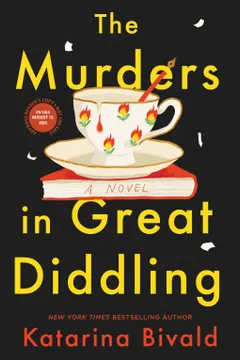


Plot Summary
Prologue
At Tawny Hall, Daphne Trent’s tea party gathers a village already angry with her nephew, Reginald. He has threatened to displace several High Street businesses, treats the villagers with contempt, and wants control of the books Daphne has spent her life collecting.
Though Daphne owns the house, she cannot undo the arrangements that will eventually pass it to Reginald. She tries to soothe the crowd with champagne and sandwiches, but watches resentment gather around him. As the party strains toward an uncertain afternoon, she realizes that several guests have reason to wish him dead.
The tea party turns a genteel gathering into a map of grievance. Reginald’s power is not merely financial: he can threaten livelihoods, treat family property as already his, and make Daphne feel like a temporary occupant in her own home. Daphne’s hospitality is therefore both social performance and a weak attempt at protection. The prologue primes the reader to suspect a crowd, not a single villain, while its pleasant surfaces sharpen the danger. Tea, champagne, and polite manners do not soften the conflict; they give it a stage.
The Yellow Scarf Arrives
Berit Gardner has spent six months unable to write, so she buys a cottage in Great Diddling hoping its unfamiliar streets will stir her imagination. On the afternoon of Daphne Trent’s party, her agent, Olivia Marsch, sends her daughter Sally to work as Berit’s assistant without asking first. Exhausted from a journey that left her walking from the station, Sally expects rejection.
Berit initially refuses the arrangement, then relents when she realizes Sally has nowhere to eat or stay. Before they leave, Berit gives her a bright yellow scarf, advising her to stand out rather than disappear. Sally arrives at Tawny Hall as an anxious stranger, while Berit comes looking for stories and finds a village already on edge.
Berit’s return to Cornwall is not simply a change of scenery. She is trying to recover the imaginative attention that once organized her life, but her instinct is still to watch rather than participate. Sally’s unexpected arrival disrupts that comfortable distance. The yellow scarf becomes a practical lesson in self-presentation: Sally cannot control whether people judge her, but she can choose not to vanish preemptively. Their partnership begins in inconvenience, yet Berit’s decision to take Sally in is her first small act of belonging.
Tea Turns to Shrapnel
At the party, Berit meets hotel owner James Elmer and his forceful wife, Penny, then sees Reginald corner James inside the house over an agreement and money. Penny steps between them and threatens Reginald, while Berit overhears enough to recognize that James is frightened of losing his hotel. Reginald later slips into the old library to make a tense business call about a deal involving Gerald and Raglan Harris.
Minutes afterward, an explosion tears out the library windows and scatters burned pages across the garden. Daphne lunges toward the wreckage, but Margaret restrains her. Berit crosses the broken glass, looks inside, and sees Reginald’s body. She calls the police and identifies the blast as murder.
The explosion converts private leverage into public catastrophe. Reginald’s business dealings, his power over local tenants, and Penny’s threat all make the victim look culpable before the investigation even begins. The scattered books matter as more than scenery: the blast destroys a room used for business and threatens Daphne’s beloved collection, fusing money, inheritance, and culture in one violent image. Berit’s attention to detail makes her a useful witness, but her response also exposes the moral hazard at the heart of her profession: turning another person’s death into material for a story.
The Village of Suspects
Detective Chief Inspector Ian Ahmed arrives to find a crowd of witnesses and a crime scene too dangerous to enter until engineers inspect the house. Berit explains what she saw, while Daphne performs grief and refuses to answer basic questions about her age.
The villagers seem more angry than bereaved. Ahmed learns Reginald had arrived at Tawny Hall only a week earlier, left his suitcases packed, and stored books in his wardrobe because the room had no space.
A bomb technician identifies signs of a small, remotely triggered device and recovers a brass anchor cuff link. Berit gives Ahmed lists of people who entered the house, disliked Reginald, or had threatened him. With no obvious mourner and many plausible motives, the case widens immediately.
Ahmed’s methodical investigation meets a community whose emotional evidence is unusually ambiguous. Anger may signal motive, but in Great Diddling it also reflects years of economic pressure and Reginald’s practiced contempt. The cuff link, packed suitcases, and books in the wardrobe make the victim legible through objects, yet each clue raises more questions than it settles. Ahmed’s insistence on procedure contrasts with Berit’s observational leaps, establishing a productive tension: police evidence can verify what happened, while local knowledge may reveal why people concealed it.
Books, Lies, and Locals
Berit and Sally visit the supermarket, the hobby shop, and Sisters’ Café, where Mary and Eleanor Hartfield describe Reginald’s threats at a tourist board meeting and Mary recalls seeing him meet James behind the hotel. Berit notices the sisters’ polished confusion and the way Eleanor watches people.
Sally, meanwhile, begins to find her footing through conversations with Liam Slater, the irrepressible local who drove her from the station. At the hotel, Berit learns the village’s celebrated history is largely invented, while Sally decides she wants to become a literary agent in her own right.
Berit’s questions draw her toward a murder inquiry, not the novel Olivia wants. At Tawny Hall, Margaret quietly tells Berit that she once bore responsibility for a young woman’s death.
Great Diddling’s fabrications are not confined to its brass plaques. Its residents manage identity through jokes, euphemisms, and selective histories, making truth a social negotiation rather than a simple confession. Sally’s ambition develops in the same environment: instead of measuring herself against Olivia, she begins imagining a professional life of her own. Margaret’s disclosure complicates the village’s moral landscape without explaining the present murder. Berit is drawn to these people precisely because their contradictions resist the tidy character sketches that have replaced her lost creative voice.
A Loan Comes Due
In London, Ahmed and financial investigator Linda Rogers search Reginald’s flat and find a loan agreement naming James Elmer. Reginald had lent James money on generous terms but could demand repayment at any time, putting the already indebted hotel at risk.
They also find correspondence about Gerald Corduroy-Smith and a supposed investment opportunity backed by the elusive Raglan Harris. Back in Great Diddling, James admits that explosives disappeared from his construction site on Thursday night, but he and the contractor concealed the theft rather than alert police.
Because Liam’s clothes carry explosive residue, Ahmed questions him. Liam claims he spent the night helping Mrs. Ainsley with her computer, and her apparent confirmation gives him an alibi. The lead collapses, though Berit doubts the story.
The loan gives James a compelling motive while revealing how Reginald weaponized generosity: the contract looked helpful until he chose to call it in. James’s silence about stolen explosives is not proof of murder, but it makes a dangerous chain possible. Liam’s alibi then exposes a central weakness in the inquiry: a witness statement can seem solid while the person giving it is not who they claim to be. Ahmed works from verifiable records; Berit’s suspicion rests on the people and relationships those records cannot yet explain.
Four Confessions, No Answer
Penny and the Hartfield sisters each sell a false confession to a different tabloid, hoping to collect money and confuse the police. James independently drives to the station and confesses, convinced he must protect Penny from suspicion.
Ahmed discovers that the four accounts cannot all be true, and James’s details about stealing and planting the bomb are so vague that his story looks constructed. The police keep him overnight, but he is eventually released. Berit sees the confessions as part of the village’s appetite for theatrical reinvention.
At the same time, she learns more about Margaret’s earlier guilt: as a health-center administrator, Margaret accepted blame after budget cuts contributed to a young mother’s fatal misdiagnosis, then left her career and former life behind.
The false confessions turn murder into a commodity and a performance. Penny needs money, the sisters relish a scheme, and James acts from a protective impulse that is both loving and profoundly mistaken. Their motives differ, but each replaces truthful speech with a version designed to control consequences. Margaret’s history introduces a quieter form of culpability: she accepts responsibility for a death caused within a failing system, then withdraws from public life. The novel contrasts these forms of guilt without treating remorse as proof of innocence or criminality.
A Festival Built on Fiction
Sima Kumar, the council chair, turns the murder’s publicity into a proposal for a book and crime festival. She recruits Liam and Sally to build a website, fills its program with famous authors who have not agreed to attend, and promises a surprise she has not planned.
Berit resists being used as the festival’s featured writer, but Sally joins the effort, eager to prove herself. Meanwhile, police research reveals Mary and Eleanor are married, not sisters, and have spent decades abroad amid suspected fraud schemes.
Eleanor admits to Berit that their sisterly presentation makes them easy to overlook. The festival draws nearly two hundred paying guests, leaving Sima with an urgent problem: she has created expectations that the village cannot honestly meet.
Sima’s festival is both entrepreneurial improvisation and ethical evasion. She believes Great Diddling needs a future badly enough to treat false promises as temporary scaffolding, but that logic risks making the community dependent on the very deception it claims to overcome. The sisters’ concealed marriage adds another layer: invisibility has protected their privacy and their schemes alike. Sally’s choice to help Sima marks a new confidence, though it places her inside a project whose moral compromises she has not learned how to navigate.
The Man Behind Raglan
Police connect Gerald to the invented financier Raglan Harris and discover that he hired an actor to pose as a wealthy contact, using a staged wallet encounter to win Reginald’s trust. Gerald’s real interest is Daphne’s valuable library. He reaches the hotel shortly before the festival and asks to meet the owners through his connection to Reginald.
Eleanor recognizes him as a fellow con artist from an earlier European scheme, and he later presses her for help gaining Daphne’s confidence. His charm masks a precise appetite: he wants the signed first editions, especially an Oscar Wilde play. At the same time, Eleanor and Penny, desperate to save the hotel, begin calculating whether the books could fund a theft.
Gerald’s con works by making another person feel chosen, then allowing that person’s own vanity to complete the deception. Reginald’s hunger for opportunity makes him susceptible to a fabricated financier, while Gerald’s fascination with the Wilde volume exceeds ordinary financial calculation. Eleanor recognizes his methods because she shares their theatrical logic, but her past does not automatically make her wise. Penny’s financial desperation pulls her toward a crime that would endanger the very home she hopes to preserve.
Fake Authors, Real Readers
With no genuine writers secured, Eleanor proposes that villagers impersonate the authors advertised online. She coaches three volunteers, including a nervous local playing Ian Rankin, while she takes the role of Margaret Atwood.
The opening panel succeeds well enough to delight most of the audience, but a sharp-eyed guest spots the fraud the next day and gives Sima until the following morning to make the festival worthwhile. Berit intervenes with a better idea: turn the village itself into a reading event.
Sima sends guests on a Cornwall excursion while villagers clean Tawny Hall, and Daphne agrees to lend books from her collection. The town’s shops become temporary bookshops, and readers form spontaneous groups around the books they discover.
The impersonation scheme is funny because it depends on the audience’s limited familiarity with authors, but its exposure forces the festival to become more than a con. Berit’s alternative does not rely on celebrity or spectacle. It uses Daphne’s actual collection and the village’s willingness to host strangers, turning reading into a shared practice rather than a performance for consumers. This is also the first time Berit’s observational skill produces something communal. Instead of merely extracting stories from people, she helps them make an experience together.
The Library Becomes a Prize
The book hunt fills Great Diddling’s shops and café with readers, while a ball brings them into Tawny Hall’s restored library. Gerald charms Daphne and offers to buy the collection while allowing her to keep the books for life. Eleanor and Penny, unable to resist the prospect of rescuing the hotel, break into Tawny Hall that night and search for valuables, but they find no rare editions and flee with only ordinary books.
Sally discovers a note Eleanor left Liam offering to arrange an alibi, then tears it up and scatters the pieces. At the ball, Liam admits to Sally that he stole the explosives as a prank with Eleanor, but insists he never intended them to be used. Their argument leaves Sally carrying the truth alone.
The library gathers competing ideas of value into one room. Daphne sees books as a living inheritance, Gerald sees assets to acquire, and Eleanor and Penny see a way out of debt. Sally’s destruction of the note shows how loyalty can become active concealment before a person has fully admitted what she is protecting. Liam’s confession is partial, but it matters: he reveals a reckless act and a friendship built on shared rule-breaking, not the murder itself. The festival’s warmth cannot erase the danger gathering beneath it.
Gerald Dies in the Alley
After the ball, Gerald pursues the rare Wilde edition and tries to maneuver Daphne into a sale. Mary secretly locates the hidden collection and arranges to sell Gerald a substitute book in a late-night meeting. Eleanor and Berit find Gerald dead at dawn in an alley, his head struck by a blunt object; a parcel and his discarded wallet lie beside him.
Berit tells Ahmed that Gerald wore disguises, including wigs, and that the altered hair may indicate he was meeting someone who knew his habits. Ahmed learns that Gerald had recently carried cash and begins examining the apparent robbery. The second killing changes the case: the killer is no longer only concealing Reginald’s death, but acting against a new threat.
Gerald’s death follows a failed exchange of stories: he believes he can outwit a fellow fraudster, while someone else may be using that confidence against him. The parcel and wallet refuse to settle into a simple robbery narrative. His wig, a tool for disappearing, becomes a clue to recognition and proximity. The murder also changes the village’s emotional climate. A first death could be absorbed into the festival’s grim spectacle; a second makes clear that the threat is still moving among the people who have begun to trust one another.
Sima Takes the Blame
Ahmed discovers that Sima once stole a small sum from a charity connected to her political work, then left Oxford after the theft was uncovered. Reginald had known about it and threatened to use the secret for leverage. Gerald later learned the same information, giving Sima a possible motive to silence him.
An anonymous witness reports a tense meeting between them, and Mrs. Tinley claims to have seen a black-clad figure carrying a garden tool after the murder. Police find a bloodied rake shaft in Sima’s garden, and suspicion hardens into public judgment. The village’s new festival allies withdraw their trust, pressuring Sima to step aside even before Ahmed has enough evidence to arrest her.
Sima’s vulnerability is not only the old theft; it is the unequal meaning society assigns to wrongdoing. Reginald could treat his own schemes as ambition, while Sima fears one youthful offense will define her permanently. Once gossip takes hold, the village treats suspicion as confirmation and withdraws the friendship she thought she had earned through years of service. The rake shaft is materially persuasive but not conclusive. The section exposes how a community can reproduce the coercion it once resented, especially when fear offers an excuse to stop listening.
The Alibi Comes Apart
A forensic clue links Eleanor to the staged visit at Mrs. Ainsley’s home, where someone impersonated the absent woman and served tea to support Liam’s alibi. Ahmed confronts Eleanor at the ball and explains that the real Mrs. Ainsley owns no computer. Berit presses Liam to explain what happened.
He admits that he and Eleanor stole the explosives as a reckless prank, then planned to return them; when Liam went to retrieve them, they were gone. He had assumed Eleanor took them, but she denied it. Berit realizes the killer must have overheard their plan and taken advantage of the theft. Before she can bring Ahmed the full insight, Liam reveals that Sima has gone to Tawny Hall to fix the situation.
Liam’s loyalty has kept him silent, but his account finally separates his wrongdoing from the murder. The distinction matters morally and practically: he is responsible for stealing explosives, yet the missing interval gives another person access to them. The fabricated alibi was not a casual lie but a carefully staged defense, which points toward someone capable of planning beyond the village’s ordinary pranks. Berit’s reasoning now has urgency. The same person who exploited the first crime may be preparing to commit another one.
The Knife in Tawny Hall
Berit, Sally, and Liam race to Tawny Hall and find Sima facing Margaret in the library. Margaret holds a kitchen knife, while Sima stands between her and the exit. Berit connects the clues aloud: Margaret overheard Liam and Eleanor discussing the stolen explosives, took the charge from Liam’s room, and used it to kill Reginald before the books could be lost to him.
She then killed Gerald after he threatened her plan to take Daphne’s collection for herself. Margaret had planted a false alibi for Liam, framed Sima with the rake, and hoped the council chair’s disappearance would restore the old order. When Margaret moves, Berit hurls a heavy book into her chest, knocks the knife away, and holds her until Ahmed arrives.
Margaret’s carefully cultivated professionalism has become a defense against feelings she cannot admit: resentment, loneliness, and the conviction that she has been denied a life of her own. She calls theft a future pension and murder a necessary correction, converting desire into administrative language. Berit’s decisive use of a book reverses the library’s role: it is no longer only property to protect or a setting for crime, but a physical means of stopping violence. Her intervention saves Sima while making her own loyalties impossible to hide.
A Future Among Books
Margaret confesses and accepts responsibility, while Berit keeps Liam and Eleanor out of her account of the stolen explosives. Ahmed recognizes Berit’s omissions and warns that the police may still pursue them, leaving their friendship strained by her choice to protect the village. Berit later visits Margaret in prison, where Daphne has promised books in her will and Margaret still imagines the sea and the cottage she wanted.
Back in Great Diddling, the village turns the successful festival into an annual plan, with Sima and Harry sharing a life beyond work. Berit returns to writing, drawing on the people who broke through her isolation. Sally wins a junior-agent position from Olivia and prepares to help launch Berit’s manuscript.
The resolution refuses to make justice and compassion perfectly compatible. Margaret’s confession gives the police a case, but Berit’s selective silence preserves the possibility that Liam and Eleanor can answer for their own choices without being swallowed by the murders. Her mercy is not exoneration; it is an ethical judgment about proportion and future life. The community also changes without becoming purified. Sima and the villagers retain imperfect memories, while books circulate beyond Daphne’s private rooms. Berit’s recovered writing depends on belonging, not on escaping human mess.
Epilogue
By early August, the Queen’s Head is full again, with Sima behind the bar and Harry trying to keep a puppy from chewing a visitor’s boot. The village is already planning another festival, this time with a genuine reading retreat and real authors.
Berit has sent Olivia more than two hundred pages of a manuscript centered on Eleanor Hartfield. Sally, no longer merely an assistant, negotiates her promotion to junior literary agent. The story of Great Diddling has given Berit her work back and Sally a direction of her own.
The closing scene measures recovery through ordinary activity rather than a declaration that everything is healed. Sima can work beside Harry without making the village her entire life; Berit can write from within a community instead of observing it from a safe distance; Sally can ask for professional authority without borrowing her mother’s ambition. The puppy, the pub, and the planned festival make the ending deliberately domestic. The town remains eccentric and imperfect, but its next story is something its residents can shape together rather than something imposed by a murder.
Analysis
The novel makes a small village feel less like a refuge from modern life than a pressure chamber in which economic insecurity, inherited privilege, and personal history are difficult to keep separate. Reginald’s threats against tenants and his attempts to control Tawny Hall connect two kinds of ownership: property that sustains people and books that preserve memory. His death initially appears to answer the village’s grievances, but the second murder shows that removing one powerful man does not remove the desires and fears gathered around him.
Performance is the story’s most important social mechanism. Sima invents a festival, Eleanor and Mary present themselves as sisters, Gerald changes his appearance, and villagers sell confessions to newspapers. These acts are not morally equivalent. Some protect privacy, some create opportunity, and some conceal violence. The novel asks readers to distinguish fiction knowingly shared from deception imposed on people who cannot consent. Berit’s craft depends on invention, but she understands that a fabricated story sold as fact can injure real lives.
The book also treats belonging as a practical achievement rather than a warm feeling. Sally learns to speak up through work and friendship. Berit recovers her writing by becoming involved with people rather than merely observing them. Sima’s festival gives the village a temporary common purpose, and the book hunt becomes more meaningful than its false celebrity program because local residents share what they actually possess. Their community remains flawed, but it can revise its habits.
Margaret’s violence grows from a self-image built around logic and deservingness. By treating her wants as reasonable and other people as obstacles, she mistakes emotional deprivation for rational entitlement. Berit’s response does not erase the crime; it insists that accountability need not require abandoning everyone connected to it. The ending’s hope is therefore neither innocence nor absolution. It is the possibility of continuing to live, read, work, and make new mistakes after the truth has been faced.
Review Summary
The Murders in Great Diddling is a charming, bookish cozy mystery set in a small English village, beloved by bibliophiles for its literary references, quirky characters, and humor. Readers praise its warm, Agatha Christie-like atmosphere and entertaining premise, including a chaotic book festival. However, many note the story is slow-paced and overly long, with some finding the mystery underwhelming or the large cast difficult to follow. The audiobook narration by Helen Lloyd receives consistent acclaim. Overall ratings skew positive, particularly among fans of cozy mysteries.
People Also Read









Characters
Berit Gardner
The watchful novelistA Swedish-born English author who has moved to Great Diddling after losing the ability to write. Berit is observant, blunt, and impatient with social rituals, yet she is more compassionate than her manner suggests. She studies people partly because she wants to understand them and partly because fiction has always been her way of approaching life from a safe distance. Her central tension is between the freedom of watching and the vulnerability of belonging. The village’s tangled motives give her attention a new purpose, while her growing ties to Sally and the locals challenge her habit of keeping emotional distance.
Sally Marsch
The tentative assistantOlivia Marsch’s nineteen-year-old daughter, sent to Cornwall to assist Berit during a gap before university. Sally is shy, self-conscious, and accustomed to being treated as a disappointment by her formidable mother. She begins by trying to make herself inconspicuous, but her curiosity, loyalty, and growing confidence draw her into the village’s work and friendships. Sally wants a future in publishing, though she initially has trouble believing she can build one on her own terms. Berit’s advice and the challenges of Great Diddling help her discover that being inexperienced is not the same as being incapable.
Ian Ahmed
The principled investigatorA Detective Chief Inspector with Devon and Cornwall Police, Ahmed leads the investigation into the explosions and their aftermath. He combines procedural discipline with a humane curiosity about people, though he knows sympathy can cloud judgment. His working relationship with Berit is useful because she notices local behavior he cannot access, but her involvement also threatens the boundaries of his inquiry. Ahmed is committed to justice even when the victim was widely disliked, and he must balance that principle against the messy loyalties and partial truths of a village where nearly everyone has something to hide.
Margaret Brown
Daphne’s composed secretaryDaphne Trent’s secretary and closest aide, Margaret is efficient, self-contained, and skilled at keeping a household functioning. She presents herself as a practical person who can manage crises without fuss, and she is deeply loyal to Daphne. That professional composure can make her difficult to read, especially beside Daphne’s theatrical manner. Margaret’s private life is shaped by a desire for quiet and independence, and she has little faith that other people will remain dependable. Her orderly routines suggest someone trying to keep disorder at bay, even when her own needs are harder to acknowledge.
Daphne Trent
The guardian of booksThe elderly owner of Tawny Hall, Daphne has spent her life among its rooms, family memories, and enormous book collection. She dresses dramatically, cultivates a youthful image, and treats ordinary social encounters as opportunities for performance. Beneath that flamboyance is a woman who fears losing control of the home and collection that give her life continuity. Her affection for books is emotional rather than financial: they connect her to generations of readers and to a version of herself she does not want age to erase. Daphne’s relationships with her nephew and secretary reveal how dependence can coexist with stubborn pride.
Reginald Trent
The coercive heirDaphne’s nephew, a London businessman who expects to inherit Tawny Hall and its contents. Reginald is ambitious, acquisitive, and comfortable using contracts, threats, and social status to press people into decisions. He treats the village’s businesses as assets and Daphne’s collection as property whose value should be realized. His confidence in his own ability to manage risk makes him persuasive to some and infuriating to nearly everyone else. Though he is central to the mystery, much of his character emerges through other people’s memories, debts, and resentments, each revealing a different consequence of his appetite for advantage.
Sima Kumar
The ambitious council chairGreat Diddling’s young council chair, Sima is intelligent, polished, and determined to prevent the village from fading economically. She is accustomed to being the most capable person in the room and can mistake confidence for consensus. Her plans often depend on persuasion and improvisation, making her a natural organizer but also a risk-taker. Sima sees public service as a way to make herself useful and to give the village a future. Her professional poise conceals an unease about whether the community truly accepts her, especially when her past and her ambition become subjects of local judgment.
Liam Slater
The reckless local helperA young man who does odd jobs for Tawny Hall and the hotel, Liam is quick-talking, energetic, and more vulnerable than his joking manner suggests. He has a history of trouble and has learned to meet difficulty with bravado, often making it harder for others to know when he is afraid. His loyalty to Eleanor is rooted in the shelter and friendship she offered him when he was younger. Liam is drawn to dares and rule-breaking, but he is not indifferent to other people’s safety. His relationship with Sally begins through a practical kindness and grows as she sees past his easygoing mask.
James Elmer
The anxious hotel ownerThe owner of Great Diddling’s hotel, James is conscientious but chronically afraid that his plans will fail. He has invested heavily in the business and wants to prove himself, especially after growing up under a father who doubted his abilities. His trust in Reginald’s promises reflects a wish to believe that a fair agreement is possible, even when the written terms say otherwise. James’s anxiety makes him evasive under pressure, while his devotion to Penny can lead him to make decisions on her behalf rather than speaking honestly with her.
Penny Elmer
The hotel’s fierce defenderJames’s wife, Penny is outspoken, resourceful, and quick to step between her husband and anyone she sees as a threat. Her childhood scarcity has left her determined never to be financially powerless again. She values action over reflection and can mistake taking control for protecting someone. Penny’s blunt humor masks tenderness, particularly toward James, whose gentleness frustrates and attracts her in equal measure. She is suspicious of sentimentality but still wants a partnership in which both people face difficulty together rather than hiding their failures from each other.
Eleanor Hartfield
The daring café ownerOne of the two women who run Sisters’ Café, Eleanor is perceptive, restless, and fond of risk. She has lived widely and learned to read a room quickly, often using charm or misdirection to control how others see her. She is protective of Mary and has also taken Liam under her wing, but her instinct to treat rules as negotiable can put people she cares about in danger. Eleanor distrusts routine and fears that settling down means surrendering freedom. Her wit and nerve make her compelling company, while her urge to solve problems through schemes complicates her loyalties.
Mary Hartfield
The gentle café partnerMary runs Sisters’ Café with Eleanor, whom she married after a long life of shared adventures. She presents herself as a sweet, slightly confused older woman, but beneath that persona are patience, composure, and an unusual ability to maintain a convincing performance. Mary longs for a stable home and an English garden, even as she remains deeply attached to Eleanor’s restless way of life. Her love of tea, domestic rituals, and pretty objects gives her a softer public presence than her partner’s. The contrast between that gentleness and her practiced adaptability makes her hard to assess.
Gerald Corduroy-Smith
The practiced confidence manA skilled fraudster who adopts a respectable name, polished clothes, and shifting disguises to create trust. Gerald is observant and theatrical, quick to identify what another person wants and present himself as the answer. He treats conversation as a performance and enjoys the challenge of directing people without their awareness. Money motivates him, but his fascination with rare books gives his schemes a more personal edge. Gerald’s confidence is both his greatest tool and a vulnerability: he assumes that his own understanding of deception makes him difficult to deceive.
Harry Wilson
The loyal pub landlordThe young owner of the Queen’s Head, Arms, and Legs, Harry is warm, eager to help, and strongly attached to Sima. He left London to build a life in Cornwall and sees the pub as part of his late father’s unfinished dream. Harry’s loyalty can make him protective to the point of recklessness, but it also gives him a steady presence in a village inclined toward gossip. He works hard to keep the pub open and becomes one of the people willing to support Sima when public opinion turns against her.
Olivia Marsch
The demanding literary agentBerit’s literary agent and Sally’s mother, Olivia is commercially astute, energetic, and accustomed to getting results from difficult authors. She believes in deadlines, publicity, and the practical demands of publishing, often expressing care through pressure rather than reassurance. Her confidence can make Sally feel inadequate, though Olivia also recognizes her daughter’s instincts when they prove useful. Olivia’s relationship with Berit is professionally durable but frequently contentious, especially when Berit retreats from writing or promotion.
Bill Stevens
Ahmed’s steady sergeantA competent Detective Sergeant working under Ahmed, Stevens is practical, conscientious, and less ambitious than his superior. He prefers clear procedures and family life to career advancement, but he remains a dependable partner throughout the inquiry. His humor and skepticism help puncture the case’s more theatrical moments, while his experience with witnesses makes him alert to the ways families protect one another. Stevens respects Ahmed’s judgment, though he is willing to question whether personal sympathy is affecting the investigation.
Linda Rogers
The financial investigatorA Detective Inspector with experience in firearms and financial crime, Rogers approaches the case through records, contracts, and money. She is direct, controlled, and difficult to read, preferring evidence that can be checked over emotional speculation. Her skepticism balances Ahmed’s interest in personal motive. Rogers is also confident enough to challenge the assumptions of colleagues and to follow an accounting trail where a more intuitive investigator might stop. Her work helps reveal how Reginald’s business dealings reach into the village.
Mrs. Ainsley
The unwitting witnessAn older villager whose supposed computer troubles become part of Liam’s claimed alibi. Mrs. Ainsley values her home and independence, and she is angered when she discovers that someone entered it while she was away. Her ordinary routines make her a useful witness, but the details of her absence expose how easily an alibi can be manufactured around a person who is not present.
Mrs. Tinley
The village gossipA neighbor who watches the street closely and is quick to share what she believes she has seen. Mrs. Tinley’s attention sometimes produces useful information, but her personal dislike of Sima colors her interpretation of events. She represents the village’s appetite for knowing other people’s business and the danger of mistaking conviction for accuracy.
Plot Devices
The remote library bomb
A murder disguised as spectacleA small explosive device destroys the windows of Tawny Hall’s old library and kills Reginald during Daphne’s tea party. Its remote trigger and limited blast suggest competence, while the later discovery that explosives disappeared from the hotel construction site links the murder to Liam’s circle. The weapon creates the central mystery, but its meaning expands beyond mechanics: whoever used it exploited a theft already underway and turned the village’s public gathering into cover. The blast also places Daphne’s collection at the center of competing motives.
The false alibi
A borrowed identity hides accessLiam claims that he spent the night the explosives disappeared helping Mrs. Ainsley with her computer. The apparent confirmation initially removes him from suspicion, but the real Mrs. Ainsley later reveals she was away and owns no computer. Someone impersonated her and used her tea service to make the invented visit look plausible. The staged alibi redirects police attention and protects the person who used Liam’s theft. It also makes Berit and Ahmed reconsider how carefully ordinary routines can be turned into evidence.
Great Diddling’s festival
A town performs its reinventionSima transforms the murder’s publicity into a book and crime festival, advertising famous authors before any have agreed to attend. Eleanor’s fake author panel keeps the event alive temporarily, but a visitor spots the fraud. Berit then shifts the festival toward real books, local shops, and shared reading. The device drives the village’s economic and social subplot, bringing characters together while increasing access to Tawny Hall and its collection. It also turns the story’s interest in performance into a concrete test of whether a community can replace a lie with something genuine.
The rare book collection
Inheritance becomes temptationDaphne’s library contains signed first editions and other valuable works, including a rare Oscar Wilde play. Reginald wants to control the estate, Gerald sees a target, and Eleanor and Penny consider stealing books to rescue the hotel. Mary’s secret knowledge of the hidden collection gives her another way to bargain. The books make inheritance, memory, and market value collide: Daphne cherishes them as part of her life, while others see money or escape. Their movement from private rooms into the village also helps transform the festival and exposes competing ideas of ownership.
The staged confessions
Public lies multiply suspectsPenny and the Hartfield sisters sell separate murder confessions to different newspapers, each hoping to secure payment and create confusion. James then makes a separate confession to police, trying to protect Penny. The conflicting stories briefly overwhelm the investigation and turn the murder into a media event. Their behavior reflects different motives, from financial desperation to theatrical mischief to misguided devotion. The confessions also reinforce the village’s habit of treating truth as something that can be reshaped for advantage, making it harder for Ahmed to distinguish a genuine admission from another performance.
Download PDF
Download EPUB
.epub digital book format is ideal for reading ebooks on phones, tablets, and e-readers.








