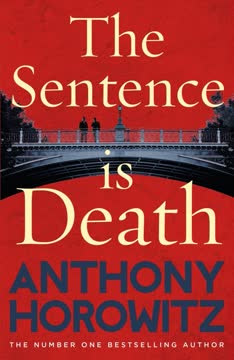
Plot Summary
Interrupted Filming, Unwelcome Visitor
Anthony Horowitz, the author and narrator, is on the set of Foyle's War when his day is upended by the abrupt arrival of Daniel Hawthorne, a former detective with a knack for solving the unsolvable. Hawthorne's intrusion is as unwelcome as it is urgent: a high-profile murder has occurred, and he wants Anthony to document the case. The victim, Richard Pryce, a celebrated divorce lawyer, has been found dead in his Hampstead home, bludgeoned with a rare bottle of wine. The police are stumped, and Hawthorne, with Anthony reluctantly in tow, is called in to consult. The stage is set for a partnership fraught with tension, secrets, and the promise of a story that will test both men's limits.
The Blunt Razor's Demise
Richard Pryce, known as "the Blunt Razor" for his sharp honesty, is found dead in his modern, meticulously designed home. The murder weapon—a 1982 Château Lafite Rothschild—seems an odd choice, especially since Pryce was a teetotaler. Even stranger, the killer has painted the number "182" in green on the wall. The police, led by the abrasive DI Cara Grunshaw, are at a loss. Hawthorne and Anthony begin their investigation, quickly learning that Pryce's professional life was filled with enemies, including the acclaimed writer Akira Anno, who recently threatened him in public. The case is complicated by the presence of expensive art, a distraught husband, and a house full of secrets.
Clues in Green Paint
The investigation at Pryce's home reveals a tangle of clues: the green-painted "182," the expensive but unopened wine, and a timeline that hinges on a phone call from Pryce's husband, Stephen Spencer. The couple's marriage, though outwardly stable, is shadowed by secrets. The neighbor, Mr. Fairchild, saw a mysterious visitor with a torch on the night of the murder, but can offer little else. The police focus on Akira Anno, whose public threat and missing alibi make her a prime suspect. Yet, Hawthorne is unconvinced by the obvious, sensing that the truth is buried beneath layers of misdirection and personal history.
Threats, Alibis, and Haikus
Akira Anno is brought in for questioning, her demeanor icy and combative. She admits to the restaurant altercation but insists her threat was a joke. Her alibi—time spent at a friend's cottage—quickly unravels under scrutiny. Meanwhile, Anthony discovers a book of haikus written by Akira, with number 182 ominously titled "The sentence is death." The investigation expands to include Akira's ex-husband, Adrian Lockwood, and Pryce's business partner, Oliver Masefield. Each has something to hide, and the web of relationships grows ever more tangled, with money, betrayal, and literary ambition at its core.
The Caving Tragedy
The case takes a dramatic turn when Hawthorne and Anthony travel to Yorkshire to investigate a caving accident from Pryce's past. Years earlier, Pryce, Gregory Taylor, and Charles Richardson were trapped underground; only Pryce and Taylor survived. The widow, Davina Richardson, and Taylor's wife, Susan, still bear the scars. Taylor, now gravely ill, recently visited Pryce in London, seeking help. Within a day of Pryce's murder, Taylor is killed in a train accident—possibly suicide, possibly murder. The caving tragedy, long buried, now casts a long shadow over the present, suggesting that old guilt and secrets may be at the heart of the case.
The Circle of Suspects
Back in London, the list of suspects grows. Stephen Spencer is caught in a lie about his whereabouts. Davina Richardson, the grieving widow, is revealed to be financially dependent on Pryce. Adrian Lockwood, the ex-husband, is hiding a fortune in wine and has a history of violence. Akira Anno's literary success is not what it seems, and her publisher, Dawn Adams, is drawn into the web. Each suspect has motive and opportunity, but none fit the crime perfectly. The investigation is further complicated by the appearance of a mysterious man in blue spectacles, seen lurking near Lockwood's office and possibly following Pryce.
Yorkshire Shadows and Secrets
The Yorkshire trip uncovers more than just the caving accident. Gregory Taylor's death is ruled an accident, but Hawthorne suspects otherwise. The local caving community is tight-lipped, but hints emerge that the official story of the accident may be a lie. The survivors, haunted by guilt, have spent years avoiding each other. The emotional toll on the families is evident, and the possibility that the past has come back to claim another victim becomes increasingly likely. The sense of unresolved trauma and buried truths pervades the investigation, deepening the mystery.
The Man in Blue Spectacles
The mysterious man in blue spectacles is finally identified as Lofty Pinkerman, a former police officer turned private investigator. Lofty was hired by Pryce to investigate Lockwood's hidden assets, specifically a secret wine collection worth millions. This discovery shifts suspicion back to Lockwood, whose financial deception could have provided a powerful motive for murder. Yet, Lofty's own actions—breaking into Lockwood's office and surveilling him—add another layer of intrigue. The investigation now pivots on the intersection of personal vendettas, financial fraud, and the lengths people will go to protect their secrets.
Hidden Fortunes, Hidden Motives
The financial investigation reveals that Lockwood's hidden wine fortune was the likely trigger for Pryce's ethical crisis. Pryce, known for his honesty, was preparing to expose Lockwood's deception, threatening to overturn the divorce settlement. Meanwhile, Anthony and Hawthorne discover that Akira Anno is secretly the author of a bestselling fantasy series under the pseudonym Mark Belladonna, with her publisher Dawn Adams as an accomplice. This revelation explains Akira's secret income and her desperation to keep it hidden. The case now encompasses not just murder, but the destructive power of secrets, ambition, and the masks people wear.
Literary Masks Unveiled
The confrontation with Akira and Dawn brings the literary deception into the open. Akira's dual identity as a literary novelist and a commercial fantasy author is a carefully guarded secret, one that Pryce may have uncovered. The number "182" on the wall, initially thought to reference Akira's haiku, is revealed to be a red herring. The investigation circles back to the personal relationships at the heart of the case: love, betrayal, and the need for absolution. As Hawthorne closes in on the truth, the emotional stakes for all involved become painfully clear.
The Child's Confession
The final breakthrough comes when Hawthorne realizes that the true killer is not one of the obvious suspects, but Colin Richardson, Davina's teenage son. Overhearing the truth about his father's death in the caving accident, and feeling betrayed by Pryce, who had become a surrogate father, Colin confronts Pryce in a fit of adolescent rage. The murder is impulsive, the cryptic "182" a childish message meaning "I hate you" in text-speak, inspired by Colin's love of Sherlock Holmes. Davina, desperate to protect her son, attempts to frame others and even confesses herself, but the truth cannot be hidden.
The Wrong Solution
In a dramatic twist, Anthony, convinced by the evidence, presents his solution to DI Grunshaw, leading to the arrest of Adrian Lockwood. Hawthorne, however, reveals that Anthony's theory is wrong—Lockwood is innocent, and the real killer remains at large. The public humiliation of the police and Anthony's own sense of failure underscore the dangers of jumping to conclusions and the complexity of human motives. The case is a sobering reminder that truth is often stranger, and sadder, than fiction.
The Real Sentence is Death
The true story emerges: Gregory Taylor's suicide, driven by guilt and illness, sets off a chain reaction that leads to Pryce's murder. Colin's act is both a cry of pain and a misguided attempt at justice. Davina's confession, meant to protect her son, is a final act of maternal love. The case ends not with triumph, but with a sense of loss and the recognition that some wounds never heal. Hawthorne and Anthony, partners in crime-solving, are left to reflect on the moral ambiguities of their work and the human cost of uncovering the truth.
Partners in Crime?
The aftermath of the case strains the relationship between Hawthorne and Anthony. Anthony, wounded both physically and emotionally, questions the wisdom of their partnership. Hawthorne, ever enigmatic, insists that their collaboration works because they complement each other—one does the legwork, the other tells the story. The case has left both men changed, their trust in each other shaken but not broken. The question of whether they will continue working together hangs in the air, unresolved.
The Shape of Truth
In the end, Anthony reflects on the nature of detective work and storytelling. The "shape" of the case, as Hawthorne describes it, is not a simple line but a complex web of motives, secrets, and unintended consequences. The lesson is clear: truth is rarely straightforward, and the pursuit of justice is fraught with uncertainty. The story closes with a sense of hard-won understanding, the recognition that every sentence—legal, literary, or otherwise—carries the weight of life and death.
Characters
Daniel Hawthorne
Hawthorne is a former police detective with a reputation for solving the most perplexing cases. He is secretive about his past, emotionally distant, and often abrasive, especially with those he perceives as obstacles. His relationship with Anthony is complex—he needs the author to document his cases but resents the intrusion into his private life. Hawthorne's methods are unconventional, relying on intuition, psychological insight, and a willingness to bend the rules. He is haunted by past mistakes, particularly the incident that ended his police career, and his interactions with others are colored by a deep sense of isolation and guardedness.
Anthony Horowitz
Anthony is both the author and a character in his own story, serving as Hawthorne's chronicler and, at times, his conscience. He is intelligent, observant, and self-deprecating, often struggling to keep up with Hawthorne's leaps of logic. Anthony's desire for control and narrative clarity clashes with the messiness of real-life crime. His psychological journey is one of humility, as he learns the limits of his own understanding and the dangers of assuming too much. His partnership with Hawthorne is both a source of frustration and growth, forcing him to confront uncomfortable truths about himself and others.
Richard Pryce
Pryce is a celebrated divorce lawyer known for his integrity and bluntness. His professional success has earned him many enemies, and his personal life is marked by complexity—a marriage to Stephen Spencer, a close friendship with Davina Richardson, and a past marred by tragedy. Pryce's need for absolution drives much of his behavior, particularly his support for Davina and her son. His murder is the catalyst for the story, and the investigation reveals the hidden costs of his honesty and the unresolved guilt he carries from the caving accident.
Davina Richardson
Davina is the widow of Charles Richardson, who died in the caving accident. She is financially and emotionally dependent on Pryce, who has become a surrogate father to her son, Colin. Davina is resourceful, resilient, and fiercely protective of her child. Her psychological journey is one of loss, anger, and ultimately, self-sacrifice, as she attempts to shield Colin from the consequences of his actions. Her relationship with Pryce is fraught with ambivalence—gratitude, resentment, and, finally, betrayal.
Colin Richardson
Colin is Davina's adolescent son, caught between childhood and adulthood. He idolizes Pryce, who has filled the void left by his father's death. The revelation of Pryce's role in the caving tragedy shatters Colin's world, leading to an impulsive act of violence. His actions are driven by a mix of rage, confusion, and a desperate need for justice. Colin's psychological state is fragile, and his crime is both a cry for help and a tragic misunderstanding of the adult world.
Akira Anno
Akira is a celebrated literary novelist and poet, known for her intellect and emotional reserve. Her public persona is at odds with her private life—she is secretly the author of a bestselling fantasy series under the pseudonym Mark Belladonna. Akira's relationships are marked by intensity and volatility, particularly with her ex-husband, Adrian Lockwood, and her publisher, Dawn Adams. Her psychological complexity is reflected in her writing, which serves as both a mask and a means of self-expression. Akira's need to protect her secret identity becomes a key motive in the case.
Adrian Lockwood
Lockwood is Akira's ex-husband, a property developer with a hidden fortune in wine and a history of failed marriages. He is outwardly affable but capable of ruthlessness when threatened. Lockwood's financial deception and willingness to manipulate those around him make him a prime suspect. His relationships—with Akira, Davina, and Pryce—are transactional, driven by self-interest and a desire for control. Lockwood's psychological profile is that of a man who believes he is above the rules, until reality catches up with him.
Stephen Spencer
Spencer is Pryce's husband, an art dealer whose grief is complicated by guilt and deception. He lies about his whereabouts on the night of the murder, hiding an affair with his assistant. Spencer's relationship with Pryce is marked by dependence and resentment, and his psychological state is one of denial and self-preservation. He is both a victim and a suspect, caught in the crossfire of other people's secrets.
DI Cara Grunshaw
Grunshaw is the lead police investigator, determined to solve the case and claim the credit. She is aggressive, foul-mouthed, and unafraid to bend the rules. Her relationship with Hawthorne is antagonistic, fueled by professional rivalry and mutual disdain. Grunshaw's psychological makeup is that of a survivor—she is tough, pragmatic, and willing to do whatever it takes to get results, even if it means cutting corners or bullying witnesses.
Lofty Pinkerman
Lofty is a former police officer turned private investigator, hired by Pryce to uncover Lockwood's hidden assets. He is bitter about his fall from grace and harbors resentment toward Hawthorne, whom he blames for his misfortune. Lofty's skills are invaluable to the investigation, but his methods are questionable. His psychological profile is that of a man trying to reclaim his dignity in a world that has moved on without him.
Plot Devices
Meta-Narrative and Author as Character
The novel's most distinctive device is its meta-narrative structure, with Anthony Horowitz both writing and starring in his own story. This self-referential approach allows for commentary on the nature of storytelling, the limitations of perspective, and the tension between fiction and reality. The author's presence as a character creates a sense of immediacy and intimacy, drawing readers into the investigative process while highlighting the fallibility of both detective and narrator.
Red Herrings and False Solutions
The plot is rich with red herrings—Akira's haiku, Lockwood's wine fortune, the caving accident, and the man in blue spectacles—all designed to mislead both the characters and the reader. The device of Anthony presenting a plausible but incorrect solution to the police, only to be corrected by Hawthorne, underscores the dangers of confirmation bias and the complexity of truth. This structure keeps the reader guessing and heightens the emotional impact of the final revelation.
Interwoven Timelines and Backstories
The narrative weaves together multiple timelines—the present-day murder investigation, the caving tragedy of years past, and the personal histories of the suspects. This layering of past and present creates a sense of depth and resonance, showing how old wounds and unresolved guilt can shape current events. The use of letters, confessions, and flashbacks provides insight into character motivations and the psychological underpinnings of the crime.
Symbolism and Literary Allusions
The novel is replete with symbols—the green paint, the number "182," the haiku, and references to Sherlock Holmes. These literary allusions serve both as clues and as commentary on the nature of interpretation and meaning. The use of text-speak ("182" as "I hate you") and the parallel to A Study in Scarlet reinforce the theme that stories, like crimes, are open to multiple readings and that the truth is often hidden in plain sight.
Psychological Realism and Moral Ambiguity
The plot is driven by the psychological complexity of its characters—their guilt, grief, ambition, and need for absolution. The moral ambiguity of the case is reflected in the actions of both the suspects and the investigators, who are forced to confront uncomfortable truths about themselves and the world. The resolution is not a triumph of justice, but a meditation on the cost of truth and the limits of forgiveness.
Analysis
Anthony Horowitz's The Sentence is Death is a masterful deconstruction of the classic detective novel, blending meta-fiction, psychological depth, and social commentary into a gripping narrative. By casting himself as both author and character, Horowitz invites readers to question the nature of storytelling and the reliability of perspective. The novel's central mystery is less about "whodunit" than about why people do what they do—the tangled web of guilt, grief, and the need for redemption that drives human behavior. The use of red herrings and false solutions underscores the dangers of certainty and the importance of humility in the face of complexity. The story's emotional core lies in its exploration of loss and the ways in which the past continues to shape the present. Ultimately, The Sentence is Death is a meditation on the cost of truth, the ambiguity of justice, and the power of narrative to both illuminate and obscure. The lesson is clear: every sentence—whether in law, literature, or life—carries consequences, and the search for meaning is as perilous as it is necessary.
Last updated:
Review Summary
The Sentence is Death follows private investigator Daniel Hawthorne and writer Anthony Horowitz investigating a celebrity divorce lawyer's murder. The victim was bludgeoned with an expensive wine bottle, and a mysterious three-digit number was painted near his body. Readers praise this second installment's Golden Age mystery style, with clever clues, red herrings, and multiple suspects. Horowitz writes himself as Hawthorne's bumbling Watson-like companion, providing humor through self-deprecation. Most reviewers enjoyed the intricate plotting and entertaining detective duo, though some found Horowitz's character slightly annoying and the female narrator's audiobook voice problematic.