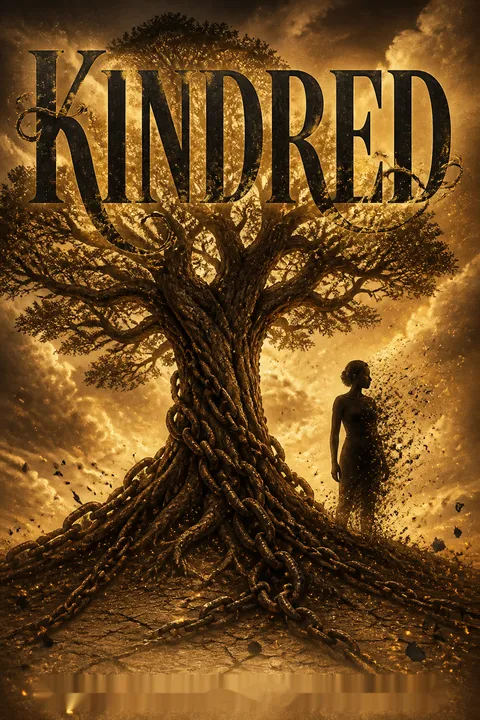


Plot Summary
Prologue
Dana Franklin wakes in a hospital with her left arm missing above the elbow. The police suspect her husband, Kevin, but she insists he did not cause the injury and persuades them to release him.
Kevin says he found her struggling to pull her arm from a hole in the living-room wall. Neither can explain how it happened. Dana remembers the violence that brought her home, and the past she has been unable to leave behind.
The opening gives the journey its bodily cost before explaining its cause. Dana's insistence that Kevin is innocent is both practical and intimate: after losing control of her own life in the past, she protects the one relationship that still connects her to the present. The police can imagine a familiar domestic crime, but not the historical violence that shaped her injury. Their mistaken suspicion exposes how experience can be true and still sound impossible to those who did not share it.
Birthday at the River
Dana Franklin, a twenty-six-year-old Black writer, has just moved into a new home with Kevin, the white writer she married after they met in a temporary warehouse job. On her birthday, dizziness sweeps her away from unpacking and deposits her beside a Maryland river in an unfamiliar time. A red-haired child is drowning, so Dana swims out and revives him.
His mother attacks her in panic; then his father arrives with a rifle. Before Dana can explain, the scene vanishes and she is back in her living room, soaked with river water and mud. Kevin saw her disappear and return within seconds. The rescue has left Dana alive, but it has also shown her that the ordinary safety of home may no longer hold.
The first journey begins with an act of care, not curiosity. Dana does not choose to enter history; a child in immediate danger overrides her need to understand what is happening. The contrast between the seconds Kevin measures and the ordeal Dana experiences establishes a split in time that will govern every later choice. Her competence saves Rufus, but it cannot protect her from the rifle or the social order surrounding him. The story makes her moral reflex the doorway into danger, a strength that repeatedly becomes an obligation.
The Fire and the Bible
That evening, Dana is pulled into a burning bedroom and stops a red-haired boy from setting the house ablaze. He is Rufus, several years older than the child she rescued, and he remembers seeing her during his near-drowning. His father is Tom Weylin, and the year is 1815. Dana recognizes the name from her family's Bible: Rufus and Alice Greenwood will become the parents of Hagar, an ancestor in Dana's own line.
Rufus directs Dana toward Alice's mother for shelter. On the way, she witnesses slave patrolmen whip Alice's father and assault her mother. A patrolman later mistakes Dana for a runaway and attacks her. She knocks him unconscious with a branch, then returns home when fear and injury overwhelm her.
The family Bible turns an abstract past into a direct dependency: Rufus must survive for Dana's family to exist. That knowledge does not make him lovable or trustworthy, but it narrows her freedom to act. At the same time, Dana learns that genealogy cannot soften the system that made her ancestors vulnerable. The patrol's violence gives her historical knowledge a physical measure that books and films never supplied. Her return depends on danger rather than mastery, foreshadowing the harsh bargain at the heart of her journeys.
A Husband in 1819
When Rufus breaks his leg in 1819, Dana is transported again, and Kevin arrives with her because he is holding her. They claim he owns her, a lie that helps them move through a society where their marriage would be illegal. Kevin tutors Rufus, while Dana works in the Weylin household and grows closer to the enslaved workers.
She secretly teaches Nigel to read, then begins helping Carrie too. Tom Weylin catches Dana with a stolen primer and whips her brutally. The pain sends her back to California, but Kevin is left behind. At home, Dana learns that only minutes have passed for him, while she has endured weeks in the past. Her husband is now stranded in a century that can punish him for helping others.
The couple's protective performance as master and slave is not emotionally neutral. Repeating it risks letting the imposed roles shape their sense of what is normal, even while they know the marriage beneath them is real. Dana's lessons for Nigel and Carrie make literacy both a practical tool and an act of defiance, but Tom's punishment shows the cost of distributing knowledge under slavery. The unequal passage of time then turns Kevin's solidarity into a new danger: Dana can return to safety, but she cannot choose when or whether he follows.
Rufus Grown Dangerous
After eight days in California, Dana is pulled back to Maryland and finds Rufus grown, battered, and fighting Alice's husband, Isaac. Rufus has tried to force himself on Alice; Isaac has beaten him and is ready to finish the fight. Dana persuades Isaac to leave rather than risk his life, then stays with Rufus until he can travel.
At the plantation, Rufus explains that Kevin left for the North years earlier and gives Dana the letters he kept. He also reveals that Alice and Isaac escaped. Dana's need for Kevin now depends on Rufus, the same man whose entitlement helped drive Alice away. He is no longer simply a reckless child she can rescue; his choices endanger the people around him.
Dana's return reverses the rescue pattern: Rufus is now an adult whose violence has consequences for another couple, and she must decide whether saving him also enables him. She intervenes because she needs his knowledge and because his death could disrupt her own family line, motives that do not fit neatly into selflessness. The letters offer hope of finding Kevin, but they also make Rufus a gatekeeper. His authority grows alongside Dana's dependence, establishing an intimate power imbalance that neither ancestry nor affection can dissolve.
Alice Bought Back
Isaac and Alice are captured. Isaac is mutilated and sold toward Mississippi, while Rufus spends his remaining money to buy Alice from jail. She arrives nearly dead after a beating and dog attacks. Dana cleans and bandages her wounds, and Alice gradually recovers, first losing and then regaining her memory. She remembers that Rufus was responsible for her enslavement and hates him for taking Isaac from her.
Rufus wants Alice and threatens to have her whipped if she refuses him. Dana cannot prevent the abuse, but she persuades Alice to go to Rufus rather than face another beating. Alice's survival becomes bound to a compromise Dana despises, while her care for her ancestor makes her both witness and unwilling participant.
Dana's care for Alice cannot undo the coercion that made care necessary. When she persuades Alice to comply, she is choosing a smaller immediate harm under a threat she did not create, yet the choice damages trust between the women. The scene rejects easy moral distance: Dana is not free to act as an outside observer, and Alice can recognize the limits of Dana's help. Rufus's affection does not cancel ownership; it makes domination more personal and therefore harder to name without also confronting the bonds that keep Dana near him.
The Letters Never Sent
Rufus promises to send Dana's letters to Kevin, but Alice discovers them hidden and gives them back to Dana. Knowing Rufus has kept her from her husband, Dana escapes at night. Tom and Rufus find her before dawn; Rufus captures her, and Tom whips her in the barn. Kevin reaches the plantation after five years in Maryland, carrying a message from Tom that he is coming for Dana.
The couple try to leave, but Rufus blocks the road with a rifle and insists Dana stay. When she risks her life rather than return to the house, the danger triggers another passage home. Kevin falls onto her as she disappears, so this time he returns with her. His years away have scarred him, and neither can simply resume the life they left.
The letters make betrayal tangible: Rufus does not merely oppose Dana's freedom but quietly controls the information that might restore it. Her escape is an assertion of agency, and its failure demonstrates how little agency a person without legal protection can exercise alone. Kevin's return offers relief, but his five years in the past prevent a simple reunion. The final escape requires a mortal threat, not a plan, and Kevin's accidental grip binds their outcomes together. Love is their anchor, but it cannot make either of them whole on command.
Home Is Only Brief
Kevin has to relearn the modern world after five years in Maryland, while Dana keeps her bag packed in case Rufus calls again. Fifteen days after their return, on July 4, 1976, she is pulled into a storm. She finds Rufus lying face down in a flooded ditch and drags him clear before he drowns.
At the Weylin house, Tom is old and frail, and Rufus is seriously ill. Dana's sudden return confirms that her brief calendar absences can conceal years in Maryland. Kevin remains in California, trying to adjust to the world he left behind. Dana goes back to a plantation that feels increasingly familiar, though its laws and dangers have not changed.
The brief home interval offers recovery without closure. Kevin's difficulty with cars, technology, and ordinary routines shows that return is not the opposite of exile; it is another adjustment to a world that has moved on without him. Dana's packed bag marks how thoroughly the past has entered her present habits. Her rescue of Rufus again begins through reflex, but now she knows the adult consequences of keeping him alive. Familiarity with the plantation is therefore not comfort. It is evidence of adaptation to a place that remains dangerous.
The Heir and the Fever
Dana recognizes Rufus's illness as likely dengue and uses aspirin, fluids, and mosquito netting to nurse him through days of fever and pain. Tom Weylin then collapses with chest pain. Dana attempts resuscitation, but he is already dead. Rufus blames her despite knowing she tried, and sends her to work in the fields. An overseer beats and drives her until she collapses.
Rufus eventually brings her back, then asks her to care for his mother, Margaret, who has returned from Baltimore sick and dependent on laudanum. Dana accepts the household work, but Rufus's grief and authority have begun to fuse. His gratitude cannot stop him from using the same coercive system that his father used.
Dana's medical knowledge is useful but limited, a sharp contrast with the confidence of a society whose doctors often worsen illness. Saving Rufus does not earn her security, and failing to revive Tom becomes an excuse for punishment. Rufus inherits not only the plantation but its habits of control, even when his emotional need for Dana is genuine. The field assignment exposes how quickly a protected household role can vanish. Care, here, is never simply kindness; the person who gives it may also be forced to endure the power that demands it.
Rufus Learns the Ledger
As Rufus takes over the plantation's debts and decisions, Dana sees enslaved people sold, including Tess and other workers. She helps Rufus write business letters, but also teaches Joe, Alice's son, and other children to read.
Alice is pregnant again and considers escape with her children; Rufus offers promises but will not put their freedom on paper. When Sam asks Dana to teach his younger siblings, Rufus sells him soon afterward. Dana protests, and Rufus strikes her.
With her trust broken and no safe escape route, she cuts her wrists to force a return to California. She has watched Rufus become more capable of managing the plantation, but that competence brings no moral conversion. His affection coexists with ownership and the power to separate families.
Rufus's development is not a straight descent from kindness to cruelty; he can protect individual people while preserving the institution that makes their lives his to manage. Dana's lessons create small openings for the children, but Sam's sale shows how fragile those openings are when the master controls both movement and punishment. Her work on Rufus's letters places her inside the machinery she resists. Cutting her wrists is not a victory but a desperate use of the only exit she can trigger, revealing how little control the journeys have given her.
Hagar's Birth, Alice's Loss
After eight months away in California, Dana returns to find that Alice has given birth to Hagar, the child who completes Dana's family line. Alice wants to escape with her children, but Rufus refuses to provide written freedom papers. When she tries to leave, he sends Joe and Hagar to Baltimore, using their absence to frighten her into staying.
Alice becomes ill and hangs herself. Dana finds her in the barn and cuts her down. Rufus denies responsibility, insisting that Alice left him, but admits he took the children away to punish her. Dana makes him secure freedom certificates for Joe and Hagar. The family link is now established, but its survival has required the loss of Alice and the lasting damage of Rufus's choices.
Hagar's birth resolves Dana's genealogical fear, yet it does not release her from the violence that made that lineage possible. The moment she has sought as proof of her own survival arrives beside Alice's despair, refusing any clean sense of triumph. Rufus treats the children as instruments in a struggle to keep Alice, repeating the logic of ownership inside his private grief. Dana's demand for legal papers turns mourning into a limited act of repair. It cannot restore Alice, but it gives her children a future their father had withheld.
The Hand That Stayed
After Alice's funeral, Rufus returns Joe and Hagar from Baltimore and has freedom certificates prepared for them. He asks Dana to stay, but she refuses. Later, he corners her in the attic and clings to her, treating her presence as something he can claim. Dana reaches for the knife she has carried for protection and stabs him when he will not let her go.
As Rufus dies, his hand remains locked around her arm. The old force pulls Dana back to California, but her left arm is caught inside the living-room wall and is torn away above the elbow. Rufus's death ends the summons, while Dana survives with a wound that makes the past impossible to dismiss as a story she merely witnessed.
Dana's final act is neither a tidy triumph nor a punishment imposed by fate. She kills Rufus only when the relationship has narrowed to a choice between bodily autonomy and continued captivity. The hand that once depended on her for rescue becomes the physical point of entrapment at the boundary between eras. Her lost arm records the cost of returning, while the freedom papers for Joe and Hagar show that one concrete consequence of her struggle survives her departure. The ending preserves moral complexity without asking her to forgive what she has endured.
Epilogue
When Dana's arm has healed enough, she and Kevin return to Maryland to look for evidence of the Weylins. The plantation house is gone, replaced by a cornfield. Newspaper notices report that Rufus died in a house fire and that his enslaved workers were sold from his estate.
Nigel, Carrie, and their children are absent from the sale list, as are Joe and Hagar; Sarah and many others are listed. Dana and Kevin cannot learn where the missing people went or whether the children stayed together. The records confirm that the family existed, but leave its fate unfinished.
The visit to Maryland replaces the fantasy of complete recovery with an archival limit. Dana can verify that Rufus and the plantation were real, but documents reduce enslaved people to names, ages, and marketable skills, then fall silent where their lives matter most. The absence of Joe, Hagar, Nigel, and Carrie offers hope without proof. Dana's lost arm and the empty field become different kinds of evidence: one carried in her body, the other imposed by a landscape that has erased the house. Understanding history does not mean recovering every answer; it means confronting what the record cannot return.
Analysis
Kindred makes history intimate by turning ancestry into a relationship Dana must repeatedly enter, not simply a past she can study. The mechanism of time travel remains unexplained because the novel's central question is not how Dana crosses centuries, but what knowledge of the past demands from her. Each journey forces her to act within a system that reduces people to property, even as she tries to preserve private loyalties and moral judgment.
Dana's choices resist easy heroic framing. She saves Rufus because she cares for him, because she needs him alive to secure her family's existence, and because a child in danger is difficult for her to abandon. Those motives overlap without becoming identical. Her acts of care can protect someone who later harms others; her compromises can lessen immediate violence while also making her feel complicit. The book insists that constrained choices remain choices, but refuses to pretend they are freely made.
Rufus embodies the instability of affection under unequal power. He needs Dana's loyalty and sometimes treats her with tenderness, yet he inherits a world that allows him to command, sell, and punish Black people. His emotional dependence does not make that authority benign. Dana's marriage to Kevin offers a contrasting bond, though even Kevin's prolonged exile shows that sympathy cannot shield him from history's effects. Both relationships complicate the boundary between intimacy and power.
The novel also challenges the confidence that education alone prepares a person for injustice. Dana knows dates, names, and historical patterns, but knowledge cannot prevent a whipping or guarantee escape. Her modern objects help at the margins; embodied experience supplies the truth her reading lacked. The lost arm and the incomplete records in Maryland leave no comforting closure. They make the past present as injury, kinship, and unanswered obligation, while asking what it means to call a place home after its history has entered the body.
Review Summary
Kindred is widely praised as a powerful and emotionally devastating novel that explores slavery through time travel. Readers appreciate Butler's unflinching portrayal of the brutality and complexity of the antebellum South, as well as her nuanced character development. Many consider it a must-read, highlighting its relevance to contemporary discussions on race and power dynamics. The book's blend of historical fiction and science fiction elements is seen as innovative and engaging. Some readers note the difficulty of the subject matter but emphasize its importance in understanding American history.
People Also Read








Characters
Dana Franklin
Time-torn family historianDana is a Black writer whose ordinary life with her husband, Kevin, is repeatedly interrupted by involuntary journeys to nineteenth-century Maryland. She is observant, practical, and quick to act when someone is in danger, but her compassion often draws her into risks she cannot control. Her historical reading helps her recognize names and institutions, yet it cannot prepare her for the physical realities of enslavement. Dana's central tension is between the moral independence she brings from her own era and the compromises necessary to survive in a society that denies her rights. She is neither a detached observer nor a simple rescuer; she is implicated by ancestry, care, fear, and the need to return home.
Kevin Franklin
Exiled writer and anchorKevin is Dana's white husband, a novelist who shares her working-class beginnings and her determination to write. He offers emotional steadiness and takes Dana's experiences seriously even when he cannot explain them. In Maryland, his race gives him freedoms Dana does not have, but it does not make him immune to the era's violence or its power to reshape a person. Kevin's willingness to help enslaved people places him at odds with the plantation order, while his prolonged separation from Dana tests their intimacy in ways neither can control. He is Dana's connection to home, though his own return requires adjustment rather than a simple restoration of their former life.
Rufus Weylin
An heir learning masteryRufus is the red-haired son of Tom and Margaret Weylin, a vulnerable child whose repeated emergencies draw Dana into his life. He is curious, impulsive, and capable of affection, but he grows up in a household where white authority is treated as natural and Black people are treated as property. Dana's influence gives him access to books and a relationship beyond the plantation's usual hierarchy, yet neither affection nor education automatically dislodges the values surrounding him. Rufus wants loyalty and closeness, but often confuses them with obedience. His mixture of dependency and power makes him a difficult figure for Dana: someone she cares about, relies on, and cannot safely trust without reservation.
Alice Greenwood
Free-born woman under siegeAlice is a Black woman born free and raised by a mother who understands the dangers surrounding them. As a child she is Rufus's companion; as an adult she has her own ambitions, loves, and judgments. Her relationship with Dana carries the unusual weight of ancestry, but Alice does not exist merely to complete Dana's family history. She is proud, perceptive, and unwilling to mistake a white man's affection for protection. Injury and loss intensify her anger, which she sometimes directs at Dana because Dana is close enough to hear it. Their connection is built through practical care as well as conflict, and Alice's resistance reflects a clear understanding of what freedom means to her.
Tom Weylin
Plantation's iron stewardTom is Rufus's father and the owner of the Weylin plantation. He is practical, suspicious of education among enslaved people, and willing to use violence when he believes discipline or property is at stake. His treatment of Rufus combines neglect with harsh punishment, while his decisions control the lives of the plantation's workers. Tom is not depicted as an exceptional monster; his ordinary acceptance of the laws and customs around him makes his power especially dangerous.
Margaret Weylin
Restless mistress of houseMargaret is Rufus's mother, a nervous and demanding woman who depends on the labor of enslaved house workers while insisting on her status as a lady. She is intensely attached to Rufus and can turn her anxiety into sharpness toward people around him. Her beauty and social position do not give her real authority over the plantation, and her dependence on others often emerges as supervision, complaint, or control.
Sarah
Kitchen's guarded matriarchSarah is the Weylin cook and the mother of several children, most of whom were sold away. She runs the kitchen with skill and makes hard calculations about safety, work, and survival. Her accommodation to the plantation can look like acceptance from the outside, but her anger and grief remain close beneath it. Dana gradually learns to see the history behind Sarah's caution rather than judging her by the choices slavery has forced on her.
Nigel
Clever laborer's sonNigel grows up as Rufus's companion and becomes a skilled, observant man who understands both the dangers of defiance and the value of preparation. Dana teaches him to read, giving him a tool the plantation authorities fear. He is close to his father, Luke, and later builds a life with Carrie. His humor and practical intelligence coexist with a clear awareness that the future of his family remains controlled by others.
Carrie
Silent, observant housemaidCarrie is Sarah's daughter and a house worker who cannot speak. She communicates through gestures she has developed herself, and Dana comes to understand that her silence does not indicate a lack of intelligence. Carrie notices tensions others overlook and offers help through steady action. Her marriage to Nigel and their family are important sources of connection within the plantation community.
Isaac Jackson
Husband resisting ownershipIsaac is Alice's husband, a Black man who resists the assumption that a white man can claim his wife without consequence. His love for Alice sharpens his willingness to risk himself, while his status as an enslaved man leaves him exposed to retaliation. He is strong and determined, but his courage cannot protect him from the laws and violence arrayed against him.
Joe
Curious young readerJoe is Alice's son, a bright child who approaches reading as a challenge to solve. Dana encourages his education, and Rufus gradually takes an interest in his questions. Joe's curiosity contrasts with the narrow expectations imposed on enslaved children, while his family ties place him within the tangled relationships at the center of the novel.
Hagar
Child at a family thresholdHagar is Alice's daughter, a child whose place in Dana's family history gives her birth unusual importance. Her name carries biblical associations chosen by Alice, who imagines a life beyond bondage for her children. Hagar is too young to understand the forces shaping her world, but her existence binds present and past in a way Dana can recognize.
Luke
Practical plantation driverLuke is Nigel's father and the plantation's driver, a position that gives him limited authority over other enslaved workers. He offers Dana blunt guidance about surviving white power without surrendering every private choice. His confidence and skill make him useful to the Weylins, but his position remains precarious because the authority he exercises is borrowed, not his own.
Sam James
A brother seeking literacySam is a field hand who approaches Dana to ask for reading lessons for his younger siblings. His request reflects a family's desire to give its children an advantage despite the danger attached to education. He is direct and hopeful, trusting that a small act of learning might matter.
Tess
Worker caught in a saleTess is a young enslaved woman whom Dana helps with difficult laundry work. Her vulnerability to the Weylins' and overseers' control makes her a quiet measure of how little protection household status can offer. She forms part of the community Dana tries to support through practical help.
Liza
Fearful household seamstressLiza is a sewing woman in the Weylin household who fears the consequences of Dana's escape plans. Her choices arise from self-preservation in a place where information can become dangerous. Other enslaved women respond to her actions, showing that the plantation's pressures shape relationships within the community as well as between enslaved people and owners.
Jake Edwards
Cruel plantation overseerJake Edwards is an overseer who uses threats and violence to assert authority over field workers. His presence makes clear that the plantation's power is enforced not only by the owner but by men hired to carry out the daily discipline. He is especially quick to target people whose status seems uncertain.
Plot Devices
The danger summons
A life pulled across timeDana is transported without warning when Rufus's life is in danger, and she returns to California when she believes her own life is threatened. The mechanism is never explained or placed under her control. This pattern makes rescue a repeated obligation while keeping escape uncertain: Dana cannot decide when to arrive, how long she will stay, or whether another person can return with her. Rufus's emergencies become the hinge connecting the two eras.
The family Bible
Genealogy becomes necessityDana recognizes names in her family's Bible and connects Rufus and Alice to the ancestry that leads to her. The discovery changes her understanding of the journeys: Rufus is not merely a boy in danger but a necessary link in her own existence. This does not explain the time travel, yet it gives Dana a reason to remain involved even when Rufus becomes harmful. The Bible makes family history a living pressure rather than a list of distant names.
Literacy and papers
Knowledge tests the lawReading gives Dana a way to teach enslaved children and gives those children a possible means of navigating a world that denies them freedom. Written passes and certificates also show how paper can define a person's status, whether the document is permission to travel or proof of freedom. The plantation's authorities fear literacy because it might help enslaved people act beyond their control. Dana's teaching therefore produces both hope and immediate danger.
Modern medicine and tools
Small advantages, limited protectionDana carries aspirin, soap, a knife, writing materials, and eventually maps and other supplies into the past. These objects help her treat illness, defend herself, communicate, or plan a route, but none can cancel the power imbalance surrounding her. Her knowledge of infection and disease sometimes improves care, while her limited expertise leaves serious risks. The objects offer practical leverage without turning Dana into someone able to command the historical world.
The returning body
History leaves a physical markDana's returns are shaped by bodily danger, pain, and disorientation, so time travel is experienced less as adventure than as an involuntary survival response. Her injuries carry across the boundary between eras and make the past impossible to reduce to an idea. The final physical consequence gives this device its fullest force: returning does not mean being restored unchanged. The body records what the calendar and the written record cannot fully contain.
FAQ
Synopsis & Basic Details
What is Kindred about?
- A Modern Woman's Harrowing Journey: Kindred follows Dana, a young Black woman from 1976 Los Angeles, who is inexplicably pulled back in time to a pre-Civil War Maryland plantation. Each involuntary trip is triggered by a life-threatening situation involving Rufus Weylin, a white boy who grows into her distant ancestor and a complex, often cruel, slaveholder.
- Survival and Ancestral Ties: Dana must navigate the brutal realities of slavery, posing as a free Black woman or a slave, to ensure Rufus's survival long enough for him to father Hagar, her direct ancestor. Her own life, and that of her white husband Kevin, become entangled in the violent and morally compromising world of the antebellum South.
- Confronting History's Legacy: The novel is a visceral exploration of slavery's psychological and physical toll, forcing Dana to confront her heritage and the compromises her ancestors made to survive. It examines themes of power, identity, and the enduring impact of historical trauma on the present.
Why should I read Kindred?
- Visceral Historical Immersion: Kindred offers an unflinching, first-person experience of American slavery, making history feel immediate and deeply personal. It transcends typical historical fiction by placing a modern consciousness directly into the past, forcing readers to confront the brutal realities often sanitized or romanticized.
- Complex Moral Dilemmas: The narrative constantly challenges readers with difficult ethical questions, particularly through Dana's forced compromises to ensure her own existence and the survival of her ancestors. It explores the nuances of survival, complicity, and resistance in an oppressive system, prompting deep reflection on human nature and societal structures.
- Unique Blend of Genres: Octavia E. Butler masterfully combines elements of science fiction (time travel) with the neo-slave narrative, creating a genre-bending work that is both intellectually stimulating and emotionally gripping. The inexplicable nature of Dana's travel underscores the irrationality and horror of slavery itself, making it a powerful and unforgettable read.
What is the background of Kindred?
- Author's Personal & Historical Motivations: Octavia E. Butler was inspired to write Kindred after hearing a young Black man dismiss the struggles of past generations, claiming he would have resisted slavery. This sparked her desire to show the visceral reality and psychological complexities of survival under such a brutal system, drawing on her own family's history and her mother's experiences with racial prejudice.
- Rigorous Historical Research: Butler meticulously researched 19th-century Maryland, including slave narratives, historical documents, and maps, to create an authentic and detailed setting. This dedication to historical accuracy grounds the fantastical element of time travel, making the brutal realities of the Weylin plantation feel terrifyingly real.
- Subversion of Time Travel Tropes: Unlike traditional science fiction where time travel is often explained by technology, Kindred's mechanism remains a "grim fantasy," as Butler called it. This deliberate lack of scientific explanation emphasizes that the true horror lies not in the how, but in the what: the enduring legacy of slavery and its profound impact on identity and survival.
What are the most memorable quotes in Kindred?
- "I lost an arm on my last trip home. My left arm.": This opening line immediately establishes the novel's brutal realism and foreshadows the profound, irreversible cost of Dana's journeys. It encapsulates the physical and psychological scars left by her experiences in the past, signaling that she cannot return "whole" from the trauma of slavery.
- "Repressive societies always seemed to understand the danger of 'wrong' ideas.": Dana's reflection after burning her history book highlights the pervasive censorship and intellectual suppression inherent in slave societies. This quote underscores the power of knowledge and the constant threat it posed to the established order, connecting historical oppression to broader themes of authoritarian control.
- "A slave was a slave. Anything could be done to her. And Rufus was Rufus—erratic, alternately generous and vicious. I could accept him as my ancestor, my younger brother, my friend, but not as my master, and not as my lover.": This internal monologue reveals Dana's ultimate refusal to fully submit to Rufus's control, even in the face of his complex, manipulative affection. It defines the boundaries of her endurance and her unwavering assertion of self-ownership, even as she acknowledges the brutal realities of her situation.
What writing style, narrative choices, and literary techniques does Octavia E. Butler use?
- First-Person, Immersive Narrative: Butler employs a first-person perspective through Dana, drawing readers directly into her subjective experience of fear, pain, and moral compromise. This narrative choice fosters deep empathy and makes the historical realities intensely personal, blurring the line between reader and protagonist.
- Sparse, Direct Prose: Butler's writing is characterized by its directness and lack of embellishment, particularly in describing violence and suffering. This unadorned style enhances the brutal realism of the antebellum South, preventing romanticization and forcing readers to confront the raw, visceral nature of slavery.
- Symbolic Chapter Titles: The chapter titles ("The River," "The Fire," "The Fall," "The Fight," "The Storm," "The Rope") are elemental and archetypal, hinting at the escalating dangers and thematic significance of each journey without revealing plot specifics. This technique elevates individual events to universal struggles, reinforcing the novel's exploration of enduring human conflicts.
Hidden Details & Subtle Connections
What are some minor details that add significant meaning?
- Kevin's Premature Gray Hair: Kevin's entirely gray hair at 34, noted by Dana early on, subtly foreshadows the accelerated aging and profound stress he will experience during his five years stranded in the past. It hints at the psychological toll of the antebellum South on white individuals, even those not directly enslaved, and the way time distorts and ages them.
- Dana's "Slave Market" Job: Dana's casual labor agency in 1976, which she ironically calls a "slave market," is a subtle callback to the economic exploitation and dehumanization inherent in both historical slavery and modern precarious labor. This detail highlights the enduring echoes of oppressive systems in contemporary society, suggesting that certain forms of "freedom" still come with significant costs and power imbalances.
- Rufus's "Ugly Name": Dana's initial thought that "Rufus" is an "ugly name to inflict on a reasonably nice-looking little kid" subtly foreshadows the moral ugliness and cruelty that will define his adult character. This early judgment, seemingly superficial, hints at the inherent corruption of his environment and the tragic trajectory of his development.
What are some subtle foreshadowing and callbacks?
- Rufus's Early Cruelty: Rufus's casual admission of burning down a stable for revenge and his father's use of a whip on "niggers and horses" subtly foreshadows his later capacity for violence and his ingrained acceptance of slavery's brutality. This early insight into his character prepares the reader for his eventual descent into full-fledged slaveholder cruelty, despite Dana's influence.
- Kevin's "Zombie" Appearance: Kevin's initial observation that Dana looks like a "zombie" due to her exhaustion from writing callbacks to the dehumanizing effects of her future experiences in the past. It subtly hints at the profound psychological and physical toll that her time travels will take, making her literally feel like a "non-person" in the slave system.
- The "Kindred Spirit" Connection: Kevin describes Dana as a "kindred spirit" due to their shared passion for writing and their unconventional lives. This phrase subtly foreshadows the deeper, more complex "kindred" connection Dana will discover with Rufus, rooted in bloodline and a shared, albeit traumatic, destiny. It highlights the ironic and often painful nature of their bond.
What are some unexpected character connections?
- Sarah's Shared Grief with Dana: Sarah, the cook, initially appears as a pragmatic, almost stereotypical "mammy" figure. However, her quiet rage over her children being sold for Margaret's luxuries creates an unexpected emotional connection with Dana, who also experiences profound loss and powerlessness. This bond transcends racial and temporal divides, revealing a shared humanity in suffering.
- Nigel's Intellectual Kinship with Dana: Nigel, a young slave, develops an unexpected intellectual bond with Dana as she secretly teaches him to read and write. This connection highlights the thirst for knowledge and self-improvement among the enslaved, and Nigel's eventual role in covering Rufus's death and ensuring Dana's family line's survival underscores his deep loyalty and intelligence, defying the era's dehumanizing expectations.
- Margaret Weylin's Unacknowledged Empathy: Margaret Weylin, Rufus's mother, is portrayed as a neurotic, often cruel woman. However, her later mellowing due to laudanum and her unexpected kindness towards Nigel's children, coupled with her ability to "forget" Dana is Black when talking, reveals a hidden, albeit drug-induced, capacity for empathy and a complex internal struggle with the norms of her society.
Who are the most significant supporting characters?
- Nigel: The Embodiment of Hope and Resilience: Nigel, initially a young slave boy, grows into a resourceful and loyal man. His secret education by Dana, his marriage to Carrie, and his eventual role in covering Rufus's death and ensuring the survival of Joe and Hagar make him a pivotal figure. He represents the potential for agency and resistance within slavery, and his actions directly impact Dana's ability to return home and her family's future.
- Sarah: The Steadfast Matriarch and Moral Compass: Sarah, the cook, is a powerful figure of quiet strength and pragmatic survival. Her deep-seated grief over her sold children and her subtle acts of defiance (like feeding Dana better food) reveal the profound emotional cost of slavery. She serves as a mentor and protector for Dana, offering crucial advice and a grounding presence amidst the chaos, embodying the resilience of enslaved women.
- Alice Greenwood: The Tragic Mirror of Dana's Fate: Alice, Dana's direct ancestor, is a complex character whose life mirrors many of Dana's struggles with Rufus, but without the escape route of time travel. Her journey from a free-born woman to an enslaved mother, her resistance, and her ultimate tragic suicide underscore the brutal realities and psychological toll of slavery. Her story is a constant, painful reminder to Dana of what her own life could become.
Psychological, Emotional, & Relational Analysis
What are some unspoken motivations of the characters?
- Rufus's Deep-Seated Fear of Abandonment: Beyond his desire for control and his twisted love for Alice and Dana, Rufus is driven by a profound, almost primal fear of abandonment. His nightmares about Dana leaving him, his manipulation to keep her, and his desperate plea "You're not leaving me!" before his death, reveal a core insecurity stemming from his unstable childhood and his mother's emotional fragility. This fear fuels much of his destructive behavior.
- Kevin's Need for Validation and Purpose: While seemingly supportive, Kevin's eagerness to join Dana in the past and his later struggles to readjust to 1976 hint at an unspoken motivation for purpose and relevance. His five years in the past, where he actively helped slaves escape, gave him a clear, heroic role that was perhaps missing from his life as a struggling writer in the present. His difficulty returning to "normal" life suggests a deeper psychological need fulfilled by the extreme circumstances of the past.
- Margaret Weylin's Quest for Status and Control: Margaret's constant complaints, her jealousy of Dana, and her desire for "fancy things" stem from an unspoken insecurity about her social standing. As a "poor, uneducated, nervous, startlingly pretty young woman" married into wealth, she desperately seeks to assert her authority and prove her worth, often by demeaning others and demanding subservience, particularly from those she perceives as threats to her fragile position.
What psychological complexities do the characters exhibit?
- Dana's Internalized Trauma and Moral Compromise: Dana exhibits profound psychological complexity as she grapples with the trauma of slavery. She develops a "slave mentality" for survival, suppressing her modern identity and enduring abuse, which leads to self-loathing and a questioning of her own strength. Her struggle to reconcile her modern ethics with the pragmatic choices necessary for survival in the past creates deep internal conflict, leaving her with lasting psychological scars.
- Rufus's Entitlement and Destructive Affection: Rufus is a psychologically complex character, a product of his environment who simultaneously craves love and exerts brutal control. His "destructive single-minded love" for Alice and his possessiveness of Dana are intertwined with his ingrained sense of white male entitlement. He genuinely believes he is caring for them, even as he inflicts immense suffering, demonstrating the profound psychological distortion fostered by the institution of slavery.
- Kevin's Shifting Identity and Moral Erosion: Kevin's psychological journey is marked by a gradual erosion of his modern sensibilities. Initially a staunch abolitionist, his five years in the past force him to make compromises, including posing as a slave owner and participating in the system to survive. His later difficulty readjusting to 1976, his accent, and his violent outburst reveal the deep psychological impact of living in a morally compromised world, blurring his identity and challenging his core values.
What are the major emotional turning points?
- Dana's First Whipping: The brutal whipping Dana receives from Tom Weylin after attempting to escape is a major emotional turning point. It shatters her intellectual understanding of slavery and replaces it with visceral, personal trauma. This experience forces her to confront her own vulnerability and the inadequacy of her modern knowledge, leading to a profound shift in her survival strategy and a deeper, more desperate fear.
- Alice's Suicide and Rufus's Betrayal: Alice's suicide, triggered by Rufus selling her children, is a devastating emotional turning point. It exposes the ultimate cruelty of Rufus's "love" and the unbearable psychological toll of slavery. For Dana, it represents the failure of her efforts to influence Rufus and protect Alice, deepening her despair and solidifying her resolve that Rufus must die for her to truly escape.
- Kevin's Return and Subsequent Alienation: Kevin's return after five years is initially a moment of immense relief and joy for Dana. However, his subsequent struggle to readjust to 1976, his emotional distance, and his violent outbursts become a new source of emotional pain and uncertainty for Dana. This turning point reveals that even escaping the past doesn't guarantee a return to normalcy, and that the trauma has irrevocably altered their relationship.
How do relationship dynamics evolve?
- Dana and Rufus: From Savior to Captor/Captive: Their relationship begins with Dana saving Rufus as a child, establishing a paradoxical bond of dependence. Over time, as Rufus grows into a slaveholder, the dynamic shifts to one of captor and captive, marked by manipulation, resentment, and a twisted form of affection. Dana's role evolves from protector to reluctant accomplice, and ultimately, to his killer, reflecting the corrupting influence of power and the impossibility of true kinship under slavery.
- Dana and Kevin: From Equal Partners to Unequal Survivors: Initially, Dana and Kevin share an egalitarian, loving relationship. However, their time-travel experiences introduce profound imbalances. Kevin's longer stay in the past and his adaptation to its norms create a subtle distance and a shift in his perspective, making him less able to fully understand Dana's trauma. Their reunion is fraught with the challenge of reconnecting across their vastly different experiences, highlighting the lasting impact of their individual journeys.
- Dana and Alice: From Ancestor to Sister in Suffering: Dana's relationship with Alice evolves from a distant ancestral connection to a profound sisterhood forged in shared suffering. Despite their initial mistrust, they become confidantes and allies, with Dana attempting to protect Alice from Rufus's abuses. Alice's tragic fate deeply impacts Dana, solidifying her understanding of slavery's dehumanizing power and fueling her ultimate act of self-defense against Rufus.
Interpretation & Debate
Which parts of the story remain ambiguous or open-ended?
- The Mechanism of Time Travel: The novel deliberately leaves the "how" of Dana's time travel unexplained, referring to it as a "grim fantasy." This ambiguity forces readers to focus on the thematic implications of her journeys rather than the scientific logistics. It remains unclear whether the phenomenon is unique to Dana and Rufus, or if it's a broader, unexplained force, emphasizing the irrationality of the historical period itself.
- The Full Extent of Kevin's Transformation: While Kevin's five years in the past clearly change him (his accent, his scar, his difficulty readjusting), the full psychological and moral extent of his transformation remains somewhat ambiguous. Readers are left to ponder how deeply he internalized the values of the antebellum South and what compromises he made beyond those explicitly stated, adding a layer of complexity to his character and his relationship with Dana.
- The Future of Joe and Hagar: Although Rufus grants his children freedom certificates, their ultimate fate and the success of their lives in a post-slavery world are left open-ended. The epilogue mentions Hagar living long enough for the Fourteenth Amendment to free her, but the challenges they would face as free Black children in a still-prejudiced society are only hinted at, leaving readers to consider the ongoing struggles for true liberation.
What are some debatable, controversial scenes or moments in Kindred?
- Dana's Complicity in Alice's Exploitation: One of the most controversial moments is Dana's decision to persuade Alice to go to Rufus's bed to avoid a beating. This act forces Dana to compromise her modern feminist ethics for the sake of her own survival and the preservation of her family line. Readers often debate whether this was a necessary evil or a profound moral failing, highlighting the impossible choices faced by enslaved women.
- Rufus's "Love" for Alice and Dana: Rufus's complex, possessive, and often violent "love" for Alice and Dana is highly debatable. While he claims to care for them, his actions consistently cause them immense suffering. This portrayal challenges readers to confront the distorted nature of relationships under slavery, where power dynamics warp affection into something destructive and morally repugnant.
- The Amputation of Dana's Arm: The physical loss of Dana's arm at the novel's end is a shocking and controversial detail. While Butler states it symbolizes the lasting trauma of slavery, some readers debate its necessity or its literal interpretation. It forces a discussion on the physical and psychological costs of confronting history, and whether such a brutal, irreversible injury is a fitting or excessive metaphor.
Kindred Ending Explained: How It Ends & What It Means
- The Final Confrontation and Rufus's Death: The novel culminates in Dana's last trip to the past, where Rufus, consumed by loneliness and a twisted desire for her, attempts to force her into a sexual relationship. In a desperate act of self-defense, Dana stabs him twice, killing him. This violent act is the ultimate breaking of their paradoxical bond, as Dana chooses her own survival and autonomy over the preservation of her ancestor's life.
- The Severed Arm: A Permanent Scar of History: As Dana is pulled back to 1976, Rufus's dying grip on her arm causes it to fuse with the living room wall, resulting in its amputation. This physical loss is the central symbolic meaning of the ending: Dana cannot return from the past "whole." It represents the indelible scars—physical, psychological, and emotional—that slavery leaves on individuals and generations, emphasizing that confronting this brutal history comes at a profound, irreversible cost.
- Searching for Traces and the Hope for the Future: In the epilogue, Dana and Kevin return to Maryland, seeking tangible evidence of the Weylin plantation and their ancestors. They find records of Rufus's death by fire (likely set by Nigel to cover Dana's actions) and the subsequent sale of slaves, but also the freedom certificates for Joe and Hagar. This search for historical truth and the survival of her lineage, despite the trauma, signifies a cautious hope for the future and a commitment to understanding and acknowledging the enduring legacy of slavery.
About the Author
Other books by Octavia E. Butler



Download PDF
Download EPUB
.epub digital book format is ideal for reading ebooks on phones, tablets, and e-readers.








