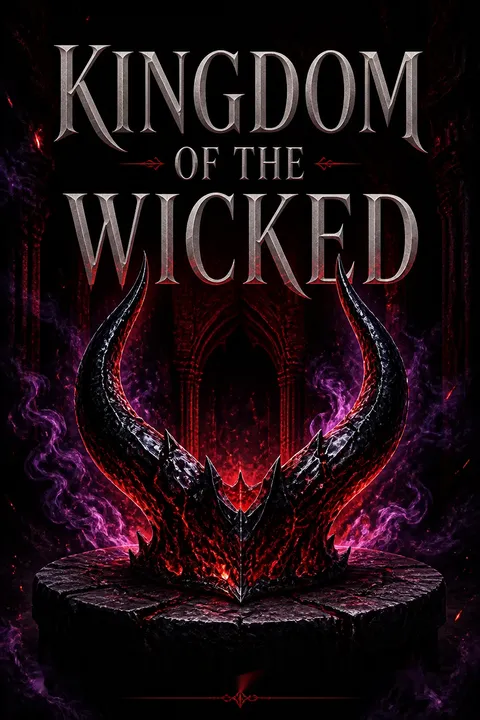


Plot Summary
Prologue
On the twins’ eighth birthday, their grandmother, Nonna Maria, teaches Emilia and Vittoria di Carlo protective charms against the seven princes of Hell. Their silver and gold cornicello amulets must never touch, she warns, or the balance between worlds may break. The girls secretly exchange them anyway.
A strange violet-black flare joins the charms, and Emilia gains the ability to see a shimmer around people when she concentrates on her amulet. Vittoria develops a gift of her own, hearing whispers from magical objects, but keeps it private. Their shared childhood becomes a quiet apprenticeship in secrets, each twin concealing the first sign of a power that will shape the danger ahead.
The childhood incident establishes secrecy as both protection and intimacy: the twins share a transgression but not its consequences. Their amulets, presented as safeguards, are also instruments of a hidden inheritance, so the girls’ first act of curiosity changes what their family can know about them. Their separate gifts mirror their temperaments: Emilia reads what is visible, while Vittoria hears what others cannot. The resulting silence is not simple mistrust. It is the childhood belief that love can spare another person worry, a belief that later makes their closeness less complete than either sister understands.
A Sister’s Missing Heart
Ten years after the twins’ secret exchange, Emilia works in her family’s Palermo restaurant, Sea & Vine, and dismisses Nonna’s warnings about witch murders and the Wicked. When Vittoria fails to return, Emilia retrieves a forgotten food basket from the monastery. There she catches a dark-haired stranger tasting blood from a shrouded body. He flees, leaving behind a serpent-handled dagger.
The corpse is Vittoria, dressed in a gown Emilia has never seen, her heart torn out and her cornicello missing. Emilia reaches home with blood on her hands and swears to make the killer pay. The police offer no useful lead, while Nonna urges her to leave vengeance to the goddesses. Emilia refuses, fastening her attention on the dagger and the stranger.
The murder turns domestic competence into traumatic helplessness. Emilia knows how to prepare food, care for her family, and read the routines of a shared household, but none of those skills could protect Vittoria in a place Emilia thought she understood. The stolen amulet makes the killing feel targeted, while the stranger’s blood tasting collapses the distinction between human cruelty and supernatural threat. Emilia’s vow gives grief a task, but it also narrows her world: she begins treating investigation as the only form of loyalty still available to her sister.
The Diary’s Locked Pages
Weeks of grief pass before Emilia finds Vittoria’s concealed diary, strange grimoire pages, and a crowned-frog gambling chip beneath their bedroom floorboards. An enchantment seals the diary, and dark witch Carolina Grimaldi identifies its magic as demonic.
The pages contain a summoning spell. Convinced Vittoria used it to learn something about her killer, Emilia decides to summon a lesser demon and bargain for answers. She gathers bones and ritual supplies, but the animal blood breaks during the ritual.
With dawn approaching, she cuts her own arm and completes the circle using the serpent dagger she took from the monastery. The decision marks a turn from mourning as endurance to investigation at any cost. Emilia enters the cave alone, prepared to call something she has spent her life fearing.
The diary makes privacy an active force in the plot. Vittoria’s sealed pages protect her choices, but they also leave Emilia to interpret clues without the sister who could explain them. Carolina’s warning does not stop Emilia because grief has changed her sense of acceptable risk: danger now seems less frightening than ignorance. Her decision to substitute her own blood for the lost offering is a precise expression of that shift. She does not merely investigate forbidden power; she makes herself its payment, repeating the family’s pattern of keeping consequential choices secret.
Wrath Answers the Circle
The summoning brings forth Wrath, one of Hell’s seven princes, whom Emilia recognizes as the stranger from the monastery. She attacks him with his own dagger, but her spell prevents either of them from harming the other. Wrath denies killing Vittoria and explains that she had made a bargain with his brother Pride.
Emilia learns that she mistakenly included a phrase that binds Wrath to her in a permanent marriage bond, not a temporary protection spell. He offers a six-month blood trade that would let him sense danger around her. Emilia refuses, unwilling to surrender another form of control. Wrath remains trapped for three days, while the truth of his connection to Vittoria and his reason for coming to Palermo remain unresolved.
The first encounter reverses Emilia’s assumption that power means command. She successfully summons a prince, yet a mistranslated incantation binds them in a way she never intended. Wrath’s rules and careful distinctions make him dangerous without making him freely deceptive, complicating Emilia’s ability to decide whether he is a threat or a resource. Their accidental bond gives the romance its central asymmetry: intimacy begins not with trust but with a magical error, forcing both characters to negotiate agency inside a relationship neither chose in the same way.
The Horn Beneath the Charm
Emilia meets Envy, another prince, who tempts her with power and offers protection in exchange for her soul. She rejects him, then follows Vittoria’s gambling chip to Greed’s hidden den. Greed trades carefully rationed information for the amulet Emilia wears and a pledge to House Greed. She refuses, but learns that blood can break the diary’s demonic spell.
A drop opens its pages, revealing Vittoria’s secret ability to hear magical objects and her discovery that the twins’ cornicelli are actually the devil’s severed horns, the Horn of Hades. Nonna confirms that the horns can lock Hell’s gates or summon the devil when reunited. Before Emilia can learn more, an invisible demon slashes Nonna’s throat and steals Emilia’s amulet.
The amulets’ revelation recasts the family’s protection as custodianship of a weapon. The twins were not simply hiding from Hell; their bodies carried a key that competing powers could use. This discovery also gives Vittoria’s secrecy a more complicated motive than mere rebellion: she had information capable of changing the balance between worlds. Greed’s transactional offer and the attack on Nonna show that knowledge has become dangerous currency. Emilia’s investigation now endangers not only herself but the family whose safety first made her skeptical of risk.
The Viperidae’s Nest
Greed reveals that Vittoria’s missing amulet lies in a Viperidae nest beneath the cathedral. Wrath warns Emilia that the enormous serpent demon can only be persuaded to surrender what it guards, but she chooses a sleeping spell and enters alone. She reaches the cornicello, yet its chain scrapes across the ground and wakes the creature.
Emilia blinds it with dirt, escapes its tail, and is bitten by a venomous fang. Wrath, despite having warned that he would not come to her aid, carries her to safety. He uses a dangerous healing ritual in hot water, sharing his power to halt the venom. Emilia survives and recovers Vittoria’s amulet. Their alliance begins on the uneasy ground of a life saved, not a trust freely given.
Emilia’s rescue of the amulet is both an act of sisterly devotion and a failure of judgment. She acts as if courage can substitute for preparation, and the physical cost makes that belief impossible to romanticize. Wrath’s return complicates his earlier claim that he would not help: obligation, strategy, and personal concern may all be operating at once. The healing ritual creates a bodily intimacy neither can treat as neutral. Their bond becomes less abstract, but the scene gives Emilia no simple reason to trust the person who saves her.
A Bride’s Blood Debt
As Emilia and Wrath investigate the killings, he admits Pride needs a witch bride to break a curse. The women approached for that bargain have been murdered after receiving time to decide. A messenger’s stolen letters lead them to Anir, Wrath’s trusted associate, and to Valentina Rossi as the next intended bride.
Before they can reach her, Emilia finds Valentina’s body, another witch with her heart removed. Anir explains that Emilia’s supposed protection spell actually created a marriage bond with Wrath. Furious at the concealment, Emilia breaks from their partnership. The death toll and the revelation leave her with a reason to keep investigating, but no confidence that Wrath’s mission is as selfless as he claims.
The bride killings turn a private mystery into a political crisis. Each murder removes a possible partner in Pride’s attempt to break the curse, while the hidden marriage bond makes Emilia herself part of the same system of bargains. Her anger at Wrath is not only romantic disappointment; it is a response to discovering that her consent was bypassed by both his knowledge and her own magic. Valentina’s death makes the consequences visible, shifting the question from whether Emilia can trust Wrath to whether any choice in this world is genuinely free.
The Palace Without Answers
Wrath takes Emilia to a temporary refuge at the ruined Zisa palace, while they search for the killer and the next bride. An Aper demon attacks Emilia after Wrath explains how dangerous escaped demons can be; he kills it before it drains her blood. Inside the abandoned storehouse nearby, they find no clear answer to the symbol on its door.
When Emilia returns to her bedroom, an intruder has torn it apart, destroyed Vittoria’s belongings, and stolen the diary. Emilia’s last private link to her sister is gone. She visits Claudia, asks her to protect their families with a ward, and decides she will stay with Wrath at the palace. The investigation has cost Emilia her safe home and the evidence she hoped would explain Vittoria’s final choices.
The loss of the diary changes the emotional texture of the investigation. Until now, Emilia has been able to imagine that enough clues will restore the sister she lost, at least as a legible story. The smashed keepsakes deny that comfort. The attack also exposes the limits of domestic protection: family charms and familiar rooms cannot guarantee safety from every creature. Emilia’s move to the palace is not an embrace of Hell’s politics so much as a recognition that isolation has become more dangerous than uneasy cooperation.
Pleasure Turns to Ash
While Wrath pursues a lead, Emilia follows her missing amulet’s pull toward a beach gathering. The Prince of Lust saturates the crowd with pleasure, and Emilia loses herself in dancing, wine, and fabricated desire. Wrath arrives and resists the enchantment long enough to pull her away. When Emilia refuses Lust’s invitation, he withdraws his influence, leaving her in an emotional void that lasts for weeks.
Wrath keeps her alive at the palace, bringing meals and tending to her, then prepares an elemental bath with sand, flowers, water, and fire to restore her connection to herself. After she begins recovering, he teaches her strategy through scopa, urging her to study her opponents and govern her reactions rather than surrender them.
Lust’s attack is frightening because it imitates well-being. Emilia’s pleasure feels like freedom precisely because it removes memory, judgment, and grief, revealing how easily emotional relief can become coercion. The aftermath is not a brief hangover but a prolonged incapacity, so Wrath’s patient care becomes a counterpoint to demonic influence. His teaching frames self-command as a practiced skill rather than an inborn virtue. Emilia’s recovery begins when she can feel again, not when she stops grieving or becomes invulnerable.
Envy Takes Hostages
After Envy’s vampire messenger Alexei tells Emilia that her family has been taken, she finds Envy waiting at Sea & Vine. He has her parents under his control and threatens everyone she loves unless she brings him both halves of the Horn of Hades.
Emilia returns home, where Envy holds her family and Claudia captive. Nonna, secretly recovered, silences Envy, binds his feet with magic, and uses a cimaruta spell to send him and his demons back to Hell.
She reveals that Emilia and Vittoria were chosen as twin keepers of the horns, and that prophecy warns their choices may decide whether Hell overwhelms Earth. Nonna orders Emilia to flee before Envy returns. Emilia leaves her family behind, carrying the knowledge that her birth itself is tied to the approaching crisis.
Envy’s hostage-taking makes the conflict brutally personal: the object he wants is inseparable from Emilia’s family history, and the people he threatens are the people she most wants to protect. Nonna’s counterattack revises Emilia’s image of her grandmother from anxious traditionalist to practiced guardian. Her revelation also gives Emilia a new burden without resolving what the prophecy demands. Leaving home is therefore not a clean heroic departure. It is an act of protection made painful by the knowledge that staying would endanger those she loves.
A Wolf at the Market
Alone and searching for her stolen amulet, Emilia recognizes the paw-and-fennel emblem on Domenico Nucci Senior’s food cart. He reveals that he is an Ember Wolf, a shape-shifter, and that Vittoria arranged his bargain with Greed.
She had been bringing the demon and the wolves together as part of a larger plan, though Domenico does not know its full purpose. Emilia realizes Vittoria’s last weeks involved more than a secret romance or reckless summoning.
She returns to the monastery, where the magical pull leads her into a hidden chamber containing the first book of spells, a grimoire belonging to the First Witch. Before she can understand why Vittoria hid it there, Antonio appears, and Emilia recognizes him as the hooded figure connected to the murders.
The Ember Wolf revelation disrupts Emilia’s increasingly simple division between allies and enemies. Vittoria had been negotiating across boundaries Emilia scarcely knew existed, suggesting that her secrecy concealed a strategy rather than a single dangerous affair. The discovery of the First Witch’s book gives the murders a possible connection to a much older conflict, while Antonio’s arrival brings that history back into the intimate world of childhood friendship. Emilia’s investigation has moved from interpreting her sister’s clues to confronting the people who helped shape them.
The Brother’s Betrayal
Antonio reveals that he killed Vittoria, Valentina, and the other witch brides after a figure he believed to be an angel convinced him that witches threatened the world. He had also been told to destroy the devil’s horns. Emilia forces him to answer with a truth spell, then recoils at the harm her magic inflicts on his memory.
Rather than kill him, she restrains her rage long enough to hear the shape of his motive: his mother died after he sought help from a woman who was secretly a witch, and grief hardened into religious vengeance. Emilia sees that someone has manipulated his pain, but Antonio still chose to turn that pain into murder. She decides to summon the devil herself and use the bargain to reach the enemy behind him.
Antonio’s confession refuses the comfort of a purely supernatural culprit. His actions arise from personal grief, but the story does not treat suffering as an excuse: he converts loss into a moral license to harm people who resemble the person he blames. Emilia’s truth spell mirrors his violation of others’ agency, forcing her to experience how easily a pursuit of justice can reproduce the violence it condemns. Her decision to summon the devil is therefore not a victory over moral uncertainty. It is a conscious gamble made after recognizing that certainty has already failed her.
The Devil’s Bride
Emilia uses Antonio to summon Pride, who takes possession of the man’s body and offers her a place beside him in exchange for her soul. Instead of accepting his terms without conditions, Emilia requires the princes to stop hunting witches and attacking humans, and demands custody of Antonio. She signs the bargain in blood and surrenders the reunited horns.
Then Wrath arrives, alive despite Envy’s attempt to kill him, and asks whether she will go with him. Emilia agrees, knowing the passage to Hell is the only route toward the forces behind the killings. The choice costs her the Horn of Hades and binds her soul to the devil, but it gives her a position inside the realm she must now challenge.
Emilia’s bargain transforms her from investigator into participant in the system she has spent the story resisting. She cannot secure every condition she wants, yet she negotiates rather than simply submitting, making the act a limited exercise of agency under extreme pressure. Her demand to protect witches and humans keeps her priorities rooted in the living world even as she agrees to enter Hell. Wrath’s return prevents his apparent death from serving as simple closure: their unresolved bond travels with them into a new political and emotional landscape.
Analysis
Kingdom of the Wicked makes inheritance both a source of protection and a mechanism for withholding agency. Emilia and Vittoria receive magical knowledge as family care, but crucial facts about their amulets, ancestry, and prophecy are held back until danger has already narrowed their choices. The result is not a simple conflict between old tradition and youthful rebellion. Nonna’s secrecy is protective, yet it leaves the twins unable to recognize the stakes of their own powers; Vittoria’s secrecy is loving, yet it isolates her from the person most likely to help.
The novel’s most sustained ethical question concerns consent. Emilia’s accidental bond with Wrath, the princes’ emotional manipulation, Pride’s marriage bargain, and Emilia’s own truth spell all make power legible through its effect on another person’s freedom. The story does not let the protagonist stand outside that problem. Her pursuit of justice repeatedly tempts her to use the same coercive methods she condemns, and her guilt after the truth spell marks an important limit: a righteous purpose does not erase harm.
Grief supplies the plot’s energy but does not become a neat instrument of empowerment. Emilia’s anger keeps her moving after Vittoria’s murder, then her emotional collapse after Lust’s influence shows how fragile that momentum is. Recovery requires care, embodied ritual, food, and practice, not merely a stronger vow. The kitchen and the magical world therefore remain linked: both depend on attention, measured ingredients, and consequences that cannot be undone once something is added.
The ending offers no resolution of the larger crisis. Emilia chooses a dangerous entry into Hell, carrying the cost of her bargain and the memory of the sister whose plans she only partly understands. Her movement from skeptical homebody to active negotiator is real, but not complete. The book closes on an entrance, not a victory, preserving the tension between chosen courage and the coercive systems that continue to surround her.
Review Summary
Kingdom of the Wicked received mixed reviews, with many praising its atmospheric setting, intriguing plot, and compelling characters, particularly Wrath. Readers enjoyed the enemies-to-lovers romance and the murder mystery elements. However, some criticized the predictable plot twists, inconsistent world-building, and Emilia's character development. The book's cliffhanger ending left many eager for the sequel. While some found it slow-paced initially, others were hooked from the start. Overall, it was a divisive read, with fans of dark fantasy and romance generally enjoying it more.
People Also Read
Characters
Emilia di Carlo
Reluctant witch investigatorEmilia is an eighteen-year-old witch raised in Palermo’s close-knit di Carlo family. A gifted cook who values home, routine, and the future of Sea & Vine, she begins as the more cautious twin, inclined to question supernatural explanations rather than trust them. Vittoria’s murder turns her practical attention into investigative persistence. Emilia’s defining tension is between care and control: she wants to protect the people she loves, yet grief pushes her toward forbidden magic that can violate others’ freedom. She is observant, emotionally direct, and more easily provoked than she realizes. Her growth comes not from losing her anger, but from learning that courage without judgment can endanger the very people she means to save.
Wrath
Warrior prince of HellWrath is one of the seven demon princes and a formidable strategist whose habits are shaped by war, hierarchy, and a fierce attachment to choice. He initially treats Emilia as a complication in his mission, answering only what he must and concealing the meaning of their magical bond. His bluntness can resemble cruelty, yet he is attentive to practical danger and capable of restraint. He distrusts emotional dependence, particularly when it threatens his freedom or judgment. With Emilia, his discipline repeatedly meets her defiance, creating a relationship in which neither can easily dominate the other. His manners and elegance do not soften the danger he represents.
Vittoria di Carlo
Emilia’s adventurous twinVittoria is Emilia’s twin sister, a bold, sociable witch who delights in perfume-making, potions, parties, and testing the limits Nonna sets. She is imaginative and irreverent, often using humor to hide how seriously she takes the supernatural world. Her closeness with Emilia is profound, but both sisters keep private gifts and discoveries from one another, believing silence can protect the other. Vittoria’s attraction to risk is balanced by a strong instinct to act for people she loves. Her presence continues through the clues, plans, and unfinished confidences she leaves behind, shaping Emilia’s investigation without reducing her to a mystery to be solved.
Nonna Maria
Keeper of family loreNonna Maria is Emilia and Vittoria’s grandmother, a formidable witch who teaches the twins charms, household magic, and the history their family must preserve. Her frequent warnings can sound superstitious to Emilia, but they come from knowledge and responsibility rather than mere fear. Nonna believes tradition is a practical defense in a world where human suspicion and supernatural danger overlap. She is protective enough to withhold painful truths, a choice that reflects both love and the risk of controlling what younger generations are allowed to know. Her authority rests on experience, but she is also capable of decisive action when danger reaches her family.
Claudia
Witch and seerClaudia is Emilia and Vittoria’s longtime friend, a witch whose strongest gift is scrying. Her visions arrive in fragments that can be difficult to distinguish from fear or imagination, leaving her vulnerable to the burden of interpreting them. Claudia is compassionate and persistent, offering Emilia help even when the two have grown distant under the pressure of grief. Her family’s openness to dark magic contrasts with Nonna’s stricter boundaries, giving Claudia a different understanding of what power may be used for. She wants to protect those she loves, but her curiosity about hidden knowledge can expose her to forces she cannot easily control.
Antonio Bernardo
Devout childhood friendAntonio grew up near the di Carlos and is a young member of Palermo’s religious brotherhood. His devotion gives structure to a life shaped by the loss of his mother, while his longstanding affection for Emilia complicates the distance he tries to maintain. He is courteous, earnest, and accustomed to understanding the world through religious teaching. His human perspective offers a counterpoint to the witches’ inherited lore and the demons’ rigid rules. Antonio’s desire to serve a higher good makes him vulnerable to certainty, especially when grief supplies a target for his fear.
Greed
Prince of the gambling denGreed is a demon prince who maintains a secret gambling hall marked by a crowned frog. He thinks in bargains, leverage, and acquisition, treating information as valuable only when exchanged for something he wants. His polished manners conceal a possessive appetite for power and useful objects. Greed is careful enough to reveal only fragments of what he knows, compelling others to reckon with the price of certainty. His court turns human desires for wealth, status, and attention into an atmosphere of excess, making his surroundings an extension of his nature.
Envy
Prince of covetous powerEnvy is a demon prince whose influence draws out the desires and resentments already present in others. His refined appearance and controlled speech conceal a restless hunger for what belongs to his brothers or to the human world. He understands vulnerability as an opening, and his offers of protection are inseparable from his wish to possess. Envy’s presence makes Emilia question whether her emotions are truly her own, sharpening her fear of powers that can manipulate feeling without leaving a visible wound.
Pride
Cursed ruler of HellPride is the demon prince whose curse has made a witch bride central to the political future of Hell. He is discussed long before Emilia encounters him directly, so his influence arrives through bargains, messengers, and the deaths of women approached as potential consorts. The stories about his curse are disputed, and even the people acting in his name do not share a complete account of its origins. Pride represents the pressure of a royal order whose survival may depend on a marriage that must still be chosen.
Lust
Prince of intoxicating pleasureLust is one of the demon princes, able to amplify pleasure until it overwhelms a person’s judgment and sense of self. His influence is seductive because it begins with emotions people already desire, such as happiness, relief, and physical closeness. He treats that emotional access as power, making pleasure a means of control rather than an uncomplicated gift. His presence forces Emilia to confront how coercion can feel welcoming while it is happening.
Anir
Wrath’s trusted associateAnir is Wrath’s human associate, a capable fighter with a scarred face and a history of surviving violence. He is direct, irreverent, and willing to challenge Wrath even while serving him. His position gives him knowledge of the demon court and its movements, though he does not control the political decisions that shape the mission. Anir’s loyalty is practical rather than deferential, and his presence gives Emilia another perspective on Wrath’s world.
Domenico Nucci Senior
Ember Wolf patriarchDomenico Nucci Senior runs a Palermo food stand and belongs to the Ember Wolves, a shape-shifting group distinct from the human benandanti. He carries shame over a bargain made with Greed and worries about the consequences for his family and pack. His working relationship with Vittoria reveals that she could bring opposing groups into an uneasy alliance. Domenico is neither a simple ally nor an enemy; his choices show how fear and obligation can bind ordinary lives to supernatural politics.
Domenico Nucci Junior
Vittoria’s secret affectionDomenico Junior is the young arancini vendor whom Emilia suspects Vittoria was seeing. He is connected to the Nucci family business and to the grief that follows Vittoria’s death. His quiet presence in the story gives Emilia a glimpse of the private life her sister kept from her.
Carolina Grimaldi
Practitioner of dark magicCarolina is Claudia’s aunt and a knowledgeable practitioner of the dark arts who runs a marketplace stall. She has taken responsibility for teaching Claudia, despite the suspicion this creates among witches who prefer stricter boundaries. Carolina is candid about the risks of demon magic and does not romanticize bargains with Hell. Her expertise helps Emilia identify the nature of Vittoria’s spell, though knowledge does not make every answer safe to pursue.
Alexei
Envy’s vampire messengerAlexei is a vampire who serves as Envy’s messenger and uses courteous manners to disguise a predatory interest in witches. His presence makes Envy’s reach feel physical even before the demon prince appears. Alexei is confident in the fear he creates and treats danger as a form of entertainment.
Francesco
Compromised royal messengerFrancesco carries messages for Wrath but allows curiosity and personal gain to compromise his role. His access to sensitive information makes him a vulnerable link between the demon court and the human world. He is more frightened than powerful, a reminder that larger conflicts often travel through people who do not understand their full consequences.
Nicoletta di Carlo
Emilia’s watchful motherNicoletta is Emilia and Vittoria’s mother, a witch-born member of the di Carlo family who does not possess supernatural abilities. She contributes to Sea & Vine through her cooking and helps hold the household together as grief disrupts its routines. Nicoletta is perceptive about her daughters’ emotional lives and protective without sharing Nonna’s full knowledge of the family’s magical history.
The di Carlo father
Family restaurant anchorEmilia and Vittoria’s father works alongside the family at Sea & Vine. He helps maintain the restaurant and the household’s close-knit routines, offering a steady presence as the women face grief and danger.
Giulia Santorini
Earlier witch brideGiulia is one of the witches approached in connection with Pride’s proposed marriage. Her death extends the pattern Emilia is trying to understand and links the murders to the history of the Santorini family.
Valentina Rossi
Claudia’s cousinValentina is Claudia’s cousin, a weaver with an appetite for a life larger than Palermo’s familiar routines. Her connection to the witches and to Pride’s bargain makes her one of the people caught in the widening conflict.
Brother Carmine
Firebrand of the brotherhoodCarmine is a member of the religious brotherhood who openly condemns witchcraft and calls others to oppose what he sees as evil. His certainty makes him a menacing presence to Palermo’s hidden witches. He represents the social danger created when fear becomes a public mission.
Plot Devices
The Horn of Hades
Key between realmsThe twins’ cornicello amulets are actually the devil’s severed horns, divided and hidden in plain sight. Together, they can lock Hell’s gates or summon the devil, making them objects of immense strategic value. Their apparent role as protective charms conceals their larger function and explains why demons seek them. The horns connect the family’s childhood rituals to the political crisis now threatening Palermo. Emilia’s possession of them repeatedly changes who can threaten, bargain with, or protect her.
The Accidental Bond
Consent under enchantmentEmilia’s flawed Latin summoning phrase binds her to Wrath in a permanent marriage bond, though she believes she has cast a protection spell. The changing tattoo on their arms marks the connection and eventually allows Wrath to find her without the blood trade he first proposed. The bond gives him reasons to protect Emilia, but its hidden meaning compromises trust from the beginning. It also makes the story’s question of choice concrete: a magical relationship can carry consequences neither person intended or fully understands.
Vittoria’s Diary
A trail of hidden cluesVittoria’s enchanted diary preserves her private observations, questions, and discoveries. Its demonic seal forces Emilia to seek help and use blood to open it. The pages reveal Vittoria’s gift for hearing magical objects, her contact with a hidden grimoire, and her knowledge of the Horn of Hades. The diary never supplies a complete explanation of her plans, so each answer creates new questions. Its later theft removes Emilia’s most intimate source of evidence and makes the investigation depend on people and places her sister never explained.
Demonic Influence
Emotion used as leverageThe princes of Hell draw on human emotion according to their sins. Envy intensifies covetous desire, while Lust magnifies pleasure until it can eclipse judgment and identity. These powers make internal feeling an unreliable guide: Emilia must ask whether an emotion belongs to her or has been enlarged by a demon. The influence can cause lasting harm, especially when the heightened state collapses. Wrath’s lessons about self-command become essential because resisting these princes requires attention to emotion as well as physical defense.
Bargains and Blood
Power with a priceWitchcraft and demon magic both demand concrete costs. Blood completes summonings and breaks the diary’s seal; bargains can promise protection or information while demanding allegiance, marriage, or a soul. Emilia repeatedly discovers that a technically precise agreement may conceal consequences she did not intend. Her truth spell also extracts a price by damaging Francesco’s memory. These exchanges bind the book’s supernatural rules to its ethical conflicts: power is never merely a tool, because using it changes the person who chooses to pay.
FAQ
Synopsis & Basic Details
What is Kingdom of the Wicked about?
- Grieving twin seeks truth: After her twin sister, Vittoria, is brutally murdered, Emilia di Carlo, a young witch, embarks on a dangerous quest to find her killer.
- Demons and dark bargains: Emilia's investigation leads her into the world of demon princes, ancient curses, and forbidden magic, forcing her to confront the reality of the Wicked.
- Unlikely alliances and betrayals: She forms a tentative alliance with a demon prince, Wrath, while navigating a web of secrets, lies, and betrayals that threaten her family and her world.
Why should I read Kingdom of the Wicked?
- Intriguing blend of genres: The book combines elements of fantasy, mystery, romance, and historical fiction, creating a unique and captivating reading experience.
- Complex characters and relationships: The characters are well-developed, with their own motivations and flaws, and the relationships between them are complex and compelling.
- Fast-paced plot with twists: The plot is full of twists and turns, keeping readers engaged and guessing until the very end, with a focus on uncovering secrets and solving a murder.
What is the background of Kingdom of the Wicked?
- Set in 19th-century Sicily: The story is set in Palermo, Sicily, during the 19th century, blending historical details with a fantastical world of witches and demons.
- Rich cultural and magical traditions: The book incorporates Sicilian folklore, traditions, and superstitions, creating a unique and immersive setting.
- Matriarchal witch families: The story features a secret society of witch families, with magic passed down through the matriarchal line, adding a layer of complexity to the world-building.
What are the most memorable quotes in Kingdom of the Wicked?
- "Memories, like hearts, can be stolen.": This quote, spoken by an unknown voice, foreshadows the themes of loss and betrayal, and the vulnerability of both emotions and physical beings.
- "One will crave your blood. One will capture your heart. One will steal your soul. And one will take your life.": This quote, spoken by Nonna Maria, sets the stage for the dangers the twins will face, and the different ways the demon princes will try to claim them.
- "You might hate it. Or love it. But temptation will surge through those magical veins of yours, obliterating all common sense. You'll want me to save you from the endless torment by giving you everything you love to loathe. And when I do, you'll thirst for more.": This quote, spoken by Wrath, highlights the seductive and dangerous nature of the demon princes, and the power they hold over mortals.
What writing style, narrative choices, and literary techniques does Kerri Maniscalco use?
- First-person perspective: The story is told from Emilia's point of view, allowing readers to experience her thoughts, emotions, and biases, creating a sense of intimacy and immediacy.
- Vivid descriptions and sensory details: Maniscalco uses rich language and sensory details to bring the setting and characters to life, immersing readers in the world of the story.
- Foreshadowing and suspense: The author uses subtle hints and clues to foreshadow future events, creating a sense of suspense and anticipation, and keeping readers guessing.
Hidden Details & Subtle Connections
What are some minor details that add significant meaning?
- The twins' amulets: Emilia's silver cornicello and Vittoria's gold one, initially presented as simple protection charms, later reveal their true nature as the Horns of Hades, and their significance in the prophecy.
- The scent of thyme: The recurring scent of thyme, first noticed in the monastery, foreshadows the presence of a demon prince, and the dark magic at play.
- The color black: The color black, often associated with the demon princes, is also used to describe the clothing and surroundings of the witch hunters, blurring the lines between good and evil.
What are some subtle foreshadowing and callbacks?
- Nonna's warnings: Nonna Maria's constant warnings about the Wicked and the dangers of the full moon foreshadow the return of the demon princes and the events that follow.
- The hellhound's howl: The hellhound's howl on the twins' eighth birthday foreshadows the presence of demons in their lives, and the danger they will face.
- The broken balsamic: The broken balsamic vinegar in the monastery foreshadows the chaos and destruction that will follow, and the loss of something precious.
What are some unexpected character connections?
- Antonio's betrayal: Antonio, a childhood friend and member of the holy brotherhood, is revealed to be the murderer of Vittoria, driven by a twisted sense of religious zealotry.
- Domenico Senior's secret: Domenico Nucci Senior, a seemingly ordinary vendor, is revealed to be a shape-shifter, and connected to the demon world through a bargain with Greed.
- Claudia's visions: Claudia's visions, initially presented as a side plot, become increasingly important as they foreshadow the events to come, and her connection to the dark arts.
Who are the most significant supporting characters?
- Nonna Maria: Nonna Maria's knowledge of magic and the demon world, and her role as a protector, make her a crucial figure in Emilia's journey.
- Claudia: Claudia's friendship and her abilities in scrying and dark magic provide Emilia with support and insight, and her visions foreshadow the dangers to come.
- Antonio: Antonio's betrayal and his role as a witch hunter highlight the dangers of religious extremism and the blurred lines between good and evil.
Psychological, Emotional, & Relational Analysis
What are some unspoken motivations of the characters?
- Wrath's desire for freedom: Wrath's desire to break free from his ties to the underworld and his brothers drives his actions, and his complex relationship with Emilia.
- Envy's jealousy and ambition: Envy's jealousy of his brothers and his desire for power motivate his actions, and his manipulation of Emilia.
- Emilia's need for control: Emilia's need to control her emotions and her surroundings stems from her grief and her desire to protect her family, and her fear of losing control.
What psychological complexities do the characters exhibit?
- Emilia's grief and rage: Emilia's grief over her sister's death is intertwined with her rage and desire for vengeance, creating a complex and compelling character.
- Wrath's internal conflict: Wrath's internal conflict between his demon nature and his growing feelings for Emilia creates a complex and compelling character.
- Antonio's twisted sense of justice: Antonio's twisted sense of justice and his belief that he is doing God's work highlight the dangers of religious extremism and the blurred lines between good and evil.
What are the major emotional turning points?
- Vittoria's murder: Vittoria's murder is the catalyst for Emilia's journey, and the turning point that sets the story in motion.
- The discovery of the Horns of Hades: The discovery of the Horns of Hades and their connection to the devil's curse forces Emilia to confront the true nature of her family's legacy.
- The betrayal by Antonio: The betrayal by Antonio shatters Emilia's trust in those she thought she knew, and forces her to confront the darkness within herself.
How do relationship dynamics evolve?
- Emilia and Wrath's complex bond: Emilia and Wrath's relationship evolves from mistrust and reluctant alliance to a complex bond filled with tension, desire, and a shared goal.
- Emilia and Vittoria's sisterhood: The bond between Emilia and Vittoria is explored through flashbacks and memories, highlighting the love and secrets they shared.
- Emilia and Antonio's shattered friendship: Emilia and Antonio's friendship is shattered by his betrayal, highlighting the dangers of religious extremism and the blurred lines between good and evil.
Interpretation & Debate
Which parts of the story remain ambiguous or open-ended?
- The true nature of the First Witch: The true nature and motivations of the First Witch, and her role in the curse, remain ambiguous, leaving room for speculation and future exploration.
- The full extent of demon powers: The full extent of the demon princes' powers and their limitations are not fully explored, leaving room for future conflicts and challenges.
- The ultimate fate of the characters: The ultimate fate of Emilia, Wrath, and the other characters is left open-ended, leaving readers to wonder what will happen next.
What are some debatable, controversial scenes or moments in Kingdom of the Wicked?
- Emilia's use of dark magic: Emilia's use of dark magic, including summoning a demon and using a truth spell, raises questions about the morality of her actions and the consequences of using forbidden power.
- Wrath's actions and motivations: Wrath's actions and motivations are often ambiguous, leaving readers to question his true intentions and whether he can be trusted.
- The nature of good and evil: The story challenges the traditional notions of good and evil, presenting a world where moral lines are blurred, and characters must navigate their own paths.
Kingdom of the Wicked Ending Explained: How It Ends & What It Means
- Emilia's choice to embrace her power: Emilia chooses to embrace her power and her role as a witch, even if it means aligning herself with the devil.
- The reunion of the Horns of Hades: The reunion of the Horns of Hades signifies a shift in power, and the potential for Emilia to control the devil and the gates of Hell.
- The uncertain future: The ending leaves the future uncertain, with Emilia entering the underworld, and the fate of her family and the world hanging in the balance.
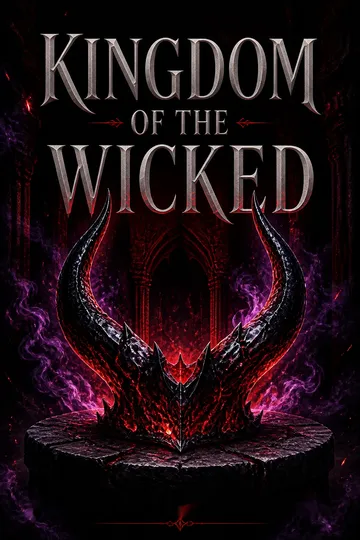
Kingdom of the Wicked Series

About the Author
Other books by Kerri Maniscalco


Download PDF
Download EPUB
.epub digital book format is ideal for reading ebooks on phones, tablets, and e-readers.








