

Key Takeaways
Treat confidence as a decision tool, not a certificate of truth
Self-awareness steers action. Metacognition means monitoring and judging the mind’s own processes: what it perceives, remembers, decides, and knows. It helps people choose whether to keep studying, trust a memory, or take a risk. In 1983, Soviet officer Stanislav Petrov received an alert that five American missiles were incoming. He judged a faulty signal more likely than an attack, and did not trigger a counterstrike. The alert was false, caused by sunlight reflected from clouds.
The stakes vary. A student who mistakes familiarity for mastery may fail an exam. A free diver who overestimates ability risks death, while a game-show contestant may lose a fortune by answering when uncertain. Metacognition is not a decorative inner voice. It helps determine what to do next, including whether to act, pause, or seek more evidence.
What's striking is that confidence matters most not as a feeling, but as information about the next move. Decision theory makes the same distinction: a judgment can be right or wrong, while confidence estimates the odds of being right. The estimate is useful only when calibrated against outcomes. Petrov's judgment was not certainty disguised as courage; it was a comparison between competing explanations under pressure. The practical implication is to treat confidence as a forecast that can be checked, rather than as proof that a conclusion deserves trust.
Your brain guesses the world, then uses uncertainty to question its guesses
Perception is inference. An inverse problem is the task of inferring hidden causes from incomplete sensory evidence. The brain faces this constantly: a faint flash could be a real light or neural noise. Bayesian reasoning describes how prior expectations and incoming evidence can be combined according to their reliability. The brain does not need to calculate equations consciously; it makes rapid estimates that help construct a likely version of the world.
Expectations shape seeing. In Adelson’s checkerboard illusion, two squares with identical measured brightness appear different because the visual system assumes one is in shadow. Such assumptions usually help, but they can mislead. The same uncertainty signals that help form a percept can also indicate when that percept may be wrong. Dolphins, monkeys, rats, and even young infants show some ability to avoid or seek help with uncertain choices.
This account makes perception less like a camera and more like a skilled interpreter working from incomplete clues. That view connects naturally to scientific measurement: observations are never simply facts without assumptions about instruments, background conditions, and noise. The useful discipline is to ask which assumptions are shaping an interpretation and how reliable the evidence is. A caution is that Bayesian models describe a powerful way to reason, not necessarily the brain’s literal operating code. The fit between brain activity and a mathematical model does not prove the brain performs that exact computation.
Let automatic error checks handle routine actions, but notice when they fail
The body predicts outcomes. A forward model predicts what an action should cause, then compares that prediction with sensory feedback. If a hand drifts off target, the brain can correct its course before the person notices. This monitoring operates at several levels, from regulating internal conditions such as temperature to coordinating skilled movement. Familiar actions, like typing or playing piano, rely heavily on unconscious control rather than detailed conscious supervision.
Errors can enter awareness. When an action violates an expectation, the brain registers a prediction error. One rapid electrical signal associated with this process is the error-related negativity, a neural response that can appear within a fraction of a second after a mistake. Dopamine also helps update expectations when results differ from predictions. These mechanisms support learning, but conscious awareness is most useful when routine correction is not enough.
The layered-control picture clarifies why conscious attention is not always an advantage. Skilled performance often improves when low-level corrections run without interference, while novices benefit from explicit feedback and deliberate adjustment. This resembles well-designed automation: routine corrections happen locally, but serious deviations need to reach a human supervisor. The difficulty is deciding when the routine system has exceeded its competence. A good error signal is not merely a punishment; it identifies a gap between expectation and outcome that can guide a better next attempt.
Measure self-awareness by accuracy, not by how confident someone sounds
Confidence and accuracy differ. Metacognitive sensitivity is how well confidence distinguishes correct from incorrect answers. Metacognitive bias is a person’s general tendency to feel more or less confident. Someone can be overconfident overall yet still notice when a particular answer is likely wrong. In laboratory tasks, people with equal performance can differ substantially in sensitivity, and sensitivity is not the same as IQ.
Self-knowledge can fail. Across surveys, people often rate themselves above average; in one study, 94 percent of university professors did so about their teaching. Stress and mind-wandering can weaken self-monitoring, and frontal brain damage or dementia can impair a person’s insight into their own condition. After a stroke left patient LM unable to move one side, she denied being paralyzed until she watched a video of herself. Seeing her behavior helped restore insight.
Separating bias from sensitivity prevents two common mistakes: treating confidence as competence, and assuming modest people are necessarily accurate. The distinction is useful in hiring, medicine, and leadership, where confident presentation can be mistaken for reliable judgment. Calibration requires repeated comparisons between predictions and results, not a single self-report. Yet objective measurement also has limits: laboratory confidence on a visual task cannot capture every form of self-knowledge, such as insight into relationships or values. Different domains may require different tests.
Learn to read minds partly by learning to talk about minds
Self-knowledge develops socially. Theory of mind is the ability to represent what someone else knows or believes, including beliefs that differ from reality. In a classic test, a child must predict that a boy will search for chocolate where he last left it, even after someone secretly moved it. Many children struggle before about age four. Around the same period, children also become better at recognizing their own mistakes and ignorance.
Culture supplies tools. Language gives people ways to represent thoughts such as believing, forgetting, and remembering. The timing and quality of mindreading also vary across social environments. Children in Samoa, where discussing mental states is less customary, passed some tests later than Western children. Deaf users of an emerging sign language became better at understanding false beliefs as the language developed richer ways to discuss mental life. Self-awareness grows from biological capacities shaped by interaction and learning.
The social account adds an important correction to the idea that introspection is a private act. People learn vocabulary and habits for noticing mental states through conversation, teaching, and disagreement. That makes classrooms and families part of the infrastructure of self-knowledge, not merely places where information is passed along. Cultural differences should not be read as a simple ranking of societies, however. A test built around one style of communication may measure familiarity with that style as well as the underlying ability. The broader lesson is to cultivate language for uncertainty and belief.
Study by testing what you know, not by trusting what feels familiar
Fluency can fool learners. Rereading notes feels smooth, but that ease is not reliable evidence of durable learning. Retrieval practice, which means trying to recall information without looking, and spaced practice, which spreads study across time, generally produce better retention than passive rereading or cramming. In one study, 90 percent of college students performed better after spaced practice, yet 72 percent believed cramming worked better.
Choose useful difficulty. The region of proximal learning model proposes that students learn best from material that is challenging but still manageable, much like lifting a weight that is demanding without being impossible. A brief planning exercise that asked students to consider an exam’s format and choose study resources improved scores by roughly 3.6 to 4.2 percent. Teaching material to someone else can also expose gaps that private rereading leaves hidden.
The gap between learning and the feeling of learning is a central practical insight. People often select strategies that produce immediate ease, even when those strategies create weak memories. This resembles exercise: comfort during practice is not always evidence that the training is effective. A useful routine is to schedule recall attempts, leave time between them, and use errors to decide what to revisit. Still, difficulty alone is not a virtue. Poorly designed obstacles can frustrate learners without improving memory, so challenge should be paired with feedback.
Change your mind when your confidence and evidence stop matching
Beliefs should update with evidence. Bayesian reasoning predicts that new information should alter a belief in proportion to its strength and the confidence already attached to that belief. Experiments found that people with stronger metacognitive sensitivity were more willing to revise an incorrect decision after seeing additional evidence. But confidence can be manipulated without improving accuracy, making people less likely to reconsider.
Watch for confirmation bias. People tend to give supportive information more weight than contradictory information. This can be especially costly when confidence is misplaced. Mark Lynas, once an outspoken opponent of genetically modified crops, publicly reversed his position after studying the evidence and acknowledging his earlier ignorance. The Cognitive Reflection Test illustrates the challenge: many people confidently answer that a ball costs 10 pence when a simple check shows the correct answer is 5 pence.
Changing a belief is not automatically rational, any more than defending one is automatically stubborn. The key is whether confidence tracks the quality of the evidence. This is close to intellectual humility: not self-doubt for its own sake, but readiness to revise a view when its support weakens. A practical safeguard is to state what evidence would change a conclusion before encountering new evidence. That reduces the temptation to invent standards after the fact. Confidence can also serve social status, so public certainty may persist even when private evidence is thin.
Make confidence legible before trusting it in groups or institutions
Groups can combine knowledge. In experiments where two people judged a faint visual signal, joint decisions often surpassed the more accurate individual’s solo performance. The benefit depended on each person communicating confidence in a way that reflected reliability. When partners were too different in ability, collaboration could instead make the decision worse.
Institutions need safeguards. Eyewitness confidence can strongly influence juries, yet confidence may be distorted by lighting, questioning, and later information. It is more informative when recorded at the first identification than after memory has been reinforced. In science, replication projects have found that many published findings do not reproduce, while prediction markets can help researchers anticipate which results are robust. In politics, people with poorer metacognitive sensitivity have been found to hold more dogmatic views and seek less information.
A group does not become wise merely by adding more voices. It needs a way to distinguish informed confidence from forceful delivery, and a structure that lets less assertive expertise count. Numerical probabilities, independent estimates before discussion, and preserved records of early judgments make that structure more visible. This is especially important where reputations or power distort what people are willing to say. Even a well-designed procedure cannot eliminate bias, but it can make uncertainty available for inspection instead of letting the loudest judgment masquerade as consensus.
Treat your explanation of an action as a model, not a perfect recording
The mind builds narratives. In choice-blindness experiments, people sometimes defended a jam they had not actually chosen after researchers secretly switched the samples. The result suggests that explanations can be assembled after an action rather than retrieved as a complete record of why it happened. Split-brain studies offer a striking parallel: when one brain hemisphere initiated an action without informing the language-dominant hemisphere, the latter invented an explanation for the behavior.
Narratives support responsibility. People’s sense of agency can also be mistaken, as when an elevator button seems to control doors that are not responsive to it. Still, reflecting on desires can help align immediate impulses with longer-term aims. Legal systems likewise consider awareness and intention when assigning responsibility. Self-explanation is therefore neither a transparent transcript nor pure fiction. It is a fallible model that helps organize action and social accountability.
This account avoids two extremes: assuming people have perfect access to their motives, and assuming every explanation is worthless. Narratives are useful because they compress complicated behavior into reasons that others can discuss, challenge, and use to coordinate. Their reliability improves when checked against observable actions and independent feedback. The legal stakes make the distinction especially important: a plausible story is not proof of intent, while a brain-based account of behavior does not by itself settle questions of responsibility. Explanation is evidence, not a final verdict.
Build AI partnerships that report uncertainty and preserve human oversight
Intelligence is not self-knowledge. Machine-learning systems can outperform people on narrow tasks while remaining unable to explain what they have learned or when their answer may be unreliable. In the 2009 Air France crash, the pilots’ reliance on automation left them poorly prepared to take control when the autopilot disengaged. More generally, automation can erode the human skills needed precisely when a system fails.
Design for collaboration. Researchers are building systems that estimate their own uncertainty or predict when a robot may crash. Such signals could help people decide when to intervene. Another possibility is to connect autonomous technology to human monitoring systems, so people can detect trouble without understanding every internal computation. Either approach requires more than raw accuracy: the machine’s limits must be visible, and human operators must remain capable of responding.
Trustworthy automation is not simply automation that performs well on familiar examples. It must also signal when conditions are unfamiliar, and people must retain enough practice to act when the system hands control back. This is a human-factors problem as much as a software problem: warning signals are useless if they are ignored, misunderstood, or too frequent to matter. Explainability can help, but a complex internal trace is not necessarily a useful reason. Operators need actionable uncertainty, clear responsibility, and a realistic way to intervene.
Train reflection deliberately, while keeping its limits and side effects in view
Self-awareness can change. Brain structure and function respond to experience, and early studies suggest metacognition can improve with practice. In one experiment, people who received feedback on how accurately their confidence tracked performance improved after two weeks, with some improvement transferring to a different task. Meditation studies also report gains in metacognitive sensitivity, although the research remains developing and results are not uniform.
Reflection has boundaries. The book distinguishes basic experience from awareness of having an experience, a debated question in consciousness research. Lucid dreaming, when a person recognizes they are dreaming, engages brain regions associated with metacognition. Such findings do not settle what consciousness is. Nor is more self-scrutiny always better: stronger insight can bring distress, and small amounts of confidence may support persistence. The aim is better calibration, not endless introspection.
The strongest practical implication is modest: reflection is a skill that can be supported, but it is not a universal cure or a mandate to monitor every thought. Training should be judged by whether it improves decisions outside the exercise, not simply by whether people report feeling more reflective. The caution about emotional costs matters because accurate self-knowledge can be uncomfortable, particularly in illness or failure. Good practice pairs reflection with useful action, support, and evidence, rather than turning self-observation into another source of rumination.
Analysis
The book’s central achievement is to turn self-awareness from a moral slogan into a set of measurable operations. Confidence, error detection, memory monitoring, and reflection are not one inner faculty, but interacting processes that help people decide what to trust, what to learn, and when to change course. This framing links neuroscience to ordinary decisions without pretending that a brain scan can read a person’s private motives.
Its most useful distinction is between performance and knowledge of performance. A skilled person can act well without explaining how, while another can be intelligent yet poor at recognizing mistakes. That distinction matters in education, medicine, law, and the design of automated systems. It also explains why exhortations to be more self-aware are insufficient: people need feedback, external evidence, and contexts that make uncertainty safe to express.
The account’s broadest social claim is that self-knowledge is partly learned through other people. Language, teaching, and collaboration give people tools for representing minds, including their own. This makes reflective ability both personal and institutional. Teams can improve judgment by collecting independent estimates and making confidence explicit, while courts and scientific communities can preserve early assessments and reward correction.
The argument remains appropriately unsettled on several fronts. Behavioral signs of uncertainty in animals do not prove human-like conscious reflection, and neural correlates do not settle the nature of consciousness. Metacognitive accuracy may also vary by domain, so a single score should not become a global ranking of people. The practical standard is therefore not perfect introspection. It is a willingness to compare confidence with outcomes, seek another perspective when appropriate, and design tools that reveal rather than conceal their limits. Self-awareness earns its value when it changes behavior in response to evidence.
Review Summary
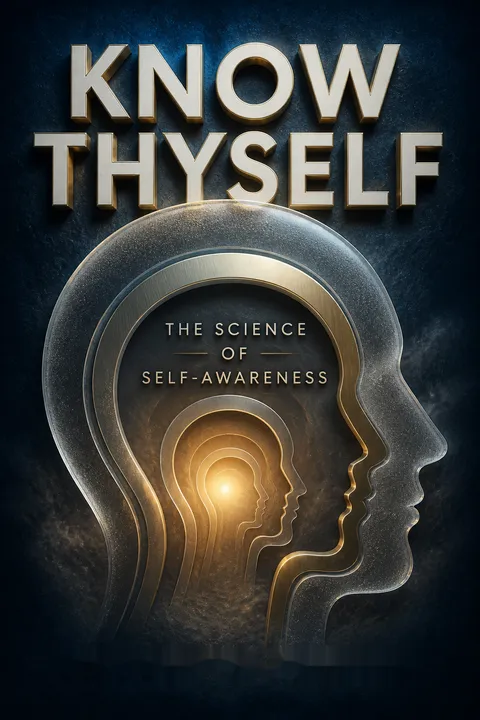
Know Thyself explores metacognition and self-awareness through a scientific lens. Fleming examines brain function, decision-making, and learning processes, offering insights into human cognition. Readers appreciate the accessible writing style and fascinating research presented. Some found the neuroscience details excessive, while others praised the book's thought-provoking nature. Mixed opinions on the AI chapter emerged. Overall, reviewers found the book informative and engaging, despite occasional critiques of writing style or depth. Many readers gained new perspectives on self-awareness and metacognition, recommending it for those interested in understanding human cognition.
People Also Read







Glossary
Metacognition
thinking about thinkingThe ability to monitor and evaluate one’s own cognitive processes, including perception, memory, learning, and decision-making. Metacognition can be implicit and automatic, such as noticing an error, or explicit and conscious, such as judging whether one knows an answer. It helps guide choices about whether to persist, revise, or seek more information.
Inverse problem
inferring causes from evidenceA problem in which a system must infer the hidden causes of available data. The brain faces inverse problems because sensory signals are incomplete and noisy. A faint visual signal, for example, may come from a real light or from neural noise, so perception requires an informed estimate rather than a direct copy of reality.
Predictive processing
perception shaped by predictionsA model of brain function in which information flows both from sensory input toward higher-level processing and back down through predictions. The brain combines expectations with incoming evidence, weighting each according to its reliability. This helps explain how context influences perception and why the brain can interpret ambiguous signals quickly.
Metacognitive sensitivity
confidence tracks correctnessThe degree to which a person’s confidence distinguishes correct judgments from incorrect ones. Someone with high sensitivity tends to be more confident when right and less confident when wrong. It is distinct from overall confidence: a person may be generally overconfident while still noticing many of their individual mistakes.
Metacognitive bias
overall confidence tendencyA general tendency to report confidence above or below a person’s actual performance. Bias concerns the average level of confidence, rather than whether confidence reliably separates correct from incorrect judgments. It can coexist with good metacognitive sensitivity, although extreme confidence may make sensitivity difficult to maintain.
Theory of mind
representing other mindsThe ability to reason about what other people know, believe, want, or feel. It includes recognizing that another person may hold a belief that conflicts with reality or with one’s own knowledge. The book connects this capacity to self-awareness, arguing that people use related mental tools to reflect on themselves and others.
Error-related negativity
rapid neural error signalA brief electrical brain response associated with detecting an error, measurable with electroencephalography. It can occur shortly after a person makes a mistake and is linked to activity in the dorsal anterior cingulate cortex. The signal is treated as one marker of the brain’s internal monitoring of performance.
Forward model
predicting action outcomesA control mechanism that estimates the sensory consequences of an action and compares them with what actually happens. When the prediction and feedback differ, the system can correct the movement. Forward models help explain rapid adjustments in reaching, typing, and other actions that may occur without conscious awareness.
Region of proximal learning
manageable learning challengeA model of study choices proposing that learners benefit from material that is neither already mastered nor impossibly difficult. The useful target is challenging but manageable, allowing progress while keeping success within reach. It resembles selecting a demanding but liftable weight during physical training.
Choice blindness
missing a choice switchA failure to notice that an outcome differs from a person’s original choice, followed by an explanation that treats the substituted outcome as if it had been chosen. In experiments, participants sometimes justified a jam or image they had not selected. The effect reveals that people may construct explanations after acting.
Anosognosia
lack of awareness of impairmentA neurological condition in which a person is unaware of, or does not acknowledge, an impairment caused by brain injury or disease. It is not simply deliberate denial. Damage to systems involved in self-monitoring can prevent a person from recognizing changes in their own abilities or condition.
Self-efficacy
belief in one’s capabilityA person’s belief about their ability to succeed at a task. These beliefs can influence motivation, persistence, and performance, even when they do not perfectly match objective ability. Strong self-efficacy may encourage engagement, while recognizing limitations can help someone seek assistance or use external tools.
Two heads are better than one effect
joint judgment improves accuracyA finding from collaborative decision experiments in which two people, after discussing conflicting judgments, often reach a more accurate answer than the better-performing person would alone. The benefit depends on participants communicating confidence in ways that reflect their reliability. If their abilities differ too greatly, collaboration can reduce accuracy.
FAQ
What's Know Thyself: The Science of Self-Awareness about?
- Focus on Self-Awareness: The book explores self-awareness through metacognition, the ability to think about one's own thinking, and its impact on decision-making and learning.
- Neuroscience Insights: Stephen M. Fleming integrates neuroscience, psychology, and philosophy to explain how our brains support self-awareness, discussing neural circuits and potential failures.
- Practical Applications: It emphasizes cultivating self-awareness in education, decision-making, and collaboration, offering tools to enhance self-awareness and improve life quality.
Why should I read Know Thyself: The Science of Self-Awareness?
- Understanding Yourself: The book provides a scientific basis for self-awareness, crucial for better decision-making and personal growth.
- Research-Based Insights: It presents findings from metacognitive neuroscience, making complex ideas accessible and offering insights into brain function regarding self-awareness.
- Practical Strategies: Readers receive advice on cultivating self-awareness to enhance learning and interpersonal relationships, encouraging reflection on thought processes.
What are the key takeaways of Know Thyself: The Science of Self-Awareness?
- Metacognition is Key: Emphasizes metacognition as essential for effective self-awareness, influencing learning, decision-making, and collaboration.
- Self-Awareness is Fragile: Discusses how self-awareness can fail, leading to overconfidence or lack of insight, and how understanding these failures can prevent judgment pitfalls.
- Cultivating Self-Awareness: Provides strategies like reflective practices and feedback to improve self-awareness, enhancing personal and professional development.
How does Know Thyself define metacognition?
- Thinking About Thinking: Metacognition is the ability to think about one's own thinking processes, involving self-reflection and awareness of cognitive abilities.
- Components of Metacognition: It includes monitoring and regulating one's cognitive processes, recognizing when we know something and when we do not.
- Importance in Learning: Metacognition is crucial for effective learning strategies, helping individuals assess understanding and adjust study methods.
How does Know Thyself explain the neuroscience behind self-awareness?
- Neural Circuits: Discusses brain regions like the prefrontal cortex involved in self-awareness and metacognition, responsible for higher-order thinking and self-reflection.
- Metacognitive Neuroscience: Introduces the field studying how the brain supports self-awareness through neural mechanisms, including effects of brain damage.
- Functional Imaging Studies: References fMRI studies showing brain region activation during self-reflection tasks, illustrating the biological basis of self-awareness.
What are some examples of metacognitive failure discussed in Know Thyself?
- Overconfidence in Decision-Making: Examples of individuals being overconfident in judgments, leading to poor decisions due to unrecognized limitations or uncertainty.
- Anosognosia: Discusses cases where individuals are unaware of cognitive deficits due to brain damage, illustrating compromised self-awareness.
- Everyday Scenarios: Uses relatable scenarios, like students overestimating knowledge before exams, to show metacognitive errors in daily life.
What strategies does Know Thyself suggest for improving self-awareness?
- Reflective Practices: Encourages regular self-reflection through journaling, meditation, or thinking about thoughts and feelings to enhance self-awareness.
- Seeking Feedback: Emphasizes obtaining feedback from others for a clearer perspective on abilities and behaviors, correcting misperceptions.
- Mindfulness Techniques: Suggests mindfulness practices to foster awareness of thoughts and emotions, improving metacognitive skills.
What role does self-awareness play in decision-making, according to Know Thyself?
- Guiding Choices: Self-awareness helps assess knowledge and confidence levels, leading to better decision outcomes in personal and professional contexts.
- Recognizing Errors: Enables recognition of mistakes or flawed judgments, crucial for learning and growth.
- Flexibility in Thinking: Fosters adaptability in decision-making, allowing choices to be adjusted based on new information or changing circumstances.
What are the best quotes from Know Thyself and what do they mean?
- "Nosce te ipsum": Translates to "Know thyself," emphasizing self-awareness's historical importance for personal growth and wisdom.
- "Self-awareness is a fragile, beautiful, and frankly bizarre feature of the human mind": Captures self-awareness's complexity and significance, suggesting its value and vulnerability.
- "The real danger... is that we will overestimate the comprehension of our latest thinking tools": Warns against blindly trusting technology without understanding limitations, underscoring the need for human oversight.
How does Know Thyself relate self-awareness to learning and education?
- Metacognition in Learning: Highlights self-awareness's role in effective learning, helping assess understanding and adjust study strategies.
- Feedback Loops: Discusses how self-awareness creates feedback loops enhancing learning outcomes, allowing performance reflection and approach adaptation.
- Lifelong Learning: Advocates cultivating self-awareness as a lifelong skill, essential for adapting to new challenges and opportunities.
How can I improve my metacognitive skills as suggested in Know Thyself?
- Practice Self-Reflection: Encourages regular self-reflection to assess thought processes and decision-making strategies, through journaling or discussions.
- Seek Feedback: Actively seeking feedback from peers enhances metacognitive awareness, providing valuable perspectives on thought processes.
- Engage in Mindfulness: Suggests mindfulness practices to improve self-awareness and metacognitive skills, fostering better decision-making.
What future directions for self-awareness research does Know Thyself suggest?
- Integration with Technology: Discusses potential integration with AI and brain-computer interfaces to enhance understanding of cognitive processes and decision-making tools.
- Educational Applications: Calls for research on teaching and cultivating self-awareness in educational settings, improving learning outcomes.
- Mental Health Implications: Suggests understanding self-awareness can impact mental health treatment, enhancing metacognitive skills for managing conditions like anxiety and depression.
Download PDF
Download EPUB
.epub digital book format is ideal for reading ebooks on phones, tablets, and e-readers.








